Photographer: Tyler Bolivar
Assistant: Terrell Paiva
Makeup Artist: Melfinna Tjugito
Model/Creative Director: Alger Liang
Wardrobe Stylist: Rina Ong
Hair Stylist: Patrick Uy
Calligrapher: Sheen Wong
Fashion Designer : Adam Lin-Bungag
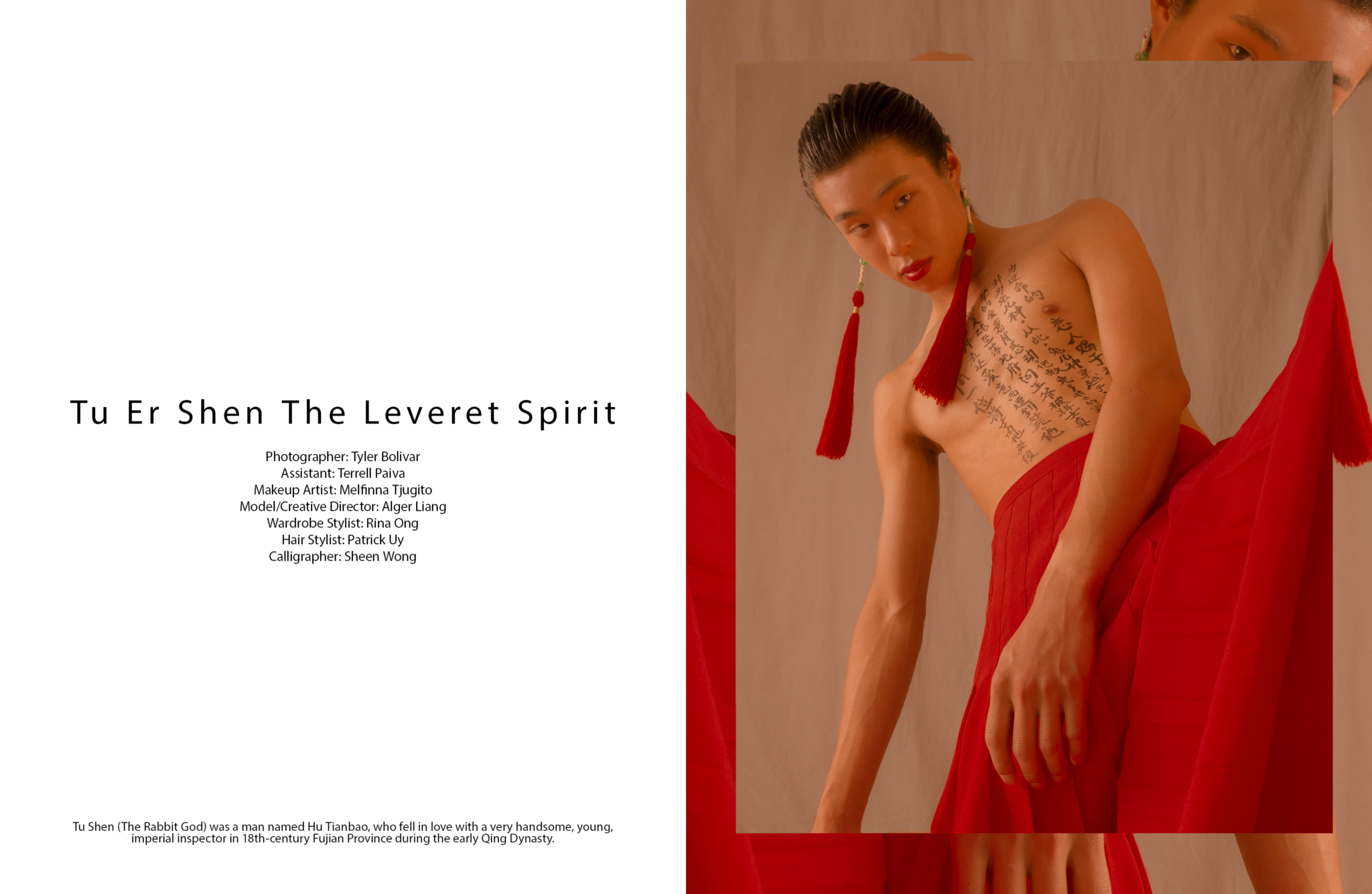
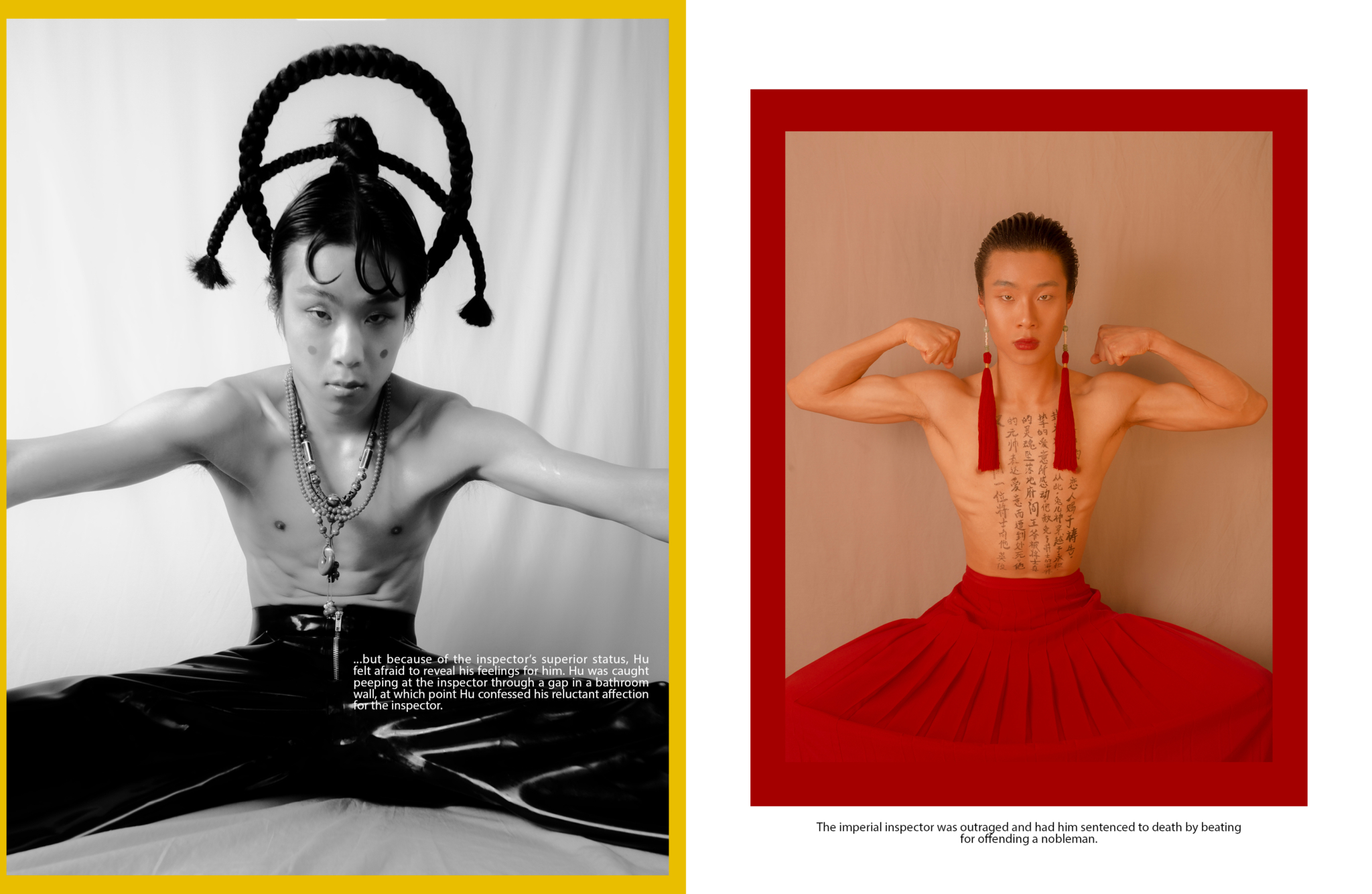
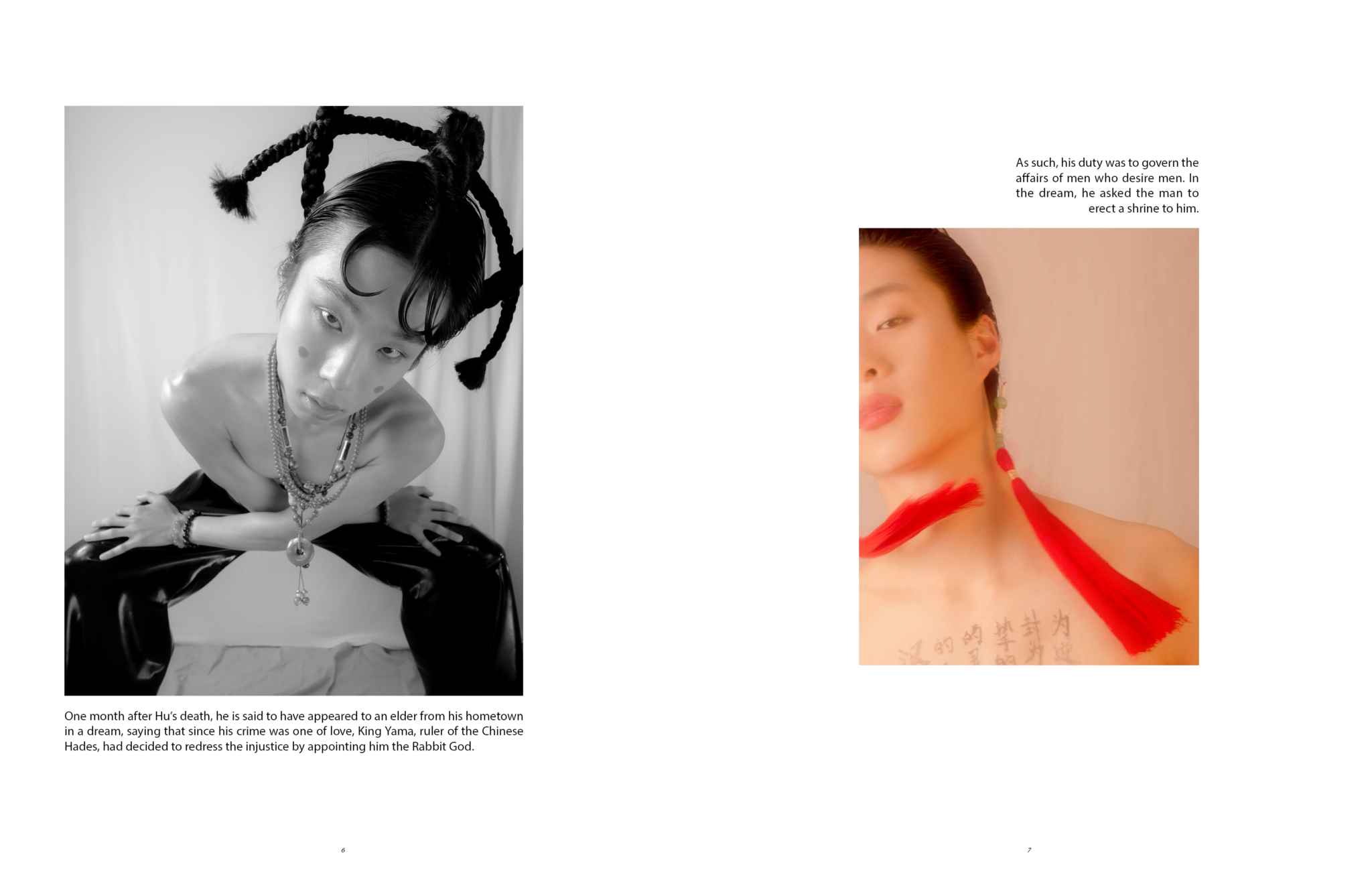
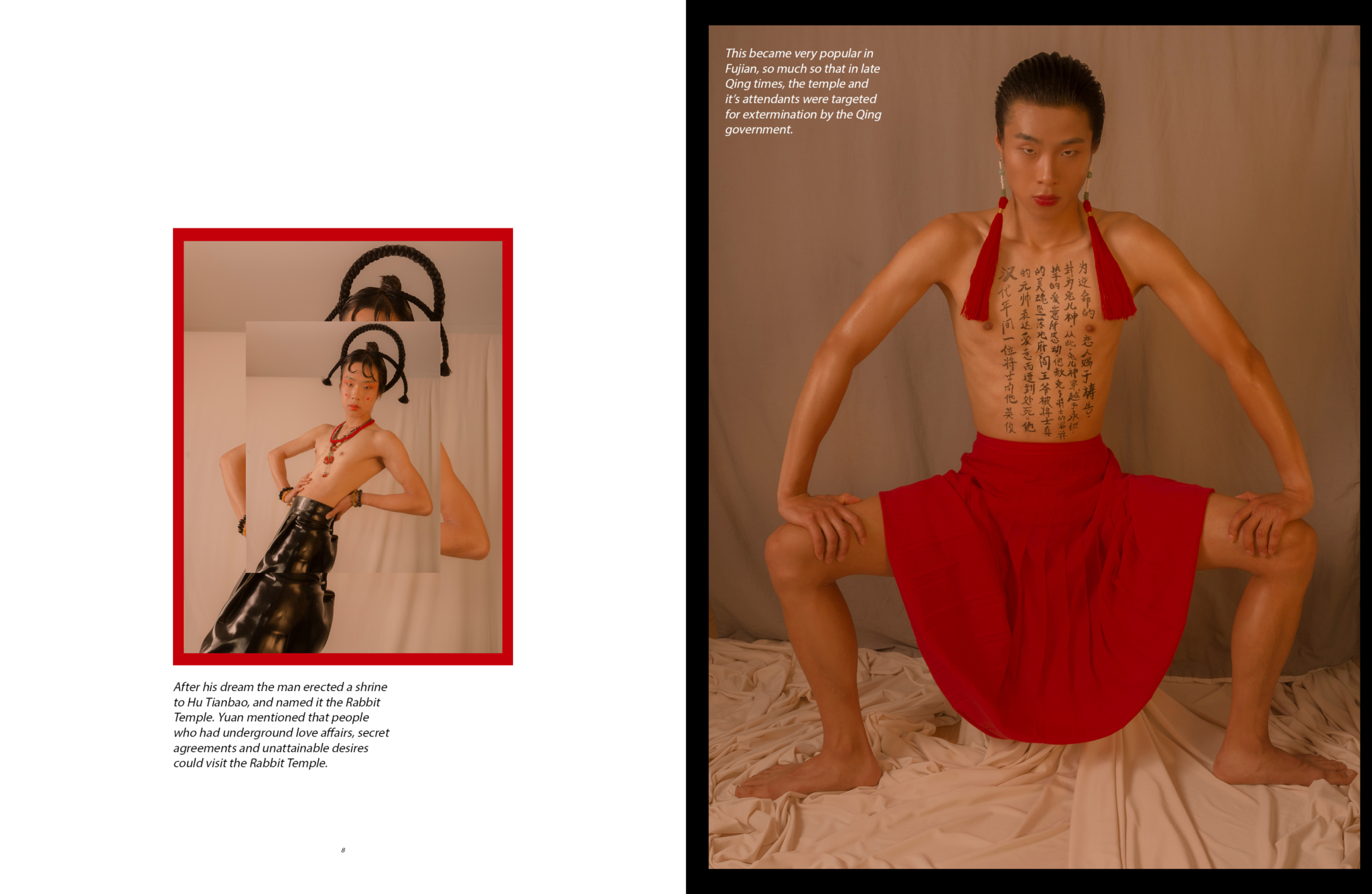
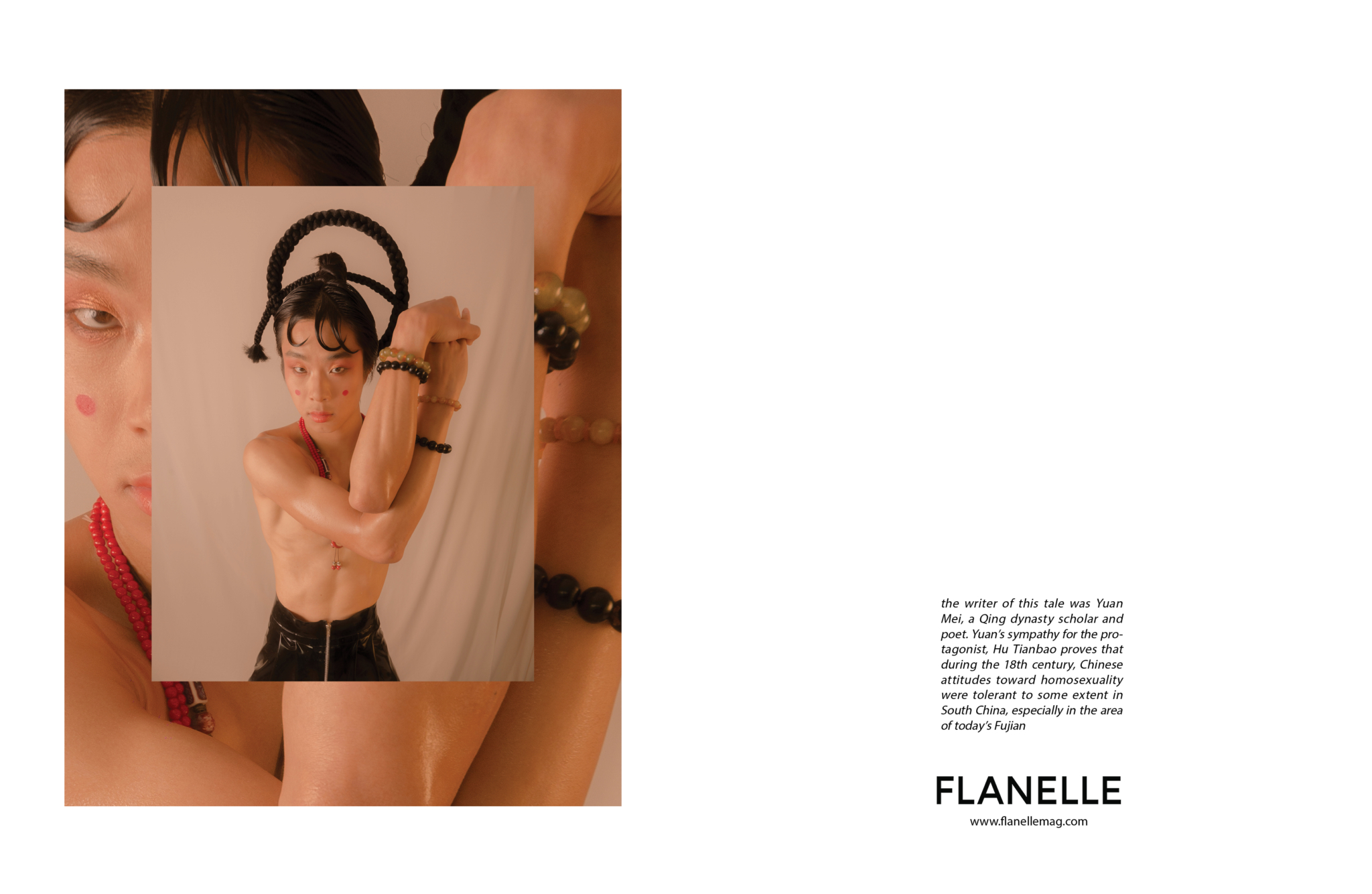
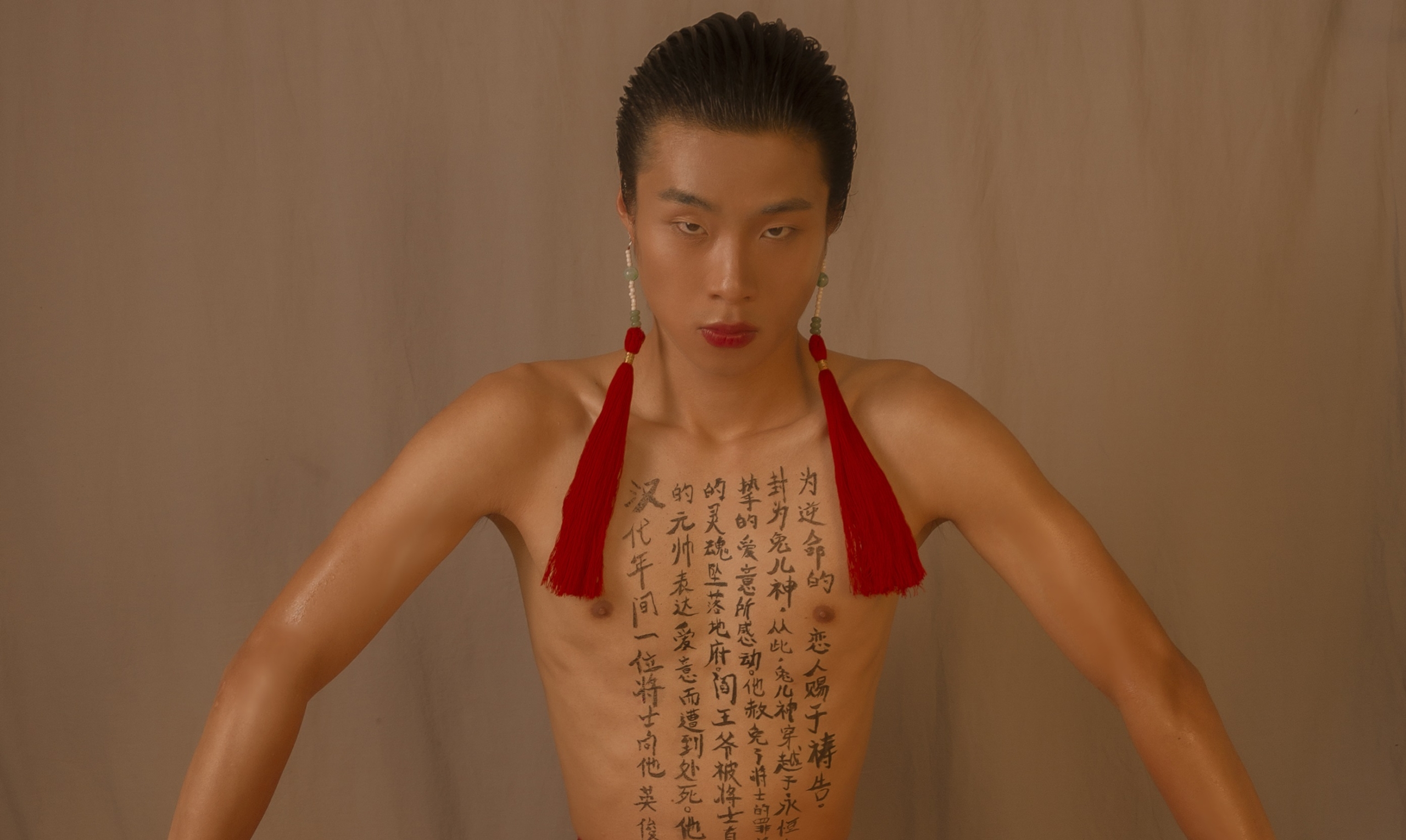
Tu Shen (The Rabbit God) was a man named Hu Tianbao, who fell in love with a very handsome, young, imperial inspector in 18th-century Fujian Province during the early Qing Dynasty. But because of the inspector’s superior status, Hu felt afraid to reveal his feelings for him. Hu was caught peeping at the inspector through a gap in a bathroom wall, at which point Hu confessed his reluctant affection for the inspector. The imperial inspector was outraged and had him sentenced to death by beating for offending a nobleman. One month after Hu’s death, he is said to have appeared to an elder from his hometown in a dream, saying that since his crime was one of love, King Yama, ruler of the Chinese Hades, had decided to redress the injustice by appointing him the Rabbit God. As such, his duty was to govern the affairs of men who desire men. In the dream, he asked the man to erect a shrine to him. After his dream the man erected a shrine to Hu Tianbao, and named it the Rabbit Temple. Yuan mentioned that people who had underground love affairs, secret agreements and unattainable desires could visit the Rabbit Temple. This became very popular in Fujian, so much so that in late Qing times, the temple and it’s attendants were targeted for extermination by the Qing government. the writer of this tale was Yuan Mei, a Qing dynasty scholar and poet. Yuan’s sympathy for the protagonist, Hu Tianbao proves that during the 18th century, Chinese attitudes toward homosexuality were tolerant to some extent in South China, especially in the area of today’s Fujian Province.