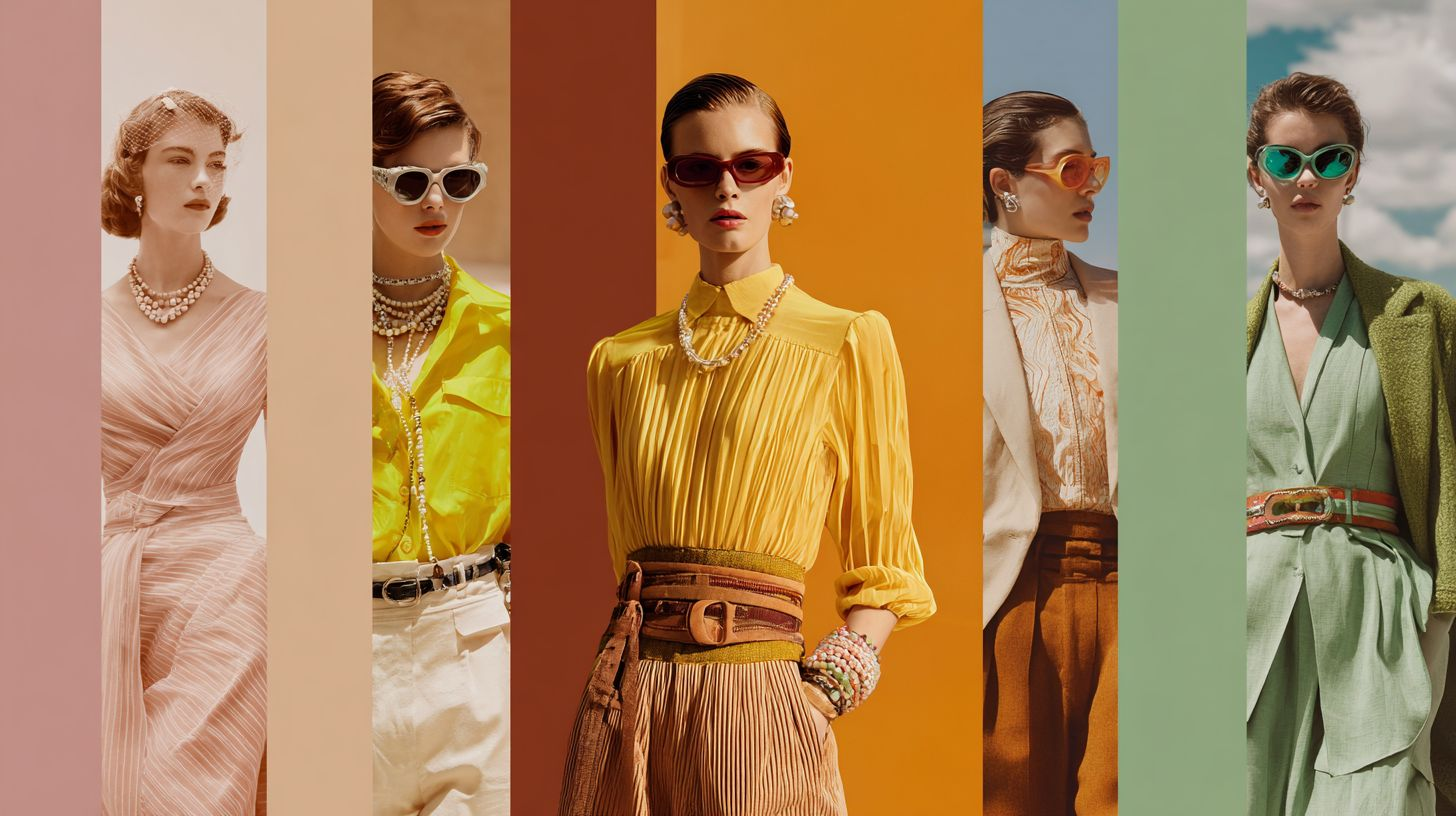
drives style forward.
Colors in fashion have always conveyed stories, from the faded earth tones in ancient Egyptian garments to the bright pinks now appearing in Vogue magazines. They really mirror what’s happening around us-like big social changes, new tech, or a shift toward greener living. It shapes everything we put on and how we see style. Let’s chat about how these colors have grown over time, starting with natural dyes and social vibes, right up to cool digital tricks, eco-friendly ideas, mixes from around the world, and even some guesses on what’s next for our closets.
Historical Foundations of Color in Fashion
Colors in fashion didn’t just happen overnight; they’ve got deep roots that pull from history and nature.
Back in 1200 BC, folks were getting Tyrian purple from sea snails-super rare stuff. Then, fast forward to 1856, William Perkin whipped up the first synthetic dye, mauveine, and suddenly colors weren’t just for the elite anymore. It opened up all sorts of possibilities in fashion.
Natural Dyes and Early Influences
Take indigo, for example-made from fermented leaves in West Africa, it’s been creating those rich deep blues for over 4,000 years.
Some standout ones? Tyrian purple from Phoenician sea snails, fermented and worth ten times its weight in gold-total royal vibes. Imagine the effort to harvest those snails-royalty only! It was a symbol of power that common folks could only dream of. Then there’s cochineal red from insects in Mesoamerica; by the 1600s, they were shipping out 500 tons a year for fabrics. Logwood black came from Mayan heartwood, boiled up, though Europe banned it in 1581 for being dodgy. And don’t forget saffron yellow, hand-picked from Persian crocus-still costs about $5,000 a pound for fancy stuff today. These dyes really mattered in trade and status, connecting distant cultures through color. Colors really matter because they carry history in every hue.
The Natural History Museum has this cool collection that shows how these dyes played big roles in cultures. Nowadays, brands like Kering are bringing them back with sustainable twists, sourcing eco-friendly.
20th-Century Shifts in Editorial Palettes
In the 1920s, Vogue shifted from those muted post-WWI neutrals to bright Art Deco shades like emerald green. It worked wonders-circulation jumped 40%, says a 2015 analysis from the Fashion Institute of Technology. Those emerald greens just screamed freedom after the war, like the world was ready to burst into life again.
Come the 1950s, Harper’s Bazaar was all about Dior’s New Look, with reds and blues that popped against those tiny 18-inch waists. The Met’s Costume Institute has exhibits on it, and it led to a 25% bump in sales.
The 1980s introduced power suits in bright primary colors and three-color combinations, thanks to MTV’s flashy influence. Remember that 1985 neon cover on Harper’s Bazaar? It tied into a 30% rise in ad money. A 2022 study in Color Research & Application even connects these palettes to better reader buzz.
Fast forward to today, and culture’s driving the colors even more.
Contemporary Cultural Drivers
These days, colors in fashion are driven by what’s happening in society, pulling in diverse voices and fresh ideas.
Gen Z values body positivity. Campaigns such as Savage x Fenty’s 2018 show that featured different skin tones increased Instagram engagement by 300%, based on a 2021 Hootsuite study. You can feel the energy in how brands are responding.
That effort continues strongly in other campaigns, using colors to promote true representation. It’s making fashion feel more like everyone’s space. Blending Asian silks with African prints in warm ochres feels so alive now, fusing global influences that honor multiple heritages. Colors really matter here, bridging worlds and sparking conversations across borders.
How Tech is Mixing Up Colors in Fashion These Days
Back in 1990, Adobe Photoshop came along and made it super easy to match colors exactly with RGB. It really helped cut down those pesky production mistakes by about 60% for big names like Burberry.
Modern fashion is increasingly shaped by digital tools that help designers, stylists, and editors work with color more precisely. From AI-powered palette generators to real-time color analysis, technology now allows creatives to test combinations, predict trends, and adapt palettes for different skin tones and visual contexts before anything goes into production.
A modern color analysis tool like Dressika helps fashion professionals explore undertones, test palettes, and visualize how colors work in real outfits. Instead of relying purely on intuition, editors can now back creative decisions with data-driven color matching — speeding up workflows while maintaining strong visual storytelling.
Tech like this opens doors for innovation. It’s more than accuracy. It’s about turning ideas into reality quicker and letting creativity proceed without typical obstacles.
How Going Green is Changing Up Color Palettes
Stella McCartney kicked things off back in 2001 by skipping those traditional leather dyes. Instead, she went with plant-based colors that slashed water use by 20% for each piece. The 2022 Ellen MacArthur Foundation report spells it out – it’s inspiring how one choice rippled through the industry.
Such shifts encourage the whole sector to rethink resources. It’s a step toward fashion that’s kinder to the earth, one hue at a time.
Swapping in Eco Dyes That Actually Work
In H&M’s Conscious Collection, they’re using yellows from marigolds to ditch those harmful chrome dyes. It cuts pollution by half, according to a 2020 study in the Journal of Cleaner Production.
Adopting these isn’t without challenges, but the benefits shine through. Brands are innovating daily, proving green can be gorgeous.
Color palettes in modern fashion are changing because of technology, sustainability, and designers’ daring choices. Whether you’re flipping through Vogue or sketching your next look, it’s exciting to see how colors tell stories.
These stories from the runway and pages remind us that colors aren’t just hues – they’re emotions wrapped in fabric. Designers keep pushing boundaries, and it’s what keeps fashion alive and kicking.
Tech changes and eco-friendly replacements mean good things ahead for color palettes. It’s a reminder that innovation drives style forward.