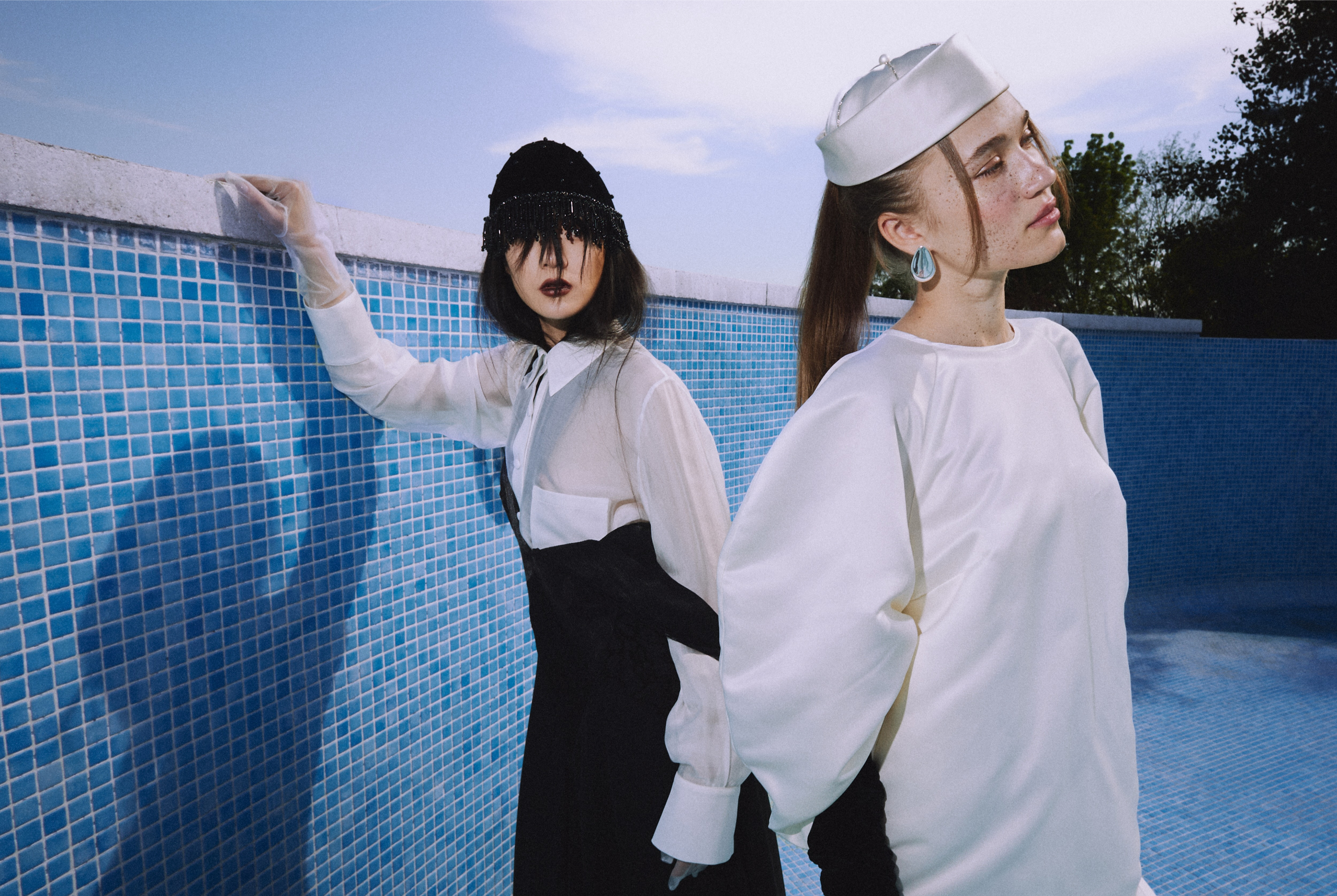
As cool as ever, radiating his signature effortless swagger, A$AP Rocky pulls from every corner of his discography to deliver a show as stylish, unpredictable, and self-assured as the artist himself.
Text by: Mia Colaner
Photos by: Louis Alson
Nearly eight years after his last studio album, A$AP Rocky arrived at Montreal’s Bell Center on June 1, 2026. As part of his Don’t Be Dumb World Tour, he moved between new material and longtime favorites with remarkable ease, commanding a crowd eager to witness a return that had been years in the making. By night’s end, he called it the best show of the tour so far.
Born Rakim Mayers, better known as A$AP Rocky or Pretty Flacko, the Harlem-born artist has long occupied a space where music, fashion, and visual culture come together. Since the breakthrough days of Live.Love.A$AP in 2011, Rocky’s artistic eye and unmistakable ear for beats have helped usher in a new sound and feel to mainstream rap. Whether through music videos, runway appearances, film projects, or the music itself, Rocky remains guided by his intuition, moving with a confidence and curiosity that continue to define his artistic identity.
His new album, Don’t Be Dumb, draws from a visual universe shaped by A$AP Rocky’s fascination with Tim Burton’s gothic imagination, The Nightmare Before Christmas, and the angular theatricality of German Expressionism. In terms of its sound, “it’s what 2011 Rocky would be making in 2026,” he said on The New York Times Popcast. After years of leaks and delays, A$AP Rocky appears less concerned with meeting expectations than with chasing a vision and sound that excite him, while still offering listeners something fresh and uncompromised. The result is a record that is as restless as it is exploratory, electrified onstage by A$AP Rocky’s classic too-cool-for-school charisma.
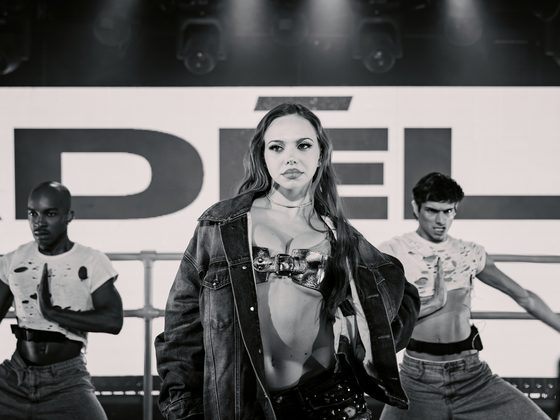
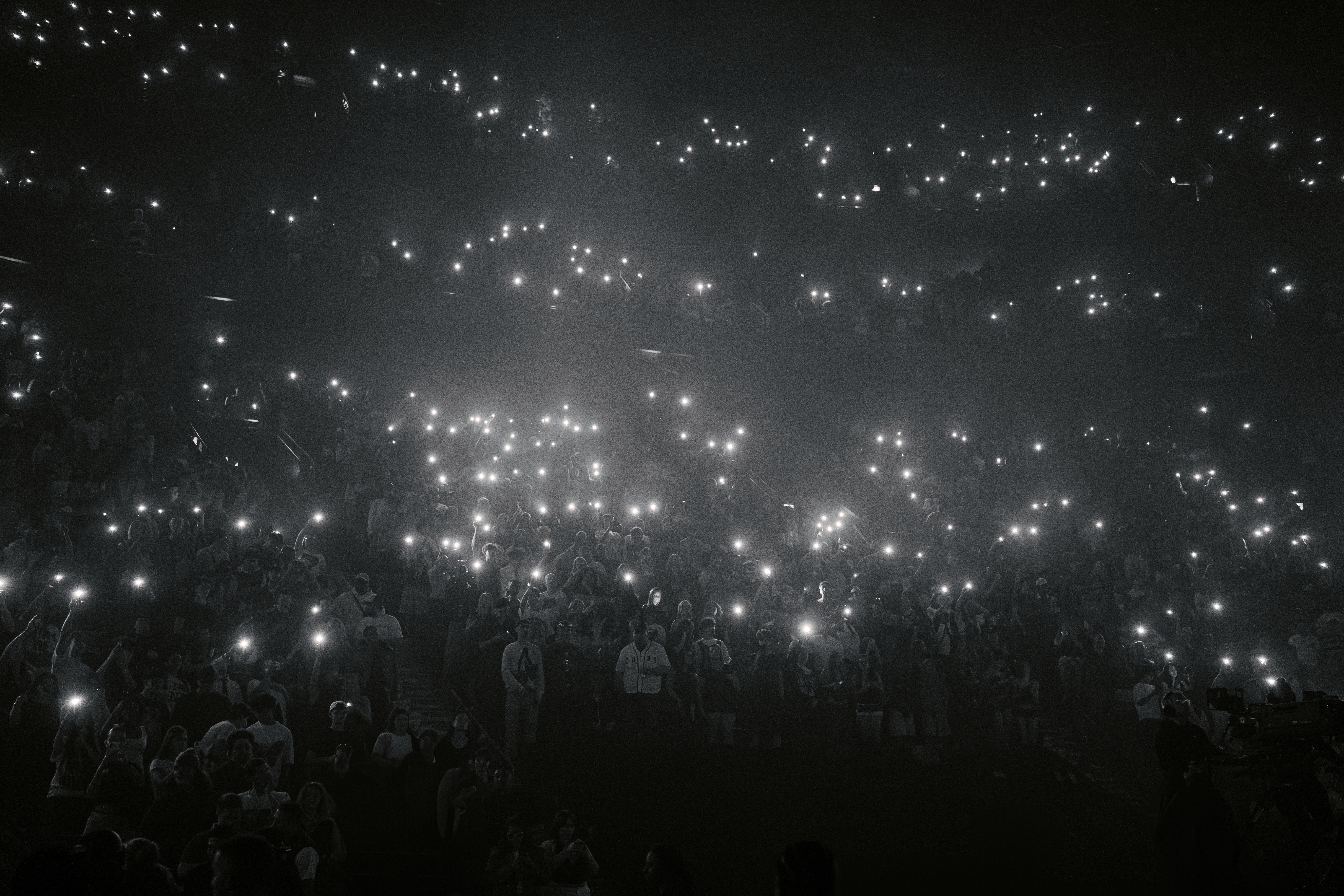
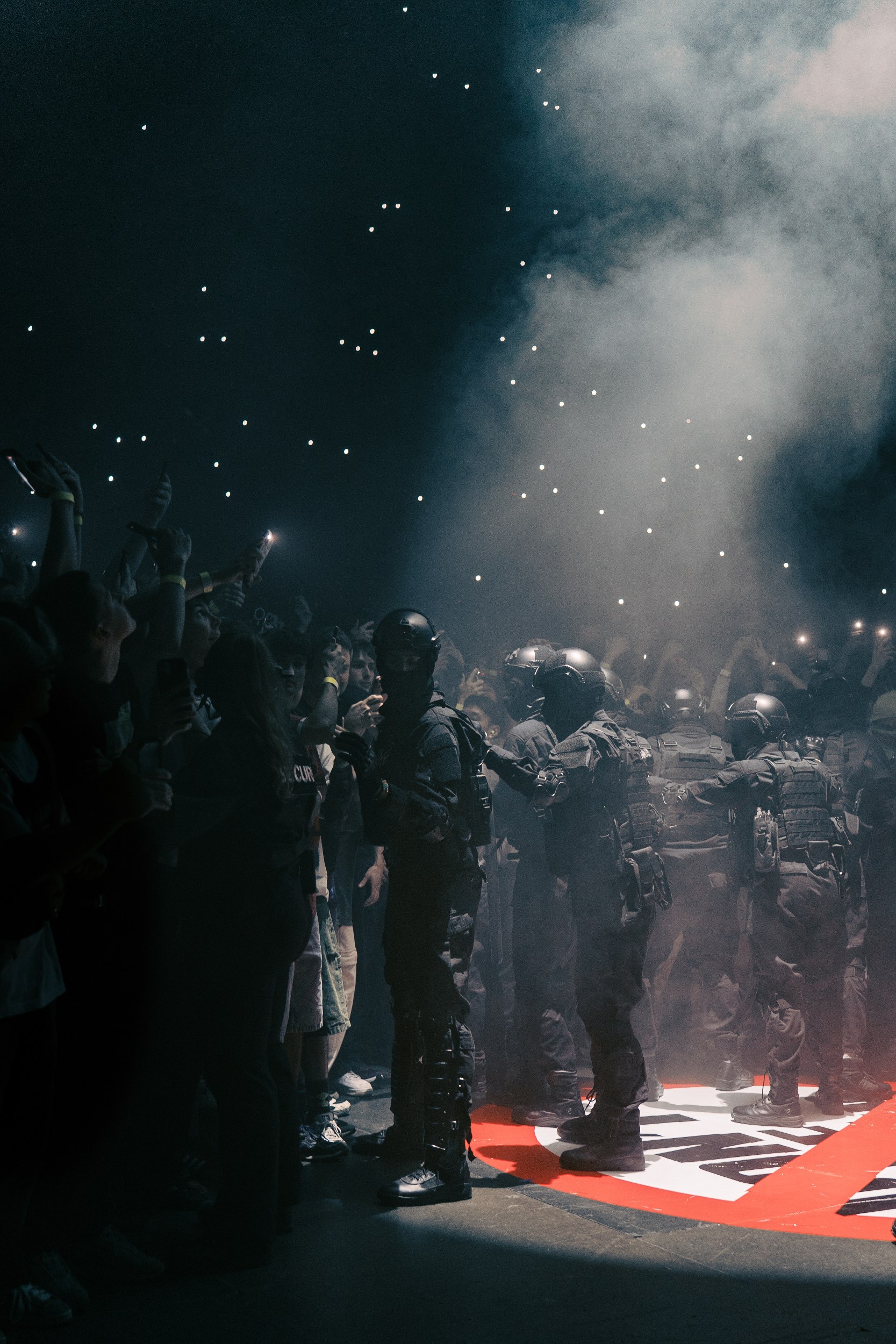
As the crowd awaited his arrival, spotlights swept across the Bell Center in search of A$AP Rocky, tracking every flicker of movement and scanning every balcony with growing suspense. Each burst of light intensified the uncertainty of where he would emerge. Without warning, surrounded by a crew dressed in white, Rocky emerged into the mosh pit as “Grim Freestyle” thundered through the venue. By the time “Trunks” followed, years of anticipation had erupted into pandemonium. He and his entourage danced through the chaos they had created, weaving in and out of the crowd before disappearing as suddenly as they had arrived, leaving the arena buzzing in their wake.
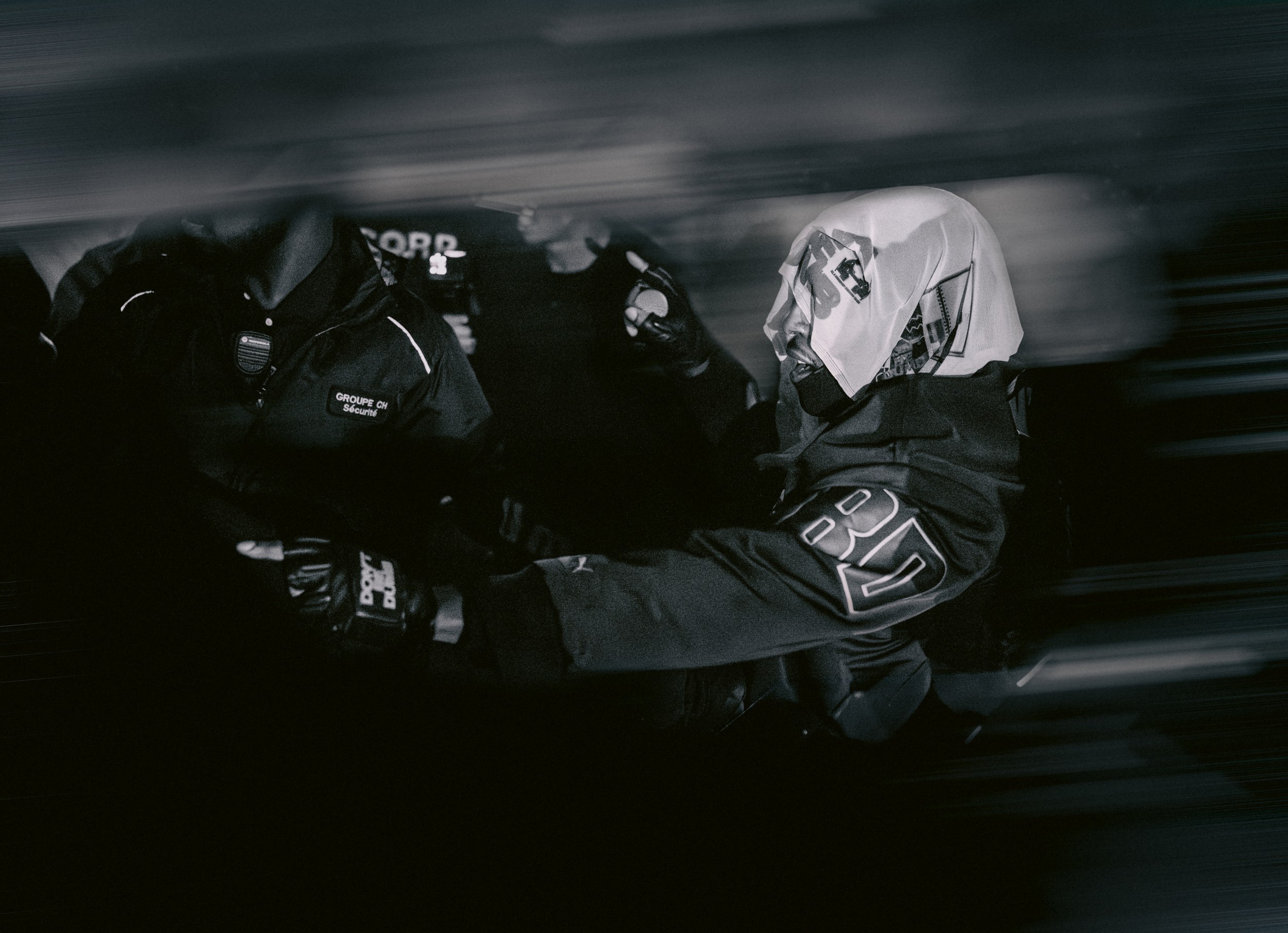
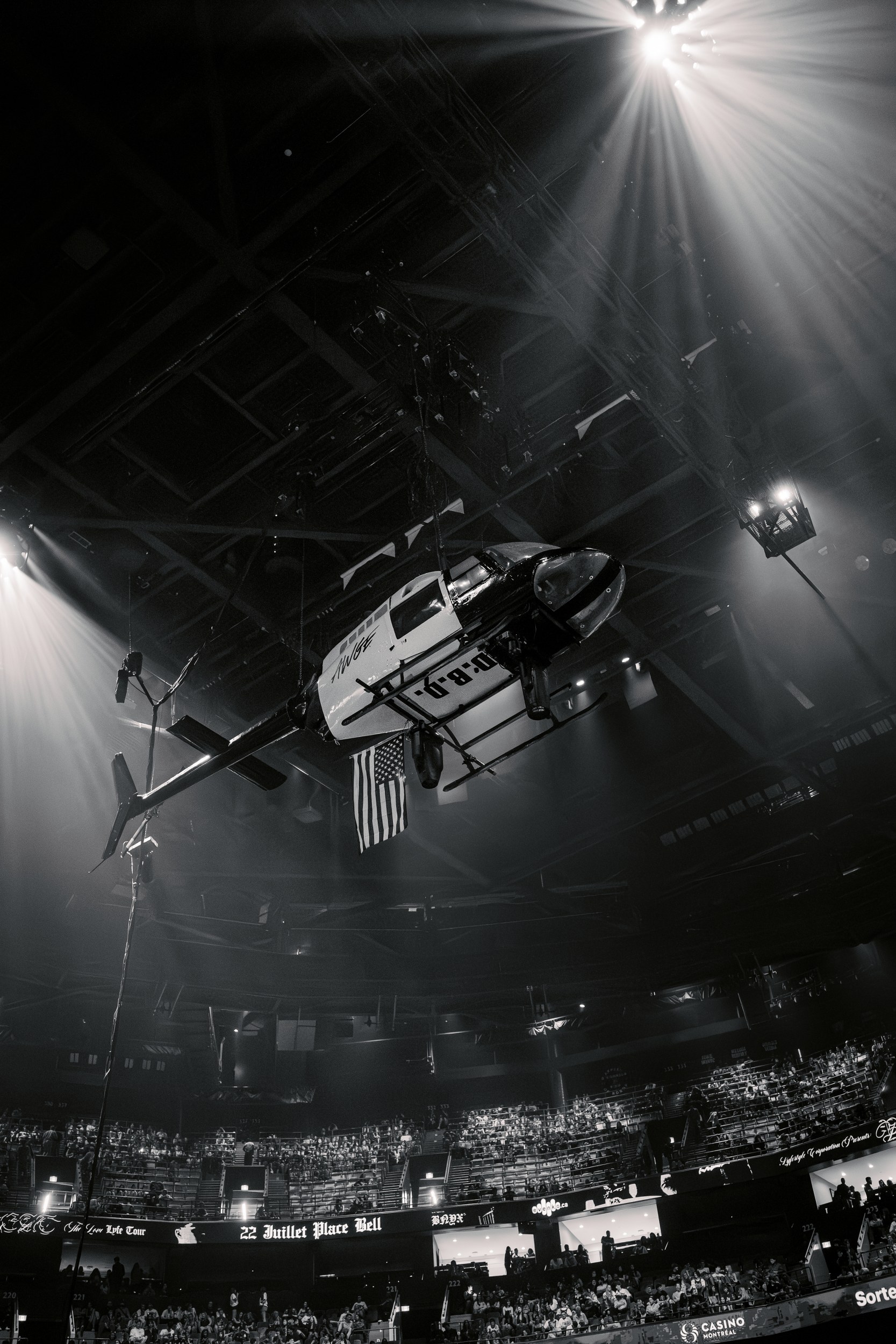
As the chaos from the mosh pit still lingered in the air, helicopter sirens and distorted SWAT alarms layered over the soundscape. Attention was drawn to the darkness above the stage, where A$AP Rocky’s silhouette suddenly appeared inside a hovering helicopter, suspended over the crowd as anticipation spiked once again. From there, he descended into the performance space and sharply launched into new material, including “Helicopter” and “Stole Ya Flow,” which pushed the crowd into even wilder chaos.
A$AP Rocky lifted his white bandana veil, revealing himself to a room that had been palpably waiting to see what lay beneath the mask. He introduced himself, “I’m A$AP Rocky, and it’s nice to meet you,” delivered with effortless charm. In that unveiling, he launched into “Purple Swag,” setting the tone for a time-traveling journey where old A$AP took center stage. Purple lights washed over the arena, casting a hazy 2011 glow before transitioning into “Peso,” where his artistic vision once again came alive through high-contrast visuals that echoed the original “Peso” era, like a pair of codeine-fever dreams. From there, he moved into “LVL” and “Goldie,” transporting the audience once again as the set moved through different eras of A$AP Rocky’s discography.
It wouldn’t have been an A$AP Rocky show without a nod to fashion and all the fashion killas in the room. The arena was cast in pink light as he performed “Fashion Killa,” his movements alone exuding that unmistakable sense of style and the innate charisma that has long made him one of rap’s most magnetic figures. He then brought two fans up from the mosh pit, both visibly ecstatic and nervous, a moment of recognition for the Montreal crowd.
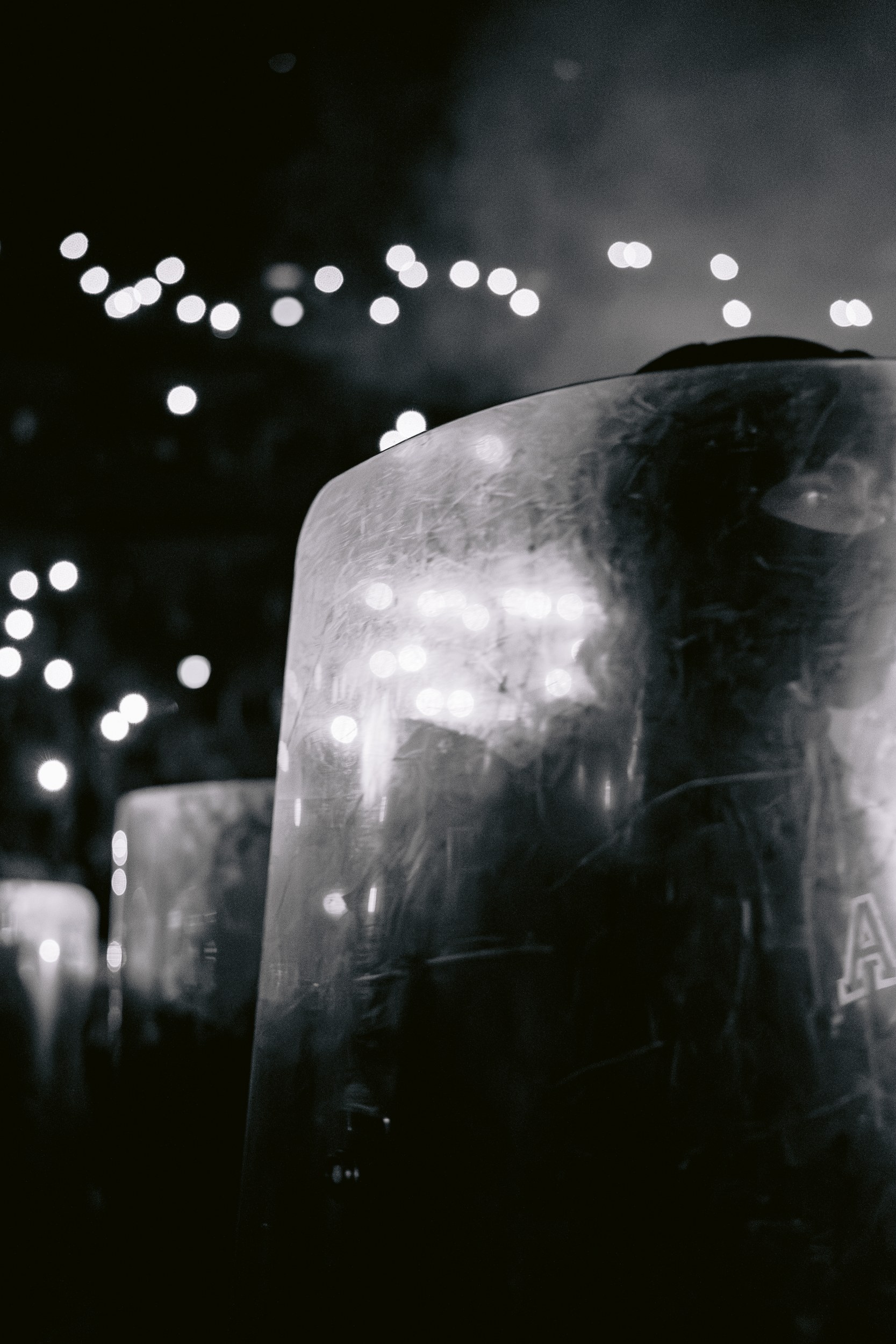
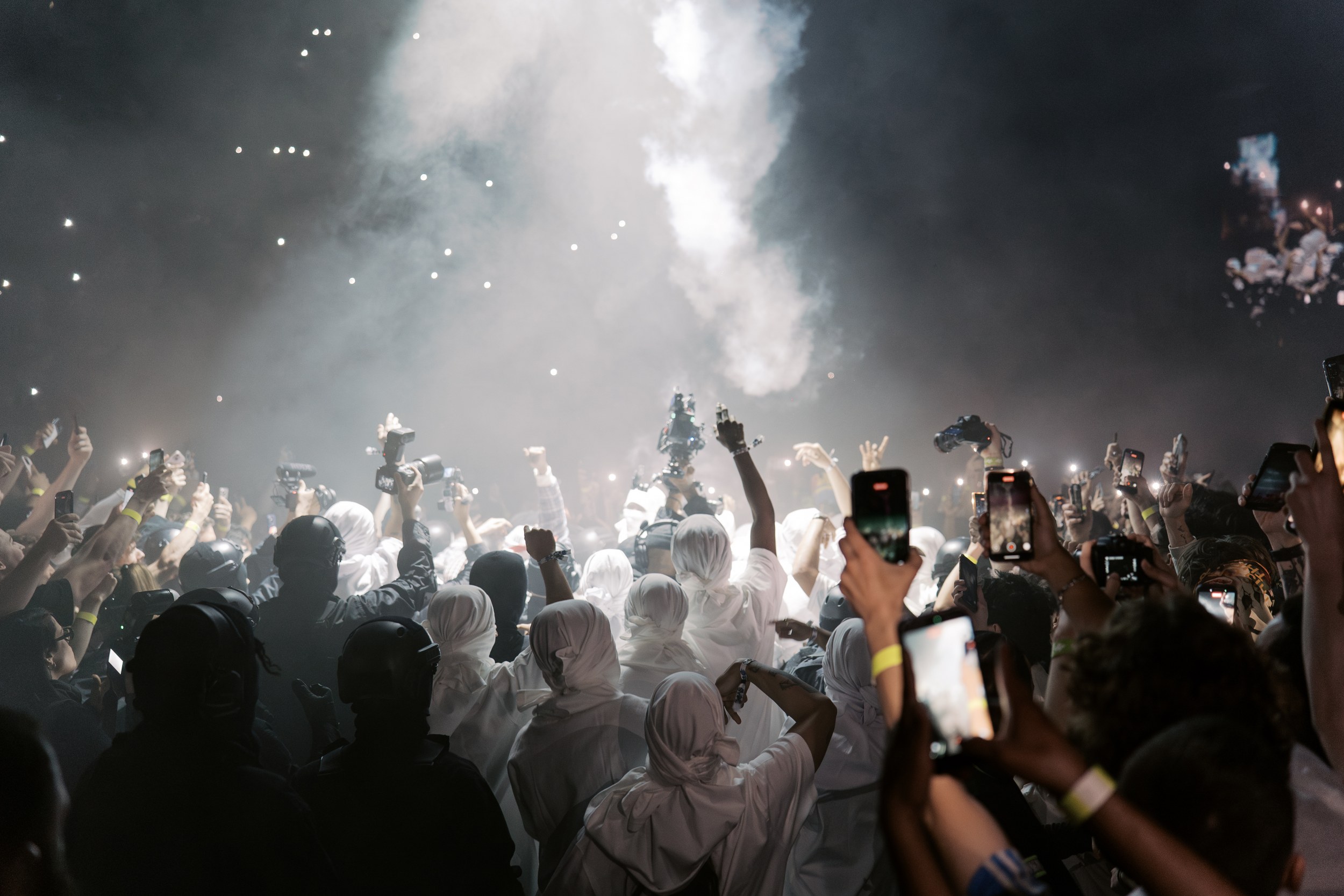
The show shifted into one of its most surreal, cinematic turns yet. A$AP Rocky stepped onto a small square platform that rose slowly into the air, in true A$AP Rocky fashion, unexpected yet impossibly smooth, as he drifted into “Stay Here for Life.” Suspended in a glowing circular halo of light, his silhouette cut through it while visuals of a flickering lighter and curling smoke spilled across the space. The transition into “LSD” softened everything further, his voice weightless as the stage behind him bloomed in slow bursts of flowers that turned the arena into a dreamlike hallucination.
The night softened into a hazy, dreamlike descent toward its closing moments. Rocky closed with “I Smoked Away My Brain” and “Don’t Be Dumb,” leaving the crowd fully satisfied. Before departing, he shared a message he had carried since back in the day: “It don’t matter if we Black, if we Brown, if we White, if we Yellow, we all Purple people.” It was a fitting final note that connected every version of Rocky: the Harlem upstart, the fashion trailblazer, the psychedelic experimenter, and the arena-ready headliner. Fifteen years after first reshaping the sound and style of a generation, Rocky remains as cool as ever and an essential force in the rap ecosystem, as vital in 2026 as he was in 2011.