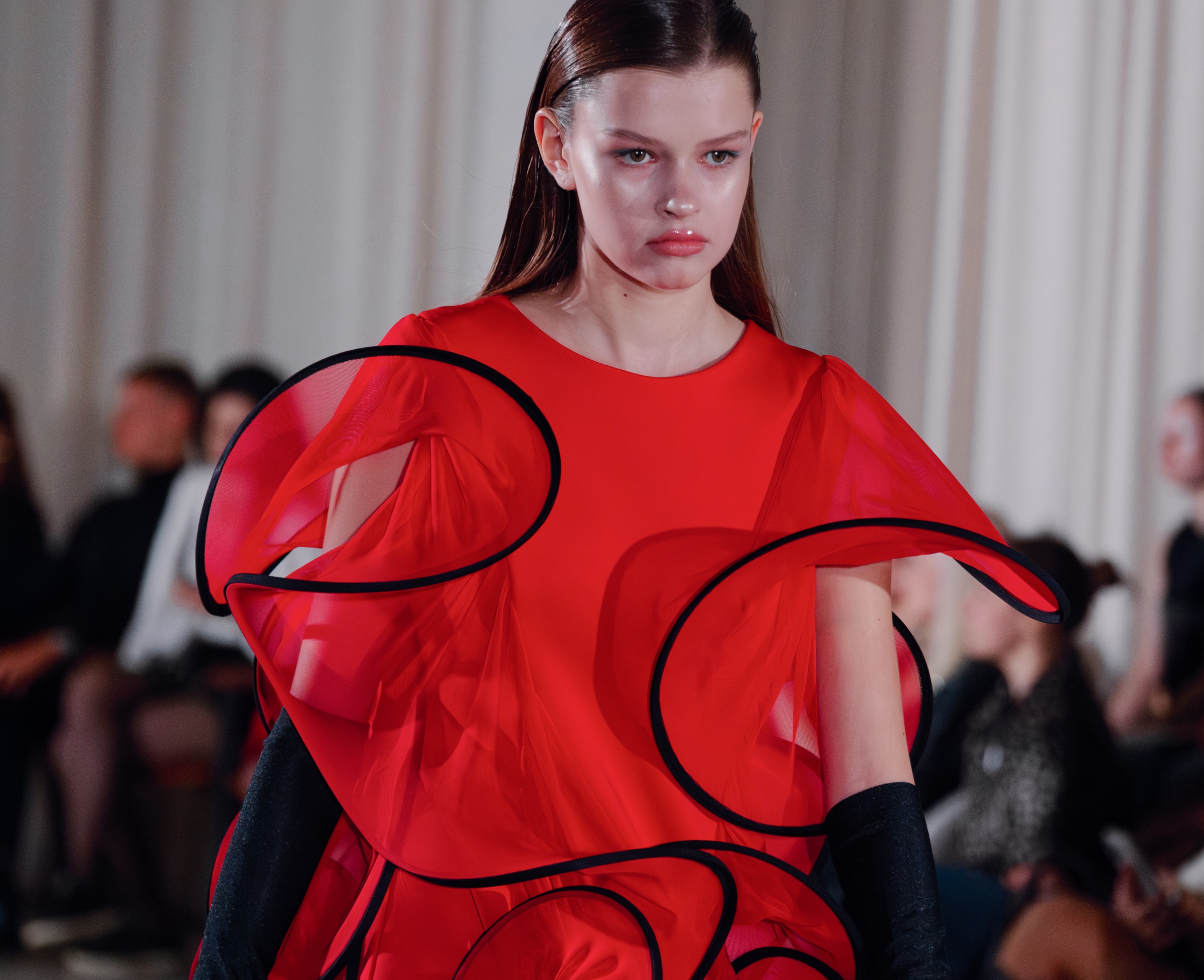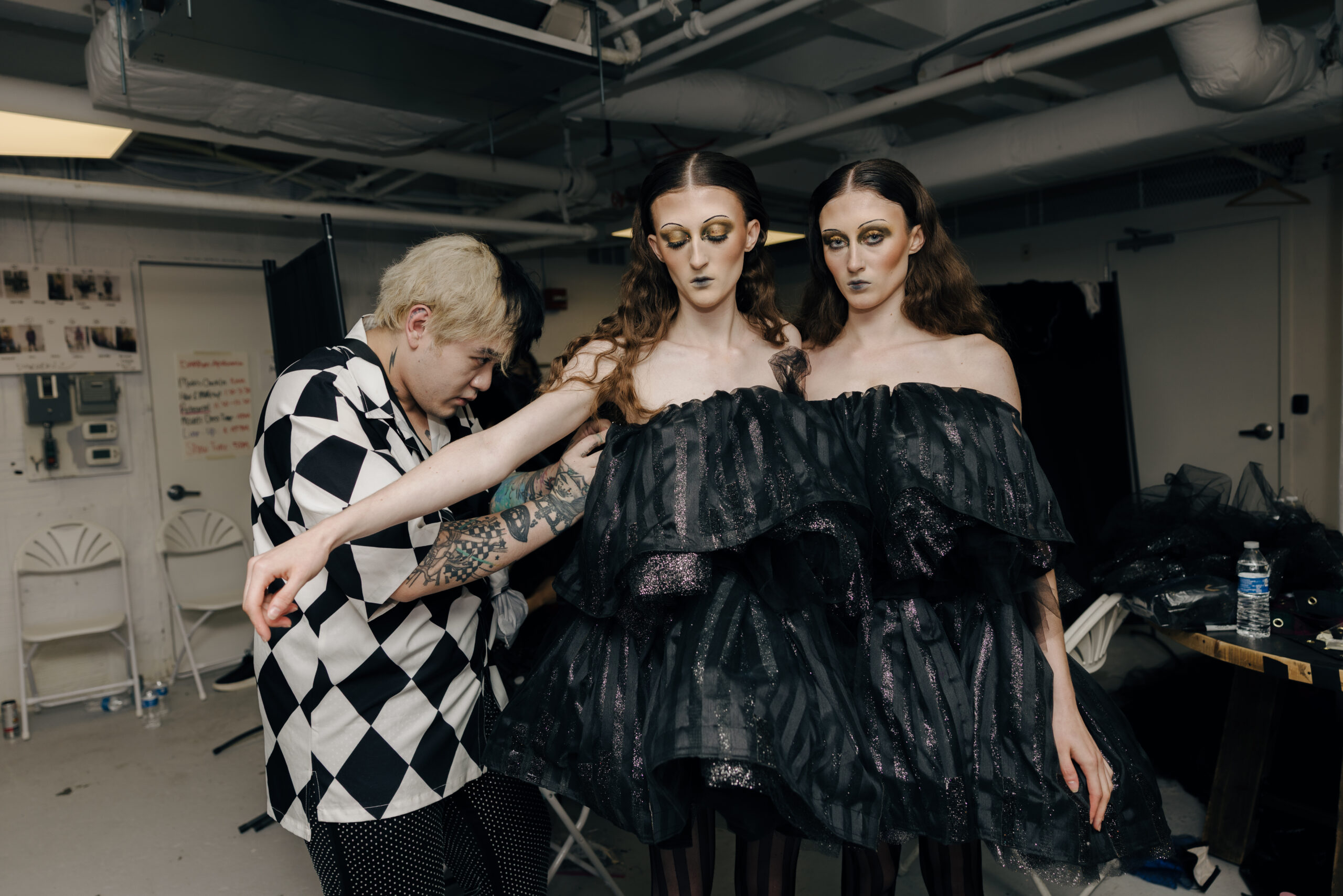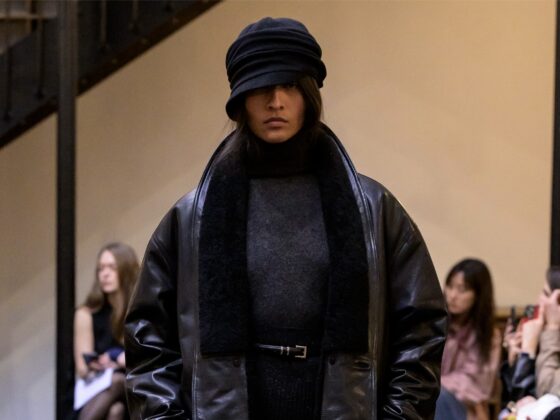
The school’s 2026 graduate show turned ten emerging designers’ explorations of identity, migration, and belonging into a three-part spatial narrative that asks what fashion retail could look like next.
The graduate fashion show has long been fashion education’s most public-facing ritual: a single runway, a single direction, an audience seated in judgment. On September 8, 2026, Istituto Marangoni Shanghai scrapped that model entirely. VIA NOMADIS, the school’s annual graduate presentation, unfolded across three distinct environments, pulled spatial designers and moving image artists into the frame alongside its ten graduating fashion students, and positioned the whole event as a prototype for a new kind of retail experience. The result was less a show than an argument about where fashion is going.
The title translates from the Latin as “the nomadic path,” and the thematic ambitions ran accordingly broad. Questions of migration, memory, cultural hybridity, and the instability of home ran through the collections and the spatial concept alike. Nicolas Dumont, Education Director at Istituto Marangoni Shanghai, described the brief in terms of transformation: students were asked to convert research into original concepts, with source material drawn from the history and cultural logic of nomadic peoples. The work that came back addressed those sources through material development, construction experimentation, and personal creative expression rather than through straightforward reference or pastiche.

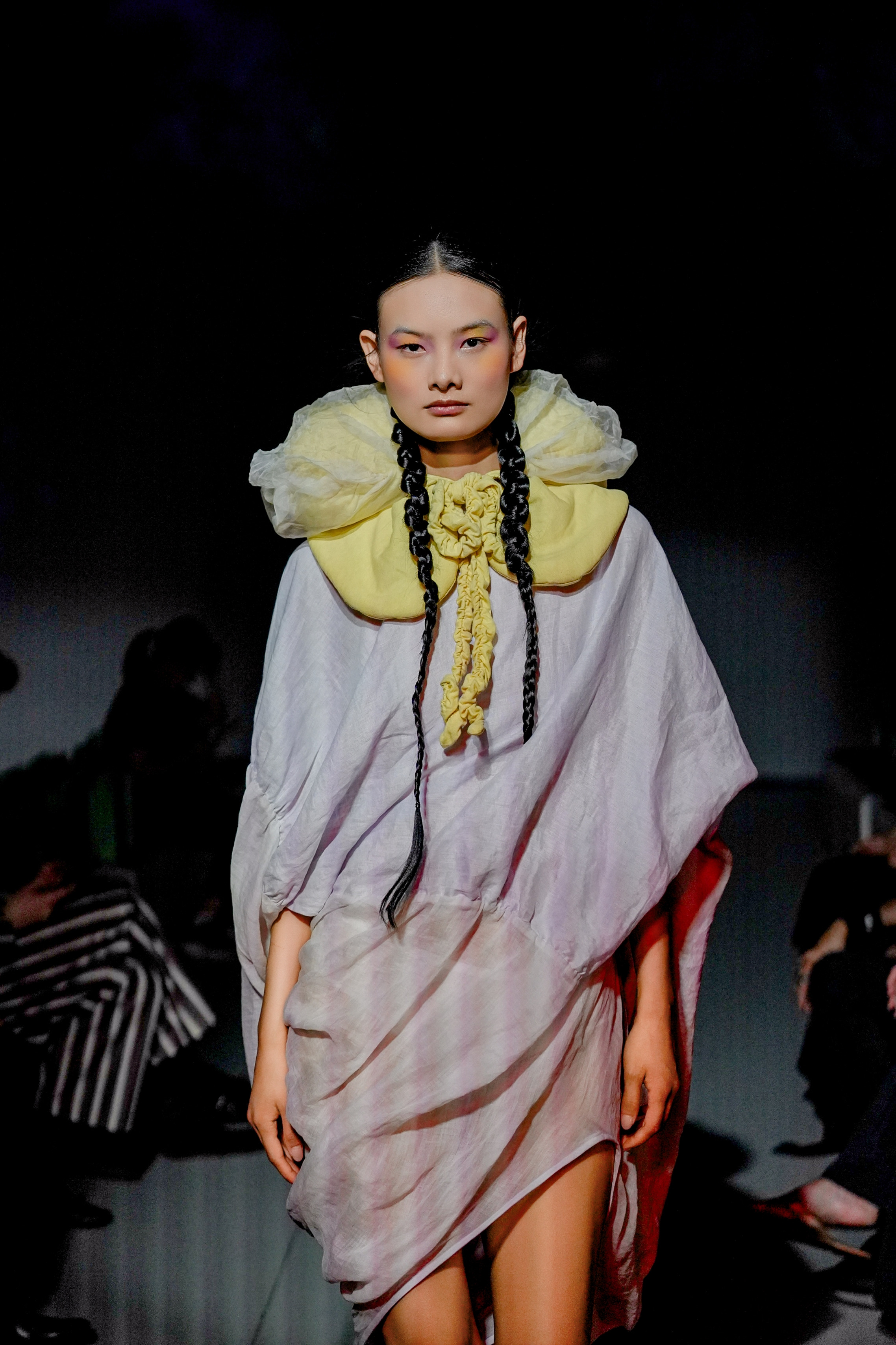
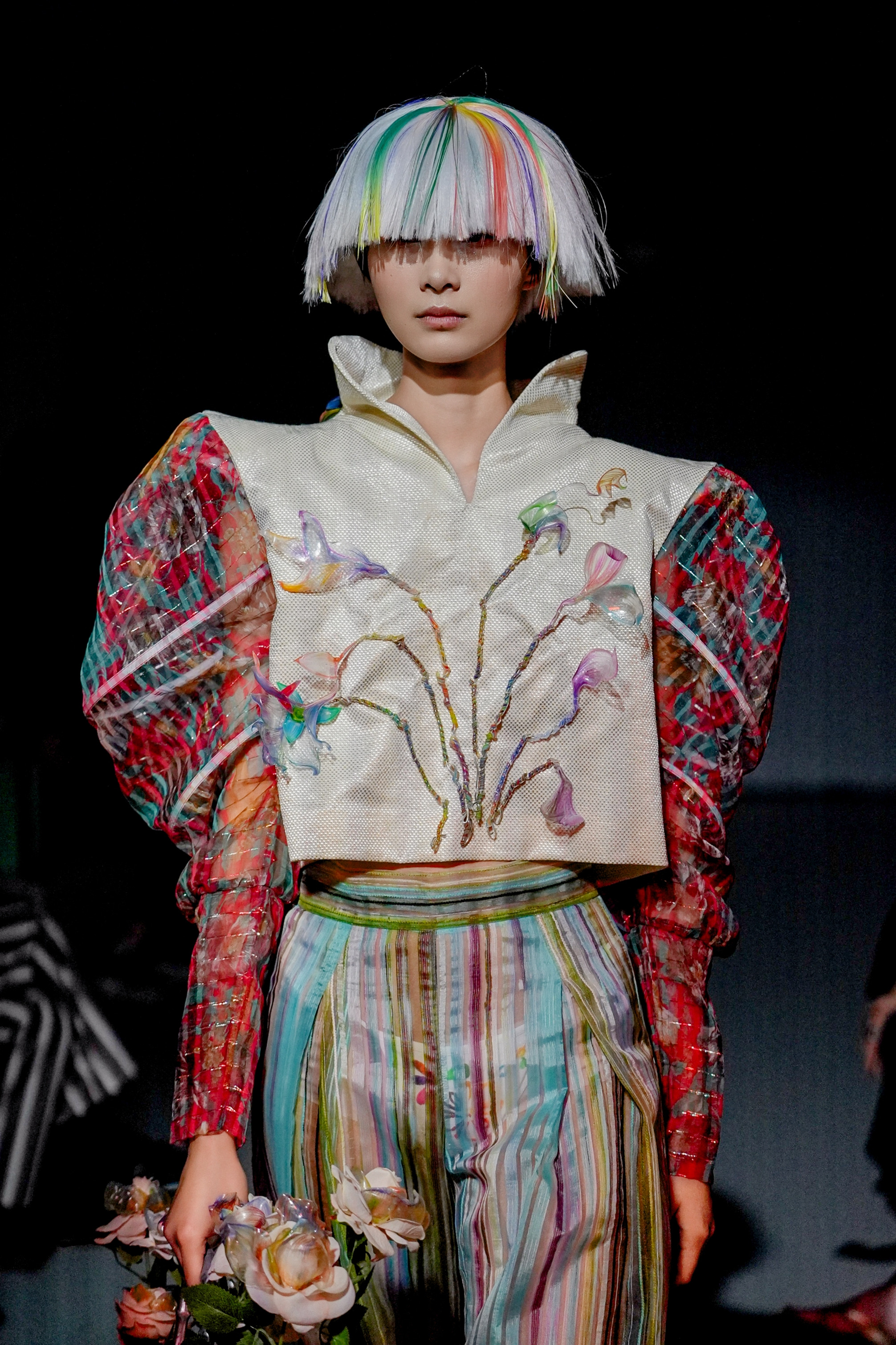
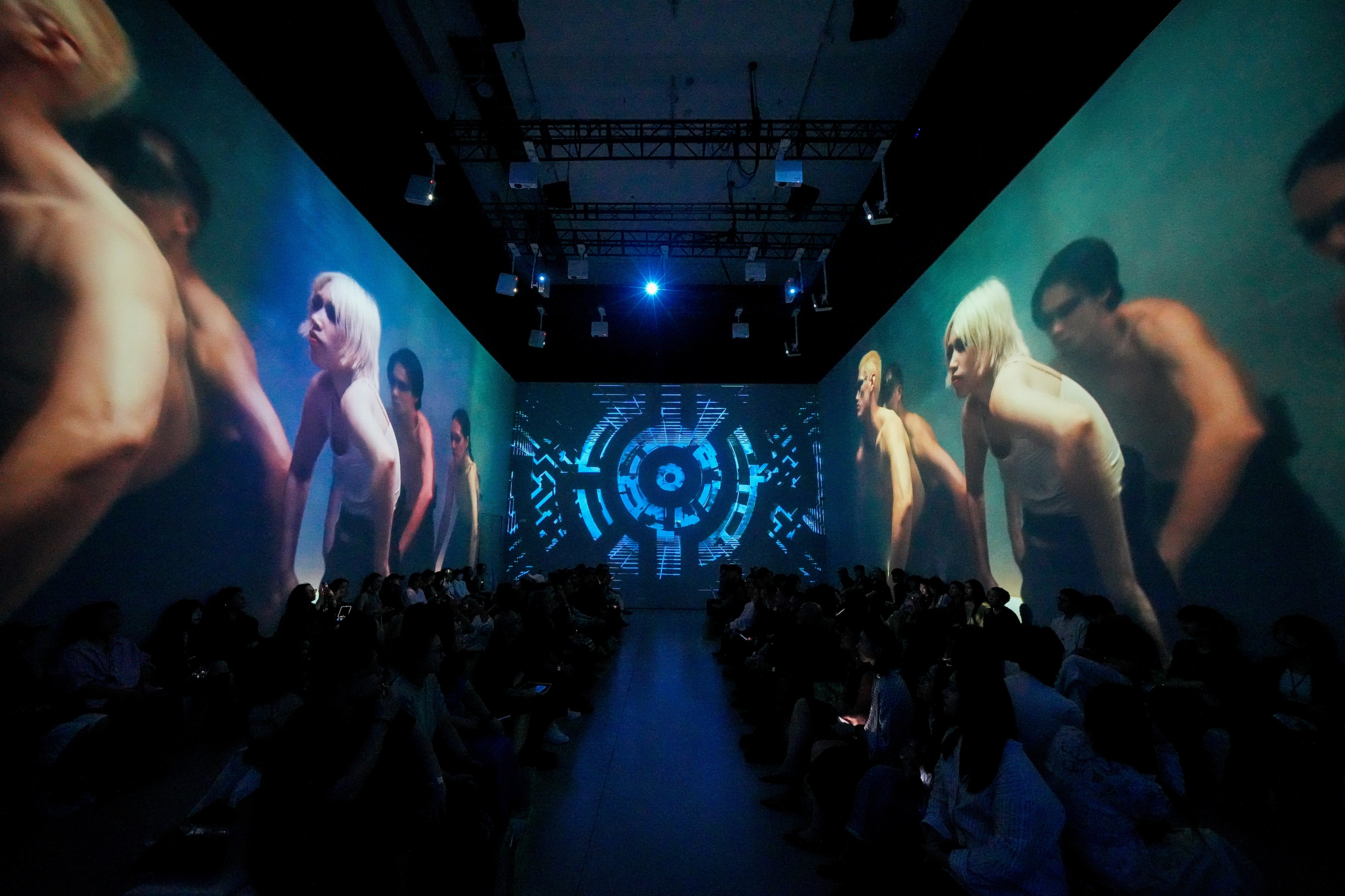
The spatial architecture of the show was produced in collaboration with Temple of Light and organized across three rooms. Guests arrived first to MUTATIONS, a pre-show digital experience that established the visual language before the first look appeared. The show itself then moved through the Infinity Room, the Hallway, and the Immersive Room, each space governed by a different sensibility.
The Infinity Room was the most theatrical. Three mirrored walls produced the sensation of infinite extension, and within that space, Fashion Communication and Image students presented an art film drawing on the myth of the Minotaur. The labyrinth here was reread not as a trap but as an interior territory, Ariadne’s thread repositioned as a metaphor for memory and cultural transmission. Garments functioned as what the school’s framing called “second skins,” materials that shift and reform alongside identity rather than fixing it in place.
The Hallway moved in a more direct register. Models walked a glass-lined passage and the collections were encountered face to face, semi-transparent imagery layering behind them against the exterior view. The Immersive Room completed the sequence with panoramic projections across all four walls and the floor: textures, embellishments, and color relationships extracted from the students’ own work, scaled up and made fluid, turning design research into immersive environment.
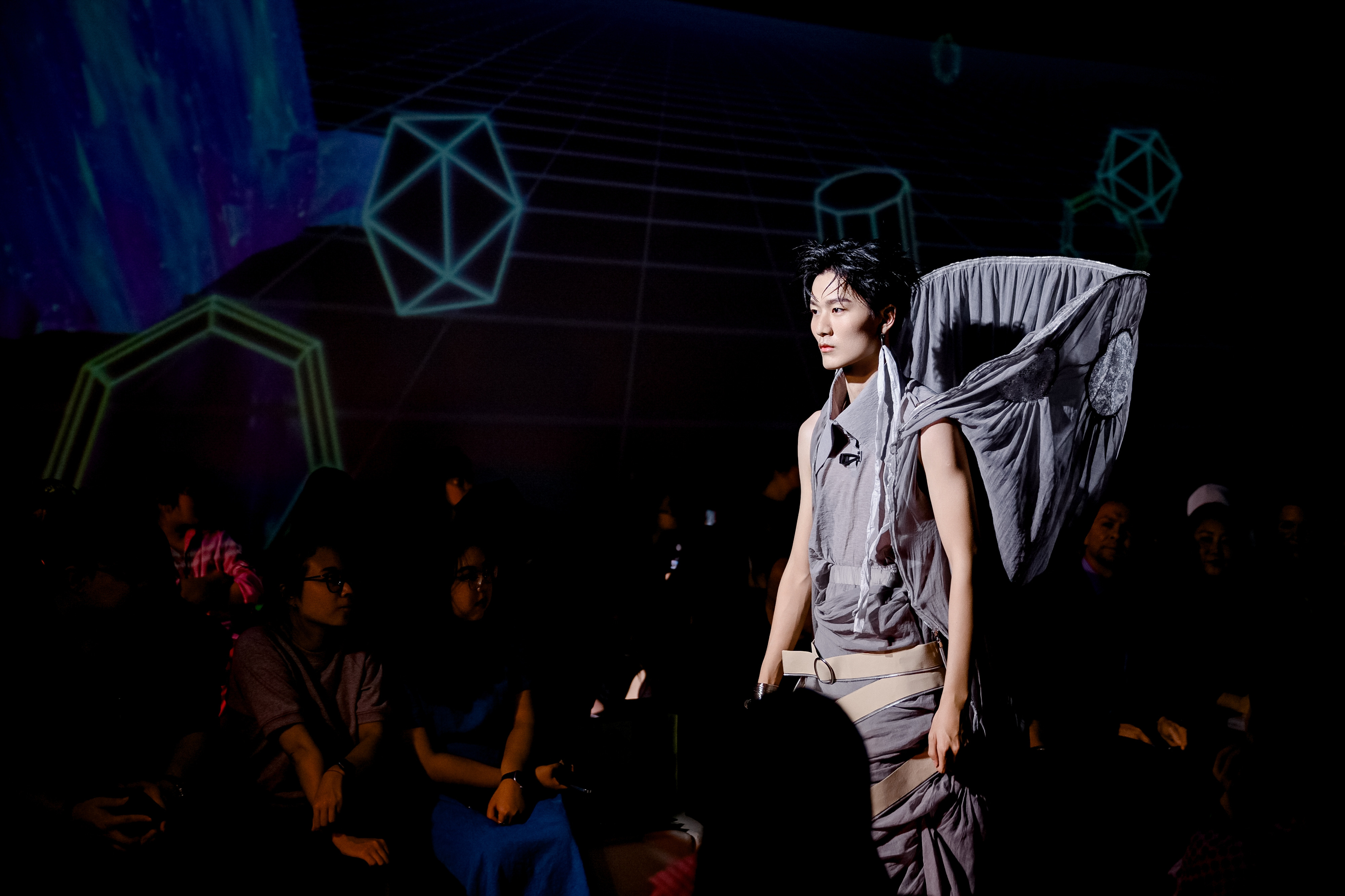
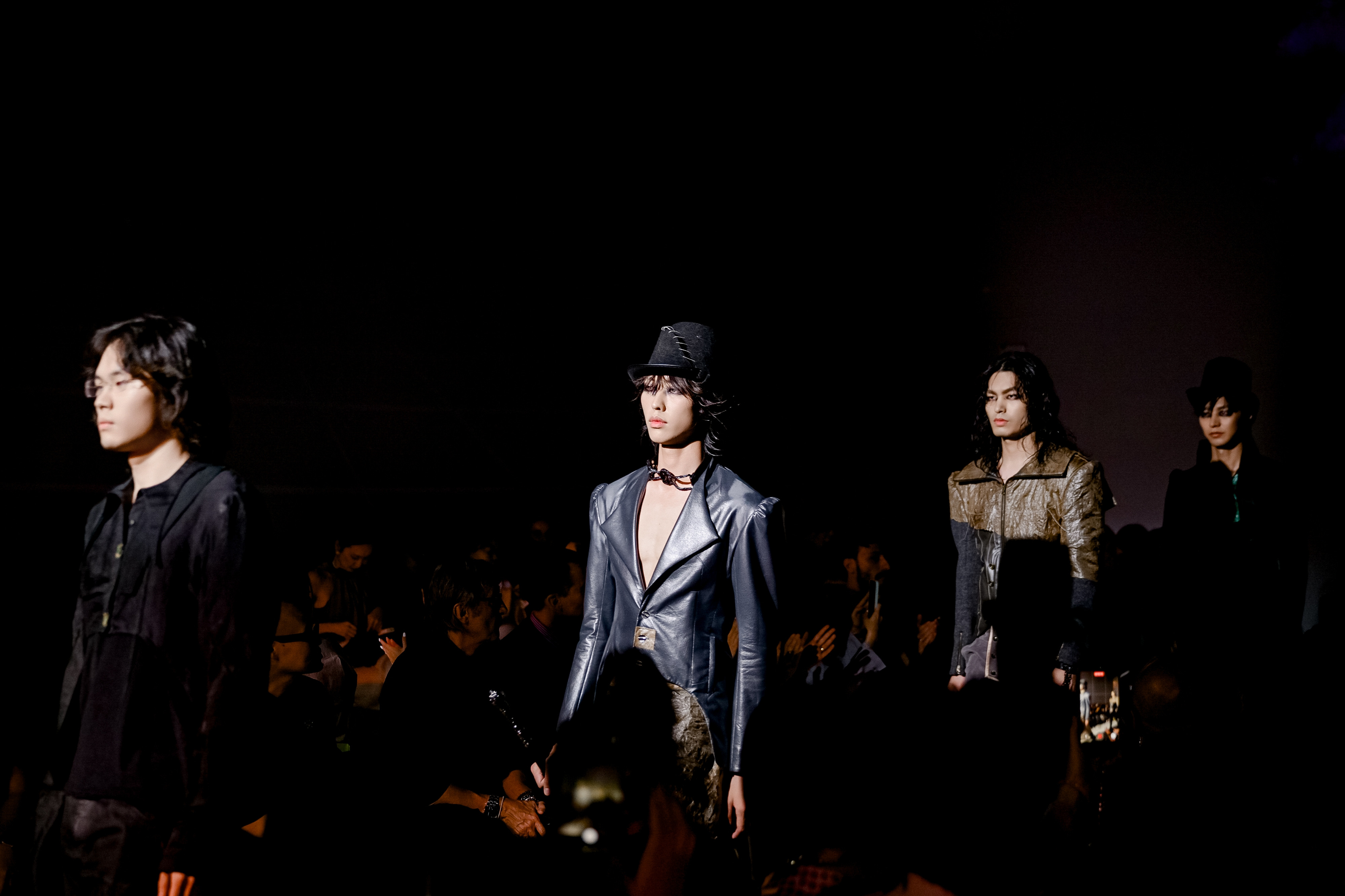
The ten graduating designers whose collections anchored the show were Ao Dongwei, Chen Qianyu, Chen Xinyan, Chen Yikun, Chu Jiayu, Liu Ziqi, Natlie Sung, Qin Ruiyang, Sun Jiaxue, and Wang Yanfei. Each brought a distinct creative language to the shared themes. Programme Leader Lesley de Freitas was direct about the school’s educational priorities: “Fashion education should celebrate individuality rather than conformity, encouraging each student to cultivate a distinct creative voice rather than reproduce established aesthetics.” The market readiness of the collections alongside their conceptual depth was, she noted, a product of that approach.
Industry partnerships added concrete material dimension to several of the collections. Scabal, the European luxury fabric house, provided fabric support for one of Qin Ruiyang’s looks. SynMetabio, a materials innovator, supported a complete look by Liu Ziqi and contributed accessories for both Qin Ruiyang and Natlie Sung, drawing a direct line between experimental practice within the school and active industry relationships outside it.
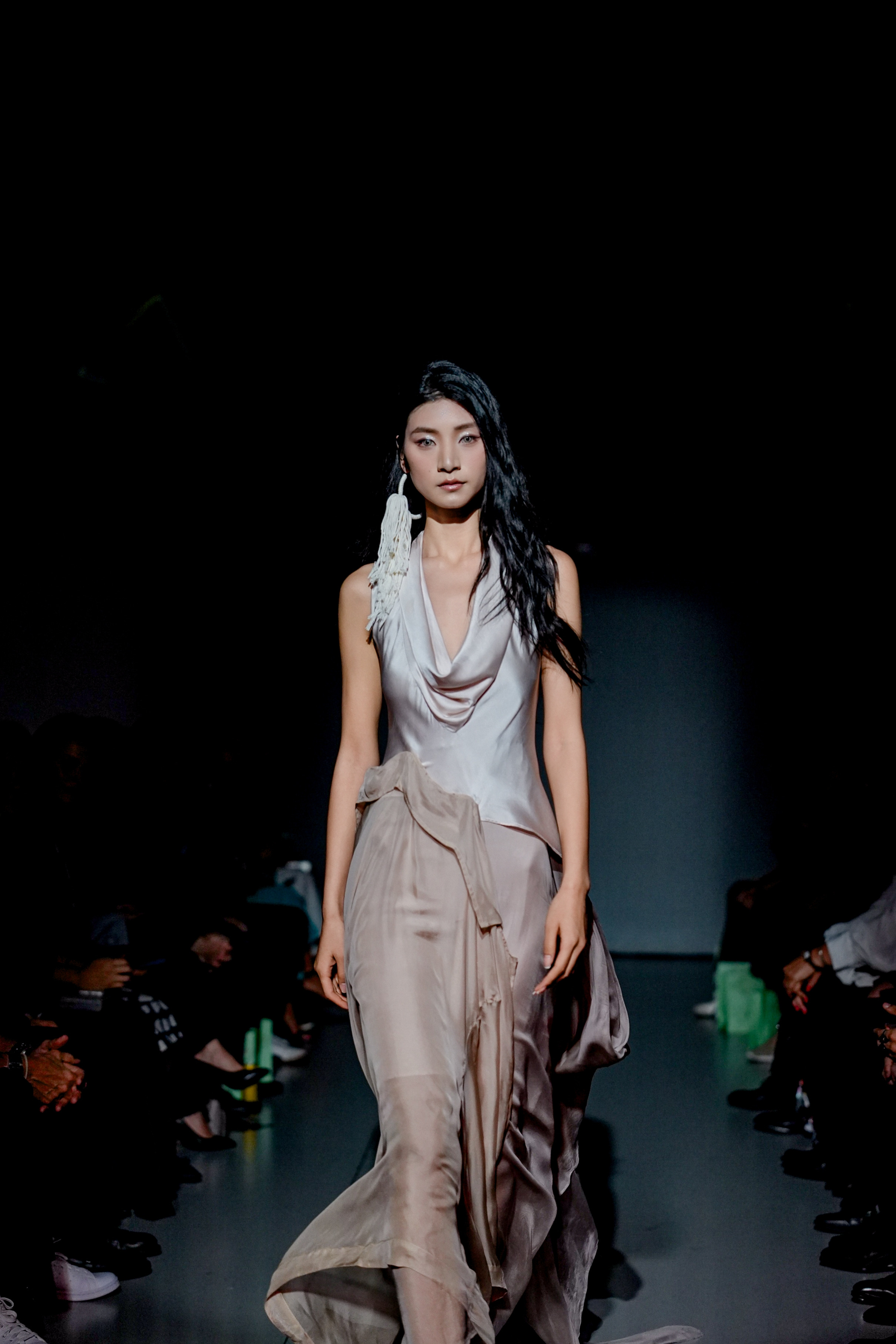
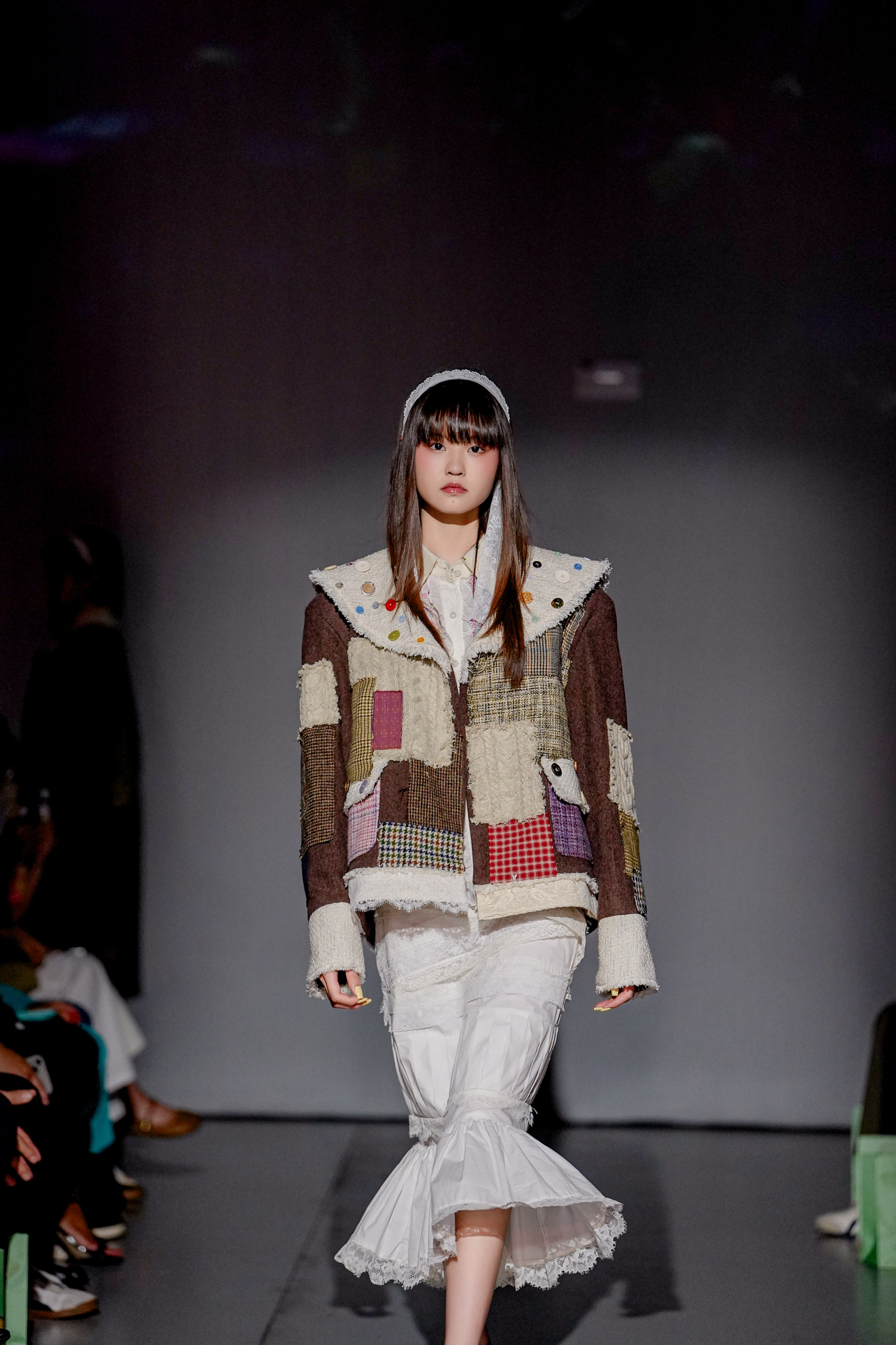
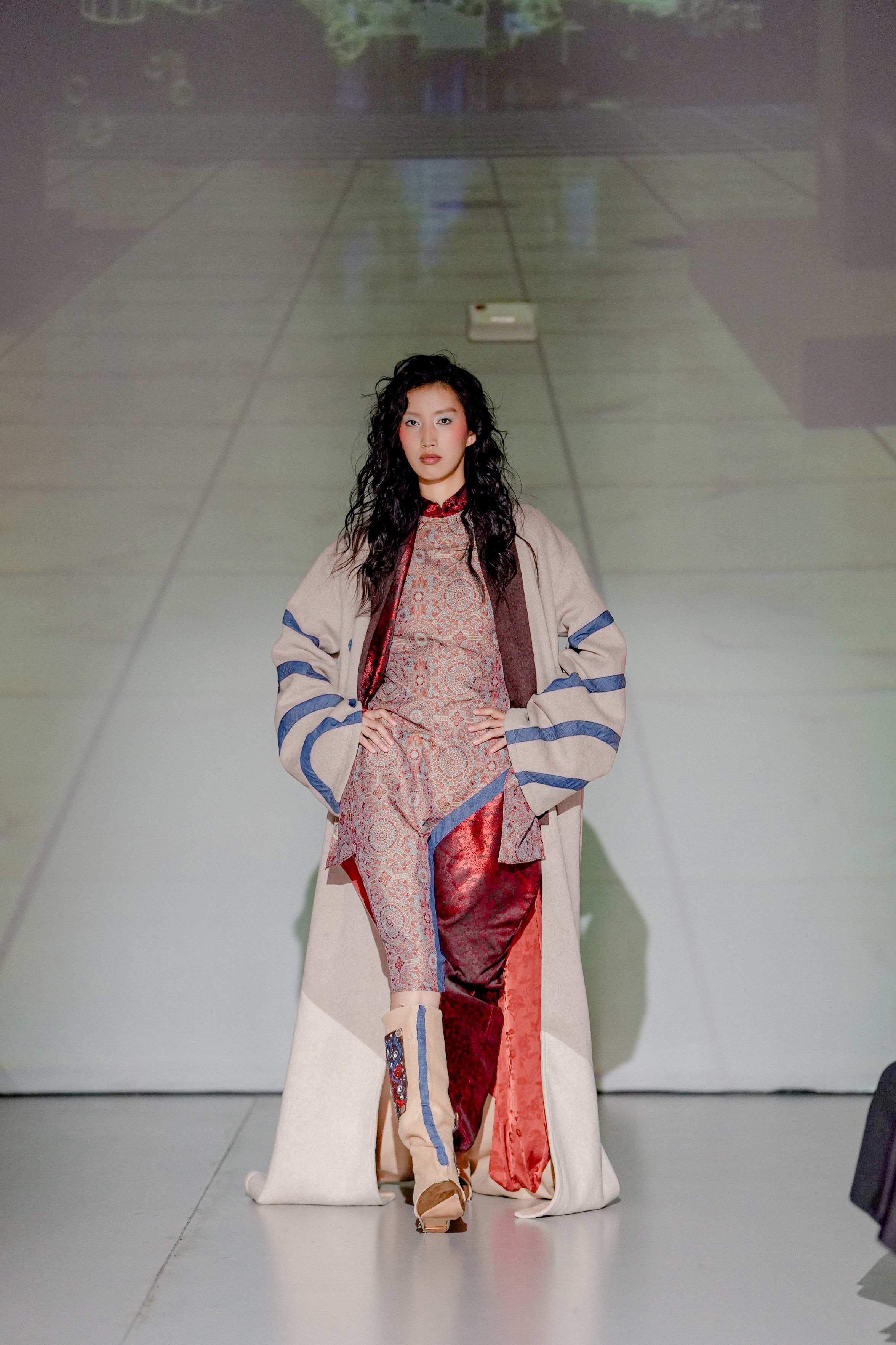
Following the show, a formal awards ceremony recognized three graduates. The Consulate of Italy in Shanghai presented Liu Ziqi with the Best Designer of the Year 2026 Award. The Consulate of Belgium in Shanghai awarded Qin Ruiyang the Best Corporate Collaboration Award 2026. The Franco-Chinois Honorary Award, presented by the Consulate of France in Shanghai, went to Zhang Han, a member of the inaugural 2022 cohort from the ZSTU–Istituto Marangoni Joint College. Zhang Han’s graduate collection, first shown in May, drew on the traditional Chinese philosophical pairing of the square and the circle. The work used drawstring systems to shift modular forms, incorporated handcrafted motifs made with natural pigments, and brought together heritage imagery, the visual language of travel, and sustainable construction methods. The collection read as a precise and considered reinterpretation of Eastern aesthetics for contemporary practice.
The institutional argument running beneath VIA NOMADIS was made explicit by Ying Ting Cheng, Chief Operating Officer of Istituto Marangoni China and APAC: “The purpose of fashion education is to cultivate transferable aesthetic thinking and a broader understanding of lifestyle. Design skills extend far beyond fashion, enabling students to navigate and adapt across different creative fields.” That claim sits at the center of the school’s position on what design education needs to produce in the current moment, as AI reshapes creative workflows and the boundaries between fashion, spatial design, technology, and retail continue to shift.
Istituto Marangoni Shanghai, established in 2013 at The Roof, Jean Nouvel’s mixed-use development in the city, has operated since its founding as the group’s first campus outside Europe. VIA NOMADIS, as both title and event, reflects the school’s current priorities clearly: the next generation of designers will need to understand and shape not just garments, but the full context in which those garments are encountered.