Sri Lanka’s South Coast has a way of holding you – gently, almost wordlessly.
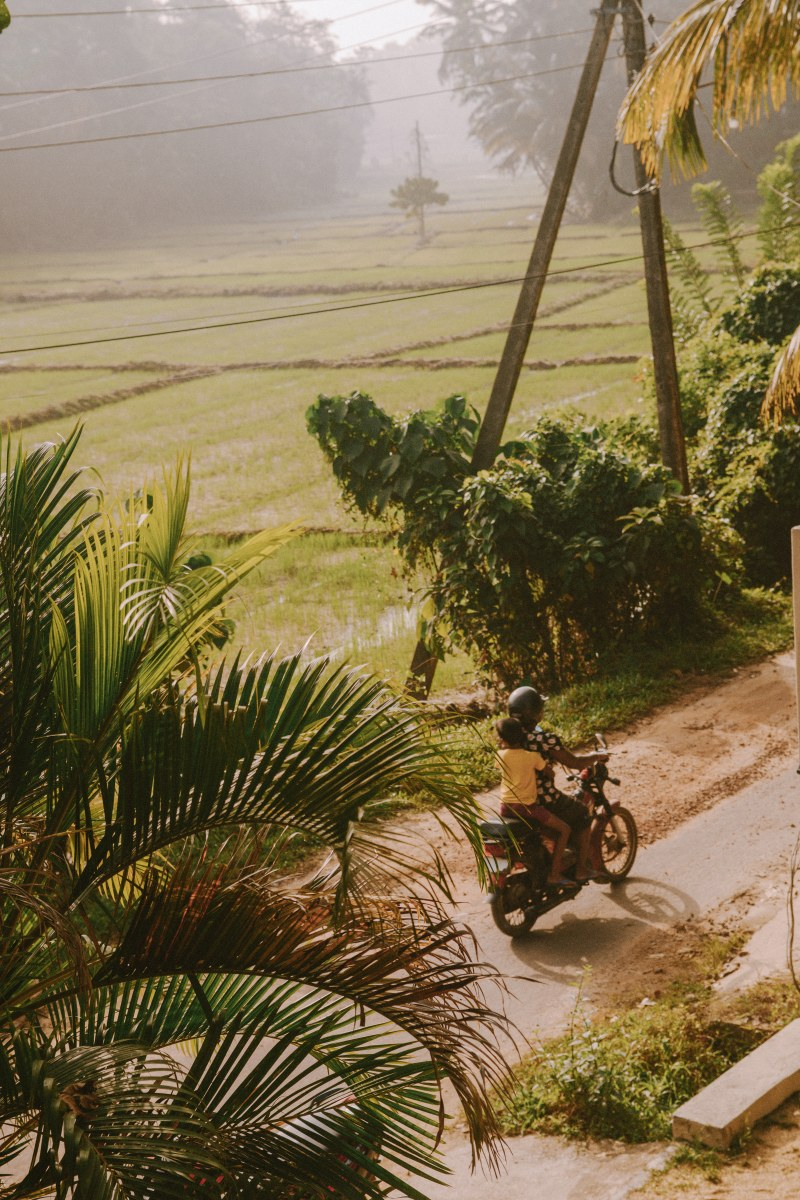
Between monsoon-soaked jungles and the luminous green of the paddy fields, time stretches into something softer, slower, kinder. In the quiet resilience that followed Cyclone Ditwah, the island opens its arms with even more tenderness. Travellers are welcomed not with urgency, but with a simple invitation: stay awhile, belong.
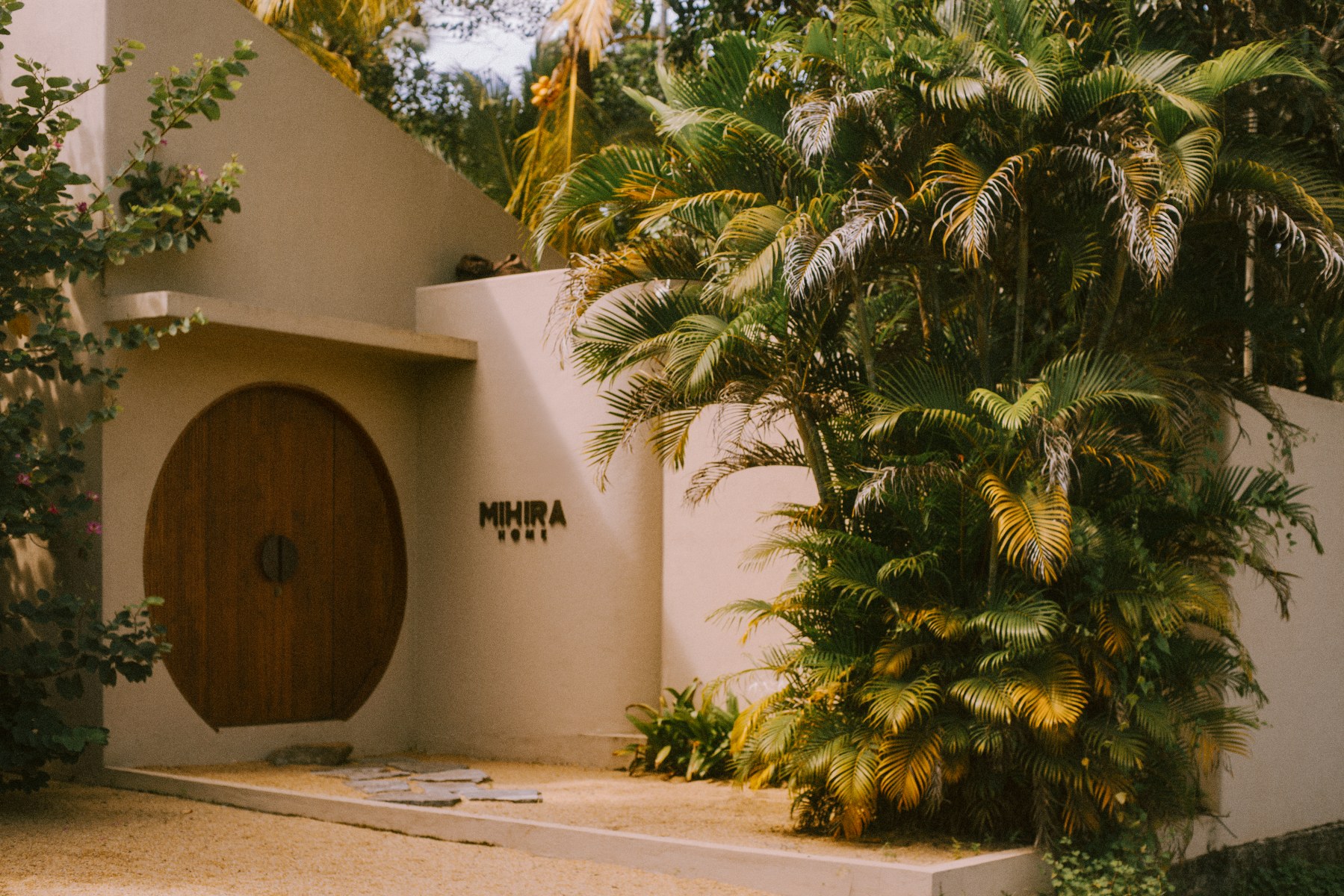
Tucked inland from the waves, Mihira Home rises like a daydream: exotic brutalism brushed with Sri Lankan sunlight. A conscious villa imagined by two young women – Sophie and Ceci – who arrived separately, stayed unexpectedly, and built something that feels both ancient and entirely new. What began as a search for waves and clarity became a refuge for wanderers: a place where minimalism turns sensual, and nature flows through every doorway like a familiar friend. A home for those ready to meet themselves again.
Text and photos by Zsofia Bodnar (@zsofiabodnar_ph)
Left Portrait shot by Issy Croker

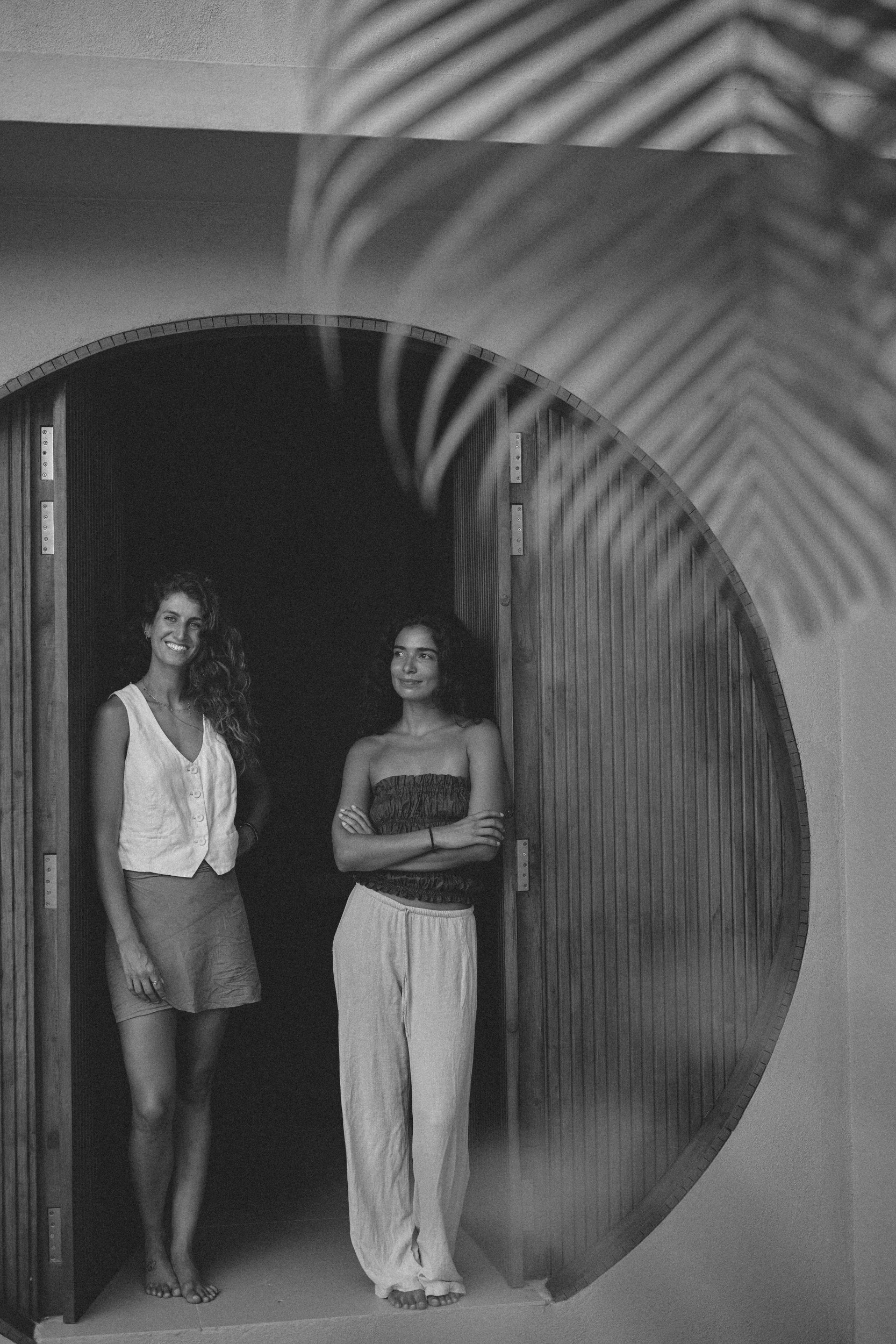
You’re two young entrepreneurs who seem to love travel, quality, and meaningful living. How did you meet, and what’s your story?
Sophie: Ceci and I met in 2022 through a mutual friend, Martina. I had met Martina a few years before in El Salvador, and she was actually one of the main reasons why I decided to initially come to Sri Lanka. She had lived in Sri Lanka for many years and was one of the founders of Sea Sisters, an organization that teaches Sri Lankan girls how to swim and surf. Ceci and I quickly connected, being both Italian and on a similar journey of falling head over heels for surfing and loving everything about Sri Lanka. We started surfing together, and would occasionally meet for a sunset drink or dinner with friends. We both had dreams of creating something just like what Mihira is today. A home, first and foremost, but much more than that. We wanted a space that helped people to connect to Sri Lanka’s culture and nature.
Ceci: I was coming from a hard time, I had just closed my company because of Covid back in Germany and I was looking to find myself again a bit, and like many others on this journey, I landed randomly in Sri Lanka looking for sun and waves. There was something about this place that was different, as if everything was possible. During one of those summer days, with a sunset drink, I met Sophie. We started talking about dreams and ideas and one thing led to another. Up to this day I still feel amazed at how things just moved on flowing — we agreed on so many things, we started searching together for a house, and this idea didn’t seem crazy or scary for either of us. When I looked at Sophie, I could already see Mihira too; she was beautiful, full of creativity and life.
Where is the idea of Mihira Home rooted?
Our aim was to create something different from what we saw around.
“We wanted to create a new hospitality concept where the environment could be an experience for the guests, showing and transmitting what Sri Lanka was for us.”
A place to experience yourself, others, and nature. When we found the place where Mihira is now, we looked for a private oasis, far from the chaos, and this land full of fruit trees was what caught our attention. The way we designed Mihira is meant to reflect a journey where you can be rooted and in contact with nature and with yourself.
What inspired the design and interior the most?
Sophie: I believe that the way a space is designed can marvelously influence the way people feel, think, interact, and connect with each other. When you walk into a space, you immediately get a feeling, just the same as when you meet a person for the first time. I wanted Mihira Home to evoke emotions of calmness, nostalgia, comfort, sensuality, and a quiet, grounded kind of happiness. I wanted the space to bring people together to talk about art, dreams, and emotions, and to help us connect more deeply with Sri Lanka’s culture and nature. Hence the openness to the outdoors, the careful choice of location, the fluidity with nature, and the desire to share bits of Sri Lankan culture through our guidebook or through the events that we host.
“Above all, we wanted Mihira to embrace nature, not work against it.”
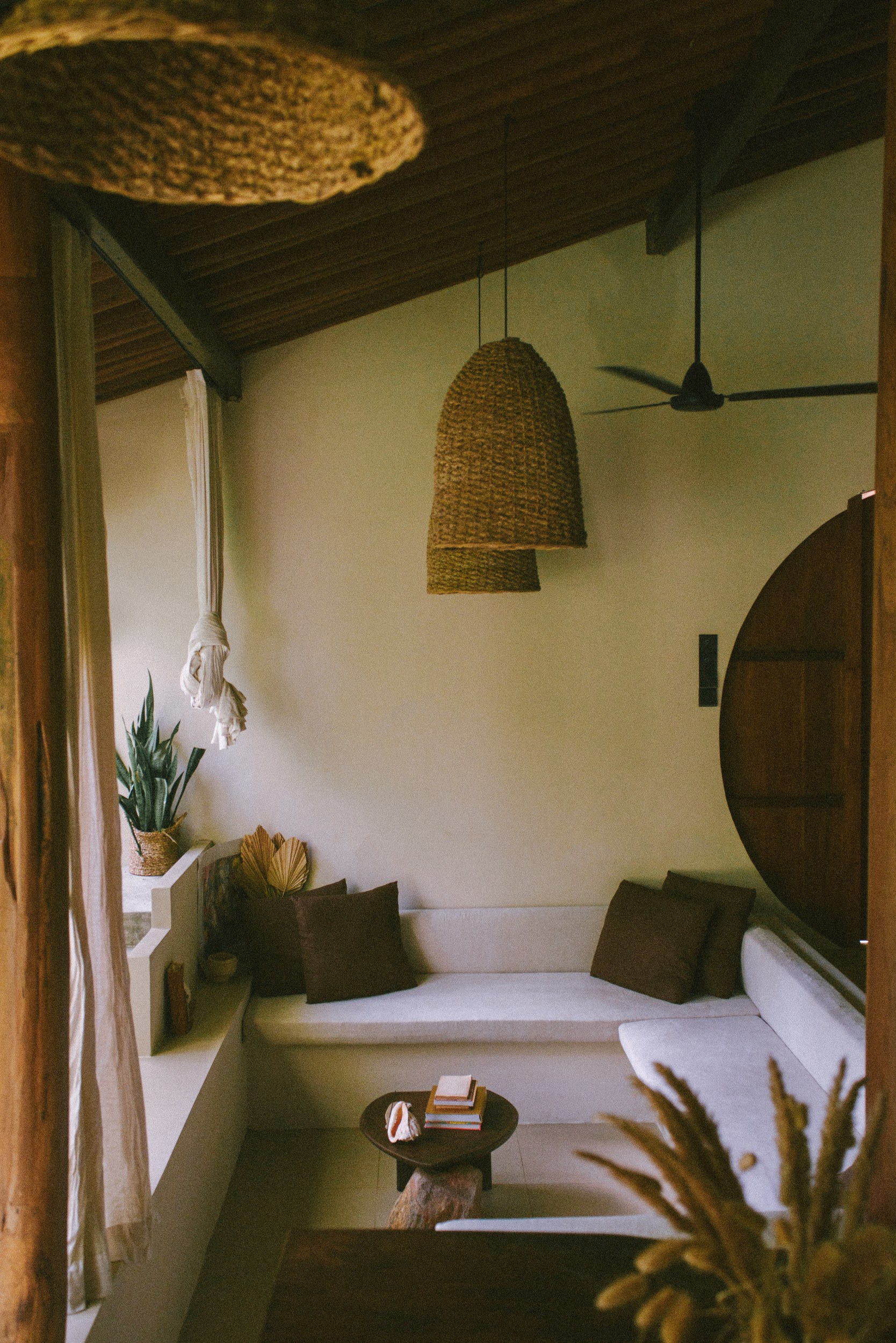
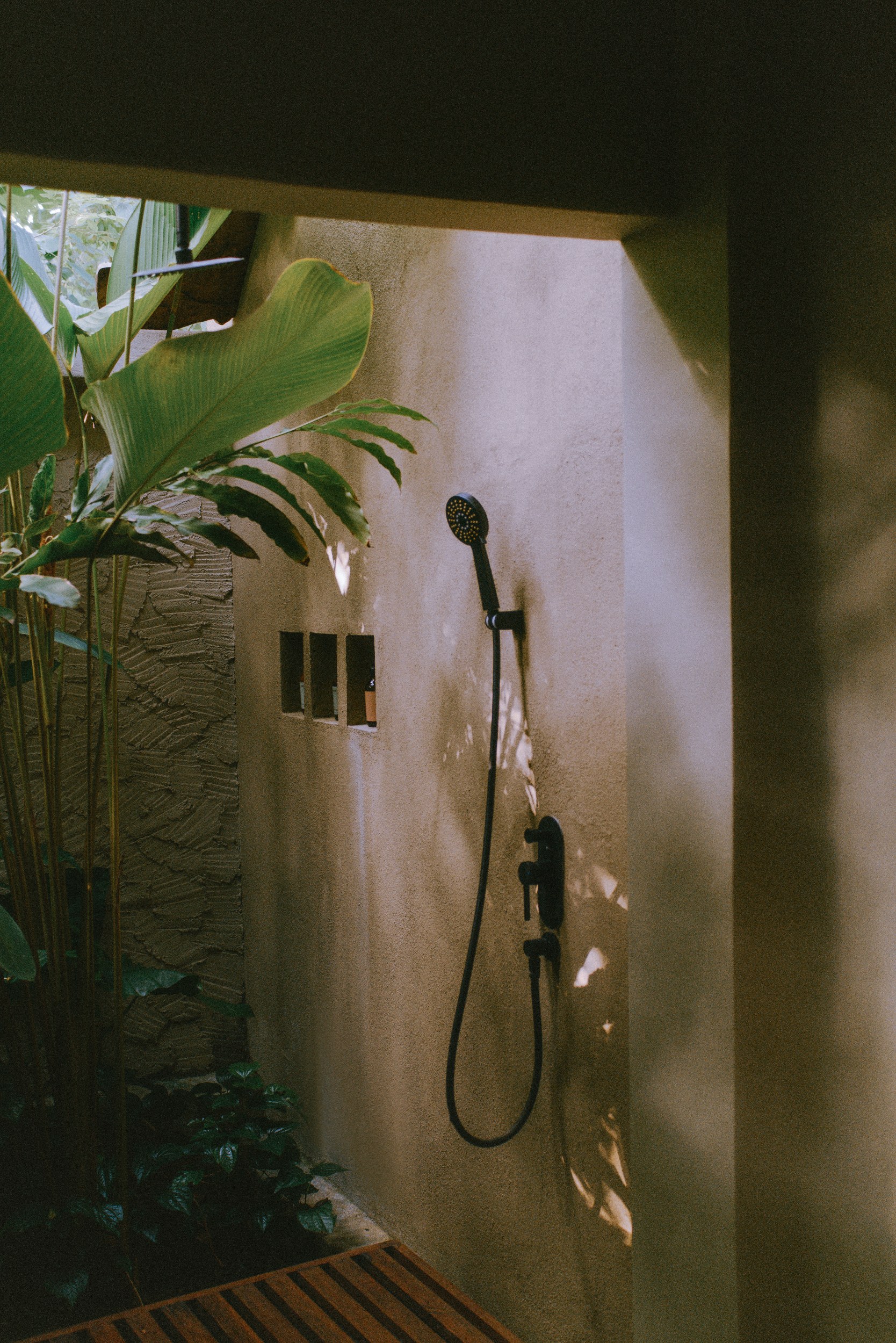
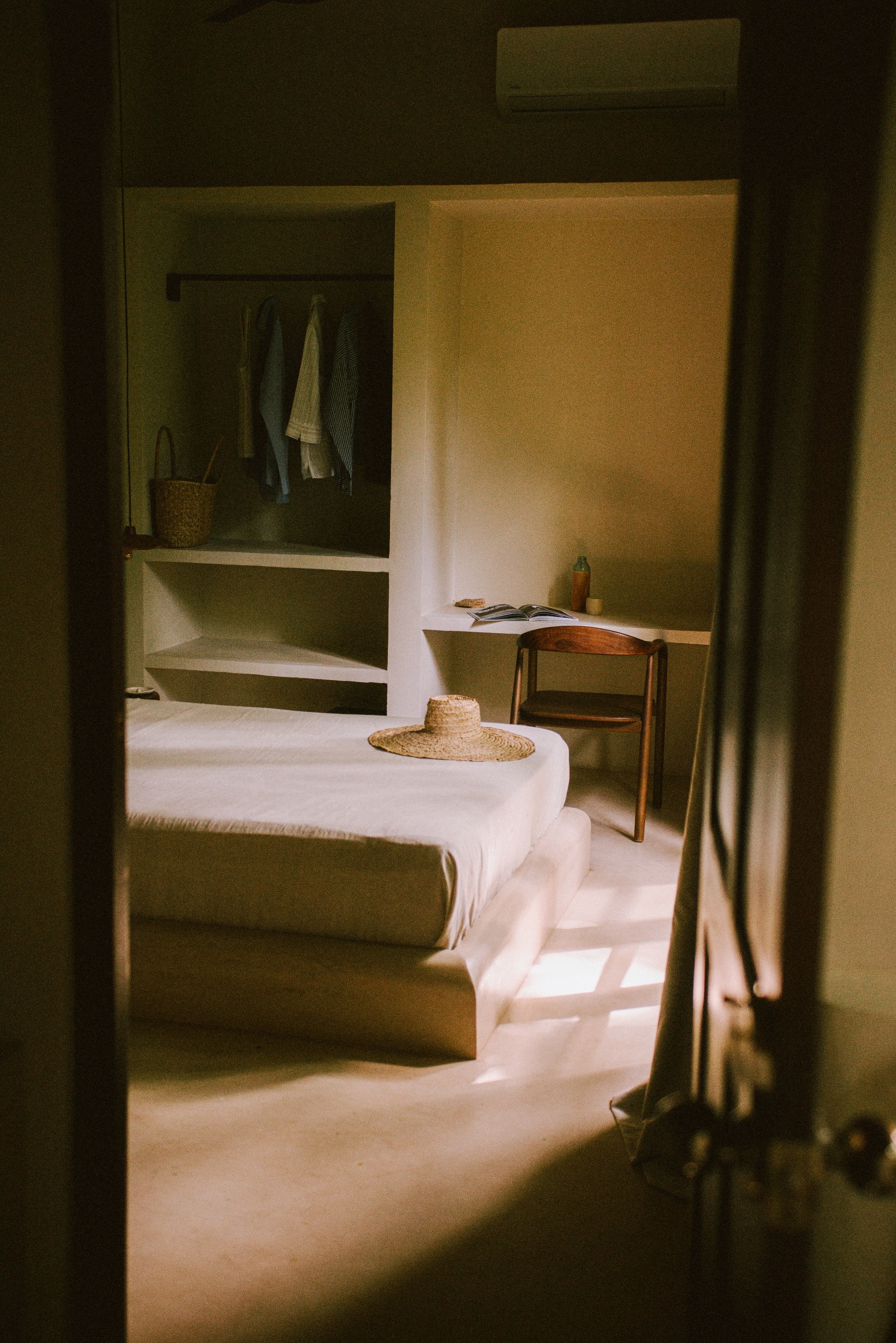
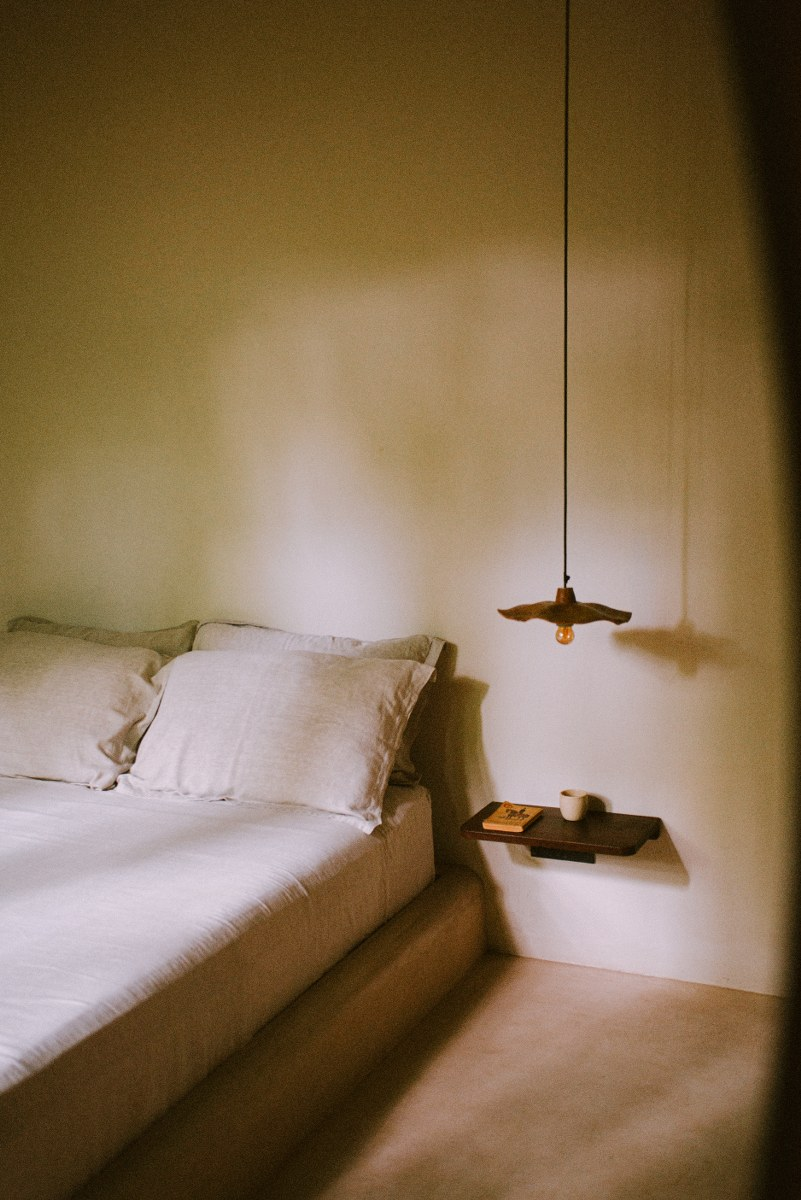
There was already a house on the land, so we worked with the existing structure, allowing that to guide us. If we built more, we built around nature and reused or restored old materials wherever possible. That’s how the hallway ended up lined with old coconut beams that once held up the previous roof, and how the coffee table came to be a refurbished piece of wood paired with a large rock we found in the garden. The free-flowing, imperfect shapes that define nature shaped the interiors too: from the ceramic, off-shaped plates to the circular entrance door that welcomes you in (recalling the moon). The main living space is completely open to the outdoors, bringing together the comforts of an indoor home with the wildness of the surrounding jungle. And the terrace was built simply to give guests a place to star-gaze, or to enjoy their morning coffee while looking out over the paddy fields. Even the selection of the name “Mihira,” which means moonlight/sunlight in Sanskrit, was chosen with nature. At every point where we needed to make a decision about colors, designs, interiors, we would ask ourselves, “What would honor Sri Lanka’s nature the most?”
Ceci:I had a lot of concepts in mind, like for example Slowness and regenerative travel. At the end of the day the main inspiration for me was nature. We wanted an open place where nature would flow inside, with soft shapes and a hearty feeling.
“We wanted to establish a sort of exotic brutalism in a Sri Lankan way.”
Our architect also helped us in shaping our design to use Sri Lankan building techniques for better house refreshment (for example the roof) and helped us understand how to use local and repurposed materials.
What would you suggest to someone in the city who wants to slow down and bring a touch of island calm into her own life?
Sophie: As I mentioned before, the space you choose to live or be present in has an enormous influence on how you feel, think, and interact. So first and foremost, I need a space that transmits to me the feelings I’m looking for. If that feeling is calmness, then I would find the calmest place in the city, whether that be a library, a park, a cafe, my bedroom, or at the top of a skyscraper. Because those still moments in between the noise have so much to offer. They bring peace in all the chaos and offer time to really appreciate the wonderful experience of connecting with yourself, others, and nature (if accessible). If I was looking for energy or creativity, then I’d go elsewhere, maybe a busy market, a gallery, or just sit on a bench on a busy street.
Then, from there, it’s up to each person to choose how they want to bring a touch of island life into their world in the city. For me personally, island life means rawness, minimalism, and quiet internal thoughtfulness. It means reducing my consumption and making space for the things I love, like journaling, reading, drawing, or listening to nature in movement. It means buying locally grown, seasonal fruits and vegetables. It means crafting and creating with materials from nature, like wood, seashells, wool, dried flowers. It means trying my best to spend less time on my phone. And it means spending a lot of time with just myself.
Ceci: Mihira was built exactly for that. We believe that travelling is not only about seeing new places and their beauty. For us,
“travelling should be about experiencing something you don’t get in your everyday life.”
We invite people to come to Mihira and immerse themself in the nature of Sri Lanka. Ahangama is a place where people like to stay, soak in the exotic life, and walk barefoot. We want people to come to Mihira to experience all of that and to come back with a better understanding of who they truly are as human beings, as couples, families or friends, and of what Sri Lankan culture represents.
Whom would you invite as a guest to Mihira Home – anyone, alive or gone, an icon or a muse?
- Sophie: My all-time favorite muse is Frida Kahlo. Being of Mexican heritage, I feel a special connection to her. Her energy, her boldness, her resilience, and her way of celebrating life’s contradictions feel close to my own roots. She’s someone who embraced the raw and the beautiful, the joy and the pain, and that’s exactly what I hope Mihira offers: a space to feel deeply.
How do you imagine a perfect day in Ahangama?
- Sophie: My perfect day usually has a sprinkle of movement, good coffee, quality conversations with people I love, cooking and sharing, and beautiful views. I’d wake up around 6:30/7 am and immediately make myself a small yoghurt with homemade granola and some local fruit, and brew up some coffee in my moka pot. I’m trying to incorporate daily journaling, it doesn’t always happen, but on my ideal day, I’d take a moment to journal.
Then I’d hop on my scooter and go in search of waves. I’d surf for maybe two hours max. After that, I’d see where my friends are and meet up with them for my second cappuccino of the day and talk about life. Typically we head to Kaffi, as I love their outdoor area and it’s right in front of a wave I like surfing.
On my way back home I’d stop into town to pick up any vegetables or fruits I’m missing. I always go to the same spot and am always welcomed with the biggest smiles and quick conversations about how life is going. They almost always give me a few extra limes or bananas.
In the afternoon I would likely read and go to the beach. I also love snorkeling, so I’d probably snorkel a bit too. Then I’d meet up with a friend for a sunset drink. After that I’d head home, make some dinner, and invite friends over to share. And quite honestly, I love dancing, so I’d end my evening dancing to some live music. Trax usually has some great sets, and it’s always a good vibe to finish the day on.
- Ceci: My perfect day in Ahangma starts with early morning surf session, a pancake breakfast with friends, reading a book close to the fresh pool air in Mihira garden, working on my next project, watch the sunset at the beach.
Why Sri Lanka? How did you discover this serene spot by the paddy fields, close to the ocean yet peacefully tucked away?
- Ceci: Sri Lanka was so random, and as with every random thing that just happens, it tends to be the best in life. When I arrived, I met so many people in a very similar place to where I was — looking for something that here was easy to find: connection with yourself. When looking for the house, we searched for a place where you could not hear the noise of the city, and once Sophie spotted this place in front of the beautiful paddy fields (which in Sri Lanka are protected environments where people are forbidden to build), we fell in love. The only challenge we had then was to build a cozy spot where you could enjoy the view and the birds that frequent it in the morning — hence the reason for our terrace.
- Sophie: I chose to visit Sri Lanka because I wanted to surf in warm, tropical nature, and a friend of mine, who I had met in El Salvador years before, had spoken beautiful things about the country. But I had no idea I would end up staying that long or calling it home. That part was a beautiful surprise.
I chose Sri Lanka to be the home for Mihira because of how comfortable and safe I felt here. The people, the warm smiles, the easiness of life, the waves, the sunsets in silence over the paddy fields. This is why Sri Lanka for Mihira.
I’ve been here for two months and noticed many people from abroad in their thirties choosing the South Coast as their long-term home. Have you ever imagined settling here, or do you prefer to stay constantly in motion?
- Ceci: Sri Lanka is for me “home” in a very special definition of this word, hard to understand for many — a place where I feel grounded and at peace, where special people are. It will always be a place I come to every year, a reminder of who I really am. I can imagine in the future spending more time there than my usual time per year.
- Sophie: The word “home” has always had a different meaning for me. I’m Mexican and Puerto Rican by blood, born and raised in Italy, and moved to the United States when I was 16. Because of that, home isn’t defined by a location, but by people, and I have people I love everywhere, which is one of the main reasons why I move constantly. I think that’s true for many people nowadays as well.
That said, I love being constantly in motion. I do see myself settling at some point, and Sri Lanka is the place where I imagine spending half the year. The other half would likely be closer to where my family lives.
And lastly, what are you both working on at the moment? Any future plans you’re excited about?
Ceci: My dream would be to build a concept similar to Mihira in Europe, bigger and with more options for different experiences. A place for inspiration, for finding yourself, for experiencing design and creativity. And I could not imagine doing this with anyone else but Sophie and why not in the land we come from – Italy
Sophie: Same as Ceci mentioned, we share this vision of making Mihira bigger than it is now. Where and when, we’re not exactly sure — for now, we’re letting our boldest dreams guide us and seeing where they take us. We only just opened in February 2025, and these first few months have been wonderful — the space is getting booked out, and we’re establishing Mihira Home as a place for retreats and events that celebrate culture, creativity, and nature in Sri Lanka.
When we imagine the next steps, some ideas we’ve had are of a boutique hotel, a treehouse, opening Mihira in Europe, or even a collection of Mihira furniture that brings the essence of the home into other spaces. These are just ideas, but they all feel reel and part of how we would like to grow.