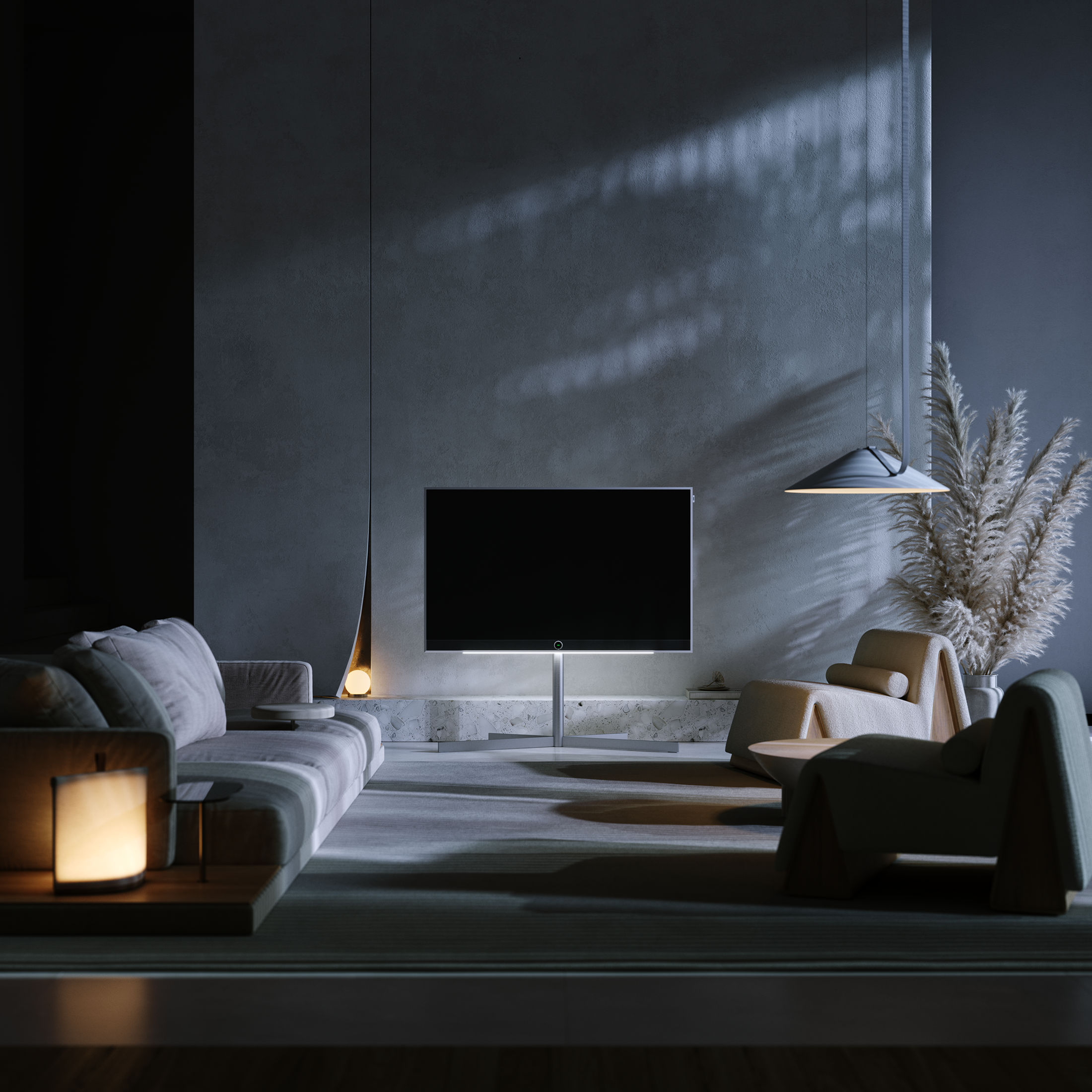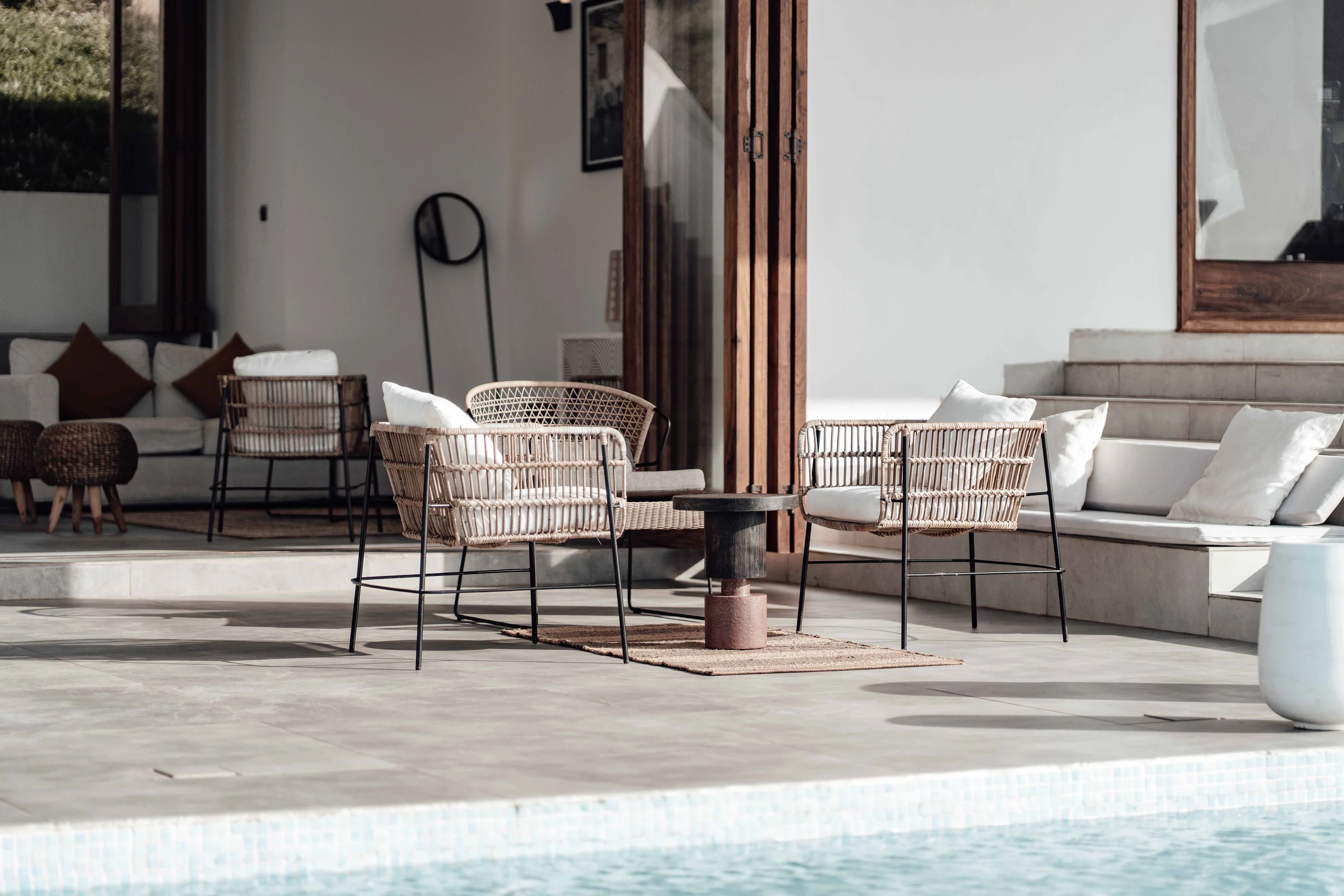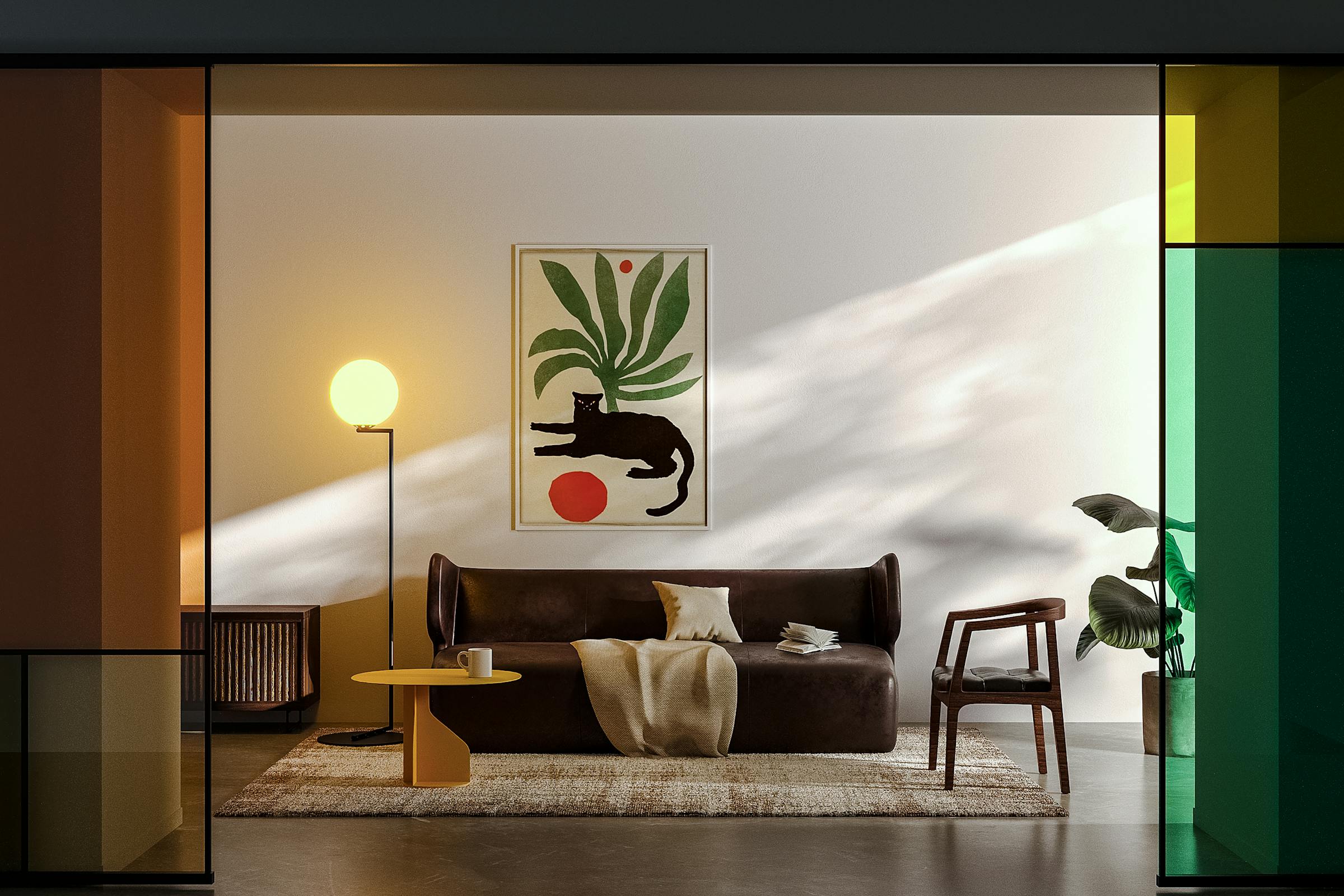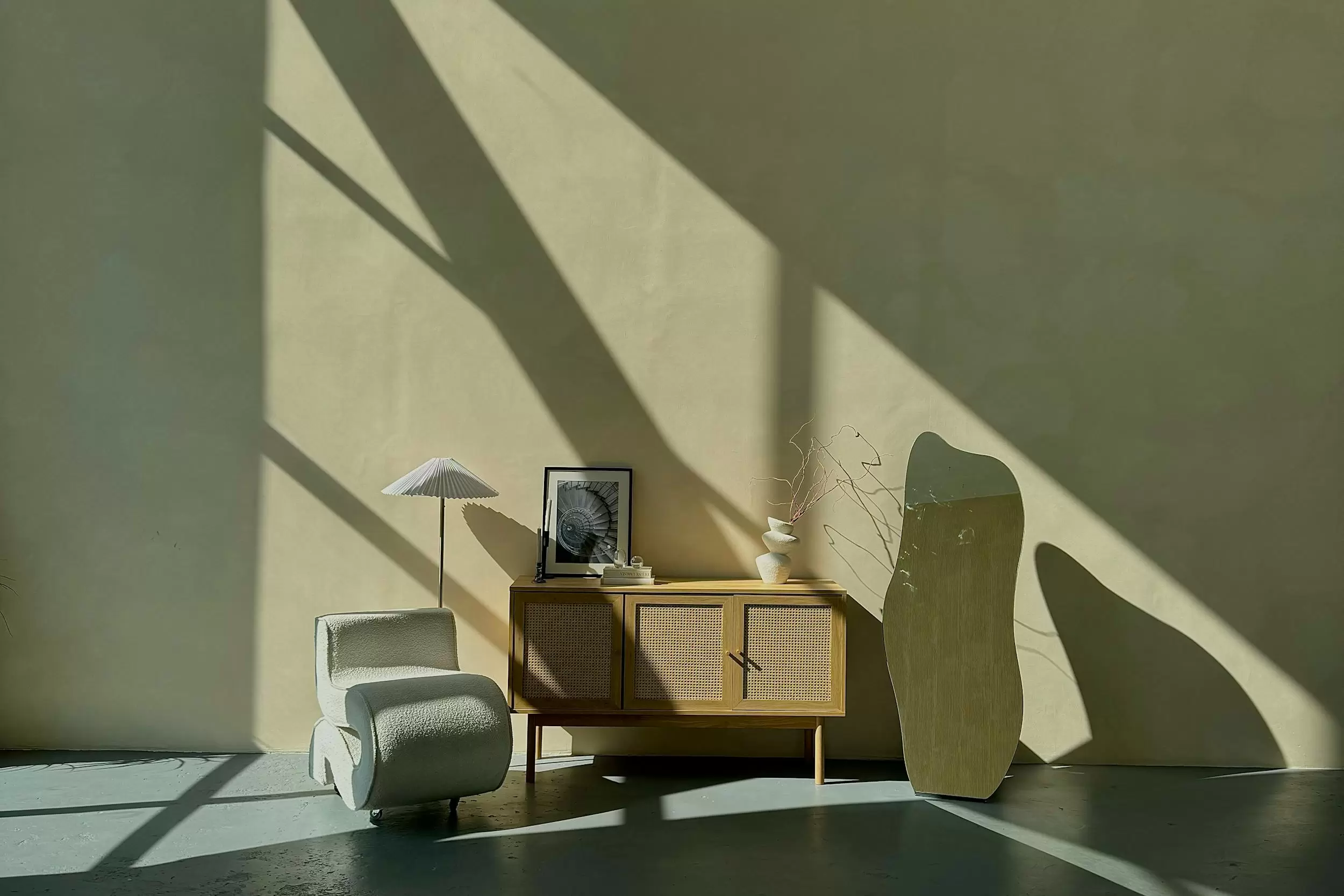
Before colour enters a room, before any object is placed on a shelf or any fabric pinned to a wall, the materials already in the space are already speaking. The weight of a stone table. The particular warmth that wood brings to a surface. The way a curved upholstered sofa seems to hold the air around it differently from one with clean angular lines. These things register before the eye has consciously named any of them.
The emotional register of form
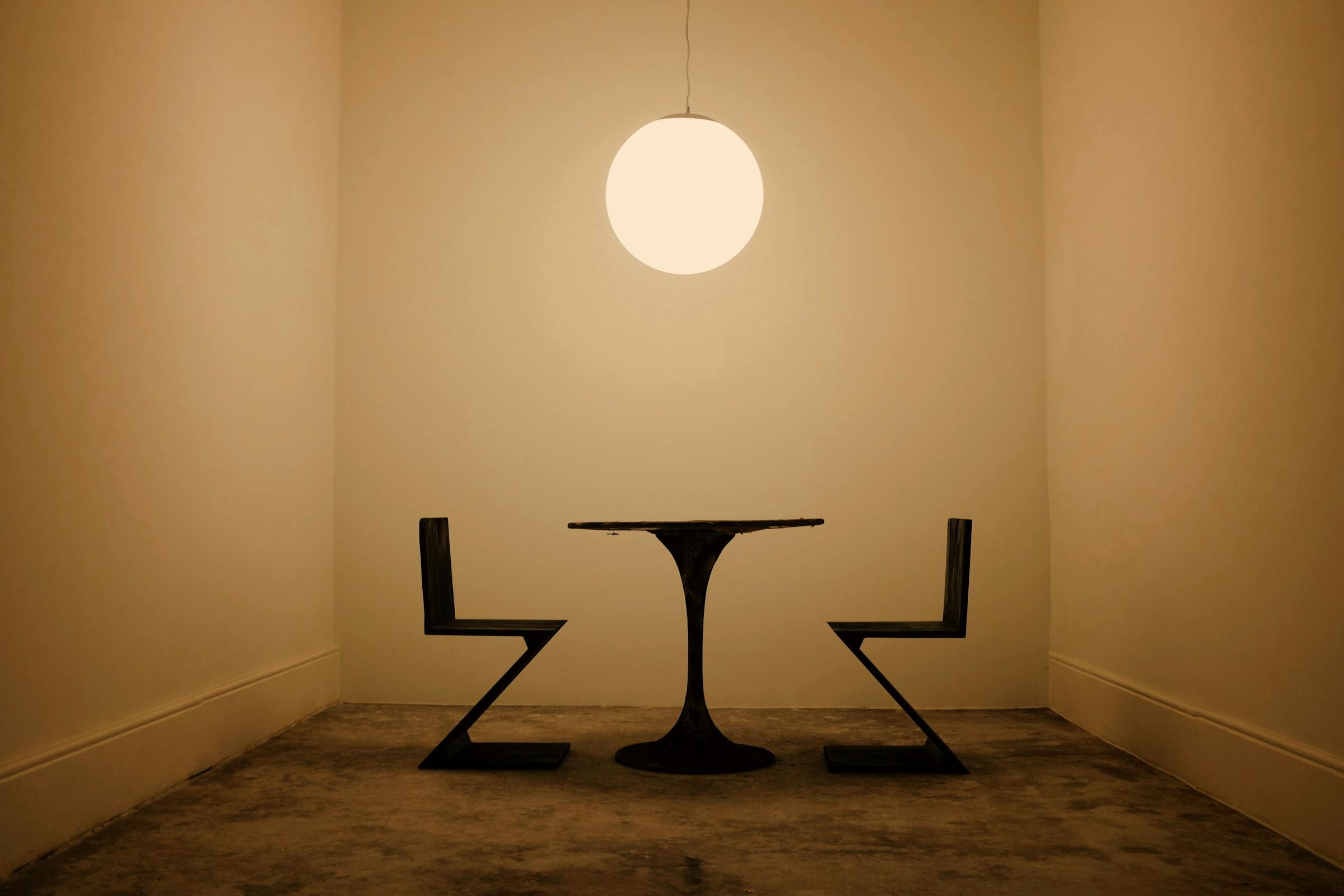
A dining table with a thick stone top and tapered legs makes a specific claim about how evenings should feel. One built from pale timber with a visible grain makes a different claim entirely. The weight sits in different places, the eye follows different paths, the room arranges itself differently around each piece.
Proportion does this work as much as material does. A low, wide sofa changes the vertical dynamics of a room — it tilts the space toward ease, toward the horizontal, toward a kind of room where people are expected to settle rather than sit upright. A piece with more height and visible structure creates a different register, one that feels considered rather than casual. Neither is better. They are different sentences.
Before a collection is photographed, styled, or introduced to an audience, designers and brands may work with a 3d rendering firm to explore how proportions, materials, and atmosphere will read in a complete visual scene. The ability to see whether a material story reads as intended — whether a piece looks lush or heavy, grounded or floating — before the physical object is finished changes what is possible in the development process.
What each material carries
Wood carries warmth, but the character of that warmth shifts considerably across varieties and finishes. Raw-edged oak reads differently from lacquered walnut. Bleached ash does something else again — cooler, more northern, somehow more reserved. All of these are wood, but they are not the same mood.
Stone introduces a quality that no other material replicates regardless of how closely it is approximated: a sense of geological time. Even a modest stone element — a tabletop, a small pedestal — settles a room in a way that references permanence rather than fashion.
Glass lightens without softening. It allows the eye to travel through a surface rather than resting on it, which creates a particular kind of spatial openness that is very different from the openness created by leaving a surface empty. And metal sharpens. Brushed brass beside linen upholstery lands differently than polished chrome in the same position — one is quiet and material, the other more declarative. The distinction matters, and designers who work with materials understand that it matters.
Fabric and upholstery absorb. A room with significant upholstered surface area — a deep sofa, a generously proportioned armchair, curtains with some weight to them — feels gathered in a way that harder surfaces cannot produce. Sound behaves differently. Light behaves differently. The room holds its occupants rather than surrounding them.
The texture shift
Many of the most compelling rooms of recent years have moved away from surfaces that primarily reflect light toward surfaces that hold it. Boucle beside plaster. Rough-hewn stone beside fine joinery. A velvet cushion on a linen sofa. The layering is not chaotic — it is calibrated, each texture in conversation with the ones alongside it.
Part of what drives this is tactility: the desire for rooms that appear to be interesting to touch, not only to photograph. A room built entirely from hard and reflective surfaces offers the eye nowhere to rest. Layered textures provide movement and depth without requiring additional colour or pattern to achieve it.
Contemporary interiors are also responding to a particular kind of visual exhaustion — the flatness of spaces that were designed more for documentation than for habitation. The rooms that feel most alive now tend to have a material complexity that resists being adequately captured in a single image, which makes them more interesting to be inside.
Light and the shifting material story
Materials look different throughout the day, and a room designed without accounting for this is working with only part of its visual range.
Morning light on pale linen is not the same as the same linen under low evening lamps. The grain of a wood floor shows more at a low angle than at noon. Stone, which reads as cool and static in midday light, can pick up a warmth after sunset that seems almost at odds with the material itself. Brushed metal shifts between warm and cool depending on the temperature of the light surrounding it.
A sculptural lounge chair placed where it receives natural light at a particular hour has been given a context that changes how it reads — and changes again when that light is gone. Furniture placement in relation to windows, and the layering of artificial light sources, belong to the material story as much as the pieces themselves do.
Tone, not just colour
The distinction between cream boucle and white plastic seems obvious stated directly, but the gap is easy to underestimate when choosing from swatches and product pages. Both are approximately the same colour. The difference is in tone, surface character, and the warmth that one material carries and the other does not.
Dark walnut and black lacquer are close in value but completely different in effect. One is organic and directional — the eye follows the grain, the surface varies across itself. The other is flat and absolute, equally dark from any angle. Brushed brass and polished chrome sit in a similar colour territory but suggest different attitudes toward luxury entirely.
These are the distinctions that give a room its register without making any single piece dominate.
Furniture as a visual story
The way furniture is presented has begun to resemble editorial storytelling. The pieces in the most considered lifestyle images are not simply products placed against backdrops — they are elements within a composed scene, where the light arrives from a specific angle, where surrounding materials have been chosen to create particular relationships, where the space around the furniture has been as deliberately considered as the furniture itself.
This matters because much contemporary furniture is encountered through images before it is encountered in person. The atmospheric work that would once have happened inside a showroom now happens earlier, in the presentation — and the material story has to read in a photograph, sometimes at the scale of a phone screen, before it can be experienced at the scale of a room.
What a room says through its furniture is often the first and most lasting thing it says. Before the objects on shelves or the pictures on walls, the pieces already in place are already in a conversation — about warmth or restraint, about ease or precision, about how the space understands itself. The materials are the voice.