On the subject of love in the digital age, Mika is a radical muse. To promote his 7th studio release, Hyperlove, Mika navigated a world of gears, robots and digital chaos with theatrical precision. At the collision of the technicolored and the industrial, fans were invited on May 4th to explore Mika’s fantastical surrealist playground—a masterclass in spectacle and sincerity.
Text by Jamie Xie
Photos by Louis Alson


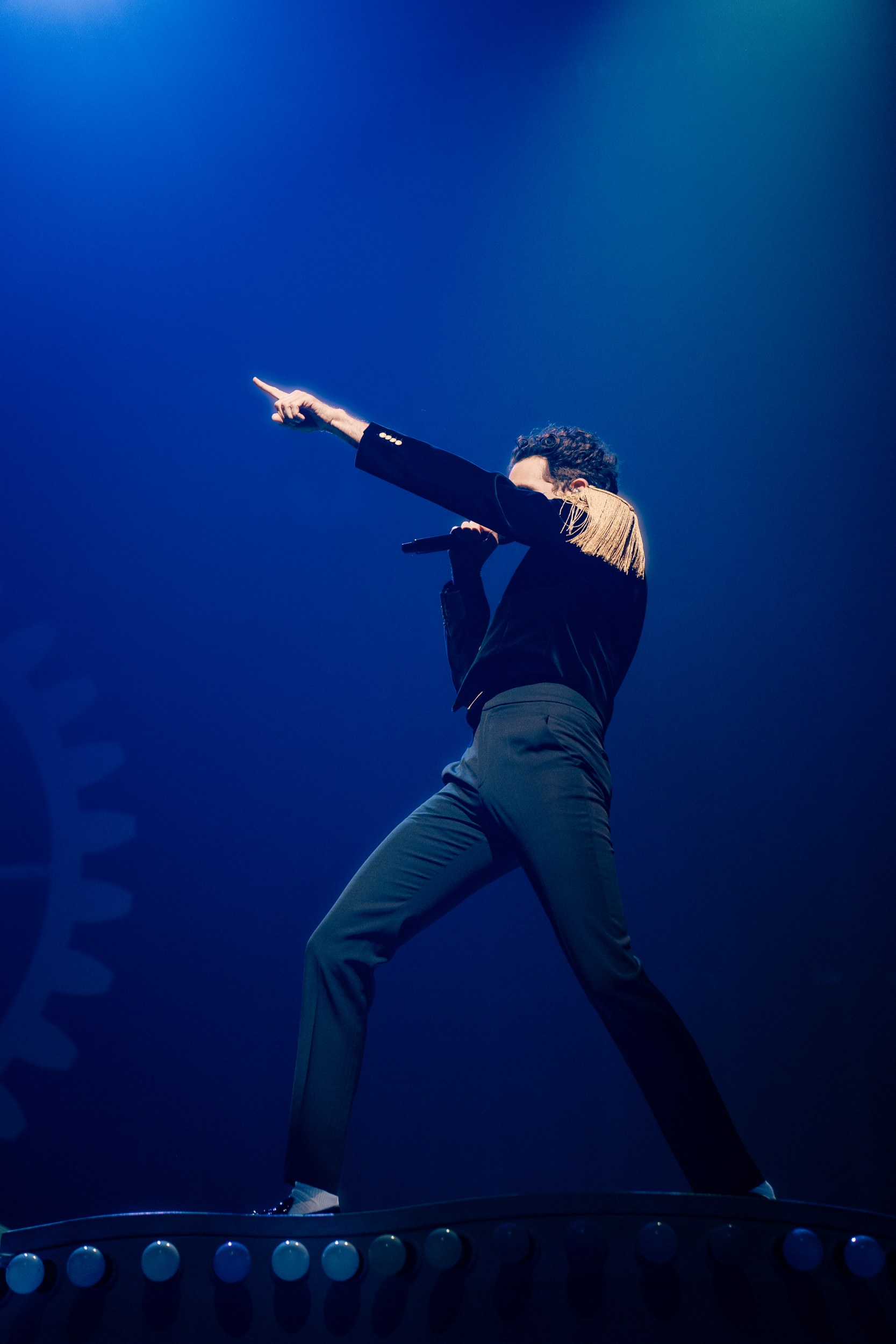
On May 4th, the stage at Place Bell did not so much welcome audiences as it activated for them. Under the soft glow of shifting industrial lights, Mika emerged from a world already in accelerated motion. Framed by a grey clockwork set, the thesis statement of Mika’s new 2026 release Hyperlove—“you are not machines” dominated the stage, as he opened the Spinning Out tour to his hit single “Modern Times.”
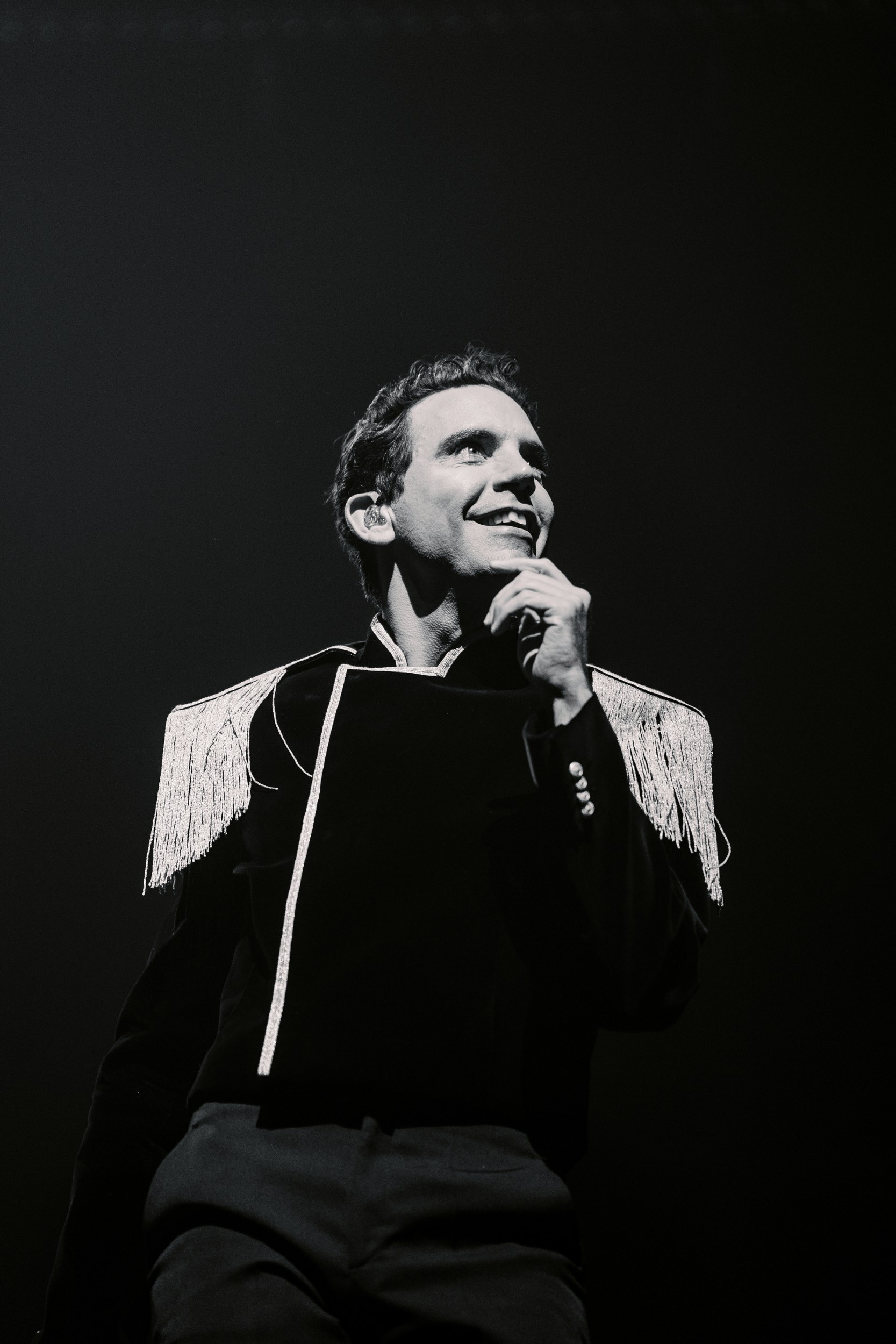
Drawing reference to the Charlie Chaplin film of the same name, Mika leaned into a satirical portrayal of modern industrial life. Dressed like a marching band conductor, Mika delivered a high-energy, technopop soundscape as both an homage to Chaplin and a broader critique of automation and emotional detachment. Embedded with familiar symbols of machinery and repetition, Mika blurred the lines between nostalgia and dystopia to highlight the evergreen tension between human fragility and the relentlessly evolving demands that underscore social progress.
From there, the show unfolded as a series of shifting vignettes. Each expansion of the conceptual world of Hyperlove introduced new textures that would bring the audience further into Mika’s steampunk design. “Eleven” was presented as a pastiche of layered projections, the appearance of a certain bright red pair of lips or an x-ray would interject upon the greyed background to create a collage-like effect. Convulsive light patterns that evoke both digital overload and artistic deconstruction leaned into an avant-garde sensibility. Inspired by the designer Meyerhold, it recalled constructionist staging in its form and meaning but remained firmly anchored in the tradition of pop sensibilities.
The night would take a manic turn, steampunk futurism and vaporwave nostalgia run rampant in “Relax, Take It Easy.” To portray the unsteady anxiety that accompanies living in the modern era, flying trains and other strange futuristic imaginings occupied the screens behind him to create a scene haunted by their grey dystopian outlook. “It’s as if I’m scared, It’s as if I’m playing with fire,” Mika confessed, only to respond to himself with the titular lyric “Relax, Take It Easy.” As a contemplation on the anxiety that comes with living in the modern age, Mika touched on something all too familiar, a fear of what comes next. He approached antiquity and futurism with a unique quirky touch, an odd ball’s fascination with the possibility of a better world.
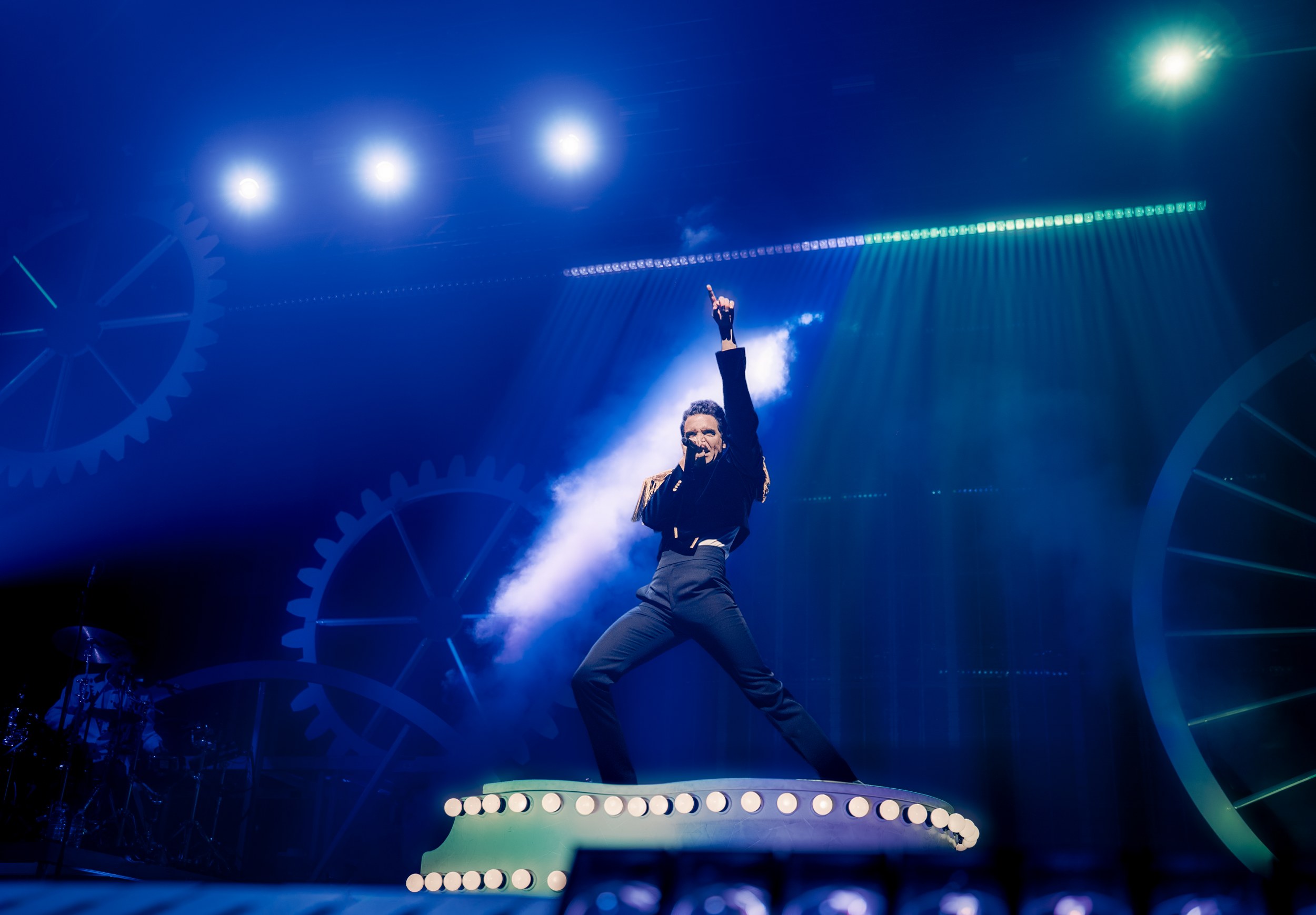
In the titular “Spinning Out,” Mika channeled his signature uptempo electropop into an anthem of empowerment, reframing music as a response to contemporary uncertainty, and the tour more broadly, as an act of collective hope in unprecedented times. The performance returned to a central concern throughout his work: the need for art that speaks to aimless insecurity in an era defined by rapid technological change and digital saturation. Behind Mika, an army of robots marched in stiff mechanical lockstep. The cold repetition crashed against the warmth of the performance. Now more than ever, we need music that speaks to public anxieties—the diffuse fears of social fragmentation and ecological collapse which render art more valuable than ever. Within this context, Mika explored the tension between mechanical social systems and the fluidity of artistic expression, positioning repetition, structure and electronic precision against movement of vocal and cathartic release.
Born in Beirut and raised between Paris and London, Mika developed the kind of transnational identity that has long shaped his approach to pop music. Yet throughout the performance, Montreal emerged as more than just another tour stop. Mika repeatedly framed the city as foundational to his career, recalling it as the site of his first arena show and the place where portions of Hyperlove were recorded. That intimacy carried through the night in his constant call-and-response exchanges with the audience and his unusually physical engagement with the crowd, transforming the concert from a standard arena performance into something far more communal and affectionate.


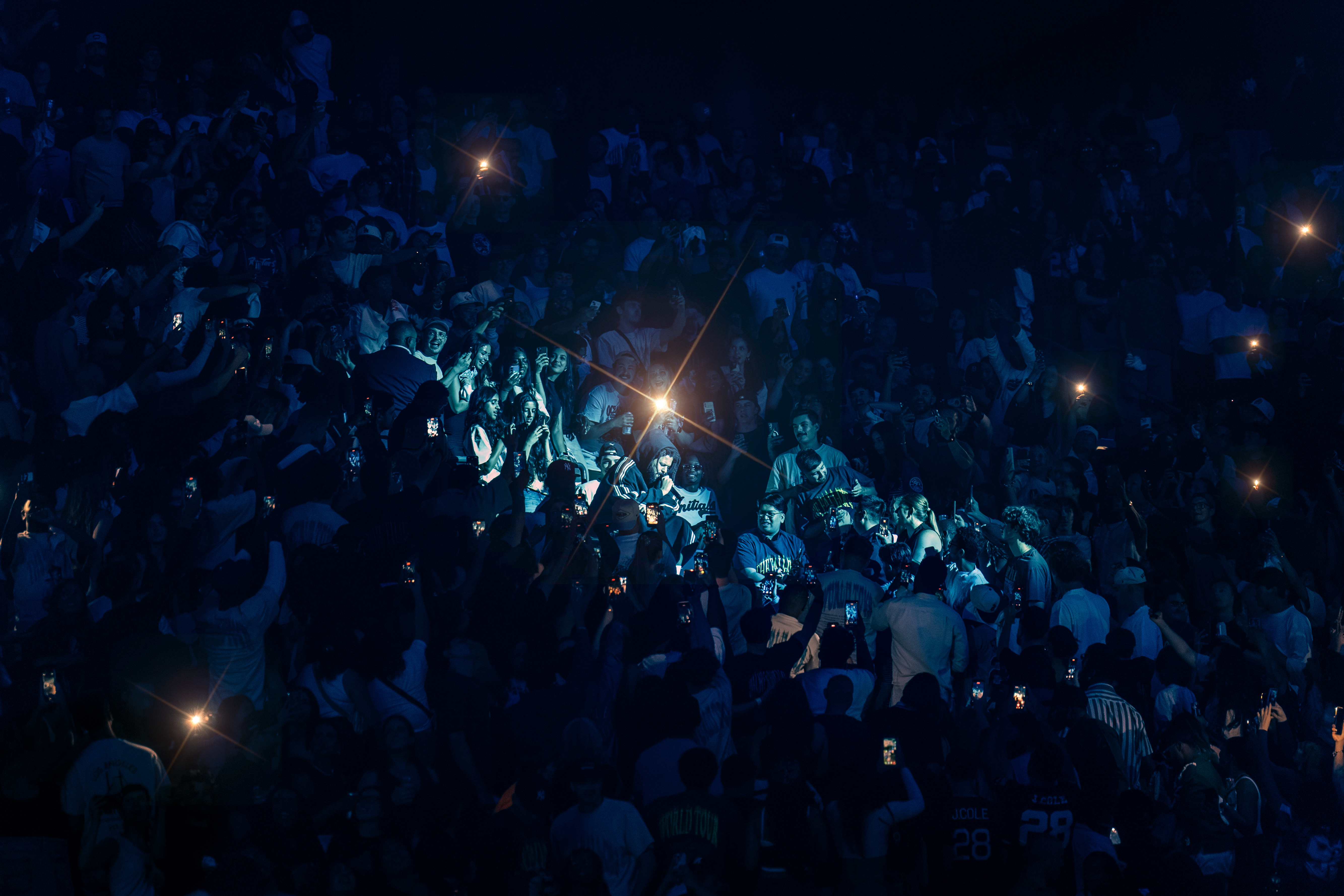
That connection reached its peak during “Big Girl (You Are Beautiful),” the undeniable highlight of the evening. Dressed in a vivid blue pantsuit, Mika abandoned the stage entirely and sprinted through the arena concourse, circling the bleachers as the crowd erupted around him. For several chaotic, euphoric minutes, the boundary between performer and audience disappeared altogether. The moment redefined the Montreal stop not simply as another date on the Spinning Out tour, but as a kind of victory lap — a celebration of the city that helped shape his career and the audience that continues to embrace him. His affection for Montreal became even more explicit during the closing encore, “Love Today,” when he revealed a Montreal Canadiens jersey bearing Cole Caufield’s number 13. The gesture, referencing the Canadiens’ recent playoff victory over the Tampa Bay Lightning, transformed the encore into a shared civic celebration—where pop music and hockey pride came together.
Mika falls in line with a long legacy of progressive pop artists who have used pop spectacle not merely as entertainment, but as a way of confronting the anxieties of modern life. Yet what distinguished Mika’s Spinning Out tour was its refusal to surrender to cynicism. Beneath the gears, robots, flashing projections, and industrial chaos was a surprisingly sincere belief in human connection—in the possibility that music, performance, and collective experience can still cut through the emotional numbness of the digital age. At Place Bell, Mika transformed steampunk aesthetics and technopop maximalism into something deeply human, reminding audiences that even amid acceleration, automation, and uncertainty, there remains value in joy, theatricality, and emotional release. In the end, Spinning Out was not simply a concert about technology or futurism, but a celebration of the fragile, chaotic, profoundly human desire to feel connected to one another.