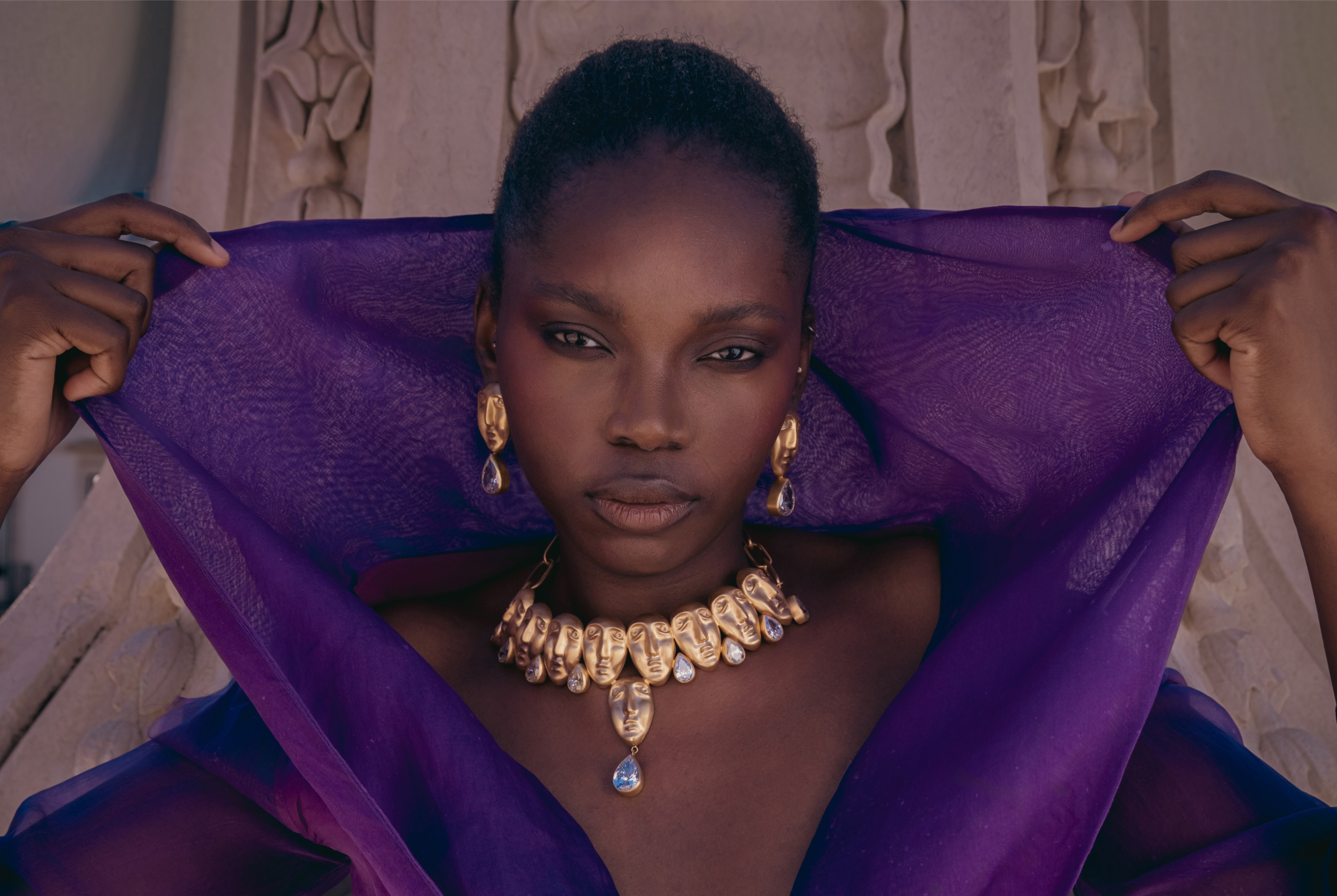
How Belacaro, a small atelier in Quebec City, is quietly building the high-end knitwear brand Canada never had.
Flanelle Magazine · Spring 2026
There is a red sweater that changed everything. A vintage Saint Laurent, complex and quietly magnificent, its checkerboard knit holding decades of Parisian craft in every stitch, that belonged to her husband. Most people would have admired it and moved on. Caroline Bélanger sat down and took it apart with her eyes.
The polo collar. The balloon silhouette, cropped and rounded like a little bomber. The damier stitch pattern that gave the fabric its layered texture. She turned it over in her hands and arrived at a thought that most people would not have thought: I could make this.
It took her over two years. But she did it.
A gap hiding in plain sight
Canada is a country defined by its winter, both climatically and culturally. The long months of sweater weather are woven into the national identity as surely as hockey rinks and maple syrup. And yet, for all that, Canada had never produced a fully homegrown, high-end knitwear house. The craftsmanship exists; The raw appreciation for a beautiful, warm garment is here. What was missing was someone willing to build the entire thing from scratch: design, production, fiber, and all.
With a Bolivian-Canadian heritage that gave her an instinctive feel for exceptional fiber, Bélanger, a self-taught designer with a passion for knitwear, believes the absence was part economic, part cultural. The postwar adoption of the North American capitalist model, she explains, pushed artisanal trades offshore toward cheaper labor markets, a shift that gutted local craft knowledge and opened the door for fast fashion. The damage was not just economic but deeply psychological, severing people from the satisfaction of making and owning things that were built to last.
“There is a real disconnection between Canadians and their own winter heritage,” she says. “Although winter is at the heart of our identity, I am always surprised by how much the appeal of sun destinations tends to take over. Winter fashion and all the craftsmanship that surrounds it represent a real and still underexplored richness in Canada. We are, I think, in a moment of awakening, a desire to reclaim our values.” Belacaro is her answer to that awakening.
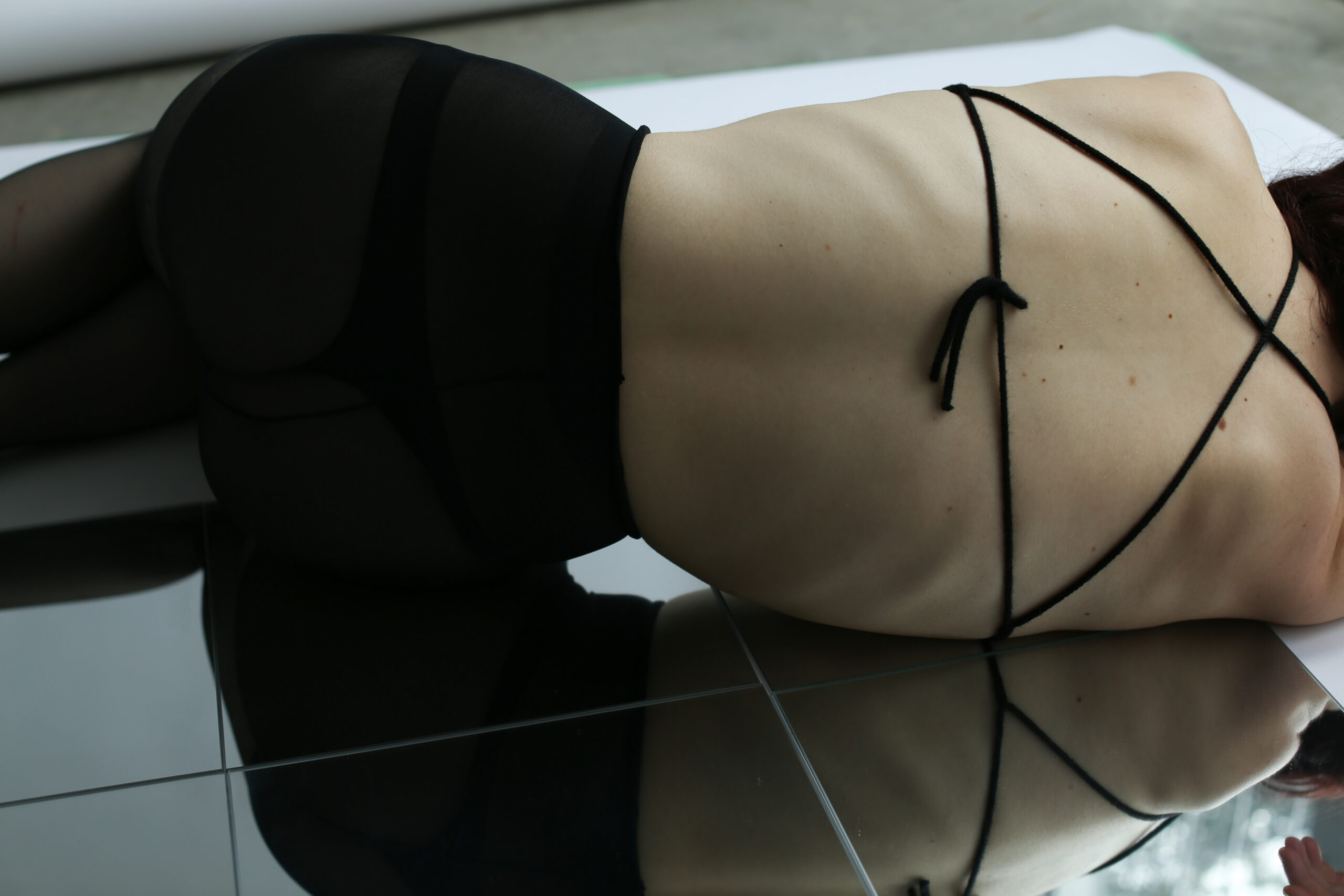
“I want to create the vintage of tomorrow, a garment you will cherish for a lifetime.”
It is worth noting that the sweater that started everything was not a women’s piece. Bélanger has always found herself drawn to menswear, which she sees as historically closer to the ideals of function and comfort that she values most. There is a directness to a well-made men’s garment, a refusal of unnecessary ornament, that she finds deeply appealing and that informs everything Belacaro makes.
Bélanger came to knitwear without formal training in fashion or garment construction. What she had was fascination, specifically with machine knitting, a discipline she sensed could make high-quality production both accessible and economically viable. Learning it was not simple. Resources exist, but they are scattered and technical. She found them, worked through them, and practiced. Then practiced more.
She had three young daughters and a full schedule. Her learning happened in the margins: evenings, early mornings, the stolen hours of a busy household. Her daughters, enchanted by the process, kept making requests for knitwear that pushed her further into her craft. A particular color. A specific shape. Gradually, the exercises became mastery.
Recreating the YSL sweater became her thesis project: a two-year study in stitch construction, shape, proportion, and the particular alchemy of translating a garment from one context into another. When she finally finished it, she understood not only what she had made, but what she was capable of making. The gap between admiration and creation had closed. From that point, there was no going back.
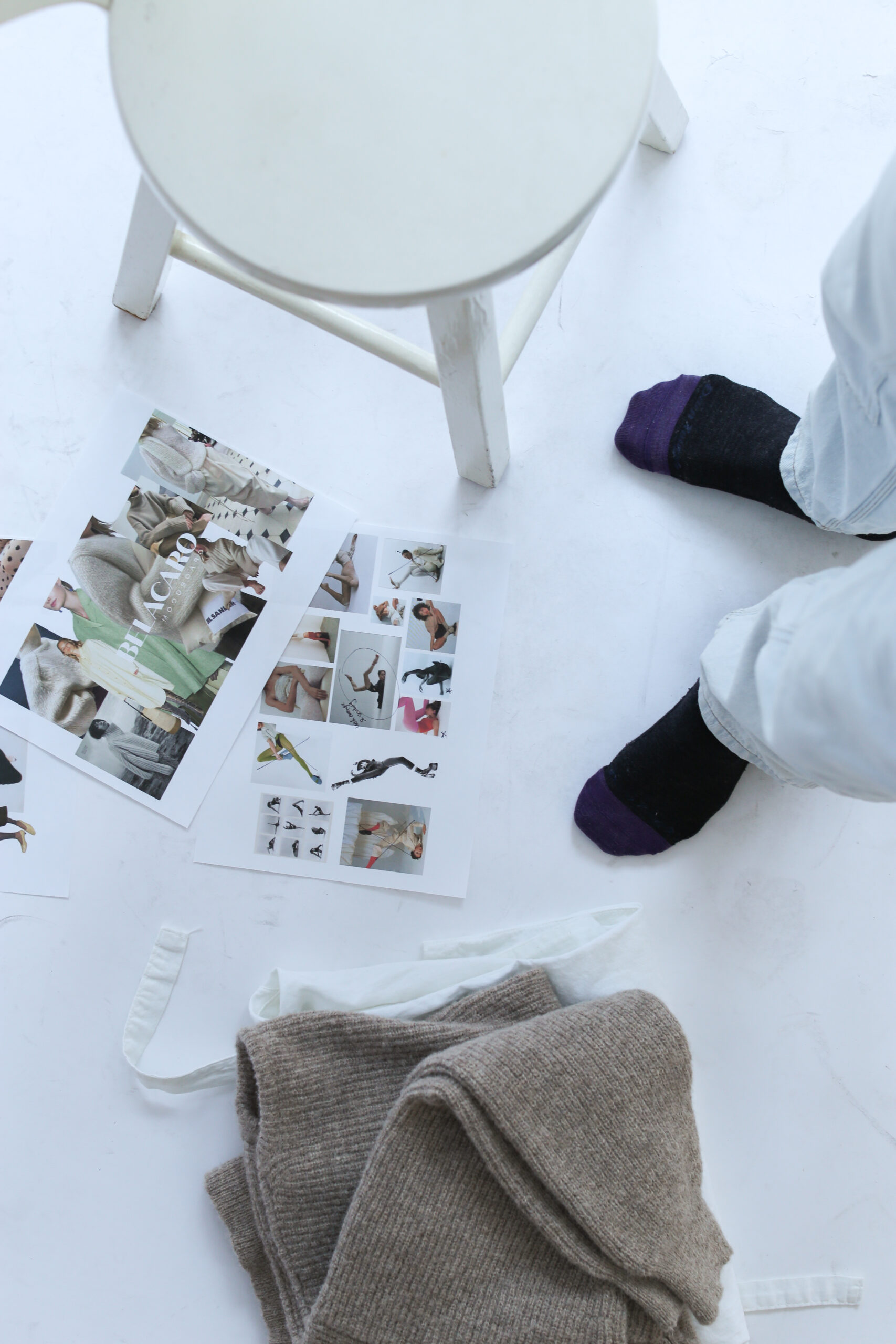
In fall 2023, Caroline officially joined forces with Maude Grondin, a textile engineer with more than a decade of experience in arts and textile production. The two had complementary instincts. The partnership was a natural one. Bélanger brought the creative vision, the aesthetic instinct, and the hard-won machine skills. Grondin brought something equally essential: a deep, technical understanding of fibers, suppliers, and the complex logistics of building a responsible production chain from the ground up.
Their pieces begin as digital files, which are then brought to life using industrial knitting machines. Maude leads this process by leveraging specialized textile design software to engineer each creation with precision. The machines produce components that are ready to assemble straight off the loom; there is no cutting and no product waste. This approach, known as “fully fashioned” remains exceptionally uncommon in the fashion industry.
Sourcing fiber, Grondin will tell you, is not glamorous work. It involves persistence, a willingness to knock on many doors, and a tolerance for dead ends. It requires knowing what to look for and being honest about what you find. Grondin’s background gave her the tools to evaluate suppliers rigorously, to distinguish between what a supplier claims and what the material actually delivers.
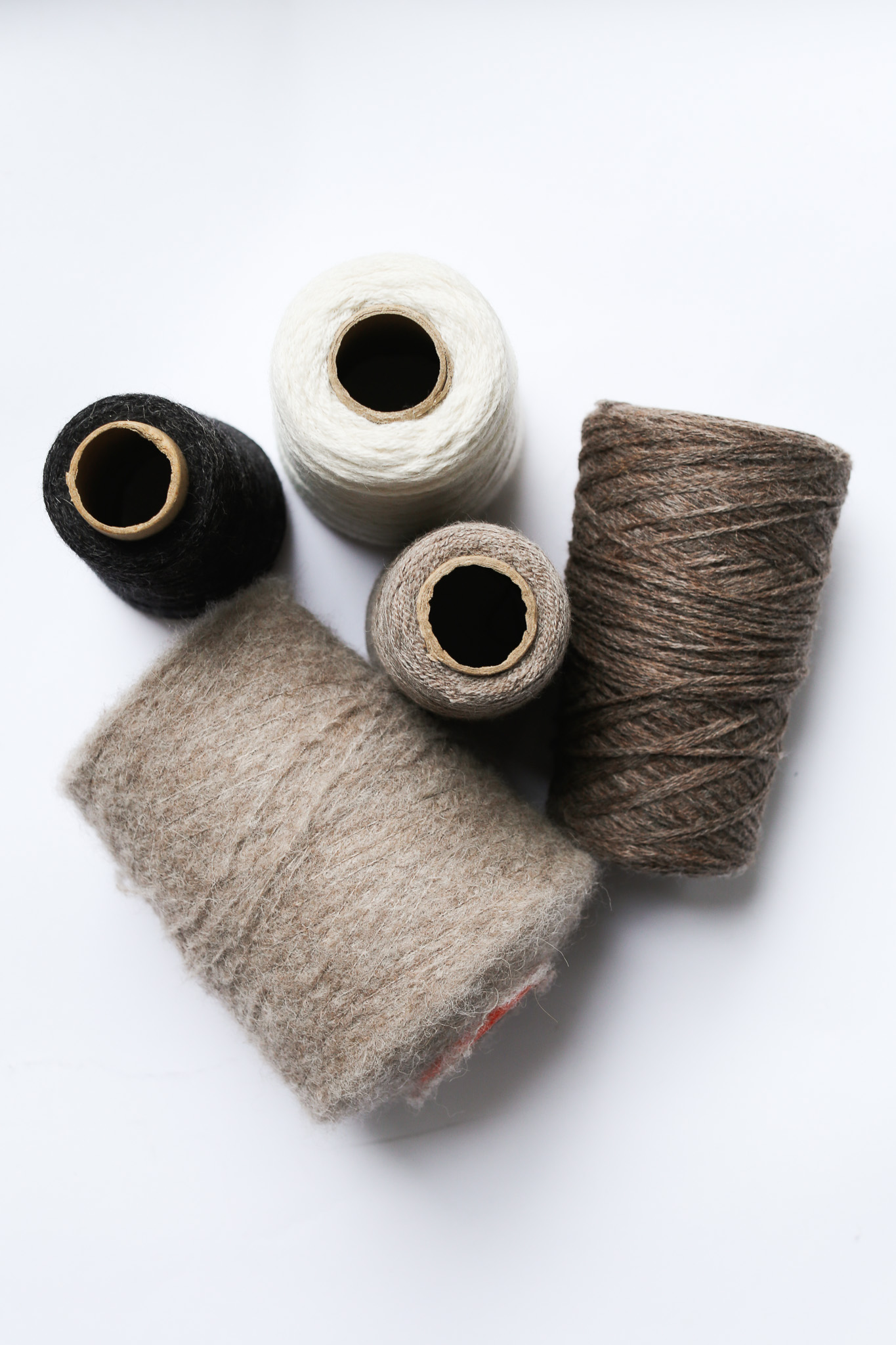
The fiber choice was, in a sense, inevitable. Baby alpaca, sourced from Peru where the finest grades are produced, had been present in Bélanger’s life since childhood, a thread connecting her Bolivian heritage to her Canadian upbringing. When she began the brand, she evaluated the finest natural fibers available: cashmere, merino, baby alpaca, and others. Baby alpaca distinguished itself not only by its qualities but by what it meant. “Having a fiber from my Latin American roots, of a quality that surpasses what the global market typically offers, felt like an unmatched value,” she says. “I am extremely proud to celebrate both the Andes and our Quebec winter craftsmanship in a single garment.“
The fiber is remarkable on its own terms: breathable, naturally warm, antibacterial, with slightly longer fibers than cashmere that make it more resistant to pilling and more durable over time.
| Fiber | Production | Model |
| 100% baby alpaca, sourced from Peru | Designed & made entirely in Quebec City | Made-to-order, no standing inventory |
Sourced in Peru, Made in Quebec, entirely
The yarn arrives from Peru. From that point on, everything, including design, machine knitting, assembly, finishing, and washing, happens in Quebec City. Some pieces carry vintage buttons sourced from specialized second-hand suppliers in the city. Nothing is outsourced. Nothing is delegated to an offshore facility. Bélanger and Grondin know exactly where every stitch comes from.
This model carries an honest trade-off: the price point is higher than mass-produced alternatives, and production takes longer. Belacaro operates on a made-to-order basis, which means there is no warehouse of unsold sweaters, no end-of-season sale to clear inventory, no impulse-purchase urgency built into the marketing. The production timeline from order confirmation to shipped package spans several days and involves a careful sequence of production, pattern-pulling, knitting, assembly, finishing of the buttons, washing of pieces, drying, and packaging.
“We don’t have inventory, and we don’t use commercial tactics designed to push impulsive buying,” Bélanger explains. “Influencing people to consume more thoughtfully is part of our values.” In a landscape saturated with fast fashion, this is a quiet but pointed act of resistance, and a true breath of fresh air.

Real luxury comes from a lifetime garment.
Customization and repair are available at Belacaro and they are structural to the brand’s philosophy. Customers can request adjustments, including length, torso width, sleeve dimensions, and specific color combinations. For independent designers or retailers who want a piece developed from scratch, full custom development is available, though it carries product development fees reflective of the work involved.
Lifetime repair is offered. That kind of maintenance is not a failure of the garment; it is part of its life. Working with the stitch is Belacaro’s core expertise, and repairing a piece is simply a natural extension of that expertise. “When one of our garments comes back to us for repair, it’s rich in emotion,” she says. “It’s one of the joys of this work.” There is something moving about that: the idea that a sweater might travel through years and seasons and return to the hands that made it, carrying its history quietly in its weave.
Five years from now, Belacaro aims to have a consolidated presence across Canada and the United States, with a foothold in Europe as well. The ambition is not rapid expansion but something more deliberate and more durable: to be recognized as a high-end North American knitwear house, growing organically, earning its reputation one carefully made garment at a time. The international appetite for what Belacaro offers is real. A beautifully made, ethically produced, culturally rooted knitwear brand has no shortage of potential customers anywhere in the world.
But Bélanger is in no hurry. The brand she is building is, in its very nature, one that resists speed. It was born from two years of stubborn, patient practice. It runs on a production model that prioritizes care over volume. Its fiber takes years to grow on animals tended by Andean farmers who have been raising alpacas for centuries. Speed would be a betrayal of everything the brand stands for.
The phrase Bélanger returns to most often when describing the brand is this: I want to create the vintage of tomorrow. Not heritage as nostalgia, but heritage as intention. Making things so well, with such care for fiber and form, that they become the objects future generations will pick up in a shop somewhere and think: I could wear this my whole life.
It is the same thought she had, years ago, holding her husband’s red sweater. That moment of recognition, of admiration turning quietly into ambition, was the beginning of everything. The sweater still exists. So, now, does Belacaro.
You can find the brand on belacaro.com