Monad Origin is a Belgium-based design studio founded by Nick Peeters and Anujin Byambaa, creating limited-edition furniture and sculptural objects by translating raw sound frequencies into physical form. Their work sits at the intersection of science, craft, and sensory experience, offering a new design language rooted in vibration rather than conventional aesthetics. Visitors can discover their latest pieces at Collectible Brussels from March 12 to 15, 2026.
What Does Monad Origin Actually Do?
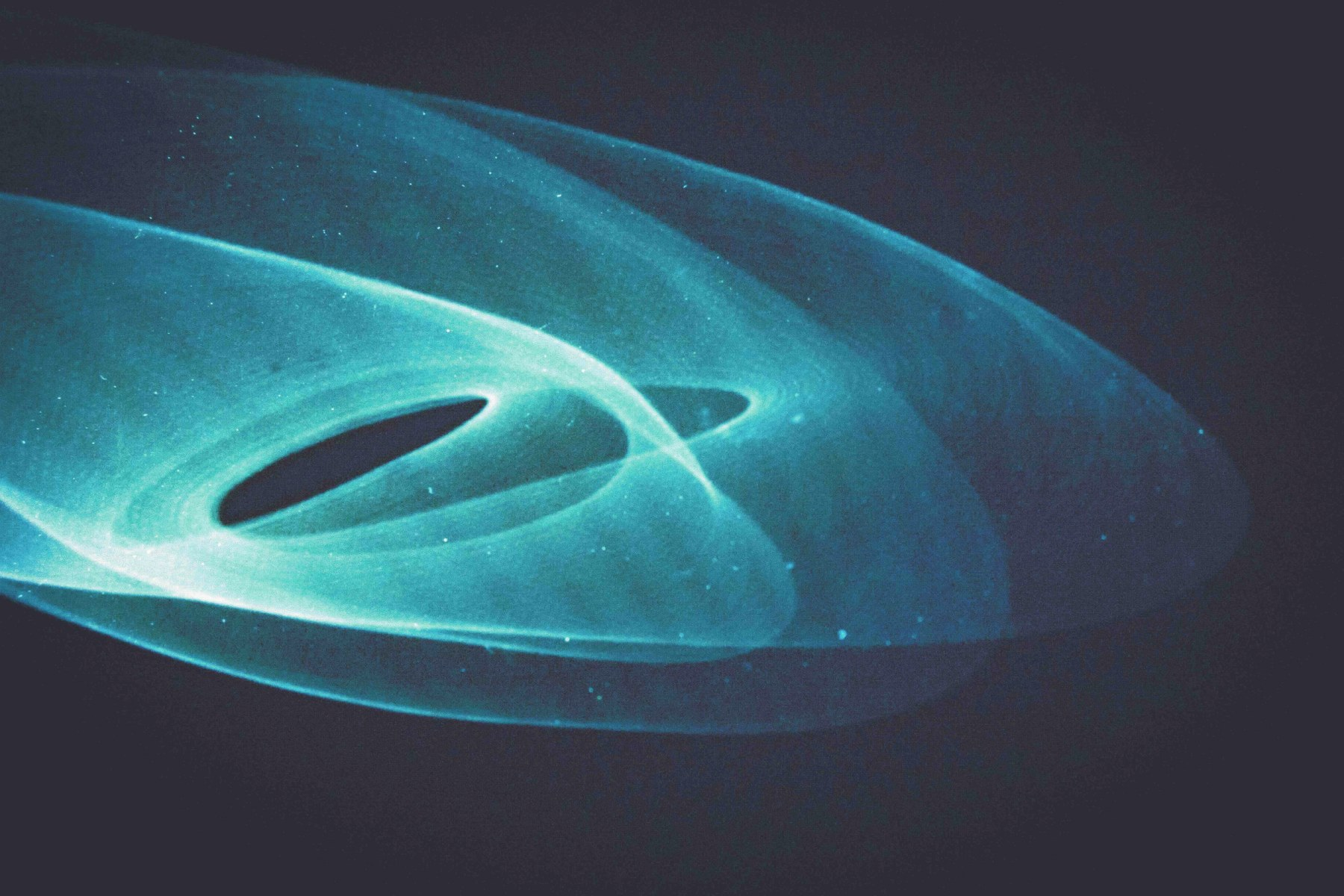
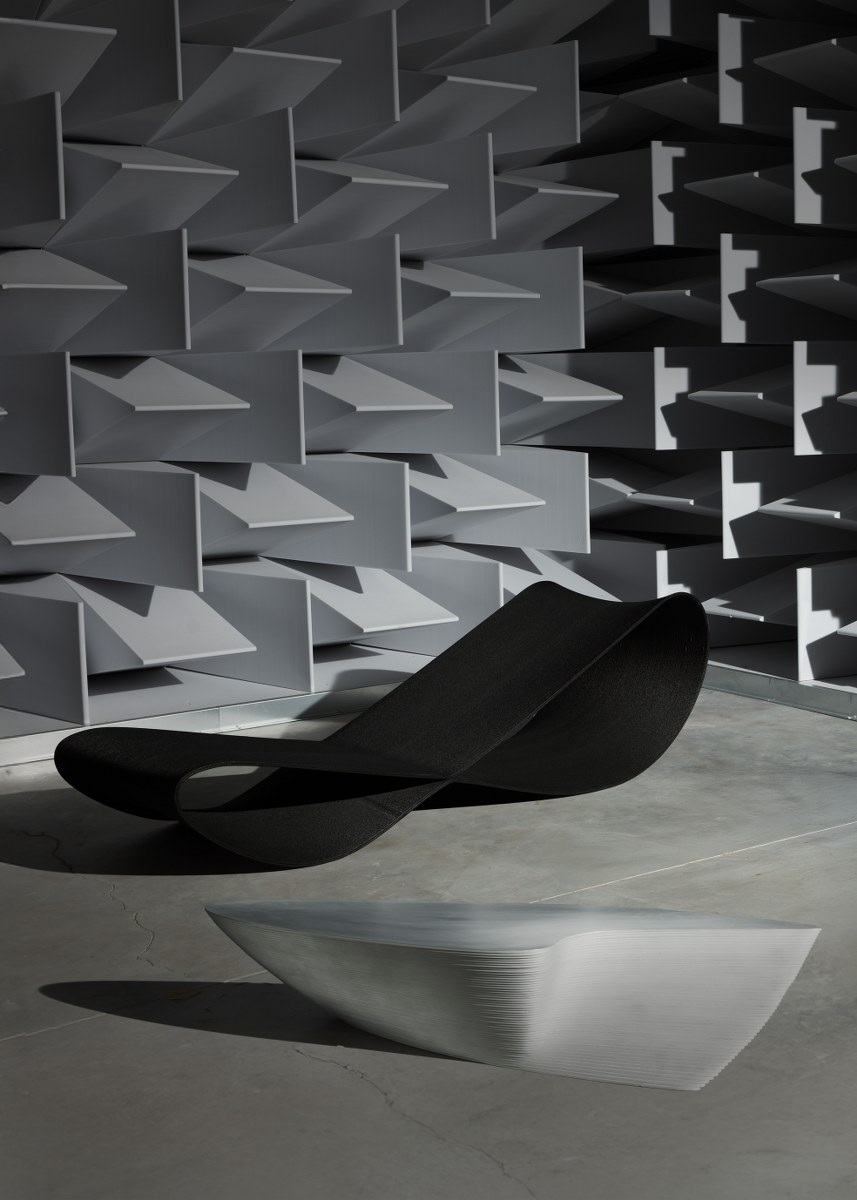
At its core, Monad Origin transforms invisible sonic phenomena into tangible objects. The duo identifies meaningful vibrations through pattern recognition, then translates these signals into sculptural and functional forms. Tables, lounge chairs, and bowls emerge not from sketches or mood boards, but from the geometry hidden within specific frequencies.
Each piece is produced in limited numbers and exists without imposed narrative. The process remains consistent, but outcomes vary, allowing form to emerge directly from frequency. A table might be titled “Study for a Table [30Hz 0.4y – 26Hz 0.8y],” its name a precise record of the sonic parameters that generated its shape. This approach removes the designer’s hand in a traditional sense, replacing subjective decision-making with a kind of controlled surrender to physics.
The result is furniture that feels both ancient and futuristic. There is something primordial about forms born from vibration, as if they have always existed and were simply waiting to be uncovered. Yet the technical precision required to produce them places the work firmly in the realm of contemporary experimental design.
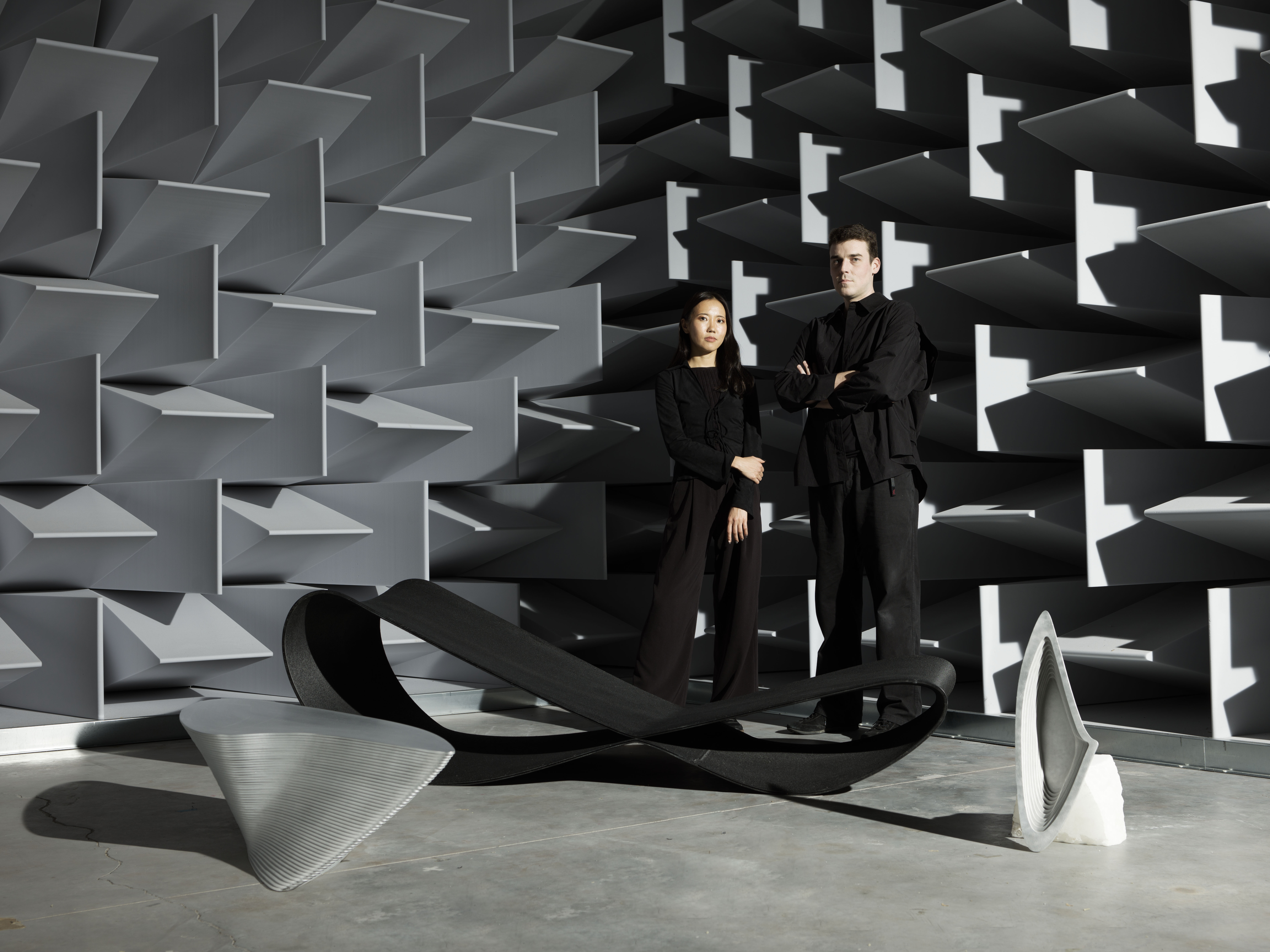
The Founders: Two Paths Converging
Nick Peeters and Anujin Byambaa met by chance in Shanghai in 2023, where Byambaa was preparing an exhibition and Peeters assisted with props and lighting. What began as spontaneous collaboration evolved into a shared practice. They now live and work together in Belgium, spending most of their time in their atelier developing ideas side by side. There was no formal decision to collaborate. They simply began doing so, and the partnership became inseparable from their daily lives.
Their backgrounds are strikingly different, yet complementary. Peeters brings hands-on construction knowledge and years of independent research into sound-based design. Byambaa contributes expertise in digital innovation, brand strategy, and a philosophical interest in the invisible. Together, they describe themselves as “listening with their eyes,” uncovering hidden geometry within vibration.
When asked how they function as collaborators, Peeters is direct: “We really do operate as one organism with two sensitivities.” Within their shared practice, he serves as “head of ritual,” constructing the system that allows sound to become matter, while Byambaa, as “head of artefacts,” decides which forms deserve to exist physically. The division is not hierarchical but complementary, with tension between their approaches serving the work rather than disrupting it. “Neither of us is trying to ‘win’ creatively,” Peeters explains. “The work always comes first, and if something doesn’t survive both of our perspectives, it simply doesn’t exist.”
Nick Peeters: Learning by Making
Peeters is a Belgian-born designer who founded his own studio in 2013. Raised in Landen in an architectural environment, with parents who are architects and a grandfather who was a painter, working with space, form, and matter was a natural starting point. From a young age, he worked on construction sites, gaining practical knowledge that continues to shape his approach more profoundly than any formal education.
He began studying product design in Genk but left after two years to establish an independent practice, driven by a need to learn through doing rather than theory. In 2016, he initiated long-term research into sound waves, focusing on the translation of vibration into physical form through extensive prototyping and technical development. Parallel to this, his self-taught practice as a music composer sharpened his understanding of sonic structure, rhythm, and resonance.
For Peeters, creation is a necessity rather than a choice. He describes the act of bringing ideas out of the mind and into the physical world as a way to stay open, clear, and unburdened. Making becomes a method of thinking, and matter serves as a tool for emptying the mind. Within Monad Origin, he leads the technological and hardware development of sound-based installations, treating sound as both a spatial and material force.
Travel has also played a significant role in his development. Journeys through the United States, Brazil, Japan, and beyond offered contrast, distance, and new perspectives. These experiences continue to feed his work, grounding abstract ideas in lived reality.
Anujin Byambaa: From the Steppes to Sound
Byambaa is a Mongolian-born artist and designer who has lived abroad since the age of seventeen. Growing up in a country of vast, open landscapes, her childhood was shaped by nomadic heritage and cultural transition. Without internet or regular television, her earliest creativity was born from watching clouds and imagining worlds beyond the horizon.
Her understanding of history and culture was formed largely through oral stories from elders. There were few books, images, or recorded histories available. This lent a personal, imaginative layer to her sense of identity and place, and led to wonder about the lives of herders who once roamed Mongolia’s unrecorded landscapes.
This longing to connect with what lay beyond the steppes led her to leave Mongolia as a teenager. She has since traveled widely, learned five languages, and spent much of her twenties in Shanghai, where she worked as an art director for luxury brands while cultivating a multidisciplinary creative practice bridging design, technology, and culture.
Trained in Graphic Design and 3D at the undergraduate level and Innovation and Technology at the graduate level, with a specialization in AI language models, Byambaa now focuses on materializing the invisible. Her work reflects a lifelong curiosity about what exists beyond the visible, inviting viewers to explore meaning in what is felt rather than merely seen.
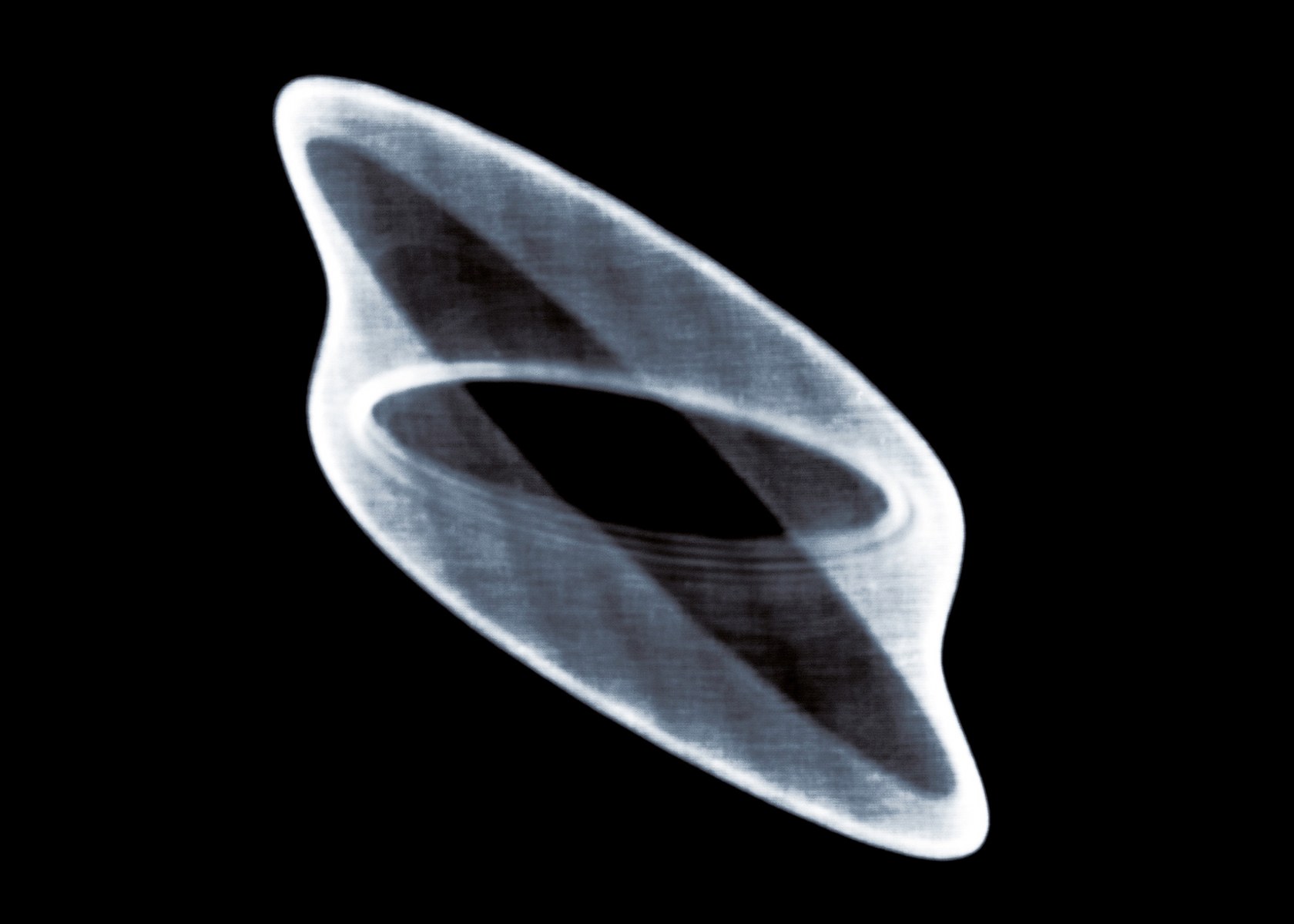
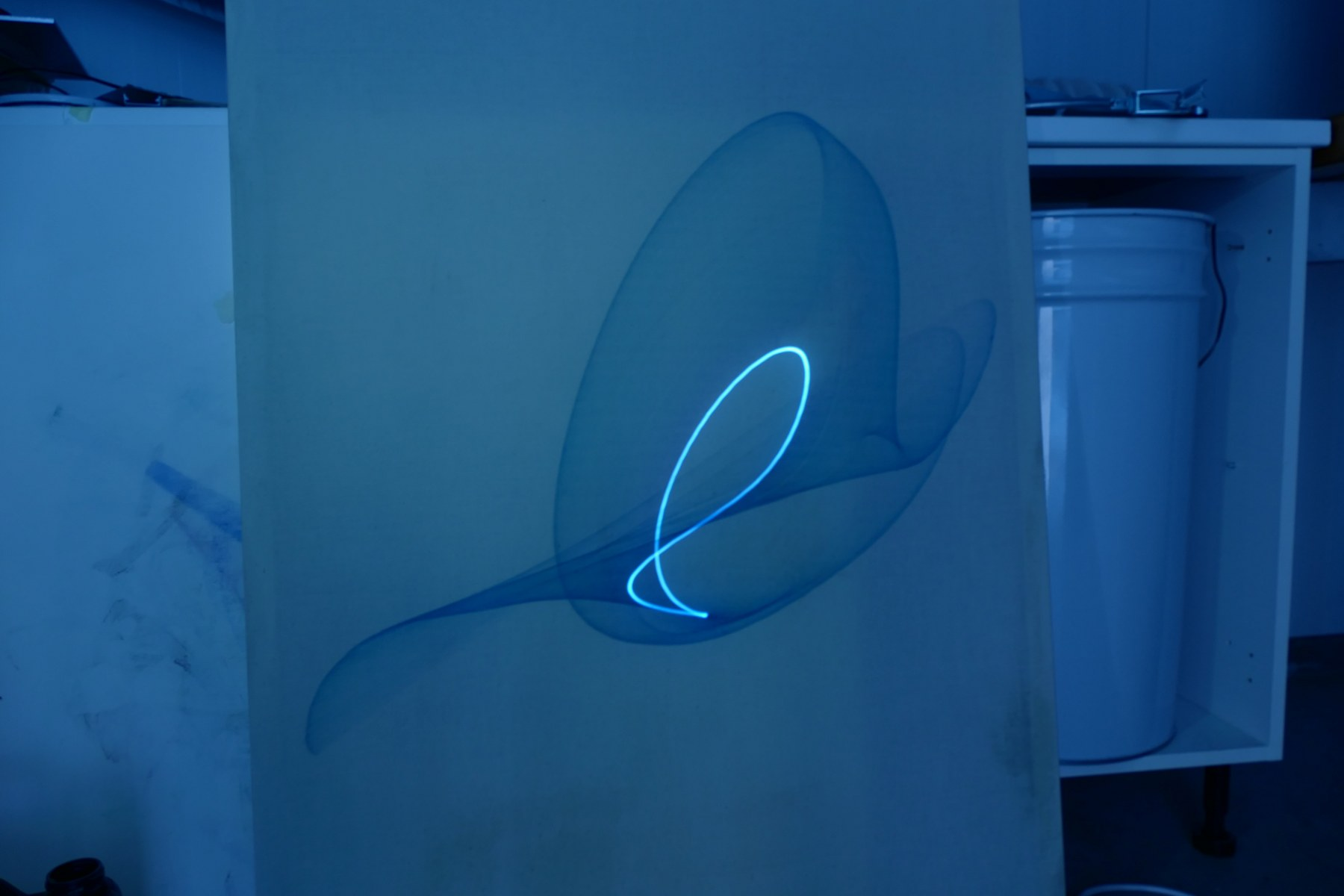
The Creative Process: From Frequency to Form
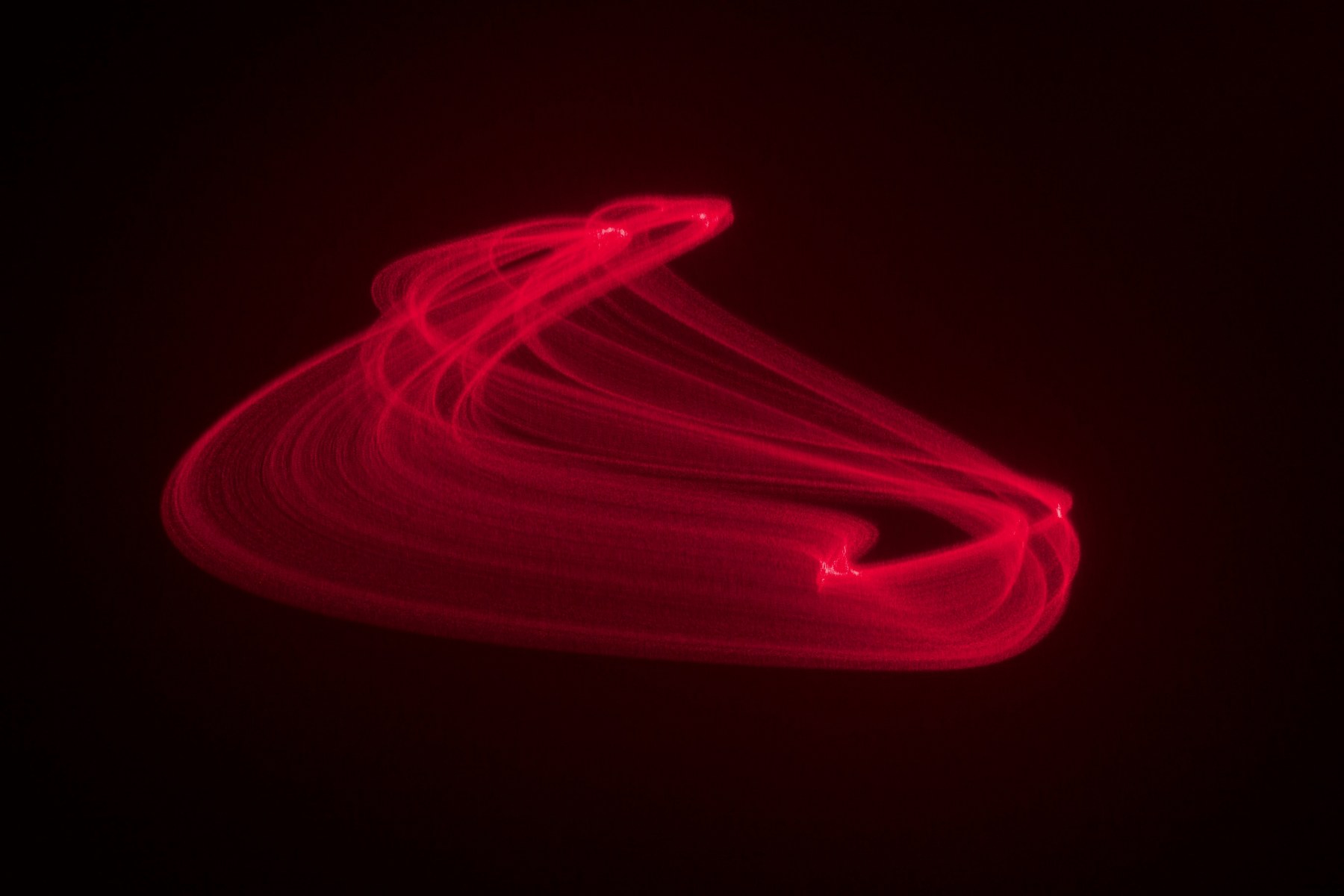
Every piece begins with sound, but not in a musical sense. As the duo explains, it starts with a frequency treated as a signal, a measurement of an invisible state. That frequency is fed into their installation, where it is translated into a spatial logic: proportions, tensions, voids, densities. From there, a large field of possibilities emerges. This is where selection becomes critical. Byambaa chooses which forms are allowed to exist physically. It is not about aesthetics alone, they note, but about whether a shape feels stable enough to enter the world.
Once selected, a form goes through refinement, material testing, and scale decisions. Some pieces remain graphic or dimensional studies; others insist on becoming functional objects. The full process can take anywhere from a few weeks to several months, depending on material complexity and whether the piece demands functional resolution or stays purely sculptural.
The work titles themselves serve as documentation. “Study for a Lounge Chair (B) [14Hz | 15Hz | 14Hz]” is not a poetic flourish but a precise record of the frequencies that generated the form. This transparency about process distinguishes Monad Origin from studios that obscure their methods behind mystique.
Yet for all its scientific grounding, the work is not cold or clinical. The forms that emerge often possess an organic quality, with curves and volumes that feel intuitive despite their algorithmic origins. There is a tension between the rigorous process and the sensual results, a tension the duo embraces rather than resolves.
When Function Follows Frequency
One of the most distinctive aspects of Monad Origin’s practice is their approach to functionality. Unlike conventional furniture design, where use dictates form, their pieces begin with frequency alone. Function is never the starting point, they explain. A form only becomes a table, a vessel, or a seat if it naturally allows it, if the frequency resolves into stability, horizontality, or containment without being forced.
Some frequencies resist use entirely. Those remain sculptural, and the duo respects that resistance. They do not believe functionality conflicts with expression; rather, it adds an extra dimension. “We never adapt a form just to make it useful,” they clarify. “It’s our human pattern recognition that allows a form to be seen and used as a functional object.”
This philosophy produces objects that feel discovered rather than designed. A lounge chair emerges because the frequency happened to resolve into a form that invites sitting. A bowl exists because certain vibrations naturally created containment. The functionality is almost incidental, a fortunate alignment between sonic output and human need.
From RBG18 to Monad Origin: A New Identity
The studio was formerly known as RBG18, under which name they presented work in Dubai, Barcelona, Brussels, Antwerp, and Kortrijk throughout 2025. The transition to Monad Origin reflects a fundamental shift in their practice.
As they describe it, RBG18 was a necessary precursor, focused on perception, color, and material, exploring how objects are encoded and experienced. They experimented with different design systems, creating chess sets, furniture based on the female body, and tables that engage interaction. But over time, they gravitated less toward representation and more toward origin.
The new name carries specific philosophical weight. “The ‘monad’ is the smallest indivisible unit, something complete in itself, containing its own internal logic,” they explain. “That’s how we see each artefact: not as a fragment of a larger system, but as a self-contained object that holds a trace of something immaterial.”
The rebrand signals permanence rather than experiment. “Monad Origin isn’t a project or a phase,” they state. “It’s the framework through which we now live and work.”
Life and Work as One
For Peeters and Byambaa, the boundaries between personal life and creative practice have dissolved entirely, and they see this as a strength rather than a problem. Their life and work are intertwined by choice. They often go to sleep talking about a piece or wake up with a solution that arrived somewhere between rest and dreaming.
Ideas can appear everywhere: during walks, meals, silence. The studio is just where things become physical. The real work happens continuously, quietly, and often without them noticing until later. “What matters is that the work doesn’t feel like labor,” they reflect. “It feels like alignment.”
This total immersion in practice is unusual even among dedicated artists and designers. Most maintain some separation between studio hours and private life. For Monad Origin, such division would be artificial, a false boundary imposed on what is fundamentally a continuous state of creative attention.
Collectible Brussels 2026: What to Expect
At Collectible, visitors will encounter Monad Origin as a complete system in the fair’s Bespoke section. The presentation will include not just objects but graphics, sculptures, and spatial decisions. Even the wall itself becomes part of the language, creating an immersive environment rather than a simple display of pieces.
Beyond the collectible objects on view, Monad Origin will offer something unprecedented: a bespoke dimension. Visitors will be able to commission an artefact generated from a sound of personal significance, whether a voice, a memory, or a moment. That sound is translated through their system into a unique form, resulting in a one-of-a-kind object that cannot be reproduced. It is not customization in a traditional sense, but a personal frequency made physical.
For the duo, this presentation represents a threshold. “It’s the first time Monad Origin appears fully formed as an experience,” they note. The Brussels fair will serve as both introduction and declaration, announcing the practice to a broader audience while demonstrating its full potential.
Why Sound-Based Design Matters Now
Monad Origin’s work arrives at a moment when design is increasingly mediated by screens, algorithms, and artificial intelligence. Their practice offers a counterpoint: a return to fundamental physical forces as a source of form. Sound is invisible, omnipresent, and deeply physical. We feel it in our bodies before we comprehend it with our minds.
In an era of mass production and disposable goods, the limited-edition model also carries meaning. These are objects made to endure, to be collected and lived with rather than consumed and discarded. The investment required to acquire a piece from Monad Origin is an investment in a different relationship with material culture.
There is also something democratizing about the duo’s transparency. By revealing their process and encoding it in their titles, they invite viewers to understand rather than simply admire. The work is not precious or exclusive in its knowledge. It shares its logic openly, even as it retains the mystery inherent in all acts of transformation.
For now, the focus remains on listening. Peeters and Byambaa continue to explore the hidden world of vibration, seeking frequencies that hold formal potential and giving them permanent, physical shape. Their combined expertise in tangible construction and digital innovation enables them to pursue a mission that neither could accomplish alone: to uncover the unseen forces surrounding us and use them as a new design language.
Whether you encounter their work at Collectible Brussels or follow their practice from afar, Monad Origin offers an invitation to perceive differently. To listen with your eyes. To find meaning in what is felt rather than merely seen.
Text by Sarah-Eve Leduc
Photos by Jean Van Cleemput
Collectible Brussels 2026
March 12-15, 2026
Brussels, Belgium