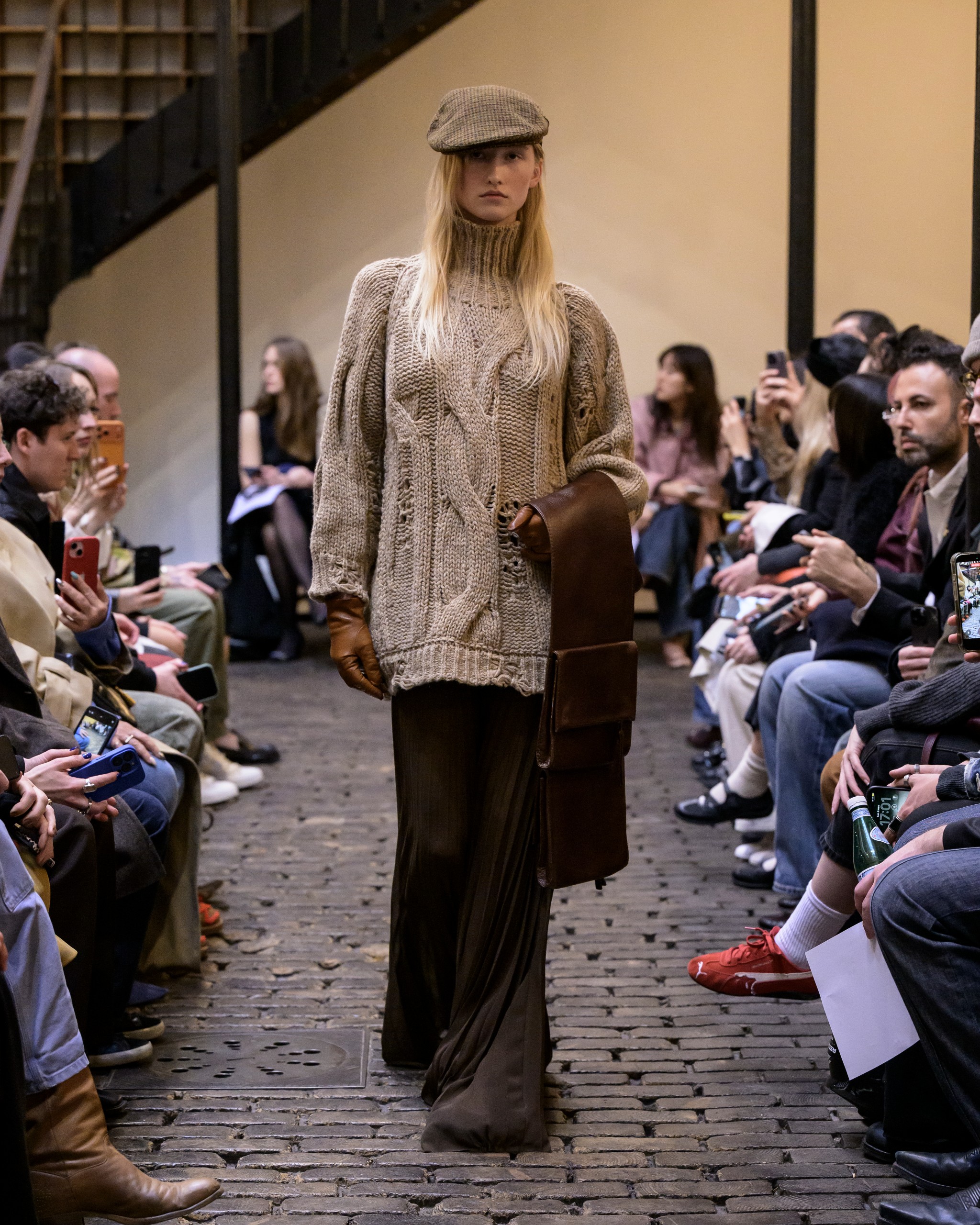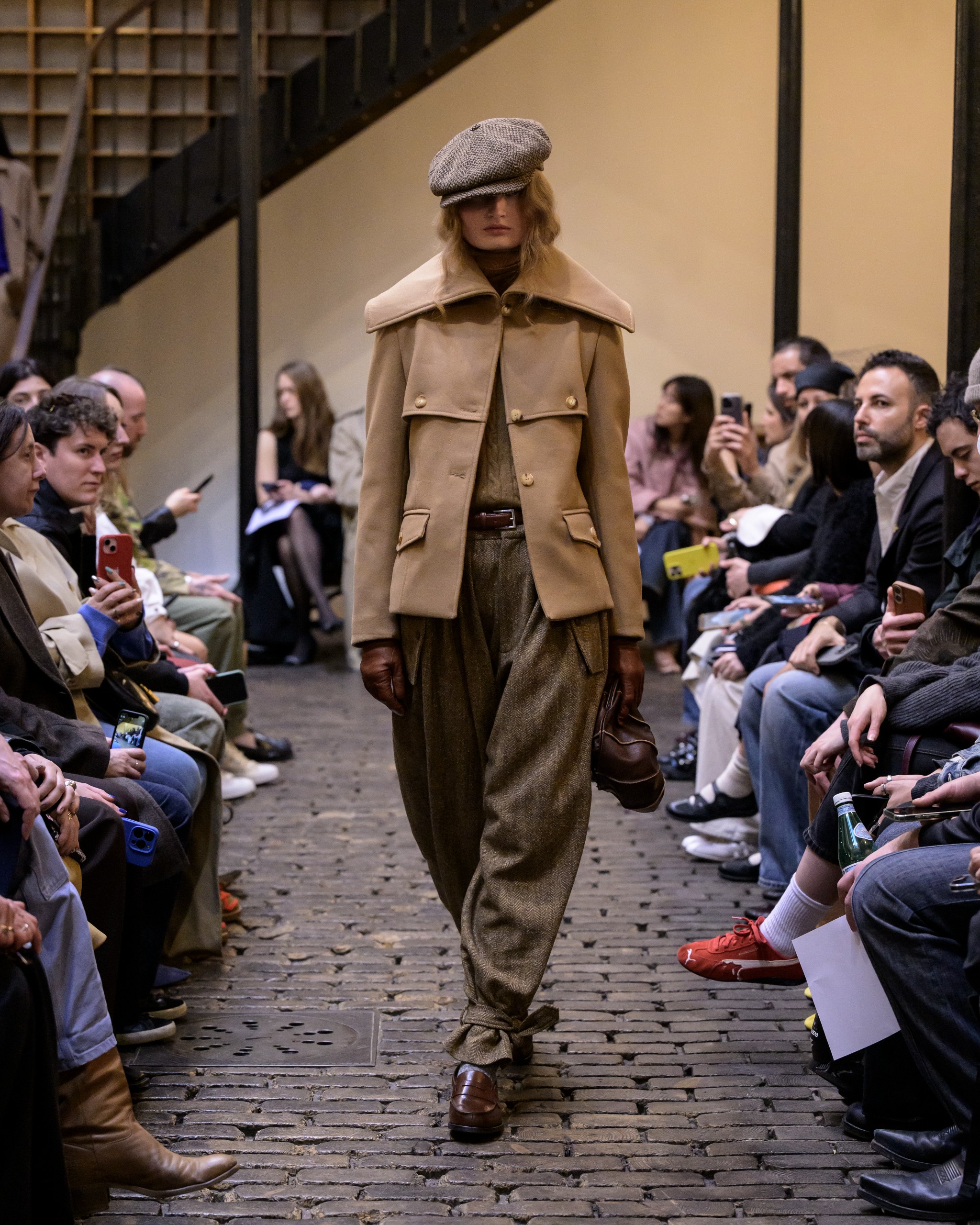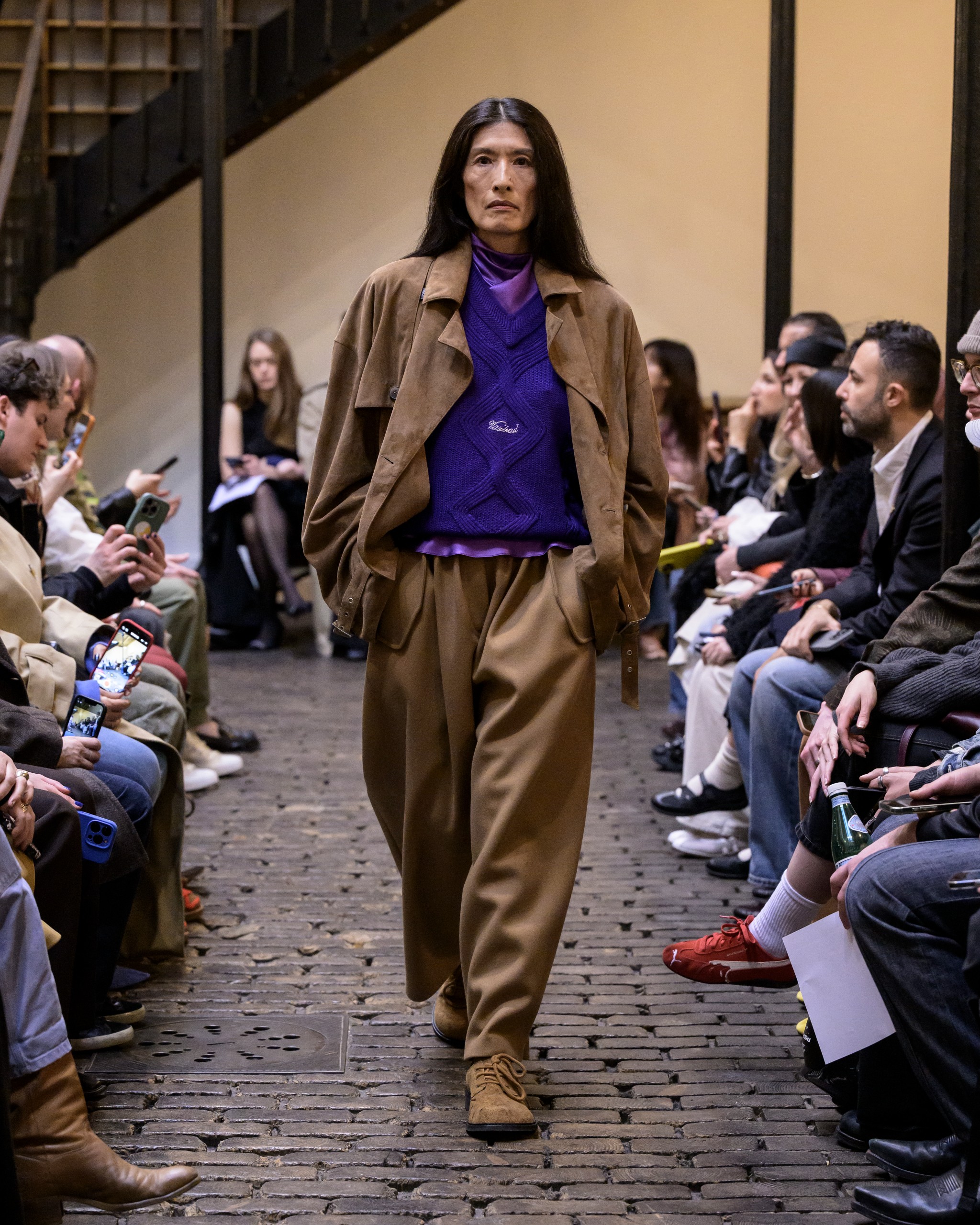
Creative director Yonathan Carmel builds a collection rooted in memory rather than territory, where locality is sensed but never stated.
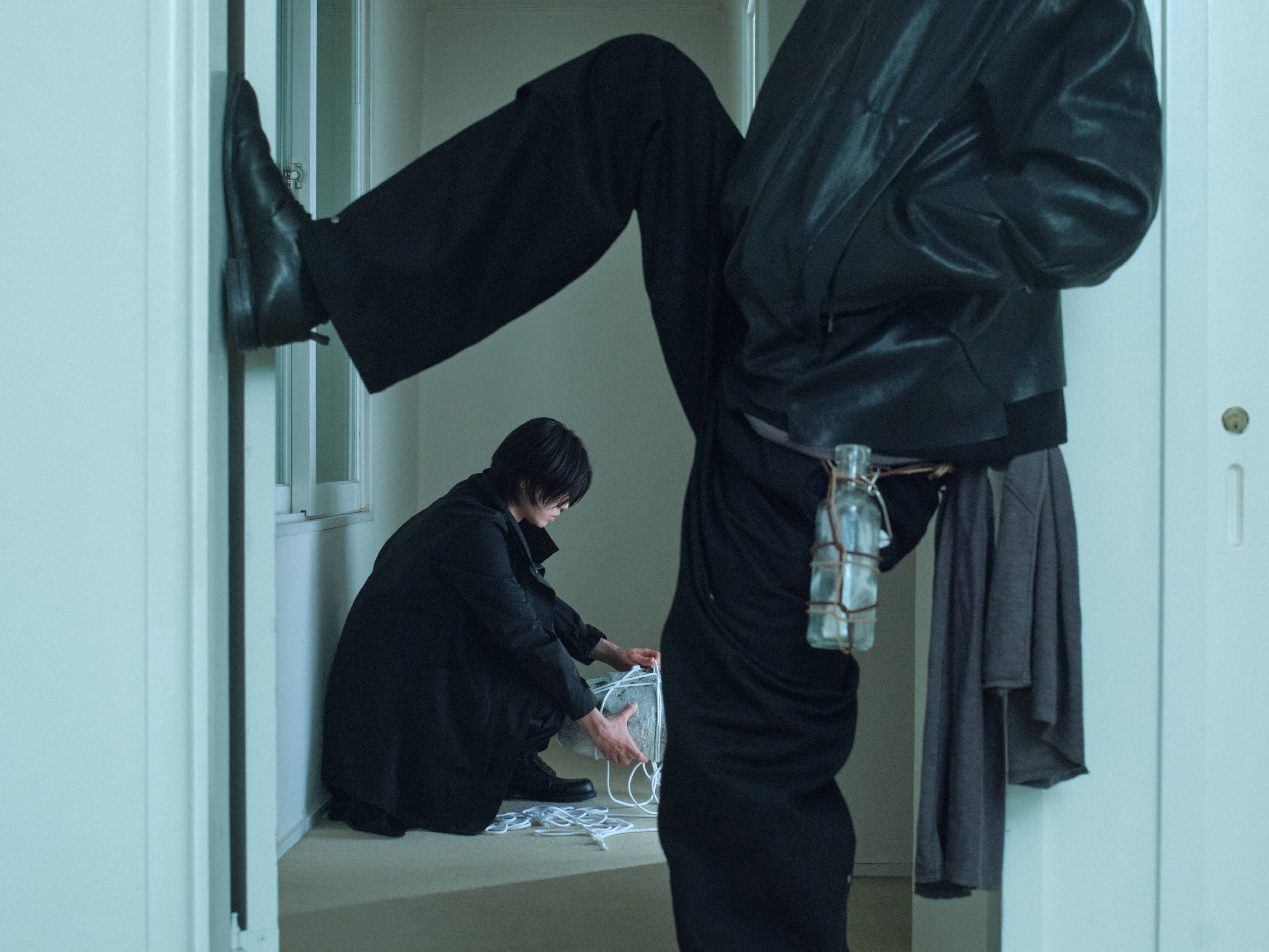
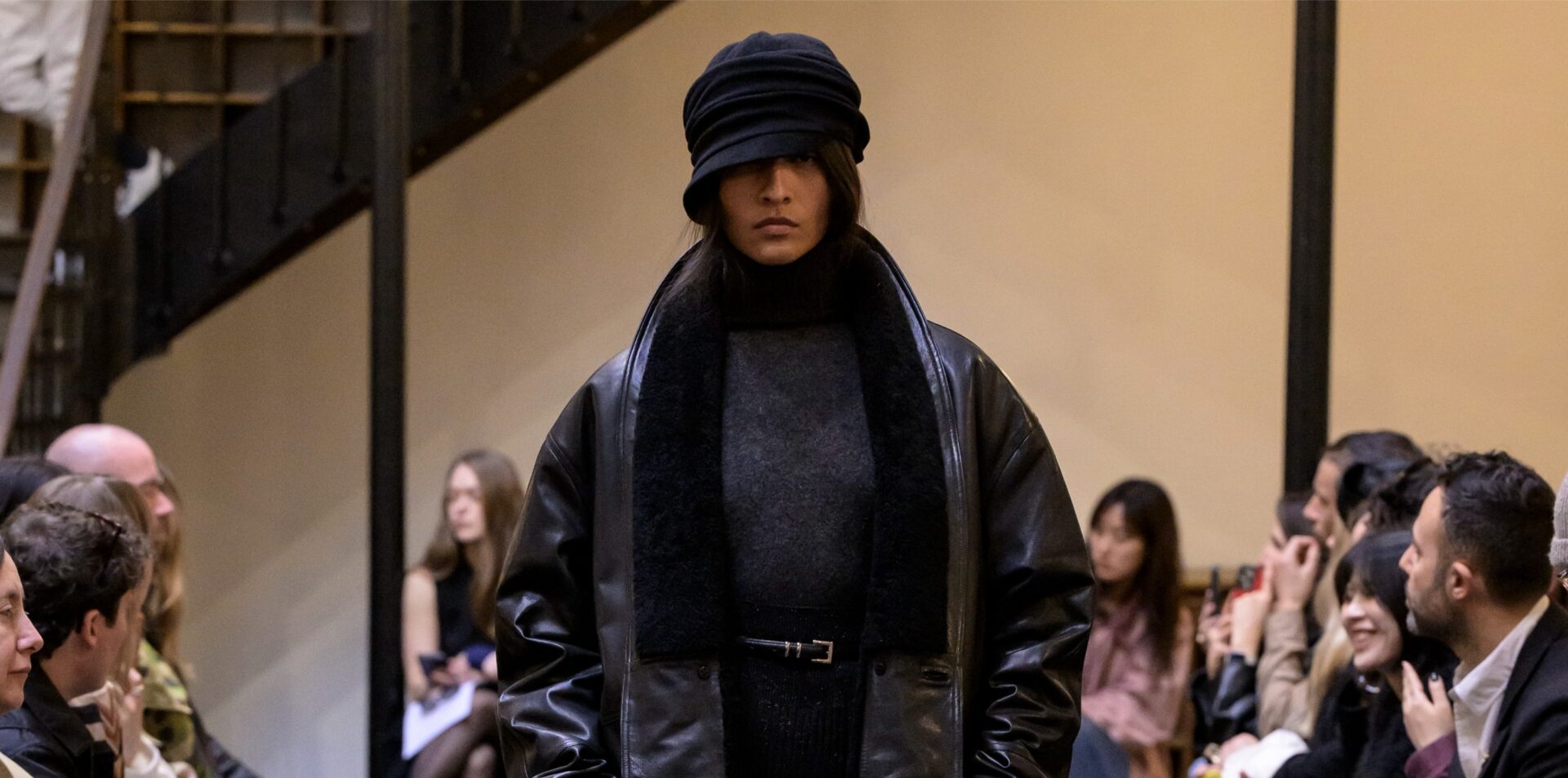
Vautrait’s Fall/Winter 2026 collection approaches protection as both physical fact and psychological framework. Creative director Yonathan Carmel draws from archival menswear, heavy tailoring, and protective outerwear: garments historically designed for endurance, restraint, and permanence. The silhouettes envelop with purpose. Coats fall with controlled volume. Shoulders carry structure without aggression. Layers accumulate as insulation, not decoration. Function precedes embellishment. The garments do not seek attention.
The proposal extends beyond climate protection. It reflects on how identity forms through tradition, craft, and ritual, much like local culinary cultures, where techniques and materials cultivate belonging rooted in geography. Yet this collection consciously resists anchoring itself to any specific place. Its references feel familiar yet elusive. The tailoring evokes heritage without citing a single archive. The materials suggest regional craft without declaring an origin. What emerges is a notion of locality that cannot be mapped, a place sensed rather than named.

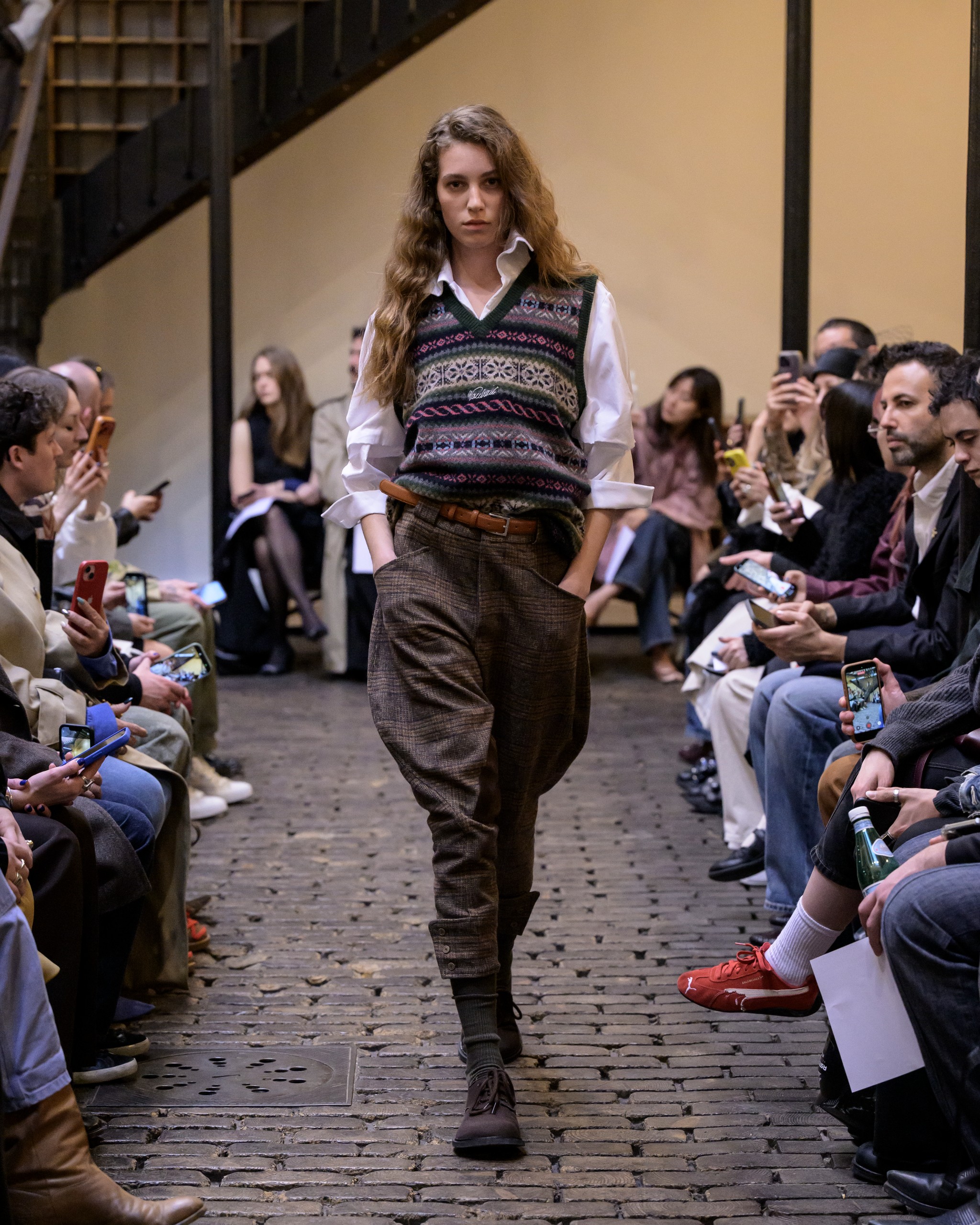

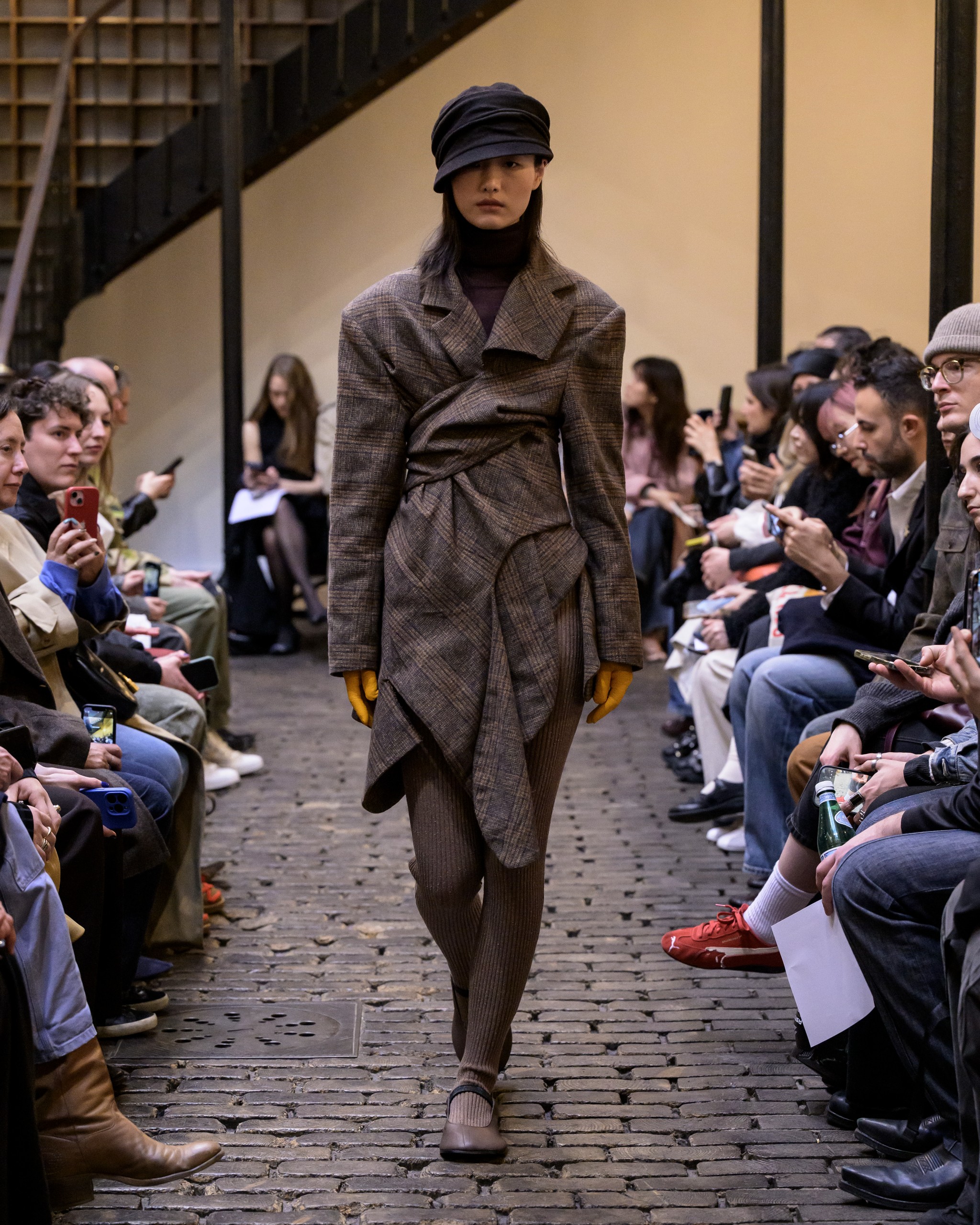
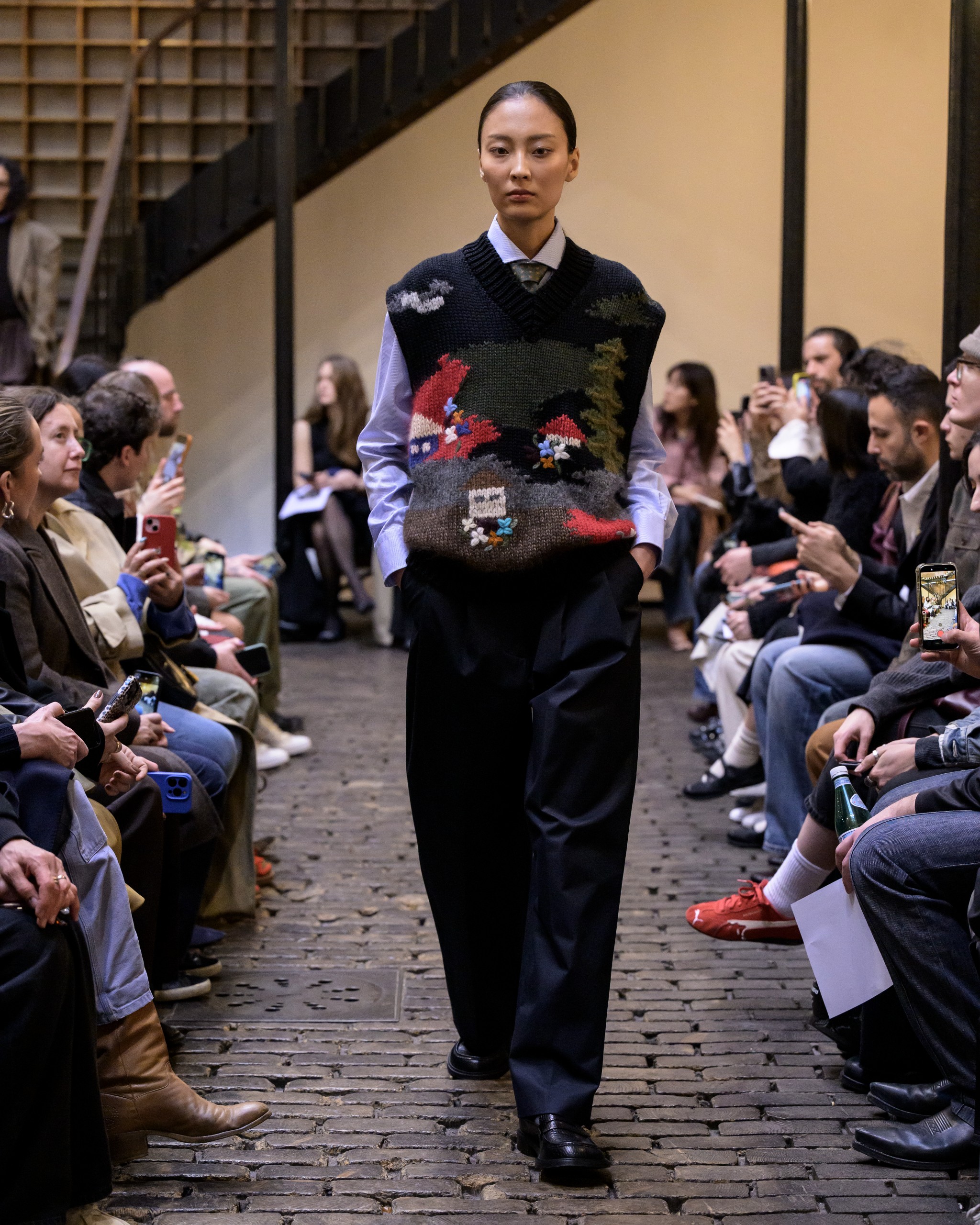
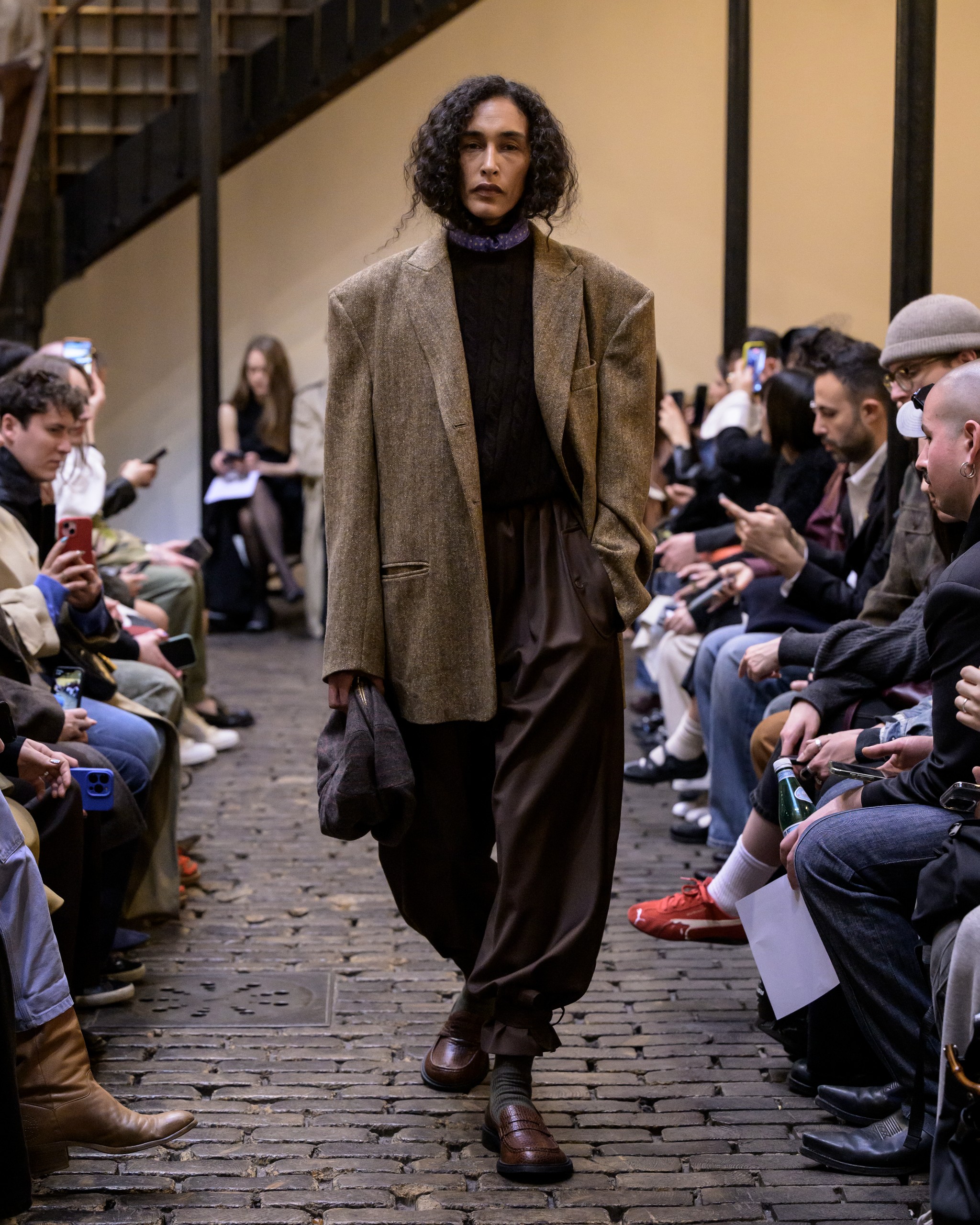
Carmel explains his position with clarity: he values the intimacy of place embedded in technique, material, and touch, yet prefers it to remain implicit. The locality exists in the rhythm of construction, in the weight of fabric, in the way something is finished, but it does not announce itself. It is sensed rather than stated, present without being labeled.
This is a collection rooted in memory rather than territory. It reflects a nationalism without a nation, a sense of belonging formed through craft rather than provenance. Styled by Tal Delgado Levy and Carmel, captured by photographer Kristy Sparow at Bastille Design Center with video by Alessandro Tinelli, the presentation reinforces the collection’s conceptual restraint. Anadol’s “Gorunmez Hava” provides the sonic backdrop, a choice that aligns with the collection’s deliberate ambiguity.
Vautrait FW26 asks what happens when the markers of place become internalized rather than worn on the surface. The garments carry geographic weight without geographic markers. They suggest origin without pointing to coordinates. What Carmel proposes is a new kind of locality: one that lives in the hand that made the garment, in the material chosen, in the technique passed down, but never in the label sewn inside. This is fashion that refuses easy identification, that demands patience, that rewards those who understand that belonging does not require a flag.