How a tailor’s daughter from Estonia built a made-to-measure atelier for the world’s busiest women, and quietly changed the way they see themselves
The majority of powerful women have a version of the same morning. The alarm goes off, and she gets ready. Some also have children to dress. The inbox is already full. There is a meeting at nine and a flight at noon, and somewhere between the coffee and the chaos, she opens her wardrobe and stares into it as if it has personally wronged her. A rail of clothes, many of them barely worn, and somehow nothing to put on.
It is a frustration so common it has become a cliche, which is perhaps why no one has thought to take it seriously enough. Until, that is, you meet Mariliis Pikkar. She learned to sew when she was six years old. Her mother was a tailor, and in the way that children absorb the rhythms of the people who raise them, she absorbed this one: the pull of fabric through a machine, the logic of a seam, the small miracle of a garment that fits. By the time she was in high school, she was already making made-to-order pieces for her friends. By university, she had a clientele. Older sisters, relatives and word-of-mouth clients who wanted something that had been thought about, made carefully, cut to the body of the actual person who would wear it.
“Creating my own high-end fashion brand was my long-time dream already in high school,” she says. When she finished her degree in 2009, the timing was, on paper, terrible. The financial crisis had arrived, and the job market for recent graduates had more or less collapsed. But Pikkar had already been running something real. She had clients. She had skills. She had, in the most literal sense, already started. “I thought: now or never,” she says. “And started my business.”
That business became MARIMO. Fifteen years later, it dresses politicians, lawyers, executives, doctors, and speakers across the world. Its atelier is in Tallinn, Estonia. Its reach is global. Its founding logic remains exactly what it was in the beginning: that women deserve clothes that actually fit.
Why professional women have a full wardrobe and nothing to wear
To understand what MARIMO does, it helps to understand what it is solving. The brand’s founder has a precise diagnosis of the problem, one she has refined over a decade and a half of working with women, one fitting at a time.
“The biggest problem seems to be emotional buying,” Pikkar explains, “which often results in a closet full of garments but nothing to wear, simply because the pieces don’t mix and match.”
This is not, she is clear, a problem of having too little. It is a problem of having the wrong things, acquired in the wrong way, for the wrong reasons. A dress was bought because it was beautiful on a hanger. A blazer purchased in a hurry before a trip. A blouse in a colour that seemed right under the shop lights, and it has not worked since. None of it is wrong, exactly. None of it is quite right, either.
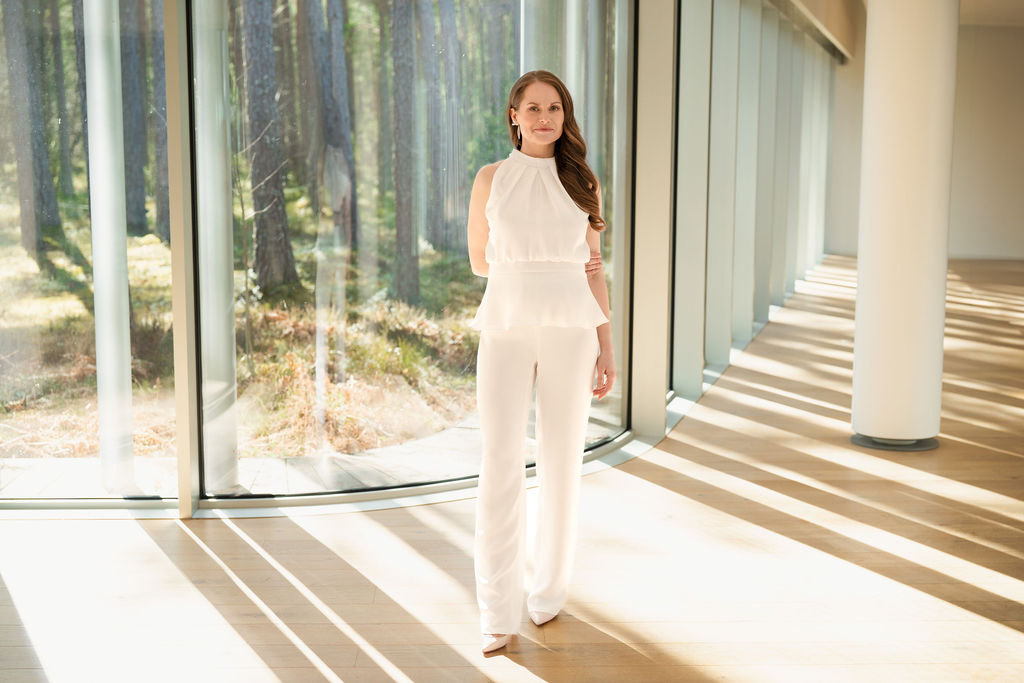
What MARIMO offers instead is a different approach. Rather than responding to seasons, trends, or the particular logic of retail, the brand works with each client to understand what she actually needs: what she already owns, what colours coordinate with it, what occasions she dresses for, and what kind of life she is living. From there, the pieces are made to integrate rather than simply accumulate.
“At MARIMO, we help her understand what she truly needs,” Pikkar says, “and guide her in choosing pieces in colours that coordinate with what she already owns, allowing her to create as many different outfits as possible.”
The brand’s capsule wardrobe approach grew directly from this philosophy. Rather than treating each purchase as standalone, MARIMO designs garments as part of a system, an evolving wardrobe where new pieces speak to old ones and the whole becomes more useful than the sum of its parts. The base capsule set begins at seven pieces and two accessories, and can be styled into more than twenty-five distinct looks. It is a deeply practical idea dressed, fittingly, in beautiful clothes.
Why made-to-measure fits better than ready-to-wear ever can
There is a particular kind of defeat that comes from trying on a garment that should, by all logic, fit. The size is right, or close enough. The cut is flattering in theory. But something is off, a shoulder that sits too low, a waist that pulls, a hem that hangs at the wrong angle. You know, vaguely, that the problem is not you. But it is hard not to feel, somewhere, that it is.
Pikkar has heard this story more times than she can count. She has also, more importantly, corrected it. “Many women with wider hips think that pencil skirts and dresses don’t suit them,” she says. “In reality, when these pieces are made according to their measurements, they fit like a glove.“
The issue is structural, built into the mass production model. Ready-to-wear garments are designed around a standardised set of proportions that do not reflect the actual variety of women’s bodies. Waist and hip measurements, for instance, rarely fall into the same size category. When a garment is cut to a single size number that assumes they do, it will fit imperfectly almost every time, and perfectly seldom.
It’s not a new problem. What is rarer is the practical solution the designer offers. Women who have never purchased a pencil skirt from a regular store, because it simply never fit correctly, have become MARIMO clients who own several because these pieces are made to their measurements, they fit beautifully and can be worn with confidence, as they were always meant to be.
“We see that women who have bought from us don’t want to go to regular stores anymore,” Pikkar says.
There is a more interesting effect, too. Women who are fitted properly begin to understand their bodies differently. They start to notice when something in a shop does not sit right and how their proportions interact with a cut. “They begin to notice how one shoulder can be lower than the other and how that affects the overall fit,” Pikkar explains. The knowledge becomes theirs. The fitting does not just produce a garment. It produces an education.
Inside the MARIMO atelier
The MARIMO atelier sits in Tallinn, a city that carries its history in layers: medieval walls beside Soviet-era apartment blocks beside a quietly thriving design and tech scene that has made Estonia one of Europe’s more quietly remarkable small nations. It is, in some ways, a fitting home for a brand that operates outside conventional fashion cycles, doing careful, skilled, unhurried work.
Inside, there are five in-house constructors and tailors. Four people work on the office side, including Pikkar herself. There is a board of advisors and co-owners alongside her. Nine people in total, producing garments that are worn by some of the most prominent women in the Baltics and well beyond them.

The fabrics arrive from mills with long histories and strong reputations. MARIMO has built sustained partnerships with high-end Italian suppliers, and sources additional materials from carefully selected producers in Great Britain, Belgium, the Netherlands, France, and Spain. The choice of fabric is not incidental. It is, Pikkar would say, part of the point.
When a client comes to the atelier, whether for the first time or the fifteenth, the process begins with a conversation: what they are looking for, what they already have, how they want the garment to feel, whether they prefer a closer fit or something with more ease. Then, measurements. There will be two or three fittings before the final piece is delivered, more for complex designs. For returning clients, measurements often aren’t needed at all. Pikkar describes herself as the link between the client and the team of tailors and constructors, translating needs and preferences across the process.
For clients who are not in Tallinn, none of this changes in principle, only in logistics. Online clients go through the same measurement process and the same series of fittings, conducted with the help of a mannequin or a person whose body shape corresponds to theirs. When the garment is finished, it is shipped wherever it needs to go. A recent pop-up in Chicago brought in a client from California who told Pikkar, simply, that she did not know how they did it: even when her weight fluctuated, her MARIMO pieces always fit like a glove.
The follow-up, once a garment is delivered, is not optional. MARIMO always checks in on the fit. It is, in a small but meaningful way, a declaration of what the brand considers its responsibility to extend to.
Where do women buy clothes when they don’t have time to think about outfits?
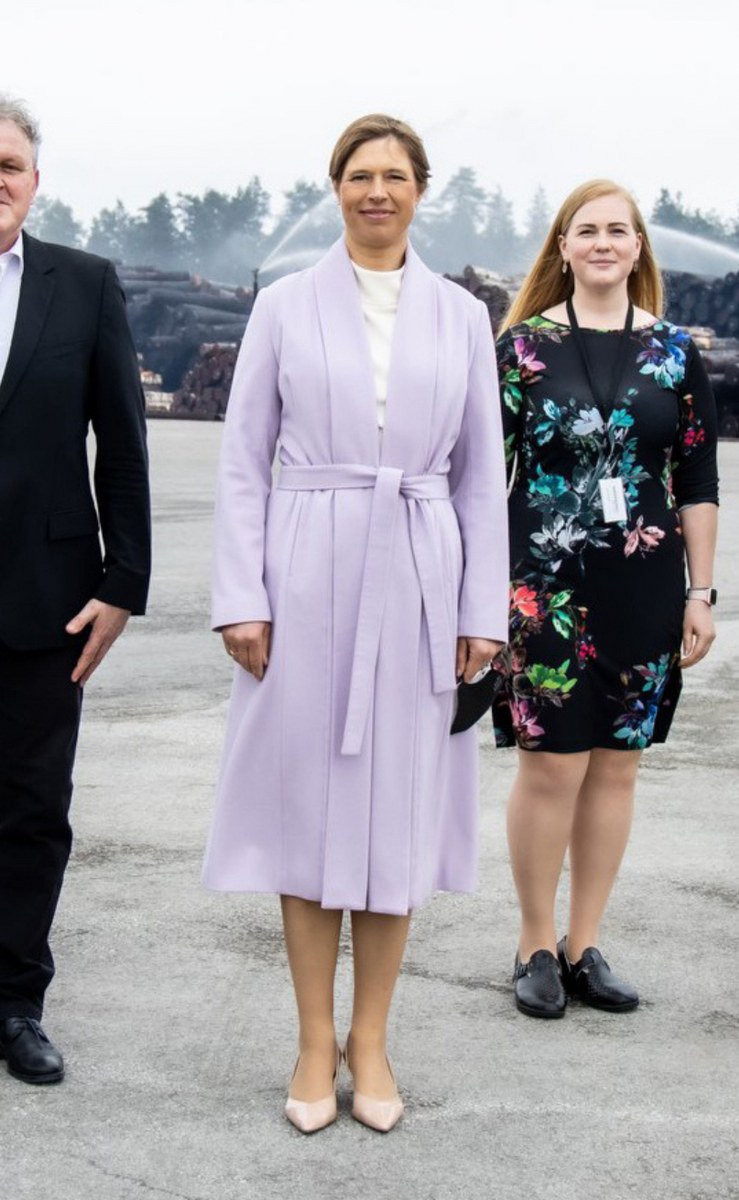
The MARIMO client is, broadly speaking, someone whose life does not sit still. Pikkar describes her as typically aged thirty-five and over, often a leader in her field. She travels frequently, attends events that require her to be at her most presentable, and is often managing a demanding professional life alongside children and an active social calendar.
What this means, practically, is that she needs clothes that can move with her. Not a work wardrobe, a separate evening wardrobe and a weekend wardrobe. A cohesive set of pieces that can adapt, be re-styled, and carry her from the nine o’clock meeting to the dinner that follows it without requiring her to go home and change.
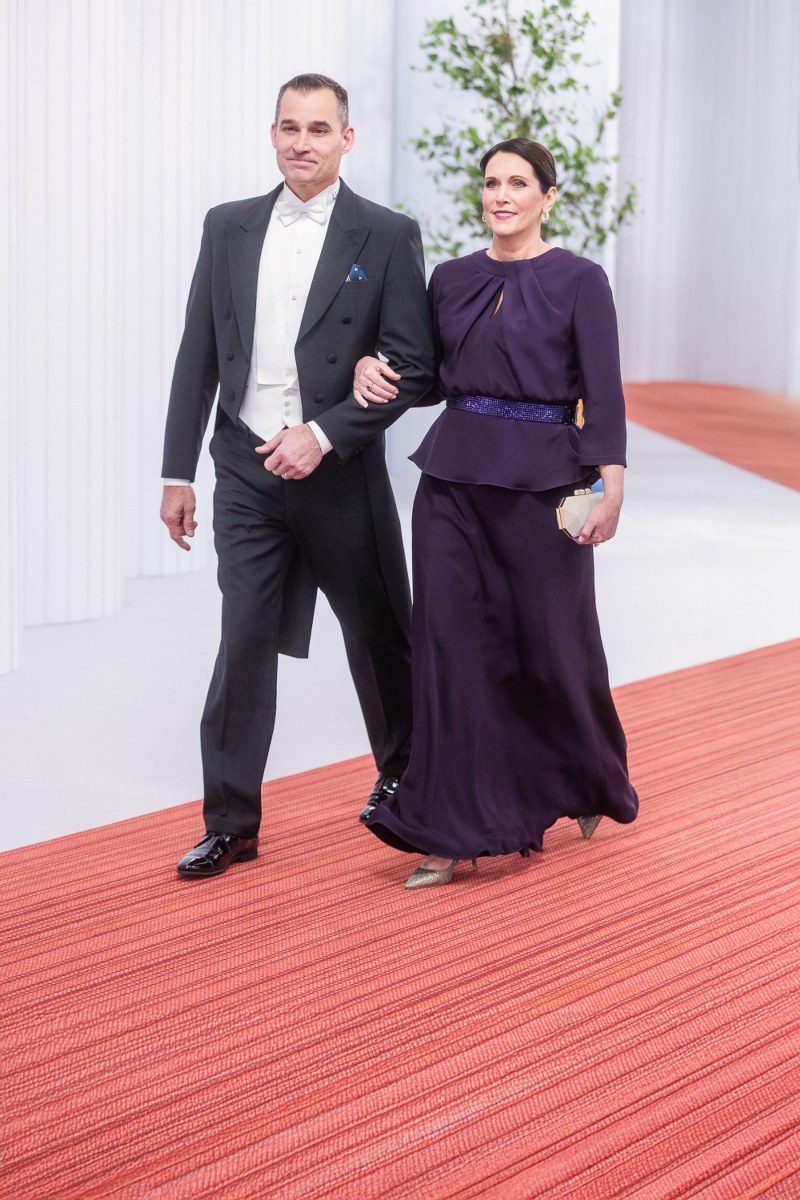
The brand has built this thinking into its design. Its accessories are a good example: back chains, elegant additions for open-back blouses, dresses, and jumpsuits that shift a piece from daytime professional to evening without touching the garment itself. Crystal belts in different widths that transform a structured dress into something suitable for an occasion and presence. The idea is not to have more clothes. It is to make the clothes you have do more.
This is also, Pikkar says, a deeply personal conviction as much as a brand philosophy. She is a mother of three. She knows what it means to have approximately no time in the morning and to need to look put-together anyway.
“Our customers’ mornings are busy,” she says. “There’s no time to try on multiple outfits, so you need pieces and styling solutions that actually work. And that’s exactly what MARIMO’s made-to-measure garments do.”
Why beautiful clothes should be worn every day, not saved for special occasions.
A great deal of fashion operates on the logic of the special occasion: the dress that lives in the wardrobe for the event that never quite comes, the suit worn twice and then preserved like a relic. “The brand’s communication emphasises that clothing should not be reserved only for special occasions, but integrated into everyday life.”
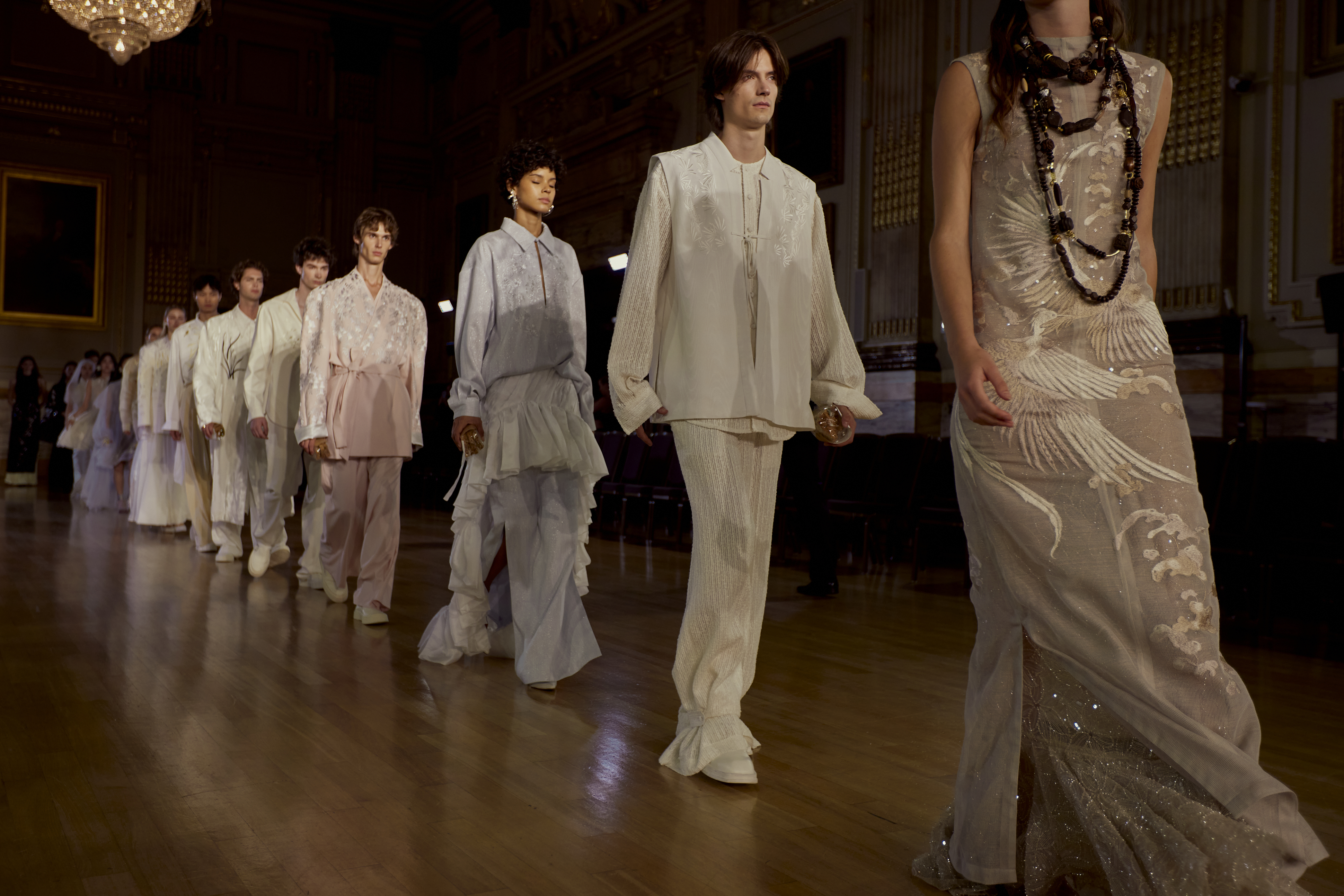
The brand’s campaign imagery sometimes leans toward the more statement pieces, the embroidered gowns, the more dramatic silhouettes, using them to show what the materials and construction can do. But these exist alongside the daily workhorses: the blouse worn ten times a month, the jacket that goes with everything, the dress that has been to three countries in the past year and looks better each time. MARIMO is not interested in the distinction between the two. The care brought to the gown is brought to the blouse. The standard is the standard.

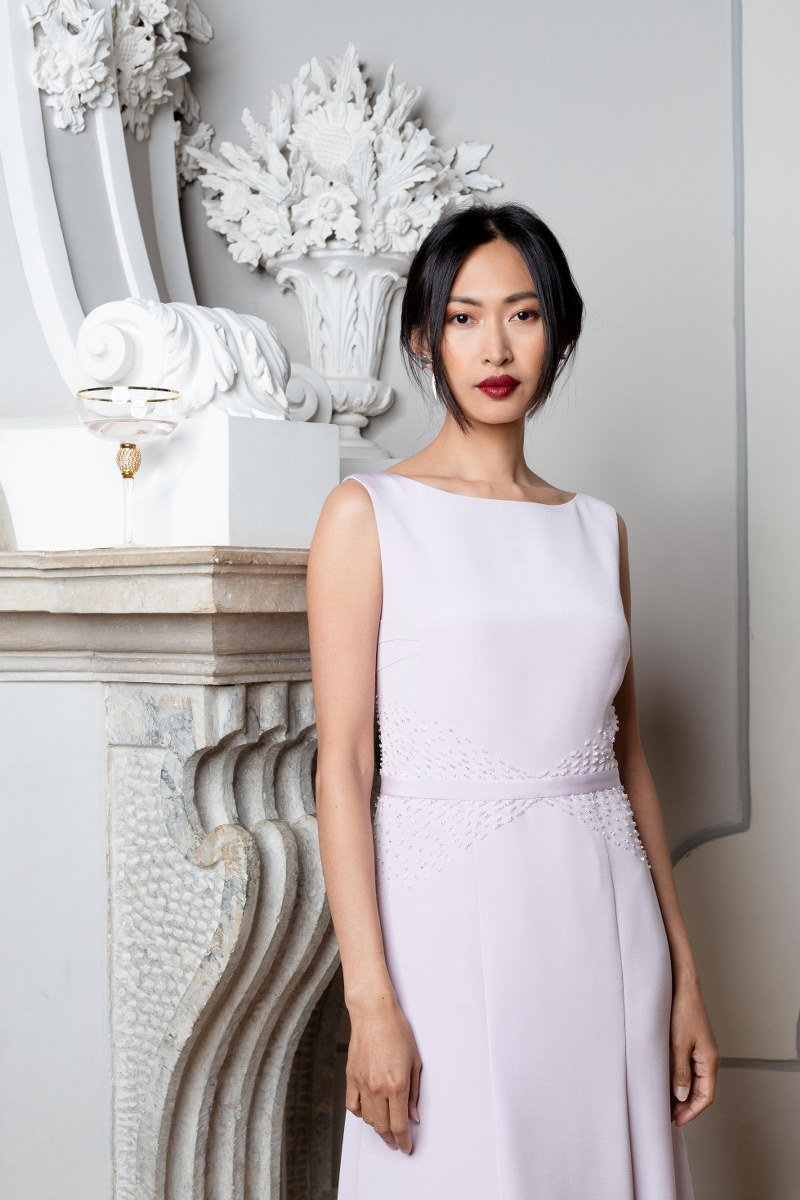

This is also what the brand means when it talks about building a wardrobe rather than buying clothes. The difference is in the verb. Building suggests time, intention, something that accumulates meaning and utility. It is the opposite of emotional buying, the impulse purchase, the half-considered addition that makes the wardrobe larger without making it better.
The real cost of made-to-measure:
A MARIMO piece is not inexpensive, and the made-to-measure fees add onto it. More elaborate pieces, those with hand-embroidered crystal work or intricate construction, can reach six or seven thousand. The average commission falls somewhere between 1,500 and 3,000 euros.
Pikkar is comfortable talking about this. She is also comfortable making the argument that the maths looks different than it first appears.
“A MARIMO made-to-measure garment, if properly cared for, can end up with a lower cost-per-wear than a lunch in Tallinn,” she says. She has MARIMO pieces she has worn for ten years. They still look like new.
The logic is not difficult to follow. A thirty-euro fast fashion blouse worn three times before the seams go is not cheaper than a thousand-euro blouse worn a hundred. It is considerably more expensive, in every sense: financially, environmentally, and in the accumulated cost of replacement, of another morning standing in front of a wardrobe full of things that do not quite work.
MARIMO’s made-to-order model also addresses something more systemic. Because the brand produces to demand rather than in anticipation of it, there is no excess inventory, no end-of-season surplus to be discounted, destroyed, or shipped to secondary markets. Each piece is made because someone wants it. This is not a small thing in an industry whose relationship to waste has become one of its defining problems.
Mariliis Pikkar started MARIMO the year the economy fell apart, with a clientele she had built by hand, a skill she had been developing since childhood, and an advisor who later became her husband and the father of their three children. She is, by any measure, a founder who did what she set out to do. New pieces are designed to integrate with previous ones. The relationship between the atelier and the client is not transactional. It is, in the best sense, long-term and the opposite of fast fashion and cheap frenzy.
There is something instructive in this; fashion tends to be structured around beginnings, the new collection, the new season, the new thing. MARIMO is structured around continuation. The question is not what is new. It is what you need now, given what you already have, given who you are and how you live, given the morning ahead of you and all the mornings after that. It turns out this is what the world’s busiest women have been waiting for. Not more clothes. But clothes that fit and last.
MARIMO is available online at marimofashion.com and through the Tallinn atelier. International pop-ups are announced via the brand’s Instagram and newsletter. You can find the founders at @mariliispikkar and @marimofashion