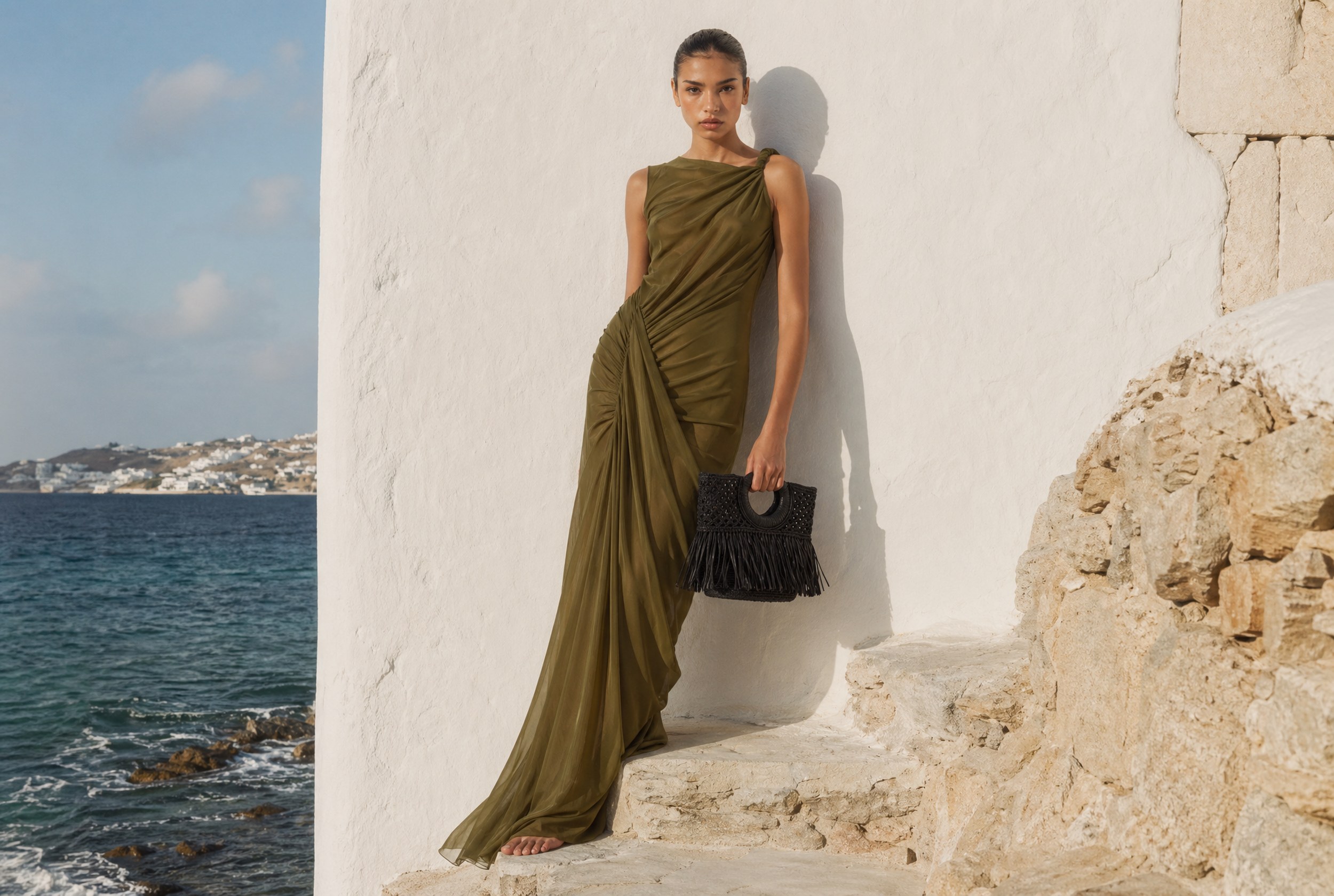
IIt is a statement in itself to build a fashion brand in our day and age. Speed is the grammar of the industry. Newness is the product. The average fast fashion brand now releases somewhere between 52 and 100 micro-collections per year. Even at the higher end of the market, the pressure to refresh has accelerated to a pace that would have been unrecognizable twenty years ago. Yet, FELUS works differently. The ION bag, which is the only product the brand makes at the moment, arrives into that environment as a deliberate refusal.
The bag is made of real raffia. It breathes. It lives. Most of what gets sold as raffia today is plastic. The genuine material comes almost exclusively from Madagascar, hand-harvested from the raffia palm, and the supply is shrinking. FELUS founder Reina Felous knows this, and she built her brand around it. Each piece is crocheted by hand in Madagascar, finished in Greece, and carries a leather charm stamped with the Greek letter Phi. The full production cycle takes four to six weeks per bag. There are no shortcuts built into that timeline.
The Trip That Started Everything
Felous grew up in Greece with family roots in Egypt, spent years working in Milan, and came to the idea for FELUS not through a business plan but through a moment of getting lost. In November 2024, she found herself wandering the souks of Marrakech for hours, circling back repeatedly to the woven bags hanging from every stall. The image stayed. She went home, started researching the material, and found Madagascar.
“That’s how I found Madagascar, a country with a profound weaving tradition that became the beginning of what FELUS is.”
It is worth pausing on that phrase… a profound weaving tradition. Because it is not marketing language. Madagascar has one of the oldest textile cultures in the Indian Ocean region, with raffia weaving documented as far back as the 17th century. The fiber itself comes from the young leaves of the Raphia farinifera palm, native to the island’s eastern rainforests. Weavers split the leaves by hand, dry them, and prepare them in a process that has changed very little over generations.
She is precise about the difference between real raffia and the synthetic version, and pointed out why it matters. Real raffia ages with the person who carries it. It develops a relationship with the user. Synthetic raffia does not. Most consumers have never held the genuine article because the genuine one has quietly been replaced, the way so many things have been quietly replaced, and nobody stopped to say anything about it.
Sparse weave, clean form
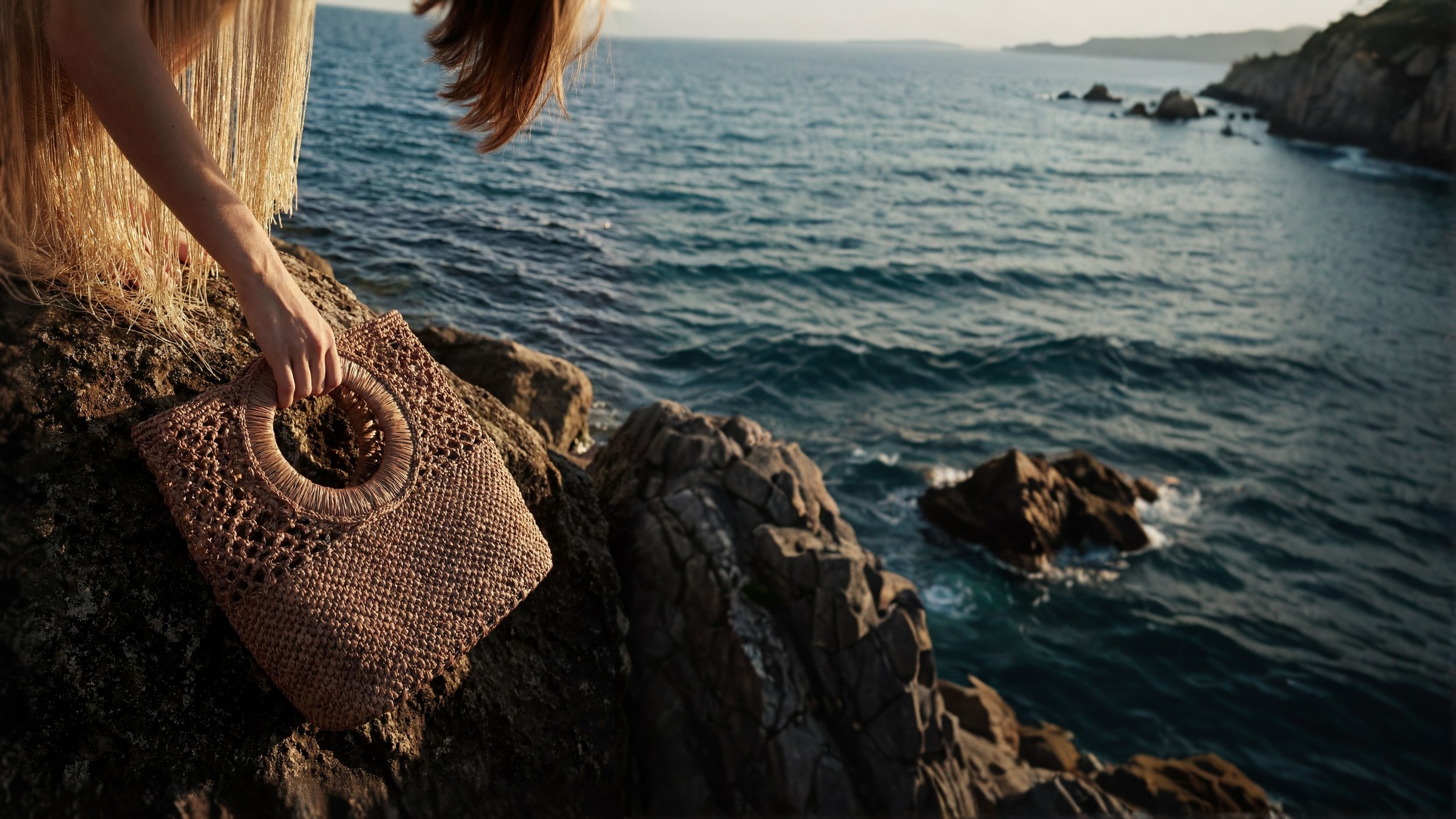
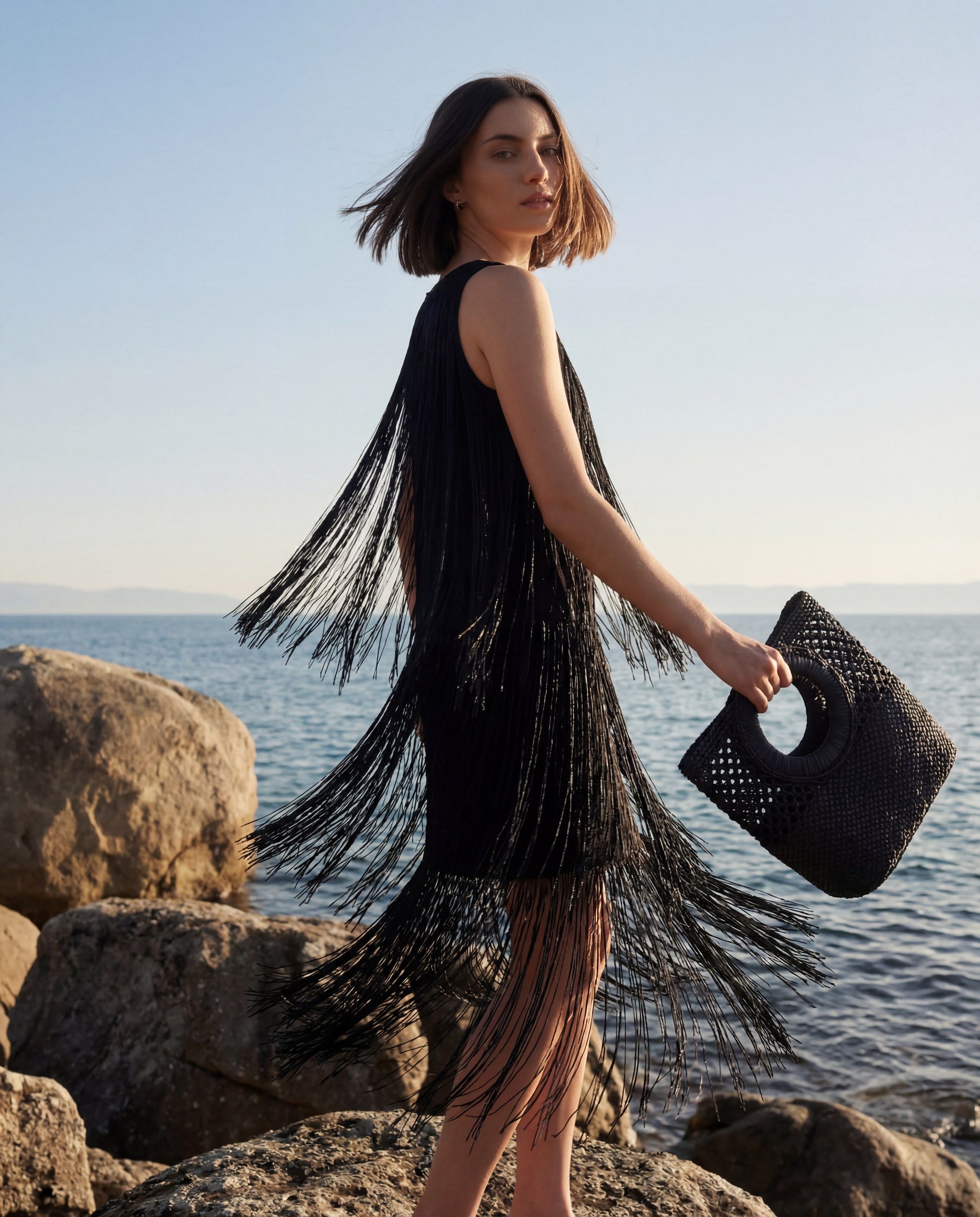
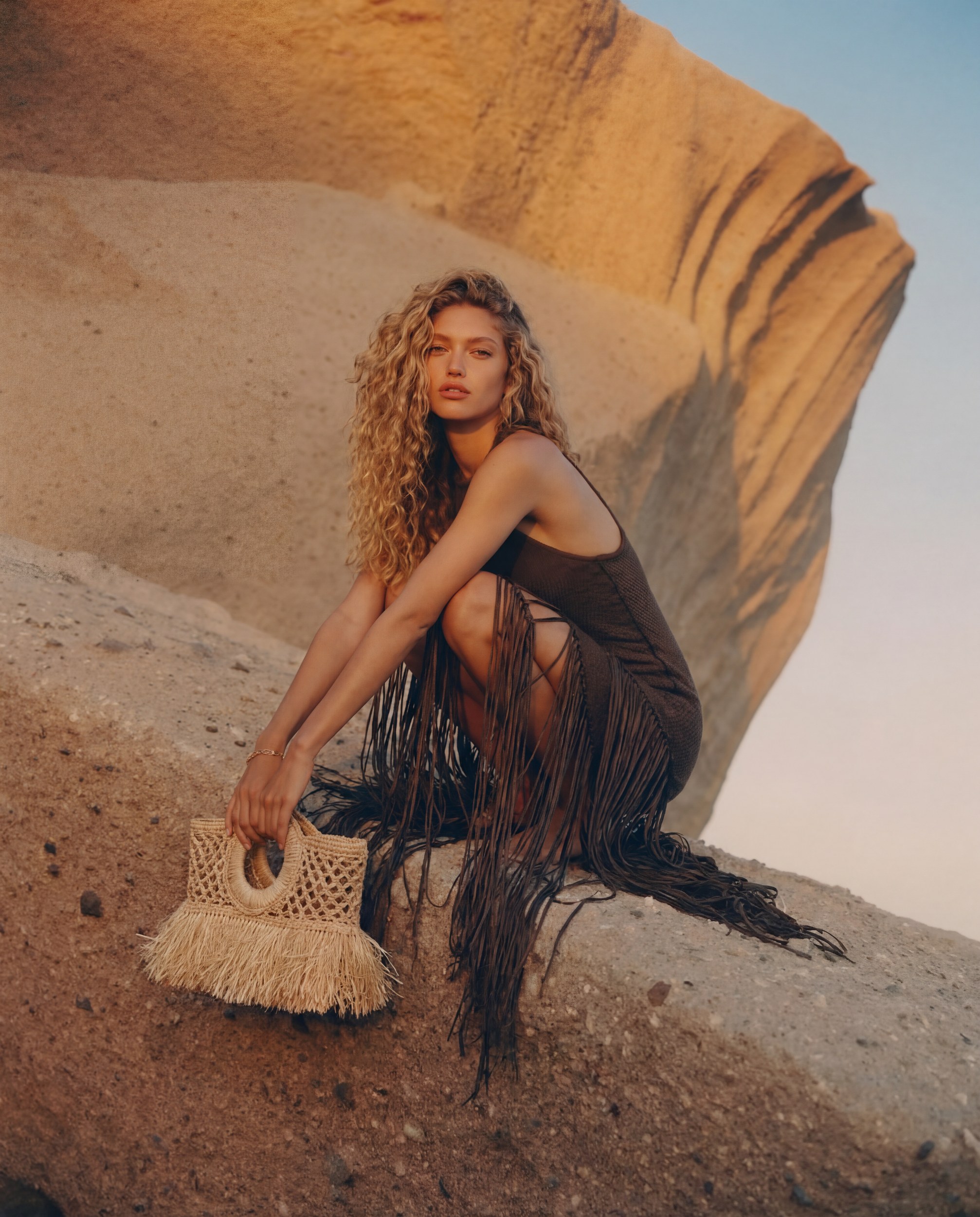
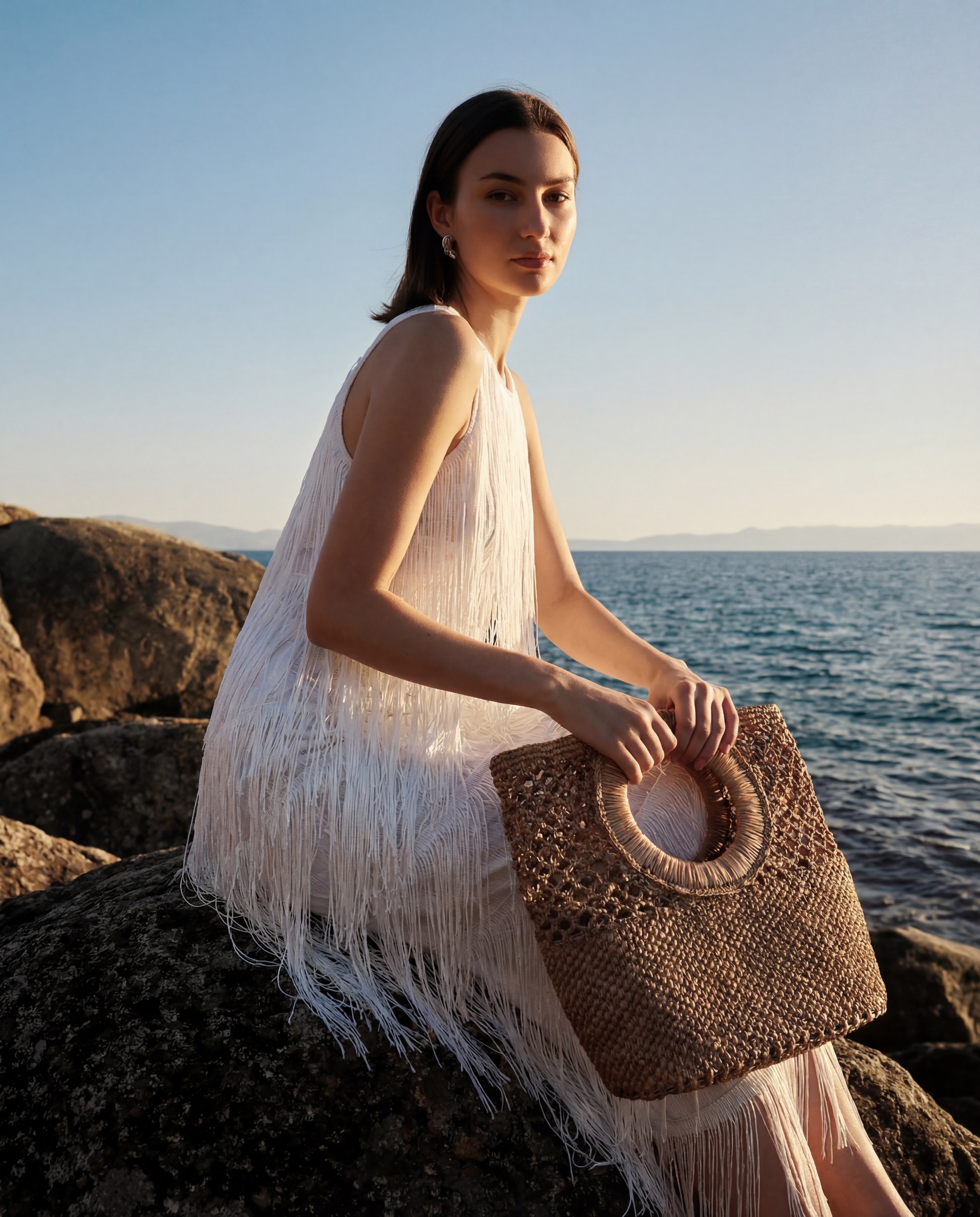
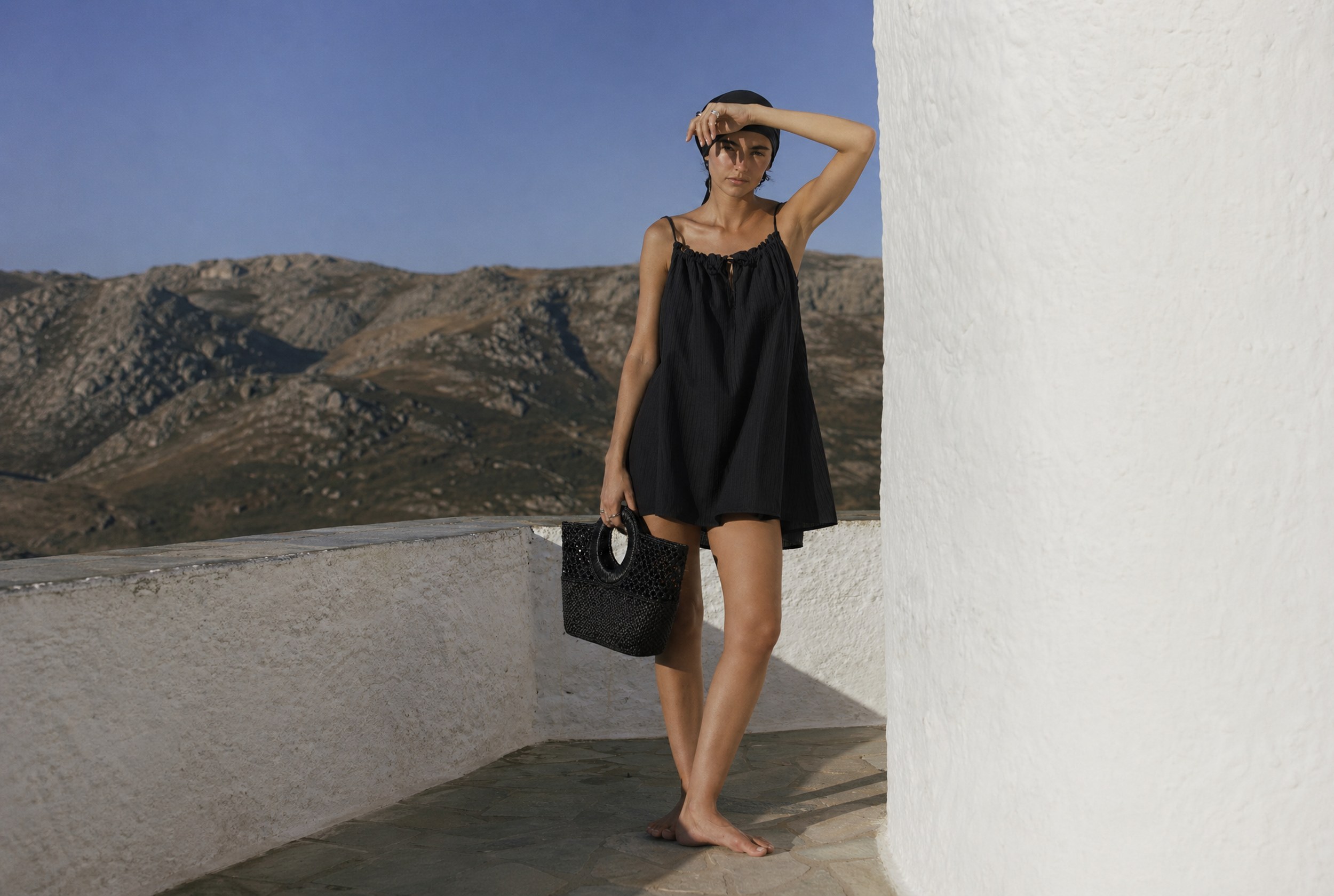
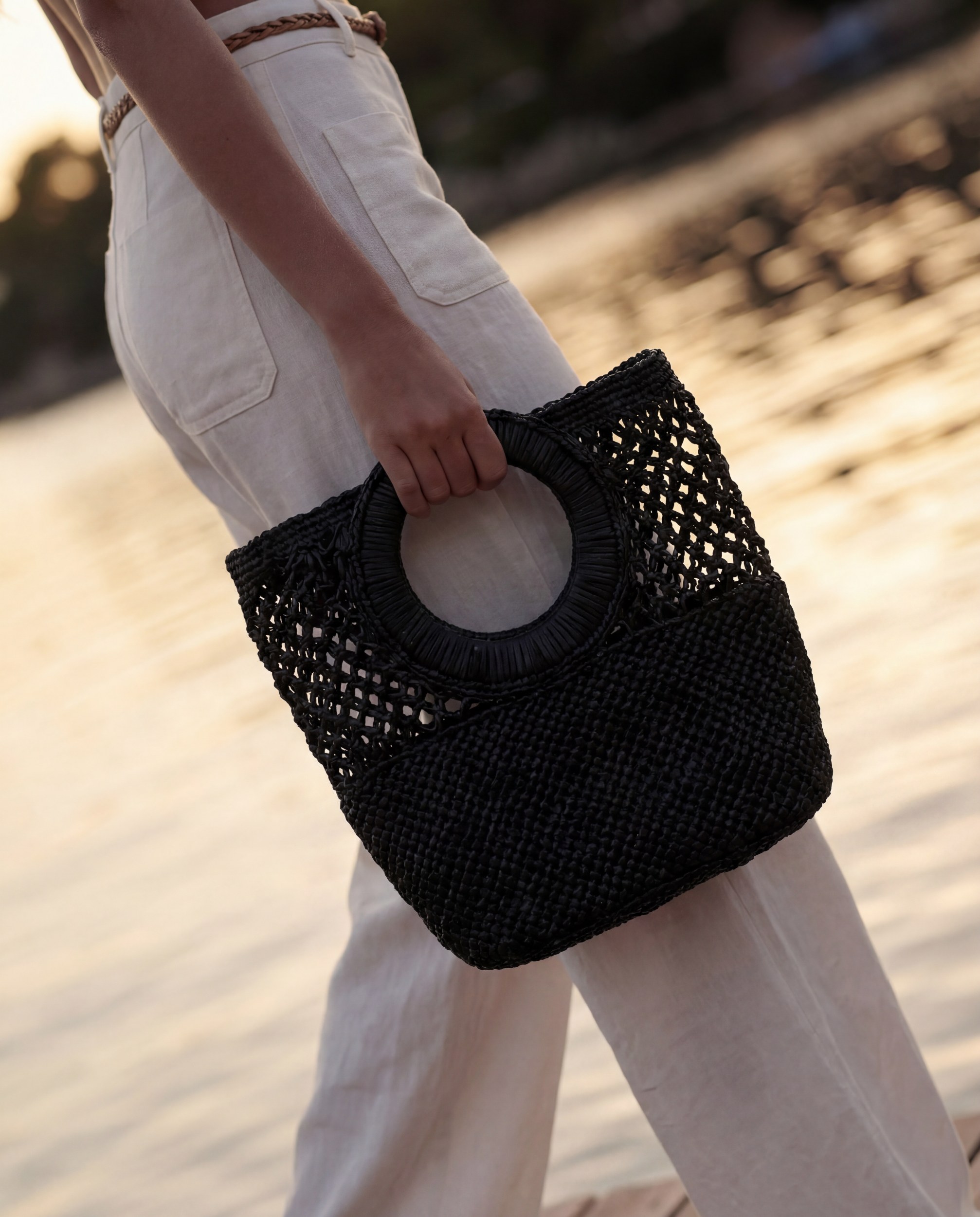
The ION is an open-weave crocheted bag with a circular handle. The weave is sparse, almost architectural, but the bag holds a clean, recognizable form. Felous describes the contradiction as deliberate: “An open, almost sparse weave that still holds a clean, distinct form. It felt like a quiet kind of confidence.”
The bag comes in four proportions, from a small crossbody scale to something closer to a market tote, and six distinct styles within that framework. The color palette runs to four options. This isn’t minimalism for the sake of branding restraint. The structure exists because Felous was making a specific thing, not a full catalogue.
That restraint is rarer than it sounds. The pull toward range extension is one of the most consistent pressures on young brands, wholesale buyers want options, stylists want variety, and the algorithms that govern Instagram discovery tend to reward volume. A brand that launches with one bag and holds there is making a bet that the object itself is strong enough to carry the conversation.
Each bag begins in Madagascar. The raffia is harvested, dried, and prepared before weaving begins. The weavers work without machines. Once the body is complete, leather is added, woven directly into the raffia rather than attached on top. Then the bag travels to Greece for finishing. Four to six weeks is the timeline the full process requires. “We don’t argue with it,” Felous says.
The letter that hangs from every handle
The leather charm is cut from a single piece of hide. No rivets. No assembly. It carries the Phi symbol, the Greek letter that opens the word FELUS, but rendered as something abstract: two asymmetric arcs flanking an extended stem, suspended mid-motion. Felous is direct about what she wants it to suggest. “Some see a weaving tool mid-gesture; others a figure with arms outstretched, a doorway, a vessel. The ambiguity is intentional.“
Phi is also the symbol for the golden ratio. The reference is quiet but present. A nod to proportion, to beauty that does not need to explain itself.
Brands have used the golden ratio as a design principle for as long as there have been brands and art, it shows up in everything from the Chanel logo to the proportions of the Apple interface. But most of those references are invisible, baked into the geometry and never named. Hanging it from the handle as a literal charm is a different kind of move. It makes the reference touchable. You can hold the Phi in your hand while you carry the bag, which is either slightly too much or exactly right, depending on your tolerance for that kind of symbolism. Given everything else FELUS is doing, it reads as exactly right.
Five Generations and a Fashion Capital
The craftsmanship behind FELUS is not a marketing claim. The women in Madagascar who weave the ION come from a tradition that spans generations. Felous found them through research and recognized immediately that this was the right starting point, not because it made the brand story easier to tell, but because working with people who have been doing something for that long produces a quality that is simply not available elsewhere. The weavers’ knowledge is embedded in their hands. The bags carry it.
This is the part of the slow fashion conversation that rarely gets examined closely enough. The word “artisan” has been so thoroughly absorbed into luxury marketing that it has lost most of its meaning. Brands apply it to anything made with some degree of manual involvement, which is almost everything. What FELUS is describing is different: a community of weavers who learned this specific skill from their mothers, who learned it from theirs, working with a material that grows in their own backyard and has shaped their economy for centuries. That is not a sourcing decision. It is a relationship with a place.
Greece contributes the finishing, and something harder to name. Felous is specific about what her years in Milan gave her: rigor, form, an eye trained by repetition. Milan is where she discovered her love of fashion and photography, where her visual language began to take shape. But Greece came first and runs deeper. The light there, the summers in the Cyclades, the directness of things made by hand over centuries without much fuss. FELUS holds both registers. The Milanese precision visible in the clean silhouette, the Greek ease in the way the bag sits on the arm.
Egypt is in there too, though less explicitly. The markets of Cairo, the woven goods that circulate through North African trade routes, the visual culture her family carried with them when they settled in Greece. Marrakech, where the idea crystallized, belongs to the same geography of influence.
The Business Case for Doing It Slowly
The slow fashion conversation has been happening for years, but the products that actually embody it are still rare. Much of what travels under the slow fashion label is still produced at scale, still relies on synthetic or blended materials, still replaces itself seasonally. The terminology has outpaced the reality. The ION is one of the genuine cases, and not because Felous chose slow as a brand value to communicate. The slowness is structural. A bag that takes four to six weeks to make by hand cannot be made faster without becoming something else.
This creates obvious constraints. FELUS cannot scale the way a synthetic-material brand scales. The supply of genuine raffia is limited. The number of skilled weavers with generational expertise is not growing. The business sits inside those constraints rather than trying to engineer around them.
There is a case to be made that this is exactly where fashion needs more companies. The industry accounts for roughly 10 percent of global carbon emissions annually, and the acceleration of production cycles is a significant part of why. A brand whose output is physically capped by the availability of a natural material and the pace of skilled human labor is not going to solve that problem on its own. But it represents a different model, proof that the alternative exists and that someone is willing to build around it seriously.
What the ION offers in return is something that ages. The raffia shifts under use. The leather charm develops a patina. The bag you carry in five years will look different from the bag you picked up, and the difference will be yours specifically. That is not a feature you can manufacture. It is what happens when a material is real.
The ION bag is available through felus.shop. Each piece is produced in limited quantities by necessity, and the current collection represents FELUS’s first full offering.