The Paris Fashion Week is considered a flurry of front row excitement. Fine. But what’s lost in the chaos is the underground: all relatively new designers doing things differently and speaking on sustainability.
Some briefly infiltrated celebrity culture with memorable pop items. But as their brands far surpass stand-alone statement pieces, their practice deserves far-flung acknowledgement. Starting with celebration of their Paris Fashion Week Autumn/Winter 2026 collections.
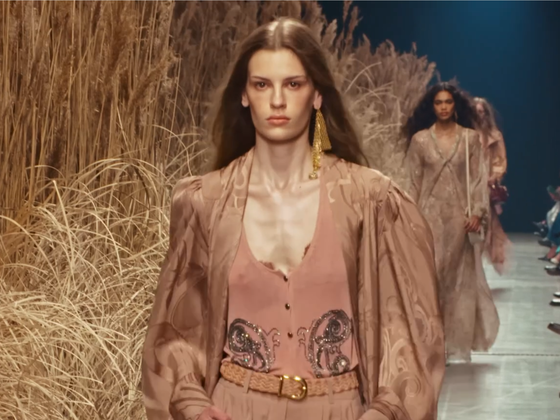
Ellen Hodakova Larsson perfects design sensibility beyond the statement. She’s known for Cate Blanchett’s spoon-embellished dress, a neat reflection of her brand, Hodakova’s, DIY, artful sustainability. Propelling her brand vision, Larsson recognises that true sustainability must be accessible, no matter how wacky.
Words by Sinead Latimer Lasic
Hodakova by Ellen Hodakova Larsson
For us, fashion usually starts in an apartment, excusably messy, a well-rounded sort of neutral. We scrap together a vibe, an external performance, as self-expression. It’s not that deep.
Our idea of a look reflects Hodakova’s perspective: accessible accents of eccentricity. Style, which is also sustainable DIY, suitable for all of us scrapping through life, however fashion-minded we may be.
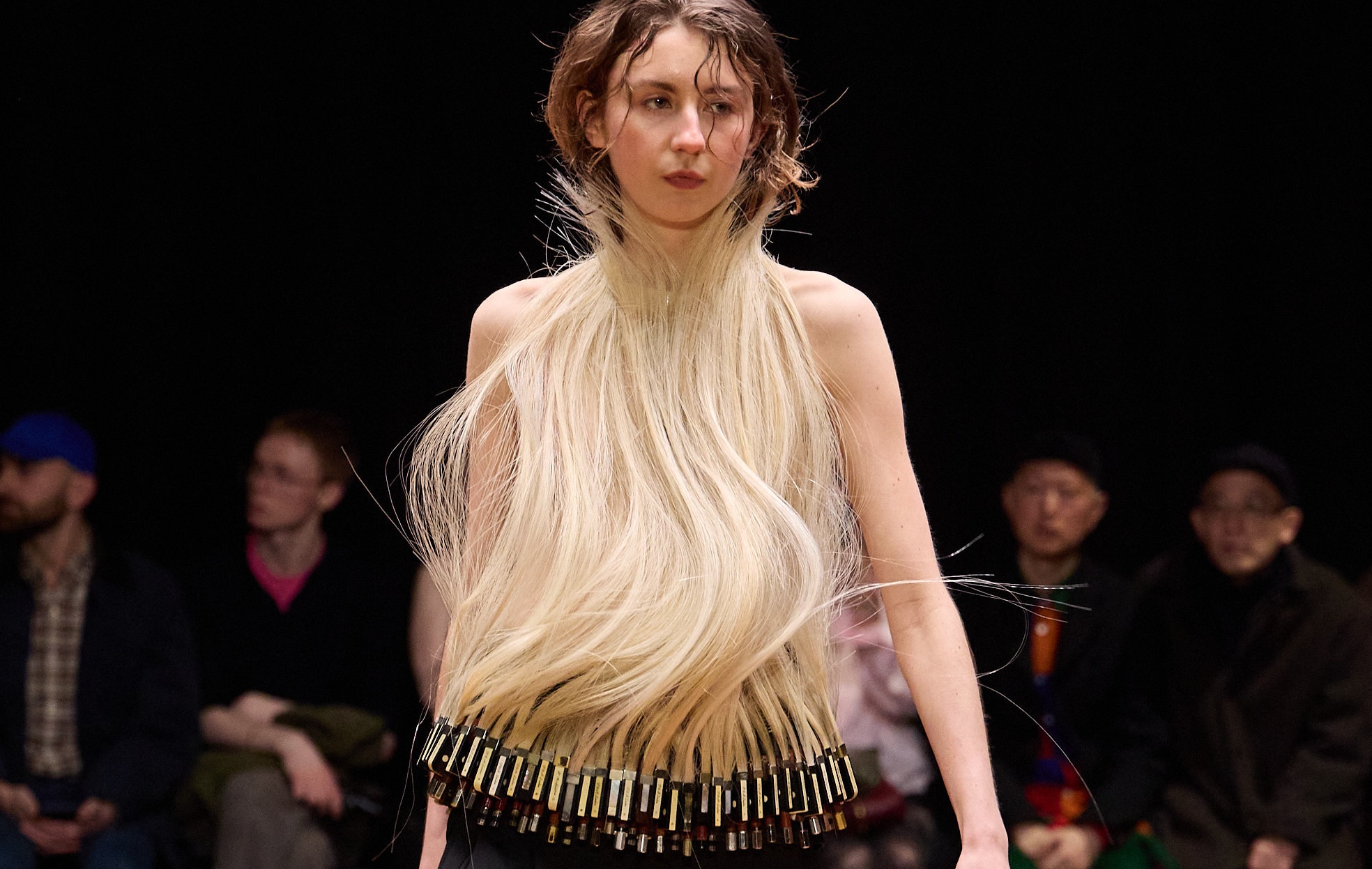
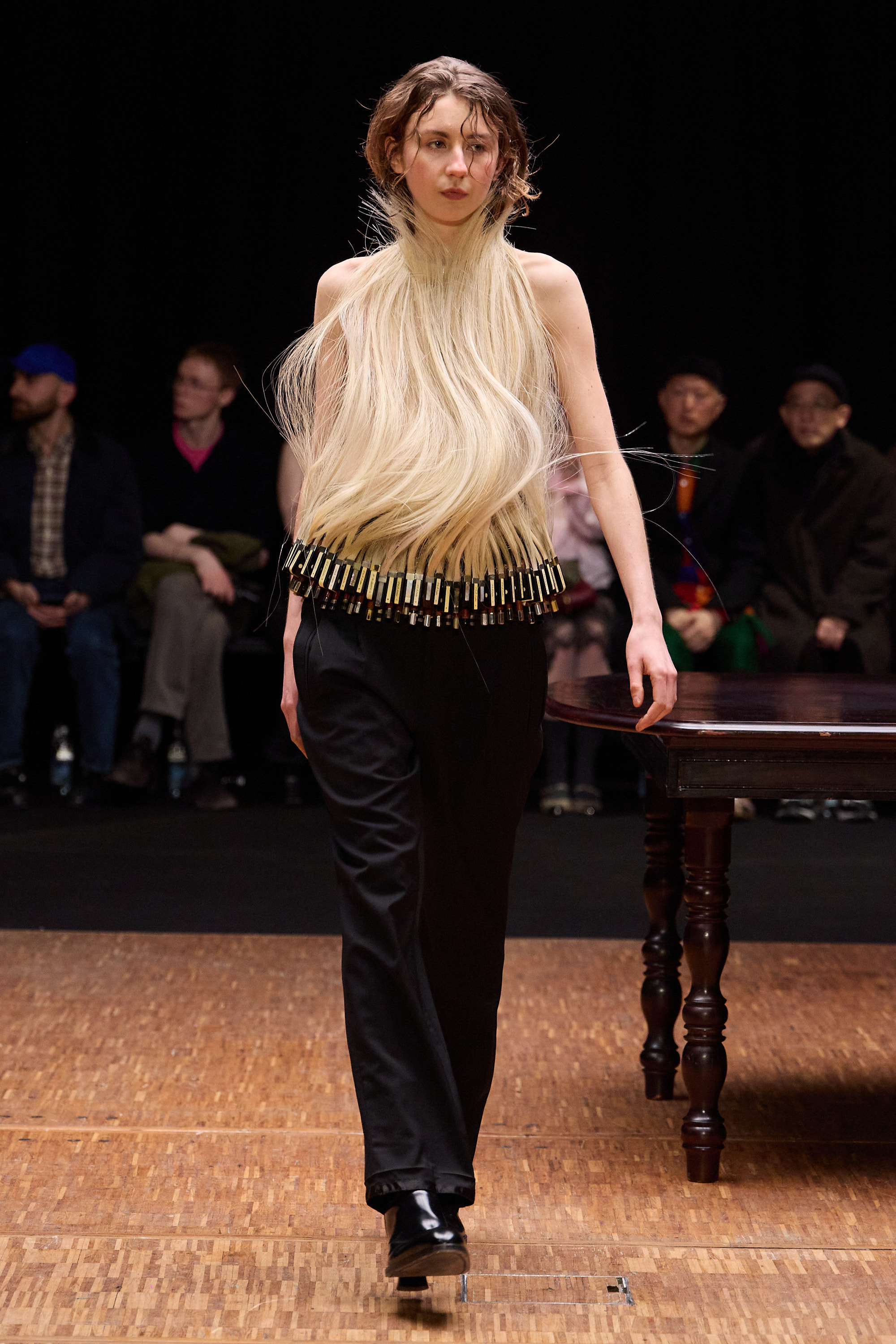
First, that horsehair vest, fashioned from old violin strings. It’s crafty, undeniably bric-a-brac, in a plucked-this-from-the-backroom kind of way. Fashion is manufactured from convenience, which also shows you off.
And gets people thinking, if only to ruminate a return to homecraft.
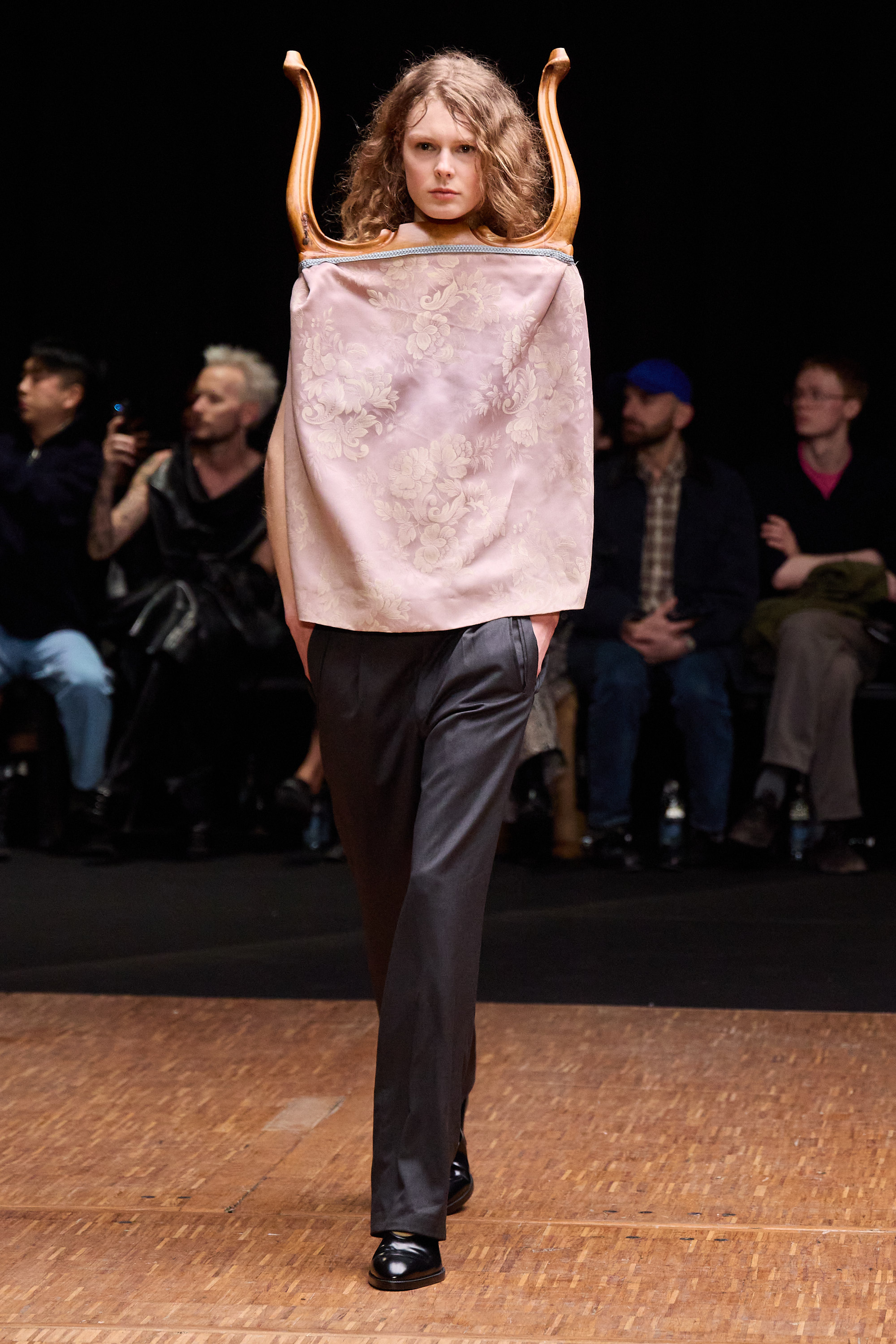
This horsehair, a vivid illustration of Hodakova’s craftsy, dwelling-bound eccentricity. But then, the chair.
The show’s most vivid theme, worn in various imaginings, on the shoulder, upside down, plastering the torso.
Hodakova Fall 2026 Ready-to-Wear Collection
Manufacturing depth in a point of difference, that is, manufacturing depth of expression, simply by pretending objects are anything they are not.
A nod to fashion at large? After all, doesn’t commercial fashion pretend anything is self-expression for the sake of sales?
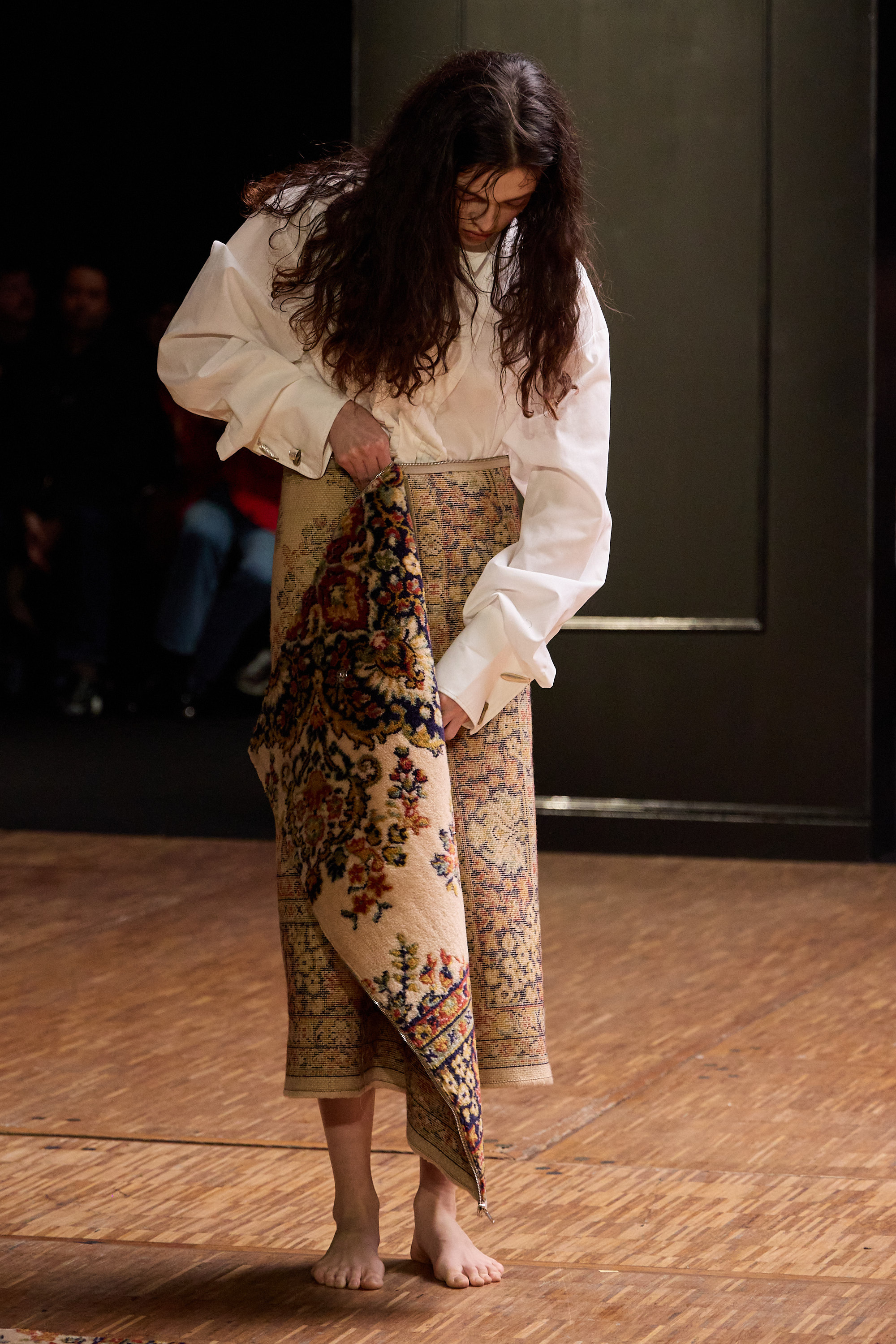
My favourite look this season, that tablecloth, whipped from body to desk; it’s a convenient sort of anything-that-says-anything but is slightly eccentric to command attention. Bonus, it’s sustainable.
And, through this look, Hodakova elevates the experience of wearing Home Depot, having models pile live into the rugs as dresses. It completely recalls Hussein Chalayan’s performance art: objects as wearable innovation.
Hodakova’s runway, as is customary in fashion, builds in edginess, so that the viewer slowly becomes accustomed to its ultimate absurdity.
Our logical conclusion? Hodakova is sustainability and truth, conveying what we all desire from fashion, premium accessibility, which makes you look twice.
Institution by Galib Gassanoff
Born in rural Georgia to Azerbaijani patents, Gassonoff was raised amongst the rich traditions of artisanal trade. And he obviously, given his creative fabric use, wants us to embrace these traditions.
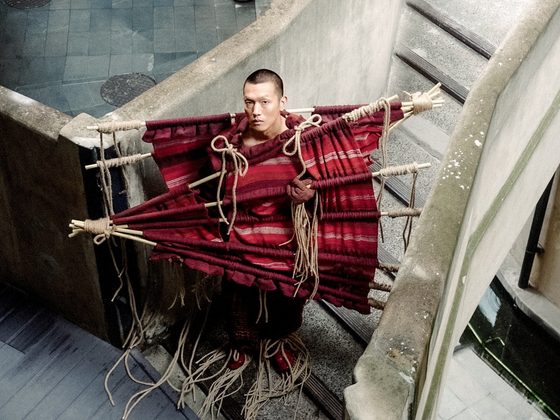
Look here, where he reimagines upcycled shoelaces blended with traditional Georgian fabric, as yak-like thread, hung in a Sherpa coat. The piece, traditional to Caucasus, his mountainous home terrain, simultaneously celebrates tradition and creativity through a contemporary shoelace-y approach.
The creative design only emphasises the versatility of Georgian traditional wear, especially of its fabric, all attention-grabbing rope.
Next, Gassanoff offers another coat, essentially a rug. It counts as design because it bloody well works; classic vertical loom, twisted into pointed shoulders. And such strong shoulders, the requisite regency required for bold tapestry native to The Caucasus.
Again, bold fabric takes centre stage.
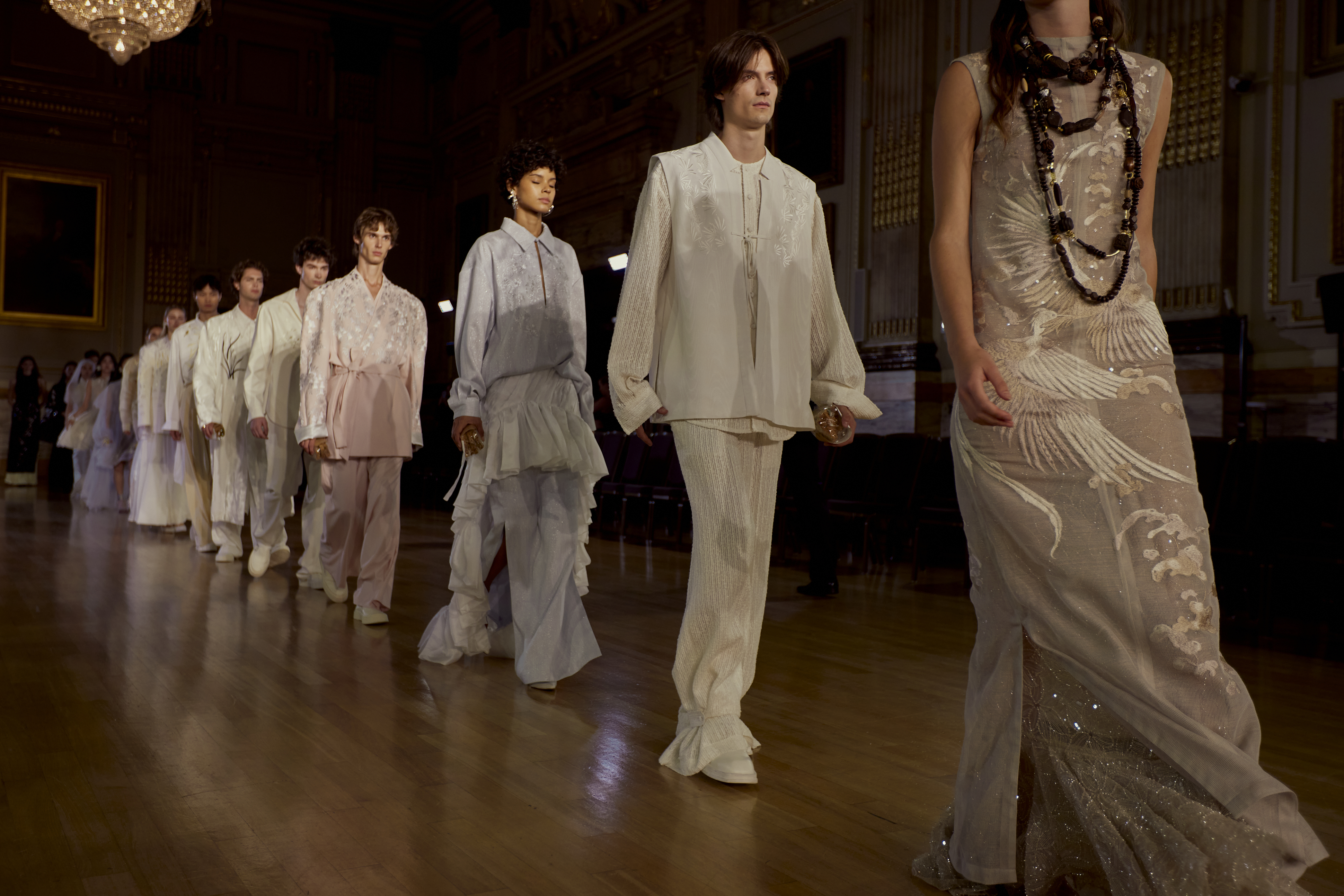
Gassanoff also plays plenty with the veil, a staple wear in Islam, Azerbaijan’s predominant religion. In one look, he twists the veil into a dress so that it, structurally, becomes the whole look; this modern approach deconstructs the traditional veil.
Indeed, in the early 20th century, Azerbaijan loosened the religious mandate that women wear veils, giving rise to something of the contemporary. Ultimately, this cocoon dress we’re left with is reincarnated, on the catwalk, in multiple, monastic styles.
I can’t turn away, a celebration of femininity, tradition and modernity.
Overall, fashion by a professional. Traditional dress, boldly reworked, often to a contemporary beat and sometimes in different versions of the one style, impresses traditional looks as highly inspirational.
And, through statement pieces showcasing regional fabric, Gassanoff cements rural artisanal in couture.
Hodakova Fall 2026 Ready-to-Wear Collection
Fidan Novruzova
Enter another Azerbaijani designer. Like Gassanoff, Novruzova’s designs are nostalgic; however, they’re inspired more by the 80s than by strict tradition.
Broadly, Novruzova is Azerbaijani fashion: melting Middle Eastern with Slavic style, or, in womenswear speak, diaphanous feminine with militant pragmatism. Only an expert blends opposite elements cohesively, in part explaining fashion’s sharp interest in Azerbaijani designers.
Novruzova leans heavily into her Slavic background, raised, predominantly, in Moldova by Azerbaijani parents. Here, post-war, she plundered Vinnies for culturally sound, pragmatic pieces, made to last. You can also imagine pop culture, loud fun, promising relief, infiltrating discount stores, for easy public consumption.
From this early introduction to fashion, Novruzova built a brand, distinctly her own, but with vivid references to the brash 80s and 20s. She calls her look “retrofuturistic”: nostalgic homages warped into new silhouettes.
Contributing to the vintage vibe are tailored finishes, which suggest durability. Recall her ’22 Hadid-endorsed Havva boot?
The boot reappears in this collection, its longevity emphasised through compatibility with a broad outfit range, its baggy bulk and square toes: very durable workwear. It’s manual creasing and cropped iterations, also pushing survival through the decades.
Such play-on-detail is just one reason why Novruzova should dominate work wardrobes.
To best understand her workwear appeal, we must return to her collection prior to her debut Paris Fashion Week. The collection introduces an arakhchin, a traditional Azerbaijani skullcap, replica, as a cultural byline.
There’s that iterative 20s dropped waist flapper dress. Its cotton, monochromatic presentation, all styled T-shirt: sufficiently subversive for the conservative office. Then, the 80s boxy, tied jacket: in-your-face but easy-wear, almost anti-authoritarian. Totally practical though.
Her jackets strike pirate-y at times, big-buttoned, silky and studded, festooned workwear. Statement, balanced, naturally, through accessibility, including through the collection’s unifying striped print.
Her next collection continues, less obviously, on the same theme. The Havva predominates and the flapper flounce is introduced to manipulate formal cuts.
The flounce alters shown suiting structure, changing feminine silhouettes, accommodating different body types. Ribbons and belted waistlines also help adjust to proportion.
There’s also looped collars as deconstructed sleeves, recalling 80s sports jerseys, tied to style, at the collarbone: nostalgic practicality. The persistent arakhchin-like cap suggests another layer of nostalgia, which cultural memories Novruzova cultivates.
The looks balanced nonetheless, fitting practicality with feminine form.
Perhaps Novruzova doesn’t exaggerate deeply ingrained, generational traditions, because she is about her own style.
She subverts the simple celebration of the 80s and 20s into new practicality, never forgetting that quality and wearability are key.
Let’s round out Paris Fashion Week with an OG Parisian, who elevates cosplay into big commerce. To understand his fashion, we dissect character evocation.
Hodakova Fall 2026 Ready-to-Wear Collection
Maitrepierre by Alphonse Maitrepierre
Another eponymous label, which promotes avant-garde. But this one is weirdly conservative, celebrating savoir faire, or what-looks-good in each garment. Maitrepierre evokes precise, vintage Parisian fashion, but veers sharply into Geek.
He crafts customarily beautiful pieces which substitute, in slightly exaggerated silhouette, as costume design. They’re all character arc, an obsession with narrative.
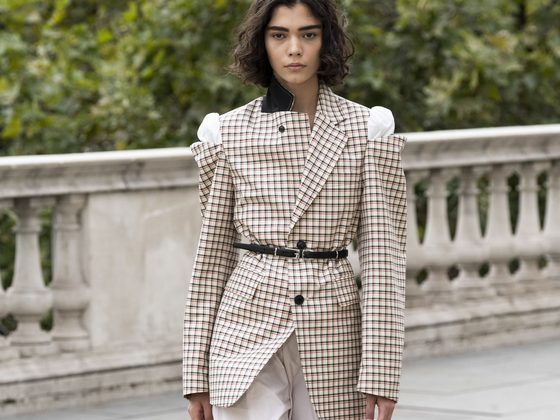
Look 1 illustrates this perfectly. The grey jumper and skirt, artfully draped, are pure heritage Parisian. But that turtleneck’s billowier than well-laced Parisian fare, the skirt also clunky in cross-weave. The bloated silhouette consequently strikes as a new kind of character. The point of difference from which springs a story.
Reconciling disparate styles, we conclude a developing character, melting childish, clunky knit into mature Parisian fluidity, in one uncertain fit
The chequered cross weave continues as motif giving graphic, video-game character. Cool, in louche Parisian tailoring. Primary colours further play to bright, graphic world building; elongated hoods to dark heroes; shredded clothing to visceral pilgrimage
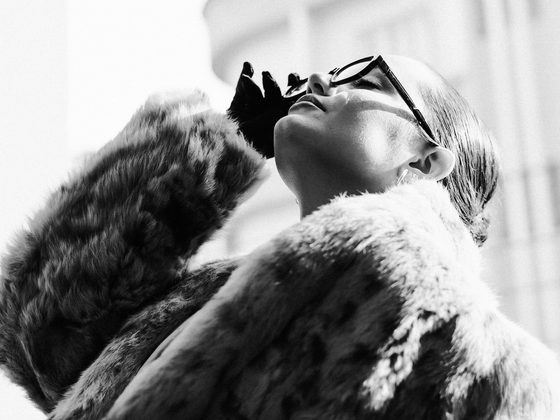
Additionally, faux fur stoles repeat this collection. Introduce fur looks to ready-wear and the message is clear: strike out merely for the sake of it. Be the main character of your own daydreams.
This look is another monochrome do, showcasing Parisian tailoring, all comfortable fit parading human form. It’s my personal favourite, the purple clunky knit, bleeding into an exaggerated masculine silhouette.
Let’s say: fashion pimp. A hustler, embracing style with a soft (woven) edge.
Maitrepierre’s ability to world-build, from idealised self-discovery to Hustler, is two-pronged: 1. The man can costume design 2. The man is savoir-faire.
How he obsessively crafts character from cloth is a testament to his brand’s wearability: this season offers multiple accessible statement pieces, unified by bold print and false fur. Avant-garde, in a sensible, sewn-to-Parisian code way. His looks as a character arc, unleashing all inner geek.
It seems that the underground lurks under Paris Fashion Week, ready to be celebrated in full, but preferring first to establish brands meaningfully, through sustainability and a unique perspective.
And there are many of them to explore, though, if you wish to begin anywhere, why not with these guys?