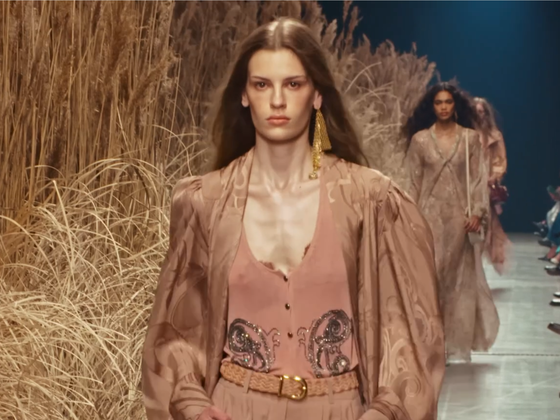
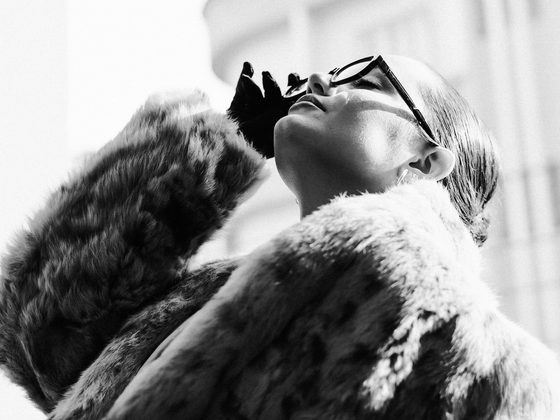
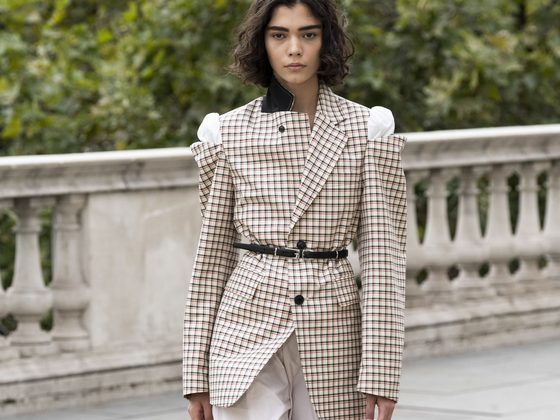
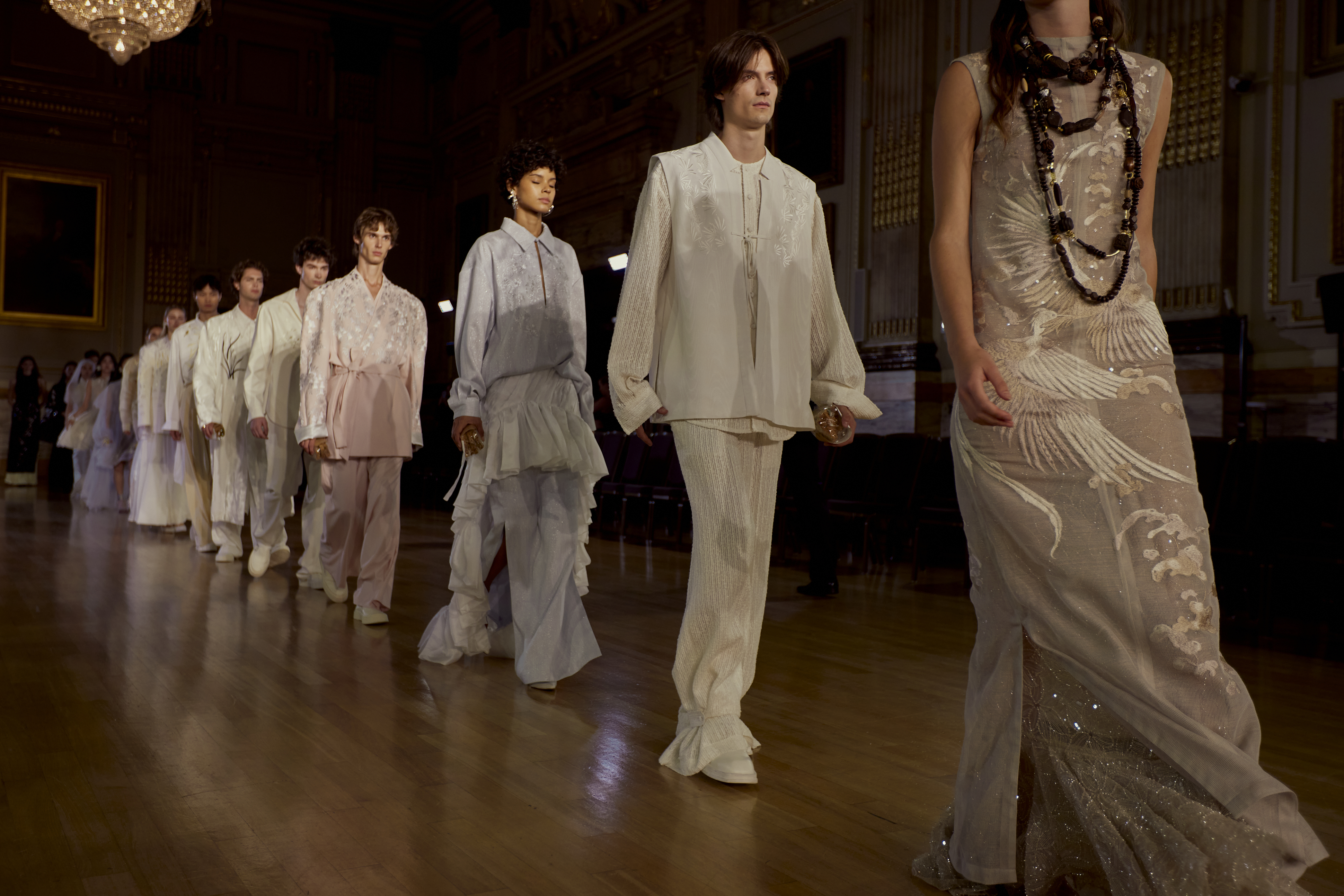
Isaac Yu is the Taiwanese designer behind ISAAC, an experimental menswear label with a focus on denim construction and concept-driven streetwear.
His work is built from personal experience as much as from fabric. In Taiwan, military service is mandatory, and for Yu, that period left a lasting mark on how he thinks about discipline, uniformity, and the cost of personal freedom. It also sharpened his memory of what came before it: childhood, drawing, collage, the instinctive and unguarded way a kid assembles an image without rules.
Serious Puzzle, his latest collection, holds those two experiences in direct tension. The title is deliberate. “Puzzle” points to something tactile and intuitive, the childhood act of building an image piece by piece. “Serious” shifts the register entirely, introducing the weight and pressure that comes with adulthood. Together, they define the collection’s central logic: innocence confronted by discipline, play confronted by control. That logic extends into the construction itself. Yu builds camouflage not through printing or dyeing, but through denim patchwork assembled from years of stored fabric remnants, translating the compositional spontaneity of children’s collage into a textile language that is also, quietly, a sustainability practice.
ISAAC has been gaining international attention. Yu’s previous collection, Who Kills My Freedom?, earned a Gold Award at the 2025 MUSE Design Awards and a Platinum Award at the 2025 London Design Awards. We spoke with him about memory, material, and the design philosophy behind Serious Puzzle.
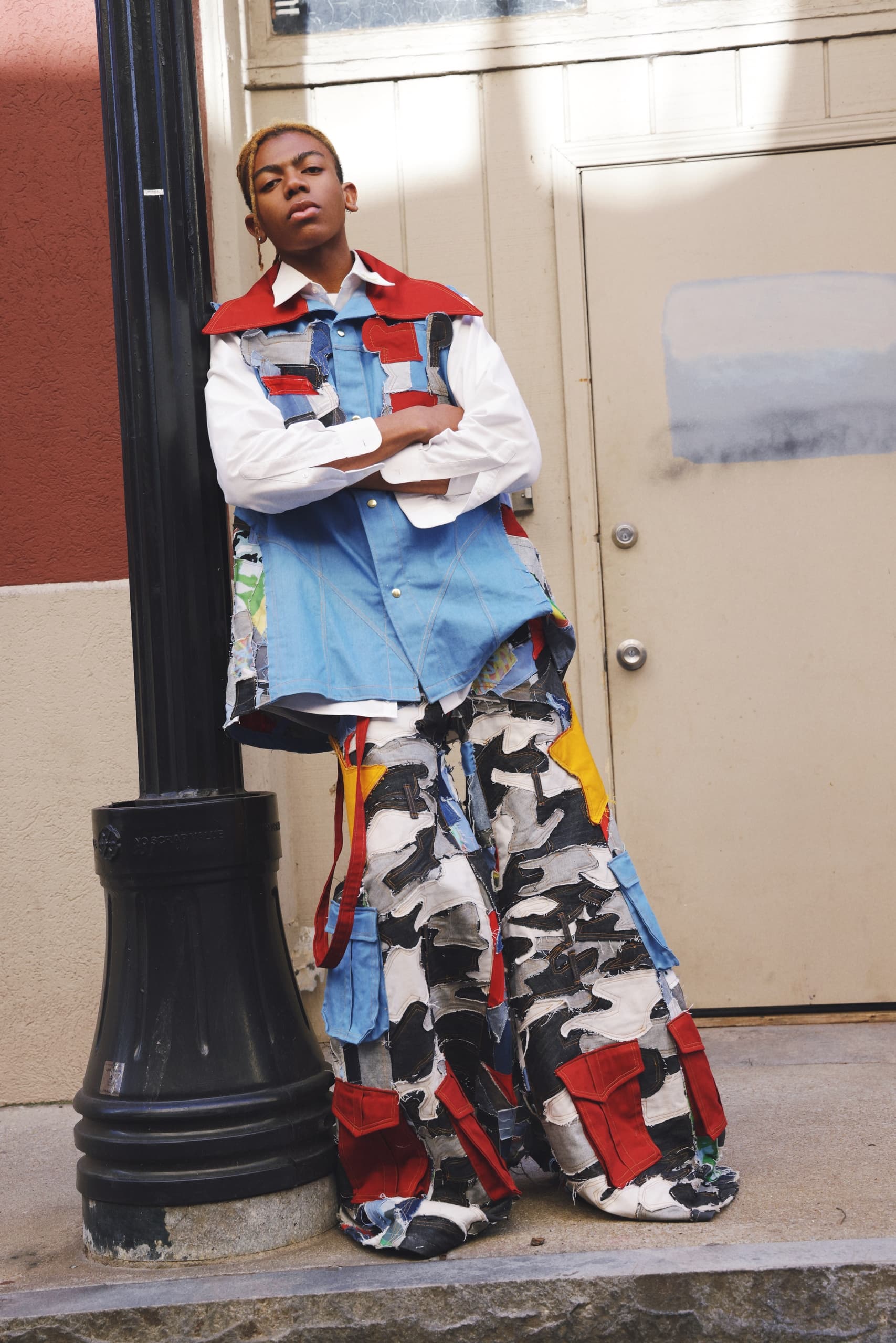
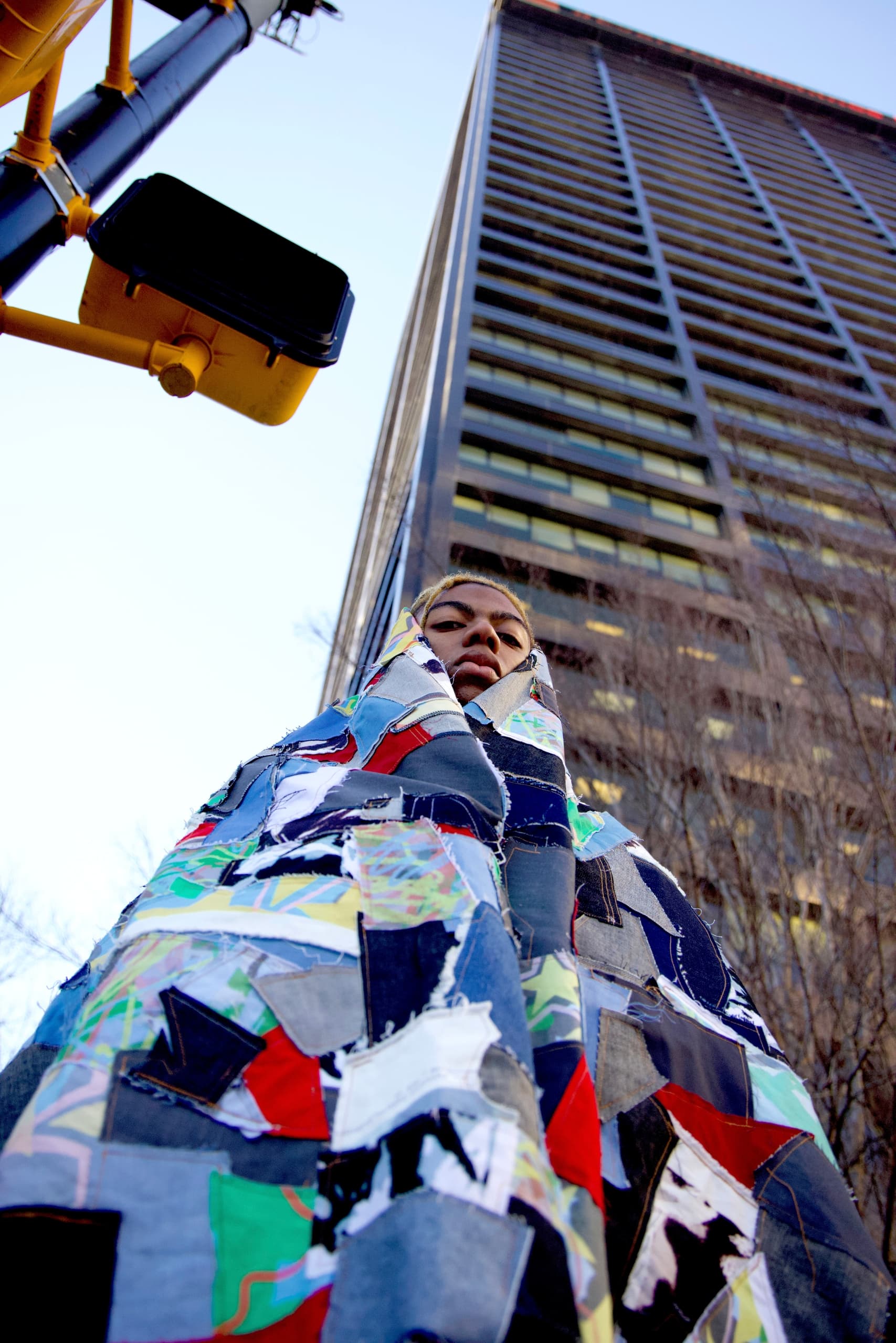
Serious Puzzle brings together Taiwanese military structure and children’s collage aesthetics… two worlds that feel almost oppositional. Where did that specific pairing come from, and when did you know it was the right concept to pursue?
The key elements of “Military” and “Children’s Collage” are closely connected to my personal journey. As a Taiwanese designer, military service was mandatory, and it had a lasting impact on how I think about discipline, control, and the loss of personal freedom. During that period, I became very aware of the emotional weight that military systems can impose: stress, confinement, and the pressure of uniformity. At the same time, it made me think intensely about childhood as a space of imagination, freedom, and instinctive self-expression.
Drawing and making collages were central to my childhood. Those activities represented a kind of openness that felt completely different from the structure I experienced later in military life. Bringing these two worlds together felt natural to me because the contrast is real, not theoretical. One is defined by order and restraint, the other by spontaneity and emotional freedom.
That tension is what made the concept feel right. I wanted to bring these contrasting experiences into a single visual language shaped by memory, play, and personal experience. Through that combination, I found a way to speak about adulthood, pressure, identity, and the desire to hold onto a sense of freedom.
That idea remains central to ISAAC. It is not only the foundation of Serious Puzzle, but also part of the larger design philosophy behind my work.nswer
The title Serious Puzzle feels intentionally paradoxical. How do you want people to feel when they hear it before they’ve even seen a single image?
I wanted the title Serious Puzzle to create tension immediately. The word “puzzle” should not suggest something academic or difficult to solve. For me, it points instead to the childhood experience of assembling an image piece by piece: something tactile, intuitive, and emotionally familiar. It carries a sense of play, but also construction.
The word “serious” changes that tone. It introduces weight, pressure, and the emotional conditions of adulthood. When the two words are placed together, they reflect the central structure of the collection: innocence confronted by discipline, freedom confronted by responsibility, play confronted by control.
Before seeing the work, I want people to feel curious rather than certain. The title is meant to open a psychological space. It suggests that the collection is not only about clothing, but about assembling emotion, memory, and contradiction into form. For those already familiar with ISAAC, it also signals that there is a deeper narrative behind the garments, one that moves through tension but does not end in heaviness. The direction of the work is ultimately constructive and affirmative.
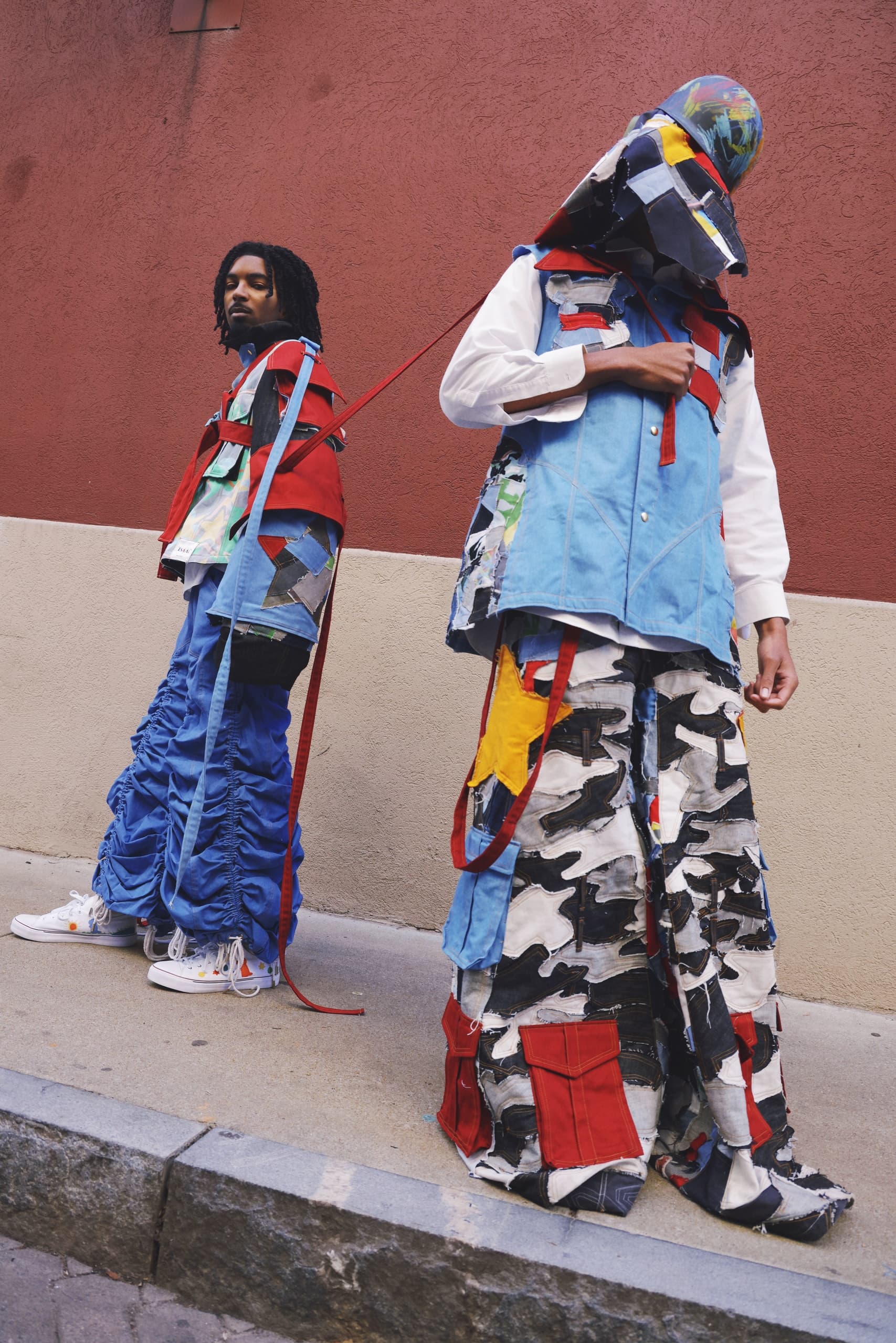
You describe transforming children’s collage techniques into reconstructed waste denim. Can you walk us through what that process actually looks like in the studio, from sourcing the discarded materials to the finished garment?
Sustainability is not an abstract idea in my studio; it is built into the way I work. Over time, I have developed a habit of preserving leftover materials from every collection rather than discarding them. Some of the fabrics I still use have been with me for more than seven years. These include different types of denim, cotton twill, nylon, and other materials that carry different weights, textures, and structural possibilities.
The process usually begins with sorting and revisiting these stored materials. Before I move into final garment development, I use them for textile experimentation: testing combinations, layering fabric, cutting irregular shapes, and studying how different remnants can create new visual and structural relationships. That stage is very important because it helps me test textures, structures, and compositions before moving into final garment development.
In Serious Puzzle, that experimentation became a way of translating the visual logic of children’s collage into reconstructed denim patchwork. Instead of treating discarded denim as waste, I approached it as a vocabulary of fragments. Through composition, layering, and reconstruction, those fragments began to form motifs, textures, and eventually a larger camouflage language that was built rather than printed.
I also stay connected with other denim-focused studios and designers, which gives me access to additional surplus materials when needed. Once the garments are completed, any remaining fabric is stored again and reintroduced into future work. That creates an ongoing cycle in the studio, one where experimentation, material responsibility, and construction are all part of the same design process.
You’re developing what you call “innovative patchwork methods.” What makes your approach different from patchwork that already exists in fashion, and what problem were you trying to solve technically?
My patchwork methods grew out of the research I began in my 2025 collection, Who Kills My Freedom? What distinguishes this approach from more conventional patchwork is that I am not using fabric pieces simply to unify contrast or create decorative surface variation. I use irregular remnants to construct specific visual forms: figures and motifs that come from the language of children’s collage, such as stars, houses, and teddy bears. The patchwork is not only structural; it is also narrative.
At an early stage, I experimented with paper collage using glue and cut shapes in order to understand the spontaneity and compositional logic of children’s artwork. From there, I translated those methods into textile construction. As the process developed, I realized that patchwork could do more than build image-based motifs: it could also create a camouflage effect through material layering alone, without relying on dyeing or printing.
That became an important technical and conceptual solution. On one level, it allowed me to reuse waste fabric in a meaningful way rather than treating sustainability as a separate concern. On another, it offered an alternative to chemically intensive printing processes. By constructing camouflage through patchwork, I could produce depth, irregularity, and visual complexity directly through material composition.
For me, that is where the innovation lies: the method is not only about appearance. It connects sustainability, textile construction, and storytelling in a single process, while expanding what patchwork can do within contemporary fashion.
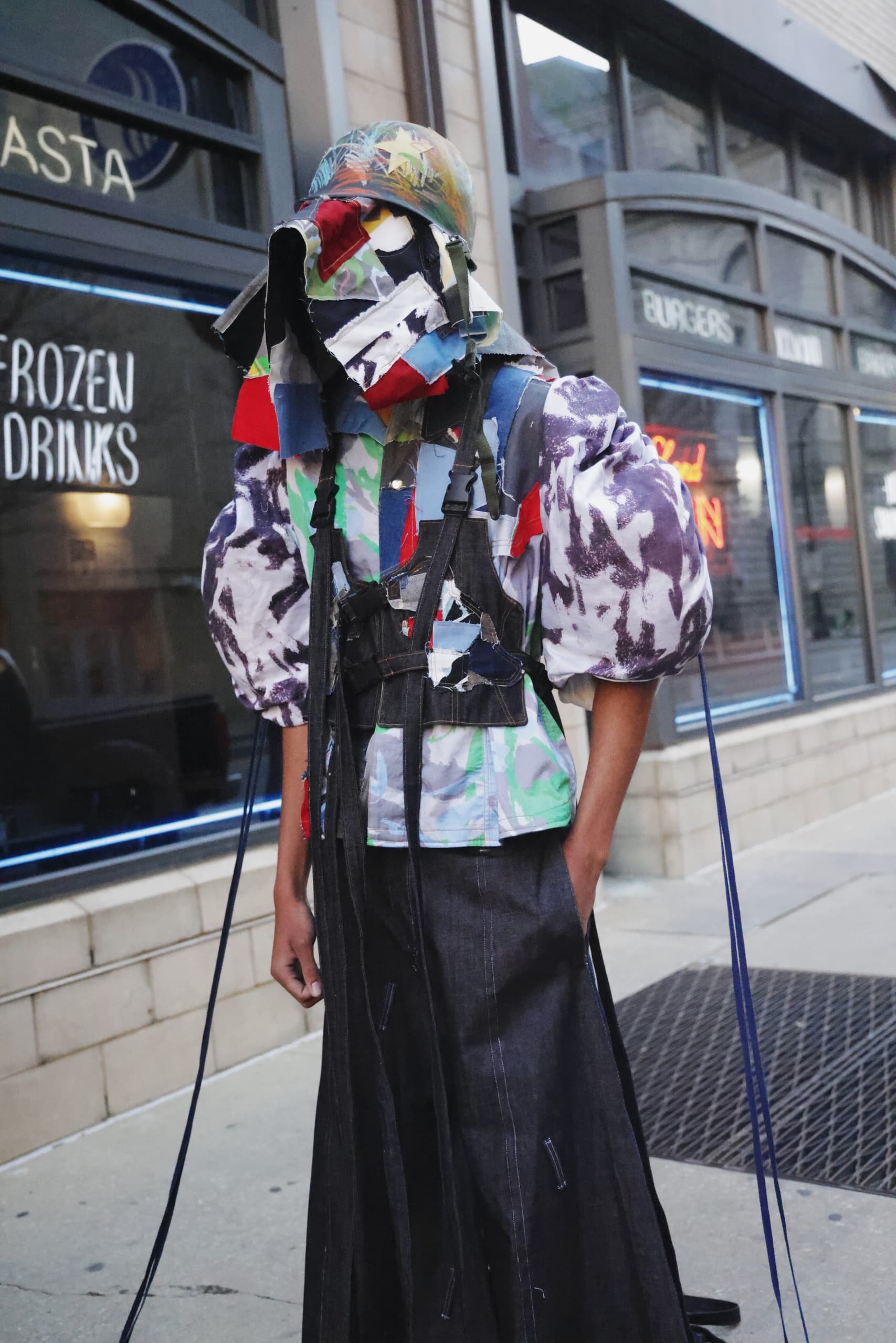
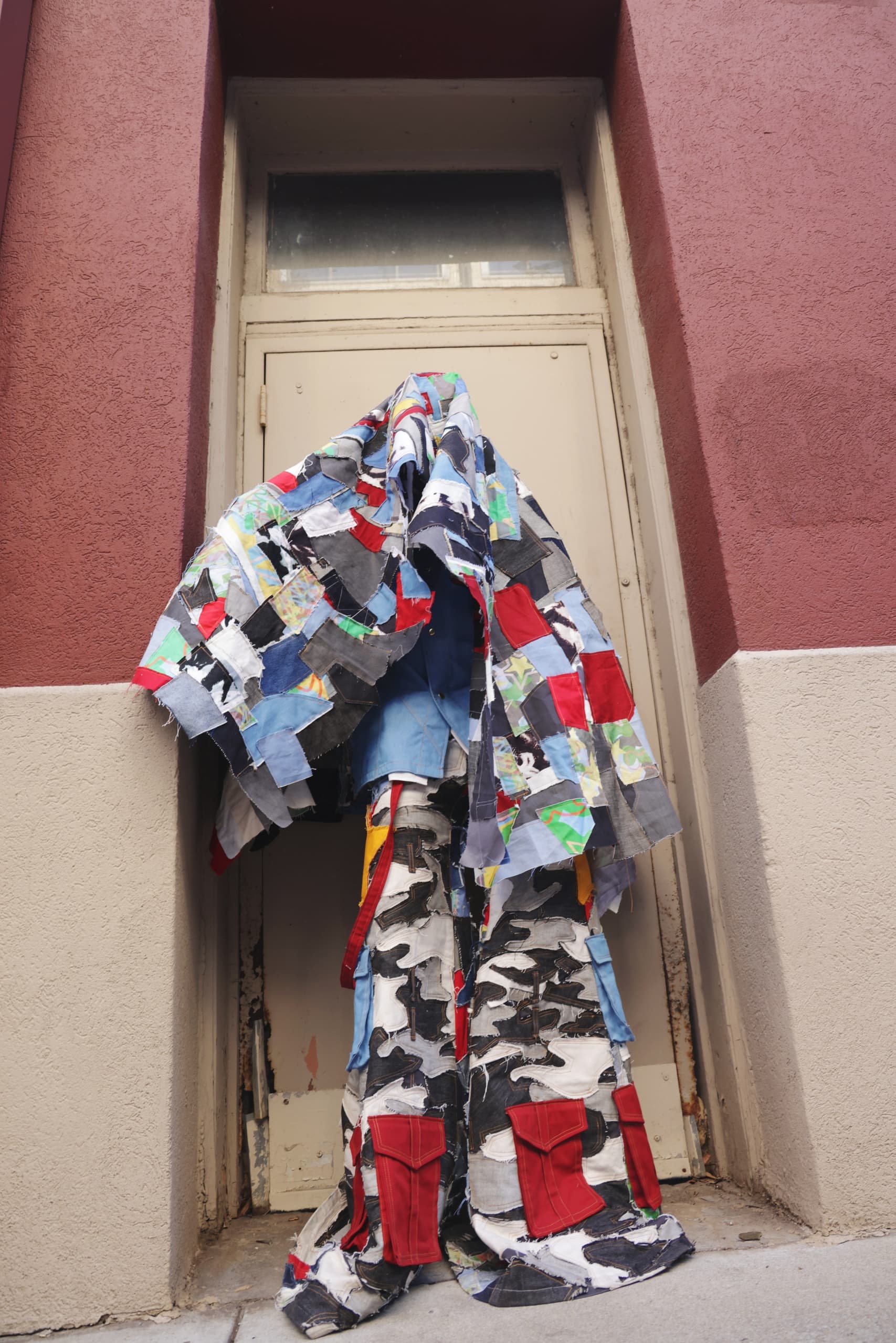
Waste denim is the material backbone of this project. What drew you to denim specifically, and do you see sustainability as a constraint you work within or a creative driver in its own right?
Denim has always meant more to me than a fabric category or a streetwear reference. I see it as a material with a unique social presence. It moves across class, geography, and cultural context in a way very few materials do. It can exist in luxury fashion, workwear, and everyday life at the same time. That accessibility and universality are important to me, because I want my work to communicate across boundaries rather than remain limited to a closed fashion language.
That idea is closely tied to ISAAC. My work is grounded in concept and construction, but I also want it to remain socially legible. Denim already carries a collective familiarity, so it becomes a strong medium through which I can communicate ideas about identity, memory, freedom, and transformation.
I see sustainability as a creative driver, not a restriction. It pushes me to think more precisely about materials, process, and responsibility. In many cases, limits produce stronger design decisions. Working with waste denim forces me to respond to what already exists: its texture, color history, wear, and structural character, and that often leads to more inventive outcomes than starting from a blank surface.
In that sense, sustainability is not something I add after the fact. It is embedded in the creative process itself. It shapes how I build garments, how I experiment, and how I define value within the work.
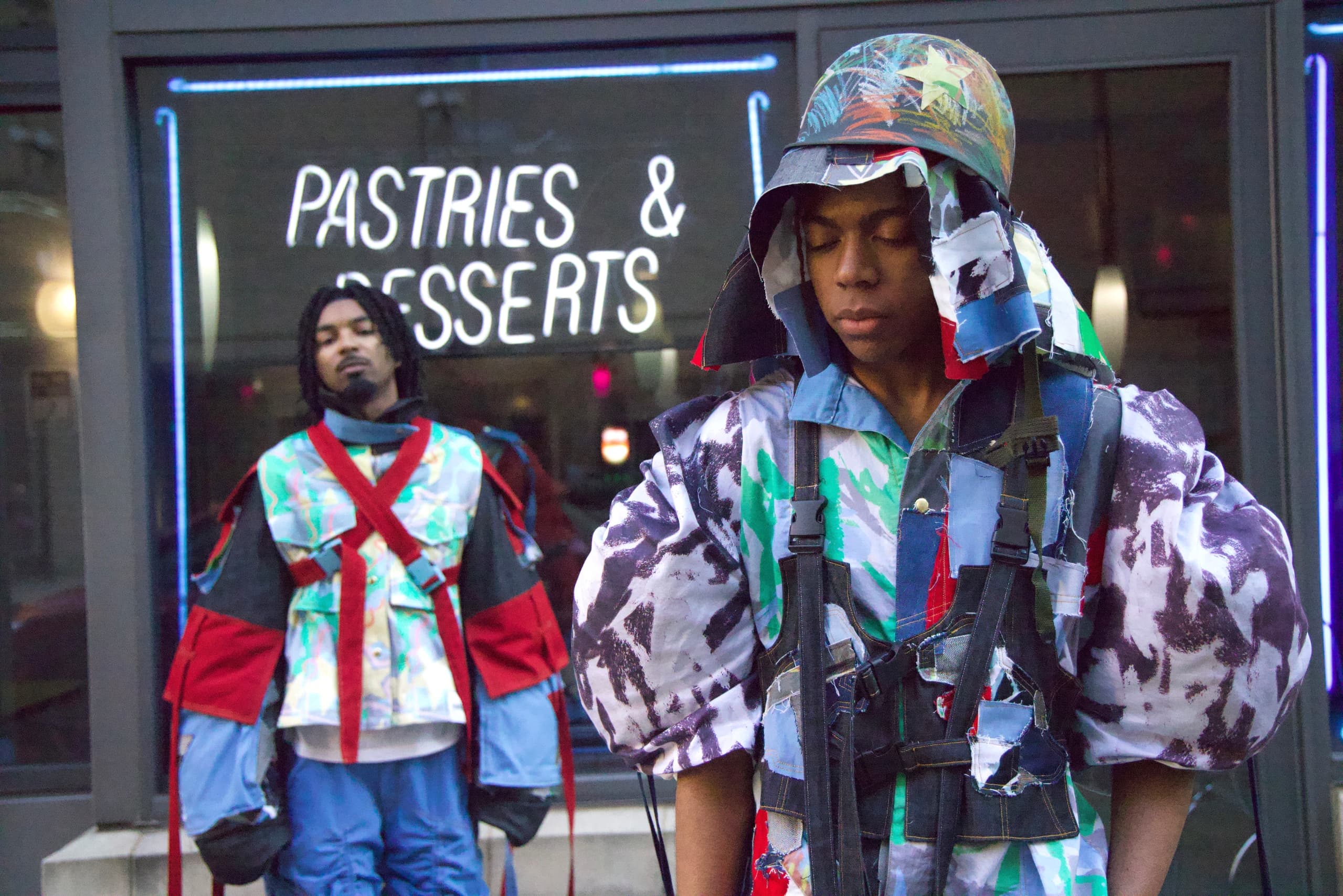
With Serious Puzzle pushing into new territory ( sustainability, cultural contrast, experimental construction ) where do you see ISAAC heading next, and what ideas are already starting to take shape in your mind?
As Serious Puzzle continues to gain visibility, and as my earlier collection Who Kills My Freedom? has received international recognition, including a Gold Award at the 2025 MUSE Design Awards and a Platinum Award at the 2025 London Design Awards, ISAAC has become increasingly defined as an experimental label with a strong focus on denim, construction, and concept-driven streetwear.
The next step for me is to translate the ideas and techniques behind Serious Puzzle into a more commercially accessible form without losing the integrity of the work. I am interested in developing pieces that retain the conceptual depth, material experimentation, and craftsmanship of the collection, while becoming more direct in everyday wear. That balance matters to me. I do not want to simplify the work; I want to extend its reach.
Going forward, ISAAC will continue to build on its core identity, drawing from children’s visual language, reconstructed textiles, and unconventional patchwork methods, while pushing those ideas into new functional and wearable contexts. I want the brand to keep challenging expectations, but I also want it to remain clear in its purpose: to create clothing that is visually distinctive, materially thoughtful, and emotionally precise.
Isaac Yu does not treat sustainability, storytelling, and construction as separate concerns. In his practice, they are the same gesture. The fabric he has been storing for seven years, the paper collages he made to understand children’s compositional logic, the camouflage built from fragments rather than dye, all of it points to a designer who works from the inside out. The ideas do not decorate the garments. They determine how the garments are made.
The gap between childhood freedom and adult discipline, between play and control, between waste and construction, is precisely where the work lives. Serious Puzzle does not try to close that gap but builds inside it. As ISAAC moves toward wider commercial reach, that tension appears to be the one thing Yu has no intention of resolving.