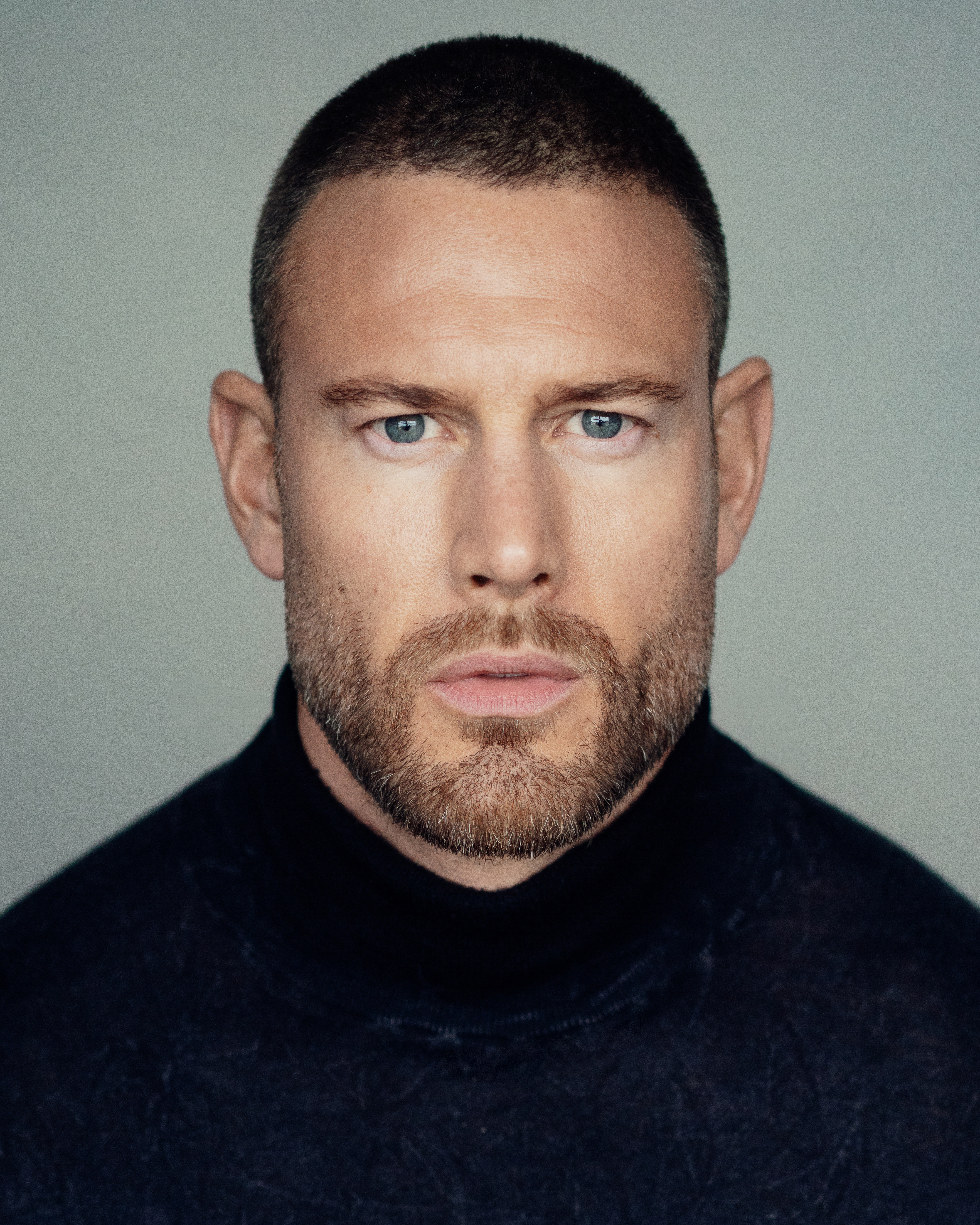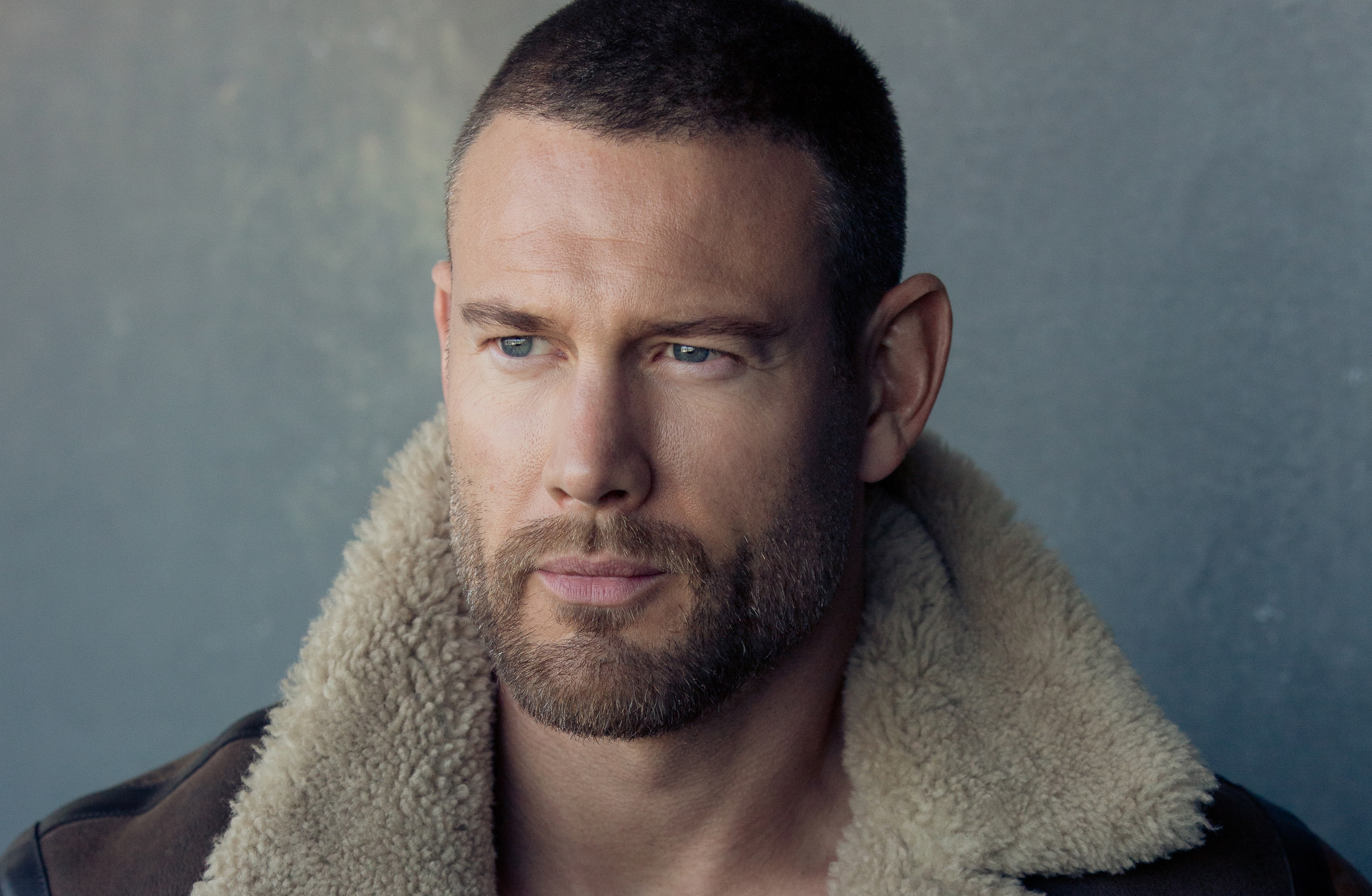
British actor Tom Hopper has an inherent talent that likely eluded to his trajectory from the start. Inspired by films that transport us, often through characters with superhuman athleticism and a superhero ethos, Tom found his creative voice and began his professional path with relative ease, earning a place at the first acting school he applied to. Watching him on screen, it’s clear this is no accident. Throughout his career, Tom’s dedication to his craft has matched the determination and rigour of those early characters that shaped his love of film. At the same time, his stature, athleticism, and talent have helped him shape characters with a strong screen presence that stays with audiences. Despite his huge success, though, Tom has a grounded affability that has no doubt contributed to his accomplishments and recognition. The integrity, versatility, and authenticity that he brings to each production, and toward the people who help create them, stand out in a world where success so often changes personalities. Flanelle had the pleasure of chatting with Tom about his journey into acting, his diverse portfolio of characters, his latest production with his wife, actress Laura Hopper, and why he’ll remember the team long after filming ends for the second season of
Terminal List.
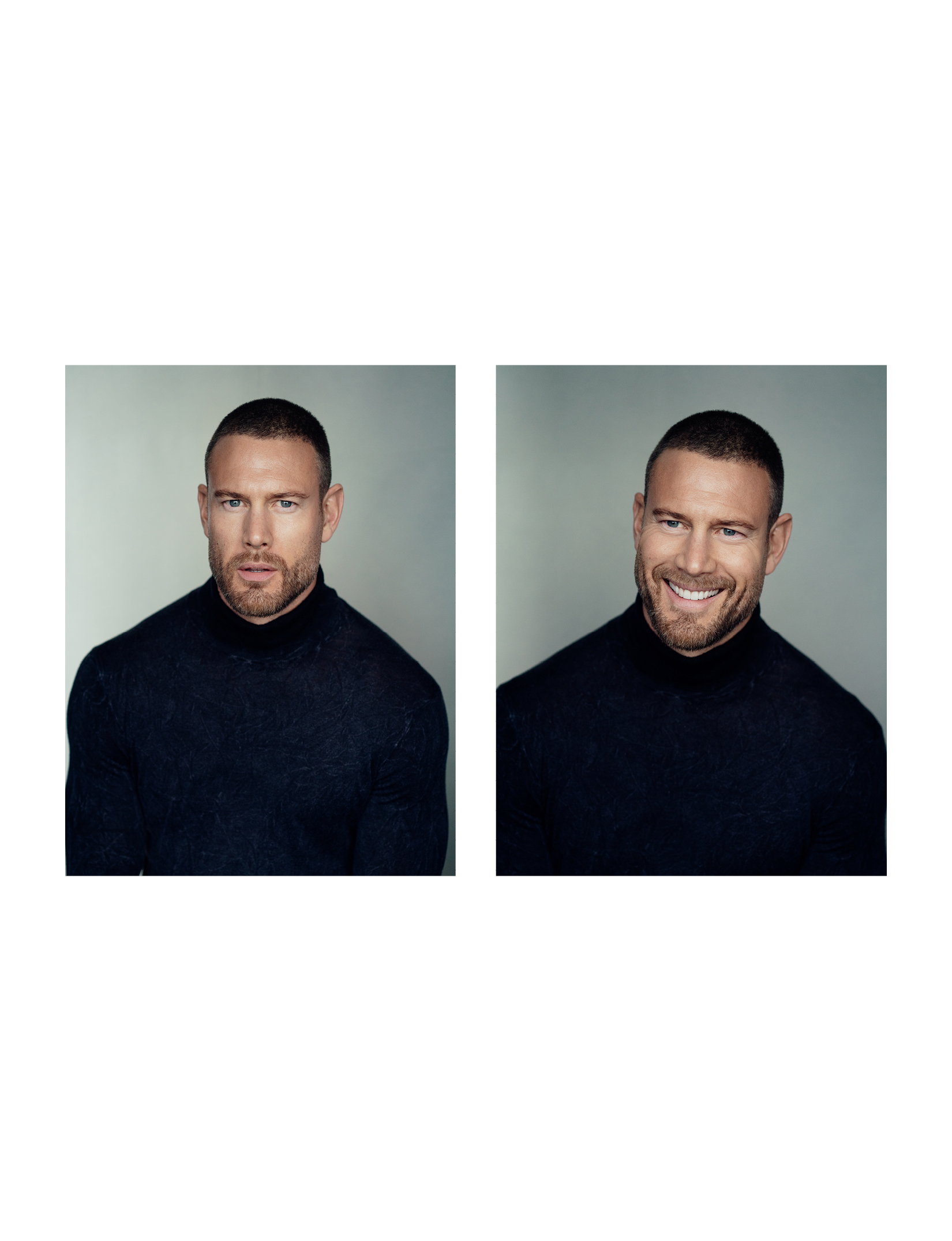
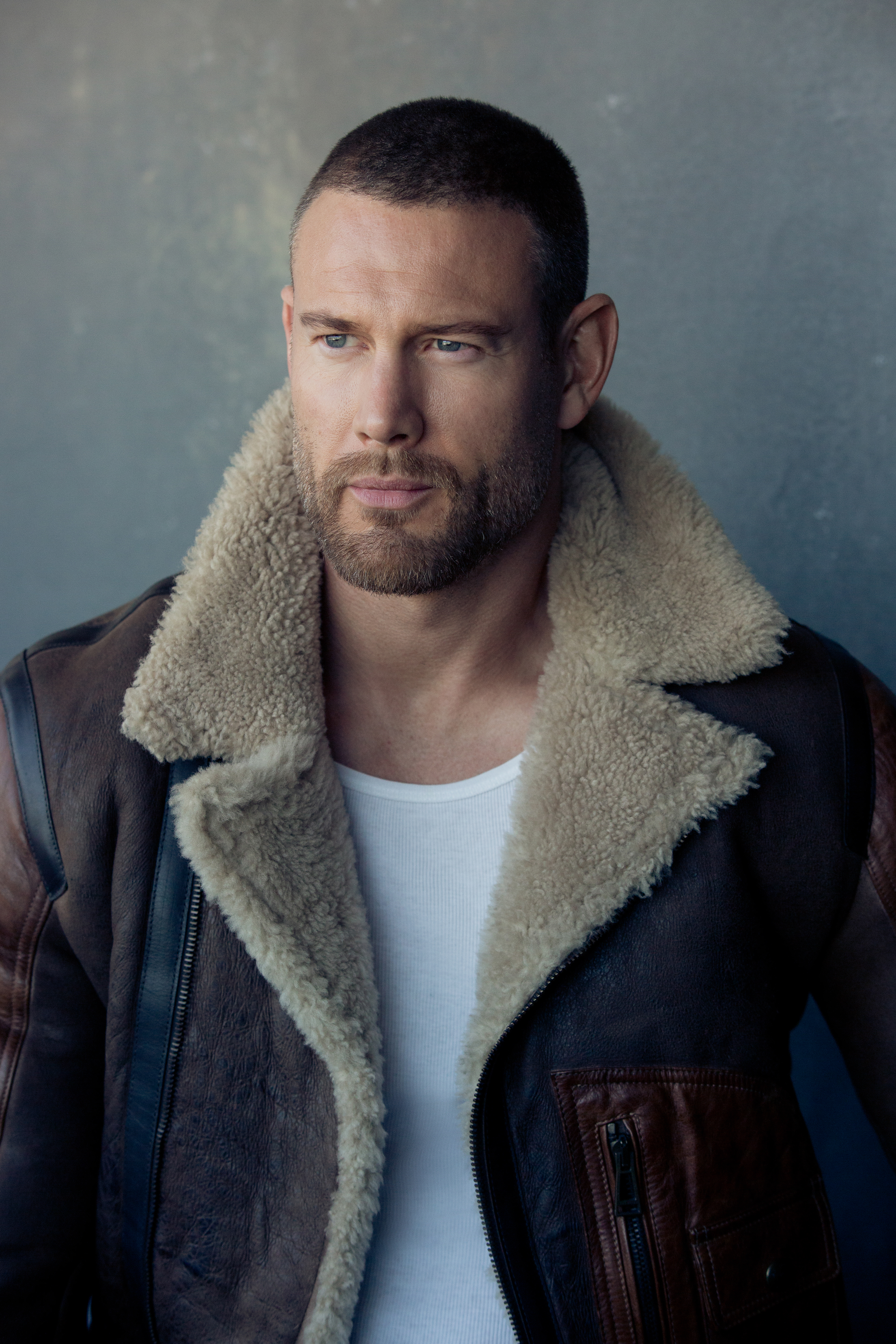
Photos by Michael Shelford, Words by Leigh Maynard
Tell us a little bit about your background and how you decided to get into this profession. What inspired you to become an actor in the first place?
Yeah, it’s multi-layered. I grew up just being obsessed with film and the escapism of film, the adventure of film. Spielberg movies, Back to the Future, these kinds of great adventure movies that, as a kid, you just get taken on a ride. I was completely obsessed with them, but the idea of ever making movies or TV shows felt untouchable to me.
I grew up in a very working-class part of England called Coalville, Leicestershire, a miners’ town. Then, during school, I took a drama class, and I remember the first time I got up on stage in front of my classmates and did a little performance, and I got such a massive buzz out of it. And then there was an opportunity to get into this school musical called Return to the Forbidden Planet, where I played a big robot on roller skates. I was the only kid in school who could roller skate. I used to play roller hockey and do half-pipe aggressive roller skating. And they needed someone who could roller skate for this role. So, I auditioned, got it, and had the most incredible time making this musical and this play, and in that moment, I thought I could do this every day. It was just the biggest buzz and, like, dopamine. I just wanted to do it over and over again.
I come from a sports background, and I love team sports and working together as a team to achieve something. And it was the same thing, like going on stage or going to make something on camera with a bunch of people, where you work together, and every cog in that machine has to work together for it to have the right outcome. I love that feeling. I love achieving something as a team and working for each other. So, it went from there, and then I went into drama school. I applied to the one drama school I knew of, the one my drama teacher knew of, Rose Bruford College, and I auditioned there and, fortunately, got accepted, and that’s how it all really began. And I went and became like a sponge there and just learned everything I could about acting and the discipline of acting, and that was three of the best years of my life.
Back then, when you thought about what a successful actor would look like, how has that changed from when you first started to what you’re achieving now?
Yeah, I suppose it has because I never imagined that I’d get to where I’ve gotten to now. It was always like, “Oh, man, if I just get a couple of jobs, that’d be amazing, if I got to work in some kind of theatre or film.” In my head, it was always like this: I knew what I wanted, but it always felt like it was unachievable. It felt like pie in the sky, and all I knew was that if I kept my head down, stayed disciplined in my craft, and went for the right auditions, one day, hopefully, I’d get that break.
The one thing I did differently is that I concentrated on what was my unique selling point. A lot of people told me that, because of my height, I would never get work because there’s not a lot of roles for guys my height, and I was quite skinny during my teens.
But I was also obsessed with these action heroes and these big dudes. So, I was like, “They go and lift weights. I’m going to start doing that.” So, I started doing something to stand out from a lot of people in the UK because a lot of the training you get in the UK in drama school is that you do not lift weights. You’re supposed to be the opposite of that and, really, free and loose. And I thought, I want to be an action hero, so I’m going to start lifting weights.” So, I went against the grain a little bit there, and fortunately it worked in my favour.
So, when you’re doing your preparation work before you begin filming on a production, how long does that normally take, and what kind of things do you do to prepare?
From a physical standpoint, it really depends on the role. So, I think about, if it is a physical role, I want to know what that character would be doing to train. So, like in Black Sails playing a pirate, I did a lot of very functional stuff, like a lot of rope work and doing a lot of rope climbs and things like that. And then for Terminal List, for instance, I’m doing a lot of things that the Navy SEALs are doing, so a lot of circuit-based training with endurance, but strength, and the ability to move very quickly and fast. I allow the time it takes me to adjust to that role. So, it varies. I train like that year-round anyway. So, adapting is never too difficult. But from the work-prep side of things, I take as long as I can get available to me. Sometimes I’m shooting a movie that I’ve just signed that’s shooting in two and a half, three weeks. So that’s how much time I have, right? I’m going to start using that time immediately. I like to start immersing myself in that character’s world. There are the lines, and all that’s secondary because I want to know who the guy is so I can, on day one, make him feel lived in.Because day one on a set you have to hit the ground running. You have to bring that person alive straight away, which is also why I don’t take roles unless I truly believe I see my version of them. If I don’t see my version of them, I’m fighting an uphill battle from day one because I don’t believe in myself as them. So, I have to know my version of them. I have to know that I can bring them to life authentically.
So, talking about your role as Raife Hastings in Terminal List, what about his character immediately caught your attention?
What I loved about Raife is his unrelenting morality: even though he’s a SEAL and sometimes has to do horrible things, he can turn a dial- this morality dial- where he can turn empathy on and off when the job demands it. But he’s an extremely loyal friend and brother to his comrades. For me, playing someone who has to do those extreme things but also stay extremely loyal was very interesting. Raife’s nickname is Mtulivu. It means “the calm one” in Swahili. There’s something about playing someone who’s capable of very intense things but is extremely calm in the process that was very interesting to me and a character that I hadn’t played before. Not to mention that I wanted to do something in this world. The Navy SEALs and Special Forces have always interested me because they’re like real-life superheroes, mentally, in what they’re able to do. And people who do extreme things for a living always interest me because I think that’s so far removed from what I do, to be able to step into their shoes for a day and learn about that and then hopefully authentically bring that to life in something that they can relate to, that’s something that I love and always have.
How much do you think Raife’s character is defined by his professional identity as a Navy SEAL, and how much by the person he is outside that world?
It’s probably equally both. Because SEALs are selected for who they are as people. It’s so specific. People like James Reece and Raife would never have been selected if they weren’t fundamentally who they were, how they were raised, how they function, and how they think. That’s why Ben Edwards, as a character, is a really interesting one, because he crosses the line of what’s morally okay as a SEAL. That’s what created the friction between them in Dark Wolf: they are so morally misaligned in that moment that you want to fight for them and their brotherhood, but they’ll never back down on what they think is right. And what’s interesting about that is that in the SEALS you have a code that you stick to, and everything is run by that code. If that code is broken, that’s a problem. But when you’re outside of the SEALs, that code doesn’t exist anymore. So, then it’s the question of how much of it is them as a SEAL who’s making this decision, and how much of it is them as a person, their problems as a person that are defining their decisions.
Is there anything you’d like to establish about your character and your portrayal of Raife that might not be so obvious from the dialogue alone?
I think the thing is, with Raife, he’s deeply thoughtful. He will never let anyone know the pain that he’s feeling inside. As a leader, his job is to be the quiet one, let the people around him thrive, and be the one who guides them. But deep inside, he’s struggling with so much from his past and what he’s dealt with, especially with this season of Terminal List about to come out. He’s still dealing with the stuff that happened with Ben in Dark Horse. He’s still dealing with the fact that he was never there for James Reese when his family died. These things are eating away at him, and he has to do something about it, but he’ll never let anyone know the truth; that’s what’s driving him. He’ll always make it about the mission, and that’s what it’s for. It’s about the truth and the mission, when actually, deep-rooted, it’s far more than that for him, and emotionally driven.
It takes a very strong person to be a Navy SEAL, by the sounds of it.
Yeah. They’re a different breed, those boys!
Working with Chris Pratt on the production, what does an ensemble like this let you do as a performer that you might not be able to do as much in a smaller production?
There are times on this production where I have had to pinch myself because we do things that I would’ve only dreamed about doing as a kid, doing action movies and TV. I feel very lucky to be doing it. But there’s one thing I’d say that’s different to other productions in general: how tight we are as a cast and as a crew because so many of the producers and the people that work on the show are ex-SEALs or ex-military personnel. It’s run like a military operation. Everything is super tight. You become incredibly close to everyone, and we’re travelling around the world together. The other thing is, very few productions travel this much globally while shooting. You set up shop in each city, and you all hang out together. You eat together. So, it’s got that sort of military vibe to it on set all the time, and you become incredibly close to each other, and that adds to that whole feeling of being part of such an organisation.
You’ve probably made some friends for life there?
Absolutely. Some of my very close friends are guys that I’ve met on this show, and they absolutely will be friends for life.
I’m going to take you back a little bit to some of the other roles that you’ve played. You played Luther in The Umbrella Academy. And he’s the strongest physically in the academy. But emotionally, he can be one of the most vulnerable. How did you approach that contradiction while playing him?
That was another one of those roles that came up that I found interesting because I’m always intrigued by guys on the outside who appear to be unrelentingly tough, but then internally they’re broken. That, to me, is always very interesting, like a kind of broken warrior. But with Luther, the whole thing about Umbrella Academy that interests me is they’re superheroes. But what it’s really about is how being a superhero and the pressures of that damages the person underneath. So, like having to save the world all the time and all that sort of thing, and him being the leader and the pressures of his dad putting on him to be this leader. Ultimately, Luther is just a little boy with daddy issues. And I just wanted to find this softness to him: that he’s just this big, broken guy, and then through the seasons he finds happiness again when he finds love, and then he loses that, but then he finds this new lease of life. When we meet him in season one, he’s been up on the Moon and forgotten who he is. He’s been up on the Moon for four years, and he’s just a bit broken. So, the journey of Luther was a story of coming of age, really, but in his 30s.
Another part you played was the one we were talking about earlier: the Game of Thrones character Dickon Tarly. Do you prepare differently when you join an established production than when you start with a character from the beginning?
Not massively. It was season seven I joined the show. It’s definitely a different feeling as an actor because you’re joining something, and you have to hit the ground running in a show that already pre-exists and are very much in the flow of the way they work and all the cogs in the machine are just, churning over. So, you have to come and hit the flow straight away. But, in terms of your process of how you approach a role, it’s exactly the same. My own rule is to always just play the truth of the character and their situation. If you always play that truth, then it will be exactly that. It will be authentically truthful because you’re living their life, right? You’re bringing them to life in that moment in their life. So, the process is always the same. It doesn’t depend on how big the role is or how integral it is to the story, because you’re playing the truth of that character, and that’s all that matters.
Is there anybody that you’ve worked with across the different productions that you’ve been on that’s really inspired you, or you’ve learnt a lot from about your craft?
Yeah, definitely a few actors, but the one that always sticks out for me is Toby Stephens, who played Captain Flint next to me in Black Sails. Which is a show I was on for four years. Toby is just a phenomenal actor. On top of that, it’s also his on-set etiquette and how he approaches the way he speaks to people, the respect he gives people, like the cast, crew, all the way down to the people who are just moving the bins at the end of the day. Everyone is equal, and no one on that set should feel like they don’t belong there. And I took a lot from the way he just approached his work in general. But just an incredible actor as well, and getting to act with him every day and learn and just watch how he does it. I’d say the actor I was when I started Black Sails to the one I was at the end of it, coming out of it, having had those experiences working with him, was a huge benefit for me.
What did it teach you about building a character you’re taking over across so many different seasons, and how that character changes over time?
You let the writing lead that, right? So, the writers, the showrunners, they’re in charge of where they want your character to go, and what makes a good showrunner as well is that they are very good at communicating the whys of what’s happening to your character. Which then allows you to take on your own process and act and develop through that writing. So, if writers are good- which most of them are, you know, I’m very lucky; the ones I work with have been a phenomenal set of writers- you’re able to kind of let that lead you. And, and then you can just, as I say, play the truth of that.
So, what kind of role would take you somewhere that you haven’t been before as an actor that you’d like to investigate?
I’ve just recently filled that void on the movie, Better, that we produced that’s coming out soon. We’re premiering this weekend actually, at the Newport Beach Film Festival. And I play twins in that movie, and that was something that I always wanted to explore. When the script came to my wife and me in our production company, we thought, “Oh, this is the one.” Because one thing I always look for, I don’t look for a specific role; I’m looking for challenges. I’m looking for the thing that’s going to really test me as an actor. I never know what that is until I see it on the page. Because you read so many scripts, and scripts will either talk to you or they don’t. You either read it and go, “Yes, this,” or you go, “No, this is not for me.”
Is that something that happens quickly?
There’s never much ambiguity for me. There’s never a grey area. It’s very black and white. If I love something and it hits me off the page, then I know I’m in. And that’s what that was for me. I read the script for Better and was like, “Yep, this is it. This is what I have to do.” And the twin thing for me was always really interesting to me, and it’s also the technical side of it: if you’re having a conversation with yourself, you’re doing two different performances. One before, one after, and you’re reacting to a performance you’ve not done yet, and then a performance you did, two hours previously. It’s quite overwhelming in your head, like how it’s going to be. You just have to trust it and trust yourself. And fortunately, in that process, I was very lucky that my wife was in the movie with me, and she was my rock through that thing because she just kept me sane. She was amazing. I was so fortunate to have her there with me.
That’s so nice to work together!
Oh, it’s the best. That’s why we started our production company because we spend so much time apart with us doing different jobs away from each other. So, we thought, we have to do something here to be able to work together more. And we did it for the first time in our movie we did together called Love in the Villa for Netflix. When we did that experience, we were like, we just have to find a way to do this more. And the obvious way to do that is to make your own stuff, right? So that’s what we did. Make things happen.
Is there one director or production company that you would love to work with coming up?
I would love to work with the production company Boulder Light. They do really cool off-centre pieces. They’re hitting a genre but from just a little bit off centre. And I just love what they do with Barbarian, and Weapons. I just think they’re such brilliant, entertaining movies, and what they’re doing is taking that same feeling I talk about at the beginning of this interview of film and escapism of taking you on a journey, on an adventure, but then also will have you freaking out at the same time. But the movies are always so grounded in truth, but with extraordinary things happening within that truth. So, it feels very real. And that, that’s the kind of thing I look for. I love those kinds of movies.
What projects do you have coming up, and what is one highlight of your career to date?
Definitely, the highlight of my career to date has been making our first produced movie, Better. That’s definitely the highlight. It’s something my wife and I have always wanted to do and achieve. And we did that, so that’s definitely the highlight, and projects that I’ve got coming up. I’ve got a movie coming out called The Mark, which is an action comedy with Jessica Alba, who’s back acting again now. I did one of her first movies back, which was great fun. We had a really good time shooting that over in the Gold Coast last year. And then we have multiple projects that we’re producing to go to camera next year. Stay tuned!