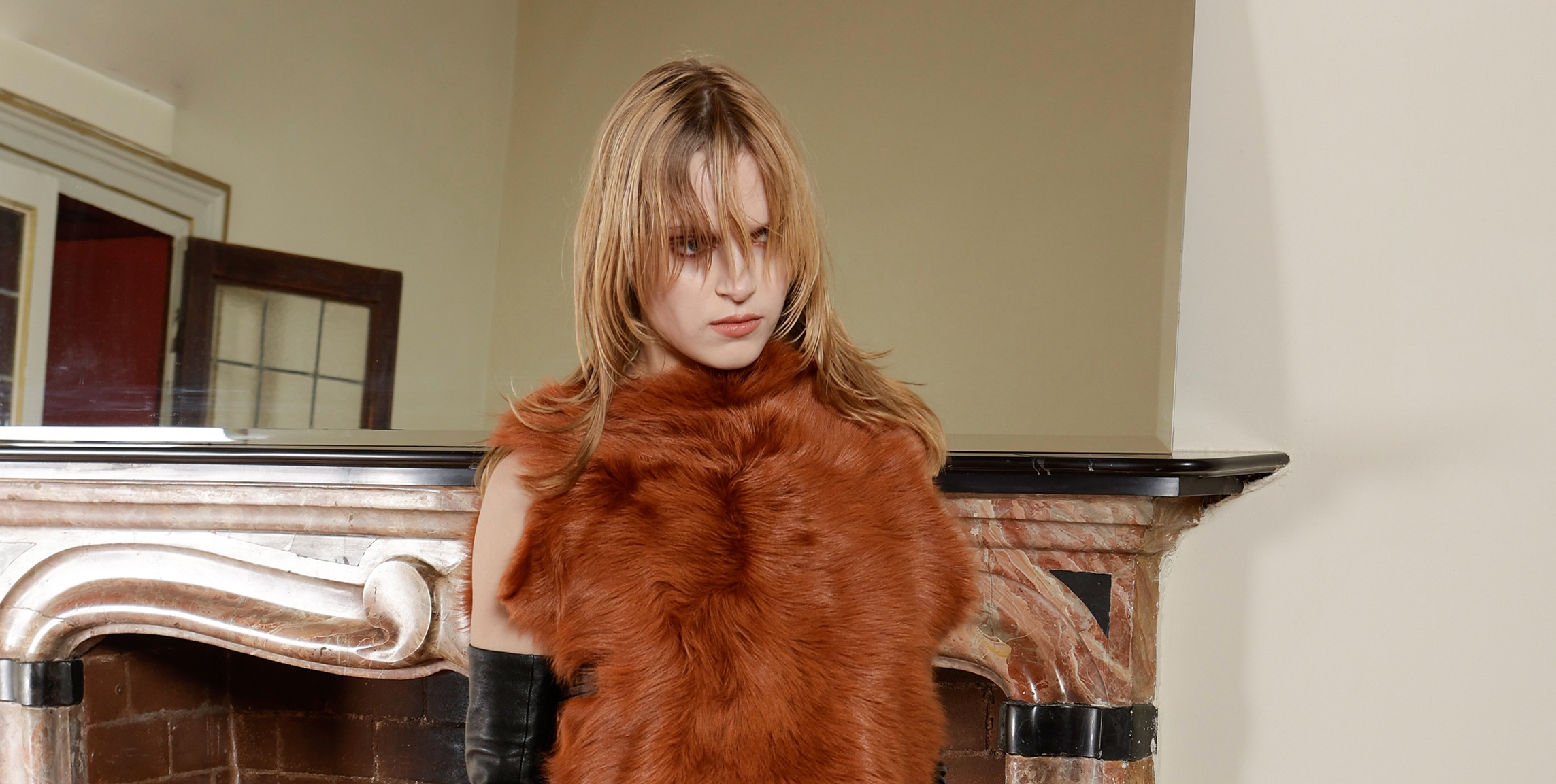
The Milan designer turns spatial perception into clothing, balancing rigid structure with fluid softness.
Alberto Zambelli works in quiet extremes. Since founding his label in 2013, the Milan-based designer has built a reputation on minimal yet decorative lines, architectural precision, and natural materials refined into something almost ceremonial. His Fall 2026 collection extends this language into sensory territory, where sound might suggest shape, scent might bleed into color, and light dissolves into the weave of fabric itself. Zambelli won recognition early.
In 2014, he was named among the 15 talents of Milan Fashion Week, an acknowledgment of his pret-a-porter ambitions and his loyalty to noble materials. His work translates a personal vision of Italian heritage, all of it designed, created, and produced at the brand’s headquarters at kilometer zero. In recent years, collaborations in the East have shaped his aesthetic vocabulary. That fascination now anchors his approach to volume, where function and beauty collapse into one gesture.
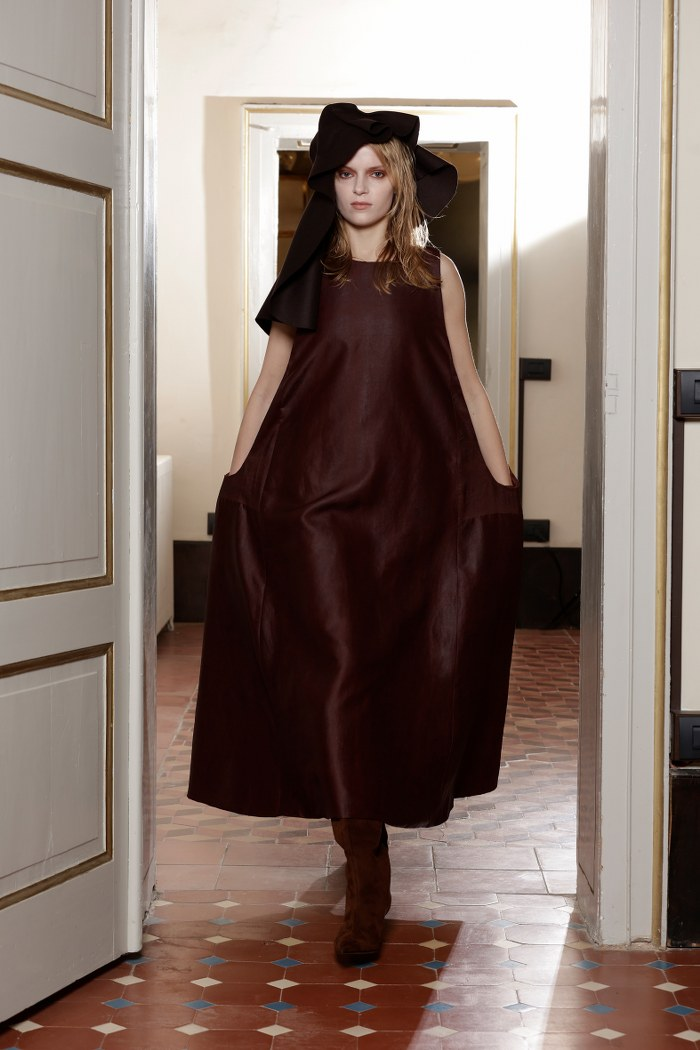
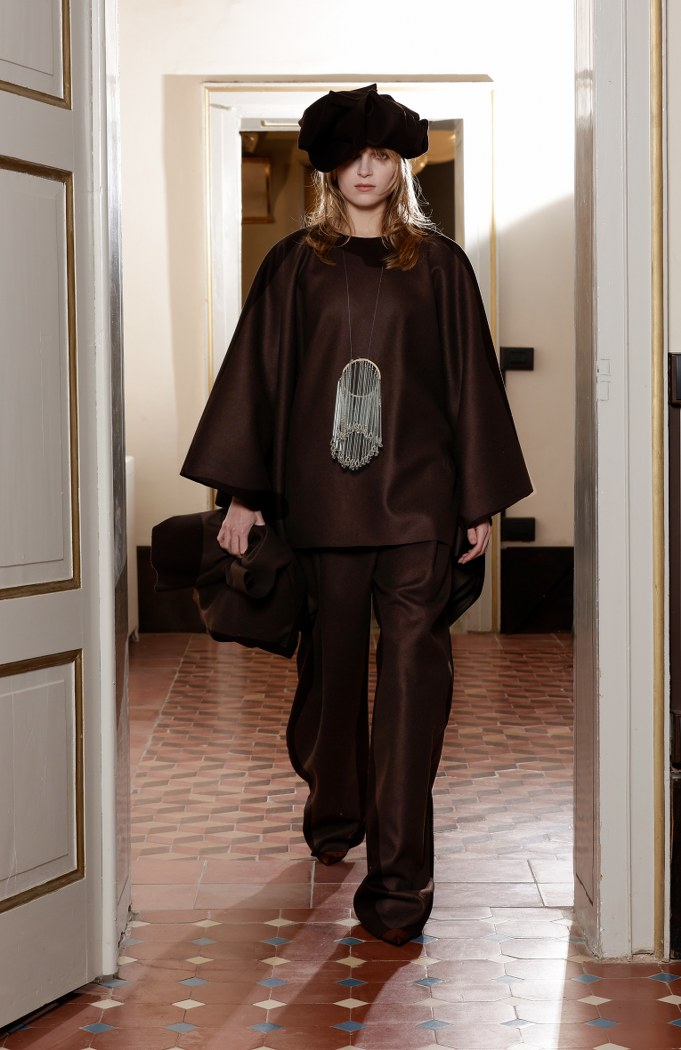
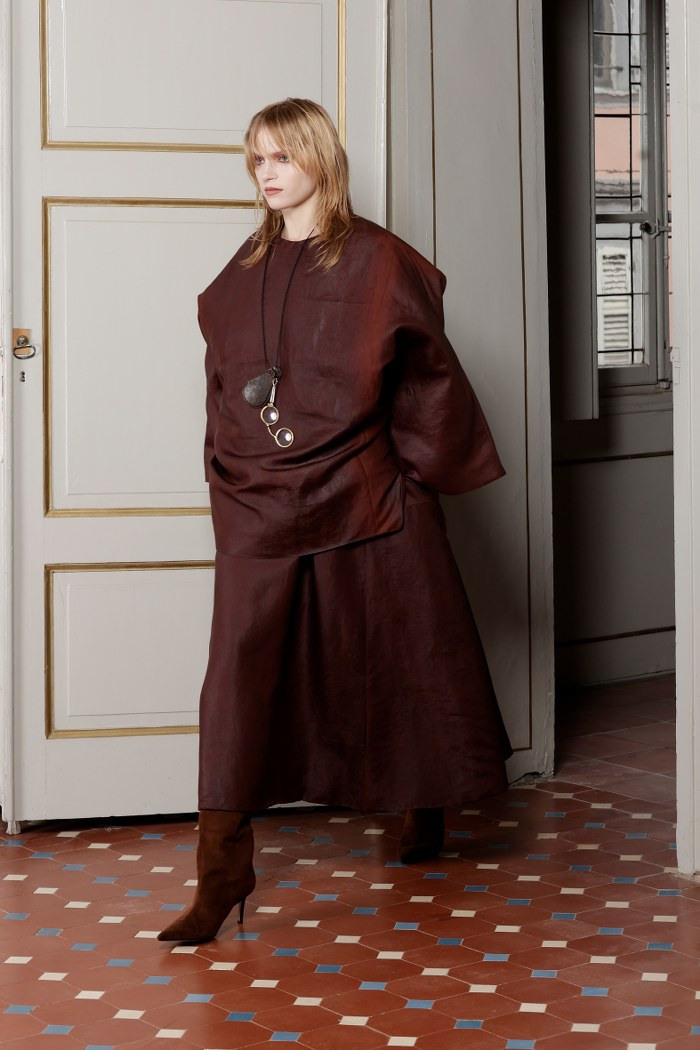
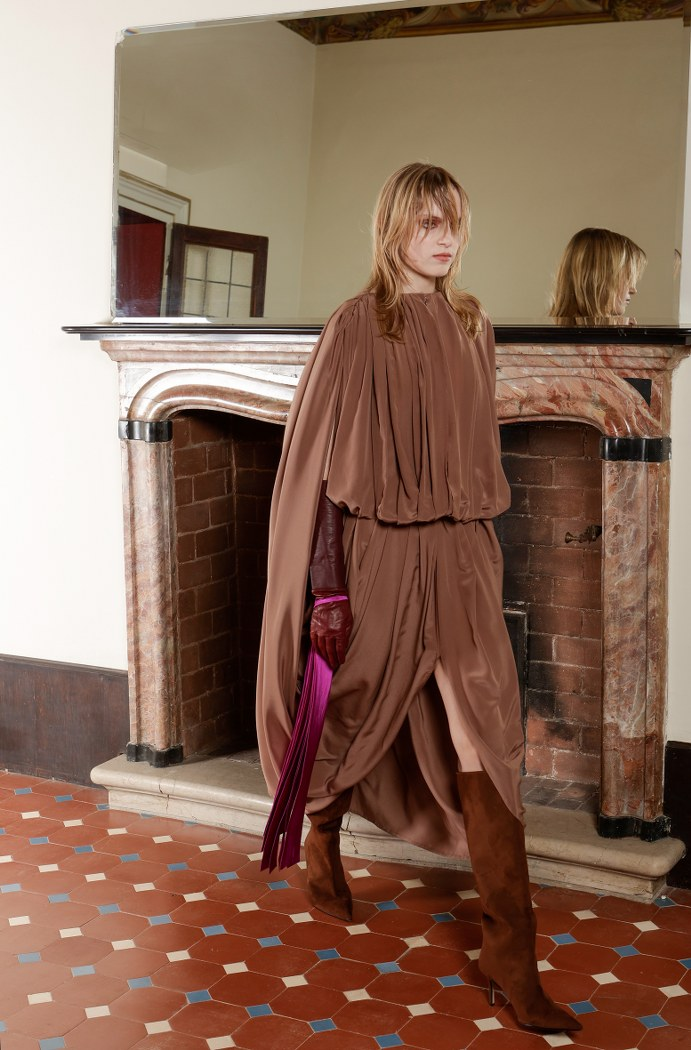
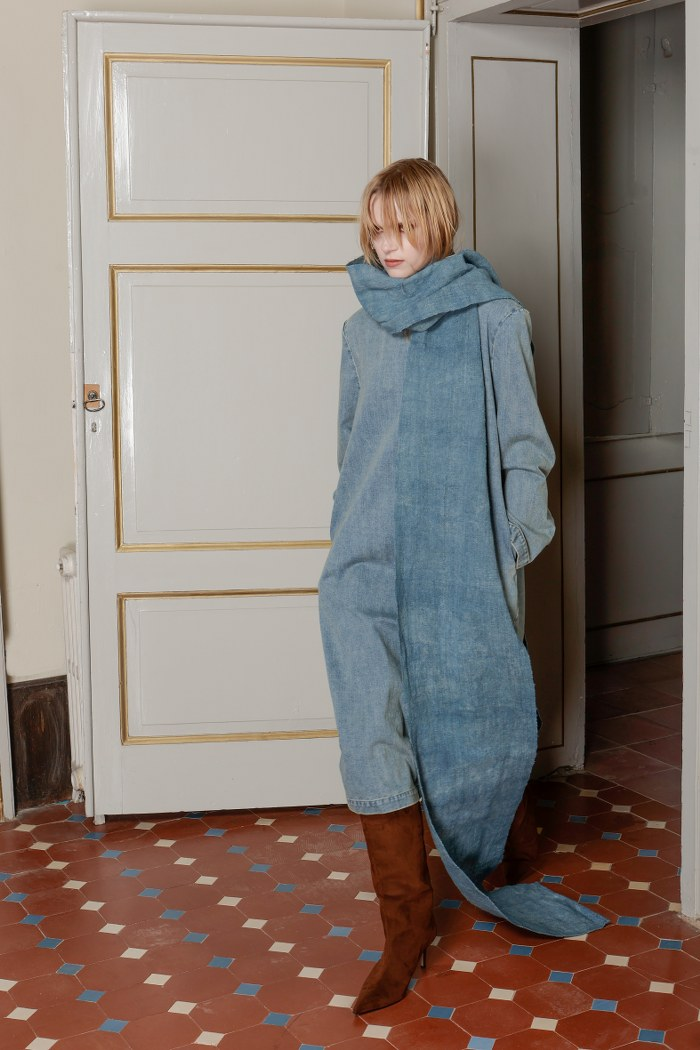
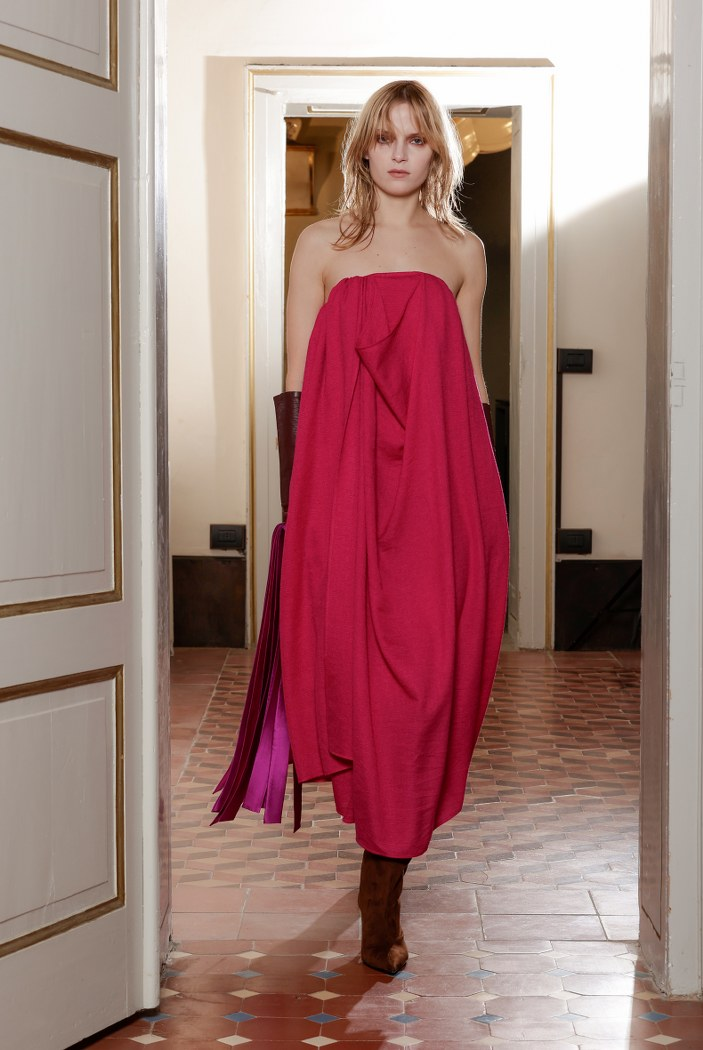
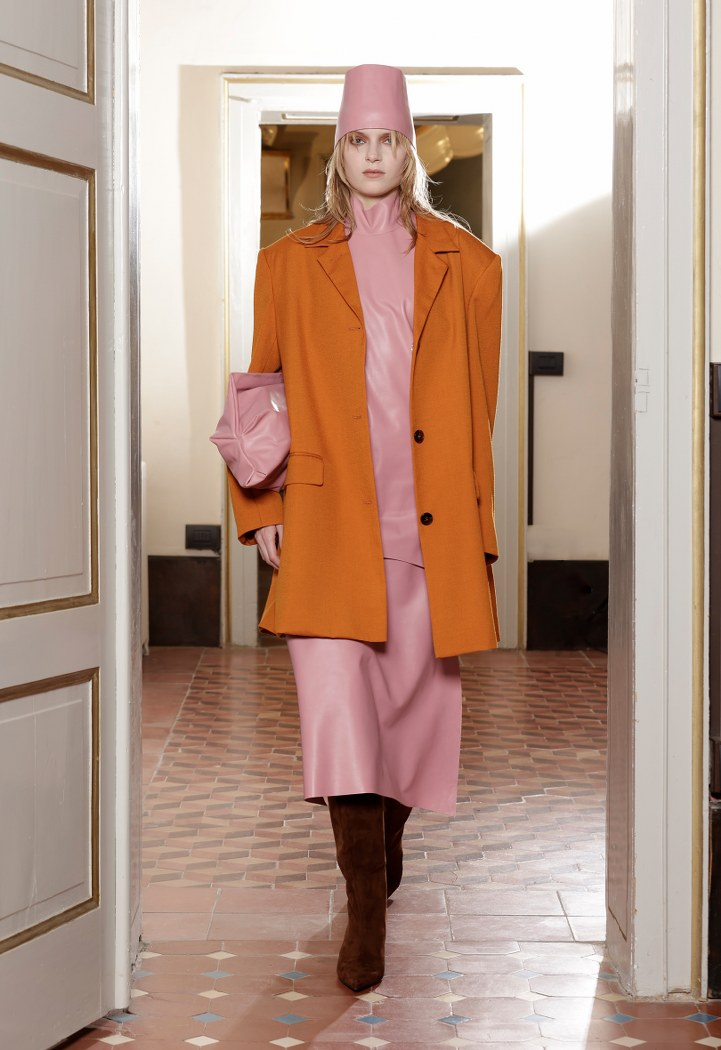
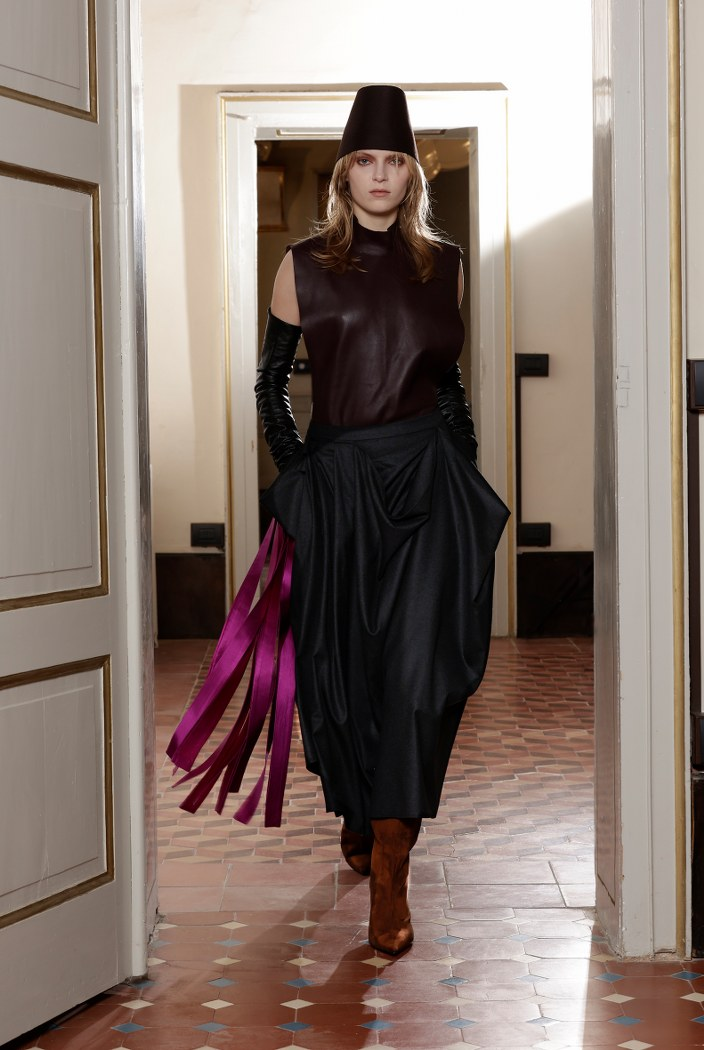
For Fall 2026, Zambelli constructs a collection rooted in perceptual experience. He calls it maximalist minimalism, a term that captures his habit of fusing perspectives and drawing connections between senses. The collection exists in the present tense. Places and words become signs. Attitude becomes movement. Movement becomes drapery. Drapery becomes space. Geometry holds the structure. Each garment follows a constructive path, a fluid grid concealing a stiffer core. It is geometry within geometry, proportions scanned by perspective and symmetry. Zambelli describes it as a mirror replicating its reflection endlessly, doors opening onto other rooms that glimpse still more rooms beyond. A window sliced by sunlight. Light becomes a material here. It floods interior spaces, absorbed or reflected, fixing them in shots dense with atmosphere.
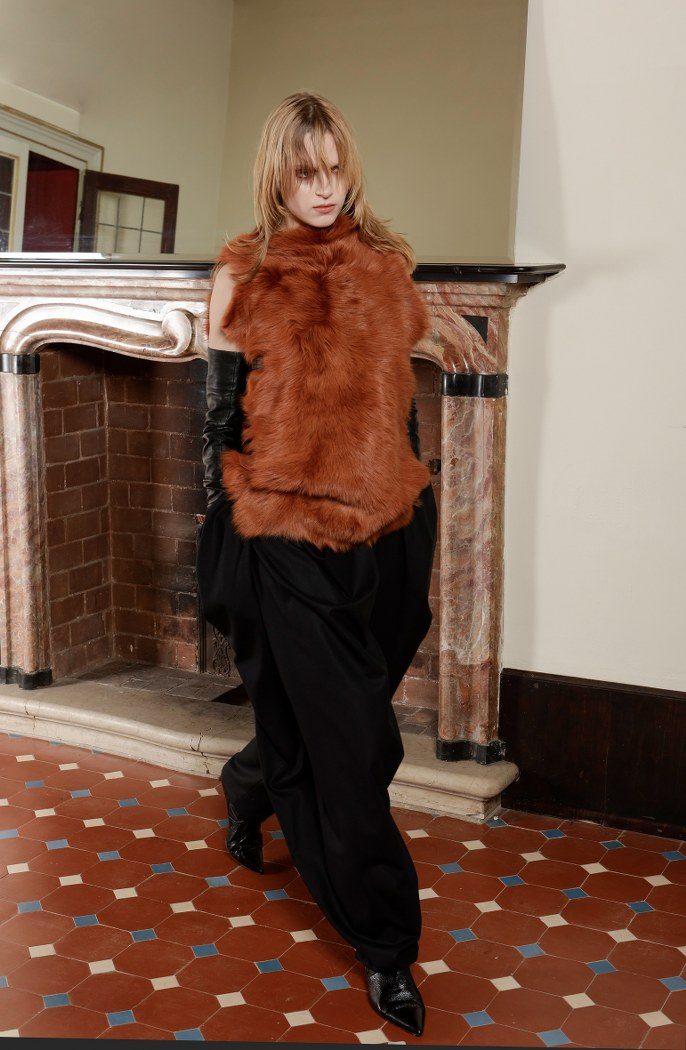
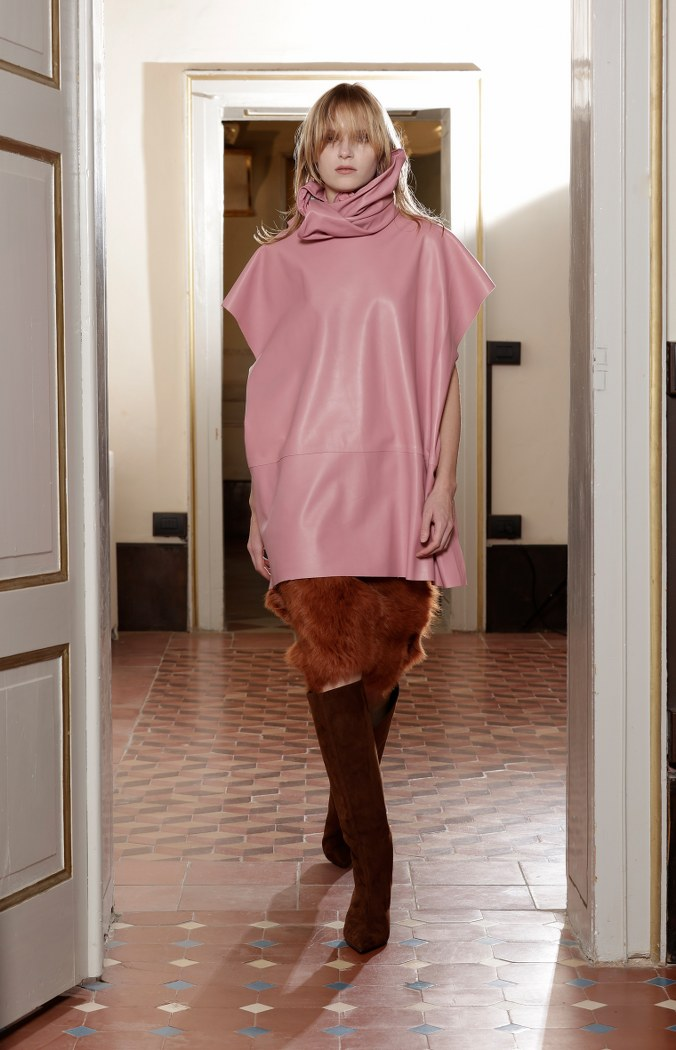
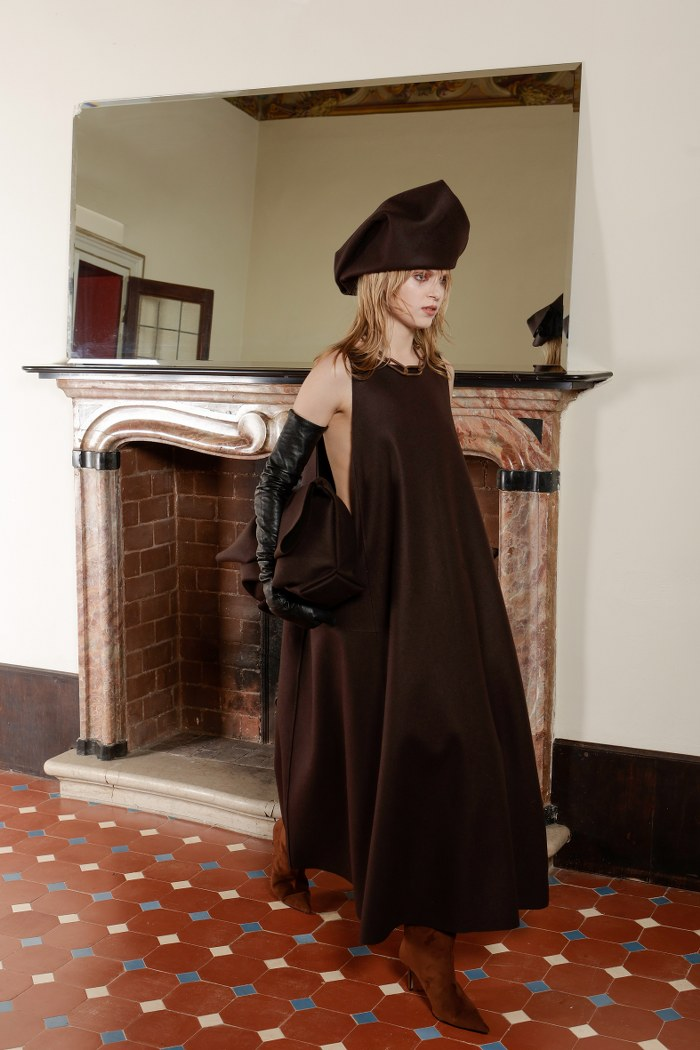
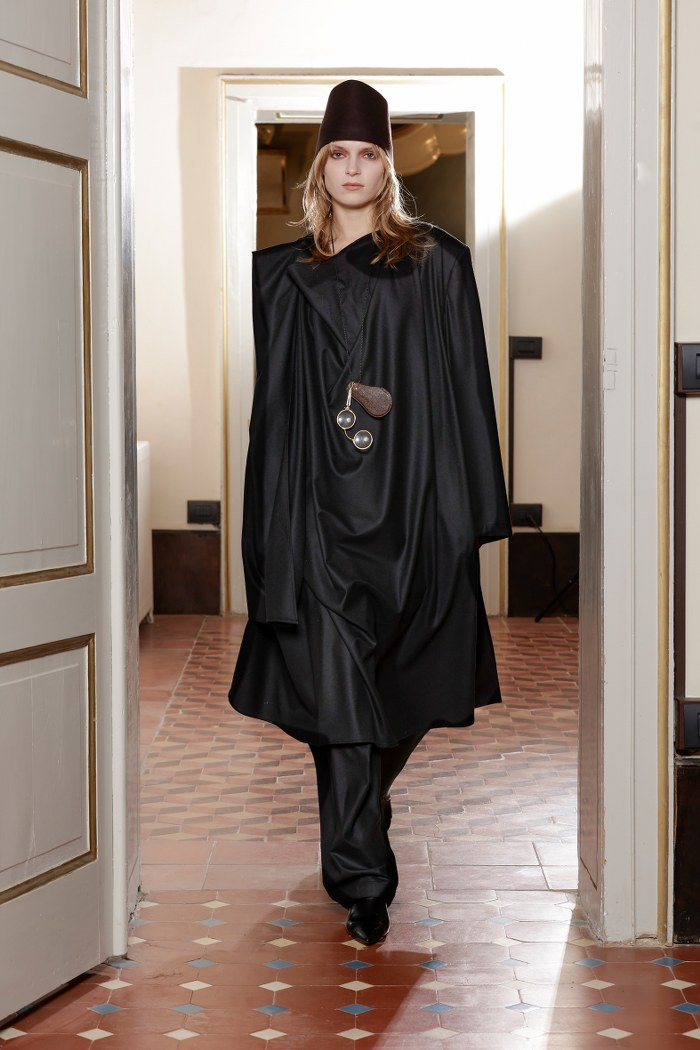
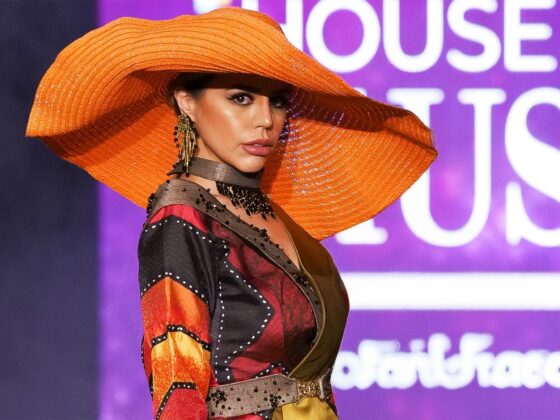
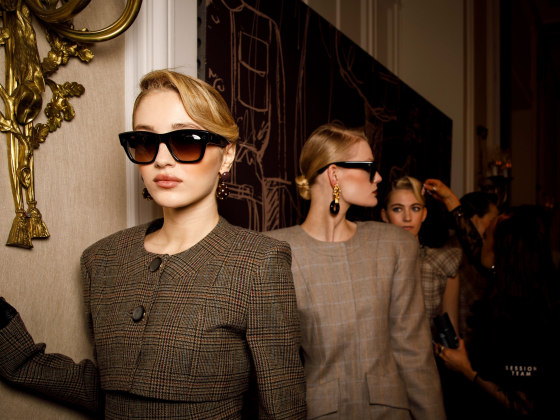
The collection’s neutral base, yeast, mauve, and carmine greys, softens under rigorous spacing. These tones temper into meditative objects. Then come flashes of ocher and fuchsia, interrupting the chromatic weave. Material experimentation defines the collection. Padded iromuji silks wrap the body in sinuous volumes. Archaic linens are deconstructed into samurai-like tunics. Raw-edged cloth takes shape in oversized coats and robes, macro capes, balloon trousers. The minimalist aesthetic borrowed from menswear grisailles turns ornate in decorative gobelins. Pink-mauve nappa leather and caramel-toned shearlings carry a primitive sensuality.
Winding wool cashmeres in deconstructed garments converse with naturally fluid silks, freeing the lines as if choreographed. Zambelli’s process begins with research. He seeks out materials, shapes, and techniques suited to high pret-a-porter, always returning to natural fibers. His collections emerge from temporal suggestions, moments caught in the aura of now. This season, he translates that immediacy into garments that demand multiple senses at once. The result is clothing that feels both weightless and grounded, structured and improvised. What distinguishes Zambelli is his refusal to choose between restraint and excess. He layers both into a single garment, building tension between the rigid and the soft, the controlled and the liberated.
His Fall 2026 collection proves this duality again. The silhouettes read as disciplined from a distance, but up close they reveal draping that moves like liquid, edges left raw, seams that suggest impermanence. Zambelli remains committed to producing within Italy, a choice that ties his work to tradition without nostalgia. His vision is contemporary, informed by global influence but rooted in local craft. The East inspires his volumes. Milan grounds his production. The garments that result belong to neither place entirely, existing instead in the liminal space where cultures and ideas intersect without dissolving. It is a collection built on paradox, held together by precision.