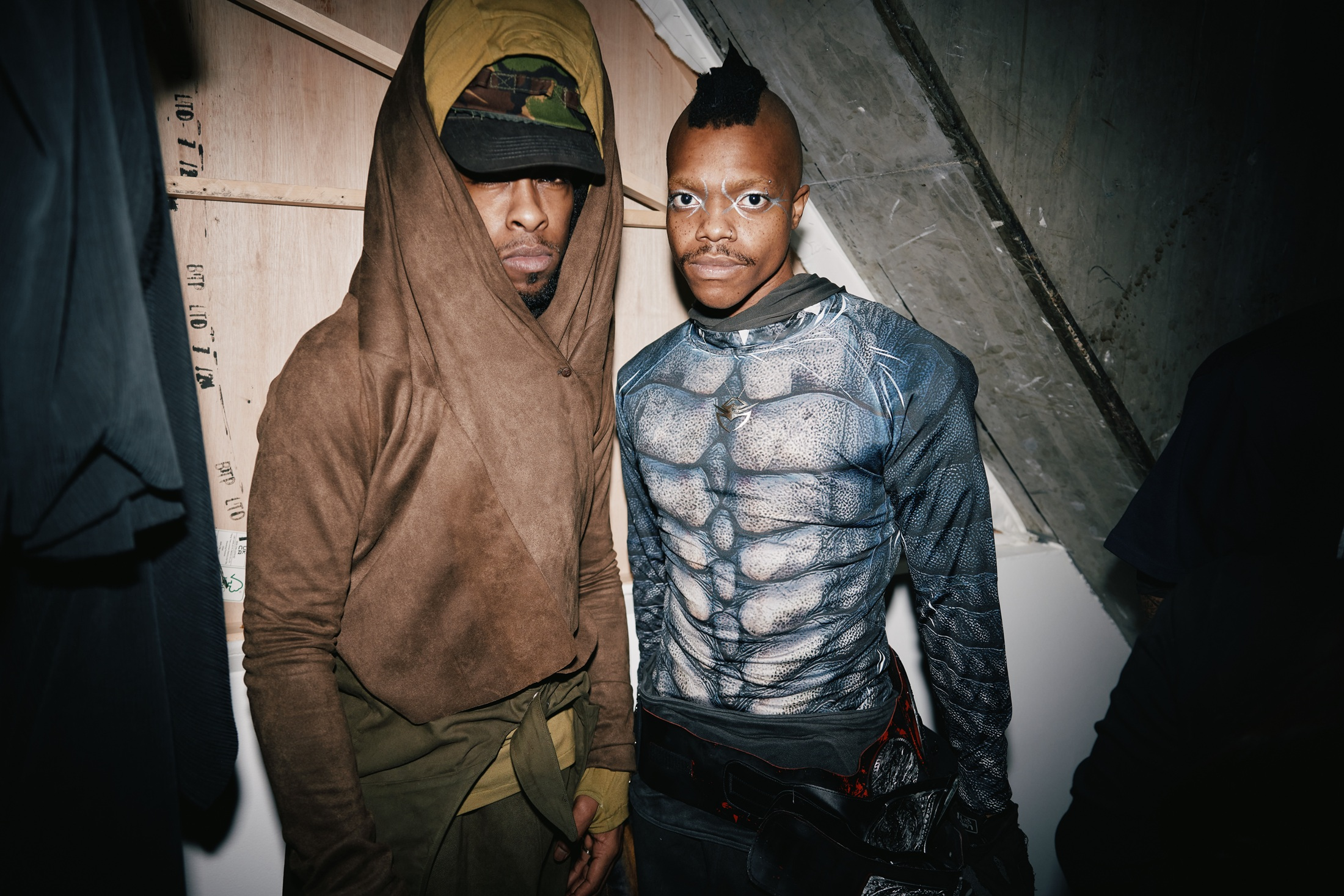
An Exclusive Interview with Designer Yaku Stapleton
by Brian James
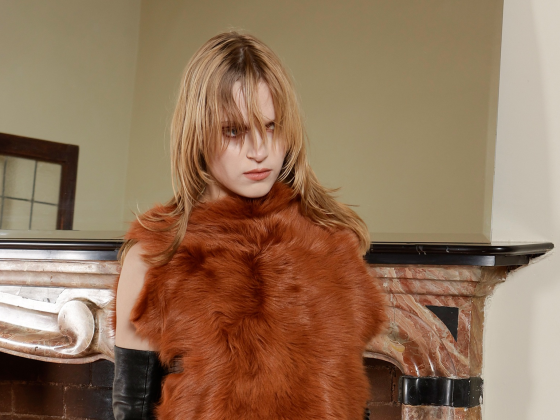
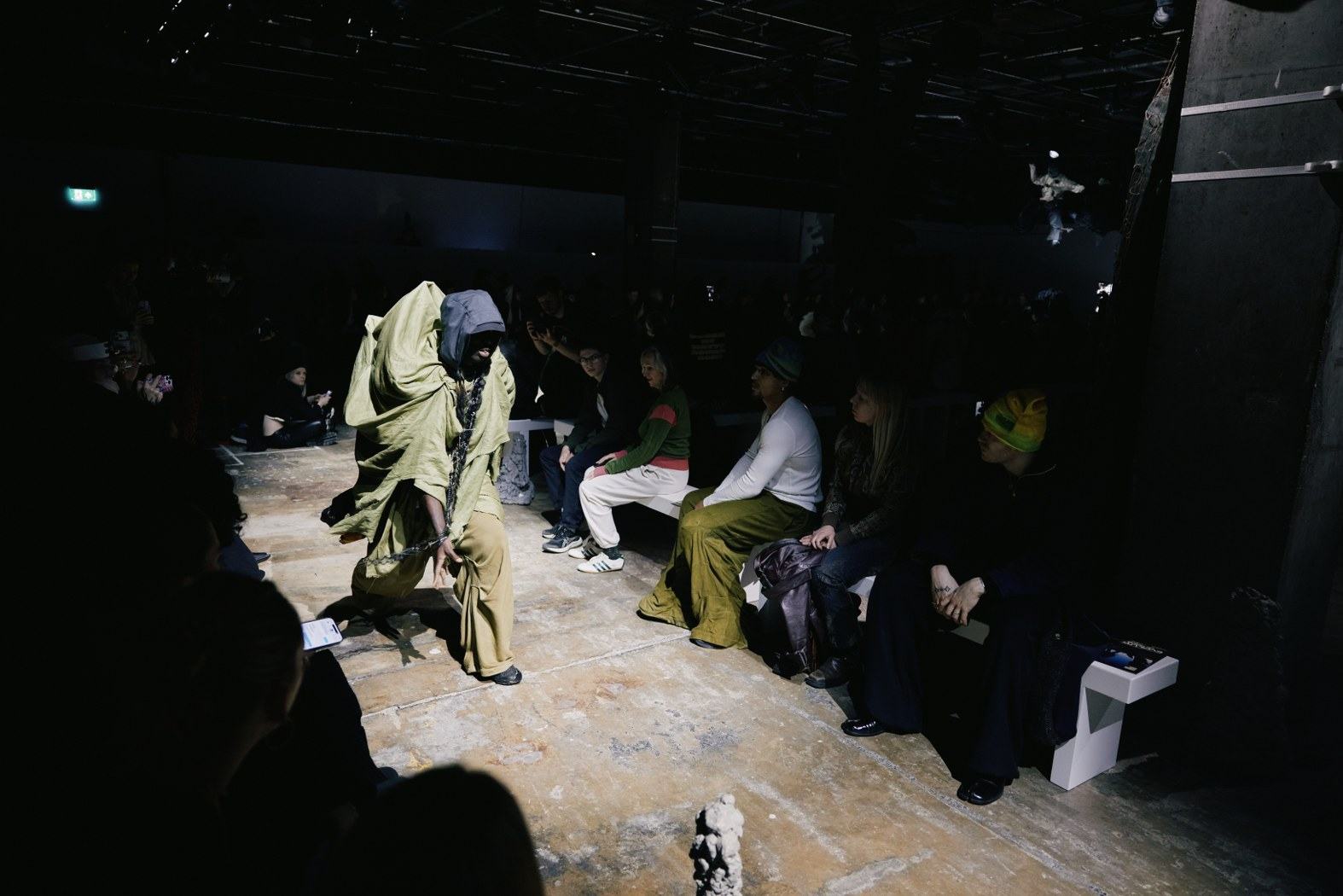
Yaku Stapleton brought his semi-eponymous label Yaku and latest collection A/W 26’s “Chapter 7: Evolution of Combat” to London Fashion Week in February. As part of the British Fashion Council’s (BFC) initiative, which selects and supports emerging designers they believe will be tomorrow’s global names, he showed his latest body of work at their showspace on the Strand.
It was a collection that explored an amalgam of cultural touchstones, including Afrofuturism, computer role playing games , martial arts and the seminal Samurai movie Harakiri. At its core, this conflation of influences posed the question of what happens when history is repeatedly ignored by those who have a fundamentally different relationship to growth and survival. A particularly prescient question in times that can almost feel dystopian themselves.
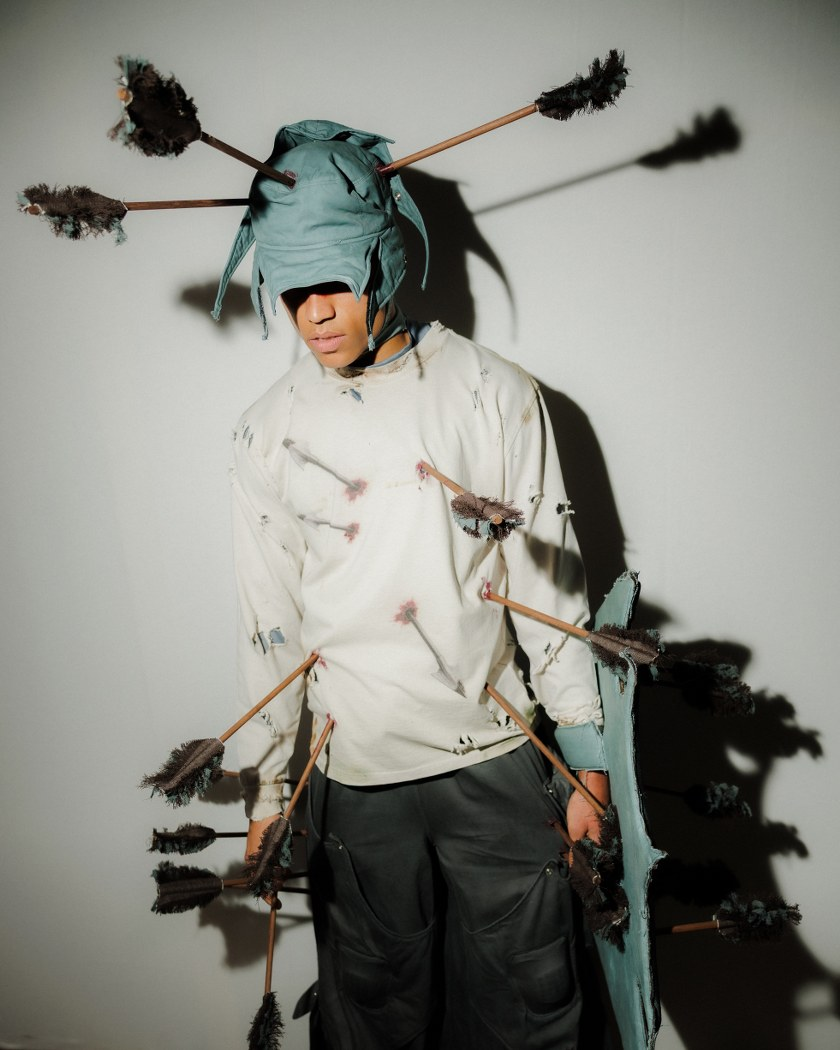
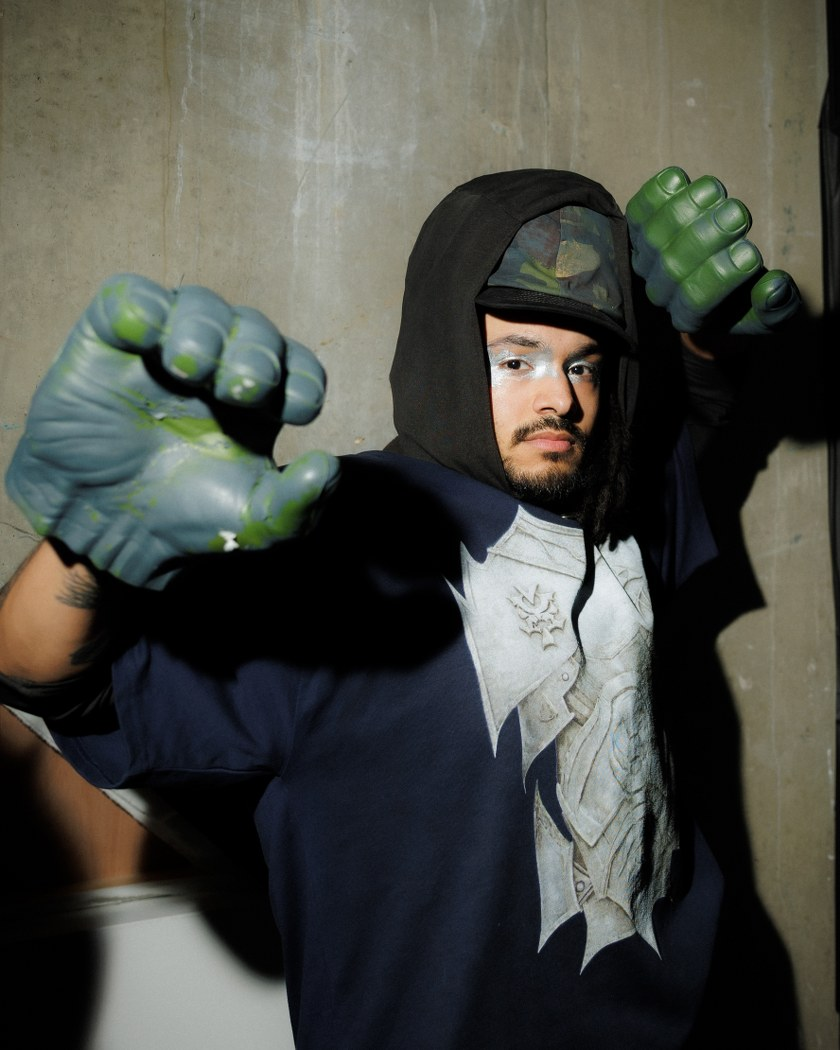
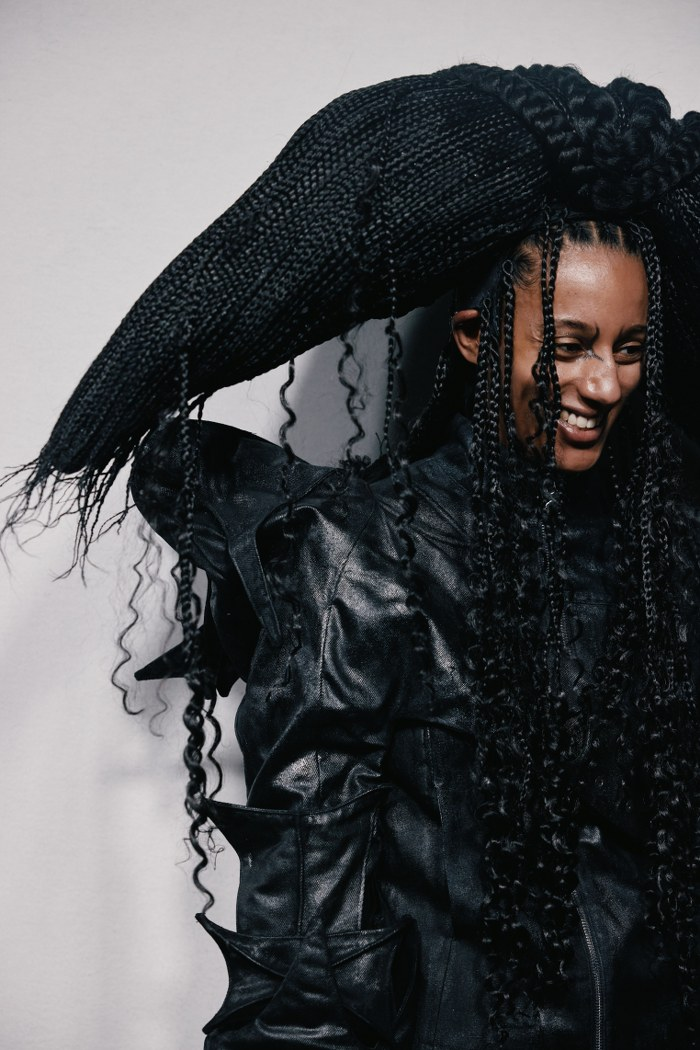
That maturation process manifested itself in a visual vocabulary where every stitch and seam told a story, some embracing unapologetic fantasy while others sat somewhere closer to an abstract interpretation of the real world. That duality of fantasy and reality revealed itself in the fantastical with garments such as 3D printed spine polos and the Ankylo-knight jacket, while the Jawa Hoodie and Télavani Shorts spoke to a more earthly universe.
Every piece was imbued with a traceability that allowed us to see exactly where the materials had come from and that environmentally ethical standards had been met. That intentionality was further evidenced in this season’s collaboration with Nike. The culmination of a three year relationship that began soon after Yaku’s graduate show, he has worked with them as part of their Re-Creation programme , upcycling Air Forces with paper from school bins and fabric scraps. These deadstock reimaginings appeared on the LFW runway, ahead of their release in May.
It was a runway show that, more than any other Flanelle had the privilege of viewing this season, propelled us into a new mood, a unique moment in time, a space beyond fashion. After it, Flanelle sat down with Yaku to ask him about the influences and inspirations that have brought him to this juncture in his career, the universes he seeks to explore through his work and his future aspirations.
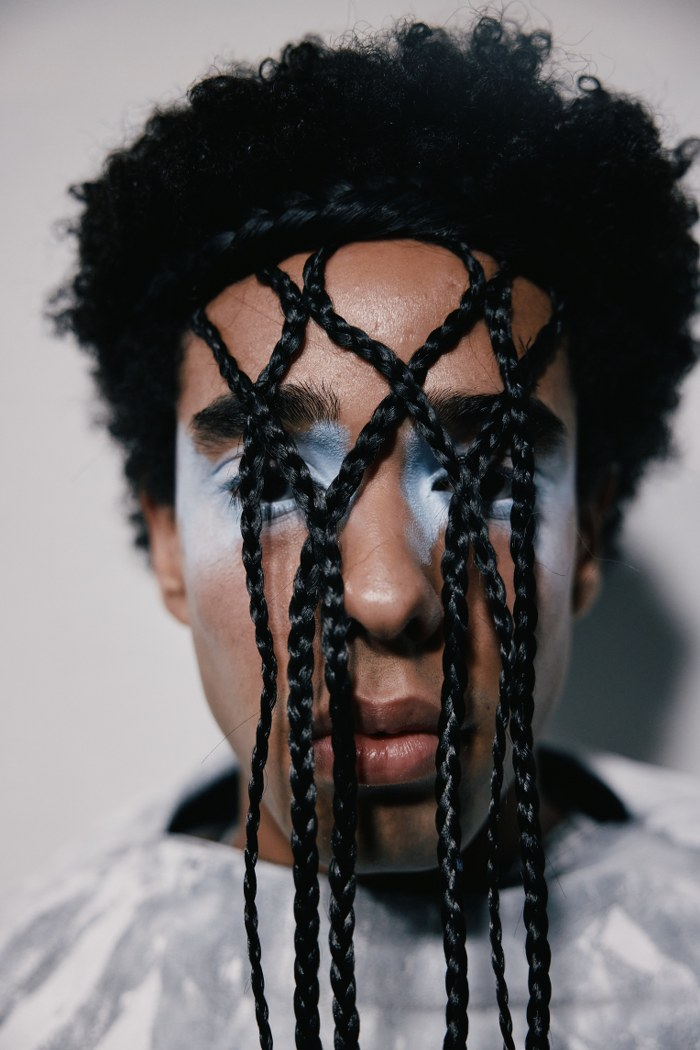
Storytelling and world-building are at the core of the Yaku philosophy. What story did you want to share with us through Chapter 7?
Storytelling and world building are absolutely at the core of what we do. I really hope these stories encourage people to question the limits the world places on them. This chapter focuses on two brothers exploring the beauty, theatre and violence of martial arts and combat. The focus and discipline required to reach the highest levels in these are unmatched, so we wanted to ask: what happens when the motivation behind that dedication changes? The story unfolds across four acts: training, journey, battle and consequence.
How did that manifest itself in the collection’s pieces ?
As usual, we started with my family and the characters that stem from them – their limitless versions that now exist independently of their real-life counterparts. Once we finished building the written story, we began designing garments and objects that these characters might need, interact with or encounter. Usually this is a very clear process for me, but this season I could only see fragments. After some initial stress, we decided to lean into it and proceed collaging them together.
In what ways is Chapter 7 a continuation of the universe you took us to in Chapter 6 and earlier collections ?
It’s almost a reaction to Chapter 6, which reimagined an alternate past/future where landing in the wider world for the first time resulted in exchange and learning, rather than conquest and domination – the positive side of the limitless world we’ve created. But blind positivity isn’t useful, so Chapter 7 continues the story with some returning characters such as the Télavani (our imagined natives of the land). The way this story unfolds counterbalances the previous chapter – where Chapter 6 taught us to live and learn from our histories, Chapter 7 describes what happens when history is ignored.
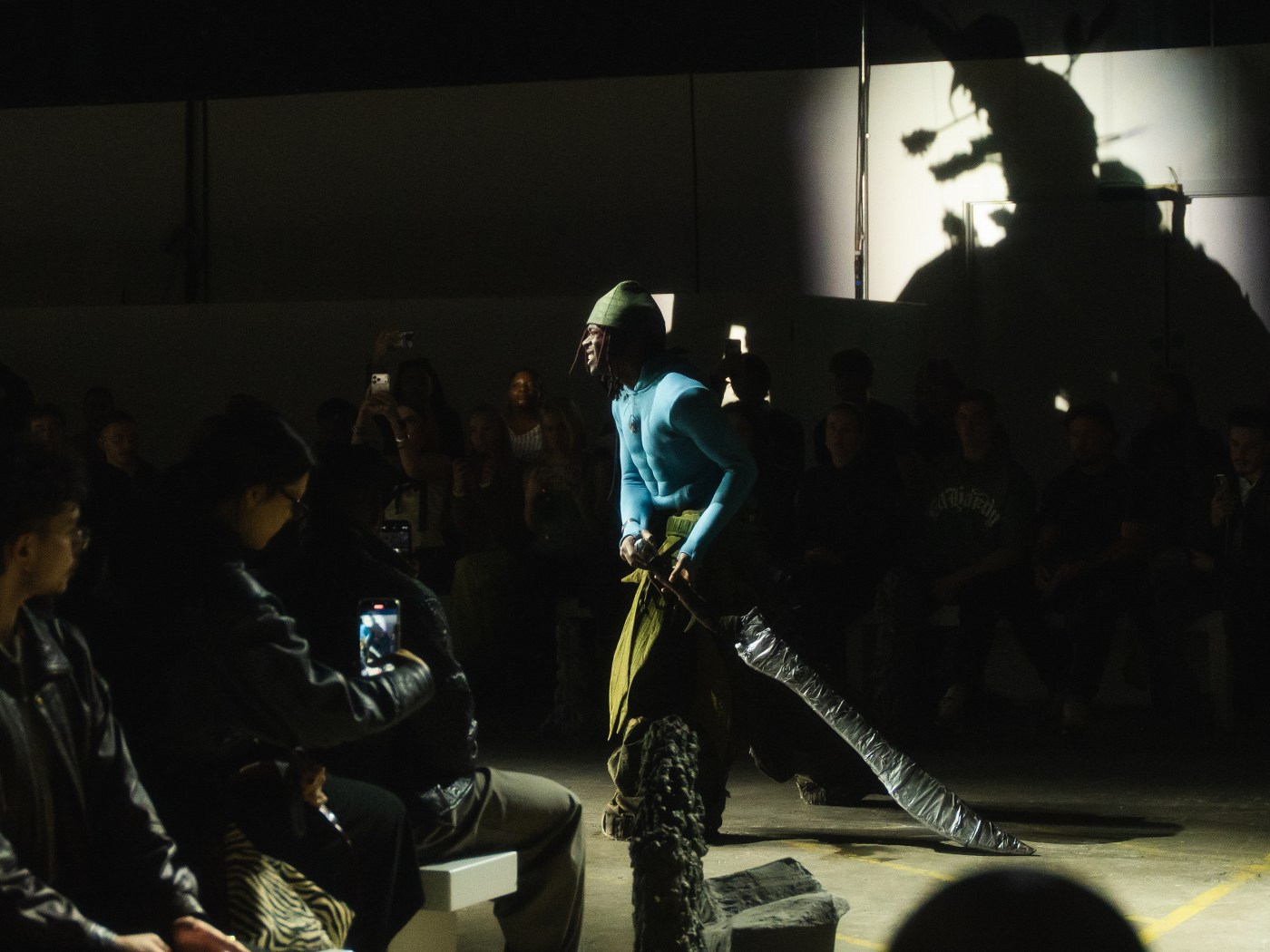
The presentation was an immersive experience melding music, movement and garments. What was the process behind achieving that synergy and who did you work with?
Honestly, it’s about time and trust – and more time, and we work with many talented people to get it right. We’ve been building our presentation language with Dermot Daly across all our shows to guide the dramaturgy and performance. This season, Gabi (Wolosik) joined us to further develop the movement direction in response to this season’s characters and story.
Jordan Fox has evolved our sound over time, and this season we also introduced Jobifuego and Oli Berg to create a score that moves across genres and carries people through a range of emotions that the weight of the subject demands.
On the immersive side, our own Soo (Sookyung Kim) directed and built our fantastic set in-house. Having an early vision of what we wanted it to be allowed us to experiment and properly execute what we wanted it to look like.
This season you also collaborated with Nike who you previously worked with on their “Re-creation” programme. How did that partnership come about initially and how did it work with Chapter 7 ?
When I graduated, I just wanted to make something of myself and tried everything so that making things could sustainably become my job – reaching out to anyone who might help. I contacted Christine La on LinkedIn to share my graduate collection with her. She visited the studio, saw the work, and invited me to join the Nike ReCreations programme. That was almost three years ago. Completing this project and bringing it into Chapter 7 feels incredible – a real full-circle moment. Our collaboration is now set for release in May 2026.
Sustainability is of course key to your craft. Can you tell us about the materials you used to create this collection and what sustainable and ethical practices you followed ?
Honestly – I had no resources when I first started creating, so sustainability just became second nature. We’re still working with a lot of deadstock and bringing it to life through dyeing and fabric manipulation. Vega Textiles in Tottenham is a massive spot for us – it’s great to be able to go there and know the family that runs it.
We also reuse and evolve previous seasons’ sets and objects rather than waste them. A future goal is to create a collection from the large amount of set fabrics that we’ve lovingly and painstakingly made in abundance for previous shows.
There’s also sustainability in simply learning how to make clothes better – making decisions that allow more expression while wasting fewer resources and choosing materials with less impact on the world.
You’re part of the BFC’s NEWGEN cohort. In what ways has that support allowed you to progress your own development as a designer and also grow the brand’s profile ?
The opportunity to show twice a year – and be supported in doing so – is something we haven’t taken lightly at all. I don’t like wasting opportunities given to me, so it’s pushed us to really think about who we are and evolve into a brand that lives and grows in front of people, in front of the world.Being in that intensity has meant we’ve had to grow, we had no choice. It was sink or swim, really.
And that’s allowed us to aim to show what we want to say at the best level we’re currently able to, while trying to build our own genre of show. I think that’s what it is – it’s given us the opportunity to shape our own way of presenting fashion and telling stories.
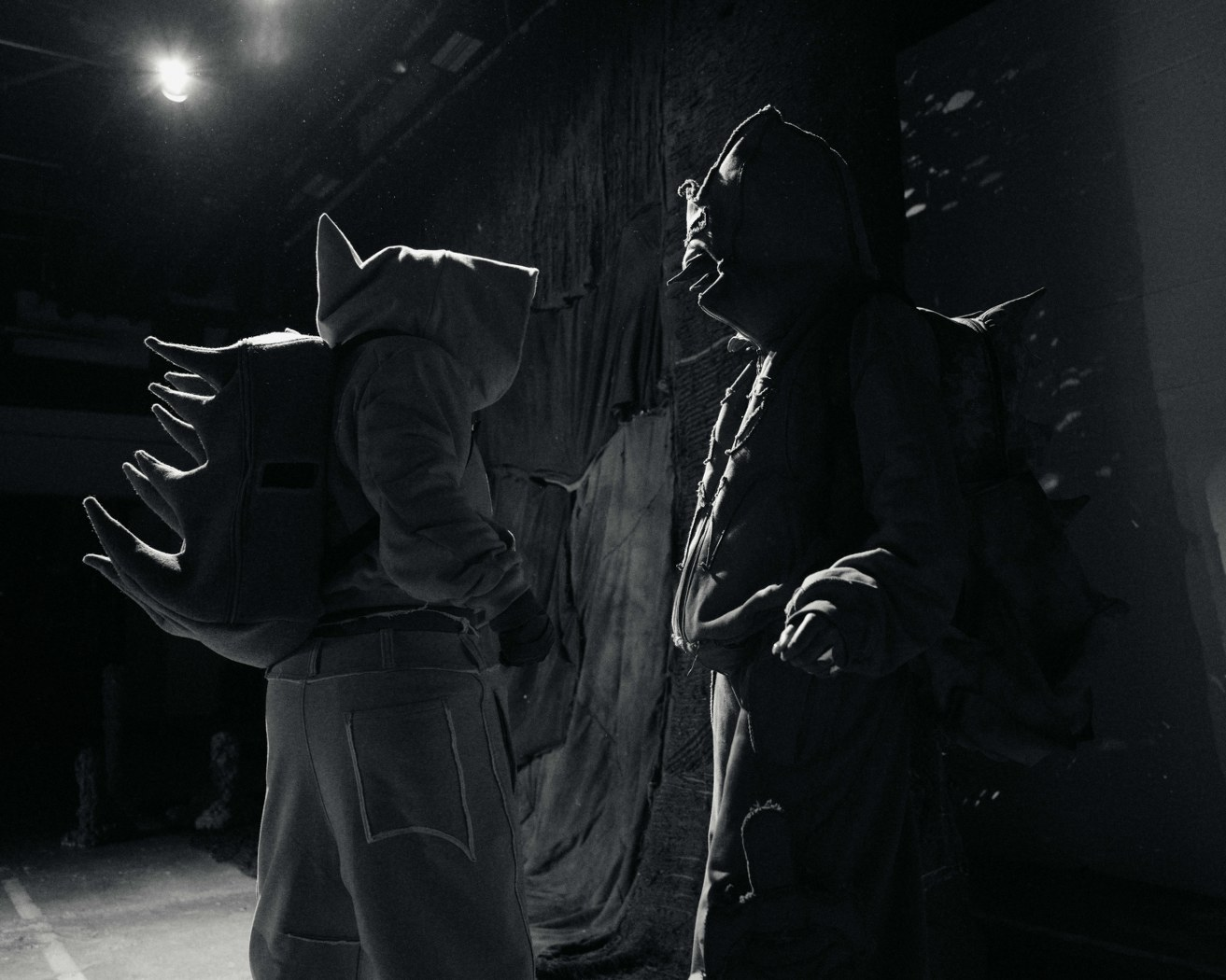
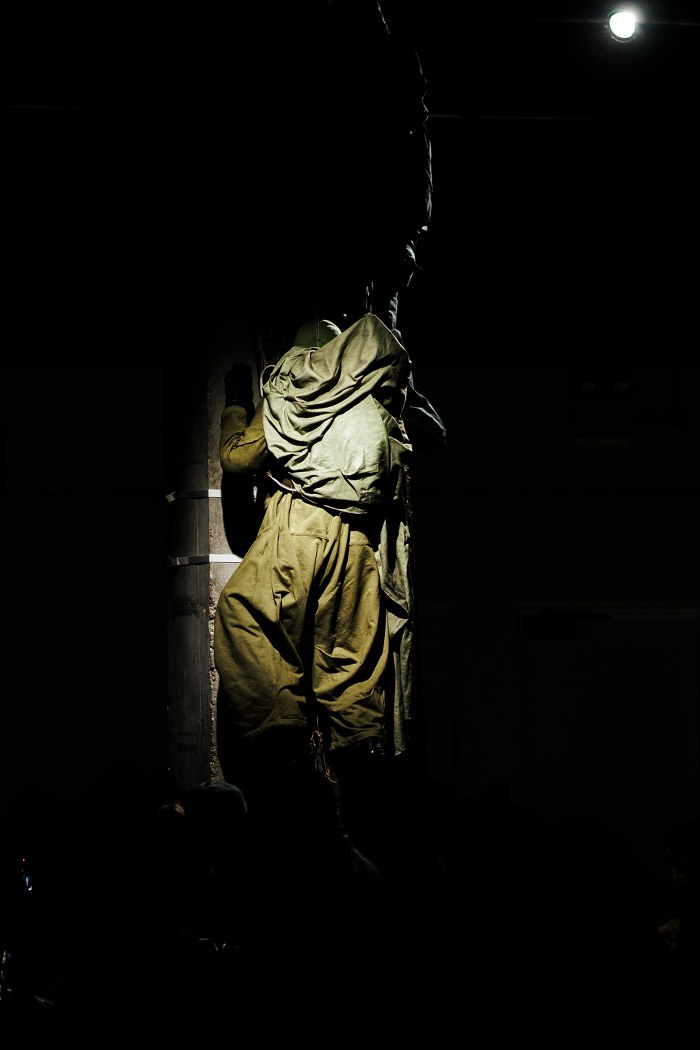
How vital do you think it and other initiatives like The Smithfield Foundation are in supporting emerging designers and what else could the industry do to empower and encourage the next generation ?
Without the knowledge, guidance, care and attention from projects like Studio Smithfield and the support of the Paul Smith Foundation, it’s near impossible to cut through and give yourself a real chance of sustaining both yourself and your team. There are just so many mistakes to make, and having that guidance means you can at least avoid some of them – or have help navigating them when they happen. It’s completely vital.
As for what else the industry as a whole could do to follow suit – perhaps it could do more to help people understand the efforts brands and emerging designers must make to survive. There’s a big push for transparency, but it tends to focus on the ethical side. This can mean that people in the industry who aren’t makers themselves don’t always understand what really goes into it. And that can result in designers not always being given the time to make mistakes and grow. There’s sometimes an expectation that they should know everything from day one, and that’s just not possible.
In your press release you talk about positive protagonists. Who are the positive protagonists who have helped shape your career and how ?
My mum showed me how to care, love and be there for people. My dad showed me the same, but also how to hustle, how to persevere through hardship. Maybe my dad taught me how to jump into the fire, and my mum showed me how to guide and help someone out of it? The tutors at Leeds Beckett – Harriet Wardsworth, and everyone else who gave me a chance when I had no portfolio, just a laptop full of Photoshop T-shirt edits – they gave me a chance to study fashion properly and learn. From there, it snowballed into more and more people who helped.
Everyone at Sable who gave me my first studio. East Street Arts, Metallic, Alex Sossa and Grace Ladoja. The tutors at Central Saint Martins on the MA – the course Fabio is running there is crazy. Harris Elliott, Jawara, Debbie. All of these people have had such a massive impact on me. The main thing they’ve given me is their time and guidance – freely, for nothing in return.
We understand that your original pathway was studying geography at Leeds Beckett University. What was the catalyst for this change in direction and what role had fashion played in your upbringing.
As a late teen, I was making T-shirts, tracksuits, and bits for friends, but still ended up going to uni to study geography. Eventually, I was using all my free time on clothing projects, and something felt wrong. It seemed the only reason I tried to excel in geography was to gain the mental freedom to pursue fashion without feeling like I was wasting time? Then I called my mum, and she just told me to go with what makes me happy – and to do it with full effort, not half-heartedly. That was enough. That was all the support I needed. So I just jumped.
In terms of my upbringing, my mum was a dressmaker before I was born, and my dad had sold clothes in Camden. So maybe there’s something innate there, something passed on, even though I never saw them doing those things. We were always quite free to pick whatever we wanted to wear. We thought people like Blade, Bruce Lee, John Cena, and Neo were cool, but we didn’t try to emulate them through our clothes. It was more about speech, playfighting or acting like them. I don’t know if fashion itself played a big role in my upbringing, I think the freedom of my upbringing shaped how I came to fashion and now influences how I approach it.
How do you want people who wear Yaku to feel about themselves and the world around them when they wear your creations ?
I want them to feel free. I want them to feel confident. I want them to feel a little bit silly, a little bit childlike.
The opportunity to dress up and explore different identities, realities and possibilities through clothing — or even through small details feels really important. It can be quite liberating, quite freeing.
So I’d love to give people that opportunity by wearing the garments, by living with them and discovering more details and features as they grow with them.
Having shown at LFW what are your ambitions and aspirations for the rest of 2026 ?
This is a really big year for us. I think it’ll be both transformative and demanding. Now that we’ve shown AW26, we’re moving on to complete Nike Recreations – a project that’s been steadily evolving over the past three years. We’ll then move into our new studio before travelling to Ethiopia with the Paul Smith Foundation and the British Council to meet and build artworks alongside artists and makers from sub-Saharan Africa.
After that, Nas and I will take some proper time off for the first time in three years and head to Brazil – somewhere I’ve felt connected to for a long time. That will be a good chance to reset, recharge, and maybe rethink our approach before fully stepping into SS27. Then probably one or two pop-ups this summer, where we’ll revisit Offcuts – a project where we repurpose and give new life to our samples, presenting them to people in a more engaging, cohesive, and special way… And after that, who knows. So much can happen in a year. But I’m really excited for what’s to come!
In many ways Yaku’s work serves as a cultural conduit for candid conversations that need to be had. He’s a designer who uses fashion to communicate things. Things that are bigger than fashion , that take us to new and better places through the power of design. Ultimately however, it’s the clothing that does the talking , clothing that gives us a sense of freedom and the joy of self-expression. Beautifully crafted clothing that also crafts emotions.
As he says in the show notes it’s not just the path that matters , but the intention behind it. With “Chapter 7: Evolution of Combat” Yaku continues to take us on that ever-evolving pathway. An evolution that’s underpinned by an all-encompassing intentionality which percolates every facet of his practice. We were captivated with Chapter 7 and await the next instalment of his multi-chaptered story.