From “Sure Thing” to “CAOS”, Miguel’s Montreal show is the lovechild of 15 years of revolutionising himself and the R&B genre as a whole. The live rendition of his new studio album“CAOS,” from which the tour derives its name, is tempered by his lived experience of a divorce and fatherhood. Modern chaos requires modern clarity—sometimes the most radical act of duty we can offer the world is the never-ending resilience of optimism.
Text by Jamie Xie
Photos by Louis Alson
Eight years after his last studio album release, “War and Leisure,” Grammy-award winning singer, songwriter Miguel Jontel Pimentel returned to Montreal on February 17th as a part of his CAOS album tour. What followed was a masterclass in reinvention, proof that 15 years into his music career, Miguel is still finding ways to connect—to his past, his pain, his audience and the man he is perpetually becoming—some things are worth the wait.
“To rebuild, I had to destroy myself. That is the core confrontation of CAOS,” Miguel recounted in a press statement.
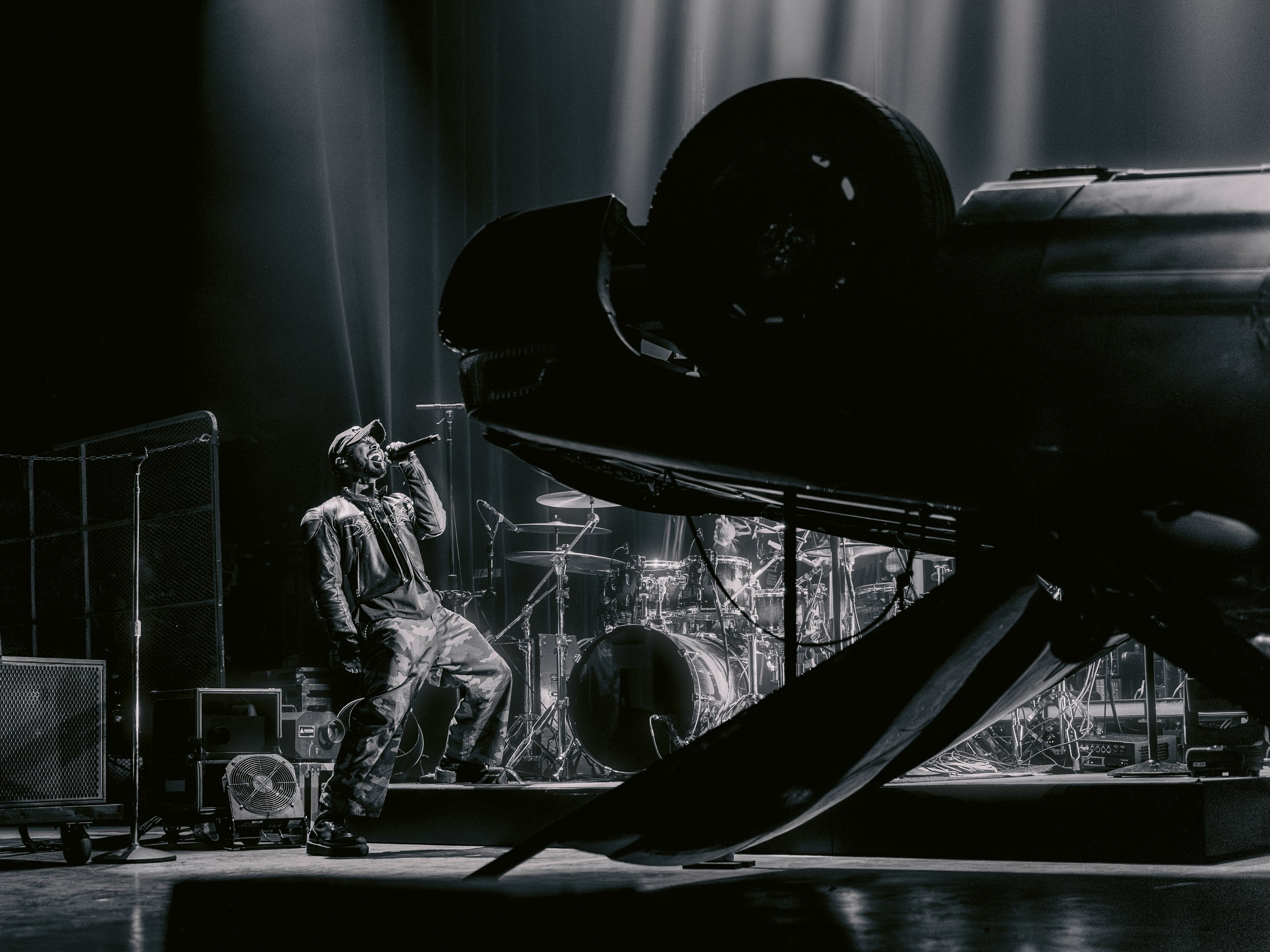
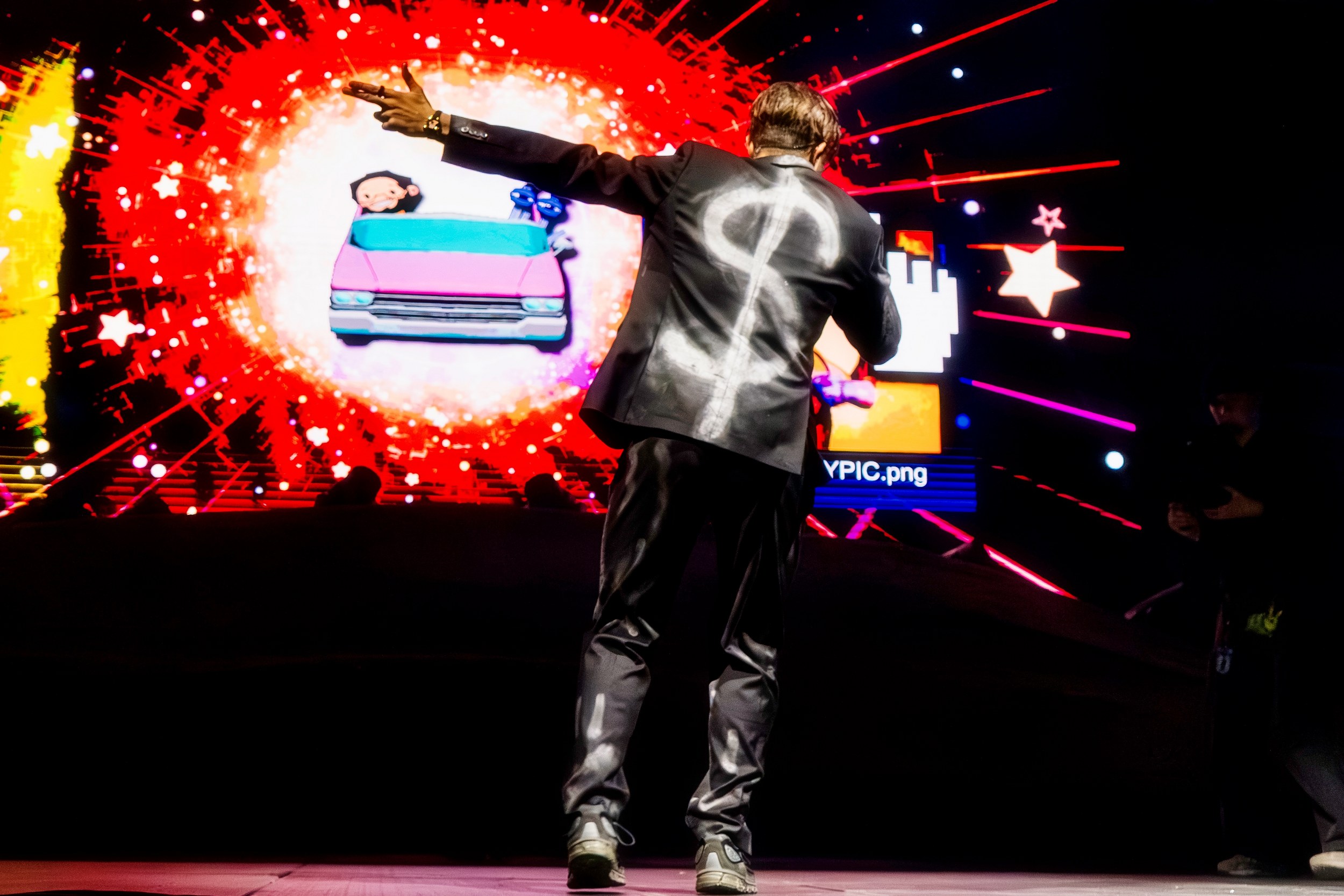
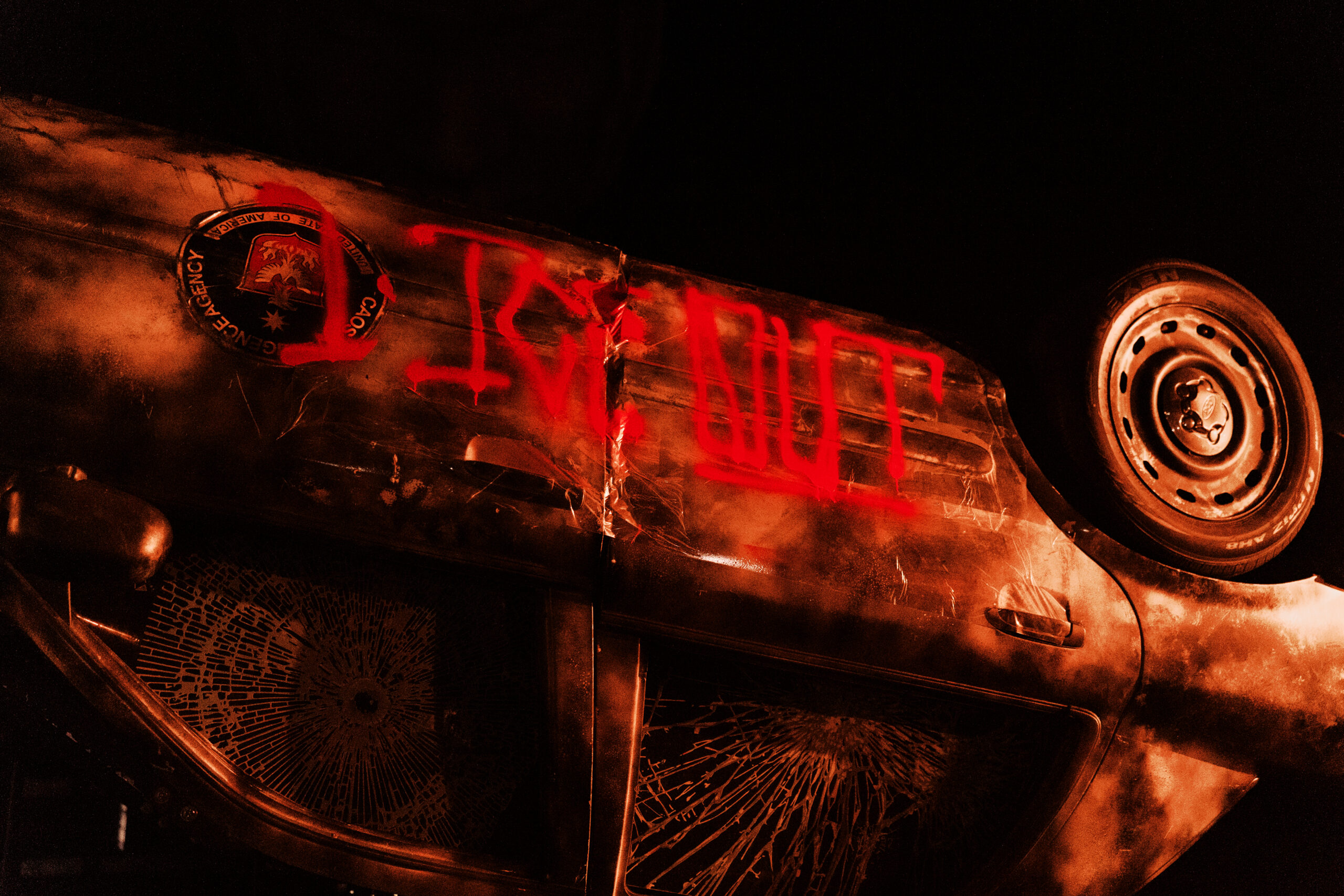
In many ways, “CAOS” is an artifact of survival, a testimony to the transformative powers of loss and the courage it takes to begin again. Miguel’s reflective performance repurposed the MTELUS centre into a conversation between him and the city that never stopped believing in him. Somewhere between staging-element and scene-partner, a colossal mask set piece overlooked the MTELUS crowd, embodying Miguel’s conscience and opening up the opportunity for meaningful monologues between songs—just one moving part in a grand, elaborate set. Arriving with full force, Miguel appeared first to the audience atop a totalled car, electric guitar in hand, underscoring the core theme of rising from the wreckage, opening with the titular song “CAOS.”
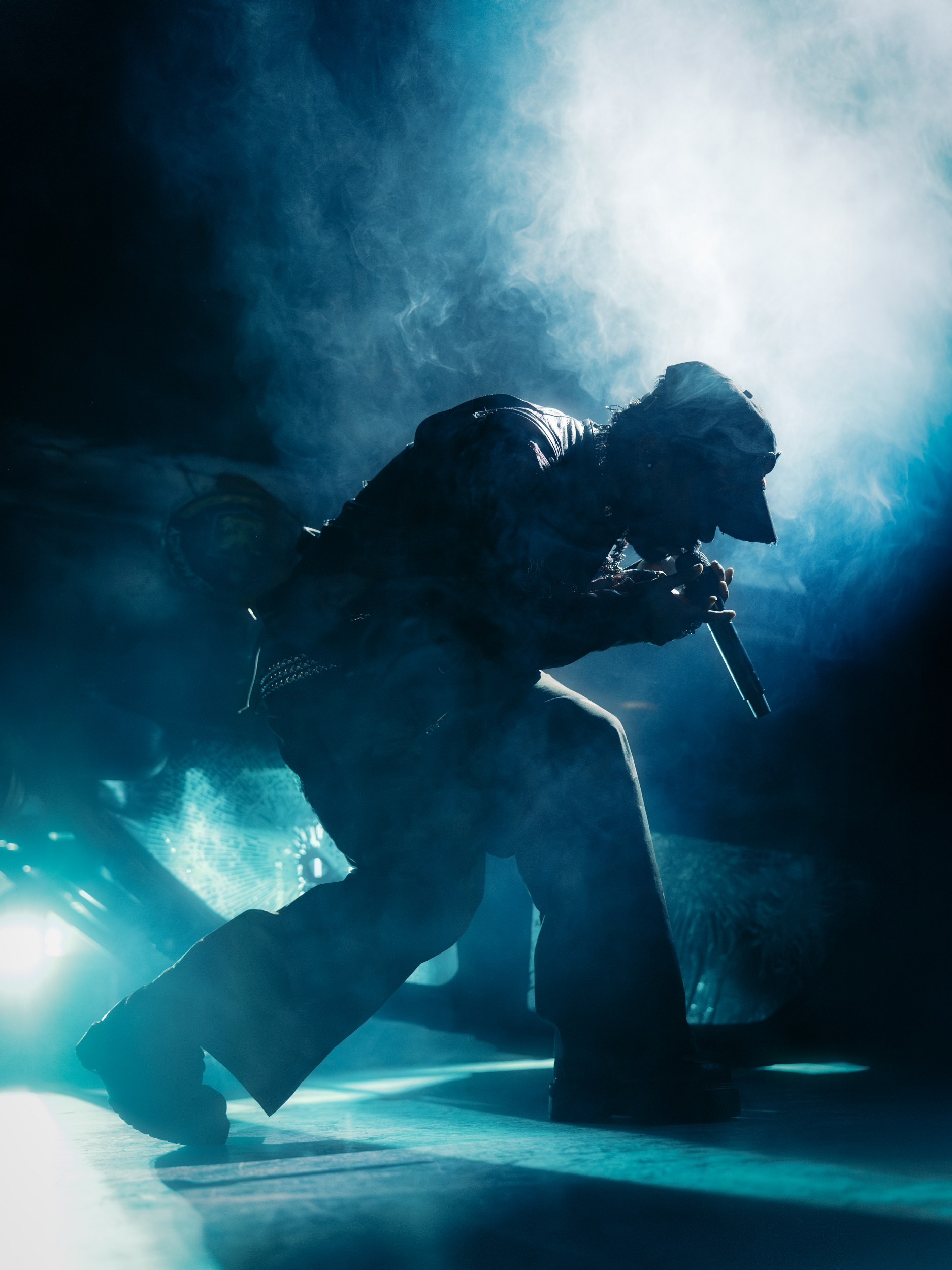
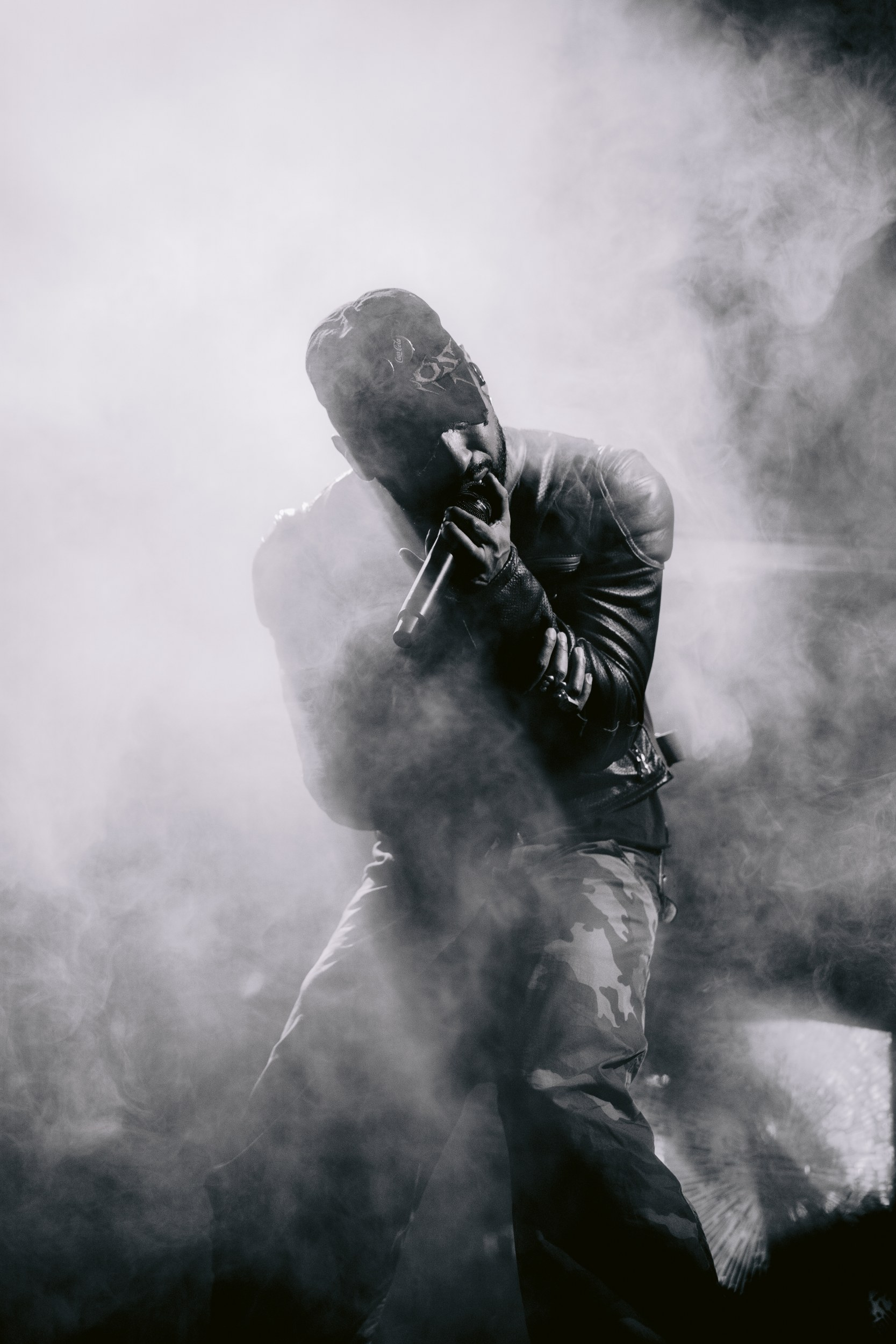
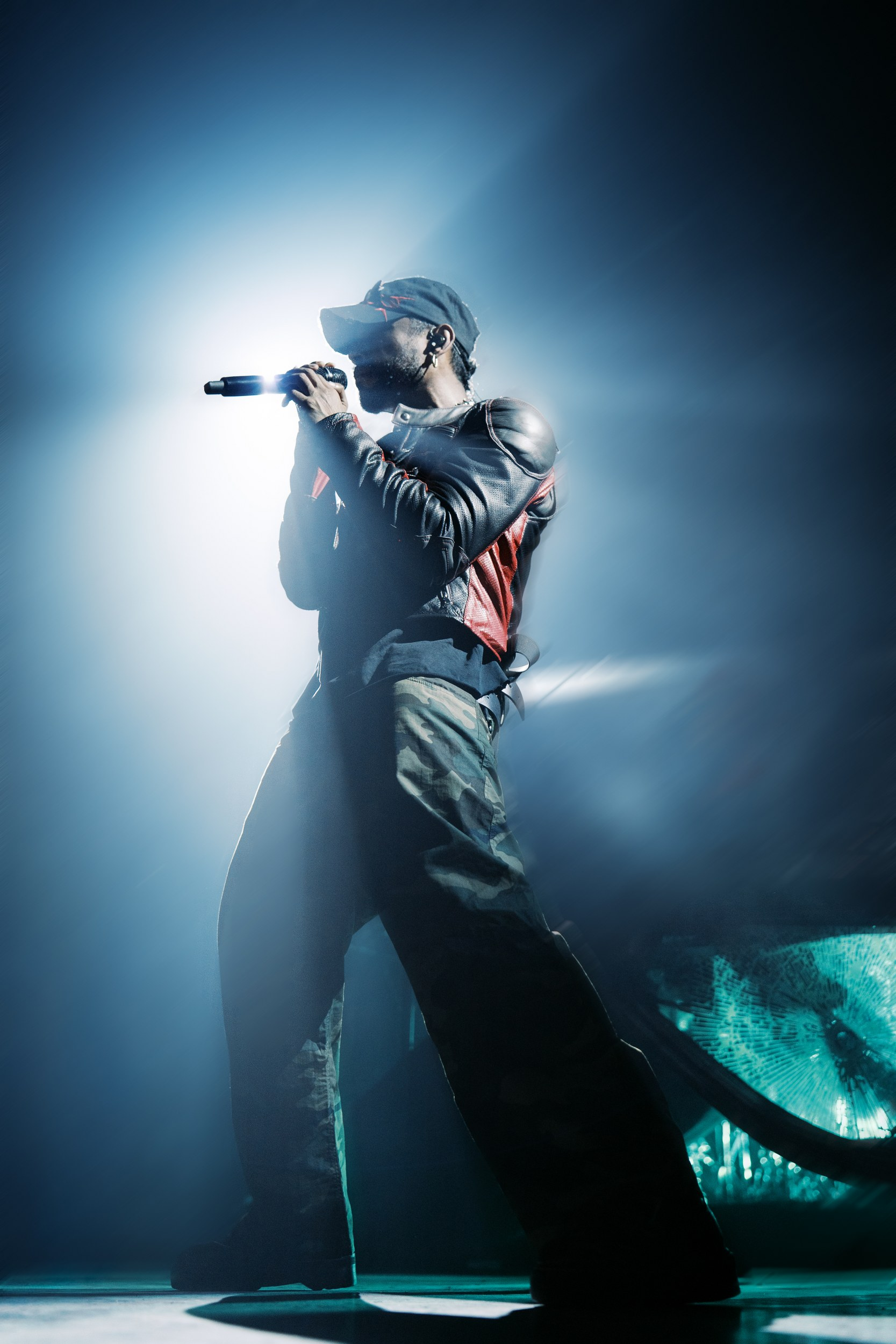
“Life without pain was boring,” the mask recounted, as Miguel began “Do You Like Drugs?” To a stripped-down backing, Miguel’s vocal prowess was at its strongest, navigating effortlessly through complex falsetto riffs and power-ballad harmonies. High atop the car wreckage, he belted over an audience turned choir and sea of flashlights—a brief moment of hope and unity. He returned to that feeling in the intro of “New Martyrs (Ride 4 You),” taking a moment to reflect on the importance of cultural diversity in the world and the importance of fighting systems that attempt to erase it, “What we need most is each other,” he told the crowd, “to take care of each other, protect each other. There are a lot of elites out there creating systems to keep us apart.” He suggested that one of Canada’s most admirable strengths is its commitment to empowering diversity efforts and protecting marginalised people—a sentiment that earned an uproar of approval when he added, “I have always loved Canada for being a safe space.”
Miguel is a rare performance powerhouse of cross-cultural, genre-defying abilities; he owes much of his stage presence to his status as a veteran in the performing R&B industry and his unique interdisciplinary background as a singer and music producer. Using the Spanish word for chaos as the album and tour title to pay homage to his heritage, Miguel is keen to redefine his legacy but never forget where he came from. In the balladic “El Pleito,” Miguel blended progressive R&B effortlessly with Latin influences, allowing industrial rock, alternative and Afro-Latin rhythms to blend seamlessly into spacey production.
Throughout the show, Miguel demonstrated striking awareness of the world collapsing around him, embedding purpose in his work and intention in his setlist. He questioned whether there is a god watching—and if there is, how it is possible that the world can be so full of cruelty. Joined by his bandmates high atop the wreckage, “it hurts to be human,” he lamented in the track “RIP,” “some days you smile with pain in your heart.”
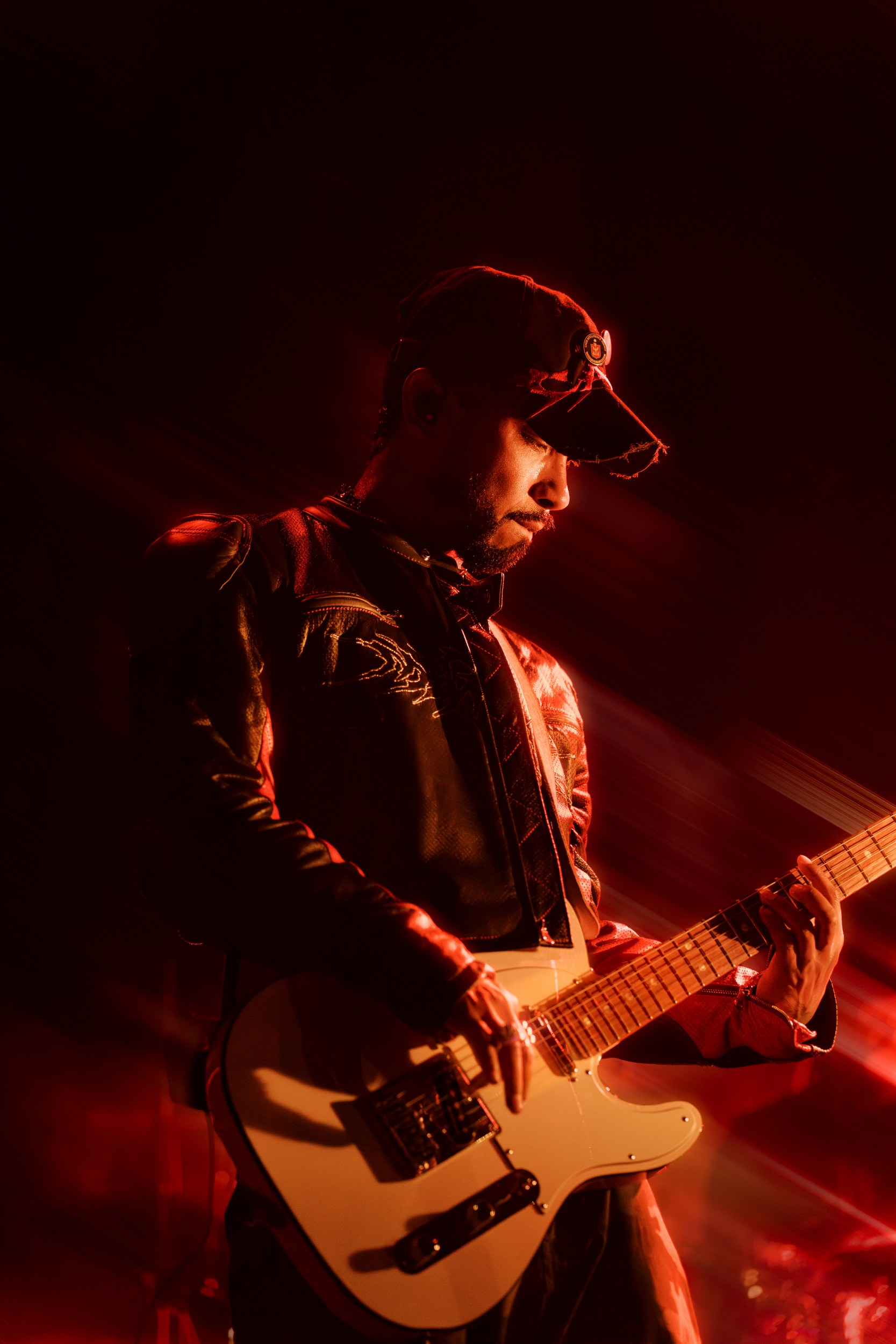
In crowd favourite “Simple Things,” Miguel shifted from anxiety about the state of the world to a humble appreciation of what makes life meaningful, reflecting on why he started writing songs in the first place. “What I found was I started writing songs because I wanted someone to listen to me. I just wanted to be heard.” Meditating on the small things that shape a person’s life, Miguel evoked a nostalgic longing and desire for change in his life. It is through “Angel’s song,” aptly named after his firstborn son Angelito, that Miguel is able to realise change itself as a simple thing—“one of the simplest things we can change is our perspective.” Drawing upon his experiences with fatherhood, Miguel recovered a sense of hope despite the turbulence of modern life, finding singular purpose in his son and relief that things will be okay. “I forget the world’s unravelling when I’m with you […] So we can just enjoy the view.”
To close out the night, Miguel returned to his roots in the encore number “Sure Thing.” As though to align himself with the themes of rebirth established by the final track of the album “COMMA/KARMA,” he concluded the concert fittingly with one of his oldest and most well-known songs, completing the cycle and the night.
Miguel emerges as a voice for modern sensibilities, speaking directly to contemporary anxieties and frustrations—showing how an audience might survive the sometimes hostile conditions of daily life. “We can’t control the storm, but we can control the direction. It’s time to lock in and crash out,” he says.