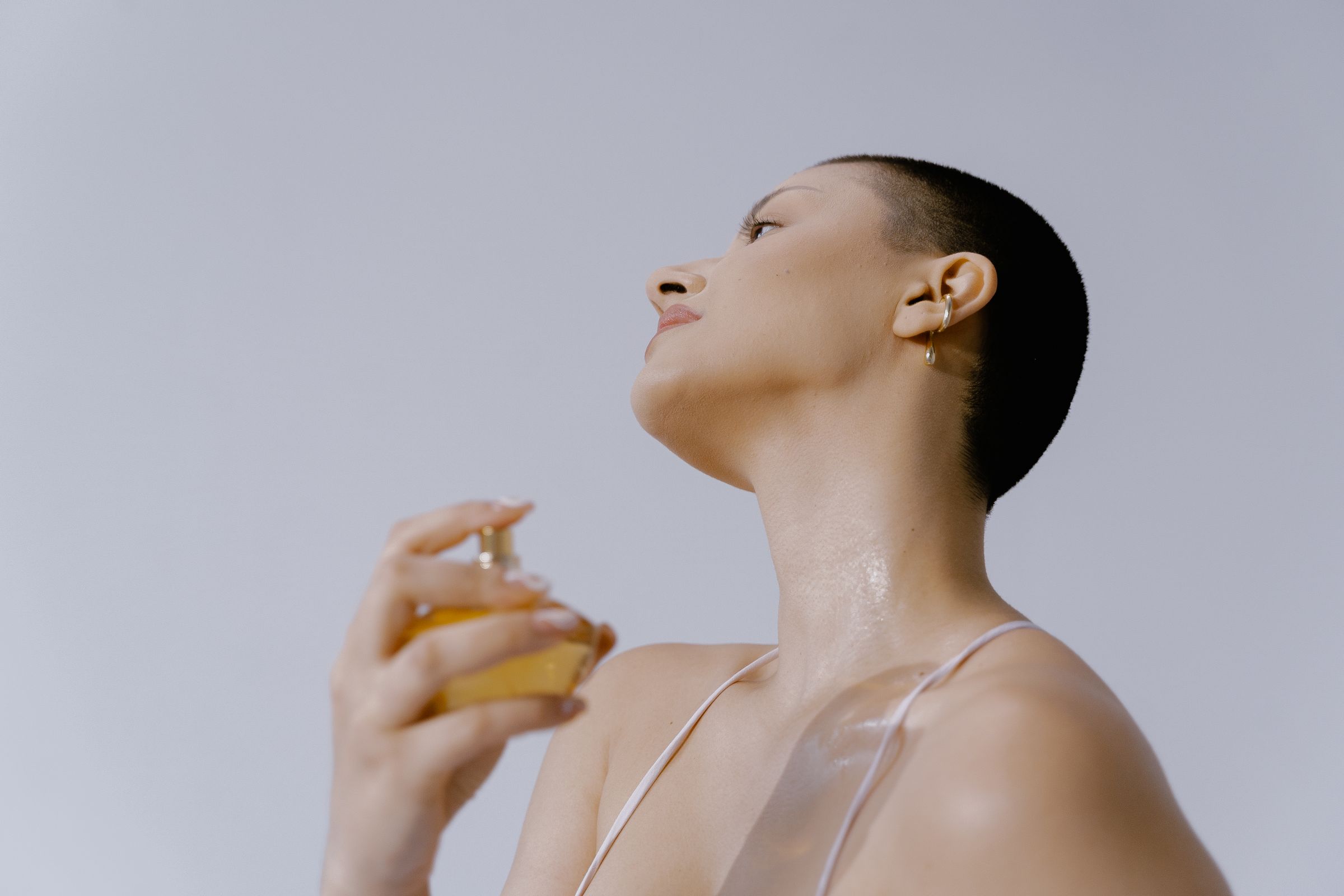
Most women who wear perfume are already layering fragrance, whether they realize it or not. The body lotion they apply after a shower has a scent. The shampoo and conditioner they used that morning had a scent. The laundry detergent on their clothes has a scent. By the time a woman sprays her perfume, she is adding a fourth or fifth fragrance to a body that is already carrying several others. ” We develop women’s fragrances for women who want their scent to feel intentional, and intentional layering starts with understanding what is already on your skin before the perfume arrives. ”
The difference between a woman who smells considered and a woman who smells confused is usually not the perfume she chose. It is about whether the other scented products she is wearing work with it or against it. A beautiful eau de parfum applied over a strongly scented body lotion in a competing fragrance family will smell muddled within an hour, and neither scent will read the way it was designed to. The perfume is not the problem. The layer underneath it is.
The foundation layer
The most important layer in any fragrance routine is the one that goes on first, which is usually a body lotion or a body oil applied after a shower. This layer sits closest to the skin, and the perfume you apply afterwards will interact with it for the rest of the day. If the lotion has a strong scent of its own, the perfume has to compete with it, and neither one wins.
The simplest solution is to use an unscented moisturizer as your foundation layer. An unscented body lotion gives the perfume a hydrated surface to sit on (fragrance lasts longer on moisturized skin than on dry skin) without adding a competing scent. The perfume fills the entire canvas, resulting in a cleaner, truer version of the scent you chose.
If you prefer a scented lotion, choose one in the same fragrance family as your perfume. A lotion with a soft vanilla note will support a perfume with amber and musk in the base. A citrus-scented lotion will support a perfume with a fresh, green opening. The key is that the lotion should feel like a quieter version of the same conversation rather than a different conversation entirely.
Hair mist and where it fits
Hair holds fragrance differently from skin. The fibers of the hair catch scent molecules and release them slowly throughout the day, which means a fragrance applied to the hair will last longer and project differently than the same fragrance applied to the wrist. This is why hair mists exist, and why some women prefer to scent their hair rather than their skin.
The risk with hair mist is adding a second distinct fragrance to a body that is already wearing a first one. A woman who applies perfume to her wrists and neck and a differently scented hair mist to her hair is wearing two fragrances that will meet in the air around her head and shoulders, and the combination is rarely as good as either one alone.
The approach recommended is to use a hair mist in the same scent as your perfume, or to skip the hair mist entirely and let the perfume do the work. If your perfume has a lighter concentration (eau de toilette rather than eau de parfum), a matching hair mist can extend the life of the scent in a way that feels additive rather than competing. If your perfume is already an eau de parfum with strong projection, the hair mist is probably unnecessary, and adding it risks tipping the overall effect from being considered too heavy.
Fabric spray and clothing
Spraying perfume directly on clothing is something many women do instinctively, and it works well when the fabric and the fragrance are compatible. Natural fibers like cotton, silk, and wool hold fragrance beautifully and release it slowly through the day. Synthetic fibers hold fragrance less effectively and can sometimes alter the way a scent smells, because the chemicals in the fabric interact with the fragrance molecules differently than natural fibers do.
The thing to be careful about with fabric is accumulation. A scarf you spray with perfume every morning will accumulate layers of fragrance over time, and by the end of a week, the scarf may smell stronger than you intend. If you spray clothing, do it lightly and not every day. Let the fabric air between wearings, and wash or dry-clean the piece periodically to reset the scent.
A dedicated fabric spray, formulated at a lighter concentration than a perfume, is a good alternative for women who want their clothes to carry a trace of fragrance without the buildup that comes from spraying full-strength perfume on fabric daily.
The combinations that cancel each other out
Some fragrance combinations create a muddled, flat impression rather than a layered one, and it’s worth knowing about them so you can avoid them.
Two strong florals from different families will often cancel each other. A rose-based lotion and a jasmine-based perfume will compete for the same register in the nose, and the result will read as generically floral rather than as either rose or jasmine. If you want to layer florals, stay within the same flower, or pair a floral with a non-floral (rose with sandalwood, for example, or jasmine with amber).
A citrus scent layered over a heavy base will often create a strange sweet-sour quality that neither scent intended, because the bright top notes of the citrus clash with the warm density of the base. If your perfume has a heavy base, choose a foundation layer that is warm and soft rather than bright and fresh.
Two heavily synthetic scents often amplify each other’s sharpness, which is one reason layering a synthetic body lotion with a synthetic perfume can smell harsh even when each one smells fine on its own. The fewer synthetic ingredients in your foundation layer, the cleaner the perfume will read on top of it.
The simplest rule
The simplest approach to fragrance layering is also the best one. Use an unscented moisturizer. Apply your perfume. Let it be the only scent on your body that is doing the talking. The women who smell the most are almost always the ones wearing the fewest scented products, because the perfume they chose has room to be itself without competing with anything else.
If you want to add a second layer, make it quieter than the first and in the same fragrance family. If you want to add a third, ask yourself honestly whether the second one is already enough. In fragrance layering, restraint will always smell better than abundance, and the woman who wears less will almost always leave a stronger impression than the woman who wears more.
The collection is coming soon, and they will share more as the launch approaches.