For those of us in the fashion industry, the day HRH Queen Elizabeth II entered and took her seat in the front row of British designer Richard Quinn’s 2018 show remains etched in our collective memory.
This is a designer whose design language, with maximalist florals, intricate embellishments and sumptuous materials, has sometimes had a subversive edge; particularly AW21’s collection with its Lee Bowery-Esque headwear. Quinn is undoubtedly an exceptional talent, one that captures imaginations, regal and less so. But he didn’t reach the height of his career through sensationalism. What really stands out about his work isn’t the royalty in the front row, the masks, or even the hallmark flowers; it’s his remarkably accomplished and recognisable design language. And in a city known for its playful irreverence and experimental style, Quinn’s work is elevated, intriguing, and quite simply breathtaking in its execution, craftsmanship, and runway delivery.
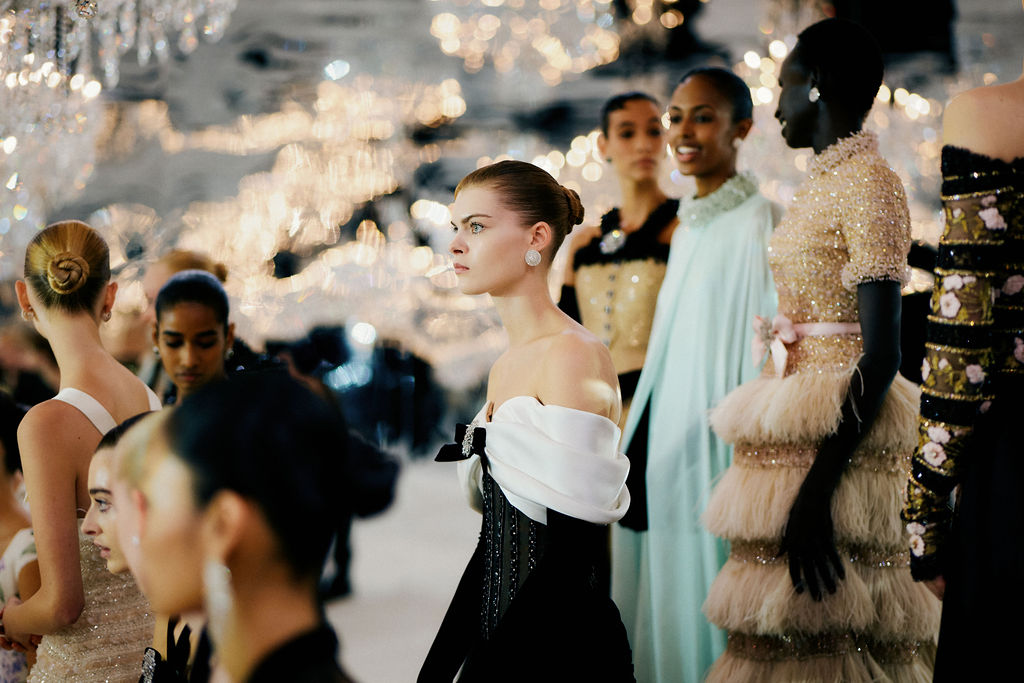
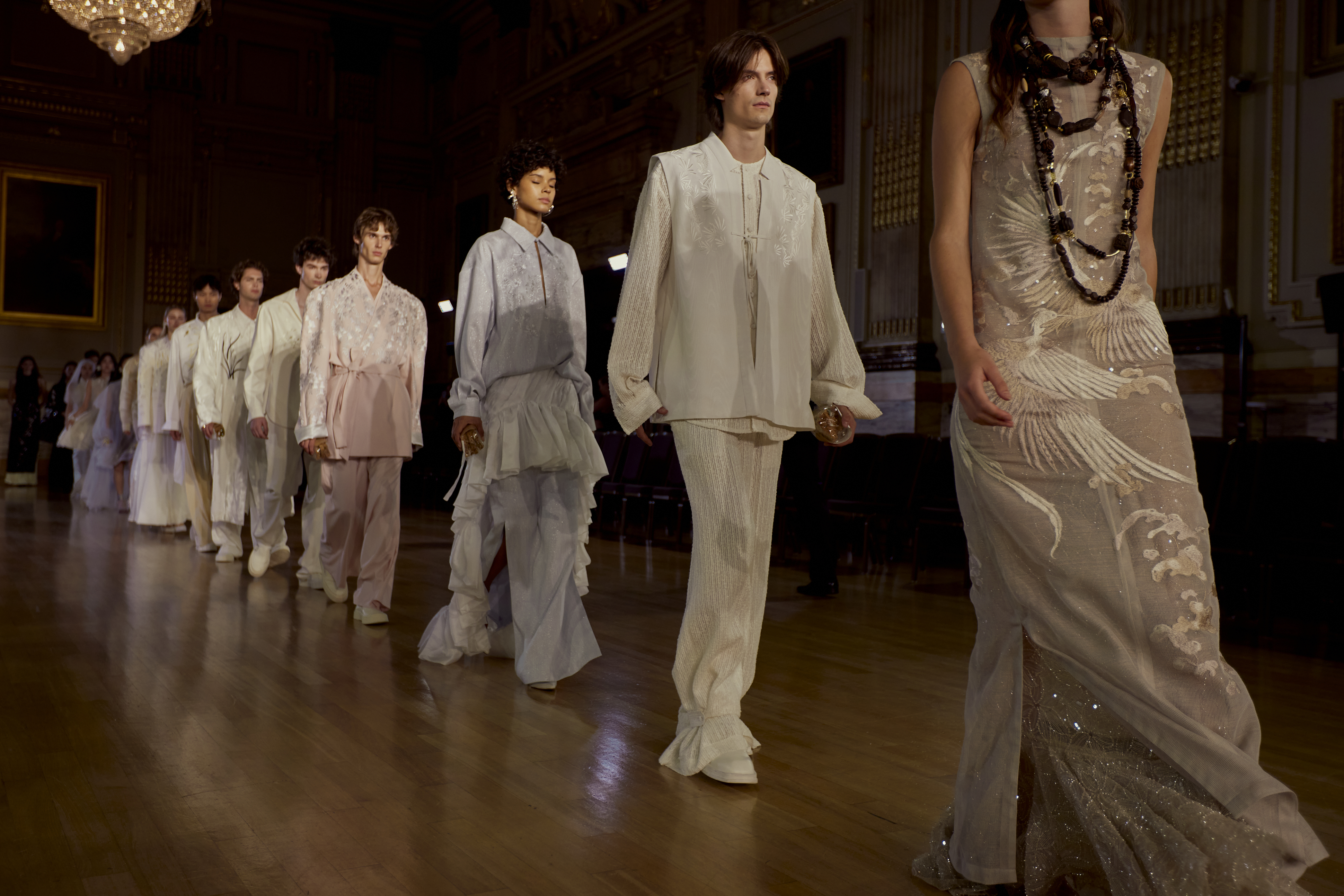
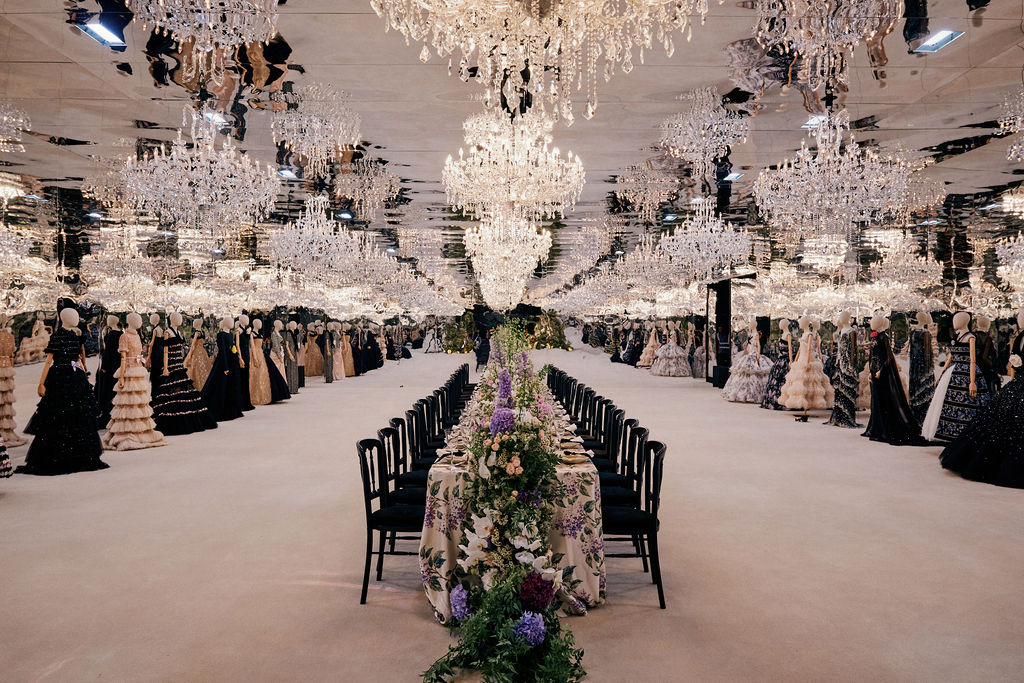
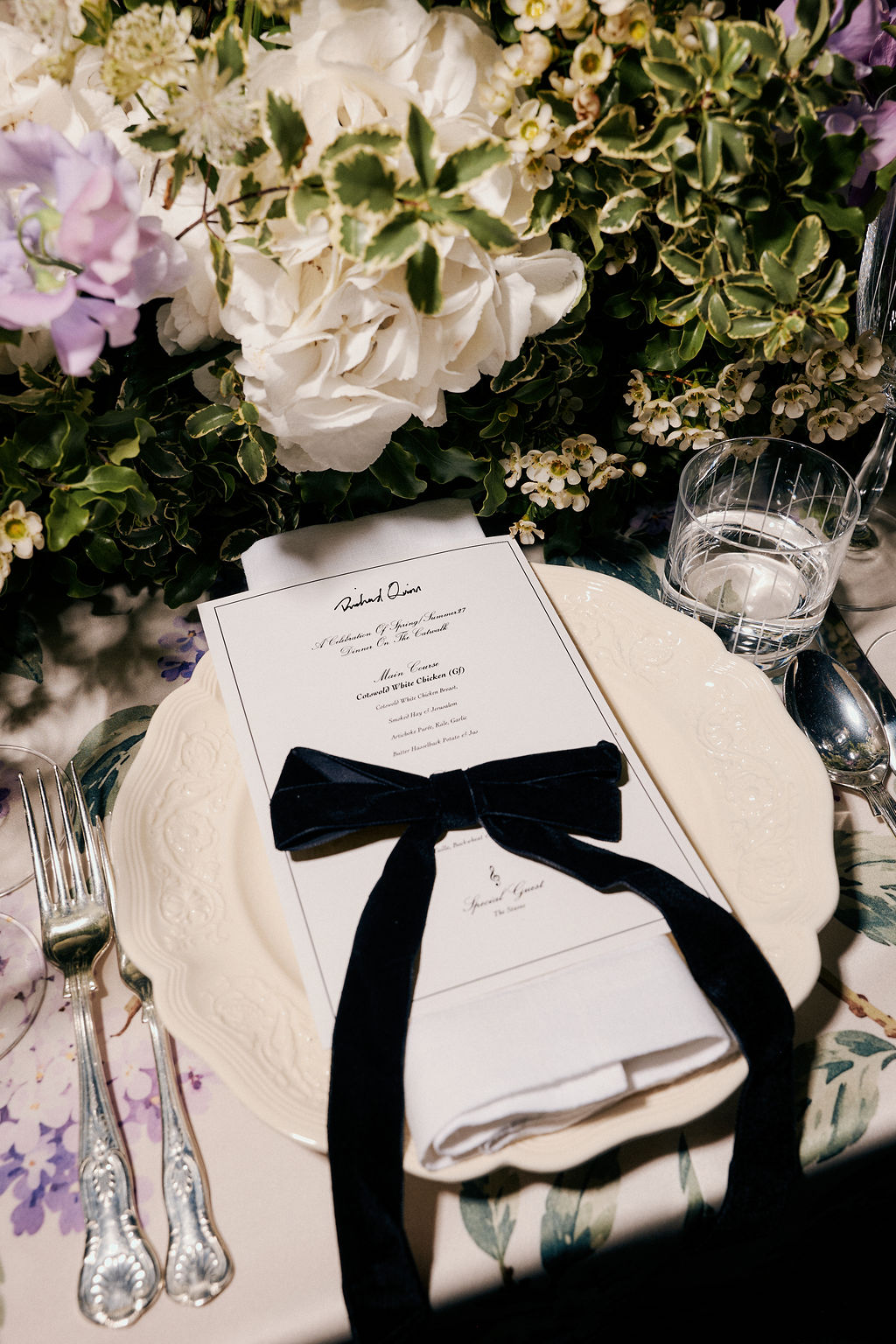
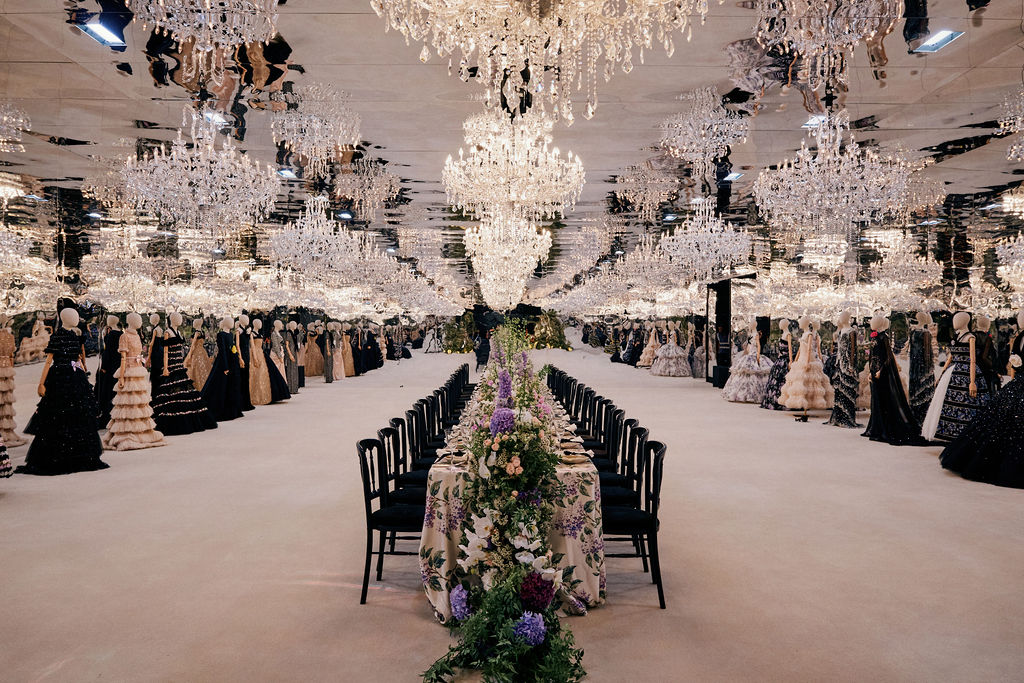
Spring Summer 27 was no exception. Entering a room that felt like a celebration of light, a huge hall mirrored and lined from end to end with crystal chandeliers dripping in stones, their sheer scale made them seem almost impossible to suspend, as though their weight might overwhelm whatever held them aloft. Hanging in sheer splendour, light refracted around the room, filled with guests, many of the FROW attendees dressed appropriately in their personal piece of Quinn. This was no ordinary show, and the collection that filled the room matched that sense of glamour in every sense.
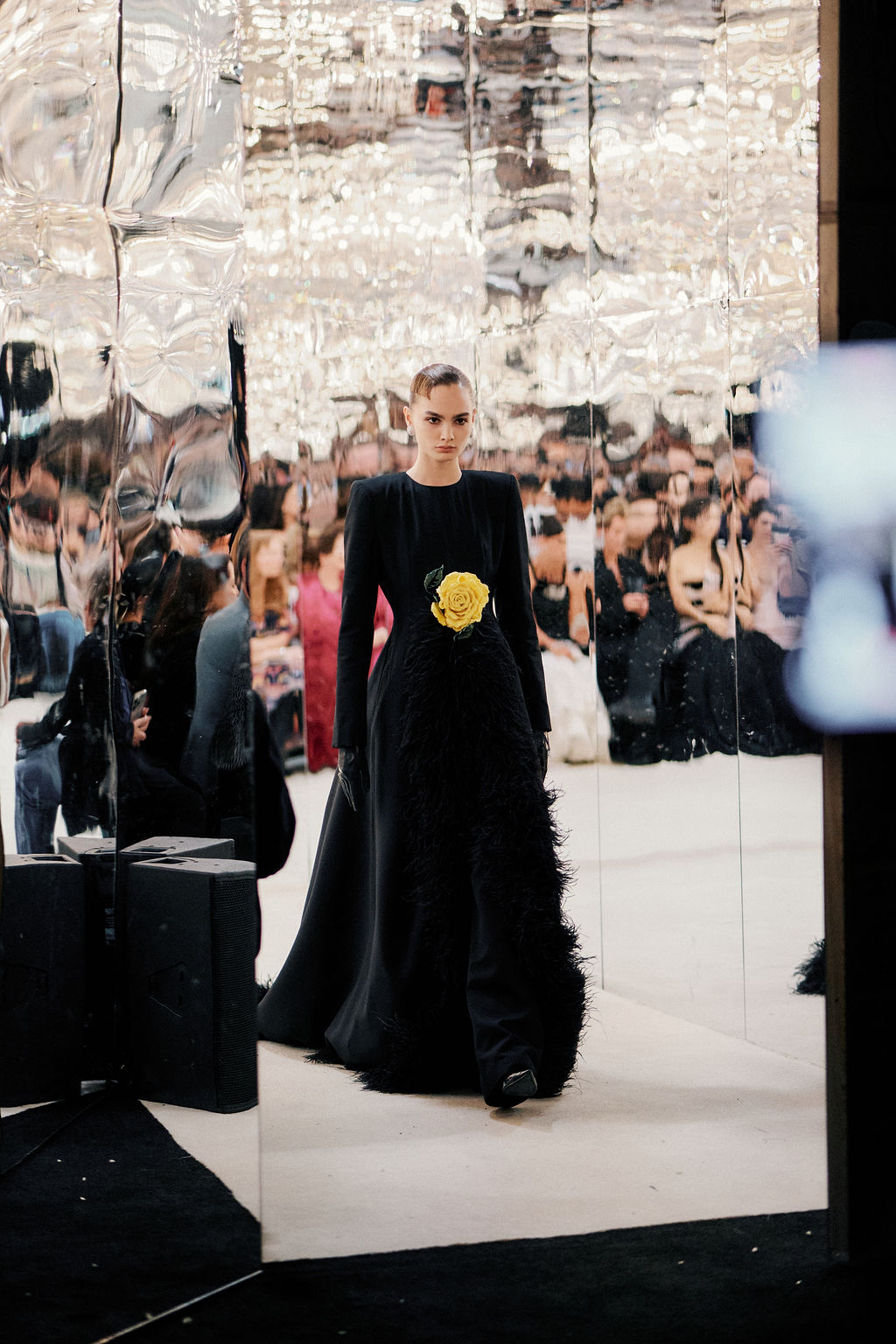
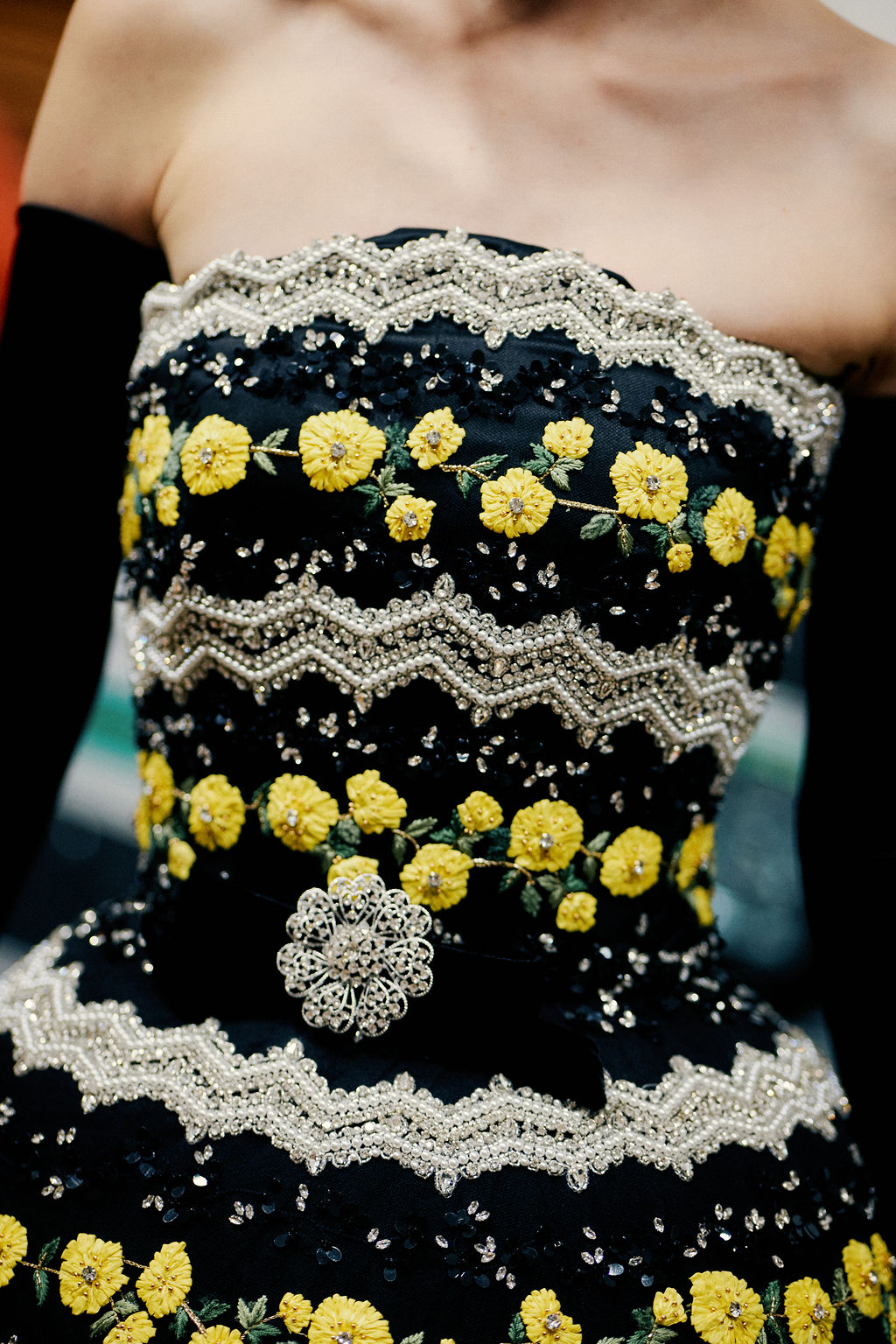
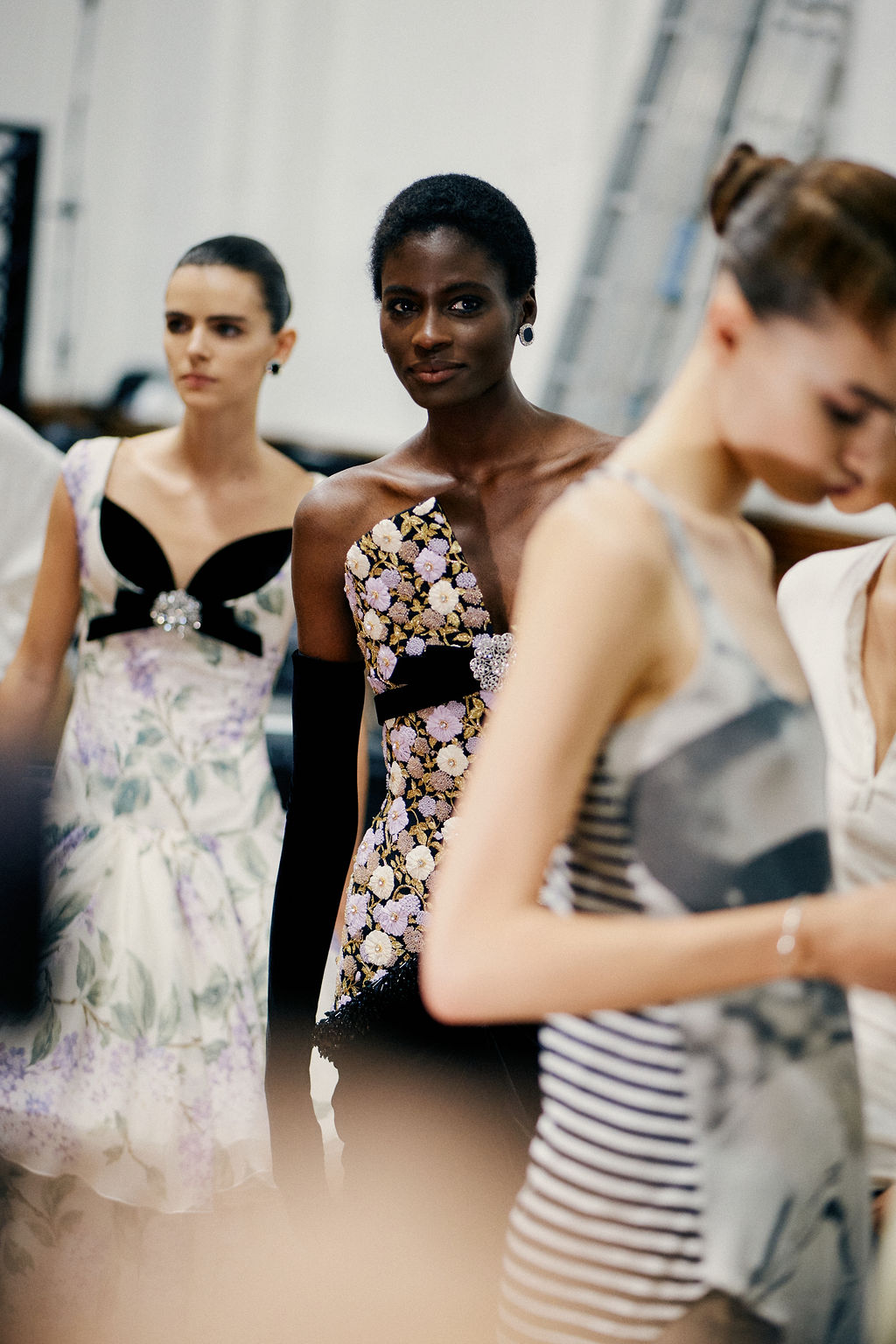
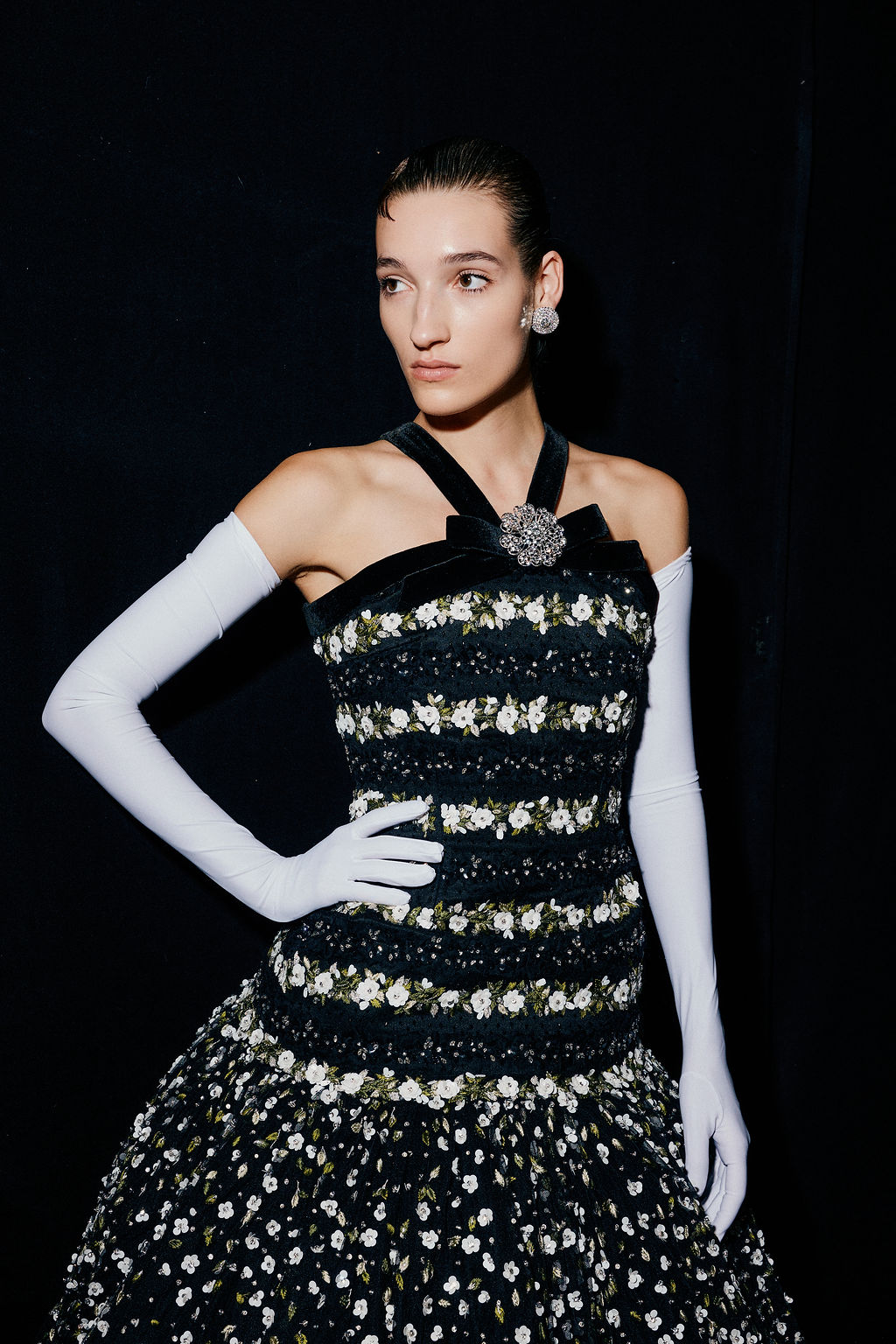
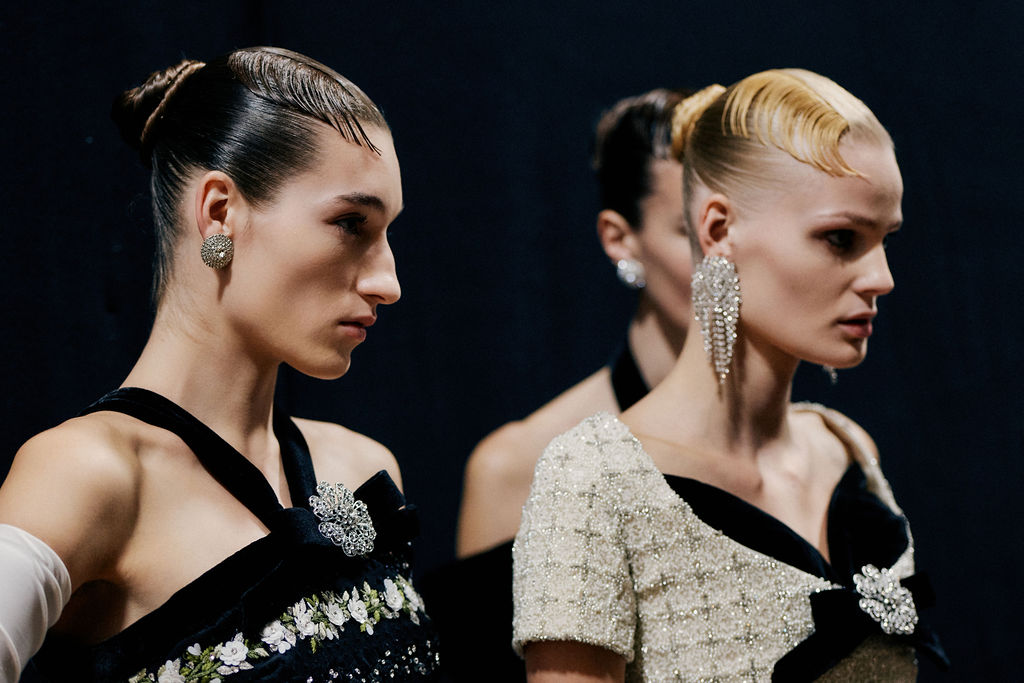
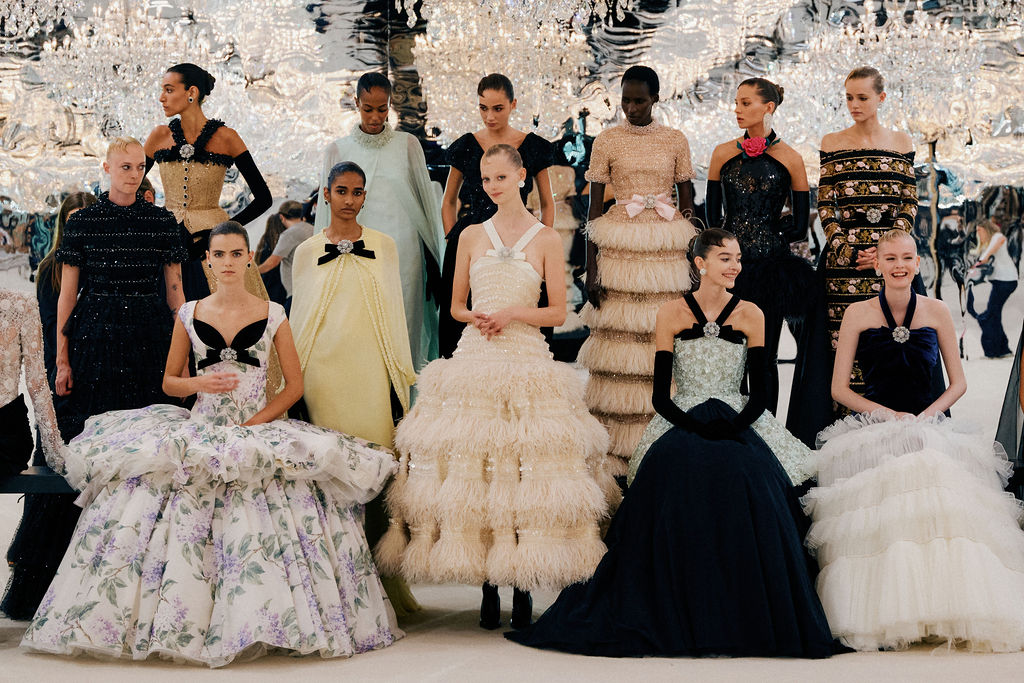
Entitled ‘The Mirrored Garden’, the SS27 collection celebrated the ritual of dressing, distortion, and perspective set against the confidence and excess of the 1980s, from dressing room to ballroom drama. Quinn revisited the exaggerated proportions of 80s glamour: hourglass silhouettes, broadened shoulders, halters, cinched waists, and floor-length gowns with flowing trains, all elevated with materials such as satin, crystal, feathers, and couture-scale embellishments.
A floor-length monochromatic dress, held together by a criss-cross of crystals, punctuated by long black gloves and patent black heels. Corseted bodies were embellished with crystals that popped against sculpted velvet gowns. Velvet bodices gave way to voluptuous bell skirts and sweeping shapes that honoured the heightened sense of occasion of being belle of the ball. Each piece in a palette of black and ivory with pops of lacquer red, lipstick pink, powder blue, and rich jewel tones worked alongside the signature florals, pieced together to perfection by artisanal hands. Print and texture are central to the collection while Swarovski crystals, statement jewels and jewellery-box motifs playfully echoed the dressing room aesthetic.
As the models strutted across the carpet to the electro sounds of Cruel Intentions by Simian Mobile Disco, the repetitive vocals and darker sonic language created an unexpected discourse between vision and sound, one that kept any sense of nostalgia in check. The tune’s hypnotic, looped quality echoed the visual repetition of the mirrored space. Andwhile the reflective surfaces said, “Look at me,” the soundtrack said, “Don’t always trust everything you see.” Its sentiment reflects Quinn’s version of the 80s: less romantic, more about nightlife, power dressing, and image. But these are no mere throwaway prom gowns; these are future archive pieces, always underpinned by quality craftsmanship, the work of artful ateliers, and a dedication to exceptional print and textile.
Closing the show, Helena Christensen emerged as the embodiment of supermodel glamour, a figure representing the profession’s very pinnacle. The Mirrored Garden, they explained, was ‘garments created for the extraordinary moment and the life that follows.’ And indeed, Quinn seems to know just how to create extraordinary clothes and extraordinary moments; this was yet another. And the creative life that follows, one can only imagine, will be just as rich.
Words by Leigh Maynard
Images by Gabriel Bush Photography