Something has been stirring in the margins. Growing stronger by the day, there is a force slipping into our periphery and into the subconscious. It draws women towards a rawer femininity – one defined by independence, confidence and the return of self-desire.
Text By Kitana M. Crowelle
The Dark Feminine Archetype has been creeping upon us like a quiet omen, and into a sudden cultural focus. Rising with a force comparable to the ‘clean-girl’ aesthetic, they stand as opposites, distinct in mood and meaning, yet both reveal an essential about the modern woman.
The dark-haired femme fatale, with her wicked cherry lips, an eye make-up so alluring and mystical that men fall at her feet from the very first look – ‘tis truly beauty at first sight. For centuries, the dark feminine has been bound to well-known established figures in culture: from Lilith and Cleopatra in ancient mythology to modern incarnations like Rita Hayworth, Dita Von Teese, Jenna Ortega, Monica Bellucci, Eva Green and many more.
While the concept of the Dark Feminine has long existed in the cultural bloodstream, its presence is undergoing a strong and shifting revival, crawling out from the cracks between the digital world and the awakening of today’s women.
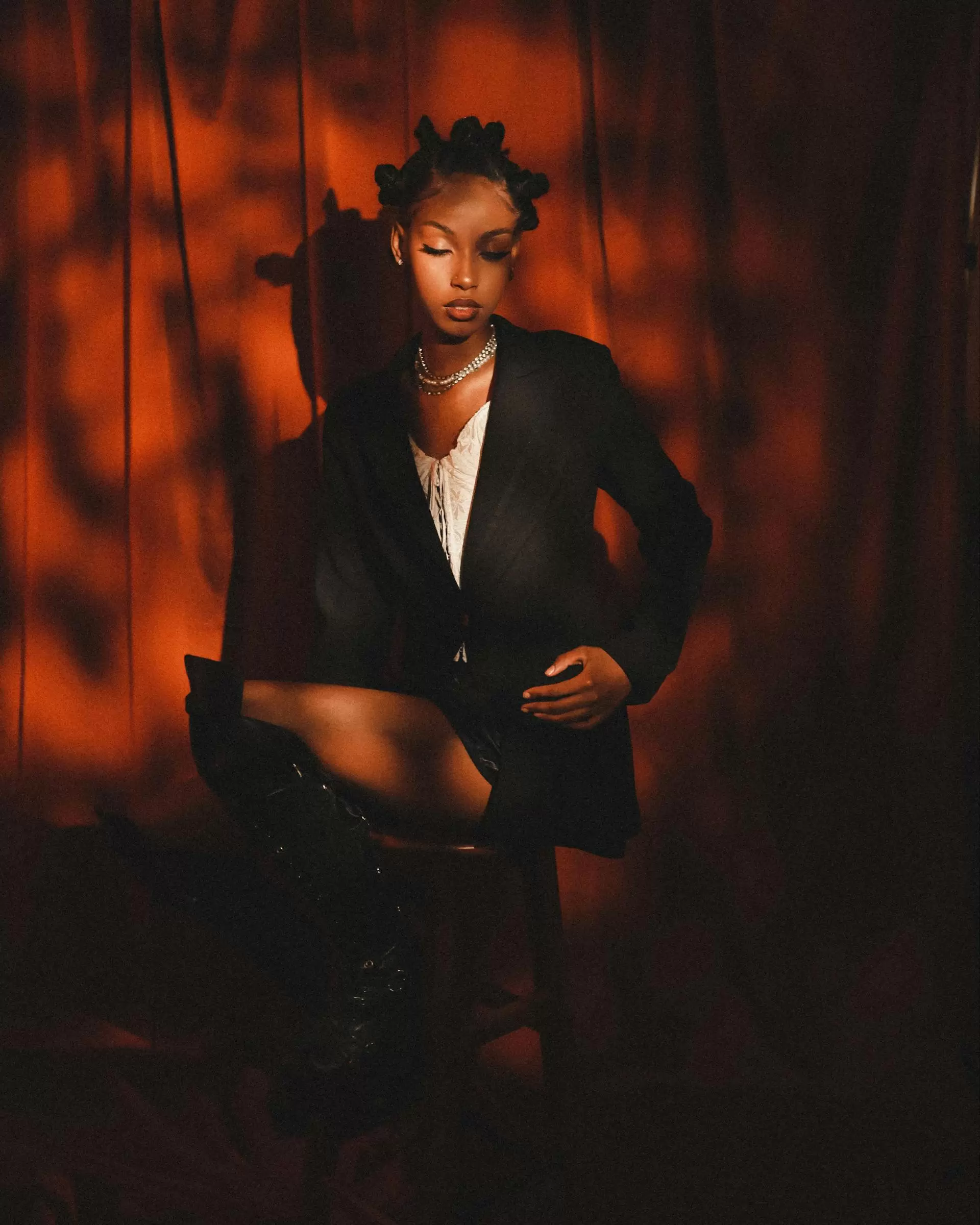
What is The Dark Feminine?
While Tiktok and Instagram often reduce the concept to surface-level aesthetics, its true essence comes from within. More importantly, it certainly has nothing to do with embodying evil – a misconception that continues to distort the meaning of this archetype.
Simply stated, embodying the shadow side of femininity reconnects with women with qualities that have been suppressed for centuries, even in the present era. From their desires, dreams, intuition, seduction, anger, and above all, their authentic voice. Psychologist Carl Jung developed a theory of the shadow, describing it as the hidden aspects of the ‘self’ that society teaches us to repress-often through shame. These traits and impulses were long viewed as dangerous, disruptive and uncontrollable, and were pushed aside to keep women aligned with cultural expectations. Thus, the embodiment of the Dark Feminine becomes, for many women, an instrument for reclaiming independence in its fullest sense-emotional, mental, and physical. It is an affirmation of personal desire and ownership, one that turns away from the male gaze and is, instead, wholly self-claimed.
This philosophy translated into expressions of everyday life, such as:
- Saying no without guilt or hesitation
- Speaking up about boundaries and disagreements without fear of being disliked
- Owning desires and sexuality openly
- Feeling confident through authenticity rather than the validation of others
- Embracing natural female intuition instead of diminishing it
The qualities that embody dark feminine energy are equally distinct:
- Maturity grounded in self-awareness and kindness
- Wisdom mirroring through intuition
- Independence as a reclamation of self-power
- Practicing confidence without needing external validation
- Embracing emotional depth
- Placing boundaries as an acknowledging of self-worth
Together, these primary traits serve as a framework through which the archetype can be applied in everyday life, transforming it into a living and approachable practice.
At its core, the dark feminine archetype is an emerging form of self-work that has swiftly captured our cultural attention and is reshaping our idea of beauty. The rising embrace of unjustifiable desire reflects an important shift: a woman returning to herself, choosing self-love not as a trend, but as a reclamation of inner energy.
Why the Dark Feminine is Rising Now.
There is a growing cultural exhaustion among modern women- a collective tiredness and anger, towards the ongoing performance of femininity.
In late 2021, the clean-girl aesthetic first emerged on Tiktok, and by 2022 it had become one of the most dominant templates of online femininity. Defining a lifestyle of “no-makeup makeup”, glossy skin, neutral palettes, slick buns, understated jewelry and the rise of products like Rhode’s peptide lip treatments, the aesthetic was heralded by some as a return to a “pure” or “natural” femininity. Its grip on the mainstream beauty language was immediately effective and as brands and influencers adapted, the aesthetic quickly became associated with tidy, disciplined forms of womanhood.
Yet, somewhere on the other side of social media, began the opposing contrasts of the Dark Feminine, coming at an unexpected rapid pace. Femme fatales of Old Hollywood noir clips recirculated, Youtube was flooded with tutorials on “embracing your feminine shadow,” and articles emerged critiquing the sanitized ideals of the clean-girl era. A digital tension of ‘glam vs clean’ was present. As a cultural response, opposing trends violently erupted: “mob wife” looks, full glam beauty, goth-glam, coquette maximalism, vampy glamour of the 90’s and a broader embrace of imperfection and ‘messiness’ self-expression.
Amid the tensions, an evident statement was spoken: the limitations of mainstream femininity. The rising attraction of the Dark Feminine is, in many ways, a rebellious symbol against the narrow, infantilized misconceptions of womanhood that social media promotes. Women grew out of the expectation to remain soft, agreeable and perpetual likable. Instead, what has emerged is a hunger for an archetype that allows complexity, intuition, sensuality, assertiveness and emotional depth, without justification.
Most importantly, an archetype that offers a version of femininity defined not by algorithmic trends or public approval, but by a woman’s own interior truth.
Unlike aesthetics that rise and fall with algorithmic cycles, the Dark Feminine is not only a temporary trend, and will most likely continue to influence today’s beauty language for a long period of time. Due to its allergic reaction to superficialness, structures, and social pressures, the archetype doesn’t just understand personal desires, but truthfully connects with deeper psychological needs. Beyond an aesthetic, is an important identity framework that reveals the permanent need for agency.
If the clean-girl gave us perfection, the Dark Feminine gives us permission. After all, archetypes inspire us because they connect with the truths of our own identity.