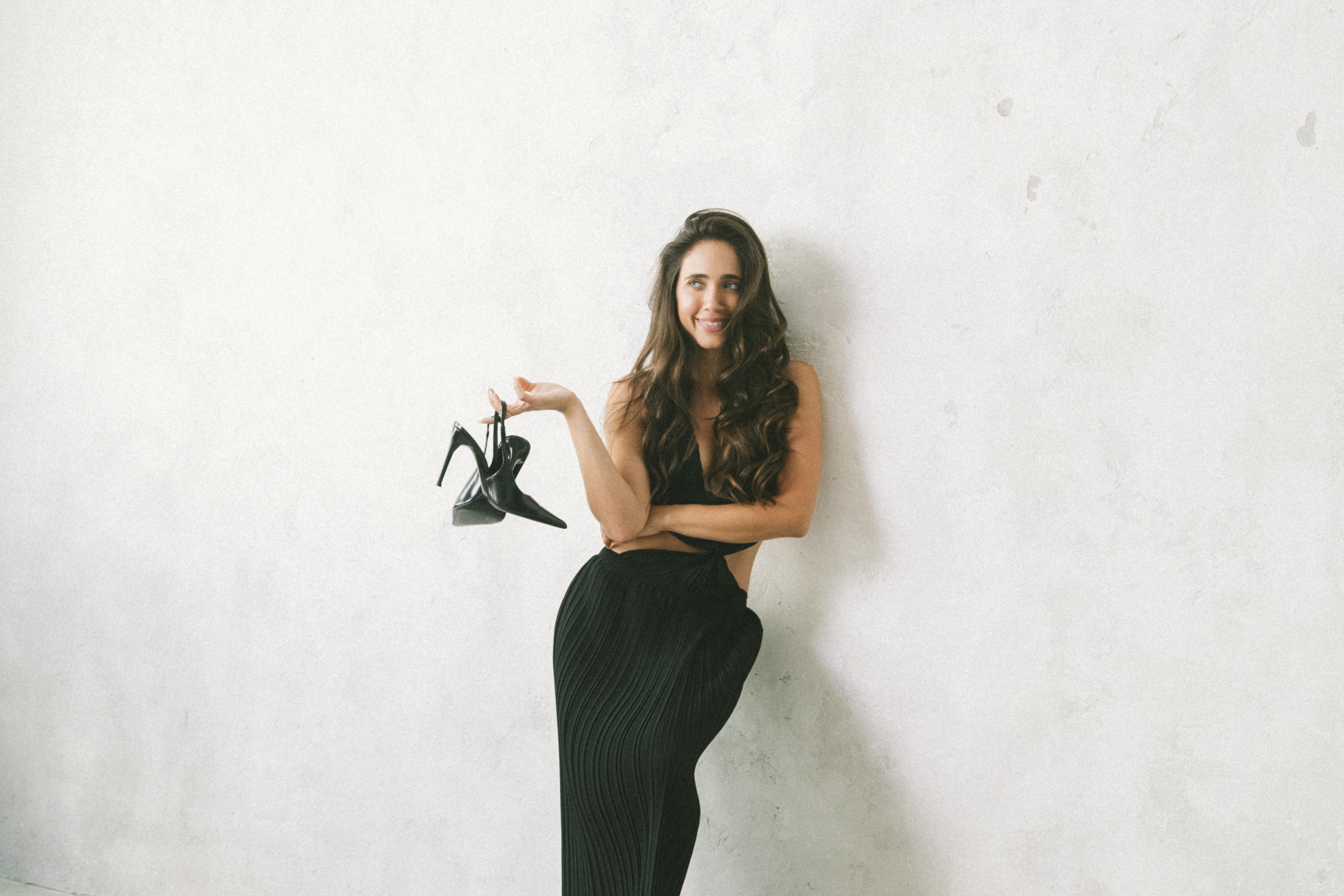
The actress and producer on growing up between three cities, Shakespeare’s Cymbeline, and the feature she’s writing about her Brazilian roots
Sofia Masson moved so often as a kid, New York to Berlin to Miami and back, that adaptability stopped being a skill and became a default setting. She trained at Alvin Ailey, sang in her first musical at Miami Children’s Theater, and eventually found her way to acting through the same instinct that got her through every new city: watch closely, read the room, find your place in it.
That constant movement built the instinct she now credits with every character she plays: watch closely, listen harder, notice what people don’t say out loud. Her new role, in the Jewish rom-com Mazel Tough, asks her to turn that same instinct on something deceptively simple. Why does finding the right person feel so hard right now, when we’ve never had more ways to find each other?
Masson was announced as part of the cast for Evan Scolnick’s directorial debut, a film set against the pressures of modern Jewish dating during the holiday season. It’s her first major comedic role after a career built largely on drama, and she’s also stepping deeper into producing, a side of the business she says she can’t fully switch off even when she’s just the actress in someone else’s story. We sat down with her to talk about the film, her nomadic childhood, and what she thinks dating apps have cost us that love letters never did.
Interview by Sarah-Eve Leduc
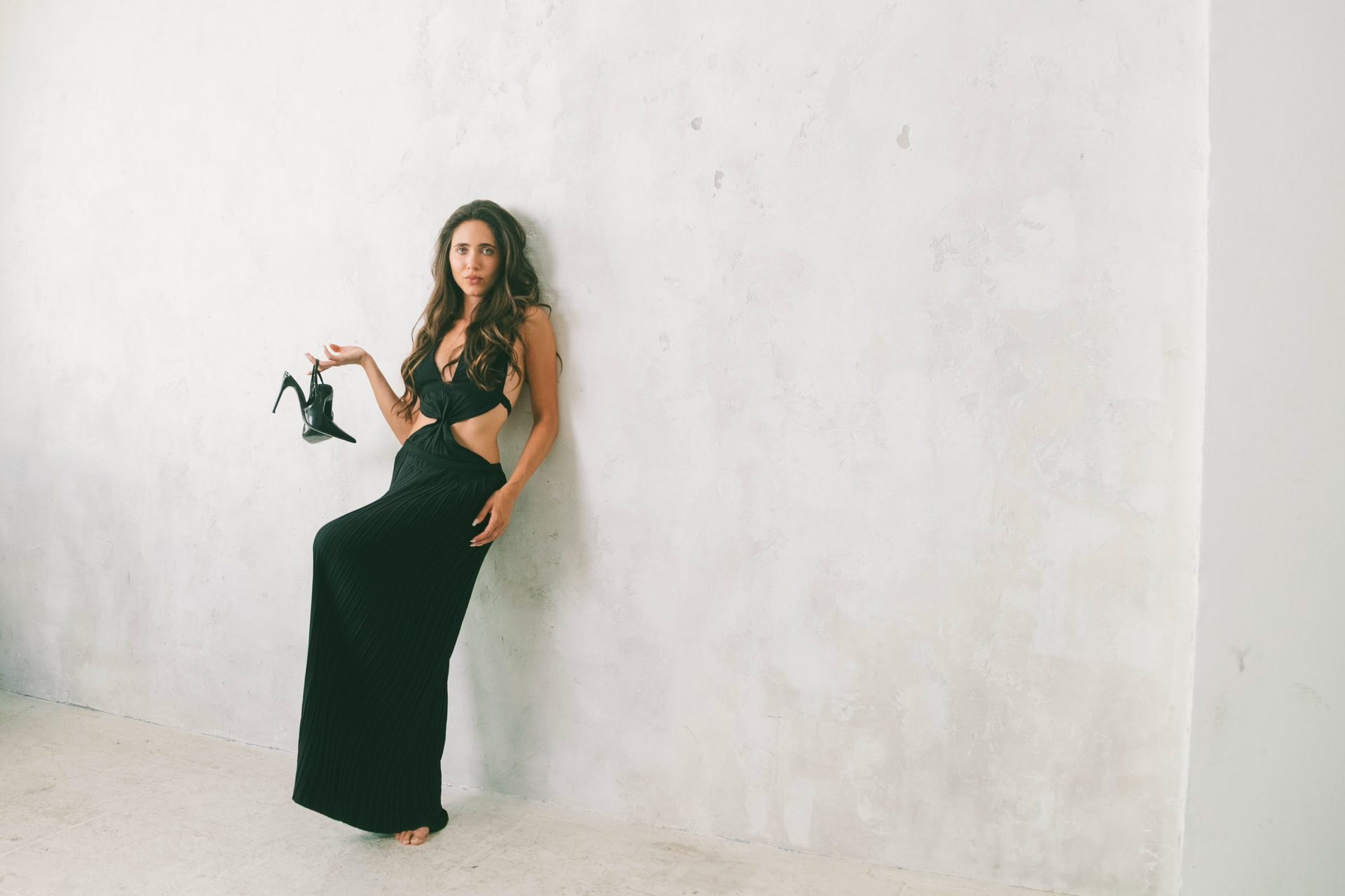
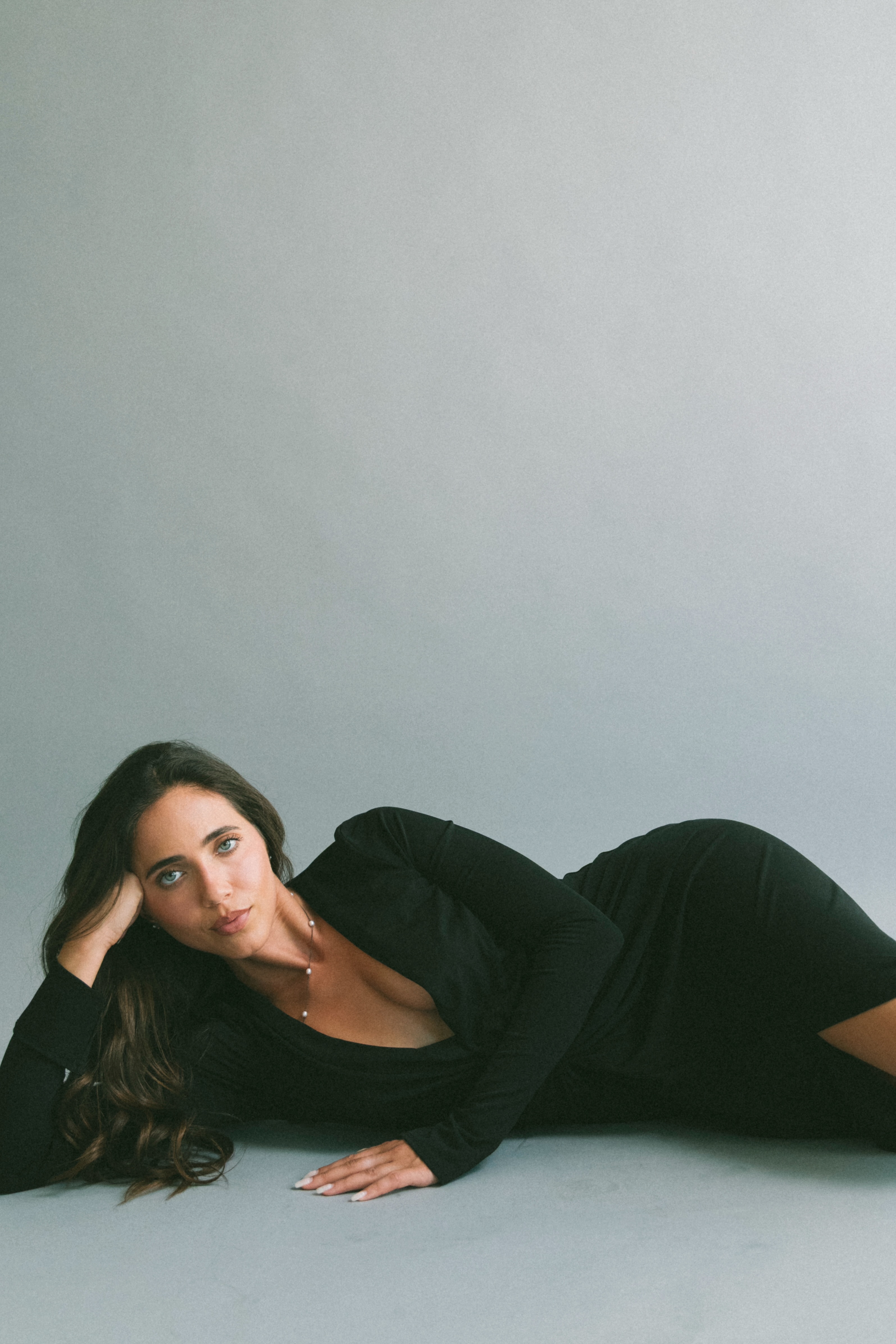
Photos by Shemoi @shemoi
Makeup by Kristin Hilton

You grew up between New York, Berlin, and Miami, studying at McGill and training as a dancer and singer. How much of that early, constantly-shifting foundation still shows up in how you build a character?
I think before I ever understood what adaptability meant, I was practicing it. There was always this rhythm of building roots and then having to uproot and begin again. I was constantly being introduced to different cultures, languages, and ways of life, and learning how to find my place within them. That wasn’t always easy, but it made me incredibly observant. You learn to read people, to listen, to notice the small things that make someone who they are. That instinct has become a huge part of how I approach acting. You’re constantly shapeshifting, and there’s a real malleability required of you. My Brazilian and Jewish identities inform my work too, sometimes consciously and sometimes in ways I only recognize later. Dance and music gave me another vocabulary entirely: an awareness of rhythm, physicality, and how emotion can live in the body before it ever becomes language. I ultimately think all of those different influences gave me a deep curiosity about people. And for me, that’s where building a character always begins.
Of the cities you grew up in, is there one that still feels most like home, or does that shift depending on the year?
New York, for sure. I identify very proudly as a New Yorker. I was born there, educated there, and it’s where my love of performing really took shape. I trained at Alvin Ailey, performed on Off-Broadway stages, and I was constantly surrounded by the city’s incredible theater, music, art, and culture. There’s also an energy and ambition to New York that I think will always be part of me. Los Angeles has become home in a new way, and I’ve built a life here that I love, but New York will always be the city I return to.
You trained classically as a dancer and singer before moving fully into acting. Is there a performance or a production from those years that still sits with you?
When I was living in Miami, I was part of Miami Children’s Theater, and the first musical I ever performed in was Joseph and the Amazing Technicolor Dreamcoat. It was my first experience being part of an ensemble, and I completely fell in love with it. With performing, storytelling, and the feeling of building something together. I can still sing the songs and remember some of the choreography to this day. Later in life, performing in Shakespeare’s Cymbeline had a very different but equally lasting impact on me. Working on Shakespeare was an incredible challenge. The rigor of the language and depth of the text demanded a different discipline from me as an actor and pushed me to grow.
Because I moved around every few years growing up, theater became a constant. A place where I could find community through creating something with other people. That naturally carried me into film. I fell in love with that same sense of collaboration on set. It was a new medium, but the same fundamental joy. To be part of something larger than yourself, and to find community through making art together, is such a gift.
Mazel Tough is being described as rooted in Jewish culture but universal in its themes. What was it about the script that made you want to be part of Evan Scolnick’s directorial debut?
I remember first reading Mazel Tough and finding myself laughing through tears. It’s just such a good script. I could feel immediately how personal the story was to Evan, but what struck me was how universal it felt at the same time. At its heart, it’s about the pursuit of love and connection, and that transcends all cultural boundaries. I think it’s a real testament to Evan’s writing that he could make something so culturally specific and personal feel so deeply human. I knew immediately that I wanted to be part of it, and I’m incredibly excited to step into that world when we begin filming.

The film leans into the idea that finding the right person has never felt more complicated. Do you think that’s true, and if so, why now?
I do think finding the right person has become more complicated. We live in a world where we’re more connected than ever, and yet somehow dating can feel increasingly impersonal and transactional. Between dating apps and social media, there’s this constant access to one another, but I think we’ve lost some of the curiosity, mystery, and even yearning that used to come with getting to know someone. I think about my parents sending each other love letters back in the day when they were first getting to know each other and there’s something so romantic about the intention behind that. I wonder where that sense of romance has gone. It’s such an interesting contradiction of our time: we have endless ways to connect, yet we can feel more disconnected from one another than ever.
Rom-coms tend to get dismissed as lighter fare. What do you think this genre can do that other genres can’t when it comes to talking about identity and family expectation?
On the contrary, I think rom-coms are having quite a moment right now. What the genre can do so beautifully is use humor to navigate things that are actually quite complicated. Identity, love, and family expectations all carry tremendous emotional weight. You can love your family deeply while they drive you completely crazy. Those emotions can coexist, and that’s incredibly human. I actually think it’s a difficult genre to do well but when you find that perfect balance between heart and humor, it’s a bull’s-eye.
You’re producing as well as acting these days. What pulled you toward that side of the business, and how does it change the way you read a script like Mazel Tough?
I’ve always naturally gravitated toward producing. When I started making short films in college, I was jumping in front of and behind the camera, so that producorial instinct was there from the beginning. For me, it’s largely about taking ownership of my career and creating projects on my own terms rather than waiting for the phone to ring. I produced my first feature this year, which was both incredibly exciting and challenging, and it’s something I absolutely want to continue doing. Learning every aspect of production has also made me a better filmmaker and collaborator. You gain a much deeper appreciation for what every department contributes and how many people it takes to bring a story to life. I’ll admit, it’s hard to completely turn off that producorial part of my brain, even when I’m reading a script I’m not producing, as is the case with Mazel Tough. I’m always thinking about the larger picture, but with this film, I’m excited to step into the world Evan has created and focus on bringing my part of it to life as an actress.
Between this and your producing work, what’s next that you’re excited about?
I’m very excited about a feature I wrote. The story is deeply connected to my Brazilian roots, so it feels particularly meaningful to bring that part of my identity to the screen. I can’t share too much just yet, but it’s in early development and beginning to gain some real momentum. More than anything, I’m excited to keep creating the kinds of stories I want to see in the world, whether that means stepping into someone else’s vision as an actress or bringing my own to life.