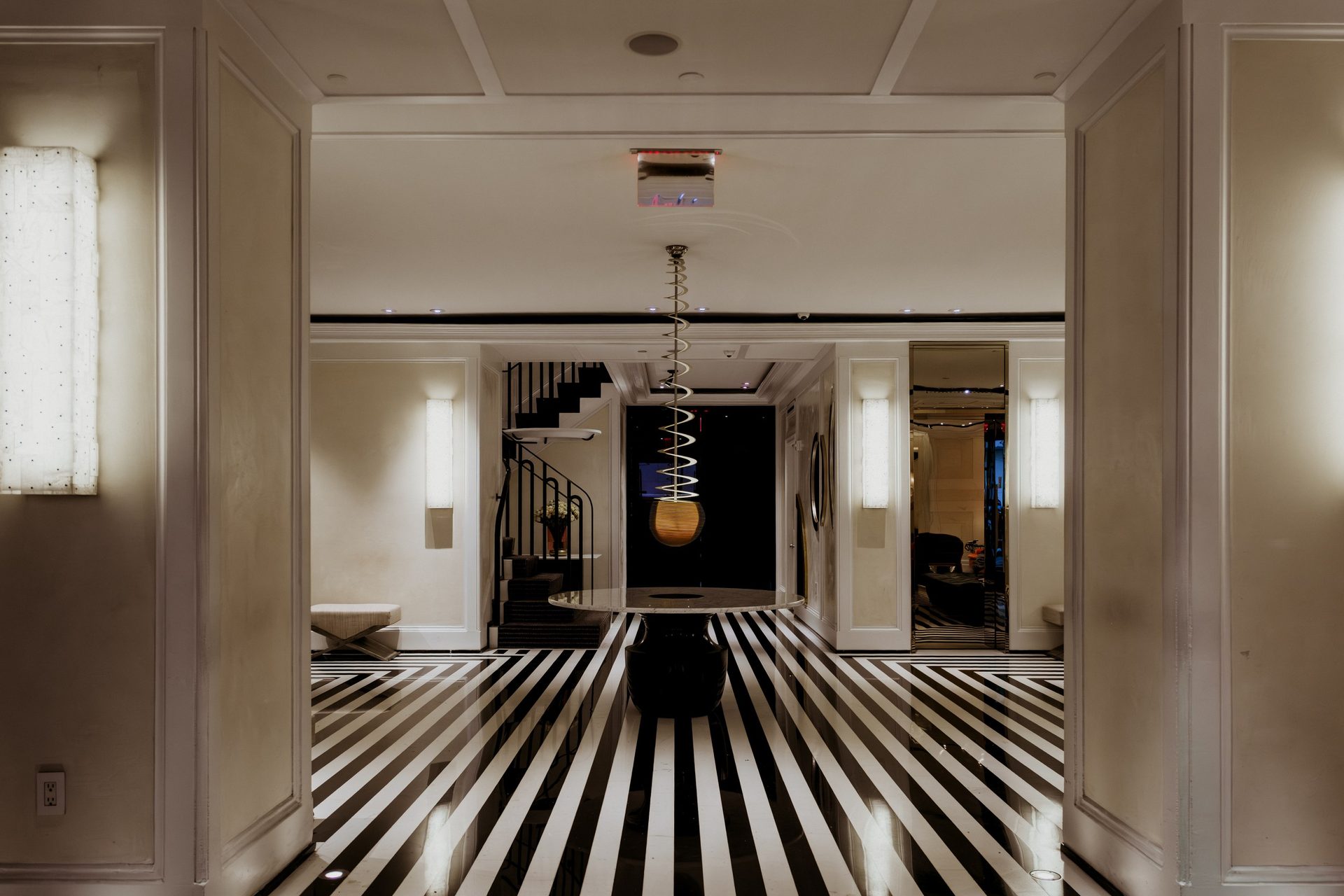
That afternoon in the eclectic lobby of The Mark Hotel, the elevator door opened and a young girl stepped out, dragging her pink backpack along the striped marble floor. A valet turned toward her immediately. “Can I help you with your bag, miss?” She looked up and said yes immediately, as if people had been asking her this her whole life. Next to them, a tall woman adorned with the most sparkling accessories swept through the lobby without breaking stride.
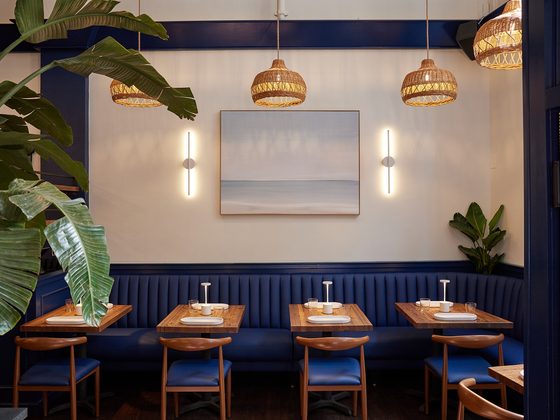
At the far end of the lobby sat The Mark Restaurant, where an entrepreneur had settled in alone. His preferred corner table, the one that caught the last of the natural light, happened to be free. He ordered the salmon sushi and read his book. Tomorrow would bring four meetings he had no interest in attending. Tonight, The Mark served as both decompression chamber and stage. He was there in the specific, deliberate way that New York at its finest allows: the city at full concentration, with the noise filtered out.
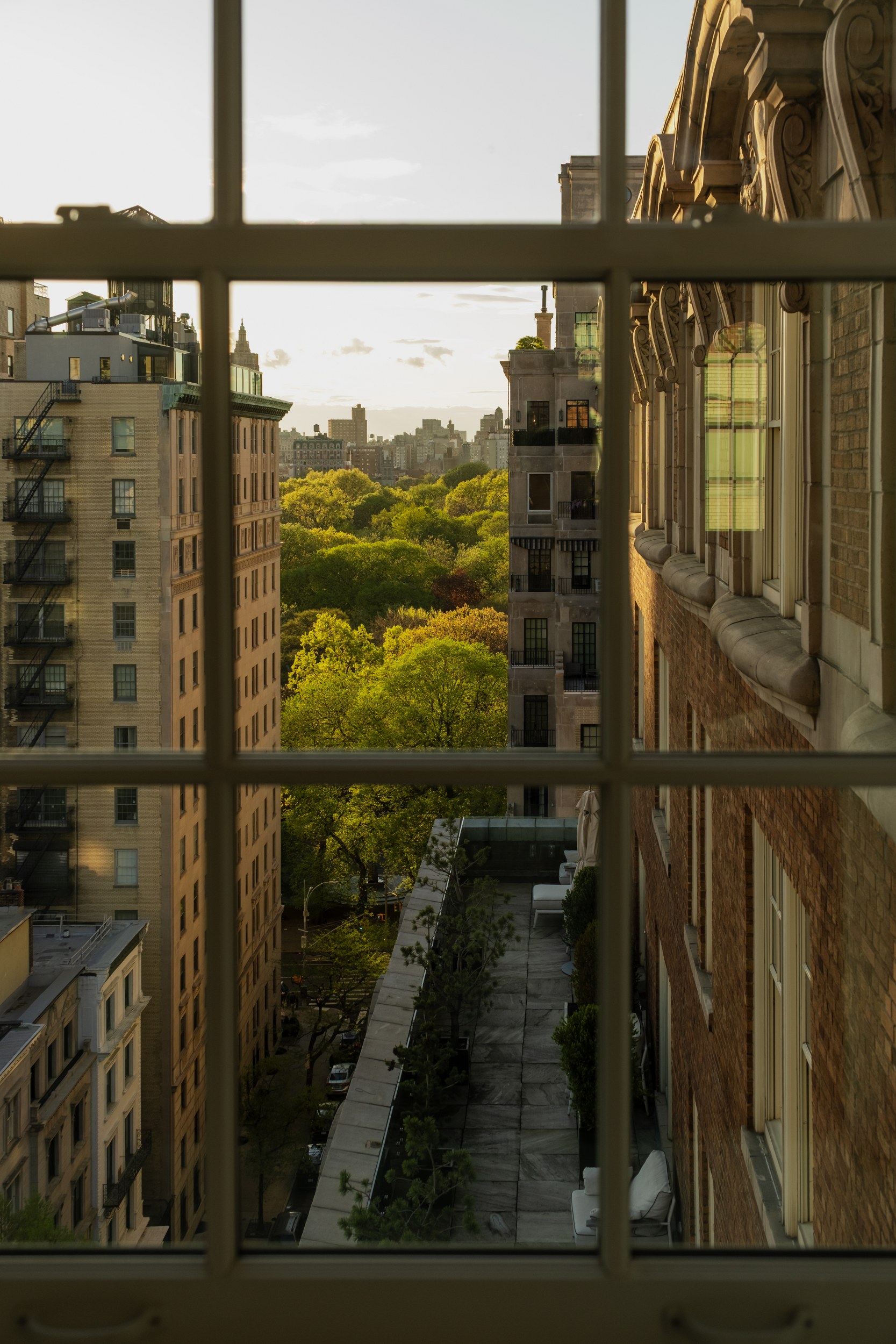
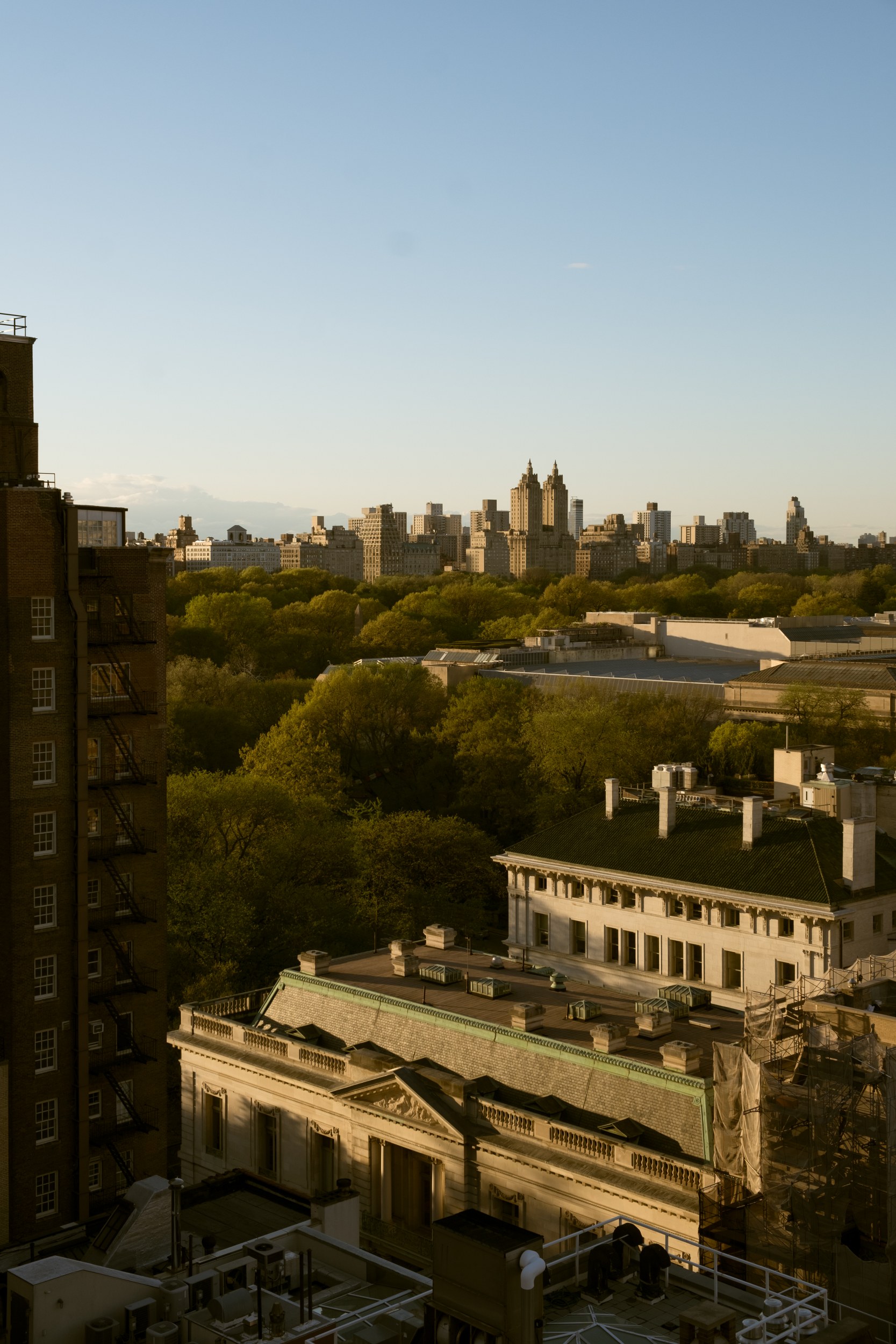
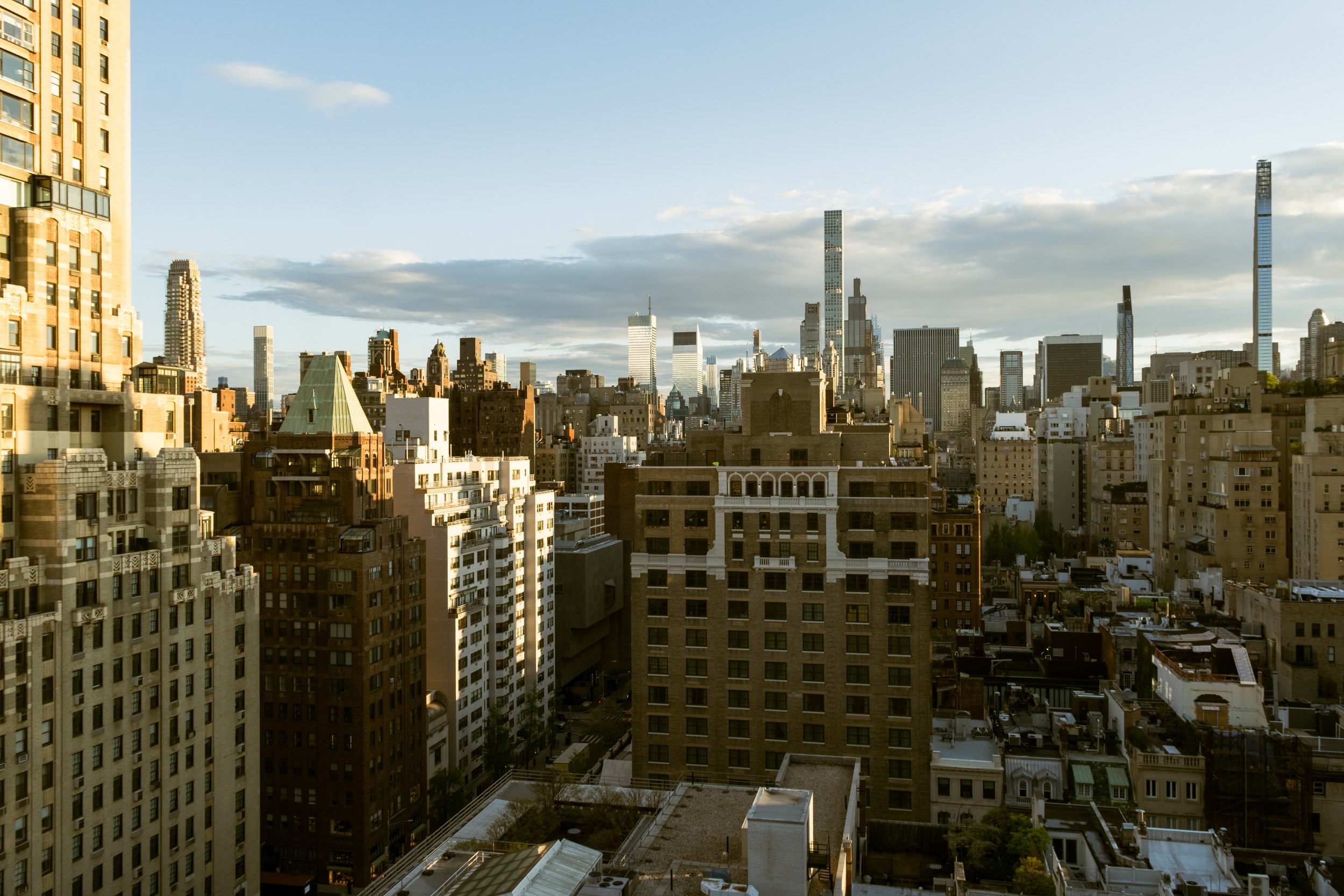
That is what I have always loved: staying in a luxury hotel at the heart of a great metropolis. The shopping, restaurants and cultural attractions are close at hand, yet when the city’s energy becomes too much, there is always the room waiting upstairs, quiet.
The Mark Hotel is the only hotel in New York City ( and one of only two in the entire United States ) that appeared on The World’s 50 Best Hotels 2025. The list recognizes properties reshaping hospitality across six continents, from pioneering urban addresses to remote outposts offering experiences that stay with a guest long after checkout.
Words and Photos by Sarah-Eve Leduc
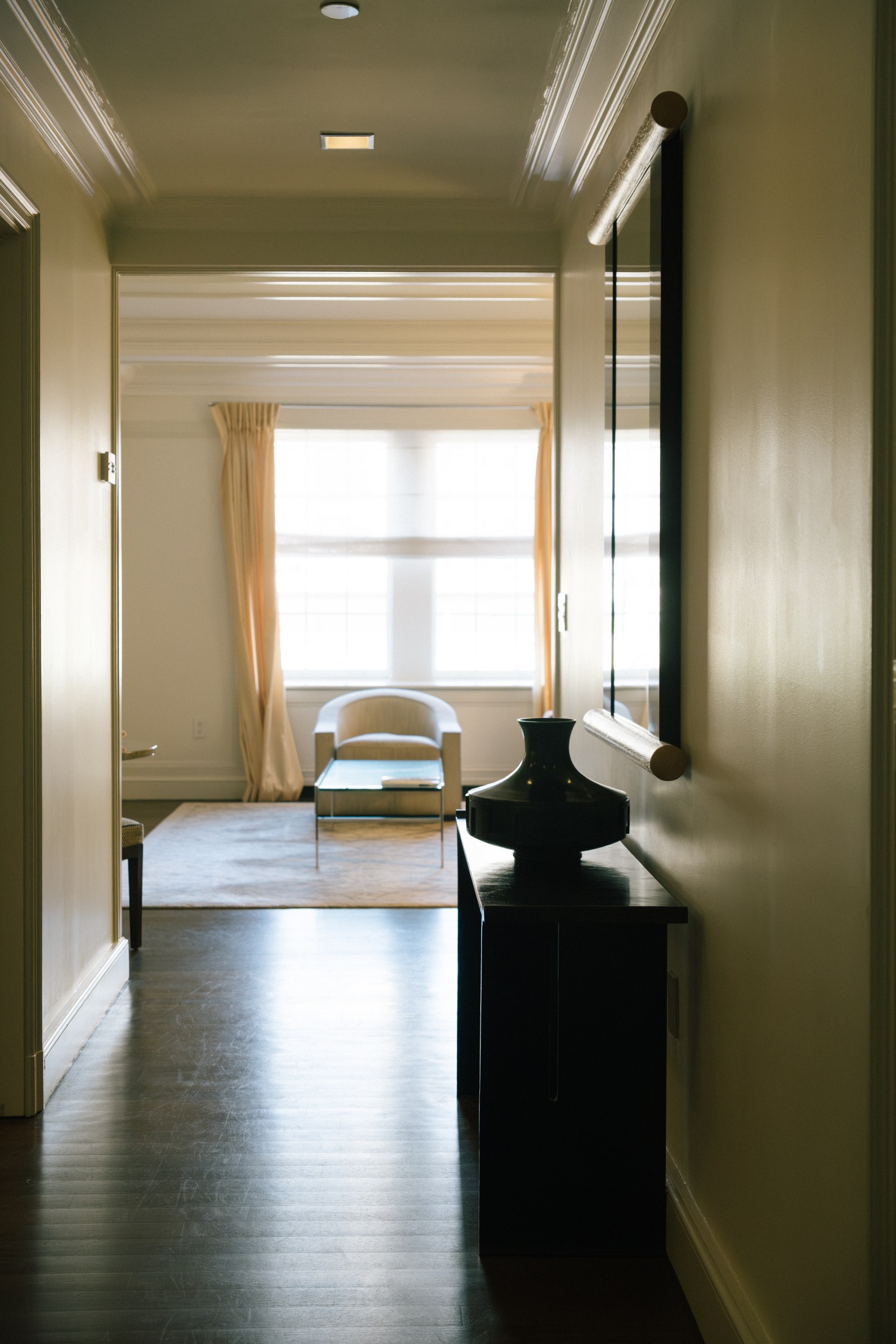
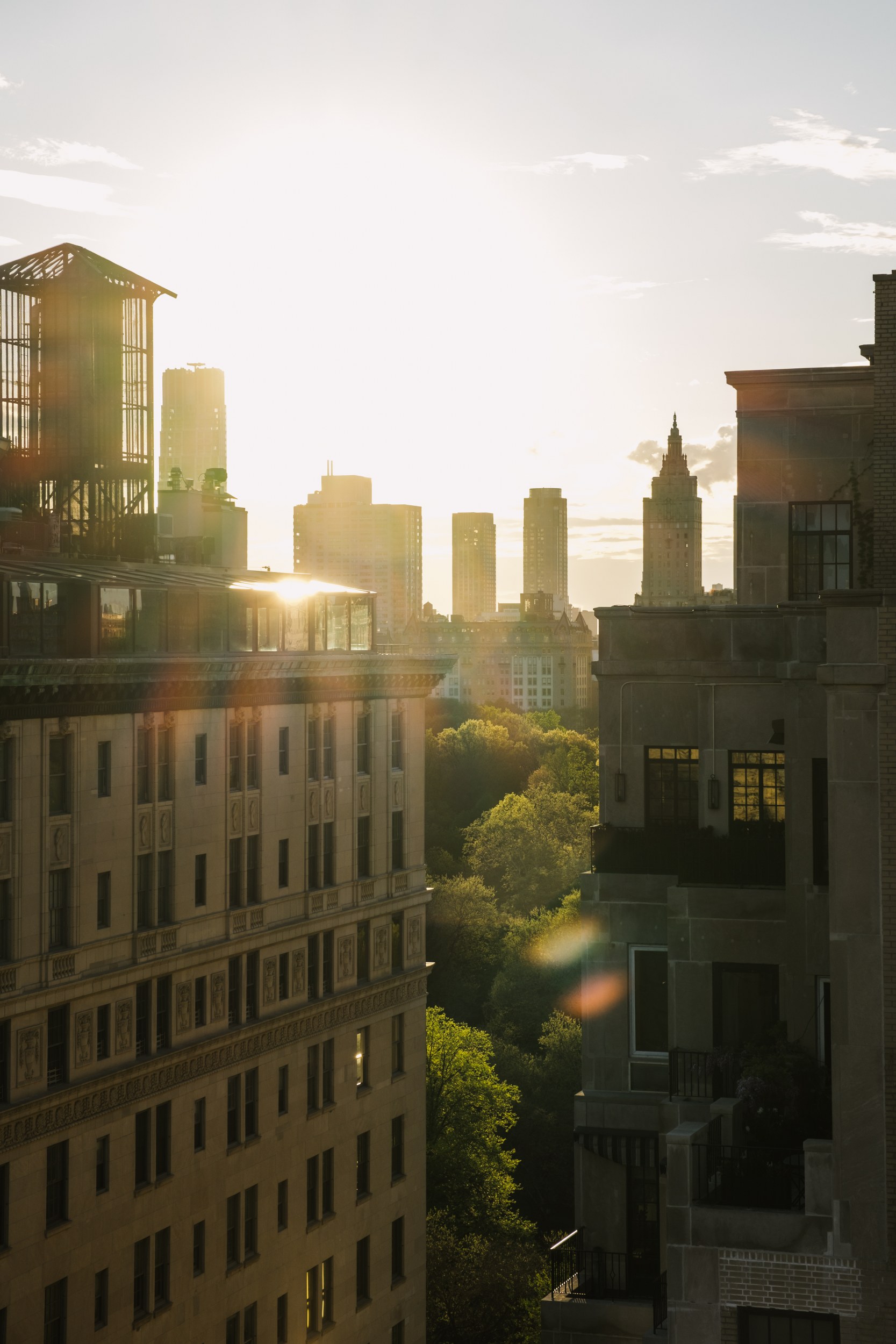
The Mark opened in 1927 as an apartment hotel, which tells you something essential about what it was always trying to be. Not a place of transit but a place of residence. It was built for people who wanted all the comfort of a great building without the obligation of owning one: long-term guests, families who returned season after season, people who needed New York to feel, if not exactly like home, then at least like somewhere that knew them. That logic never left the walls, even as the city changed around it and the hotel industry reinvented itself several times over.
When Izak Senbahar, co-owner and president of the Alexico Group, acquired the property shortly after the turn of the millennium, he spent years and a reported $250 million on a complete renovation. The scale of that investment was not simply financial. It was a statement of intent. Senbahar, born in Istanbul and educated at a French lycée before attending Catholic University in Washington and then NYU, approached the project less like a developer and more like someone furnishing a home he planned to live in himself. He brought in Jacques Grange, the French interior designer whose collaborators include Yves Saint Laurent, Princess Caroline of Monaco, and Francis Ford Coppola, because Grange understood how to make grandeur feel inhabited rather than staged. He called Jean-Georges Vongerichten, not to install a restaurant, but to build a food program that could genuinely serve everyone from a solo traveler eating quietly at the bar to a family celebrating something they would talk about for years. He tracked down renowned hairstylist Frédéric Fekkai personally in St. Barths to ask him to open a salon on the second floor, because Fekkai represented the same considered, individualized approach that Senbahar was building into every other corner of the hotel. Each decision was deliberate. Each name was a position taken.
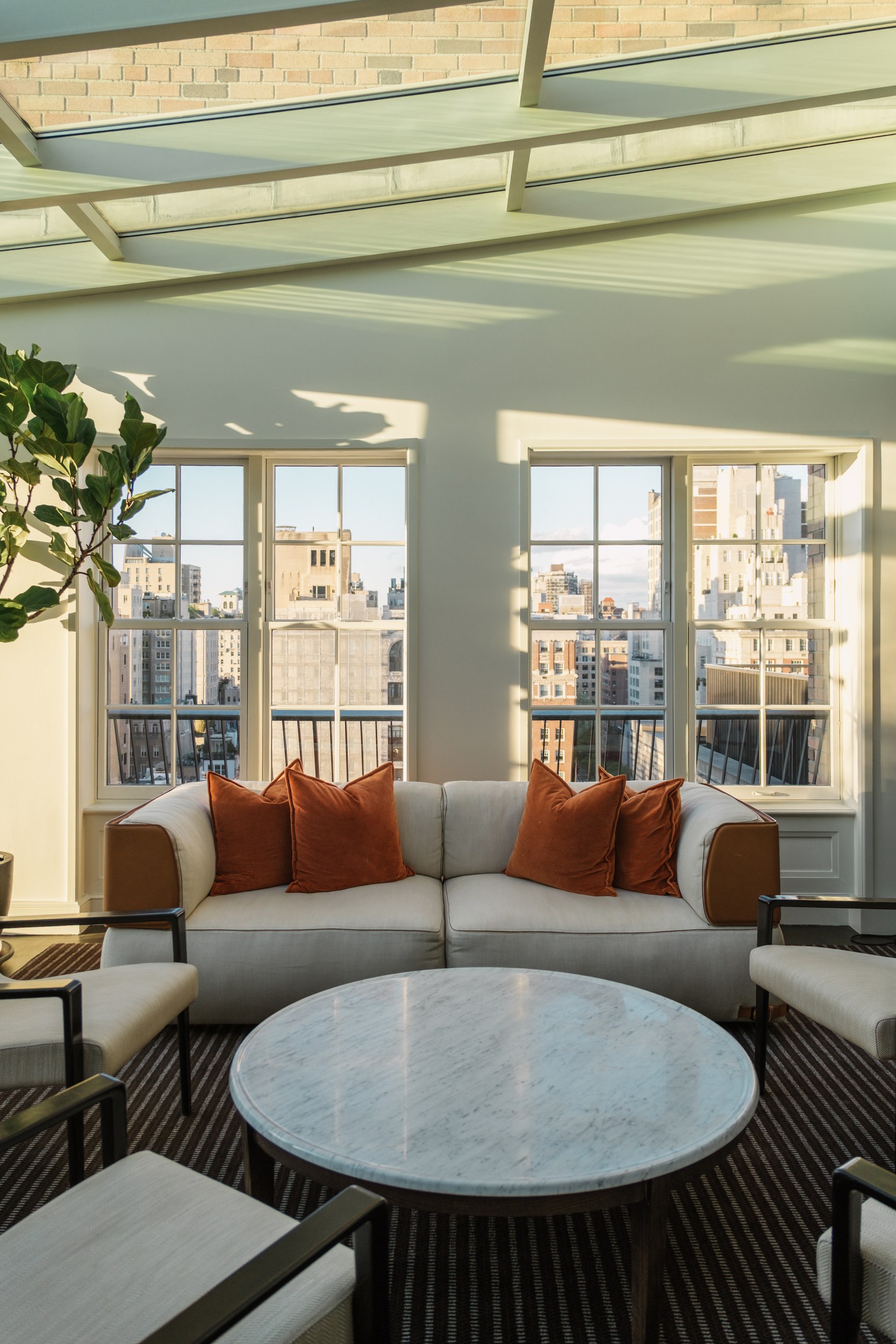
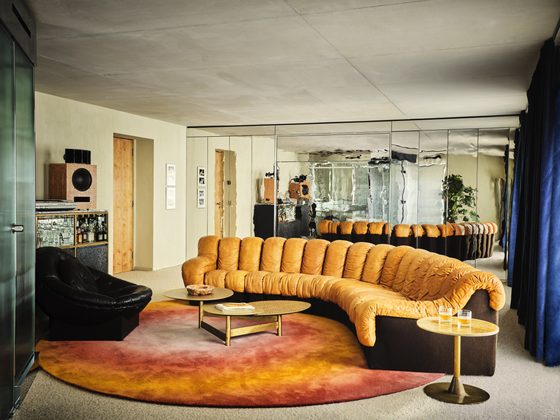
What they built together is vivid, confident, and entirely unapologetic about it. Karl Lagerfeld, Vladimir Kagan, Piero Lissoni, Rachel Howard, Ron Arad. Jean-Philippe Delhomme, the French illustrator whose collaborators include Le Bon Marché, Barneys New York, and Chanel, painted the lobby murals in a spirit he traced back to Ludwig Bemelmans’ cocktail bar a few blocks away: whimsical, free, a little mischievous.
The design conversation around luxury hotels tends to favor restraint, neutral palettes and whispered elegance, spaces that ask nothing of you. The Mark asks things of you. The Art Deco bones are graphic, the marble floors demand to be noticed, the coffered ceilings hold the room with complete authority. Grange described it as absolute comfort mixed with modern style. What he actually built feels more like a private residence assembled by someone with total confidence in their own taste. You don’t need to agree with every choice. You feel the conviction regardless.
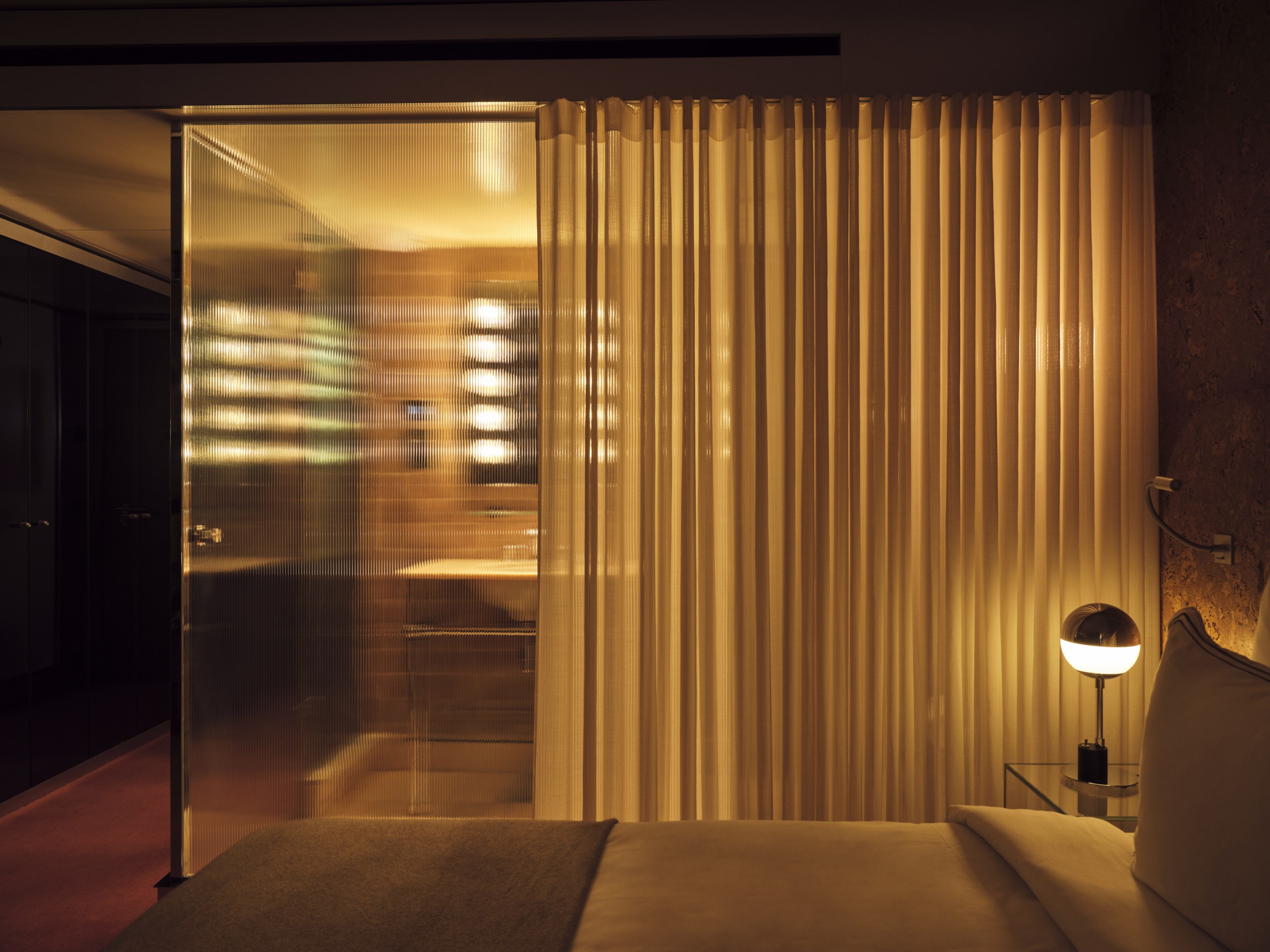
The rooms are quieter than the lobby, intentionally. Spacious by New York standards, which is a real thing to say in a city where most hotels offer elegant closets and call them suites. Italian linens, marble soaking tubs, proportions that let you breathe. I could have slept in the bathtub and counted it among the better nights of my life.
It turns out that, that kind of luxury begins with water pressure. Senbahar has been quoted describing his ideal guest experience in those terms, which sounds like a joke until you realize he means it as a complete philosophy: genuine luxury is the elimination of every small friction, including the ones guests would never think to ask about but would notice immediately if they were wrong. The showers at The Mark have extraordinary water pressure. This is not a coincidence.
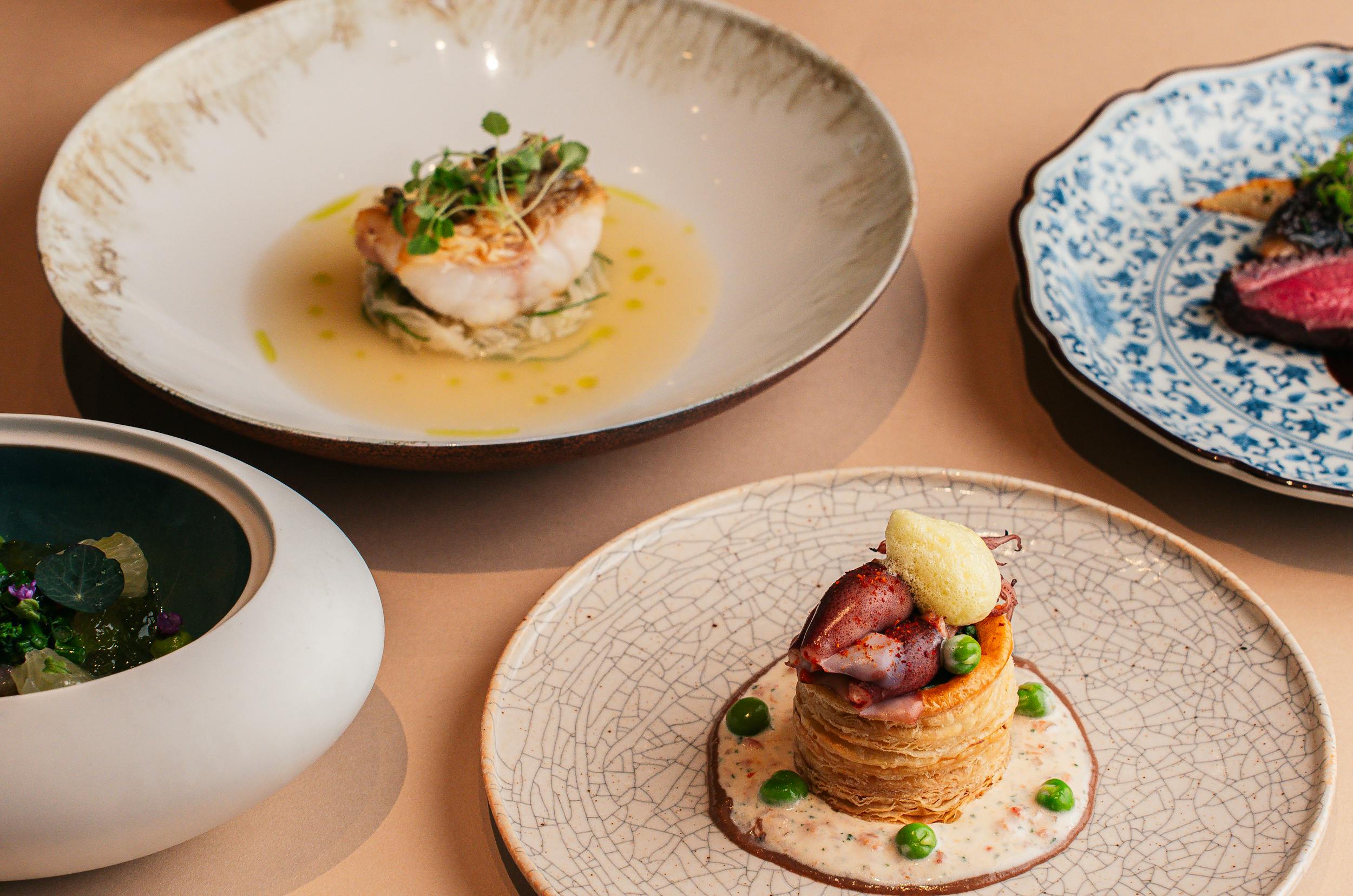
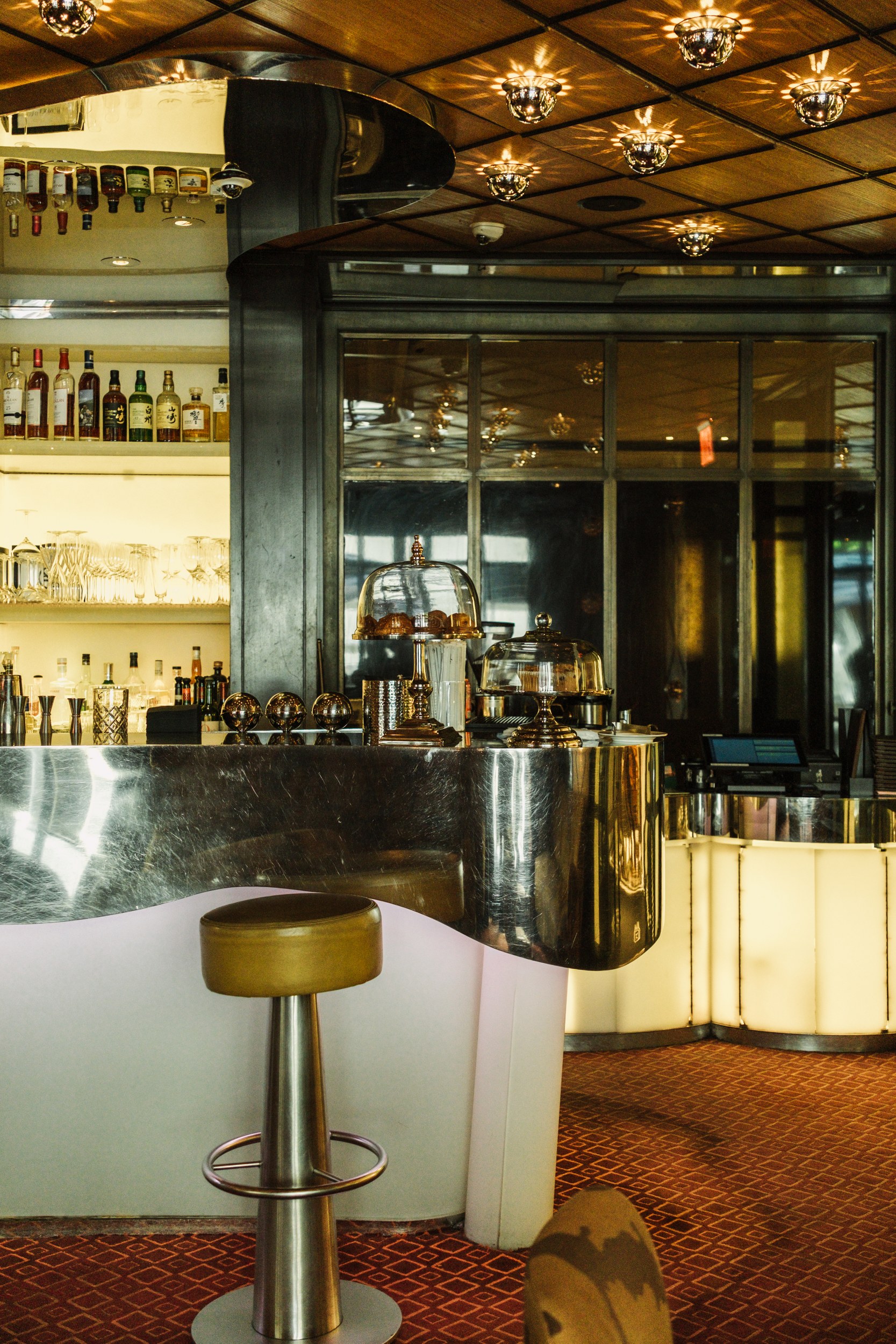
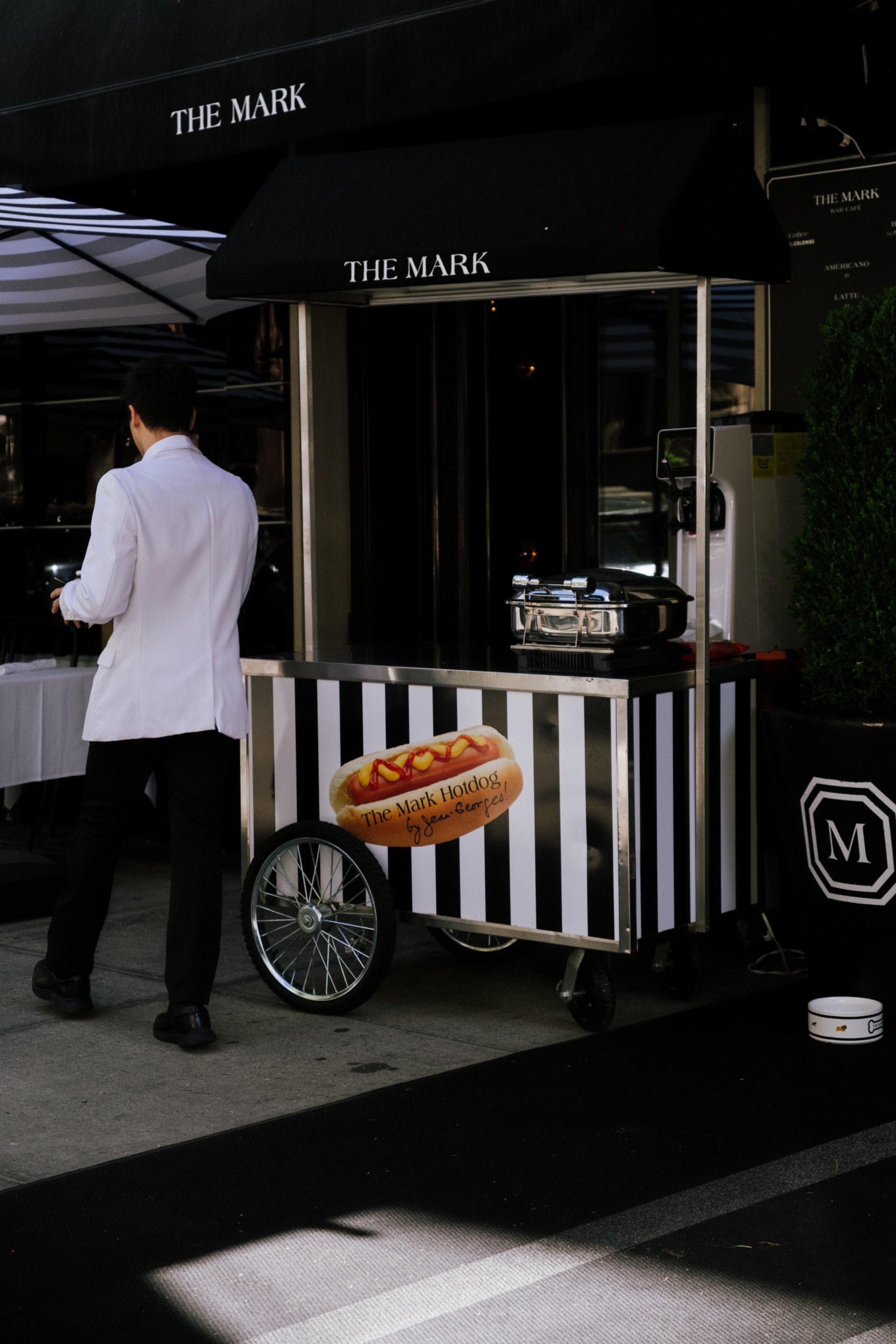
It extends from there into every corner of the place. Jean-Georges’s menu is serious enough to satisfy any table, from the truffle cheeseburger that has developed its own reputation to the Crispy Salmon Sushi you order when you want something perfect without having to think about it. Caviar Kaspia restaurant, on the corner of Madison Street, operates its outpost inside the hotel. And the terrace opens onto 77th Street: lobster rolls, champagne, and the particular pleasure of watching the city pass at exactly the right distance. Not removed from it. Inside it, but held.
Frédéric Fekkai’s salon occupies the second floor, open seven days a week, with Fekkai himself known to make in-suite visits for special occasions. John Lobb runs a shoeshine station near the lobby. Assouline has a bookshop on the ground floor, where Richard Jean-Georges’s grass-fed version at six dollars. A complimentary umbrella if it rains. Complimentary newspapers at request each morning. Papeterie in the rooms.
I forgot my bookmark and was using a nail file as a placeholder until I found theirs.The Mark anticipates what you didn’t know to pack, which is a fundamentally different skill from fulfilling requests. Any hotel can fulfill a request. Eliminating the need to make one in the first place is something else entirely.
The staff understand this the way you only can after years in the same place. The faces in The Mark’s Assouline monograph, published to mark nearly a century at this address, are the same faces that greeted me each morning, called the cabs, poured the coffee. A waiter who has worked here for years asks a returning guest about his children. Not because he was briefed. Because he remembers. The guest’s expression shifts when he hears the question. That exchange is worth more than any suite.
The address makes its own argument. 77th and Madison is the cultural center of the city in a way that is not a matter of opinion. The Metropolitan Museum, the Guggenheim, the Frick, Sotheby’s, and the Whitney are all within walking distance. Ralph Lauren, Prada, Thom Browne, Céline, and Goyard line the same stretch of Madison Avenue. Central Park is at the end of the block. In May, the Met Gala turns the hotel into something that has to be witnessed: the unofficial staging ground for the most photographed evening in fashion, designers and clients moving through the suites to dress and prepare and recover, couture gowns sweeping past families eating brunch in the lobby. It is a vision of New York that sounds almost fictional until you are standing in the middle of it, and then it feels inevitable.
From June, a seventy-foot Herreshoff sailboat moored at the Hudson with lobster rolls and a view of Lady Liberty.
The real luxury at The Mark has nothing to do with the penthouse or the sailboat or the caviar, though all of those things are real and all of them are extraordinary. It has nothing to do with the address, though 77th and Madison is as good an address as this city offers. It has nothing to do with the art on the walls, though the art is worth stopping for, or the food, though the food is worth coming back for on its own. Strip all of that away and what remains is something much harder to build and much harder to replace.
It is the waiter who remembers you, it is the valet who moves toward your bag before you have decided you need help. It is the water that appears when the afternoon turns warm, before anyone in the lobby thinks to ask for it. It is the newspaper folded the way you prefer it, with the small details exactly at the right moment. None of these things appear in a brochure. They are the result of something much simpler and much rarer: people who have been here long enough to care, looking after guests who come back often enough to be known.
That loop, quietly repeating itself over decades, is what the $250 million was really building toward. There are hotels you visit and hotels you return to, and the distance between those two categories is not measured in stars or square footage. It is measured in whether the place remembers you, and whether that memory translates into something you actually feel. That is the luxury. That is what you are really paying for, and what no renovation budget, however generous, can guarantee. It has to be built slowly, over years, by people who believe it is worth building. The Mark believes it. You feel that the moment the elevator doors open, and you go on feeling it long after you have left.
Some hotels impress you. The Mark takes care of you. After a while, you realize those are not the same thing at all, and that only one of them is worth going back for.
When I left, I already knew I would return.
The Mark Hotel, 25 E 77th St, New York.