After 40 years of dressing royalty and redefining Irish fashion, Paul Costelloe’s house enters a new era. His son William’s debut at London Fashion Week proves the legacy is in safe hands.
In 1983, over tea and scones at Kensington Palace, Paul Costelloe found himself in a meeting most designers only dream of. Sitting opposite Diana, Princess of Wales felt, in his words, like a moment of “historical contentment.” For the Dublin-born designer, it marked the start of a creative partnership that would span more than a decade and firmly establish him on the global stage.
The introduction had come almost by chance, after a member of the royal household wandered into his Windsor shop. From 1983 until her death in 1997, Costelloe dressed the most photographed woman in the world. He became known for bringing lightness to her formal wardrobe. Through uplifting palettes, bold florals and playful polka dots, he injected warmth and ease, helping define the Princess’s evolving style throughout the 1980s and 1990s. In doing so, Costelloe secured his place in fashion history.
Yet the Diana years were only one chapter in a long and industrious career.

The youngest son of a Limerick raincoat manufacturer and a stylish New York-born mother, Costelloe’s grounding in textiles came early. He studied first at Dublin’s Grafton Academy of Fashion Design before moving to Paris and the Chambre Syndicale de la Haute Couture, where he learned the realities of atelier life under Jacques Esterel. By the early seventies, he had worked across Milan and New York, before establishing his own label in 1979.
London would become his professional home. Costelloe famously cycled daily from his Putney house to his central London studio, observing what people actually wore and what worked in real life. From 1984 onwards, he was a fixture on the London Fashion Week calendar, holding the coveted opening slot for more than 15 years — a position he once wryly described as a “poisoned chalice,” yet returned to season after season.
Over four decades, Costelloe built something increasingly rare in modern fashion: a true family house. Long before “family-run” became a marketing angle, the label genuinely was one. He met his wife Ann while working in his Drury Street shop, and together they built both a family and a company that became deeply intertwined. Several of their seven children are now embedded in the business across marketing, sales and creative roles. His son William, now Creative Director, had long been his father’s closest collaborator, working alongside him on collections and runway visuals.
If Costelloe’s early ambition was to become “the Irish Ralph Lauren,” he later admitted he never reached the level of international scale he had envisioned. In reality, his impact landed somewhere more personal and meaningful. Rather than replicating another designer’s empire, he built a decades-spanning brand alongside his family, something far rarer in fashion today.


Through his long-running partnership with Dunnes Stores and the widely loved Paul Costelloe Living range, he brought considered design into everyday Irish homes. Tailoring, homewares and childrenswear became accessible without losing the polish associated with his name. As he once noted in a radio interview, strangers would stop him in the street to say, “I’m wearing one of your jumpers, Paul.”
Few designers moved so comfortably between the runway and the living room, a versatility he credited to his mother. Growing up, he was influenced not only by her personal style but by the way she kept her home, which gave him his instinct for what looks good and what feels expensive, even when it isn’t. By any measure, he was prolific — womenswear, menswear, Communion dresses, leather goods and home furnishings. Over four decades, he established himself as one of Ireland’s most enduring designers.
Which is why this season at London Fashion Week felt different.
The Palm Court at the Waldorf Hilton remained the house’s familiar stage, and the brand once again held its traditional morning opener. But Autumn/Winter 2026 marked the first collection shown without Paul following his death in November 2025. In his place was his son William, formally stepping into the role of Creative Director and following in the footsteps of both his father and his namesake grandfather.
Seated beneath the breakfast room’s glass ceiling, the absence of the founder was palpable. But the feeling quickly gave way as the show began and the focus shifted firmly to the clothes.
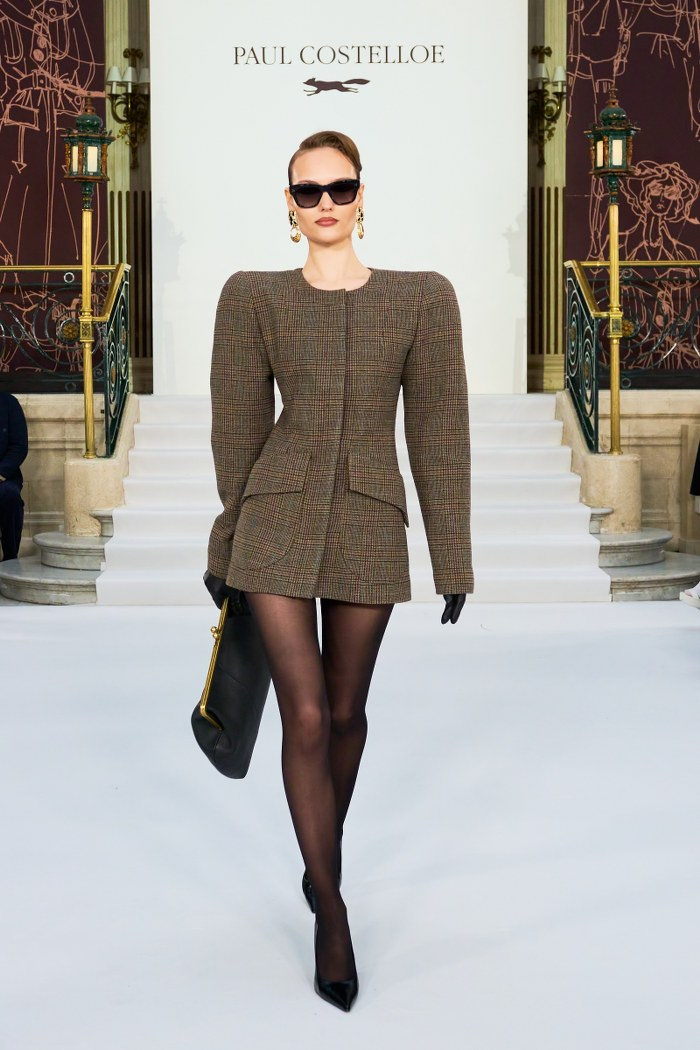
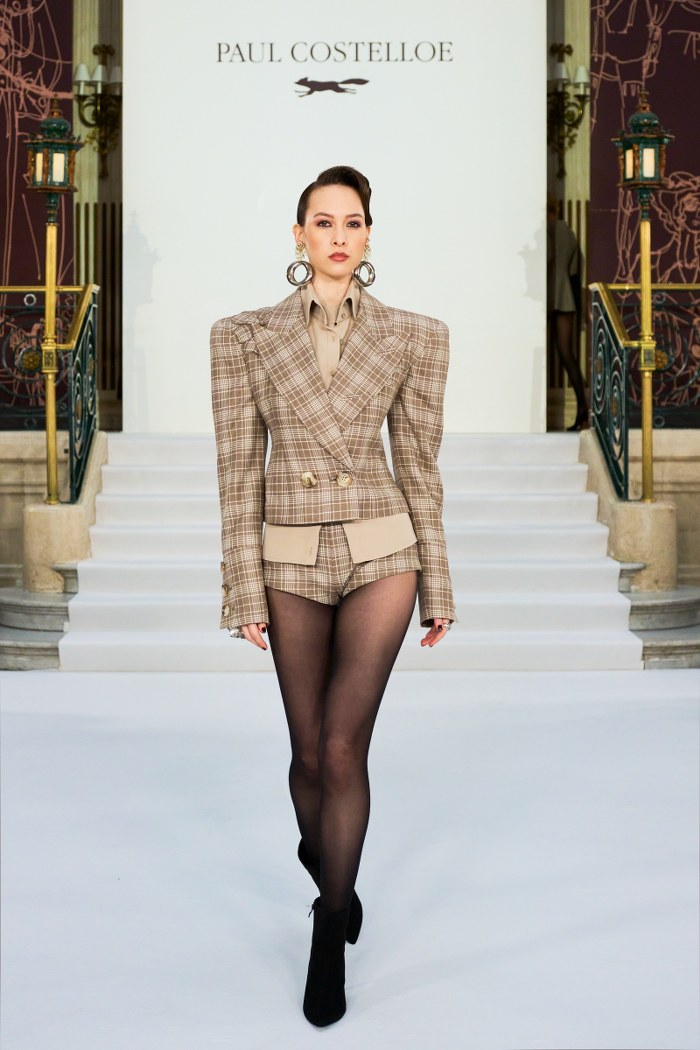
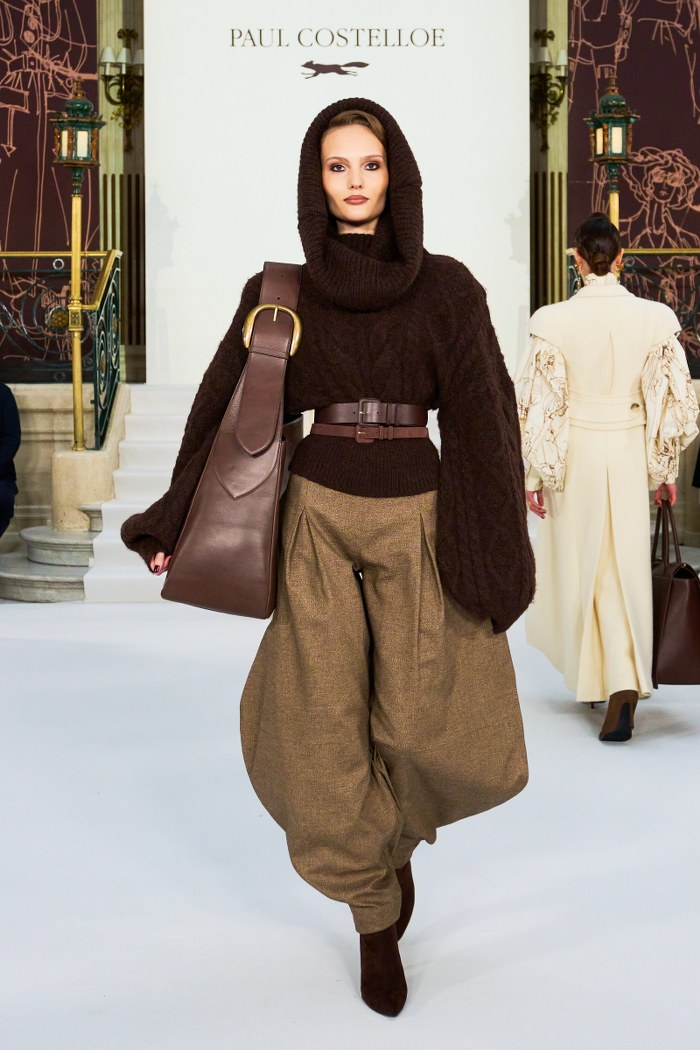
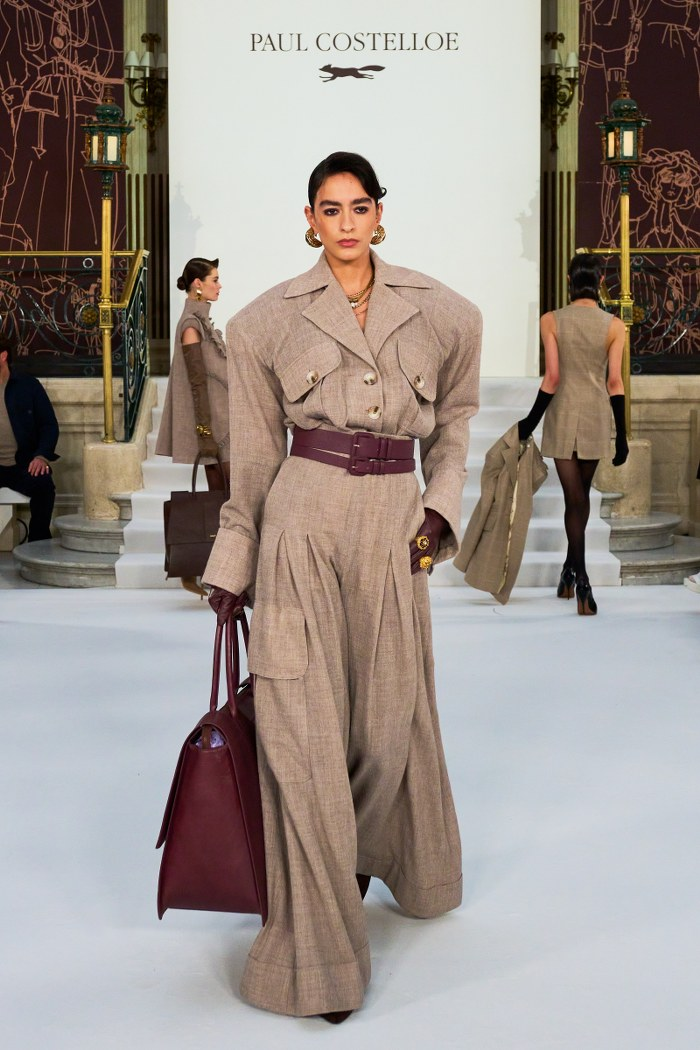
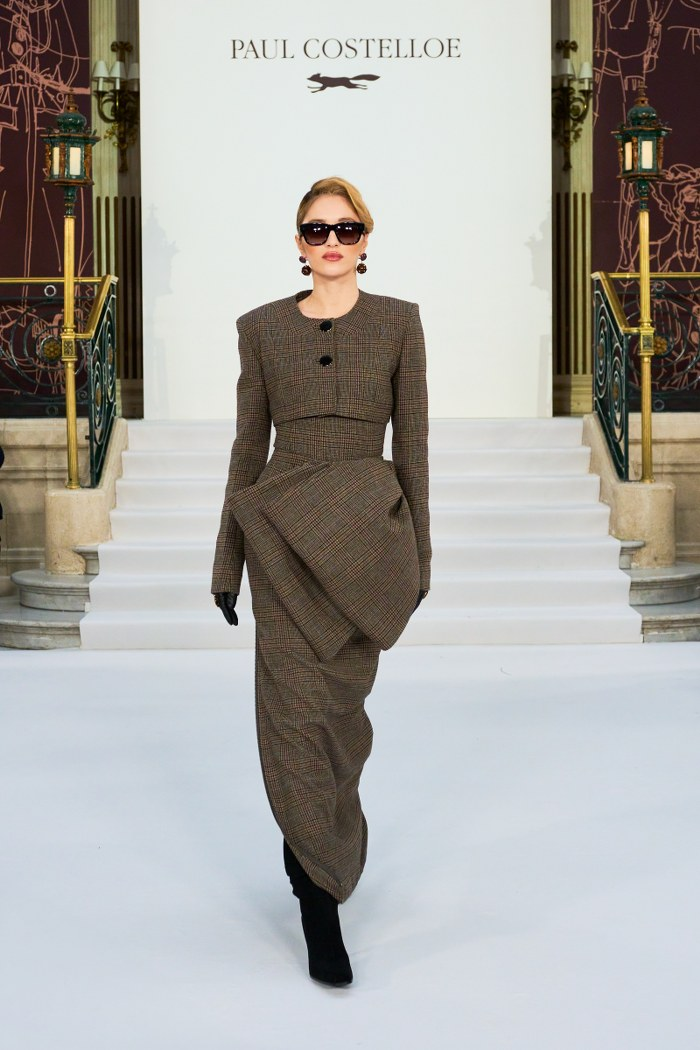
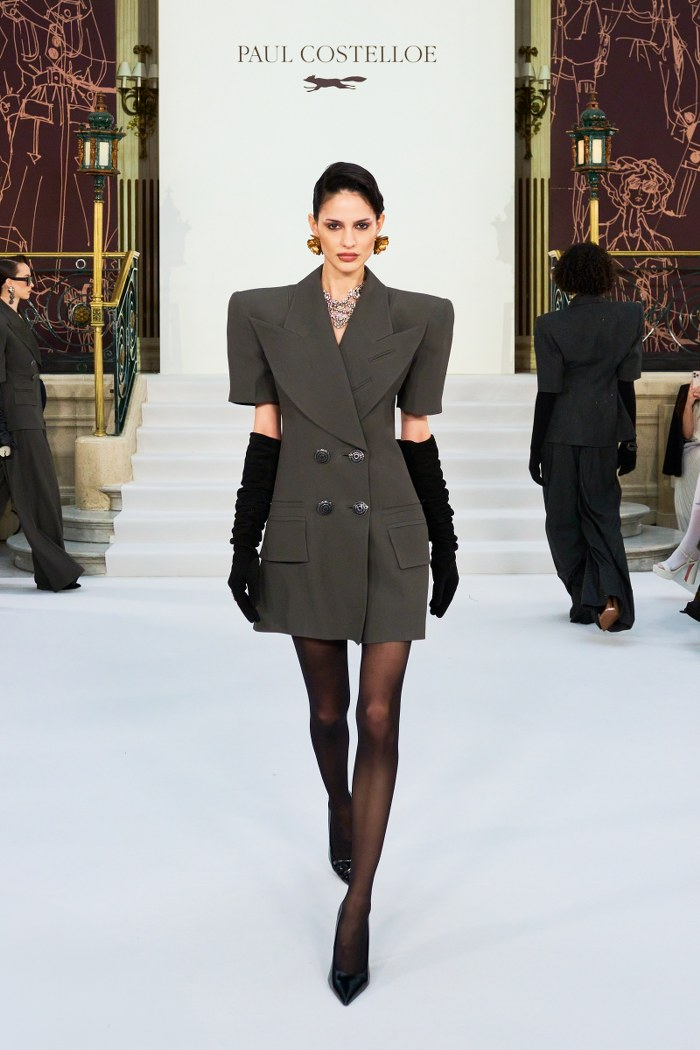
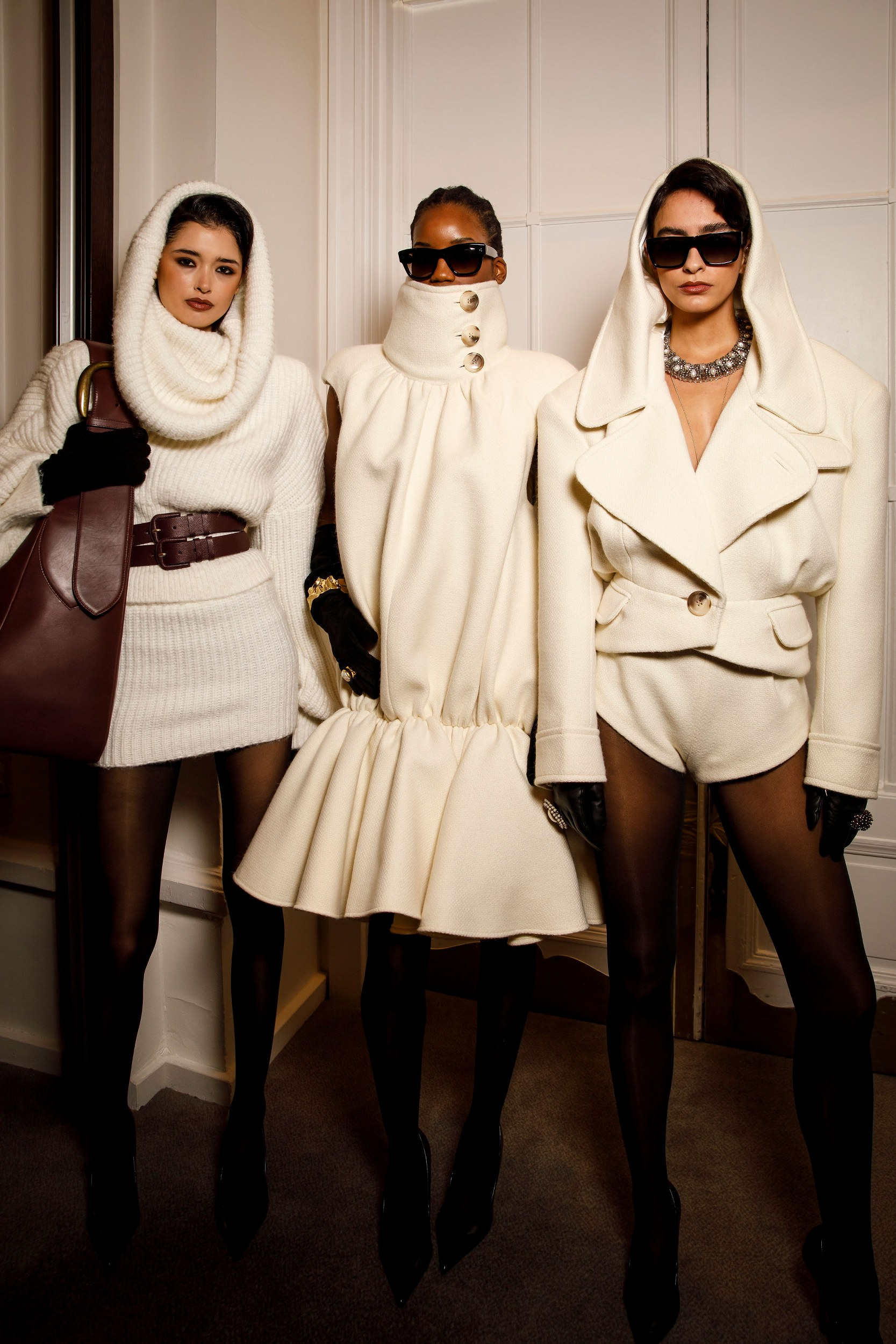
As debuts go, it was unmistakably a triumph for William, who demonstrated a clear understanding of the house codes and DNA. While there were moments of eveningwear, his instinct, like his father’s, was rooted in tailoring. The standout pieces were the suits: razor-sharp, broad-shouldered and structured. Daywear leaned into the silhouette long associated with the brand — strong shoulders, a defined waist and an elongated leg.
The collection embraced an Eighties-inflected power shape, with square, padded shoulders tapering into tightly cinched waists. The proportions were cleaner and more controlled than their vintage counterparts, delivering impact without tipping into caricature.
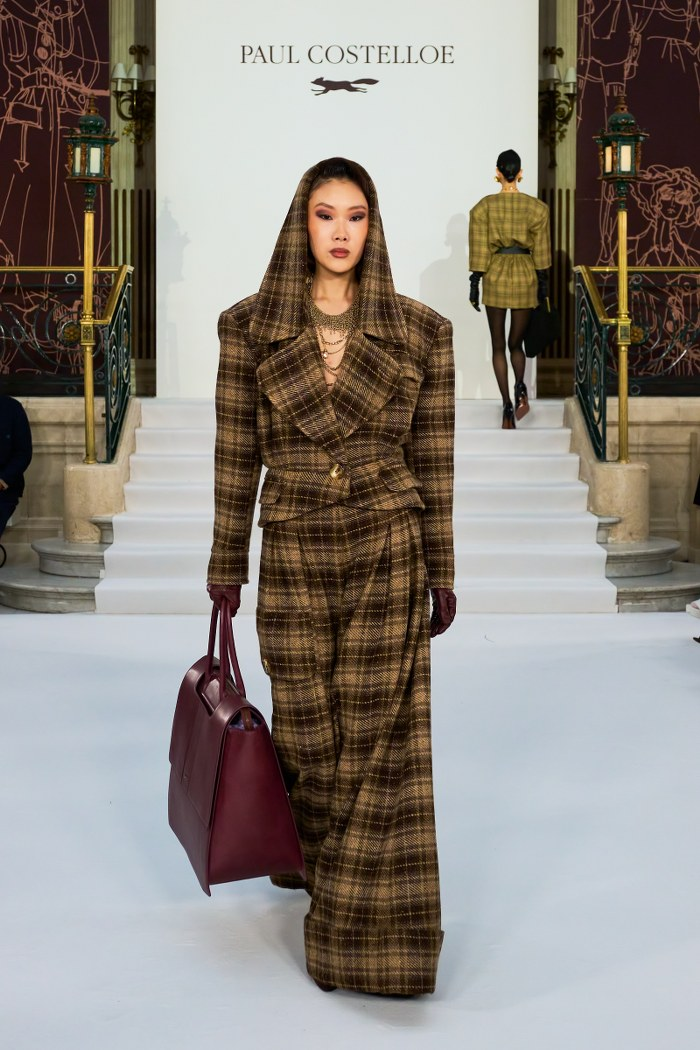
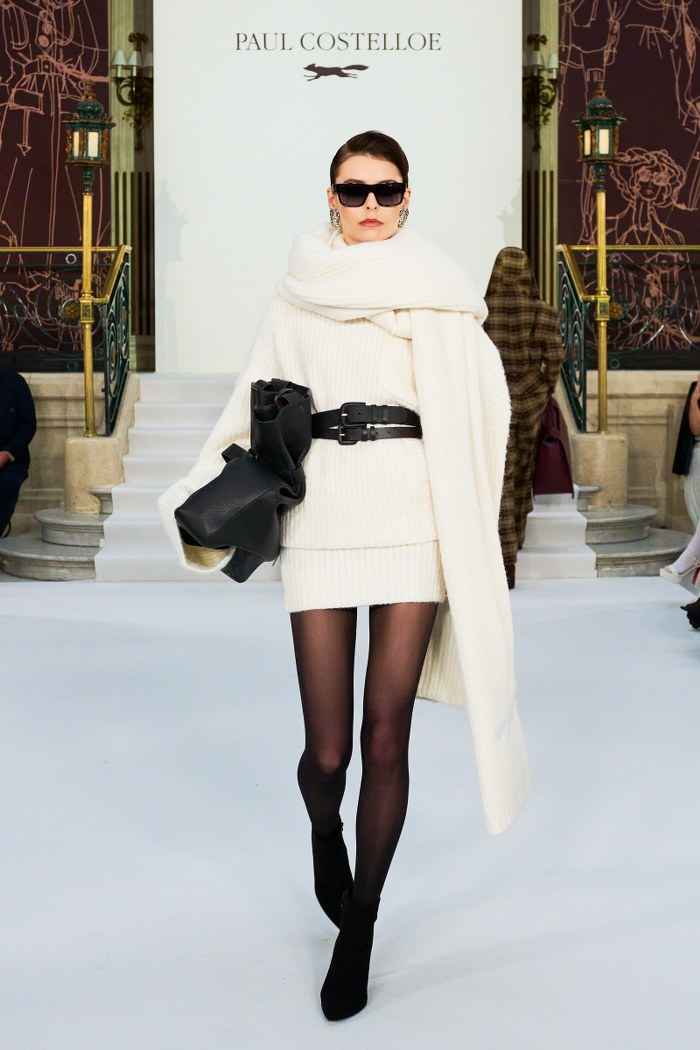
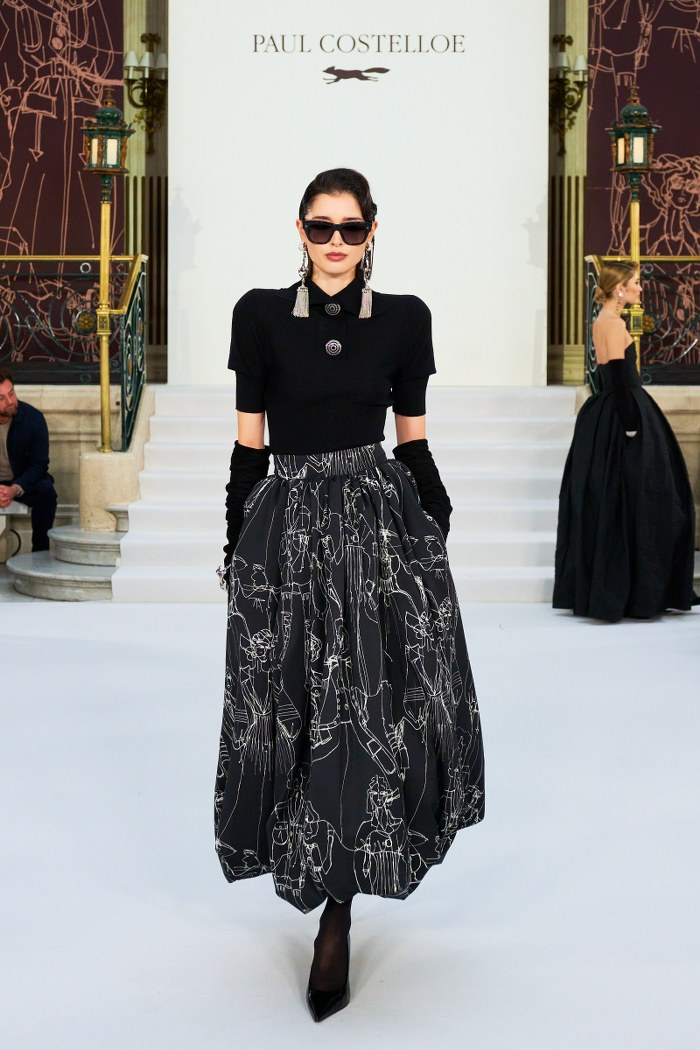
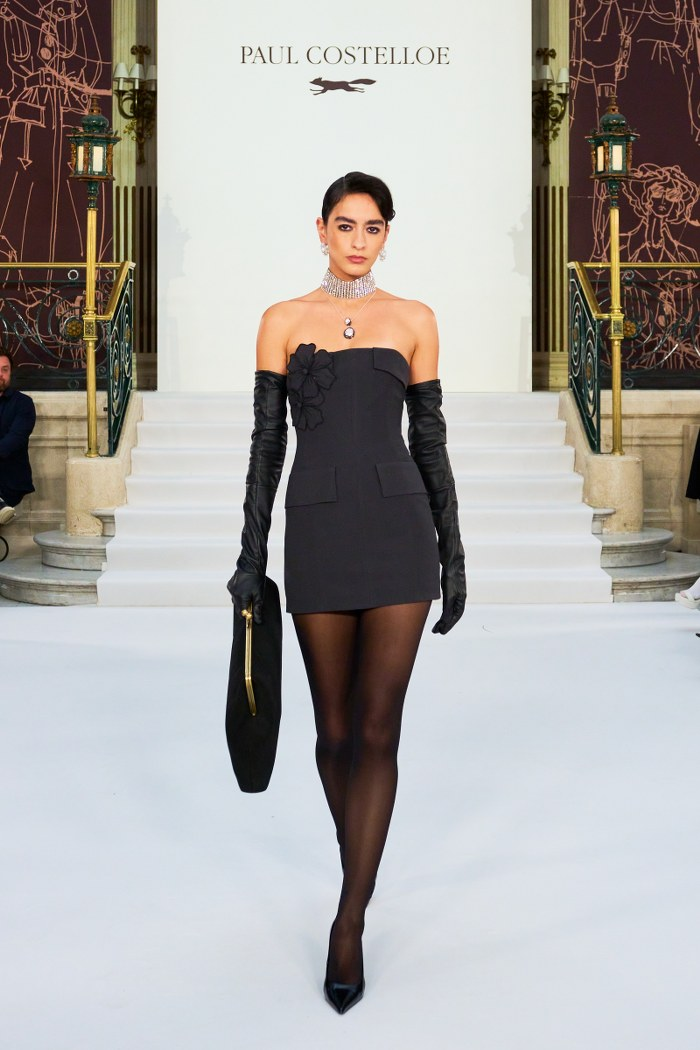
The opening looks set the tone: sculptured mini dresses and wool tunics in Irish tweeds. Sheer black tights lengthened the line, while oversized slouchy clutches softened the tailoring. Fabric remained central: tailoring cut from 100 per cent Irish wools and tweeds by Magee, a signature the house revisits each season. William kept the palette tight and considered, with earth-toned tweeds, creams, chocolates and tans gradually deepening into charcoal and black, culminating in sequined tuxedos and jacquard evening gowns.
A champagne-gold metallic blouse with billowing sleeves and an oversized bow introduced evening drama, while opera-length leather gloves, doubled belts and berry-toned lips reinforced the collection’s more glamorous mood. Hair was tightly pulled back into scraped chignons, sharp side parts, intricate braids and sculptural curls, mirroring the precision of the clothes.
Music softened the atmosphere. Models walked to the ambient calm of Enya’s “Caribbean Blue” and cinematic piano, creating a deliberate contrast between softness and the sharp strength of the tailoring.
The emotional peak came at the finale, set to the triumphant sounds of U2’s Where the Streets Have No Name, as William emerged from behind a backdrop he painted himself as the first new face to close a Costelloe show. There was an immediate standing ovation and rapturous applause with a clear sense of emotion and support in the room.
“My father will always be my inspiration,” read the show notes. “Creating beautiful clothes for all women to dream and wear with pride and love.” Safe to say, he did his dad proud.
If last season’s collection was titled Keep the Home Fires Burning, this one proves the flame has been carried forward.
Paul worked right up until the end of his 80th year, guiding collections and collaborating with his children. For more than 40 years, he championed quality materials, strong tailoring and designs meant to make every woman feel pulled together, whether she was the Princess of Wales or shopping at Dunnes Stores. Every garment reflected a simple philosophy: good design should make people look and feel their very best.
That ethos remains intact. In an industry that often pivots to the next new thing, the Paul Costelloe house is taking a steadier path forward: one rooted in continuity, family and a clear understanding of what the brand does best. The future is in safe hands.
Text By Cristin Proctor Rooney
Photos by Debbie Bragg (Behind The Scenes Images) and Paul Costelloe (Runway Images)