Words by Haider Rifaat
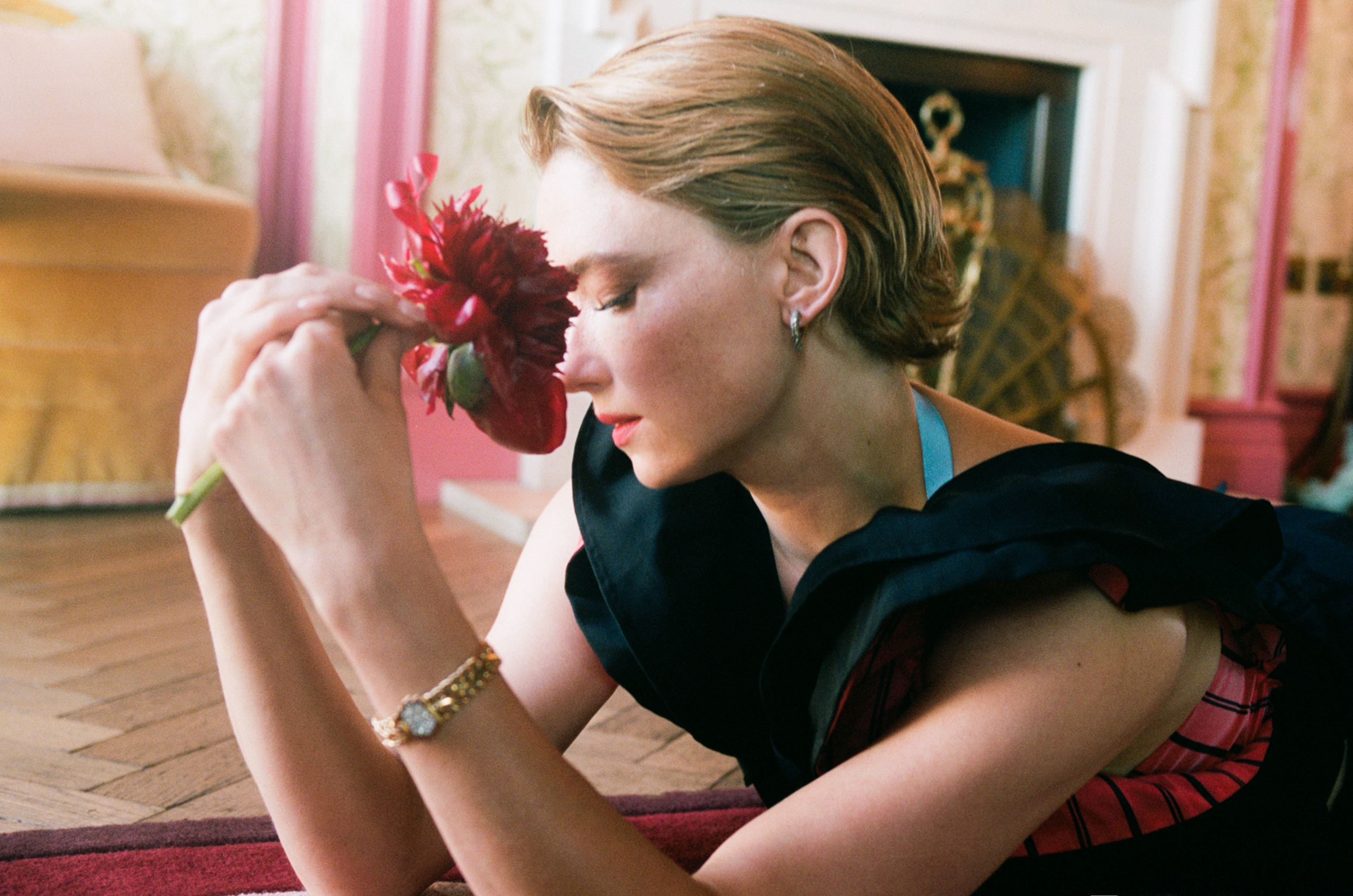
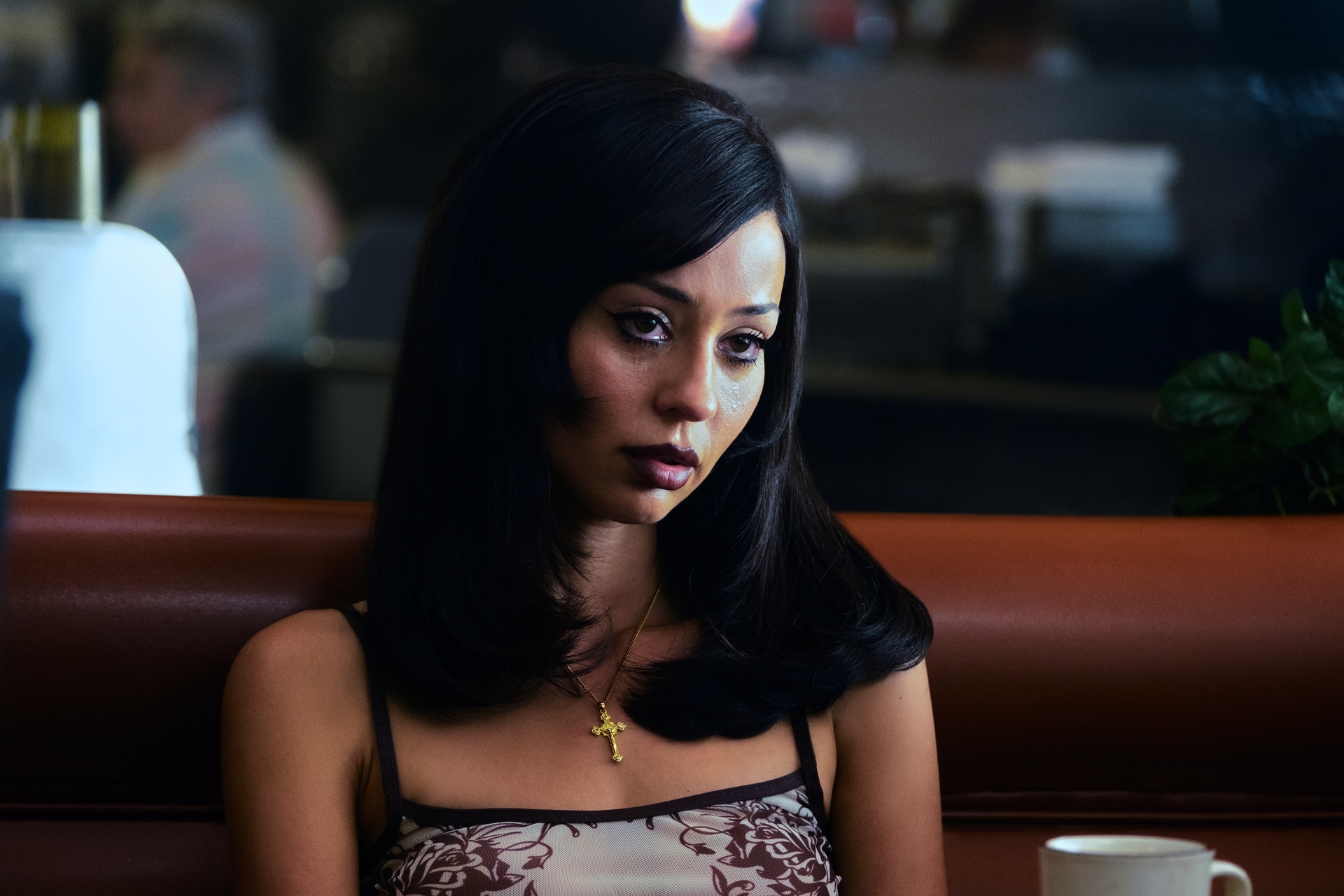
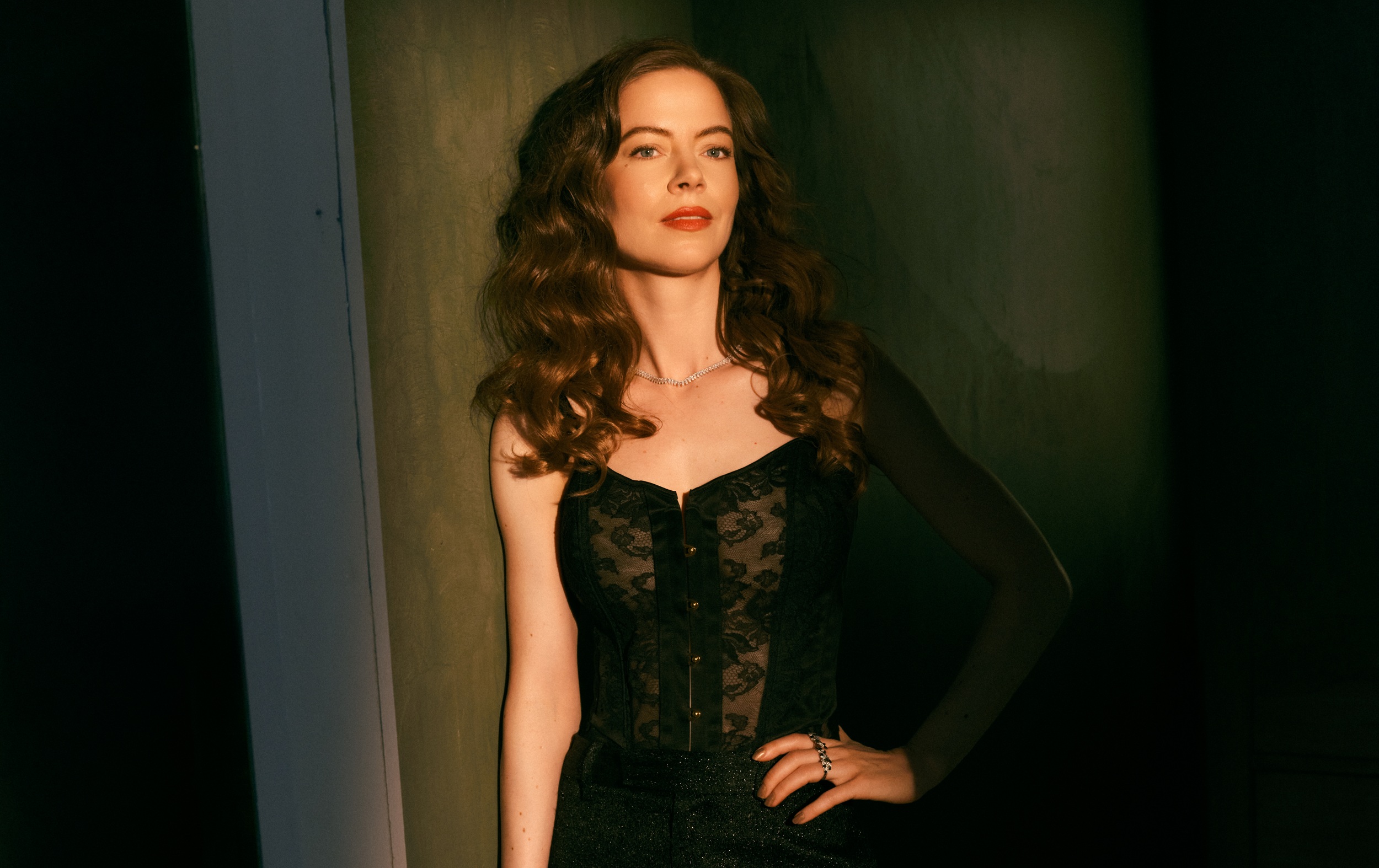
Hailing from Germany, Elena Sanchez is an actress and a stuntwoman who calls herself a third culture individual, having spent her childhood and teen years living between Germany, the United States and Switzerland. Sanchez studied at Cornell University to pursue hotel management before realizing her passion for acting. It was in New York City that Elena booked her first acting job as an extra in 2008 before receiving her SAG card in 2010 to pursue acting full-time. Now, after starring in a wide range of roles in more than 100 projects opposite Hollywood A-listers to the likes of Dwayne Johnson, Jennifer Lawrence and Tom Holland, Elena is continuing to break ground as she takes on another exciting role in the anticipated film Jumanji: Open World slated for a Christmas Day release. Discover Elena’s drive to make it big in Hollywood in this exclusive interview with Haider Rifaat for Flanelle.
Elena, when did you realize your passion for acting?
I realized my passion for acting when I was a junior in college studying hotel management at Cornell University. We had to take electives outside of our major, so for my arts elective requirement I took an acting class, because I had always thought it would be fun but it never seemed like something I could realistically do. This was my chance to take the acting class and get it out of my system…except I fell in love with it. Within about two or three weeks, I knew that this was what I wanted to do for the rest of my life. I thought to myself, imagine being as excited to go to work every day as I am to go to this class and so I decided that is what I was going to do, and I was going to figure out a way to make it work.
When you discovered your passion for acting through these acting classes, did you decide to also maybe change your field of study?
It was too late because I was already a junior. This was my spring semester during junior year. I had a bit of a crisis because I was like, oh my gosh, did I study the wrong major? But what I realized was that the hotel administration degree from Cornell is basically a business degree and a lot of the classes I took, like marketing and negotiation, apply to any business you are in, and so I was able to apply a lot of the things I learned to the industry that I am in now. Then I decided to move to New York City and attend the Lee Strasberg Theatre & Film Institute to further my studies in acting.
You are also a stuntwoman, and in a past interview, you mentioned that you have been a gymnast your whole life. Has gymnastics shaped your career as a stuntwoman?
Absolutely. Most stunt people have a discipline that they grew up with that they are very good at and ithelped them learn how to move their bodies and have that body awareness to be able to do stunts. So, for me, that discipline was gymnastics and because I had done gymnastics for so long, I knew how to make my body move in a way that it needed to do stunts. So, whether that is falling or whether that is something that requires extra strength, like climbing or doing zero gravity work where you are in a harness and you are flipping, without gymnastics, I would not have been able to be a stuntwoman.
Do you find that performing your own stunts in projects gives you an edge as an actor as opposed to being professionally trained by someone from scratch?
Yes—but there are limits to the stunts that you are allowed to do when you are an actor in a project. For insurance reasons, you are not allowed to do the really dangerous stunts. But I have done projects now where as the lead or as the supporting lead, I am allowed to do my own stunts if they are not super dangerous. I find that it helps the story and the character if you do your own stunts because if there is a stunt double involved, you have to hide them from certain angles and you can only film from behind or from the side. If you perform stunts on your own, you can get different shots, like close ups of your face, and I think that is helpful to do within limits, of course.
Now, if you had to select between being an actress and a stuntwoman, which one would you choose?
I actually get that question a lot, and it is hard to answer because I love them both. I guess if I have to choose, I would probably say acting because I can’t do stunts when I am 80, you know? But you can still be acting when you are 80. My favorite part is when I get to combine the two: when I am doing an action role and I get to do my own stunts. Stunts fulfill that physical longing that I have as an athlete to perform physically with my body whereas acting fulfills the emotional side of it.
Come to think of it, even when you are performing stunts, the physicality of it is also part of acting, right?
Exactly.
As I alluded to in my introduction, you have also starred in over 100 projects in a wide range of roles. Which role was the most fun for you to play?
I can’t pick just one. Obviously, one of my favorites was The Hunger Games: Catching Fire justbecause of the scope of it. The sets were so amazing. We got to wear really fun costumes, and we got to ride chariots with horses. When else would you get to do that in life? That was cool. I really enjoyed a movie I did called Geostorm with Gerard Butler where I got to float in outer space wearing a very heavy spacesuit, I might add, which was challenging, because it was like a 60-pound spacesuit, and we had to act like we were weightless.Filming The Magnificent Seven was an incredible experience too. They had built an entire fake western town near Baton Rouge, Louisiana, and we got to wear period clothing which was a lot of fun (but very sweaty!).
You said that you can’t really cherry pick one role you played but which character do you personally resonate with the most? The one that has so much emotional depth that you felt connected to it personally as Elena Sanchez.
I think that would probably be the most recent one that just came out, which is Neglected, in which I played Detective Keyes opposite Josh Duhamel. What was interesting about that character is that she is an officer of the law, and wants to do what is right, so she has got a moral compass leading her. But at the same time, she is also just a human being and very close to her partner—the detective played by Josh Duhamel. Sometimes, there is a fine line between doing what is right in a situation versus what is right according to what society is telling you that you need to do. So that was an interesting character for me to play because Detective Keyes has this inner conflict of wanting to perform her job but also wanting to help her friend who she cares deeply about.
I was going to ask about Neglected, but before I go further, I am curious to know, what is your acting style because everybody follows a different method.
I wouldn’t say that I have one specific style. I have studied several stylesfrom Meisner to Stanislavski and the Alexander Technique. I wanted tolearn and study a little bit of everything just to see what all these different methods were aboutandkind of mesh them together to see what works for me.When I am on set, I try to emotionally connect with the characters I am playing and say to myself, wellwhat would I do as Elena if I were in this situation?That strategy guides me instead of trying to put on an act and trying to create a different character.
How much of a director’s input and feedback do you take? Because many actors also consider themselves to be directors’ actors.
That depends on the director. At this point, I have worked with so many that I am very open to whatever directing style they have for me to follow. If a director wants to be more collaborative, I love that. If it is someone who has a very specific vision of what they want, I will follow that, too. If it is someone who just gives me free reign and says do your thing, I am good with that as well. So, it depends. You feel it out and see who you are working with. But then, of course, you still want to give a performance that feels real and is going to be in the best interest of the project. If a director gave me a note that I thought sounded insane, I would still do it, but then I would probably also ask to do a take that felt right to me. Filmmaking is a collaborative art so it just depends on each experience.
When you are playing a character, you are in the mindset of that character, so you as an actor also know how to approach the role without solely depending on a director, correct?
Yeah, so I think there is balance between doing what the director is telling you plus also bringing your own spin to that character, which is equally important. That is probably why you were hired for the project as an actor—to bring your spin to it.
Exactly. Now, coming back to Neglected. You played Detective Keyes in this film opposite Josh Duhamel and Dylan Sprouse. How was your experience like working opposite these two actors, and what is the story about?
Neglected is about a detective played by Josh Duhamel. On the day of his retirement, a young man, played by Dylan Sprouse, comes into the police station and confesses to a murder, saying that he has buried his (Josh Duhamel’s character’s) son alive. The detective has to solve three murders before his buried son runs out of oxygen and dies. I play a detective who is Josh’s partner. I want to help him solve these murders and save his son so it is very much a race against the clock, edge-of-your-seat thriller.
I had never met Josh or Dylan before this movie, and on my first day I walked in and had a scene to film with Josh. I was definitely a little nervous, it is like the first day of school when you walk onto a new set! But Josh was just so incredibly welcoming that it immediately took away any nervousness I had. He was so collaborative and kind and we had both been thrown into the project very last minute. I had only auditioned for it a week before, and Josh only had the script for a few weeks as well. In between takes, we were running lines with each other trying to figure out these characters and really preparing for the scenes to make sure we were giving our best performances. Dylan plays a very creepy serial killer in the movie and I was glad that in between takes, he was a normal dude, you know? He didn’t stay method and wasn’t creepy the entire time. So, it was also a lot of fun to work with him as well.
You have starred alongside so many superstars in Hollywood and it just keeps getting better. You will be seen next in Jumanji: Open World opposite Dwayne Johnson, Kevin Hart and Jack Black. Can you tell our readers what they can expect from your role in the film?
Unfortunately, I can’t talk much about Jumanji: Open World yet. I can say that it is coming out Christmas Day in theaters, so it will be a fun movie to watch with your family over the holidays, and I am very excited to be a part of it. I had a lot of fun working on the film. It was nice to work in Los Angeles. Sadly, I did not get to go to Hawaii to film (haha). I will say this, and it is not a spoiler or anything because this information is already out there, but what I like about Open World is that it is very full circle to the original with Robin Williams, which I think is very special.
I am going to close with this question. In order to play an empowering woman on screen, you also need to find a script that is equally empowering in its content. As a woman, are you more careful and selective in the roles you undertake from the perspective of empowering women, especially those who are in your community and who come from a similar background as you?
Absolutely. I think when you are starting off in this business, you don’t necessarily have the option to do that because you are just trying to work and get your foot in the door and get more credits on your résumé. So, you are saying yes to basically everything just to get the experience, meet more people, more directors, actors, producers and people you would like to work with in the future. As I have continued and developed my career, I am absolutely more aware of the types of projects that I would like to be a part of, and when I read a script, I definitely want to be a part of projects, like you were saying, that are empowering to women and minorities, characters who may not necessarily have a voice otherwise, or people who may not have a platform to tell their stories.
Photographer: Storm Santos @stormsantos
Hair: Danni Katz @dannidoesit
Makeup: Nadia Hoecklin @nadiahoecklin
Stylist: Philippe Uter @philippeuter