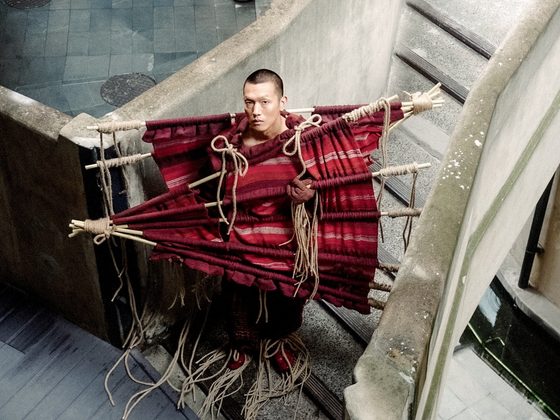
Designer Oleksandra Sakhaudinova on creative identity, the Ukrainian avant-garde, and her design philosophy.
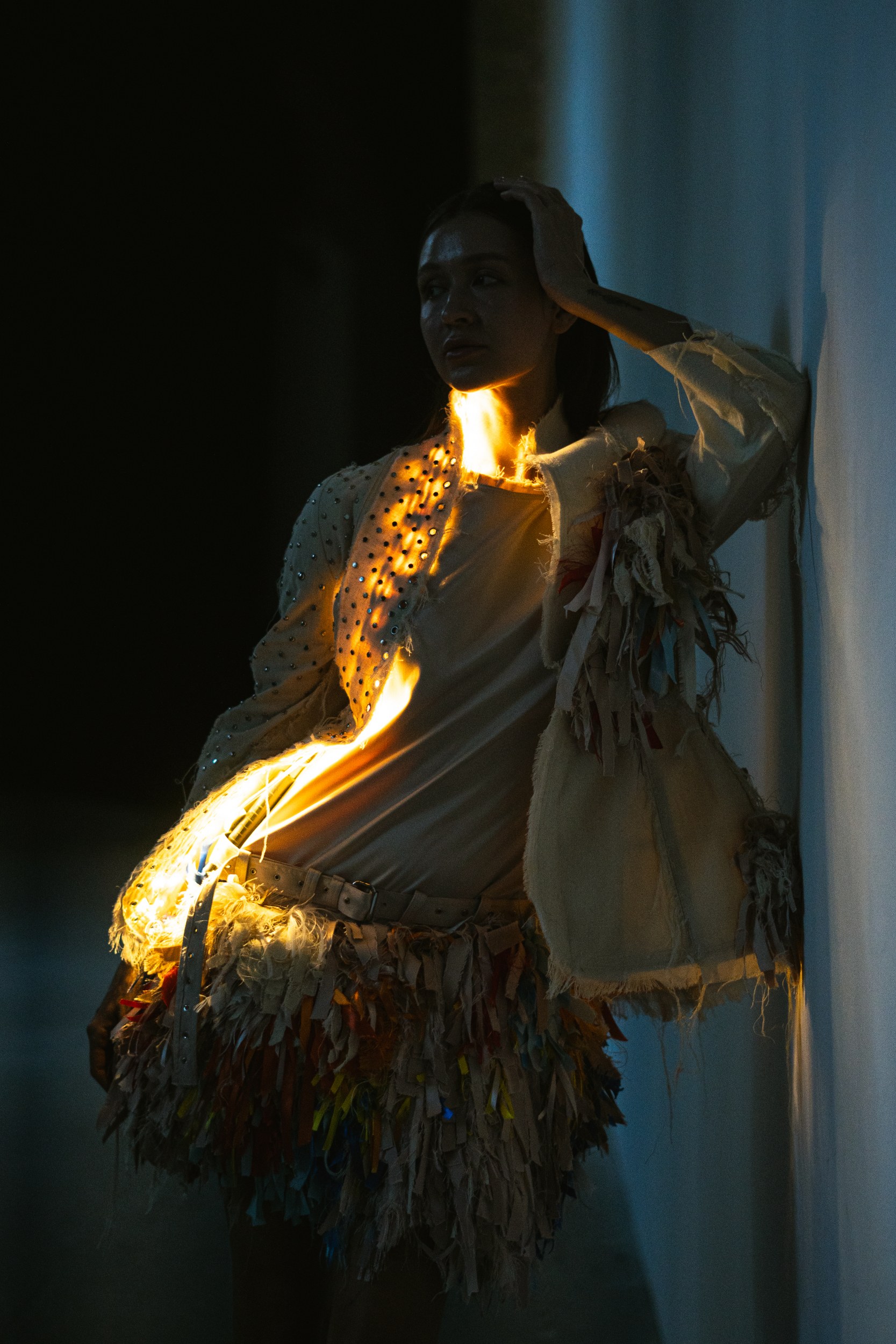
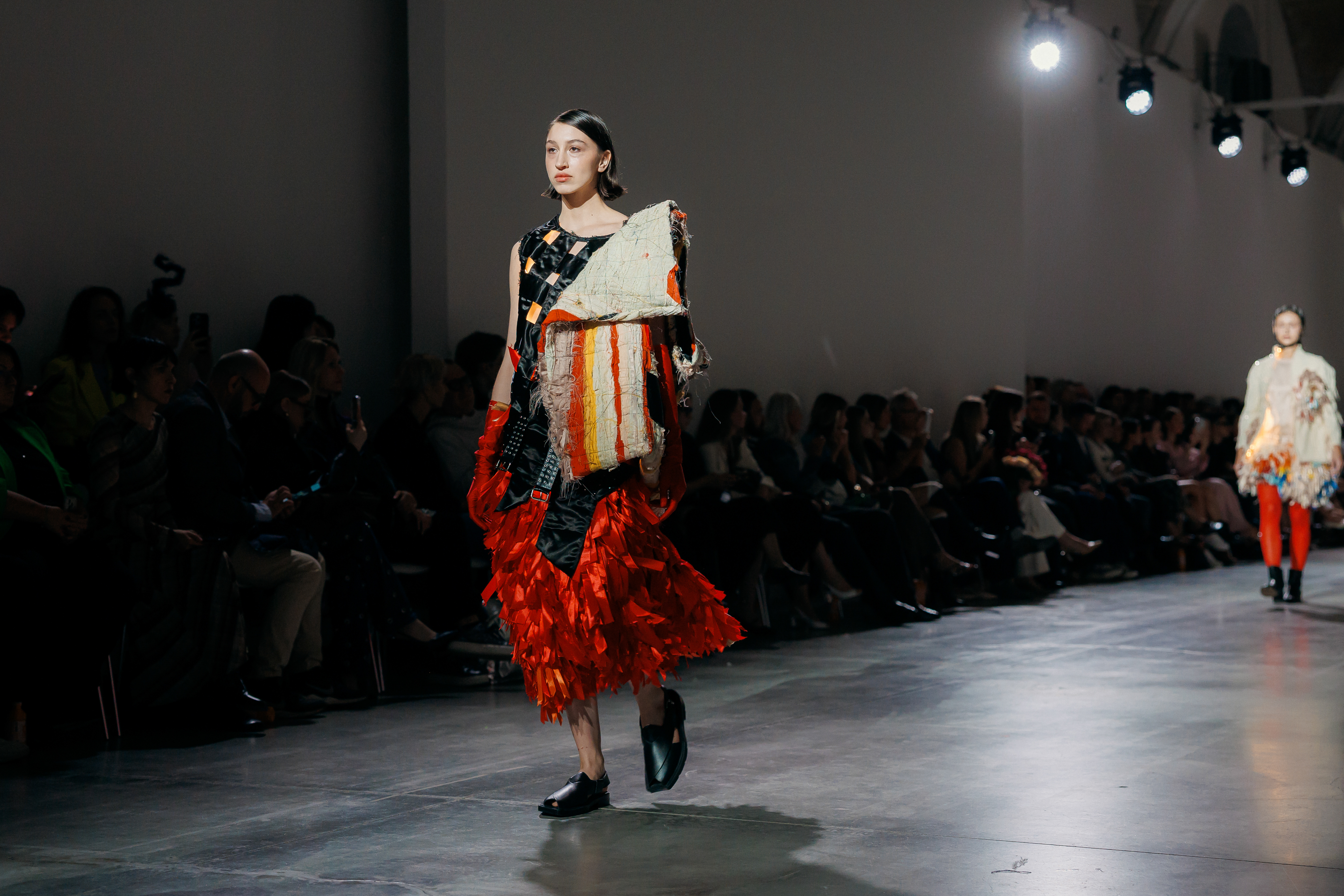
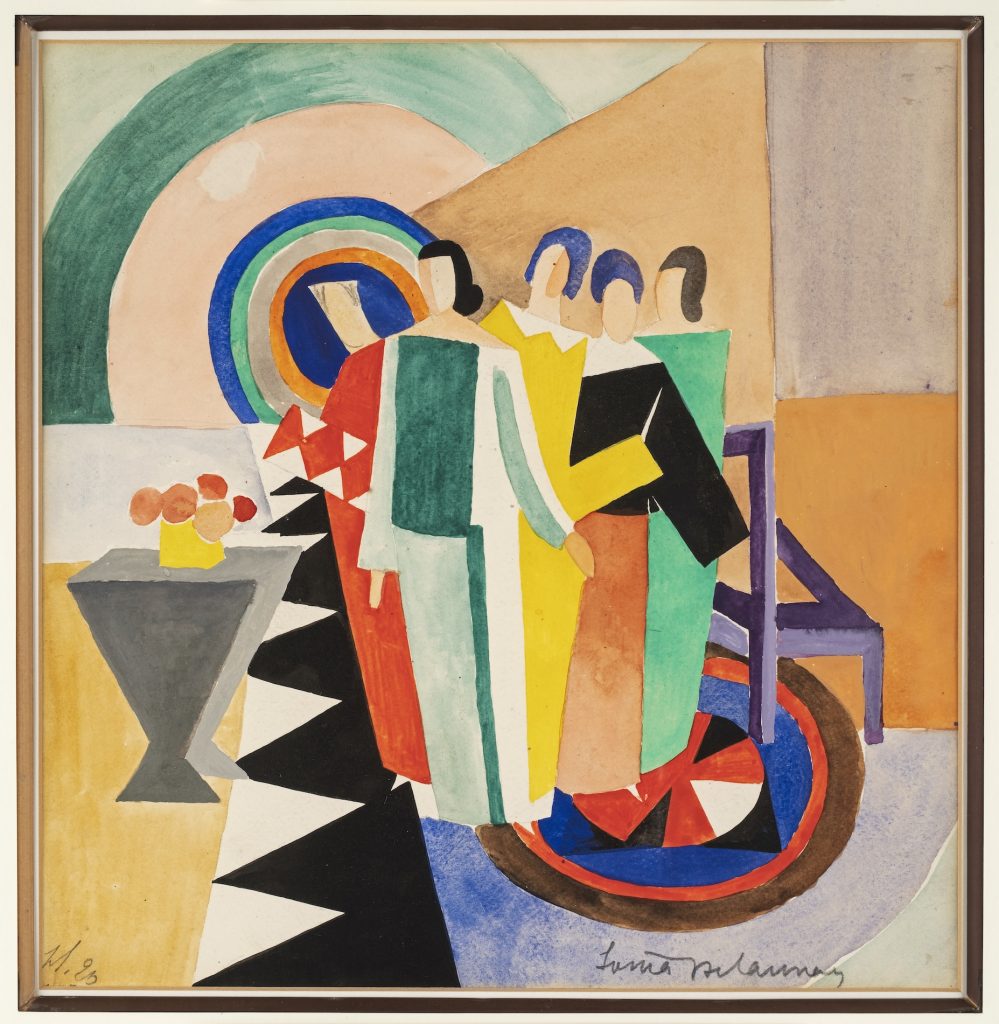
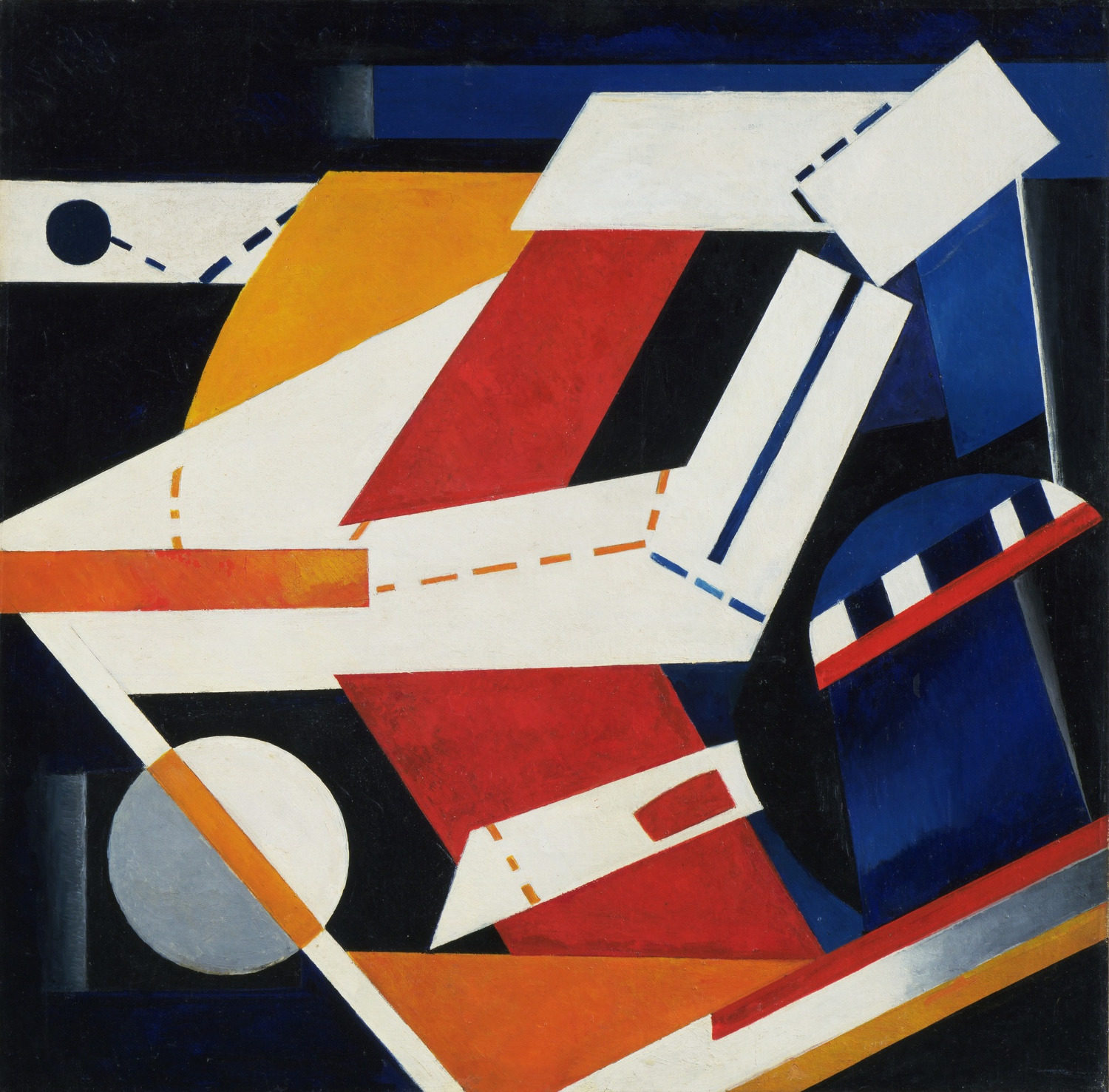
For SS27, Oleksandra Sakhaudinova, known as Dömd, explores the legacy of the Ukrainian avant-garde. Titled Reclaiming the Light, the collection draws on the work of Sonia Delaunay, Kazymyr Malevych, and Oleksandra Ekster, whose distinctive geometries and colour compositions became the conceptual foundation of her designs, presented at Ukrainian Fashion Week.
Reclaiming the Light is both a tribute and an assertion of artistic continuity for Oleksandra Sakhaudinova, winner of the 2026 Look into the Future young fashion designers contest. Through her work, Oleksandra seeks to carry forward the legacy of some of the most prominent avant-garde artists, whose work has become an intrinsic part of Ukrainian cultural identity.
In this conversation, Oleksandra reflects on the creative process behind the collection and the distinctly Ukrainian sensibility that informs her approach to fashion. “If, after reading this interview, someone looks up even one of these artists and takes the time to explore their works, that will be a small victory for me,” she says.
Working as a multidisciplinary artist, how do different forms of expression interact in your work, and where does fashion sit within that constellation?
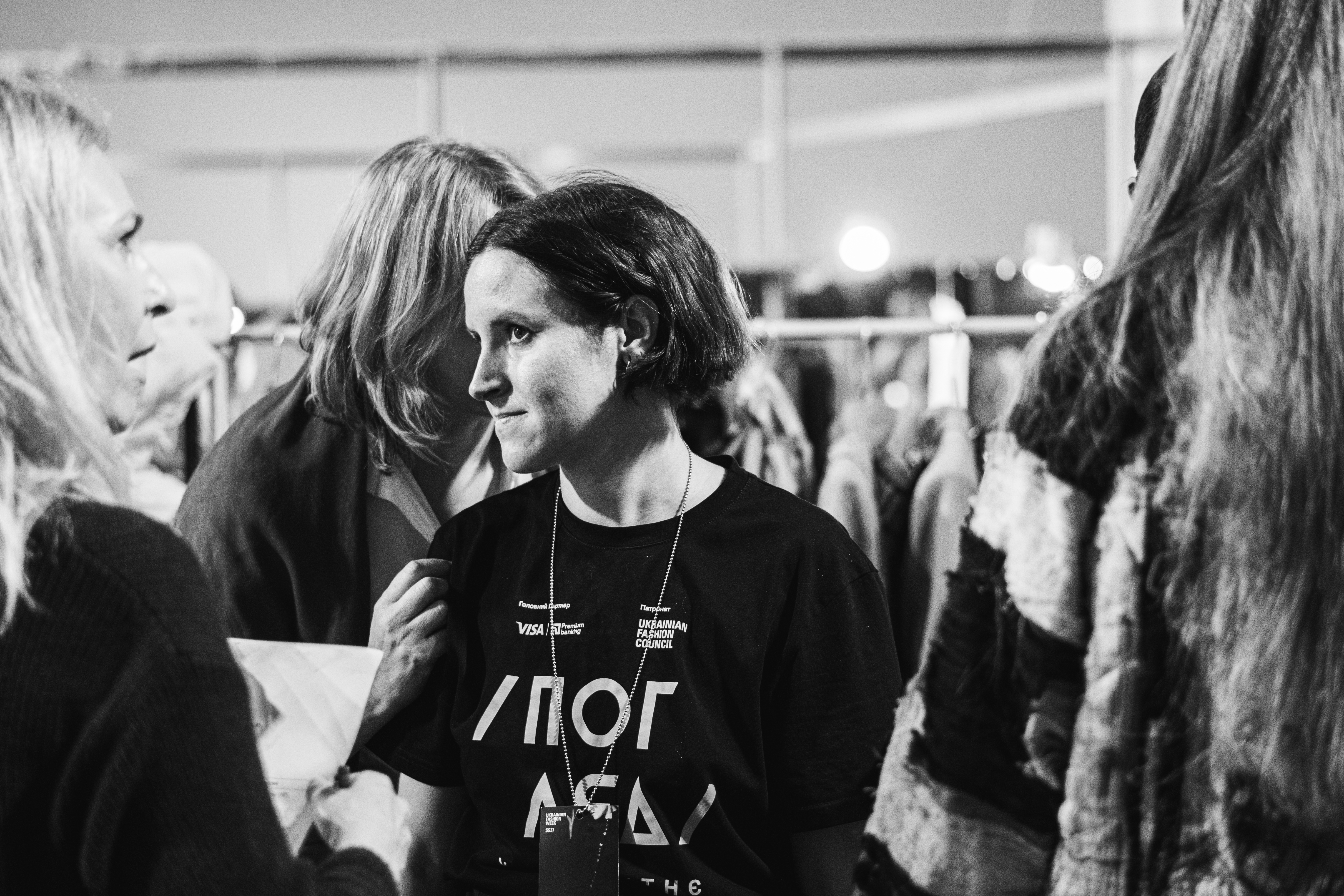
I don’t limit myself to any particular artistic discipline or medium through which I express myself and connect with the world. Rather than being defined solely as a fashion designer, I see myself as a multidisciplinary artist, driven by a deep yearning to create that finds expression in many forms — from poetry, short stories, painting, and drawing to fashion design, screenwriting, and styling.
You’ve worked under the alias Dömd for years. How did the name originate, and how has its meaning evolved alongside you?
Dömd translates to “doomed.” At first glance, it carries fatalistic weight, but to me, it holds far more than its literal meaning. These four compact letters encompass my past, present, and future.
They represent continuity with the person I was as a teenager when I first adopted the name. Back then, I felt as though I experienced the world without skin—lonely and misunderstood. I haven’t lost that acute perceptiveness—which is both a curse and a gift—but through years of therapy, I’ve learned to live with it. I’ve stopped trying to force myself into boxes that were never built for me.
Once I had developed a stronger sense of who I was, the name took on a broader meaning through Jean-Paul Sartre’s phrase, “Man is condemned to be free.” According to Sartre, we first come into existence and only then shape our identity through our actions and choices. This philosophy resonates with me.
I don’t believe we are born with a predetermined purpose; our choices define us. I cannot change my nervous system or erase past trauma, but I am entirely free to choose what I do with my life.
Your collection, Reclaiming the Light, draws on early 20th-century avant-garde movements and the artistic legacy of the École de Paris. What is the central idea that brings these diverse influences together??
This collection is about the light of memory — a light that can never go out.
Reclaiming the Light is not just a tribute to Ukrainian artists such as Sonia Delaunay, Kazymyr Malevych, and Oleksandra Ekster. Above all, it is a manifesto of self-awareness: a way of affirming the continuity of their artistic heritage through my work, which draws on their practices.
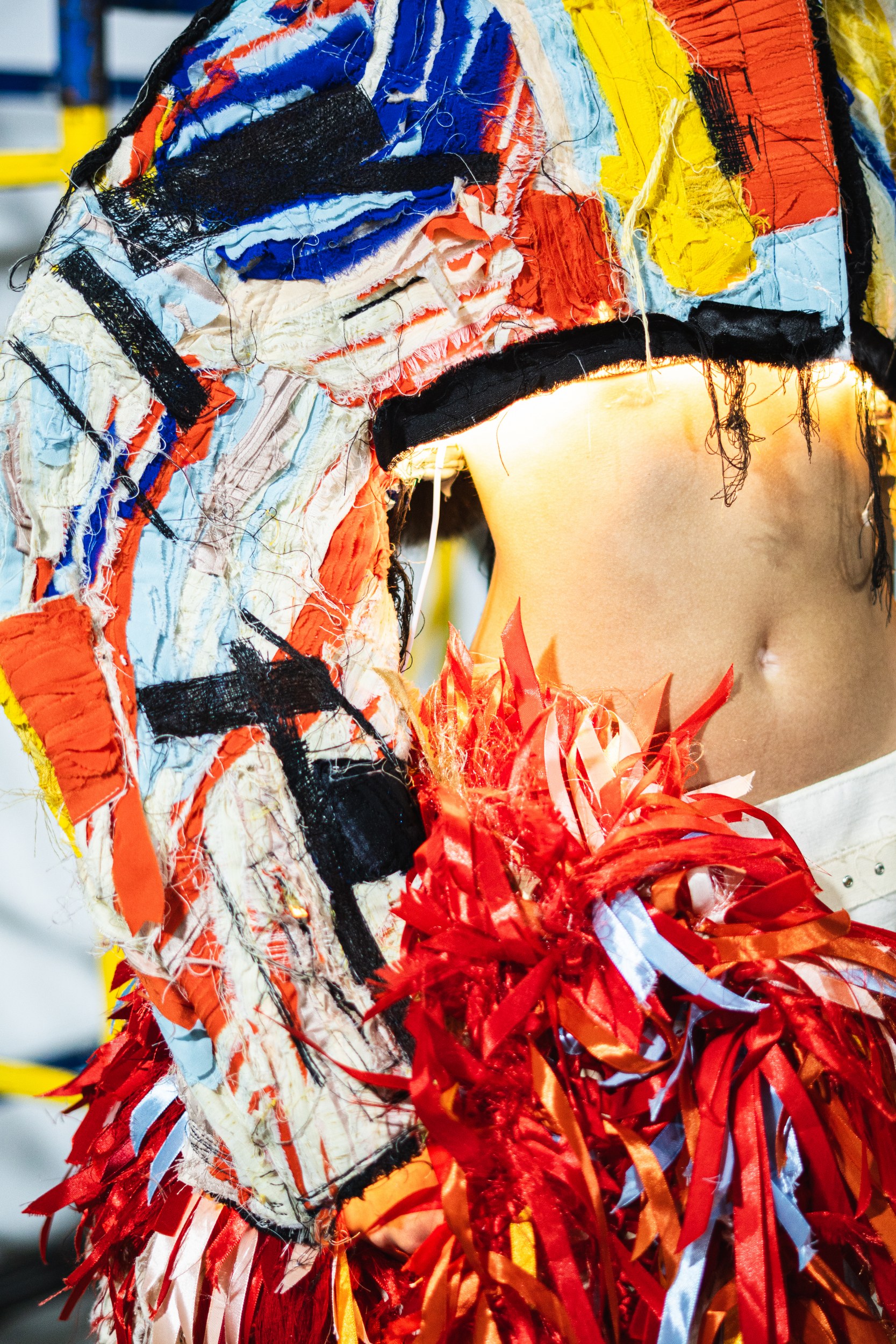
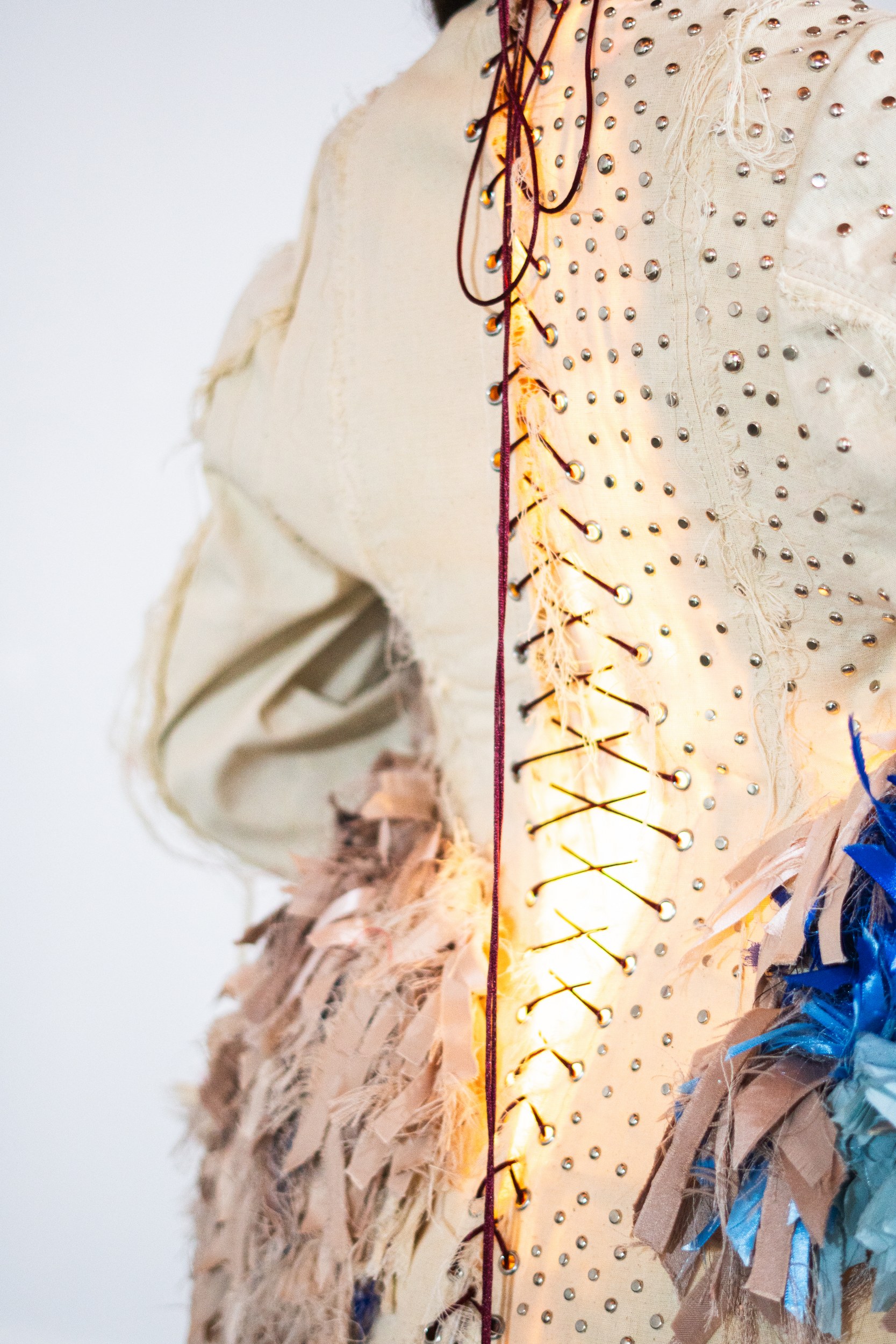
What sets the Ukrainian avant-garde apart from other modernist movements is its distinctive use of rhythm, dynamism, and colour. Rather than quoting these artists literally, I wanted to convey their symbolism through my own interpretation.
I deliberately took risks with complex cuts and experimental silhouettes to maximise the visual impact. To me, art is anything that leaves the viewer with an emotion, an impression, or a visceral experience. That is what I aim to achieve.
How exactly do these artistic references translate into the garments themselves?
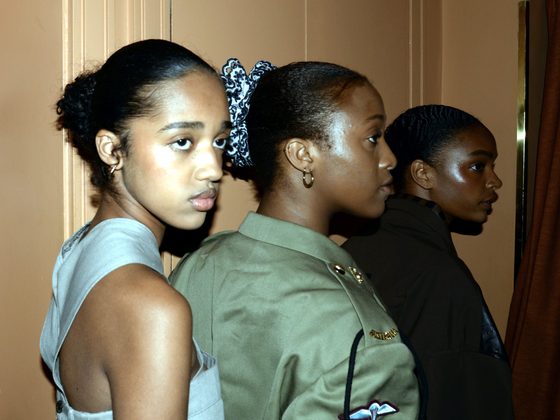
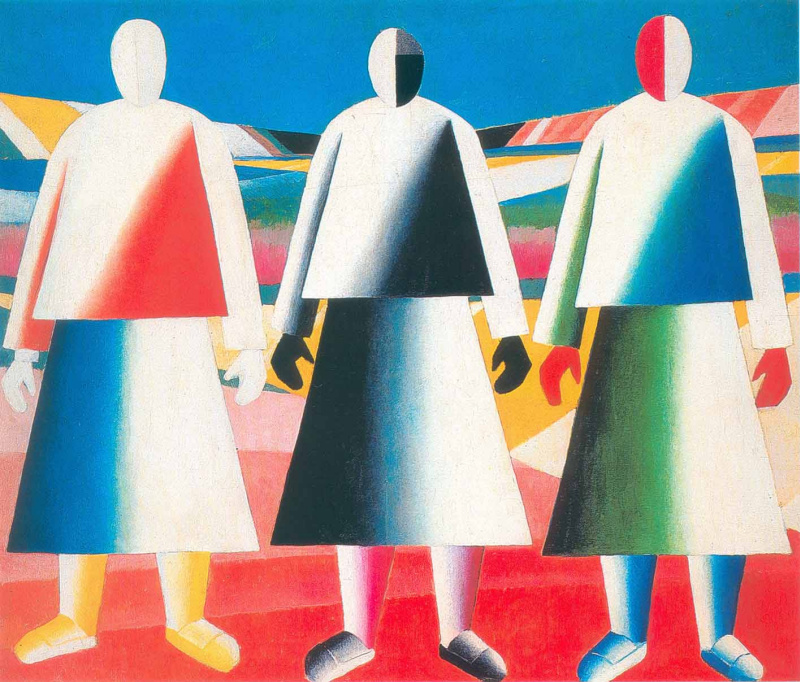
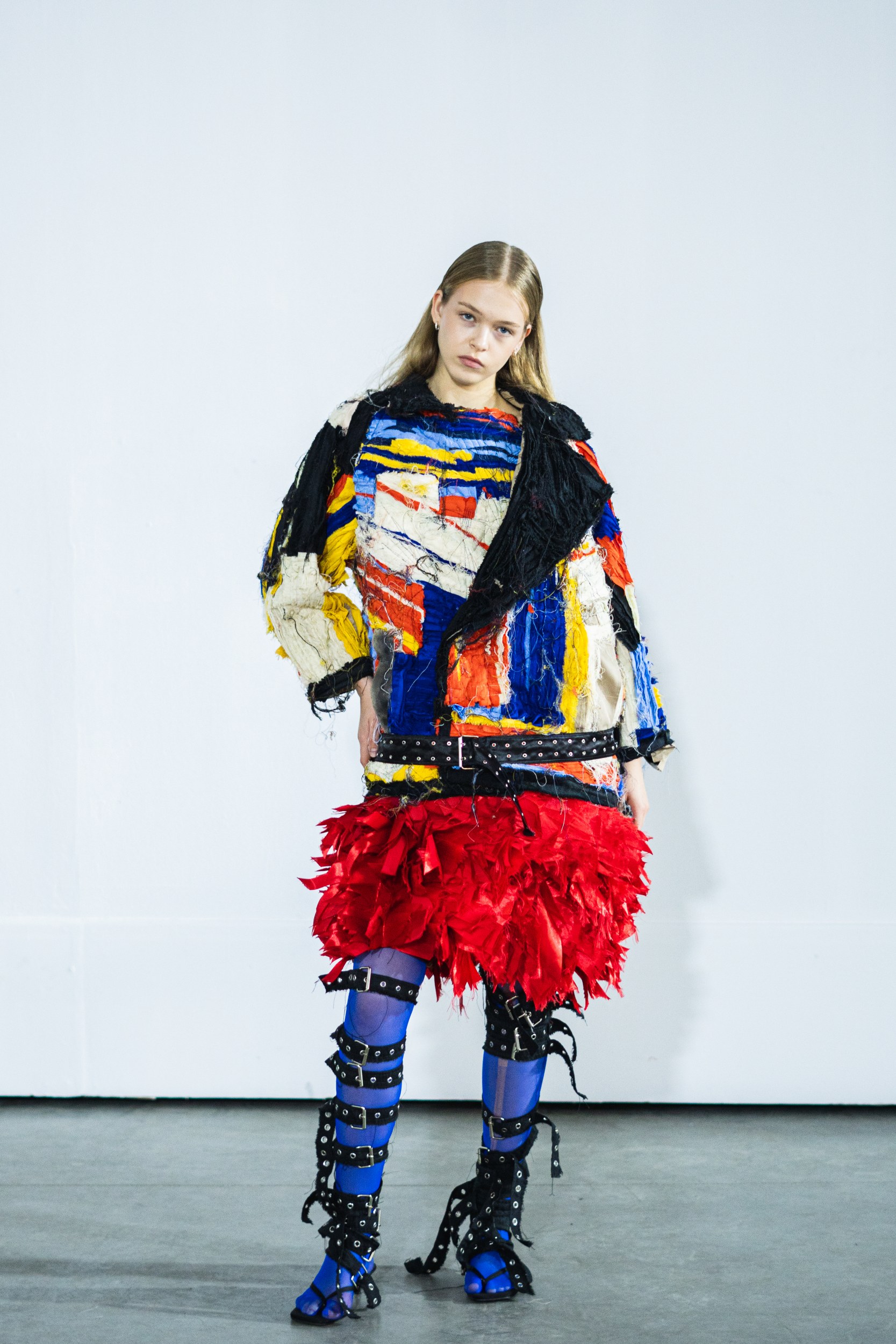
The opening look of the collection bridges the dynamic Cubo-Futurist compositions of Oleksandra Ekster with the painterly approach of Kazymyr Malevych’s rural-life series, drawing particular inspiration from the geometry of his 1932 painting Girls in a Field.
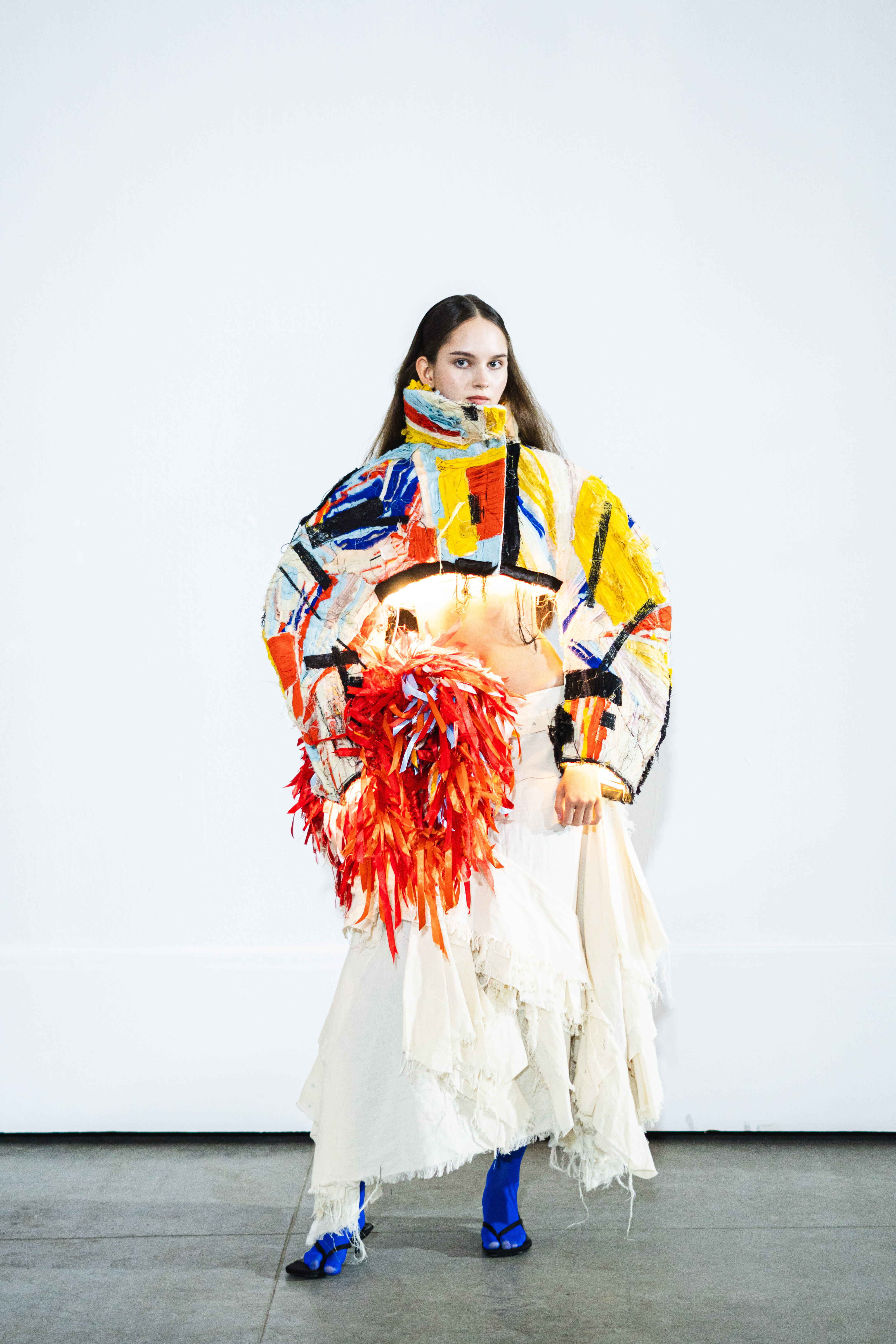
The material choices for the jacket and skirt look are equally deliberate. The skirt, crafted from double-knit fabric, symbolizes an unprimed canvas—the raw starting point of a painting. The jacket offers an exaggerated interpretation of the structured shoulder garments in Malevych’s portraiture, while its overall silhouette gravitates toward the circle, a primary motif in Sonia Delaunay’s color studies.
I could spend hours discussing these hidden details, but I prefer to leave room for people to discover them in their own way.
Complex construction and very specific artistic references seem to be defining elements of this collection. Looking at your practice more broadly, which techniques and approaches are fundamental to your design process?
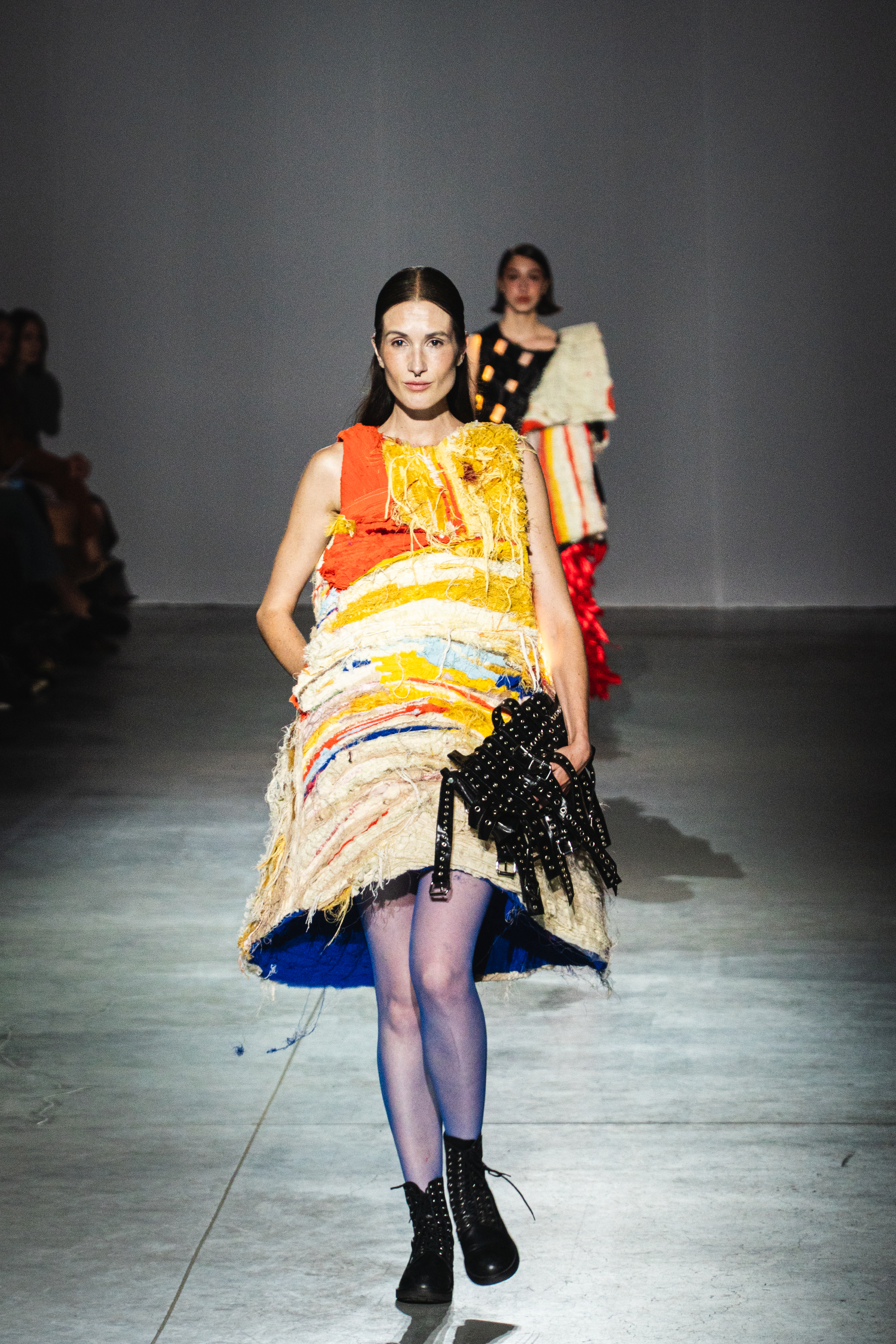
I’m still figuring out what defines my work, but I’m consistently drawn to an artisanal approach centered on rich, tactile textures. There is something deeply intuitive about working this way—something that feels inherently, authentically Ukrainian to me.
In 2025, you presented your debut collection at fashion weeks in Kyiv and Berlin. Compared with Reclaiming the Light, it feels like a striking contrast. What changed in your creative process between the two collections? Was there anything you allowed yourself to explore this time that you might have held back from previously?
They really are different, but both stem from my inability to stay silent about what I consider truly important — to remain indifferent or take the position of a passive observer in the face of sociocultural and political events. Last year, I presented La Pace — meaning “Peace” — a work that reflects on how the meaning of the word has shifted in today’s reality.
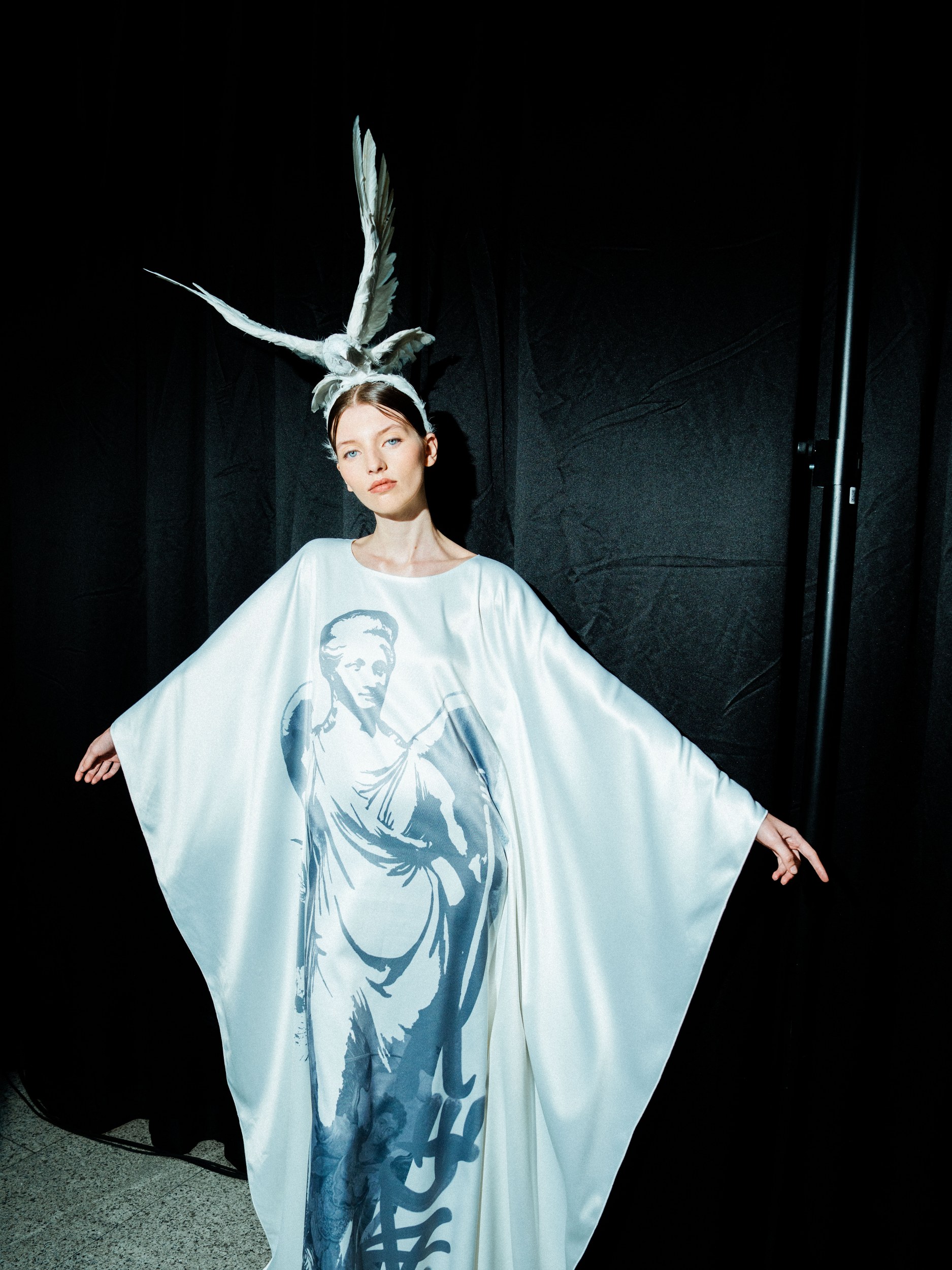
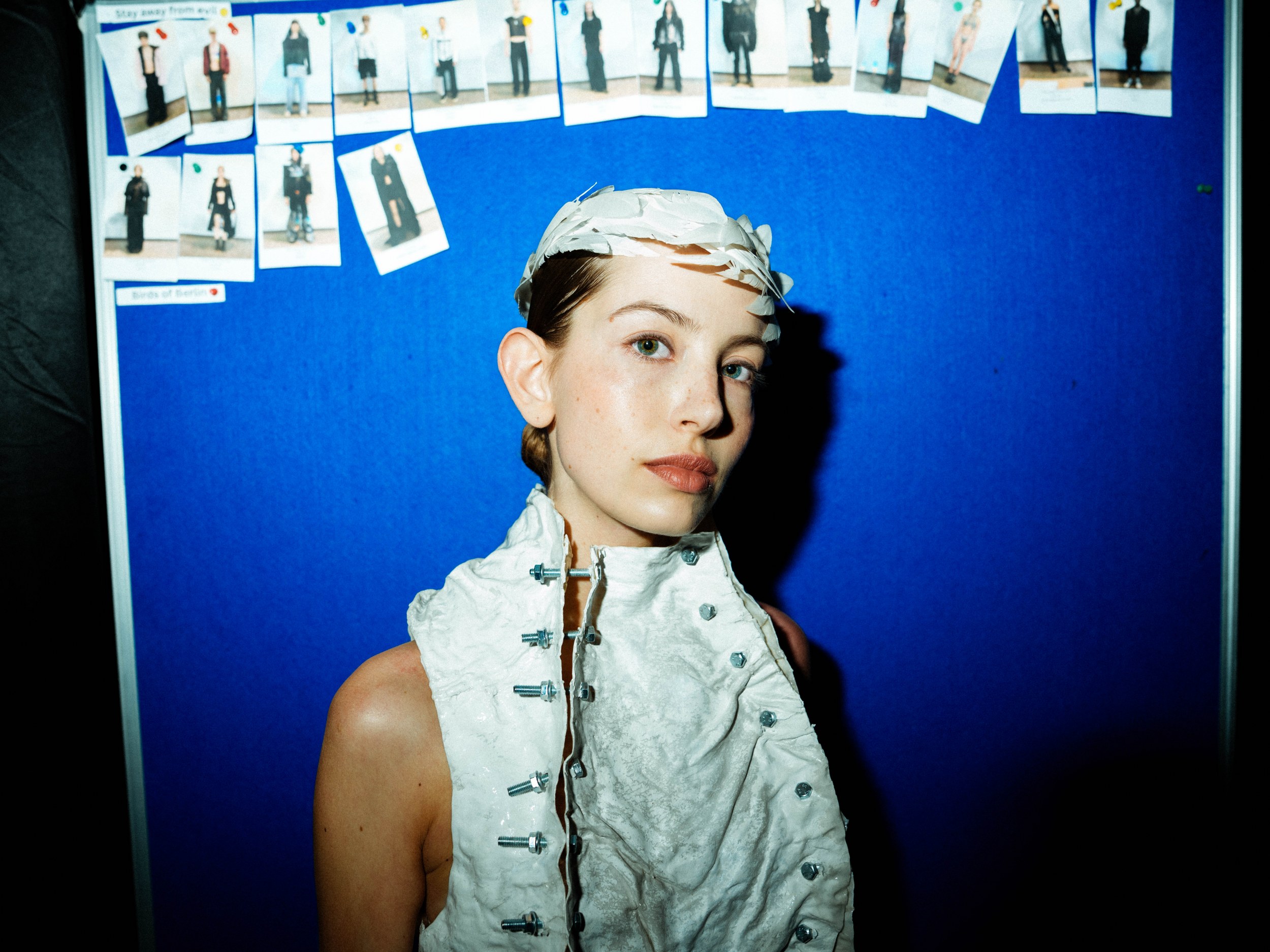
What connects the two collections is the interplay of handcrafted textures, a shared inspiration drawn from art, a willingness to explore unexpected solutions, and a commitment to research and experimentation. It comes back to living “without skin” — absorbing even the things you might rather not let in.
That said, I would describe the 2025 collection as more restrained and, in some ways, more practical. The continued interest in it is evident in the requests from stylists I still receive about it.
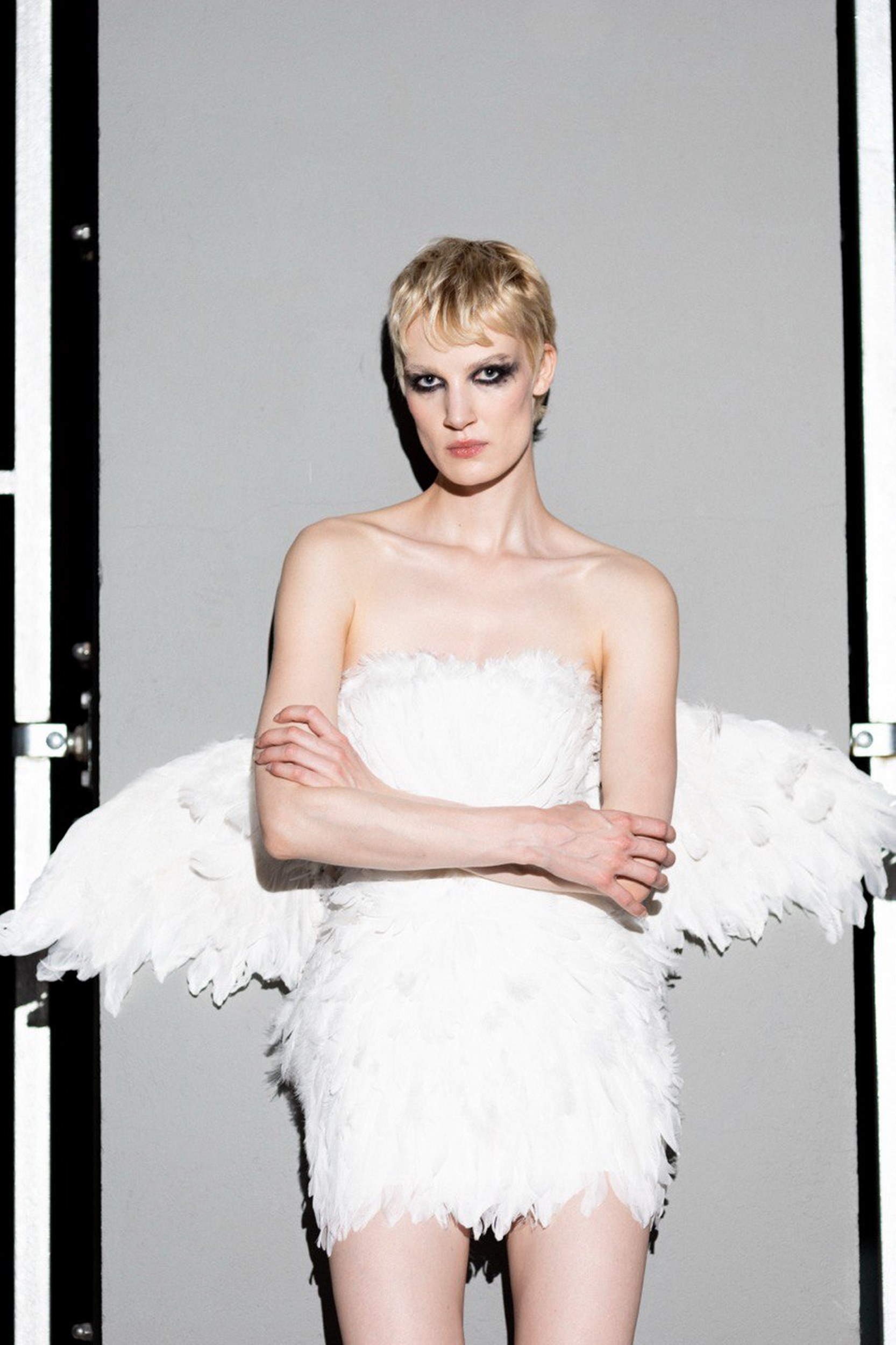
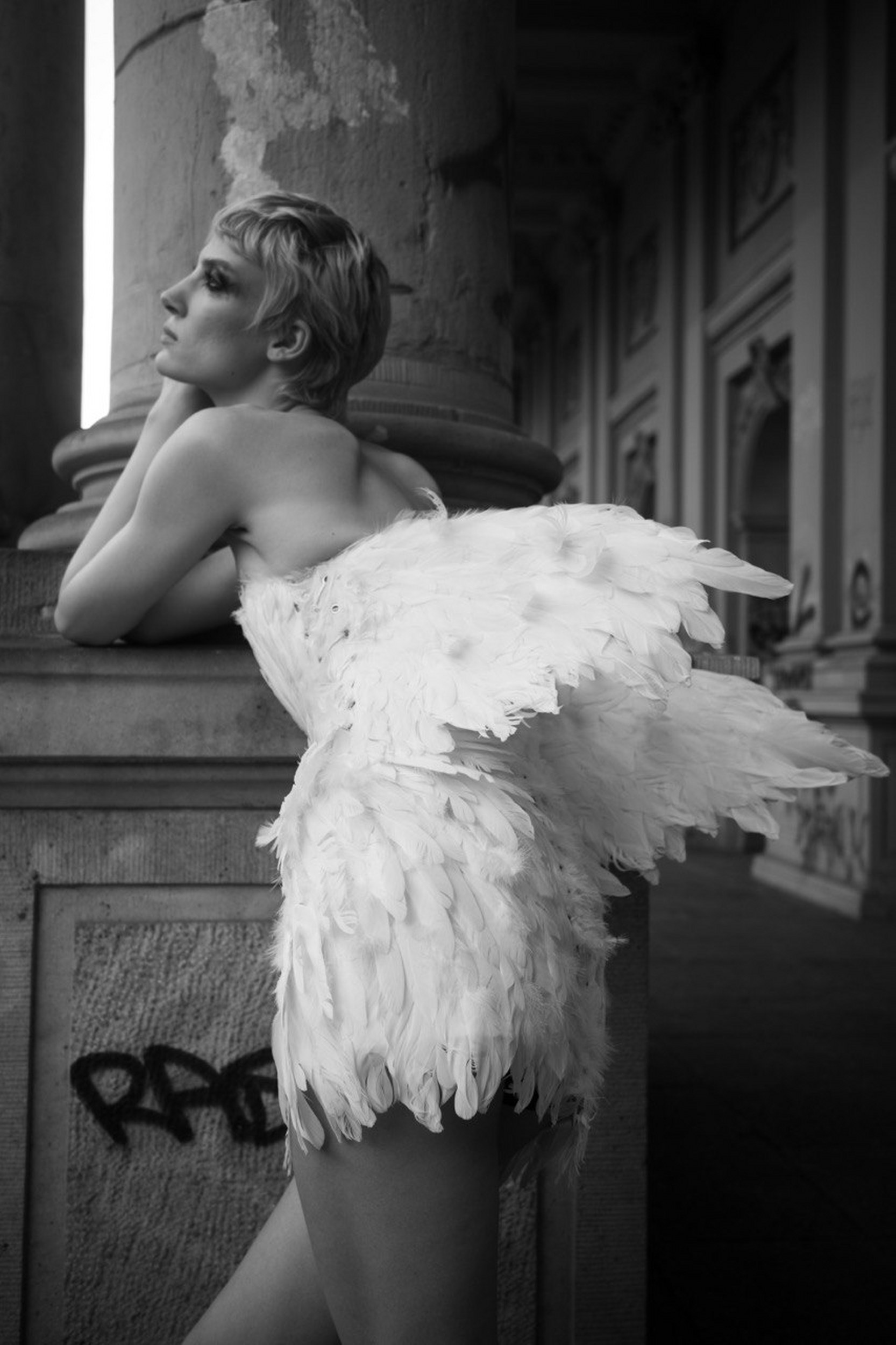
In 2026, by contrast, I gave myself complete creative freedom, letting go of the need to worry about whether people would like me or my work. Instead, I focused entirely on what I wanted to convey and how to communicate it compellingly.
Do you see your practice evolving towards ready-to-wear, or do you envision continuing to create singular pieces at the intersection of fashion and art?
At this stage, I’m working in-house as a designer, gaining hands-on experience while continuing to develop my own creative practice. I’m not rushing to launch a brand of my own.
I feel a strong inner need to continue expressing myself through fashion. I can’t predict how long this life-giving energy will stay with me, but right now, I can’t imagine myself doing anything else.
Credits
Interview & Text: Anna Ustenko (@anyaustenko)
Designer: Oleksandra Sakhaudinova / Dömd (@itsdomd)
Photography: Cover photo by Serhiy Khandusenko (@ikwydln), Taisiia Fedorenchuk (@taisiia_fedorenchuk), Robert Schlesinger (@robertschlsinger), Masha Fischer (@masha_fischer)