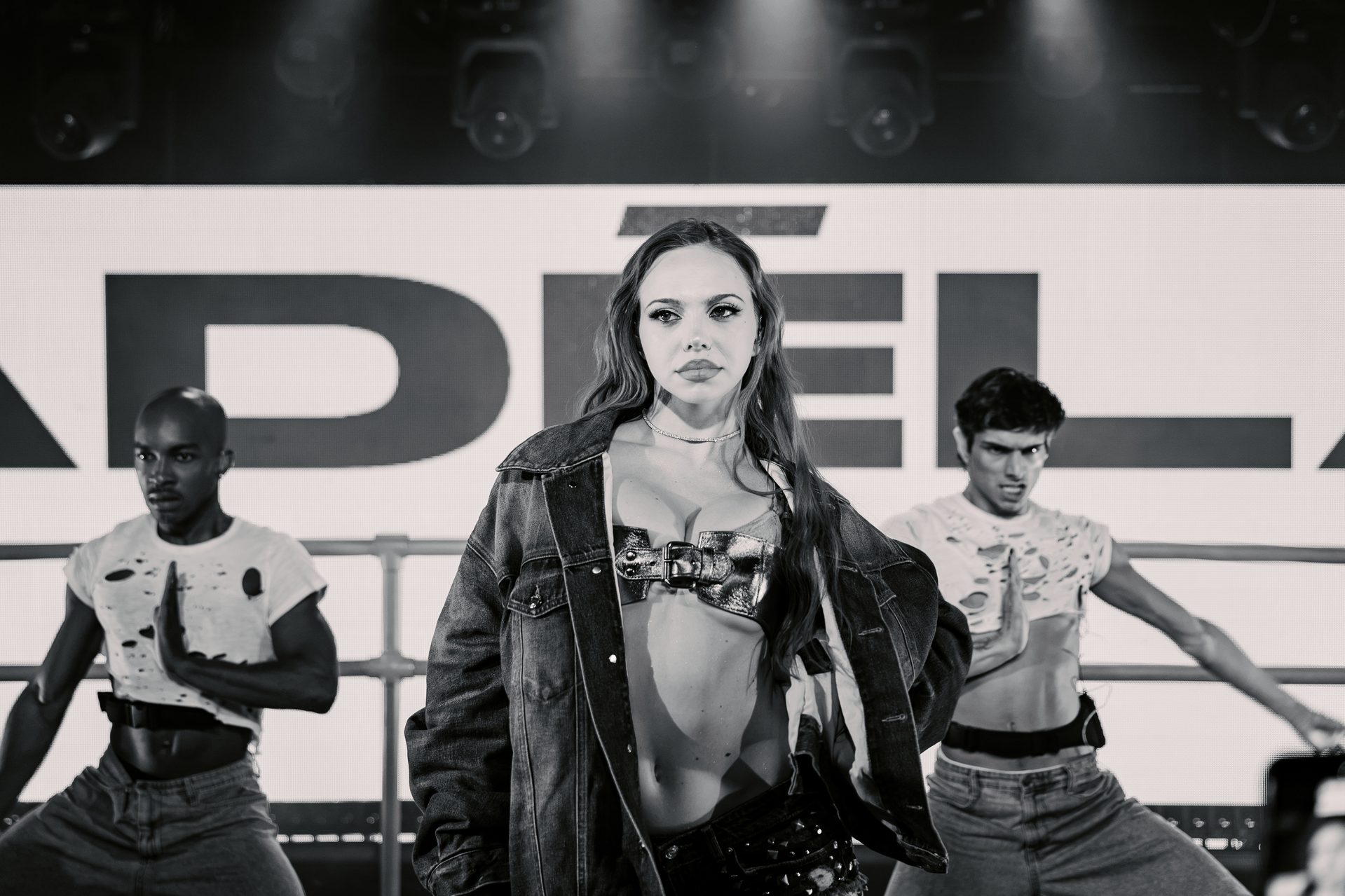
On September 12th, at the Fairmount Theatre, ADÉLA turned heads at the Montreal stop of The Red Bottoms Tour. As a follow-up to the release of her debut album, PRIMA, the singer delivered a feel-good concert full of powerful dance-pop anthems steeped in a deep reverence for the lipgloss-nostalgia of early 2000s pop. Touching on themes of ambition, sexuality, and fame, ADÉLA established herself as an empowered pop star that lives on her own terms. Her classical ballet background gave the performance a distinctly theatrical edge, proof that taking up the Louboutins doesn’t mean giving up the pointe shoes.


Text by Jamie Xie
Photos by Louis Alson
It is no secret that Adéla Jergová (ADÉLA) has come a long way since her appearance on Dream Academy in 2023. After leaving the competition and pivoting to a solo career, she has since found herself reintroduced to the public with international acclaim and a newfound desire to dismantle the mythos of pop stardom. Acting as a sort of spiritual successor to her 2025 EP The Provocateur, ADÉLA’s debut album PRIMA, is a deliberate claim on the ever-moving spotlight, one that happened to land on Montreal’s Fairmount Theatre on September 12th as a part of The Red Bottoms Tour.
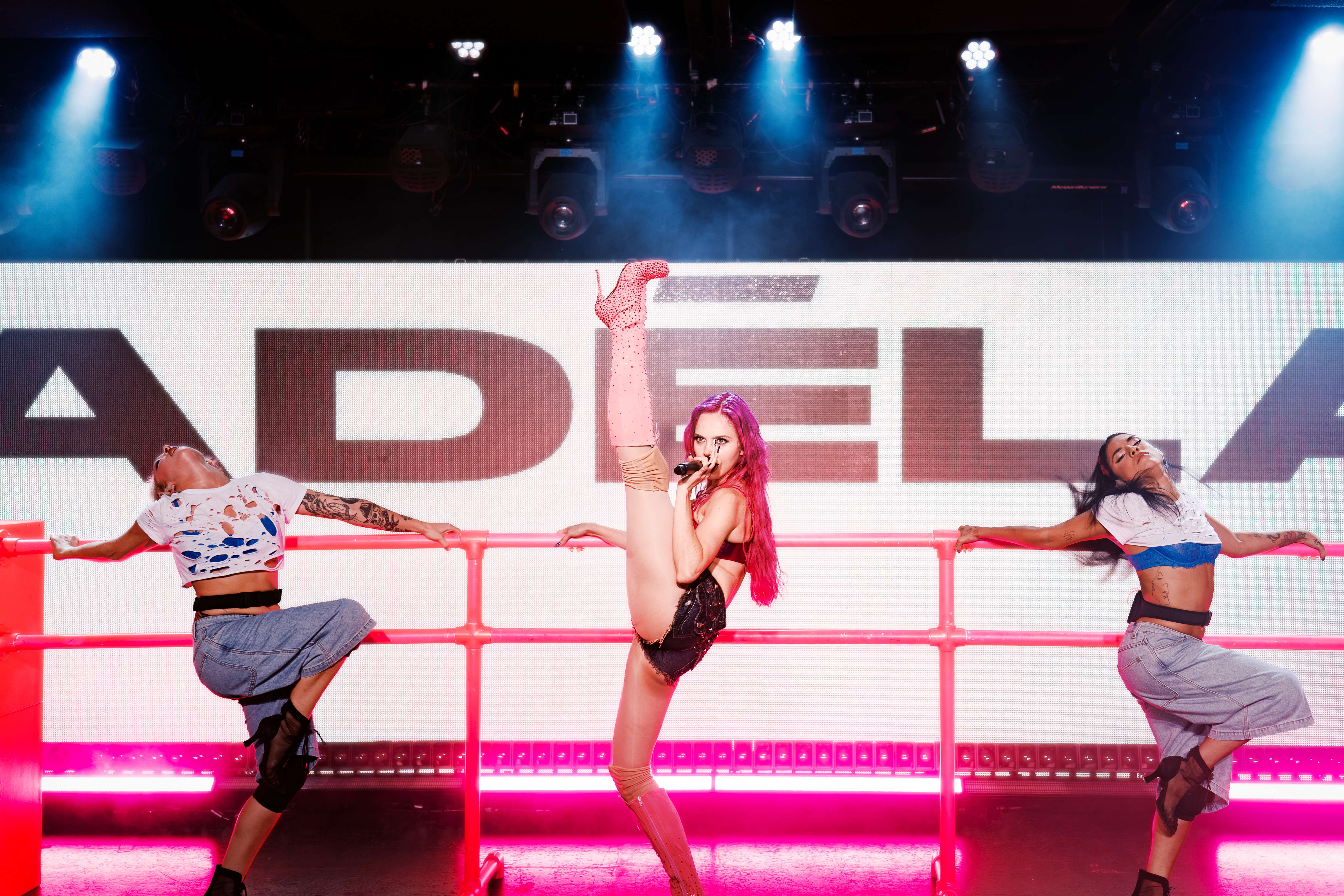
The night would prove to be a fuschia fever dream set against a stylized Barbie ballet barre. ADÉLA took the stage in distressed, bedazzled shorts, a matching denim jacket, and a pink satin top to open the show with a surprise remix of the album’s lead single, “KGB” and Madonna’s “Vogue.” The choreography drew upon the titular ballroom dance style, incorporating striking poses, dramatic arm movements and runway movements that helped to establish the concert’s visual language: campy, fashionable, referential.
From ballroom dance, ADÉLA moved into a downtempo pop number with the introduction of the subversive track “Boys.” Reminiscent of early-2000s pop icon Britney Spears, the performance featured sultry choreography and flirtatious lyrics, serving as a clear nod to the confident pop star personas of the era. Using the familiar setting of a girls’ night out, ADÉLA dissected persistent male attention and characterized it as distinctly unwanted, all to serve a broader exploration of empowered female sexuality.
The viral song “Ain’t In LA” offered a tender moment of fan interaction as ADÉLA crowned the best-dressed member of the audience, a small gesture that echoed the track’s aim to uplift ambitious women who struggle to see themselves in Hollywood stars. The song acts as both a subversion of the American Dream and an ode to the mythology of the aspiring pop star archetype; an ambitious teenager who dreams of leaving home for a bigger, opportune city, convinced that fame perpetually exists somewhere else. With lyrical references to Destiny’s Child and a vocal feature from Theron Thomas, known for his work on Miley Cyrus’ Bangerz, ADÉLA situates herself within the legacy of artists raised during what some might dub pop’s modern golden age. Yet the song ultimately complicated that mythology. The dream of Los Angeles becomes less about arriving at a predetermined destination and more about realizing that there are countless versions of the same dream being lived around the world by girls everywhere: “I’d rather be nobody than be like everyone,” she sang.
It is through the internet language of a shared pop-cultural lexicon that ADÉLA, who was raised in Slovakia, was able to find a way to resonate with her diverse international audience. Her love of pop stardom, coupled with her willingness to draw from her heroes and contemporaries, uniquely positioned her as an artist who is also in many ways a fan. Speaking to the idea that in order to create good art, it is essential to consume good art. Rather than simply recreating the sounds and images that shaped her, ADÉLA has developed a rich musical vocabulary through which to articulate her own experiences, proactively contributing to the pop tradition. ADÉLA leaned fully into her classical ballet background. Performing “Ain’t In LA” en pointe, her control, flexibility, and breathwork were on full display as she seamlessly incorporated hyperextensions and ballet technique into the hip-hop choreography.
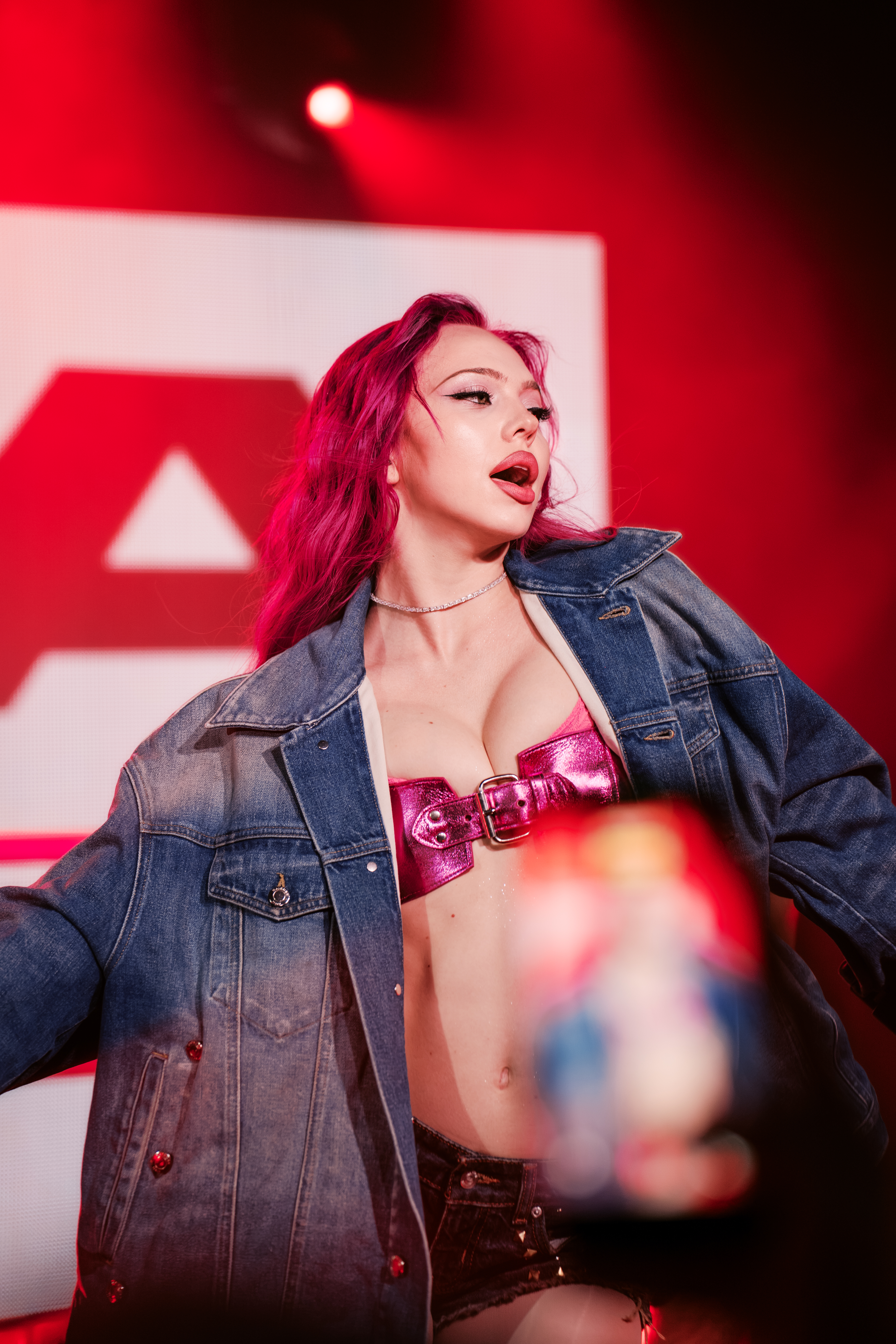
In “Red Bottoms,” ADÉLA turned her attention to self-worth. The ballad opened with a spoken mantra playing over the speakers: “I feel expensive. I feel desired. I feel loved and that’s a good feeling.” But the mantra quickly becomes more complicated, questioning what happens when those feelings begin to fade: when beauty fades and the rush of attraction starts to feel like something closer to resentment. Beneath the song’s high production design is a familiar, universal anxiety about the fragility of self-worth. As the inspiration for the tour’s title, “Red Bottoms,” delivered an honest, vulnerable account of insecurity and some of ADÉLA’s most heartfelt lyrics.
To conclude the night, ADÉLA performed the fan-favourite “Nicole Kidman,” featuring a unique manifestation she wrote roughly 15 minutes before the show that would outline her present hope for the opportunity to reach a broader audience with her music. It was a thoughtful end to a performance built around allusions, fame and self-empowerment. “Nicole Kidman,” in many ways, encapsulates much of what ADÉLA’s body of work represents to the public consciousness right now: bold, flirtatious, irreverent. The song invokes Kidman’s performances in Moulin Rouge! and Babygirl, venerating her as an empowered sex symbol while playfully imagining ADÉLA in the same lineage of larger-than-life female performers.
ADÉLA is a performer worth keeping an eye on. A firecracker of an artist, she doesn’t just make pop, she’s returned from an academy where she studied it and intends on adding herself to its ever-expanding canon. The world according to ADÉLA: The prima ballerinas aren’t in L.A., They’re right here in Mile End.