Walking through Marilyn Monroe: A Portrait at the National Gallery, I found my attention continually drifting away from the photographs and toward the people looking at them.
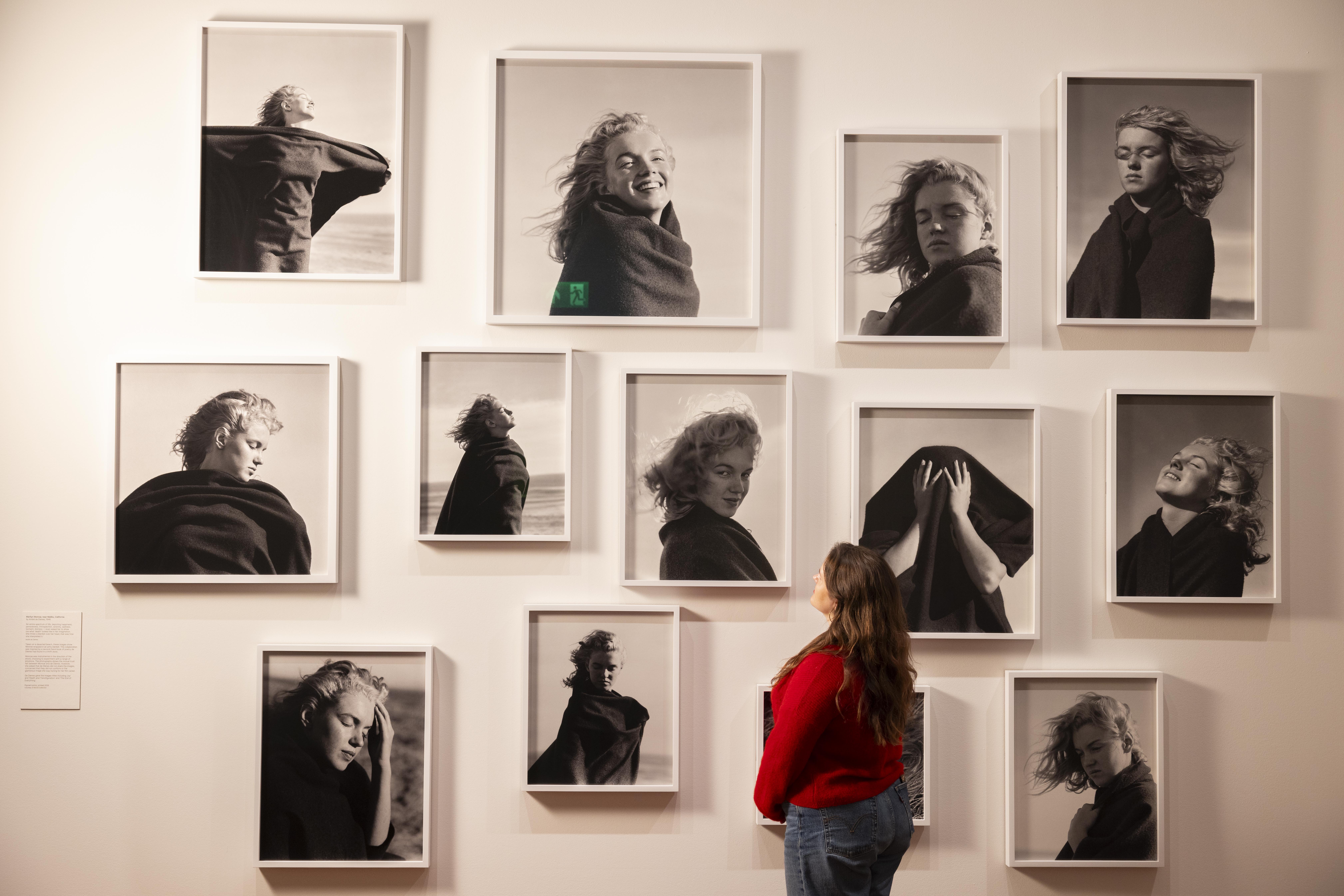
Crowds jostled for position in front of images in order to take pictures of photographs that have already been reproduced thousands of times. At one point, I was edged aside by an eager tourist who clearly felt I was spending too long reading Monroe’s final interview in Life magazine. Nearly sixty-four years after her death, the impulse remains unchanged: everyone wants a piece of Marilyn Monroe.
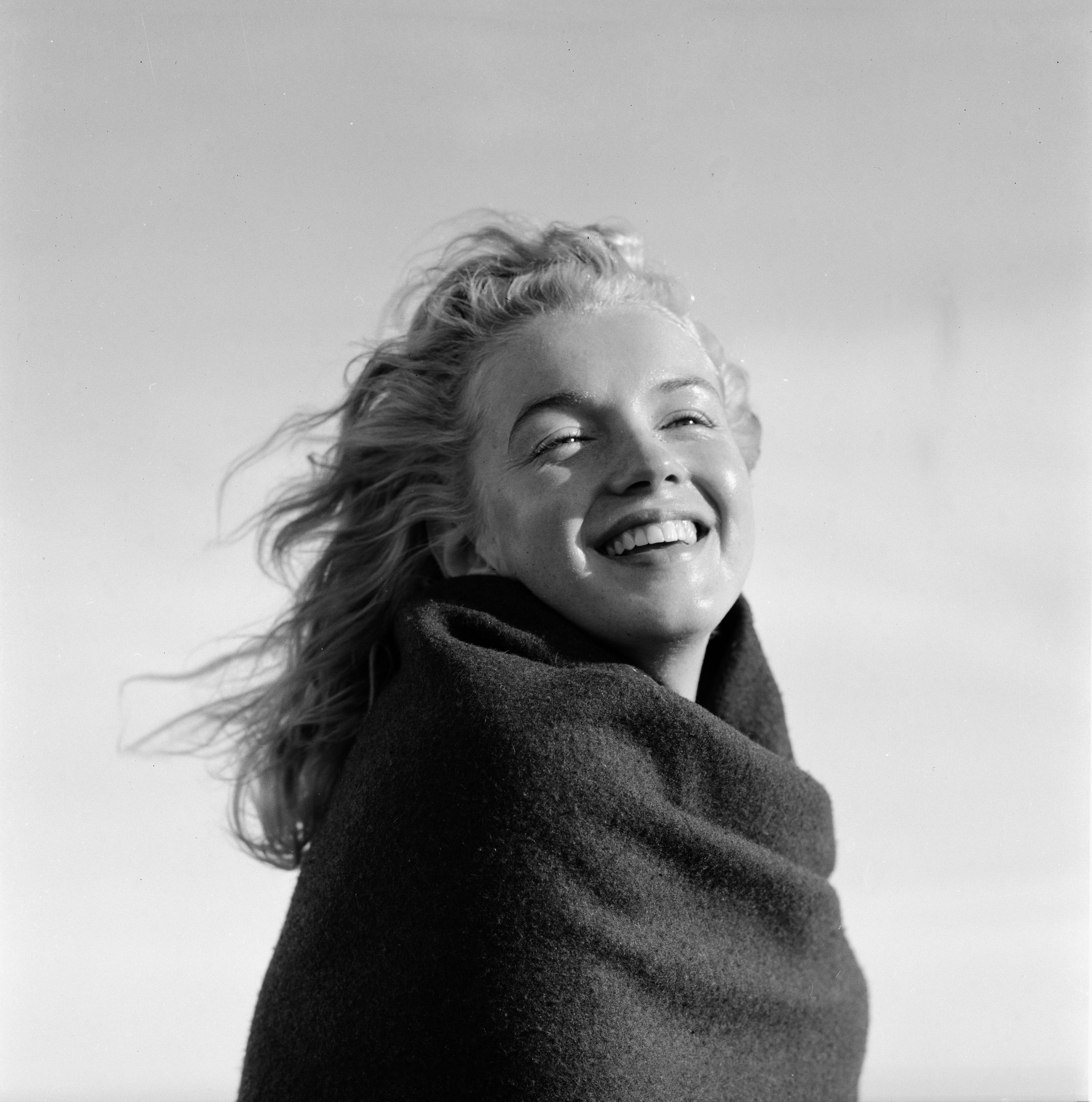
The exhibition marks the centenary of her birth by gathering portraits by some of the twentieth and twenty-first centuries’ most celebrated photographers and artists, tracing Monroe’s life, career, and afterlife through photographs, paintings, objects, and film. It is beautifully curated, rich with material that reveals both the woman and the mythology she became. Yet as I became increasingly aware of the collective act of looking, I began to see parts of it differently. Images Monroe herself had crossed out on contact sheets, paintings depicting her death, and nude photographs sold to Playboy without her consent took on a new significance. For a woman so meticulous about her public image, their inclusion felt like a reminder of our enduring belief that we are entitled to more of Monroe than she ever intended to give. I left the gallery with an uncomfortable sense of complicity in cultural voyeurism, and with a question: what does it mean to continue looking at Marilyn Monroe?
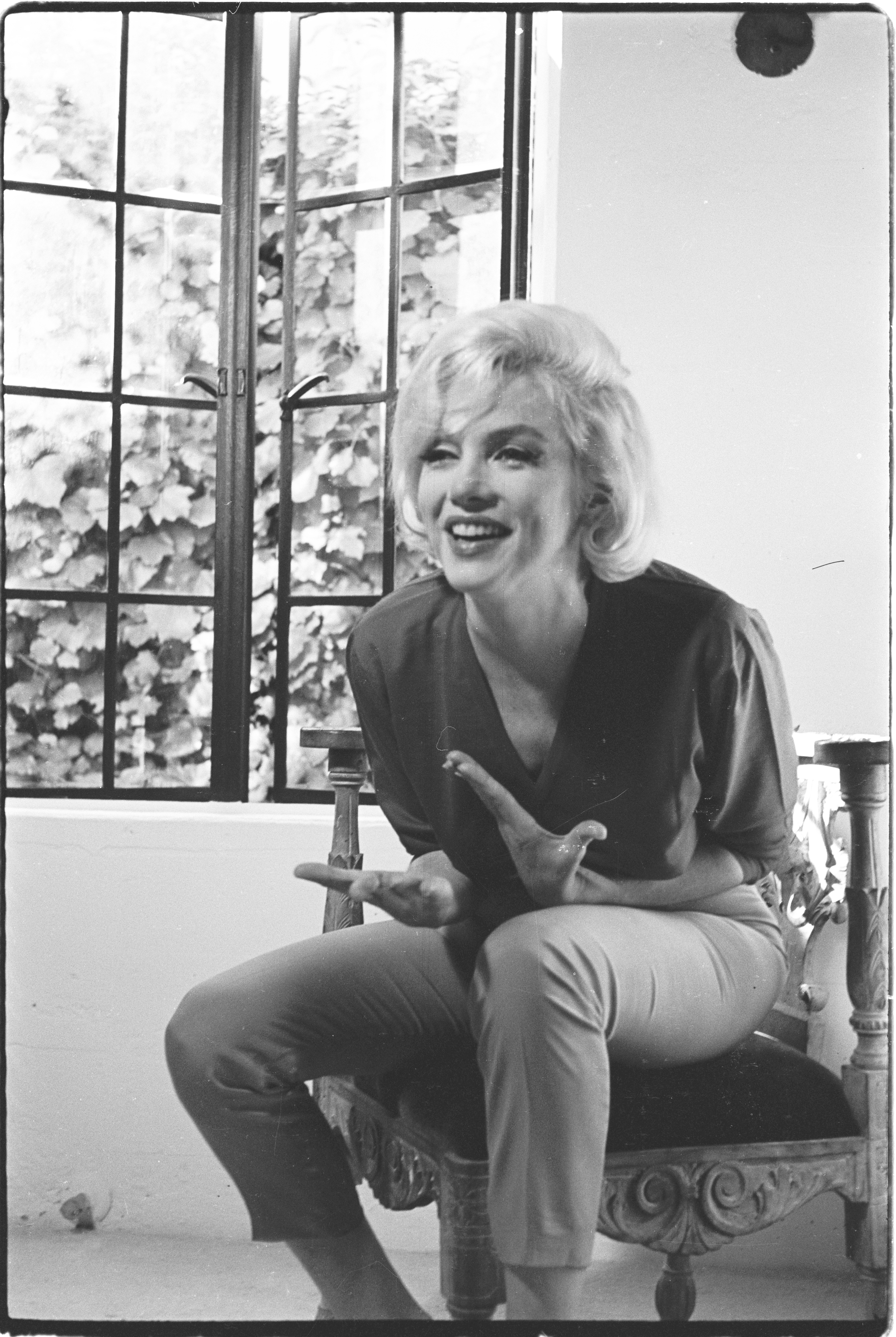
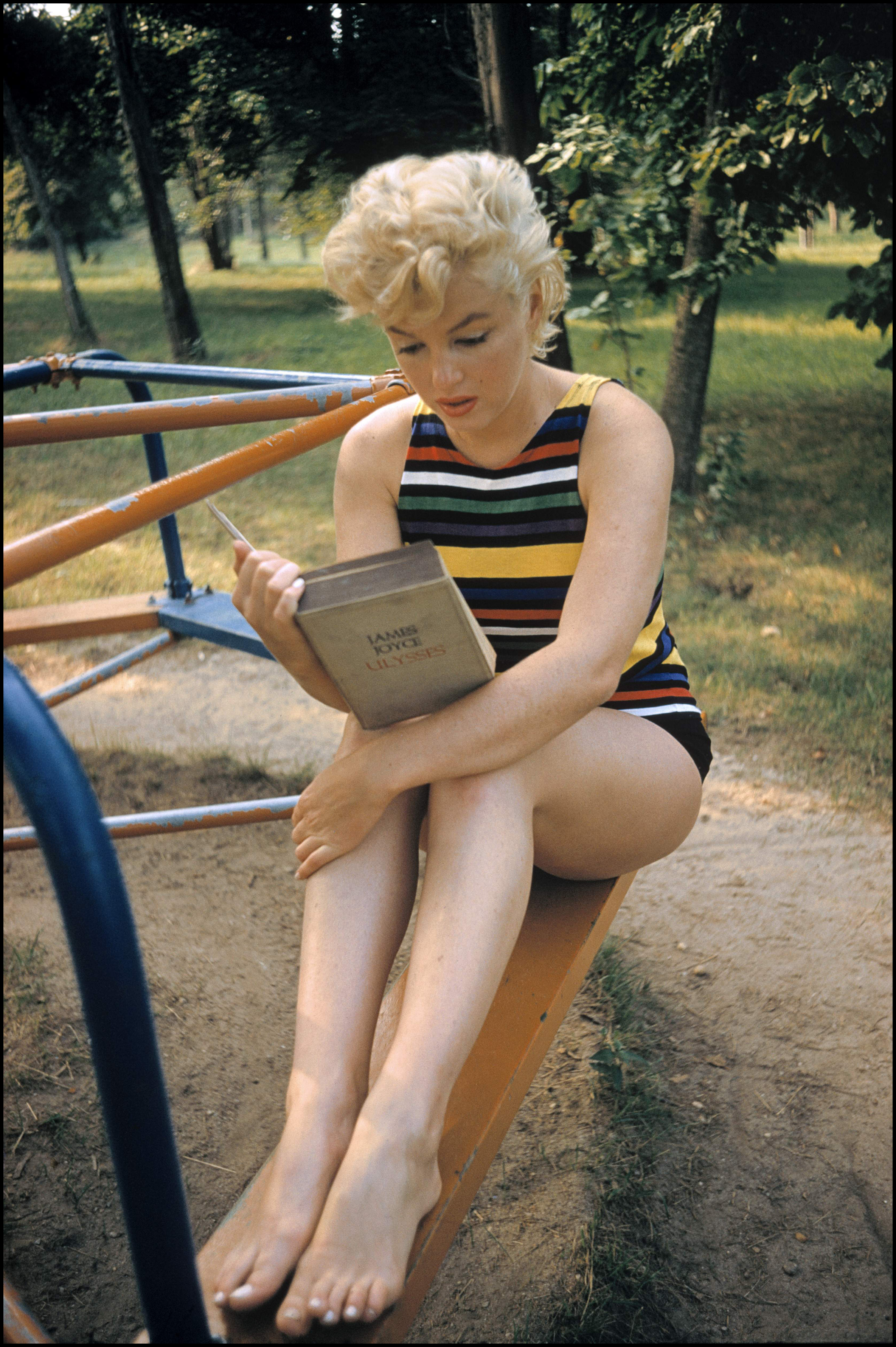
1955 By Eve Arnold
I soon found something like an answer in a lecture, Told and Retold, given in the gallery by Sarah Churchwell, whose 2004 book The Many Lives of Marilyn Monroe remains one of the most incisive studies of her legacy. Churchwell asked what it is about Marilyn that we cannot look away from.
Her answer was, in essence, that Monroe made it so. She devoted her life to constructing an image, learning the craft of posing and photographic performance in order to produce the very pictures that still cause crowds to push for position in front of her.
What struck me most was Churchwell’s insistence on Monroe’s agency—an aspect of her story so often eclipsed by narratives of victimhood. Monroe was not simply a passive subject. She understood photography with unusual sophistication. She knew her angles, understood lighting, directed photographers toward specific effects, and studied contact sheets with care, selecting the photographs that would define her public self. The reason we cannot look away from Marilyn Monroe is not only that photographers found her compelling; it is that she created an image so powerful it has outlived her by generations. Yet that autonomy rarely sits at the centre of the story.
Instead, Churchwell reminds us that we return repeatedly to familiar themes: failed marriages, illness, addiction, loneliness, and her early death. Far less attention is paid to the production company she founded, the books she read, the artists she admired, the political causes that interested her, or the young photographers she championed. We rarely dwell on the determination and discipline required for Norma Jeane Mortenson to transform herself, with such precision, into perhaps the most recognisable face of the twentieth century.
Instead, she is contained within a narrow narrative: blonde bombshell turned tragic victim. Nowhere is this more evident than in our fixation on her death, and the way its spectacle often eclipses every other aspect of her life and legacy. In the exhibition, Peter Blake’s Norma Jeane Baker 1926–1962 (1988) makes this explicit. A chronological collage traces Monroe’s life only to be interrupted by a stark press photograph of her body being removed from her home after her death. The composition seems to read her life backwards from its end, as though everything preceding it were leading inevitably toward that final image, the visual weight of her death overshadowing what came before.
This is a tendency Churchwell identifies as central to how Monroe is now seen: the way we read foreboding into her images. We project inevitability onto them, searching for evidence of doom, as though the photographs themselves contained signs of the tragedy to come. This is particularly evident in images from her final weeks. If Monroe appears thoughtful or tired in a given frame, the photograph is retroactively transformed into a warning. We tell ourselves the tragedy was visible all along. But that narrative depends on selective vision. A photographer may have taken hundreds of images in a single session, yet we choose the melancholy one and overlook the smiling ones. In doing so, we construct a story and impose it back onto Monroe.
The only comparable figure is Elvis Presley, whose legacy is also shaped by public projection, though in markedly different ways. Like Monroe, he transcended celebrity and became a kind of cultural language—an image endlessly reproduced and instantly recognisable across generations. Presley, too, was no stranger to scandal or excess, and his life ended in the shadow of addiction and fame. Both were detached from ordinary personhood and transformed into twentieth-century iconography: symbol, commodity, myth. Yet there is a crucial difference between them. Public memory allows Presley to remain expansive. We can speak of his music and films, Graceland and Las Vegas, the ’68 Comeback Special, Priscilla, and his time in the army. His life is permitted to extend outward from his death. Monroe’s story, by contrast, is repeatedly drawn back toward her suffering and her ending. This difference is perhaps most visible in how their lives are represented on screen. Baz Luhrmann’s Elvis is loud, colourful, and excessive—celebration as much as tragedy—treating its subject as a complicated but enduringly vital force. Andrew Dominik’s Blonde, by contrast, presents Monroe’s life as an almost unbroken sequence of suffering, lingering so insistently on her victimhood that it can feel exploitative. The contrast says less about Presley and Monroe than about the kinds of stories we choose to tell.
Monroe is routinely reduced to a cautionary tale. Her life becomes evidence for her death.
There is often an implication, whether overt or subtle, that her fate was in some sense self-authored—that what followed was the near-inevitable consequence of the life she chose to pursue. Monroe wanted fame and devoted herself to becoming a star. She spoke openly of her affection for audiences, describing the energy she drew from being seen. She was a sex symbol, yet she also resisted the condition of being made into an object—into a surface onto which others could project their narratives. She understood the mechanics of celebrity and shaped her public image with precision, achieving a form of visibility that was still rare for women in the 1950s. And yet it is precisely this agency that complicates how she is remembered. It becomes easier to assign Monroe responsibility for her own end, while the conditions that produced and sustained her fame fade from view.
What is less often asked is what role the public played in that construction. With Princess Diana, conversations about media intrusion and public appetite are central to understanding her life and death; complicity is part of the narrative. With Monroe, the same question is more often absent. Perhaps this is because Monroe desired fame while Diana desired privacy—is it easier to sympathise with those who resist celebrity than with those who actively pursue it? Beneath that distinction lies an uncomfortable assumption: that those who seek stardom should accept whatever it demands and ultimately pay the price of fame. Standing in that crowded gallery, watching strangers strain for a better view of a woman who has been dead for more than six decades, I found myself wondering if Marilyn’s price for fame has ever stopped being collected.
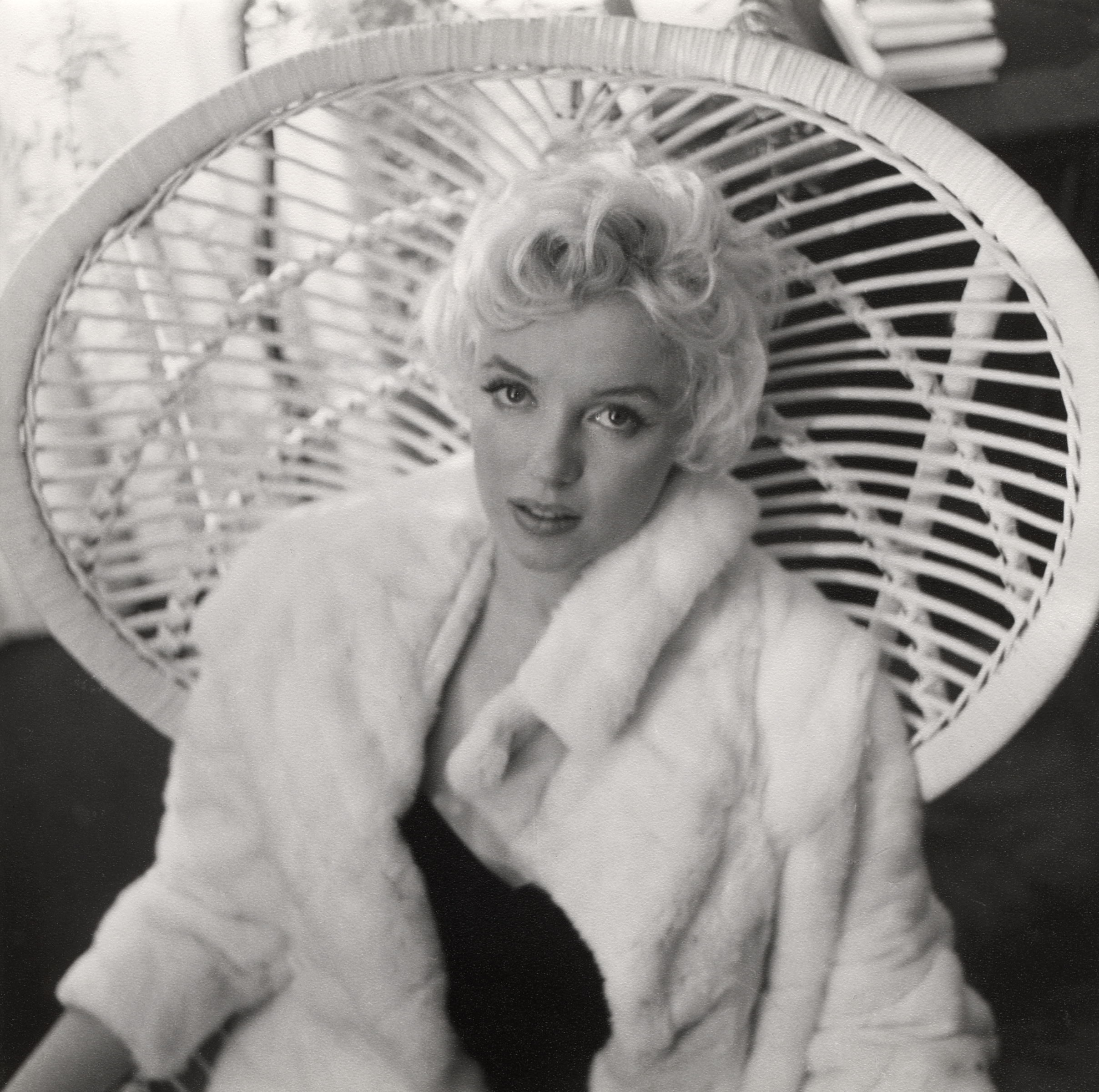
This is perhaps best captured in Larry Burrows’s Marilyn Monroe and Laurence Olivier Press Conference at the Savoy Hotel, 1956. Monroe sits in the lower corner of the frame, surrounded by a wall of photographers; flashbulbs explode around her from every direction. In her lecture, Churchwell observes that Monroe appears, at first glance, to seek refuge amid the chaos. Looking at the photograph, there is a brief illusion that she has found solace in us, the viewer. But the illusion collapses almost immediately as we realise we are seeing her through the lens of another photographer. We are not outside the scene looking in; we are complicit within it.
This prompted a reflection on my own complicity, and on the contradictory ways Monroe has been framed. I was first introduced to her through my granda’s collection of black-and-white films. I remember watching Niagara and being struck by her command in every scene. I had not seen anyone before who could hold such a precise balance of sensuality and vulnerability, coupled with confidence and control. What stayed with me was the sense that she was entirely aware of the effect she produced, and entirely capable of shaping it. As I got older, and as more of my peers cited Monroe as their icon, in a familiar gesture of teenage contrarianism, I convinced myself that admiration for her was somehow less sophisticated than admiration for actresses such as Katharine Hepburn or Lauren Bacall. Monroe, I thought, belonged to the masses; Hepburn and Bacall to more discerning viewers. The distinction was, of course, embarrassingly naïve. Lena Dunham captured this tendency in a 2022 Vogue article: “I thought that girls who cited Monroe as an inspiration were at best trite and at worst boring.”
It is a phenomenon of sorts—that sense that we all have some claim to Monroe, some narrative we are entitled to impose upon her. Monroe spent her life constructing one of the most successful public images in modern history. She wanted, above all, to be seen. Yet the question remains whether she was ever allowed to be seen on her own terms—or whether, a century on, we still feel entitled to claim her. Her final interview in Life magazine appeared just days after her death. In it, Monroe complained that she disliked becoming a “thing” onto which others projected their fantasies. Churchwell recounts a moment from the shoot that accompanied the interview: after the session, Monroe chased photographer Allan Grant up the driveway and pleaded, “Please don’t make me look like a joke.” The photographs from that session are the last taken of her alive. In the final frame, she is laughing—open and relaxed.
As Churchwell concluded in her lecture, referring to that image: “The woman in this photograph is neither a thing, nor a joke.”
Words By Cristin Proctor Rooney
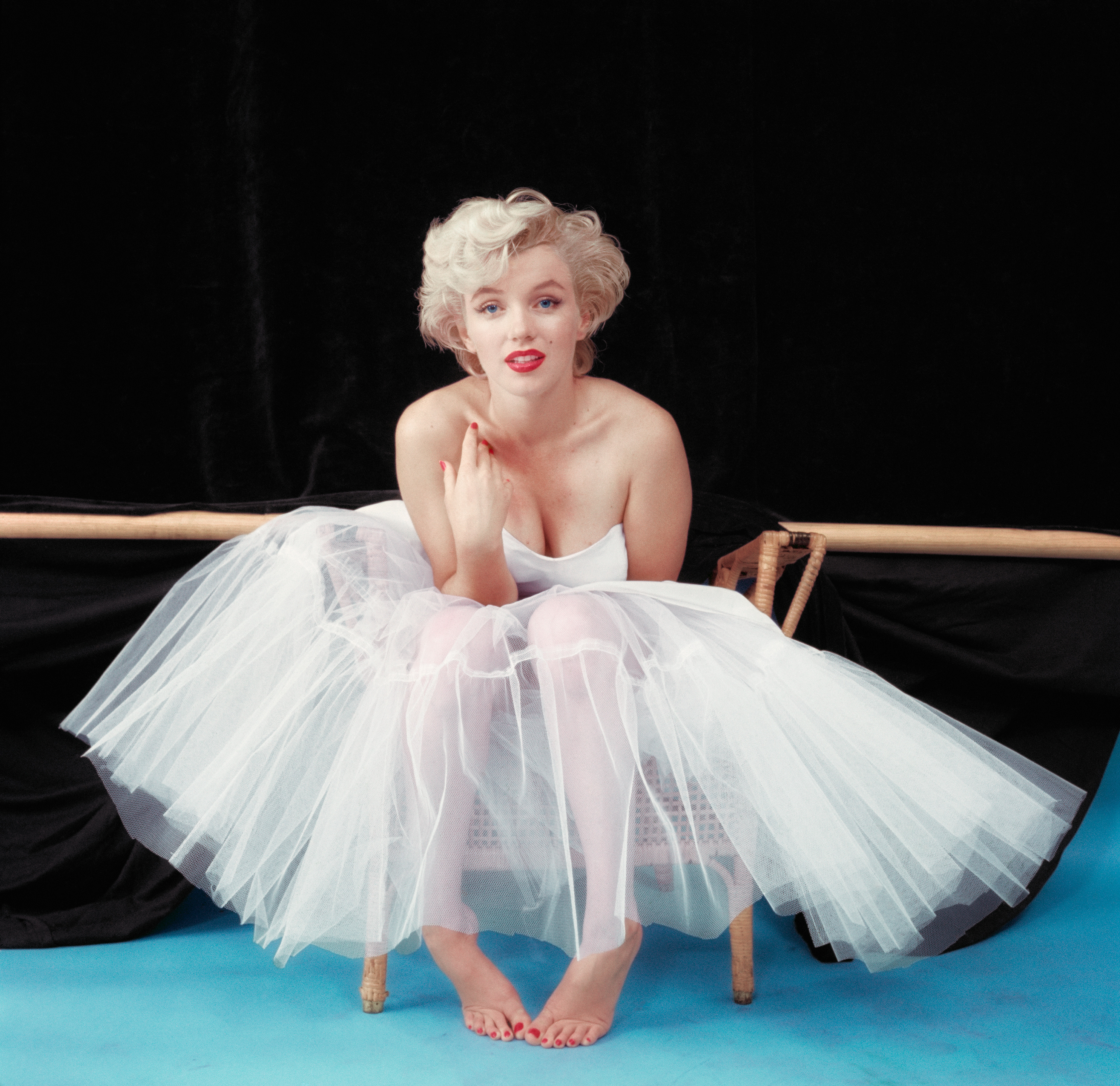
Cover Photo Marilyn Monroe ‘Ballerina’ sitting, 1954 by Milton H. Greene
All images provided by the Nation Portrait Gallery