From July 31 to August 2, Osheaga 2026 offered Montreal a home away from home. Ushering in the last leg of summer, Parc Jean-Drapeau was an invitation to a debutante ball, a beach day party in Montreal’s very own backyard.
Artists from across the world took on the daunting task of figuring out what to give the city that already has everything. It was an impossible endeavour, but Osheaga rose to the challenge. With headliners Twenty One Pilots, Tate McRae, and Lorde, the 19th edition of Osheaga turned out to be a fluent masterclass of the pop culture lexicon. It was the bravura of Montreal in all its facets that, rain or shine, proved uniquely capable of giving people exactly what they needed most.
Text by Mia Colaner & Jamie Xie
Photos by Louis Alson
It is one of Montreal’s simplest pleasures, a staple of the relentless summer season: to spend an unsparingly hot August weekend at Parc Jean-Drapeau to witness Canada’s largest music festival, Osheaga. For just three days, the island transformed into a vibrant community hotspot, which united the city through music. Osheaga 2026 proved itself a beautiful love letter to the aimless ennui of a seemingly endless summer.
Friday
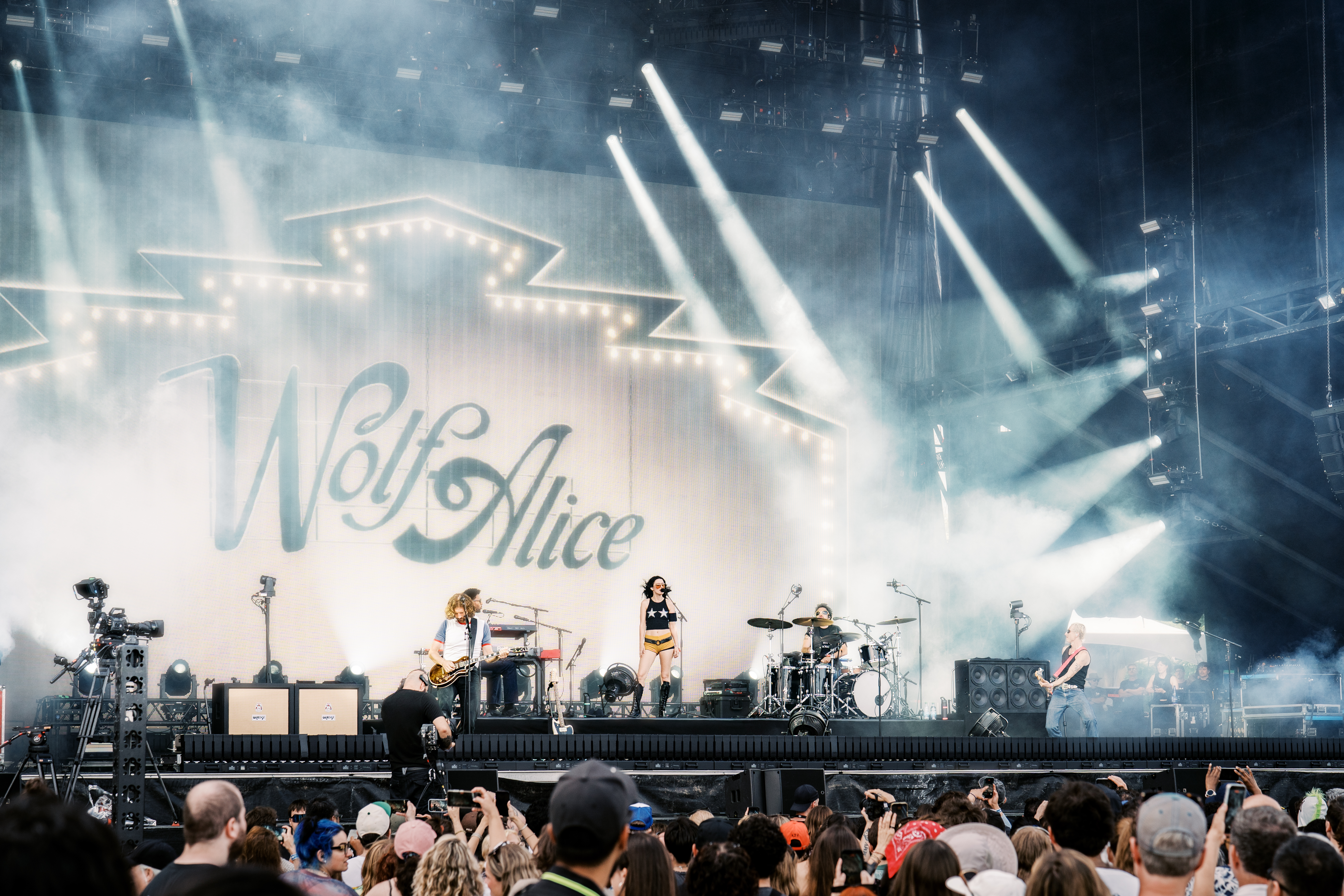
Wolf Alice tore through the Friday lineup with punk energy, channeling a generational angst and worldly frustration. In “Bros,” wearing knee-high Converse and a dark shag, singer Ellie Rowsell haunted the stage, singing “I was raised by wolves, are you wild like me?” Incorporating screamo elements in “Yuk Foo,” Wolf Alice embraced the chaotic charm of nihilism, with Rowsell filtering all her anger into a little red, white and blue megaphone in the process. In “The Sofa” and “Don’t Delete The Kisses,” she played around with texture, working in signature vocal flips and a silky soprano full of breathy soul. Wolf Alice was a beast of many genres who was not afraid to turn the main stage into a talent show.
Brandishing a visually striking, neon green electric guitar, Wet Leg brought a visually distinctive, not-before-seen allure to the festival. Subverting the niche internet aesthetic of the office siren, singer Rhian Teasdale’s classy white blouse and narrow-framed glasses contrasted the wilder, more daring fur-trimmed shorts she wore. In “ur mum,” Wet Leg featured a prolonged outro in which Teasdale rolled around on stage, leaving the lead guitarist to scream at the top of his lungs. The hypnotic, TikTok-viral “Chaise Longue” was equally playful. Wet Leg knew how to stay in the moment and have fun with the crowd, never taking a moment too seriously. Even when rain poured down during the final number “mangeout,” Teasdale threw up bunny ears behind her head and reminded the crowd that there is no beautiful storm without perfect thunder.
Next, coming all the way from the UK, Blood Orange opened with a soft synth set and a reaffirming message of hope. In the outro of “I Wanna C U,” he monologued on the ingenuity of man and its ability to reinvent itself and find good even under political turbulence and worldly pressures, “We get to choose our families. We are not limited to biology. We get to make ourselves, and we get to make our families.” As he sang “Bad Girls,” the sun drove away the rain.
Beginning his set in a business suit and a red tie, The Neighbourhood’s Jesse Rutherford slowly stripped down from his formal attire throughout the set, exposing an ink-covered torso, and taking on a certain punk charm, particularly with his bright red fingerless gloves. “Sweater weather” undoubtedly stood out as the highlight of the set, drawing out one of the festival’s loudest singalongs.
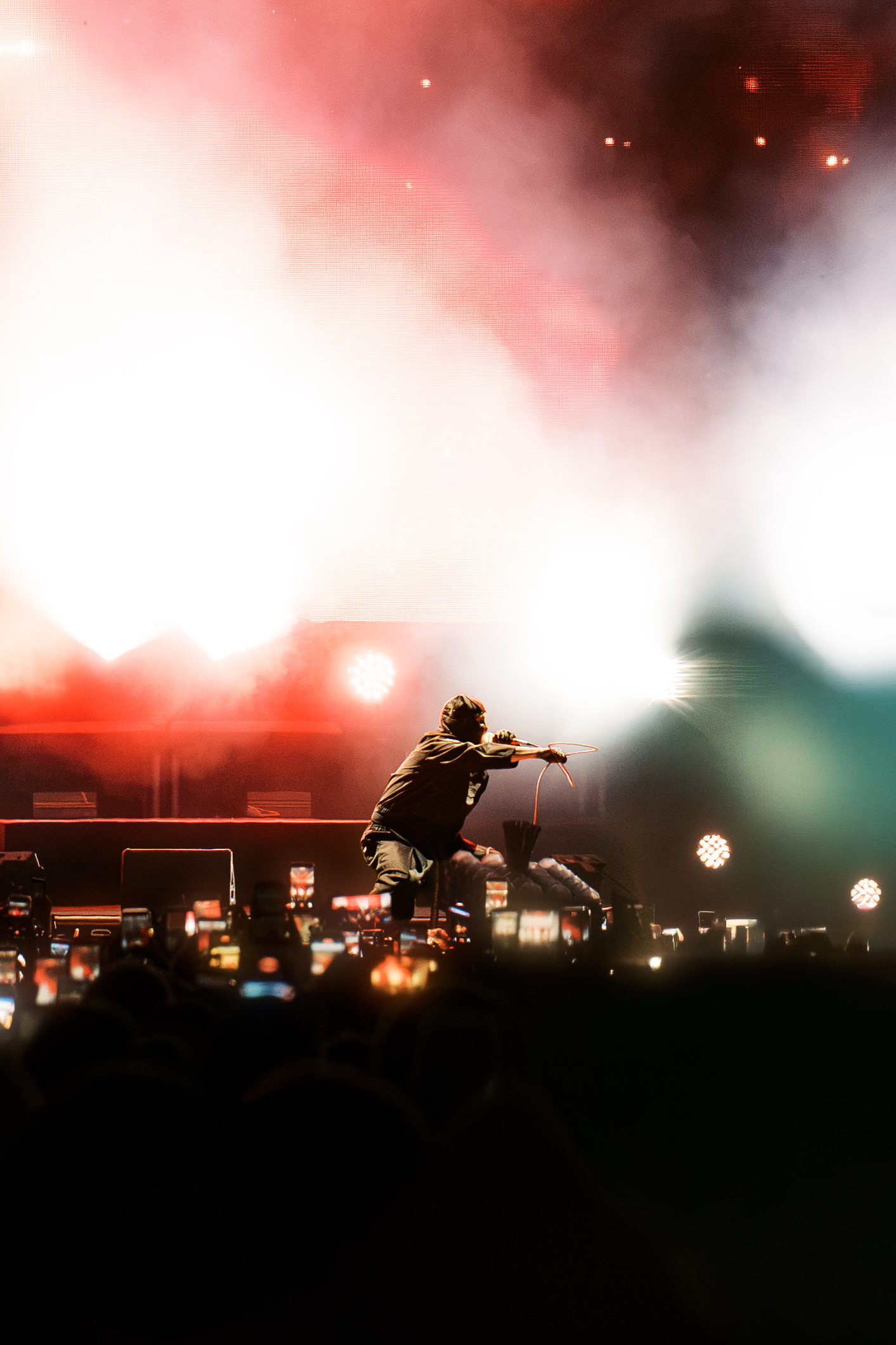
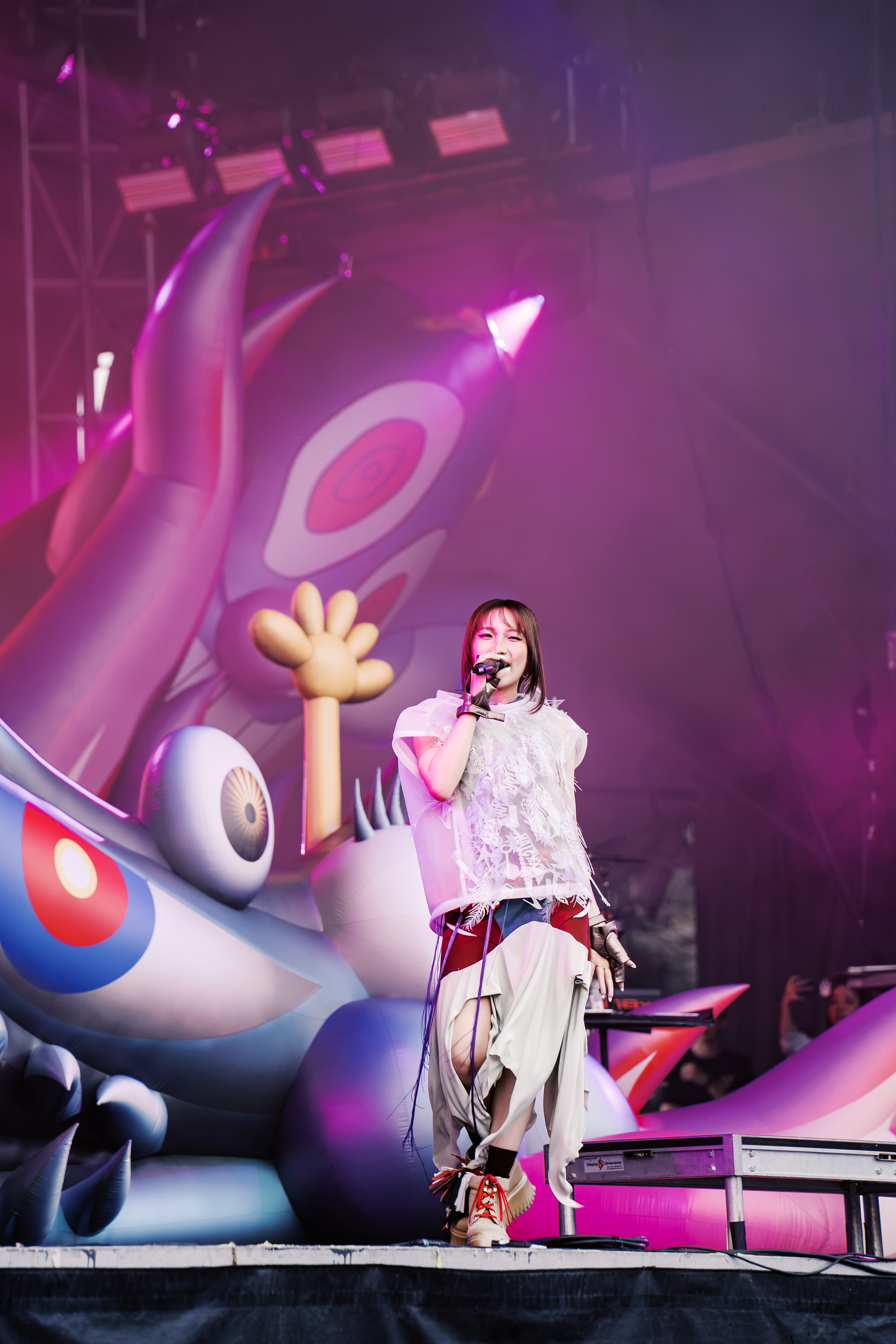
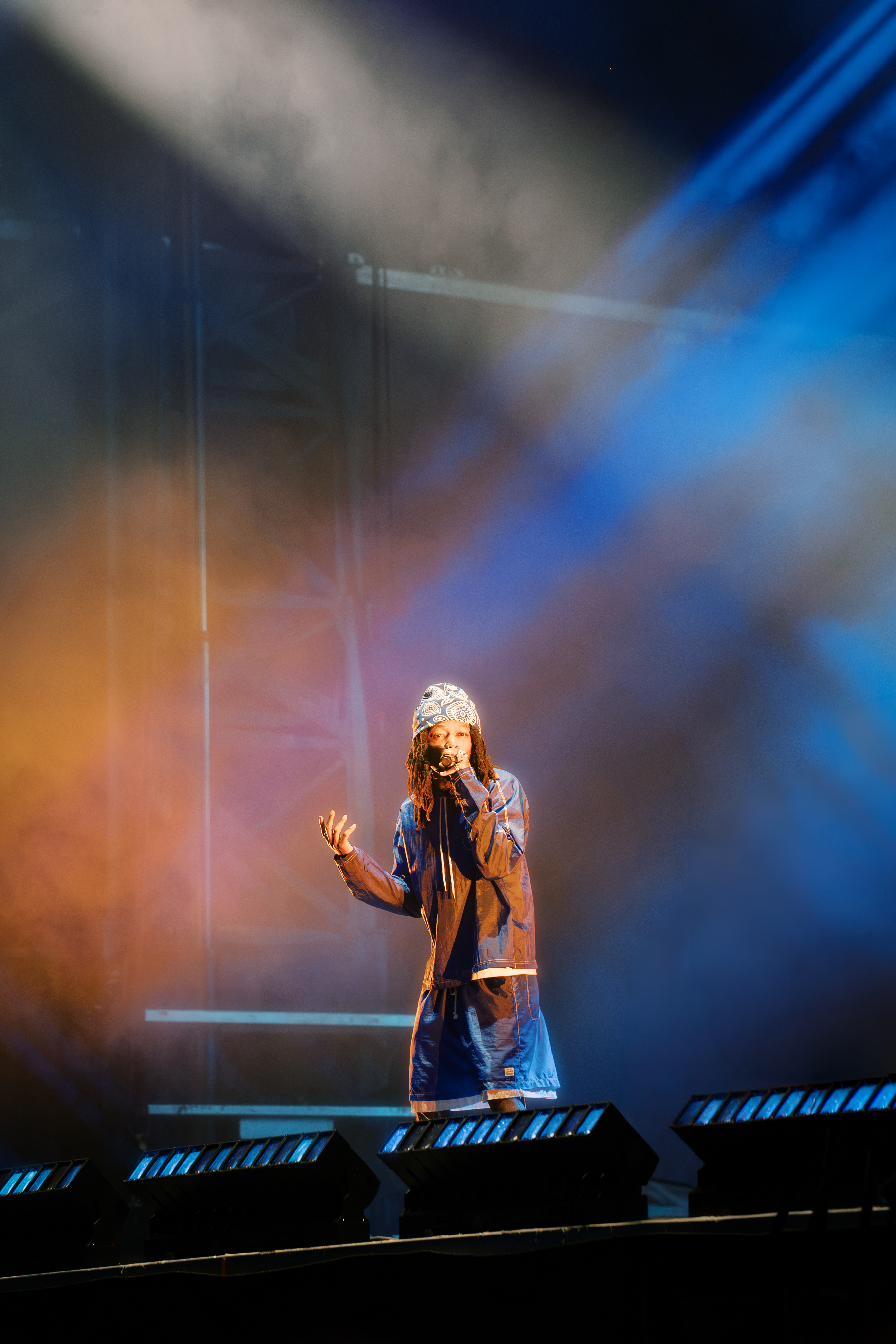
Best known for their anime opening productions, Yoasabi is a Japanese pop-rock duo who came all the way from Tokyo to introduce Montreal to their music as the first ever J-pop artist to perform at Osheaga. With perhaps the most extravagant set design of the night, the duo conquered a large cartoon shark centre piece as hand-drawn animated backgrounds flickered behind them, a homage to their connection to the anime industry. Representing Japanese street fashion, the lead singer sported a distressed oversized skirt and bohemian top which complimented the alternative aesthetic of the set. The duo was a refreshing addition to the lineup, which breathed a new perspective into the night – an electric ode to hand-drawn art and the living, breathing world of Japanese pop-rock.
Not many artists can perform at the level JID does, let alone do it all live. With razor-sharp wit and a silver tongue, JID is brilliantly enunciated and equally eloquent. Preaching “positive vibrations, it’s the will of the hunt and love of the creator ahead of us” as a choir chimed, JID dug deep throughout his set and delivered live homebrew rap on fan favourite “Community” for the audience to see unfold in real time – no editing or post-production required. In “Of Blue,” featuring Mereba, JID channeled a softer, dreamy R&B sound. Self-described as a “palette cleanser,” the song was a beautifully sung soprano ballad about being at peace, revealing the many facets of JID as an artist armed with intention and a message.
Dressed head-to-toe in black, The xx arrived at the Osheaga stage after an eight-year live hiatus with the kind of enigmatic presence that left the audience in a state of perpetual wonder over what might come next. Bathed in monochrome visuals, the trio opened with “Crystalised,” where Romy Madley Croft and Oliver Sim’s hushed, intertwined vocals conversed in the language of heartbreak, with a backdrop of Jamie Smith’s atmospheric beats. They drifted through “Infinity” and “Islands,” revisiting fragments of their self-titled debut album, a record whose understated brilliance has cemented its place as one of indie’s most influential releases of the last two decades. Fragmented visuals scattered across the screens like pieces of a puzzle, momentarily separating the trio into the solo musical identities they had cultivated on their own. As a finale, they gravitated back toward one another, reuniting for “Intro,” affirming that although each member had flourished on their own, they remained at their most alluring together.
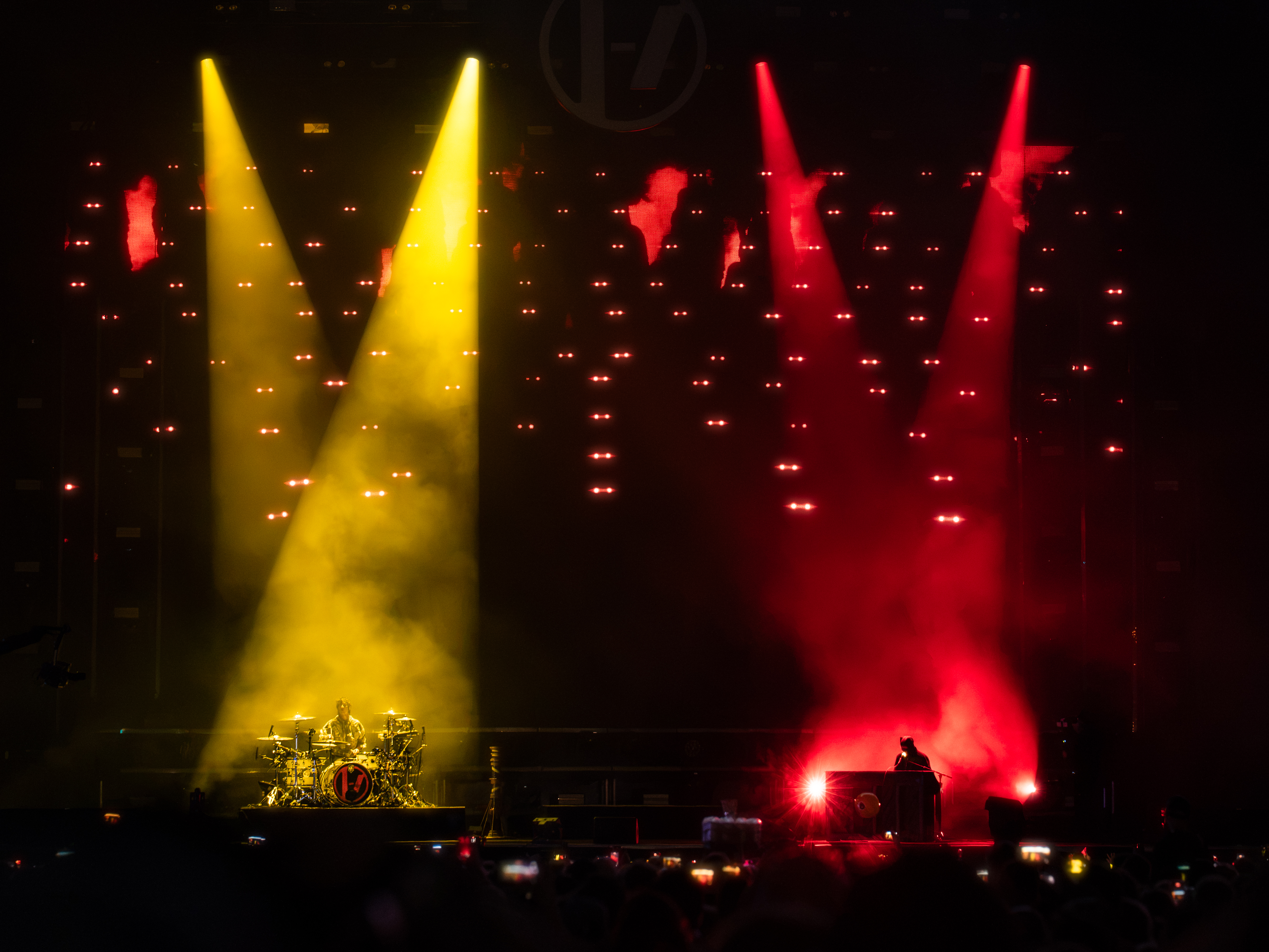
Twenty One Pilots closed Friday night off with a bang. The duo tore through their catalogue beneath a world of colourful constellations that projected across the stage. Returning to Osheaga after a decade, they opened with “Shy Away” and “Heathens.” Their set featured elaborate pyrotechnic effects with flamethrowers and fireworks. At the same time, they weaved in a cover of Milky Chance’s “Stolen Dance” before breaking into “Ride.” The band covered “Seven Nation Army” with a softer, hushed rendition as a surprise treat. For their renown “Stressed Out,” a carousel played in the background as they spoke about the struggles of growing up and all the pressures of lost childhood. They ended the night with confetti cannons, making it a sensory experience to remember.
Saturday
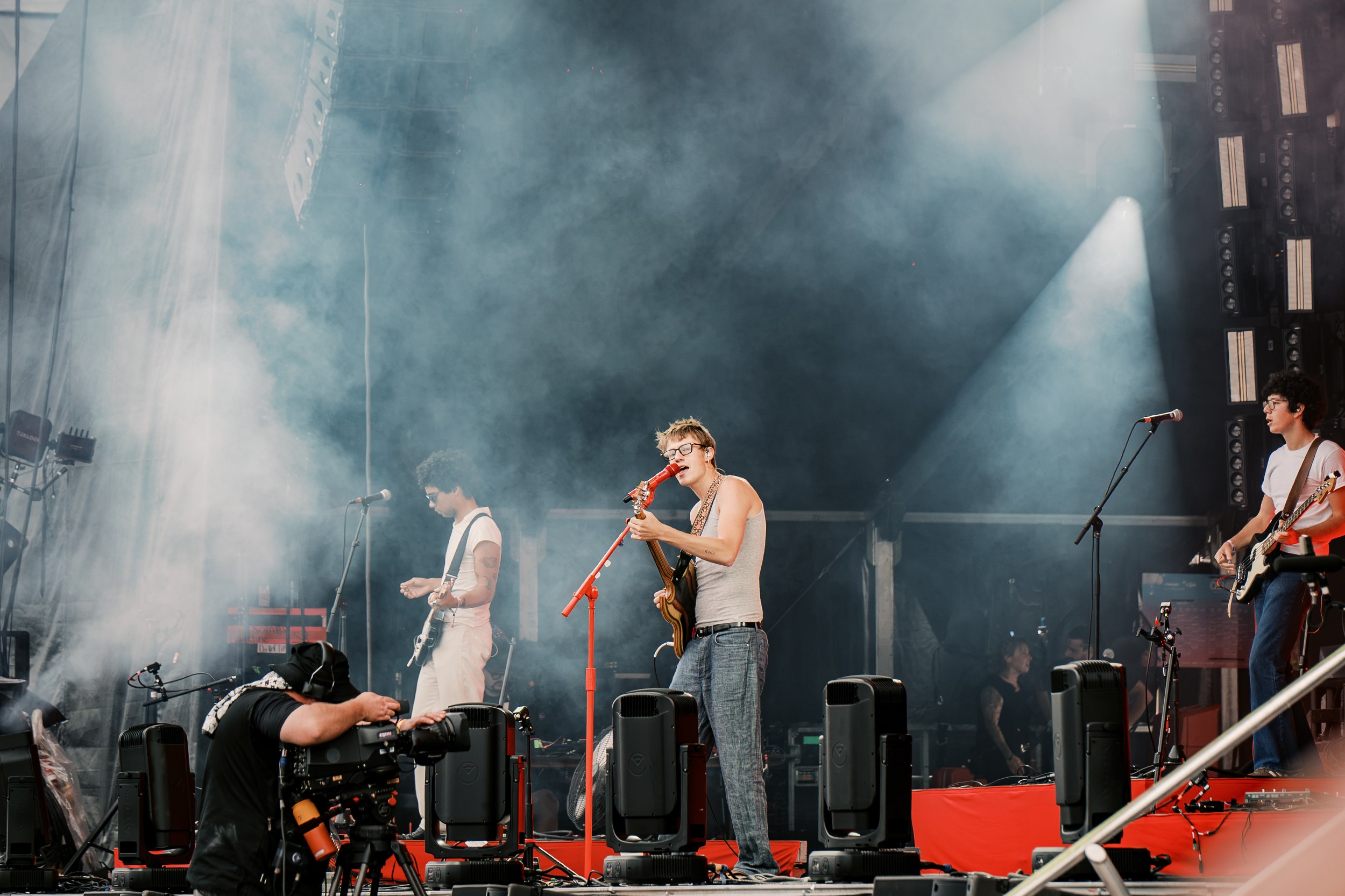
Finn Wolfhard has grown increasingly confident in finding his voice as a musician, and his performance at Osheaga was yet another testament to that ongoing evolution. Clad in matching pink baseball jerseys, Wolfhard and his band brought a nostalgic, classic rock sound that felt authentic and instantly recognizable. Periodically throughout the set, the crowd chanted his name, making it clear that he has successfully carved out an identity beyond his acting career. Tracks like “Common Side Effects” highlighted his songwriting and stage presence, reinforcing the apparent merits of Wolfhard’s musicianship.
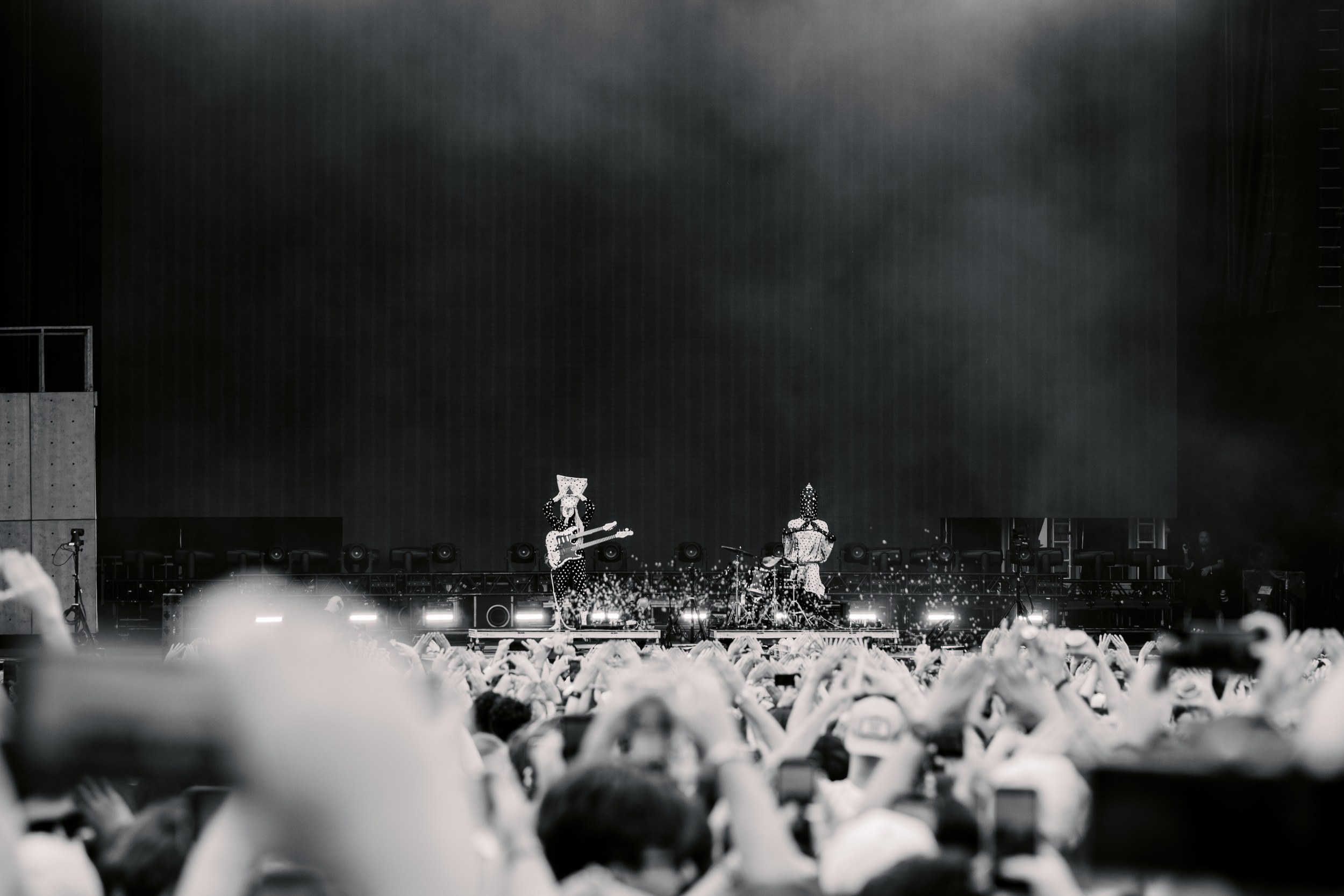
Returning from their recent record-breaking Jazz Fest concert, Angine de Poitrine made a surprise appearance at Osheaga as welcome heroes, familiar guests, and esteemed artists. With a distinct anonymity, the band blended elements of jazz, rock, and electropop to create an imaginative, electronic soundscape and immerse the audience in idiosyncratic instrumental pieces. Between songs, the duo would “communicate” with the audience and each other through a series of rhythmic tapping, beeping, and their noteworthy triangle-fan hand symbol. The duo so effortlessly captured, in their performance, the idea of music as a form of communication in and of itself that transcends language. The duo is as lovable as it is mysterious, always willing to say so much by saying so little.
Malcolm Todd’s music is groovy and jazzy. After spending years perfecting an indie pop sound, he arrived at Osheaga to perform fan favourites such as “Walk to Class” and the charting “Earrings.” In a playful back-and-forth with the crowd, he led a few call-and-response exchanges that hilariously culminated in convincing the crowd to answer “who let the dogs out.” His music incorporated a dreamlike element, which was only enhanced by the impressionistic, blurry camerawork, which would frequently phase him out into a red silhouette.
Mt. Joy is a band that came with a very particular message about the state of the music industry under the threat of generative AI: “Keep supporting human art, art is humans by humans. If you don’t know how to make music, learn to. Art is very, very human.” In their renowned resonant New Age sound, the band played “Astrovan.” What came as quite a surprise was the band’s cover of Wheatus’ “Teenage Dirtbag,” which fit the theme of loving the creation of music, whether your own or others. Mt. Joy is a certified lover of the art of creating music, and that includes respecting their contemporaries.
A master of suspense, Franz Ferdinand has so much skin in the game it’s palpable. For several songs, including the hit single “Take Me Out,” the band included a prolonged intro to subvert audience expectations. Making an effort to address the audience in French, lead singer Alex Kapranos, at every turn, attempted to bring a uniquely Montreal appeal to his show by playfully weaving French, “Osheaga,” and “Montreal” references into “Hooked” and “Love Illumination” as well as between songs. His love for Montreal came through vividly.
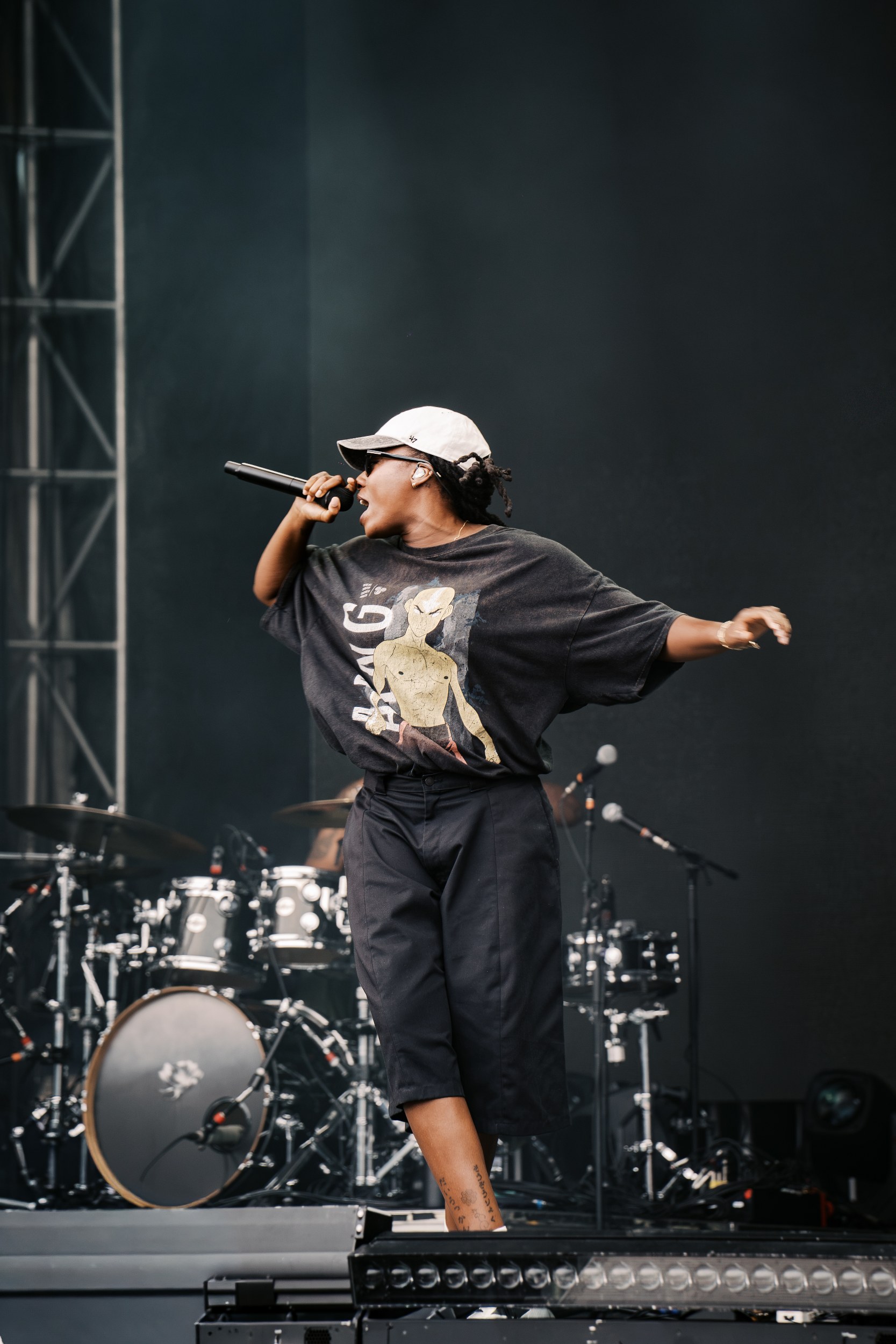
Rapper Little Simz delivered a set that moved with buoyancy, incorporating referential nods to Montreal into her savage verses, while moments of levity softened the sharpness of her delivery. As she performed tracks like “I Love You, I Hate You” and “Venom,” she shifted seamlessly between rapid-fire bars and cinematic sounds. Reflecting on her return to Osheaga after performing on one of the festival’s smaller stages in 2017, she shared her gratitude before launching into “Mood Swings,” “Lion,” and “Free.” Her set balanced razor-sharp lyricism with an undeniable sense of cool, making her sense of experimentation with beats and sound feel so effortless.
America’s singer-songwriter sweetheart Sombr was a powerhouse performer at Osheaga, making his Montreal debut with an Aperol spritz in hand, as he strolled onto the stage in style. Clad in a pinstripe suit, his eyeliner, dark features, and grim outlook gave a Tim Burton-esque appeal that perfectly accompanied the vulnerable, heartfelt lyricism imbued in his work. In his hit single “Back To Being Friends,” he featured a prolonged instrumental interlude as he wrote “Sombr loves Montreal” on a flag, which he would fly while running offstage into the crowd, hugging fans and signing merch. Much like a homecoming scene from a coming-of-age movie, it was a moment of intimacy that spoke to the stakes of his music. In his final song, “12 to 12,” he featured a playful lyrical alteration of “we met in a Paris cafe” to “we met in a Montreal cafe.” The song featured an impressive display of vocal prowess as Sombr channeled his falsetto to deliver unheard-of vocal variations, harmonies, and trills. The set included a daring fake-out where a clock appeared on the big screen, counting back to 12:12, and he performed the song all over again from the top, ending with triumphant fanfare.
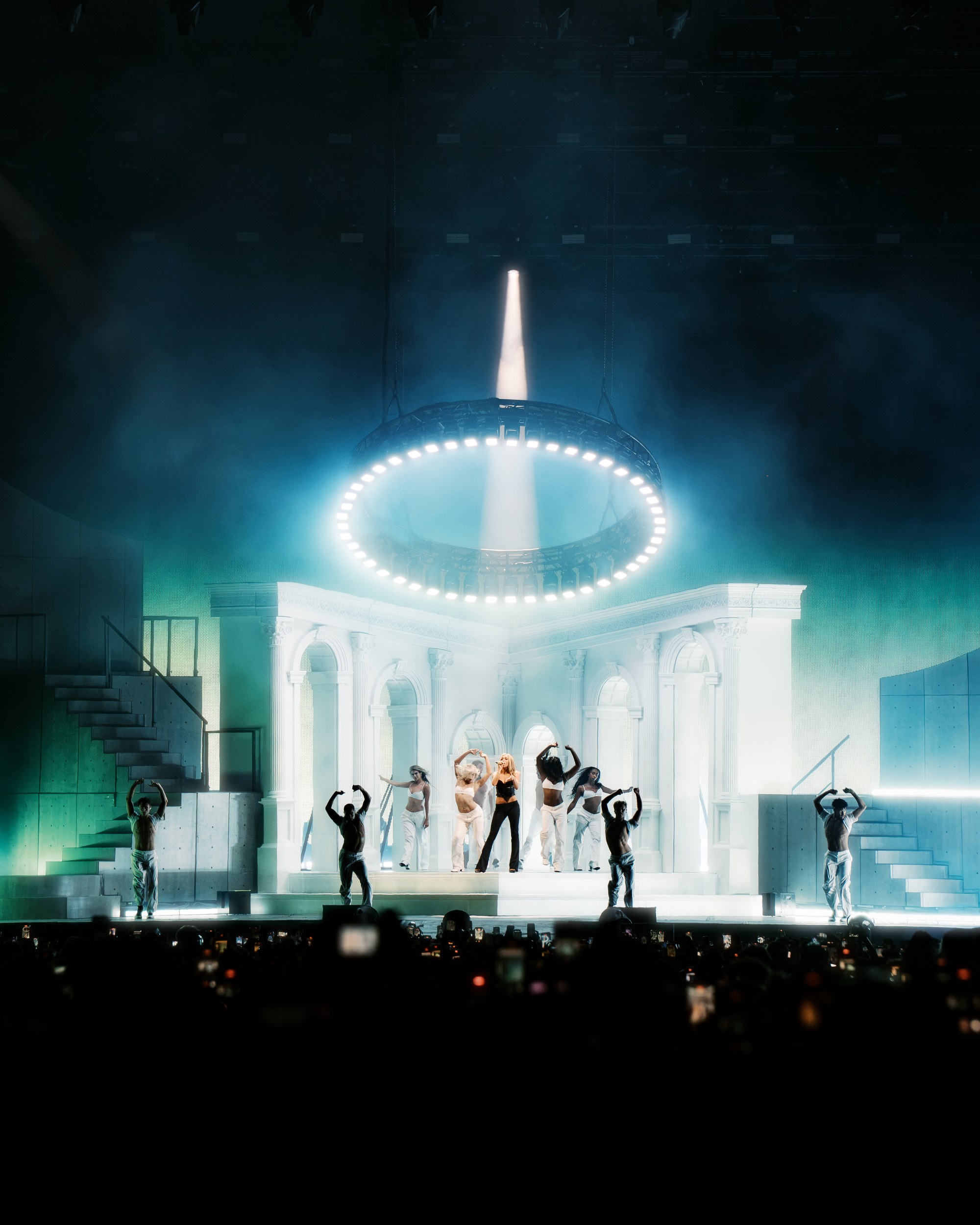
Nobody has moves quite like Calgary-born Tate McRae, who arrived with grandeur, as a modern-day pop sensation, strutting sassily across center stage. Emerging between ancient columns surrounded by an entourage of dancers dressed in white, she opened the show with a sharply choreographed performance as fireworks erupted in perfect synchrony. The anticipation was undeniable, with hundreds of fans dressed up in matching T8 baseball jerseys awaiting her arrival. After declaring Montreal one of the loudest crowds on her tour, the energy only amplified as she moved through hits like “you broke me first,” “she’s all i wanna be,” and “greedy,” before closing with “Sports Car.” As she covered herself in gold paint and fireworks once again burst above the stage, Tate left behind a glittering reminder of why she has become one of pop’s most captivating young stars.
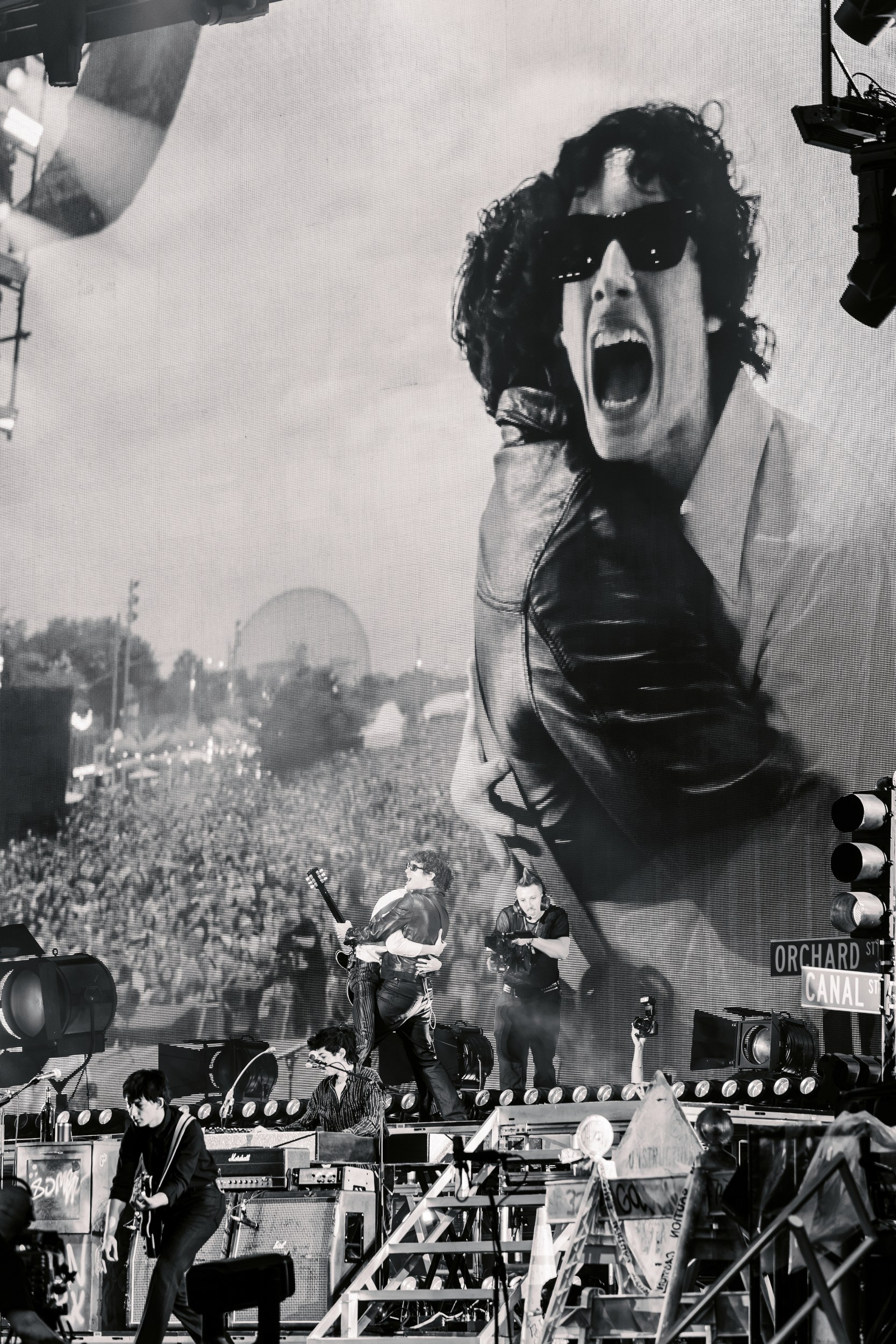
Australian electro pop duo Empire of the Sun closed out the Saturday lineup at the Scotiabank Forest Stage. To say the duo is imaginative would be an understatement, with much of their discography working with world-building elements inspired by futuristic imperial aesthetics. The set was as elaborate as it was fantastical, incorporating oversized mannequin-head set pieces, powerful smoke machines, and dancers who moved in abrupt, sharp choreography to intense electric guitar solos. “The journey is a rhythm of three forces: time, self, space,” the electronic voice said overhead, as “We Are The People” set the crowd alight. Completing the set with the much-anticipated “Alive,” Empire of the Sun returned to its recurring theme of the afterlife, bowing to the crowd as they walked off to an angelic choir playing in the background.
Sunday
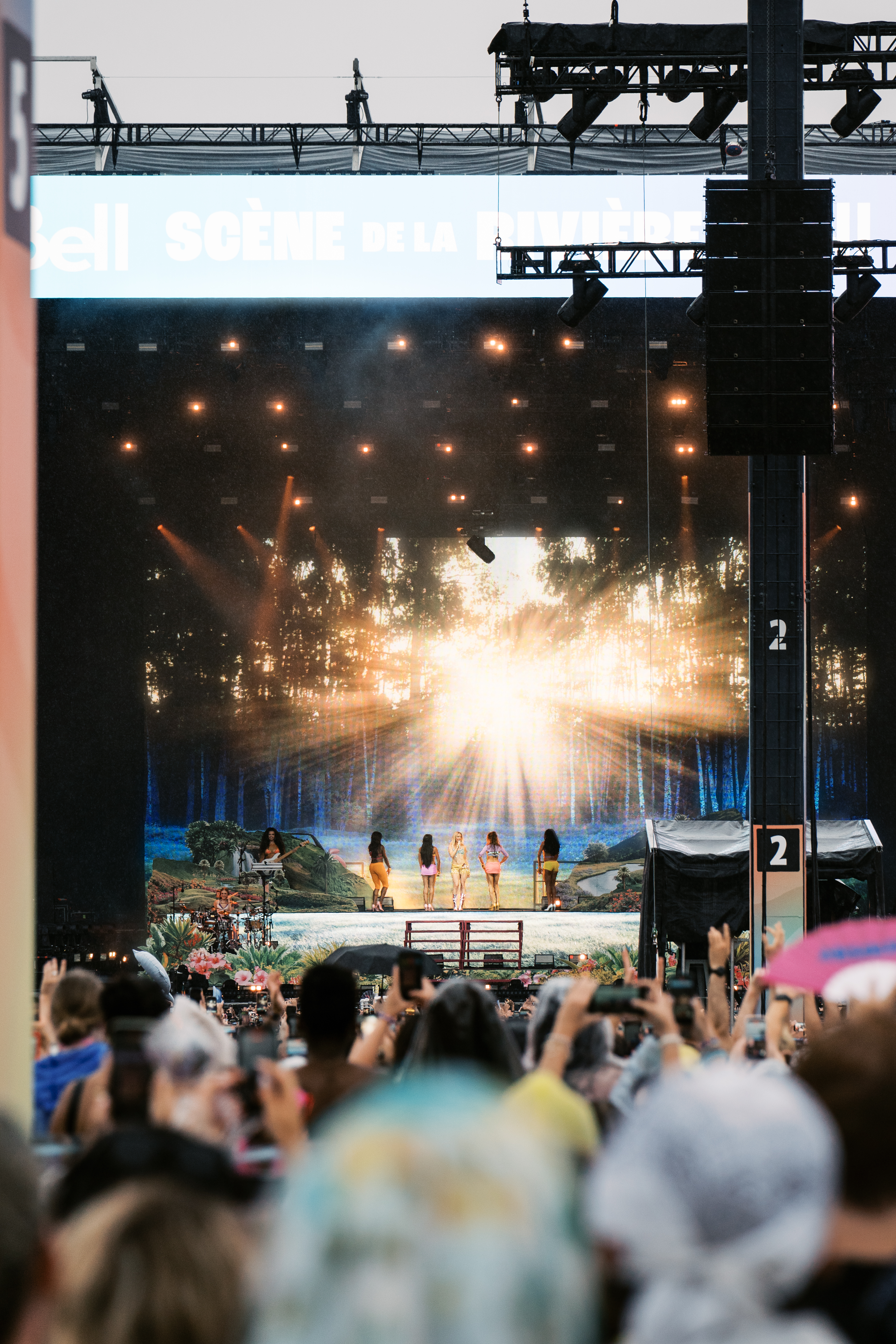
Despite the rain that settled over Montreal on Sunday, Zara Larsson spent the night convincing fans it was midsummer. Looking like a sparkling fairy princess bathed in the last rays of daylight, she smiled at the crowd before declaring, “I know it’s raining, but we’re going to make it feel like summertime,” and her promise lingered throughout the set. “I’m so happy to be back because Montreal has one of the best crowds in the whole world,” she beamed, later calling it the best crowd of her tour. She dedicated moments to “all the pretty people in the crowd,” punctuating the sentiment with effortless splits and playful charisma. It was girlhood in its loudest, brightest form, embracing bold colours, messy moments, freedom, and the confidence to take up space. As the opening notes of “Lush Life” gave way to the final reprise of “Midnight Sun,” bubbles drifted through the air, catching the orange glow of the stage lights until Larsson seemed to disappear behind a cloud of shimmering light. One last reminder that summer isn’t over just because the rain has arrived.
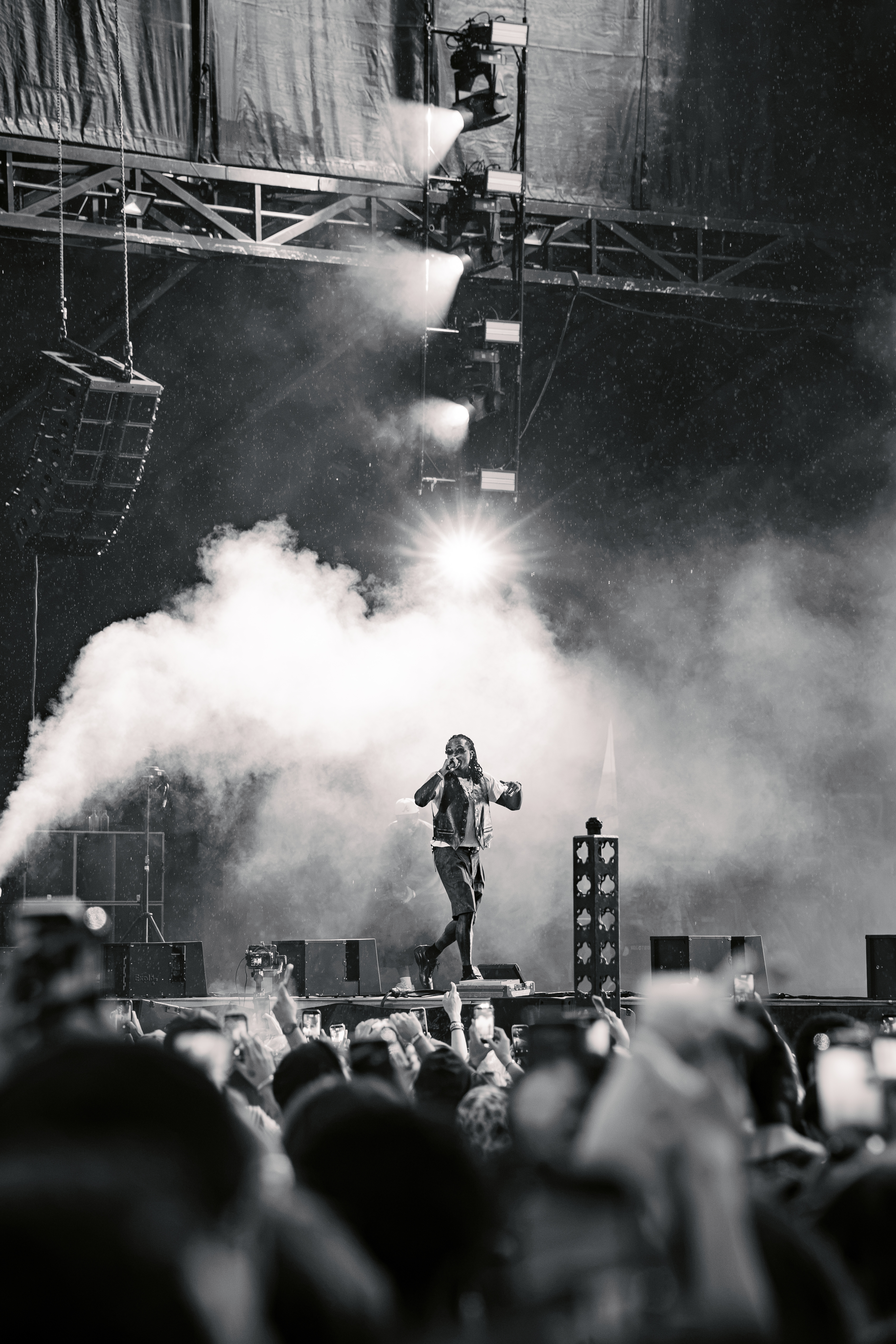
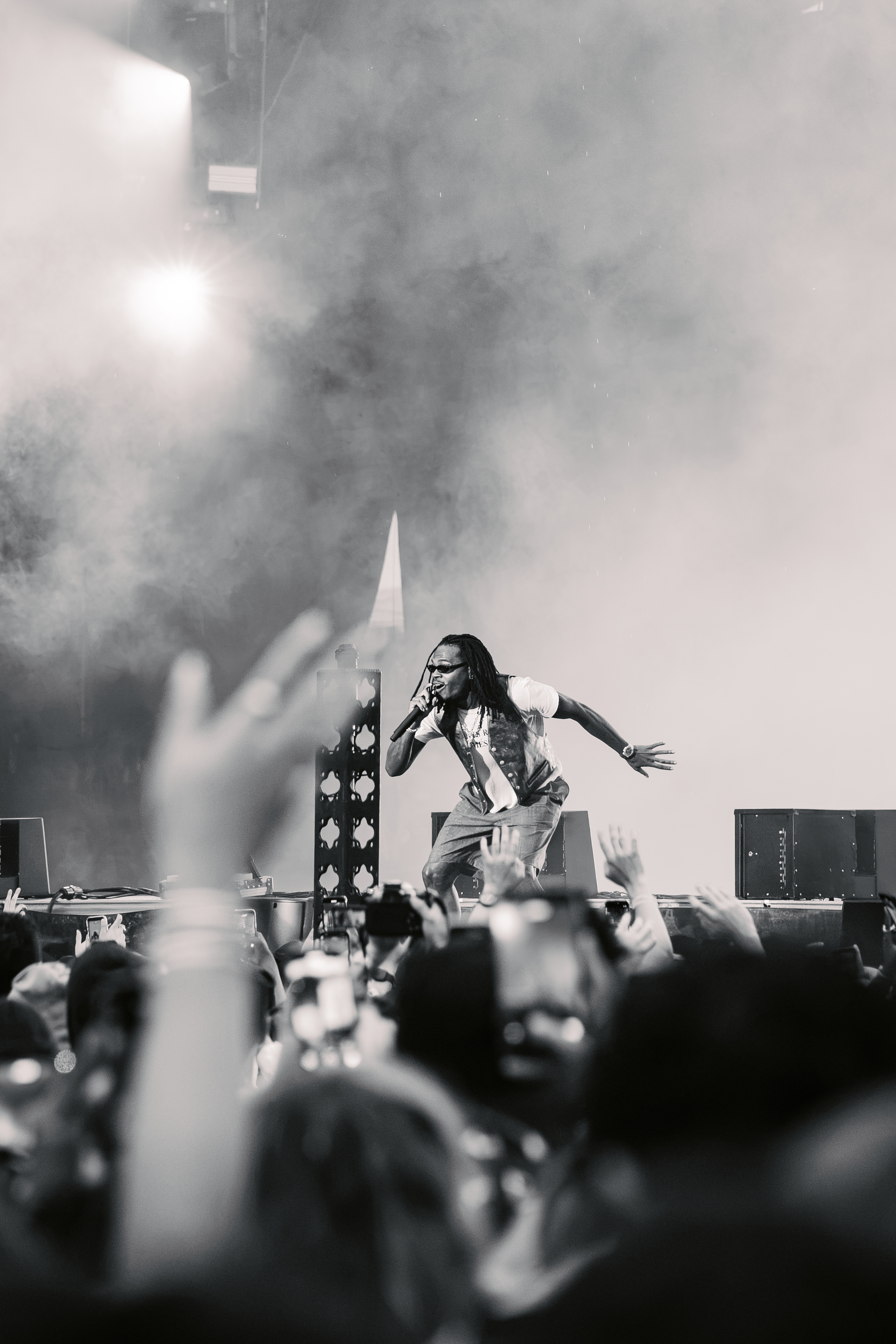
From golden nostalgia to streetwear royalty, Gunna arrived as the embodiment of his own mantra, practicing the drip he preaches. He sported a stylish black leather vest layered over a crisp white T-shirt, plaid trouser shorts, and black shades to complete the look. Bouncing from one end of the stage to another, he moved from tracks like “One of Wun” to “Dollaz on My Head,” “Drip Too Hard,” “Fukumean,” and “Banking on Me,” a catalog that fans knew by heart and whose familiar beats reverberated through their chests.
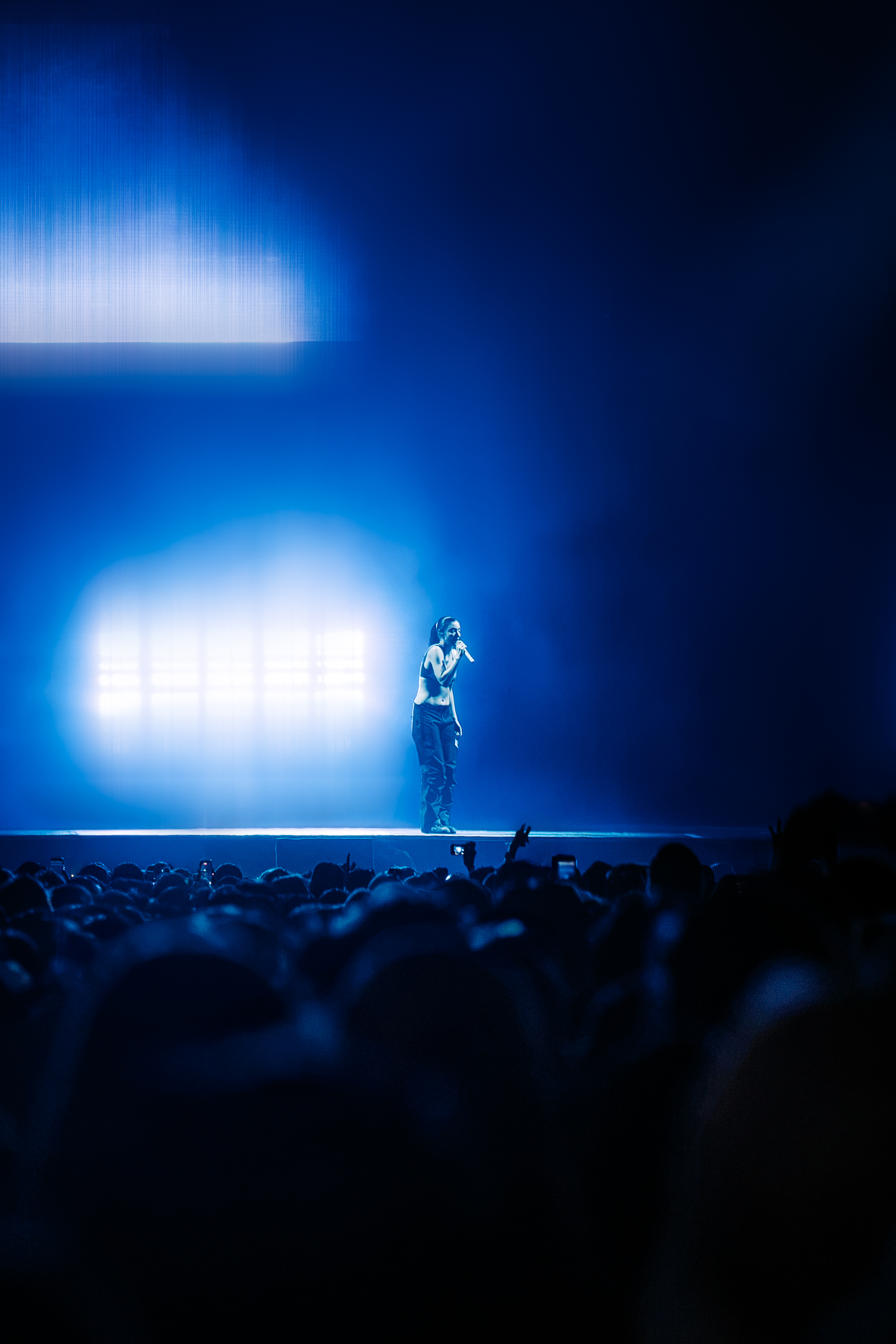
Somewhere between a midnight club and a nostalgic memory, Auckland-born artist Lorde returned to Osheaga for a full-circle moment, thirteen years after first stepping onto the stage as her seventeen-year-old self. Opening with “Royals,” “Buzzcut Season,” and “Perfect Places,” cold blue lighting washed over the stage, and her dancers flowed through the space with hypnotic, trance-like movements. “We can make anything magical and cool,” she told the crowd. Between songs, she reflected on her first time at Osheaga, remembering the blue skies, the green trees, and the comfort that Montreal gave her. She exclaimed that “there is something real about sharing a decade of music with someone, a connection built on growing together,” explaining that music is meant to do exactly that: bring you closer to yourself and to the parts of you that are harder to reach. She then moved into tracks like “Green Light” and the closing anthem, “Ribs.” With her return to Osheaga, Lorde carried every version of herself that had existed in the years between, closing the three-day festival with a magical, transcendent energy that left fans floating.
There was hardly ever a dull moment at Osheaga. Historically, its lineups have been a powerful mix of up-and-coming artists who age like fine wine, boasting setlists carefully curated by an impeccable eye for the next big thing. The festival expertly balances international superstars with rising stars, and this year is no exception. Watching Osheaga is like glimpsing history in the making, programmed by brilliant minds and soundtracked by the defining voices of our generation. In many ways, Osheaga is a sun-bleached, city-wide excuse to fall in love with Montreal all over again.