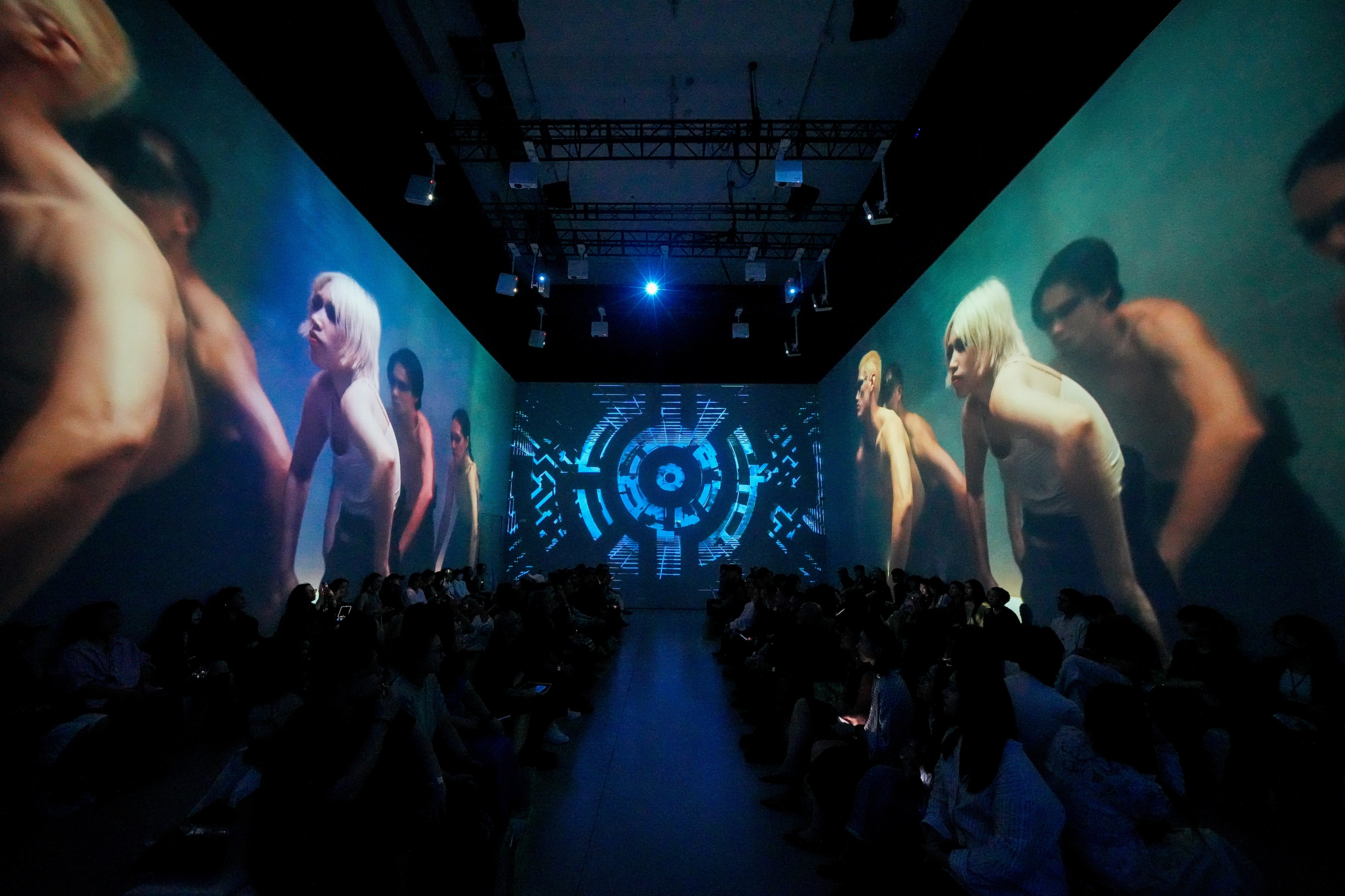
TULASI brought futuristic flair to London Fashion Week with its latest collection, Omnia Vanitas.
The collection explored themes of mortality, identity and existence – encouraging us to ponder over what it truly means to be human. Referencing Paolo Veronese’s Allegory of Wisdom and Strength as inspiration, the collection offers further insight into TULASI’s vision for documenting both the passing and permanence of life. Founded by multi-award-winning designer Tulasi Palmer, this innovative womenswear label builds on bridging the physical and digital within luxury fashion. By designing both physical garments and matching digital twins, Tulasi has her eye set on the future.
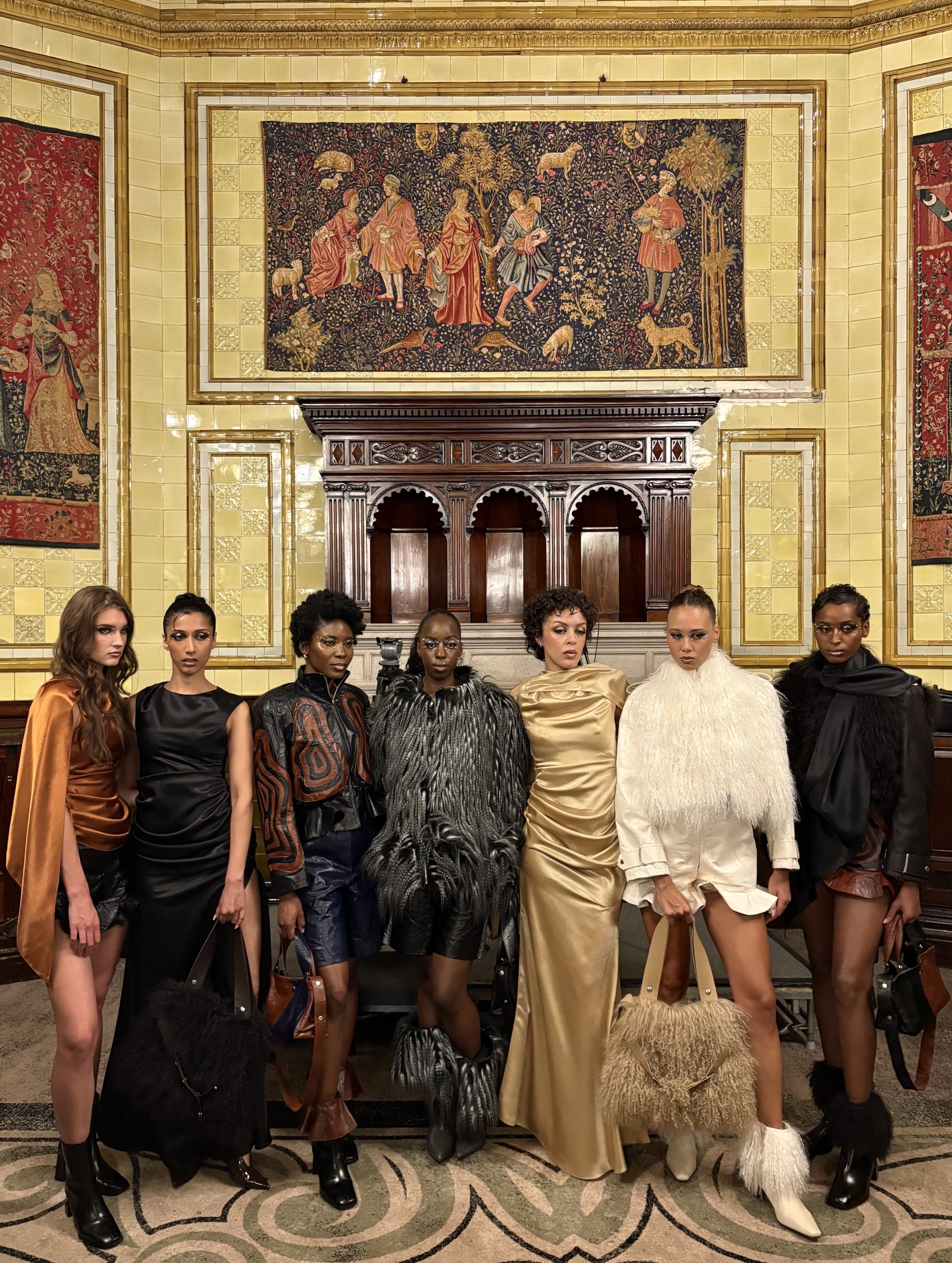
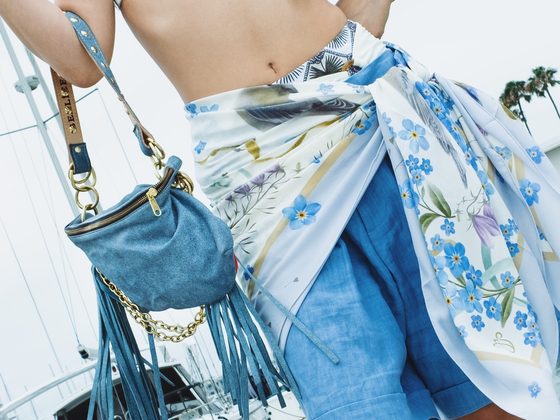
Sustainability sits at the centre of TULASI, promoting sustainable practices through 3D digital design and AI to minimise physical waste, as well as incorporating deadstock fabrics into her designs. Tulasi sees a future where fashion in the digital realm will become just as important as the physical. This is already the case within her label, with digital platforms playing a key role throughout stages of design development. Her third collection, Omnia Vanitas, made this philosophy evident. Featuring beautiful flowing satin, funky multi-coloured leather, and faux fur galore; these looks presented a portal into the extravagant craftsmanship and luxurious visions of TULASI – proof that futurism does not come at the detriment of beauty.
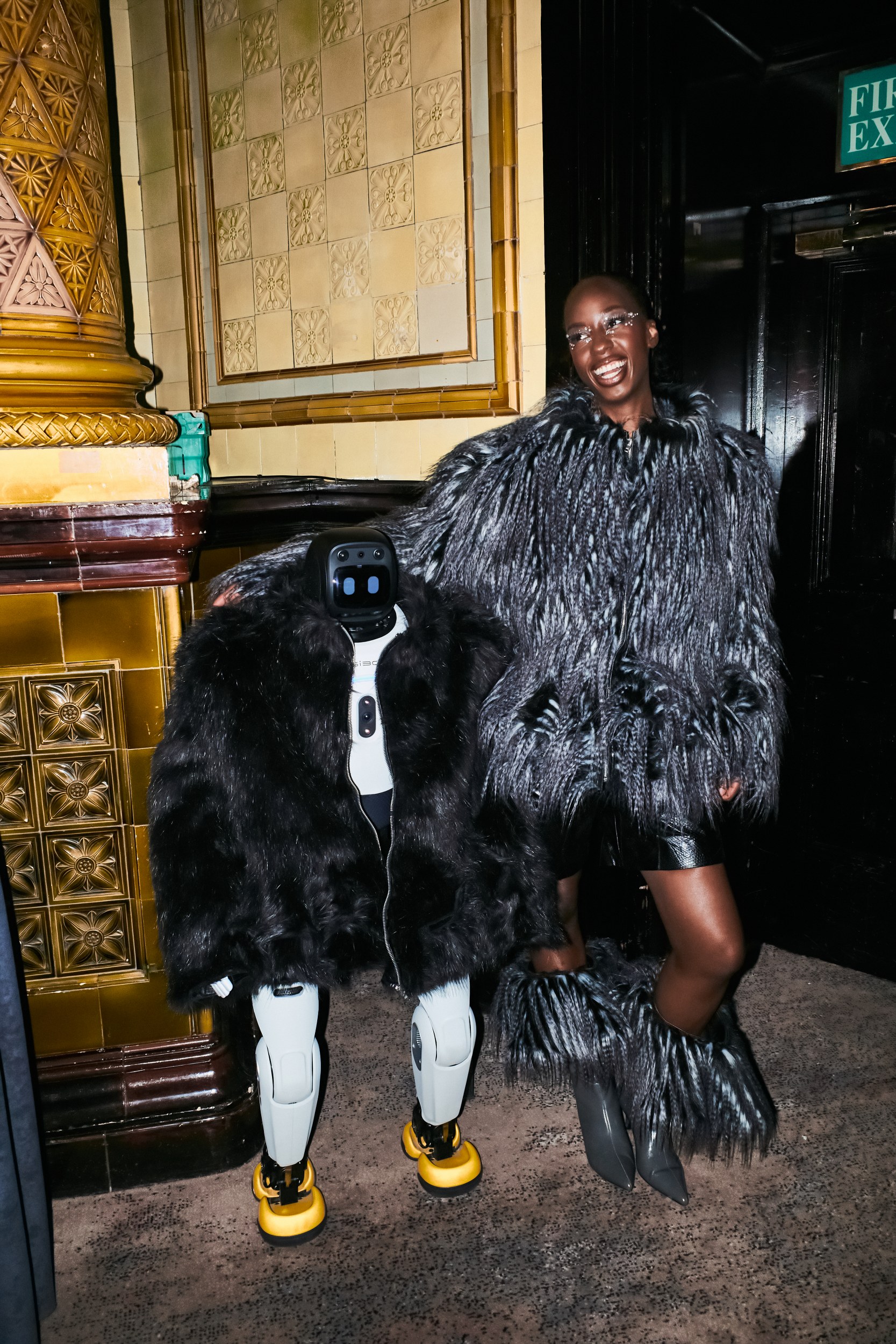
Then came the finale.
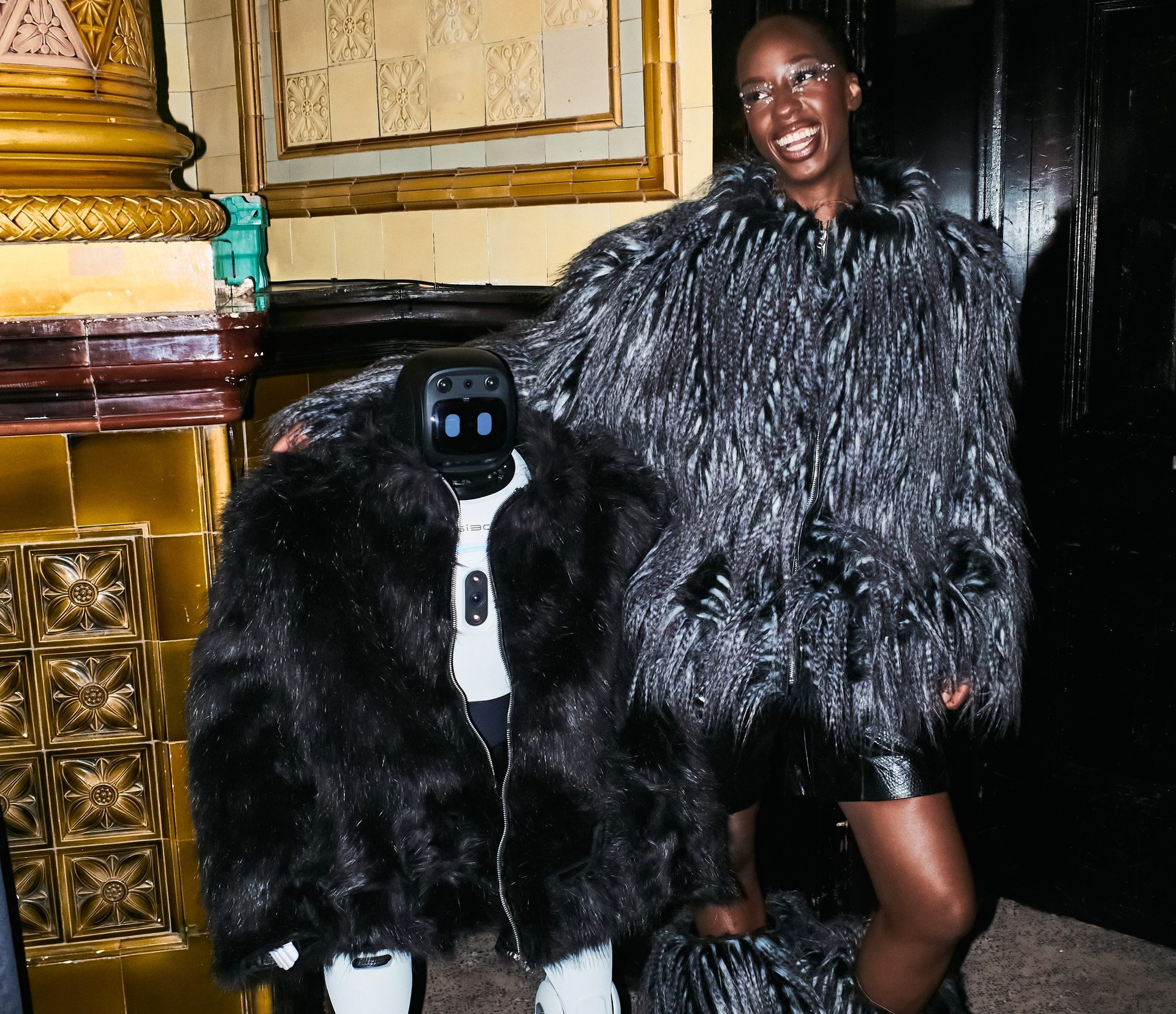
All eyes were on the humanoid robot that approached the end of the runway to close the show – the first to ever do so at London Fashion Week. It offered a striking glimpse into a future vision of fashion, one where the boundary between human and digital begins to blur. Models are certainly not going anywhere, but with the continuing rise of AI and furthering digital advancements, we are able to reshape what is possible through new and unexpected collaborations between the physical and digital. TULASI made us stop and think about what these collaborations may look like, bringing the future into the present.
Words by Clemmie German
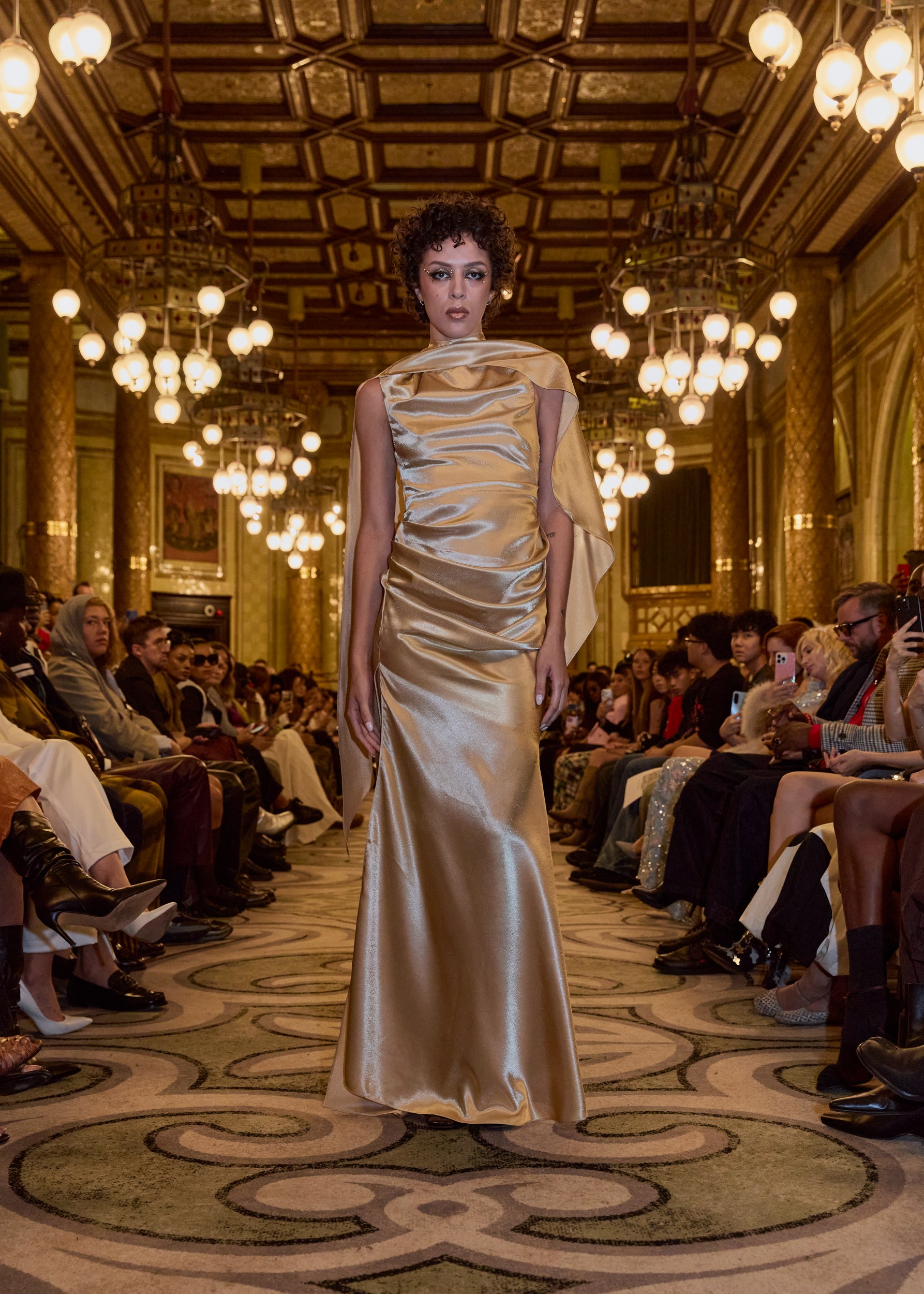
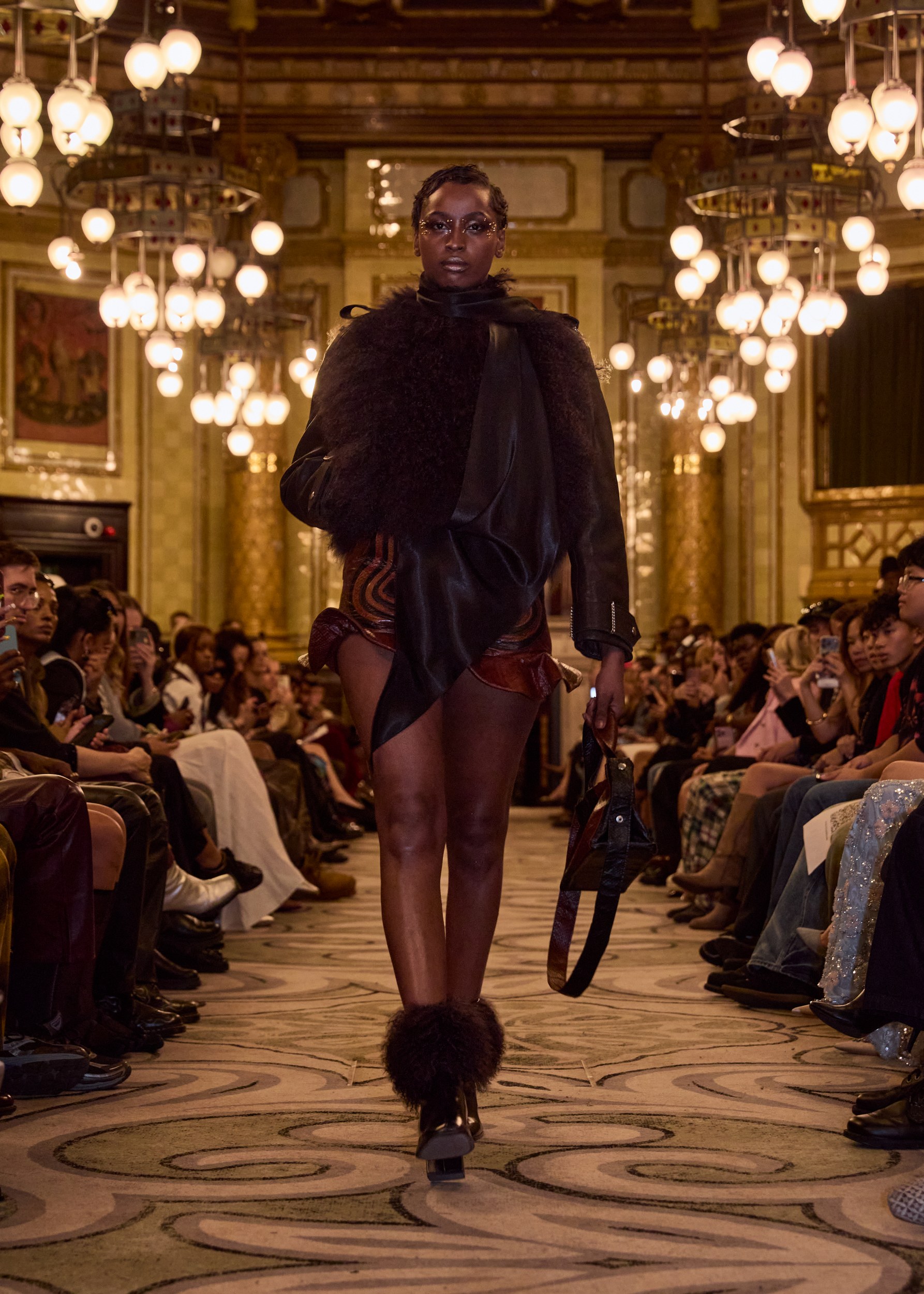
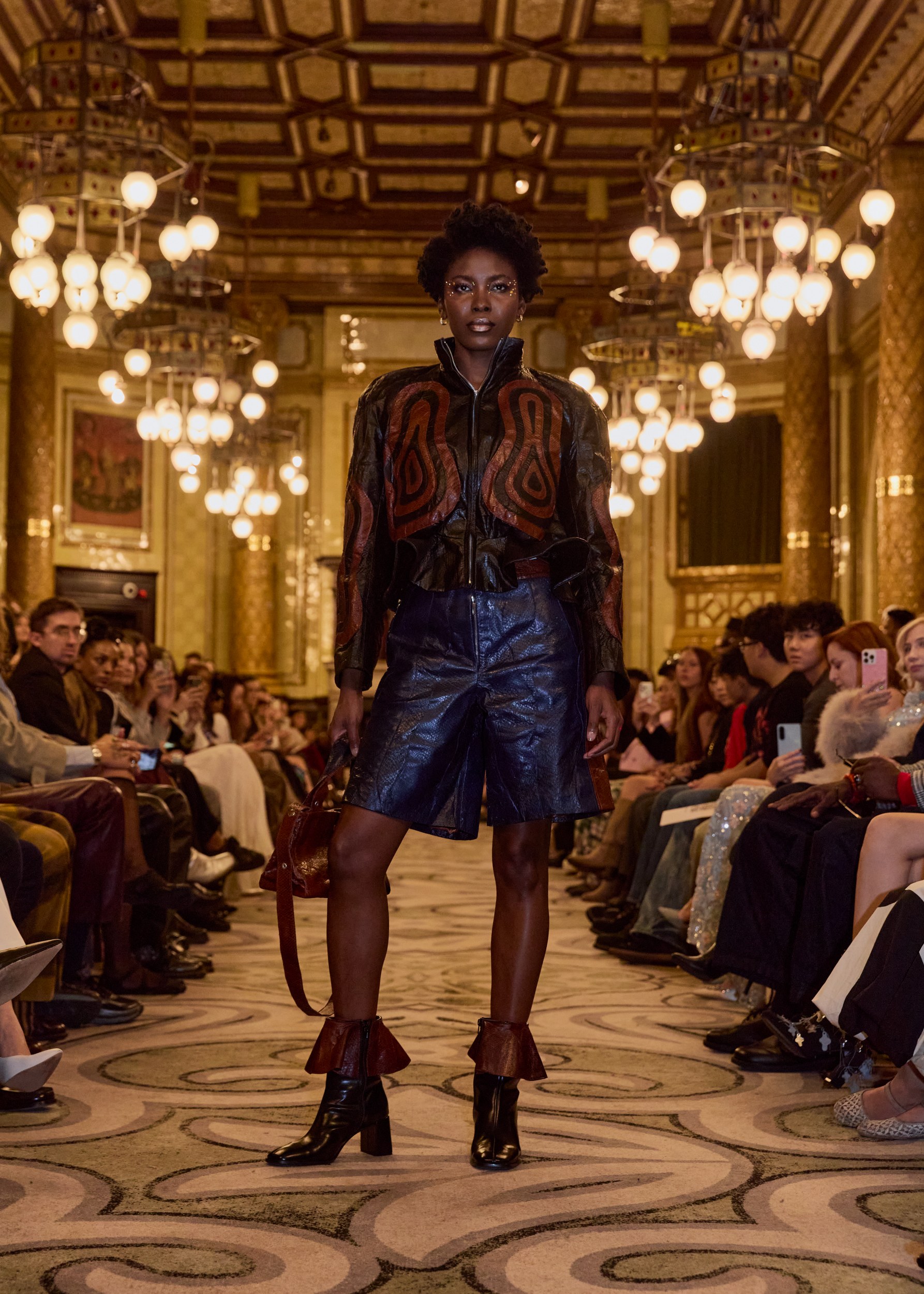
Flanelle had the pleasure of speaking to Tulasi following her show to ask about the collection, her inspirations, aspirations, and ideas for future collaborations between fashion and the digital.
Congratulations on your show, it was amazing, I loved it.
What is the meaning behind the title of your collection Omnia Vanitas?
So, Omnia Vanitas translates to ‘vanity of vanities, all is vanity’. So it is inspired by the book of Ecclesiastes, it explores this idea of physical mortality versus virtual identity, existing forevermore and forever on. We’ve really merged fashion design with the future of AI in this season, with this collection, bringing in the fabulous humanoid robot to close the show at the end.
Why have you chosen to bridge the gap between fashion and digital?
So for us, digital fashion also helps us from a sustainability angle. So, with digital fashion, you can ideate what something looks like virtually before you go ahead and make it, which reduces waste by up to 80% per garment. So we can really help cut back on material usage, water consumption, and align with UN Sustainability Goal 12.
So what does sustainability mean for TULASI? Is it about material sourcing, digital substitutions, or the volume of production?
Of course, yeah, so we’re really proud to be sponsored by Inversa Leathers this season, all the way from New York City, where we’re looking to expand internationally over the next year. And we were working with their silverfin fish skin, which is basically an invasive species that’s ruining the Mississippi River basin at the moment. So we were using all of these different materials and mixing them in with different faux furs and different beautiful satins in the collection to create a really stunning, glamorous collection.
And are there any digital textures that you’re trying to recreate in real-life garments or vice versa?
Yeah, so I think for us, one of the biggest things is we love to try and create faux fur virtually. It’s one of the hardest things to make in the digital tech world, but it’s something that we’ve done with different kind of substance renders and other different bits and pieces, and it’s just so beautiful having a garment that exists in the real world and twinning it so you can have it for a virtual identity or a metaverse avatar.
Where do you see TULASI being in 5 years time?
My biggest aspiration and dream is to be one of the largest women’s wear labels globally, pioneering digital fashion and AI. So, let’s see where I am in 5 years.
Are there any designers that have inspired you in particular?
Ooh. For me, my parents had a retail store, and in the 80s they used to sell luxurious fur and leather overcoats to empowered women. So I always look to Roberto Cavalli and old Celine, that really, really inspires me.
What do you think the future of digital fashion will involve?
So I think we’re going to care about how we look in the virtual world as much as we do in the physical. So I think for us, we’re going to be wearing luxurious designer wear on our meta avatars, our gaming characters. I think it’s going to expand into virtual identity.
Why did you choose to bring out a humanoid robot to close the show? Is there a deeper meaning behind that?
For us at TULASI, bringing the humanoid robot out to close the show was very much in keeping with the collection’s theme, Omnia Vanitas, which was inspired by the Book of Ecclesiastes and its exploration of the question ‘what is the meaning of life’?
As our physical and digital worlds increasingly overlap, we wanted to explore where humanoids might fit within our society and what that could mean for the future of humanity.
We were also really proud to cast more models in the show than ever before. The humanoid wasn’t there to replace them, but to complement the cast and create a moment of contrast between the human and the technological. Interestingly, bringing the humanoid into the show also created additional job opportunities behind the scenes. We needed at least three extra members of the Humanoid Robot Solutions team on site to operate and support it, which was a great reminder that even as technology evolves, there are still people at the heart of making these experiences possible.