An introduction to cities of the future with Sasaki’s Michael Grove. Text by Bernadette Gallagher
What is a ‘city of the future?’ It could be difficult to imagine as many of us already live within large urban centres. But it sounds really impressive. And it is. According to Sasaki, a city of the future is focused on changing the way we think about urban planning and design. A city of the future is also focused on changing the way we think about farming and food production.
One of Sasaki’s recent projects is in Shanghai, in the urban farming district of Sunqiao. It is a farming district within the city which has earned Sasaki and lead Landscape Architect, Michael Grove, a Finalist spot with the Fast Company World Changing Ideas Award.
Michael Grove, Chair of Landscape Architecture, Civil Engineering, and Ecology at Sasaki sat down with me to help explain how we can all contribute to improving upon urban centres, and the positive impacts which come from urban farming and utilizing the natural world around us
Tell us a bit about your background.
I’m a Principal at Sasaki and I’m currently the Chair of Landscape Architecture, Civil Engineering, and Ecology for the firm. I started at Sasaki 22 years ago so I’m one of those strange people who stayed at one job, one firm, my entire career- that wasn’t the plan. I came right out of school because I was interested in working at a large firm with a global presence, and felt that it would be not only a great resume builder, but an incredible place to learn and grow before deciding what my next steps would be. I was amazed and just blown away by the caliber of work that the firm does and did at the time: where we were working, the project types, but most importantly, the cities and individuals I got to work with every day.
There is such a diversity of people, not just based on what countries they are from, or what their life experiences are, but their knowledge and skill sets too. And that was the beauty of working at this interdisciplinary firm that mixes a bunch of different design disciplines together. Every day I interact with architects, planners, urban designers, civil engineers, data scientists, and so it opened my eyes to beyond what the traditional landscape architectural practice would be, and that’s why I’ve stayed.
Tell us more about your role as a landscape architect at Sasaki.
Landscape architecture is such a broad field of study and practice, ranging in scale from large land planning, regional plans, understanding environmental and ecological systems, all the way down to the craft of the work, and building these public realms that a lot of people take for granted, and don’t realize that they’ve been seriously thought through.
I tend to work more upstream in the profession, which is looking at larger landscape systems, open space, and ecological systems, and understanding how they contribute to the public realm in cities.
Something which you and others at Sasaki are focusing your work on is this concept of cities of the future- but that could mean different things to different people. How do you and Sasaki define a city of the future?
There is so much conversation around climate change, and the impacts to our cities. A lot of people think of it affecting coastal cities the most, as in sea level rise. What we don’t think about are larger patterns that are going to come out of climate change, whether that’s drought, or migration to and from different cities, and the social aspects we’re dealing with as a result of climate change.
Landscape architects are able to look at what these environmental impacts will be on cities, and what the social patterns will be in cities. And what we try to do is create a more resilient framework for these cities. So we look at ecology, ways to mitigate risk and minimize impacts of climate change- whether that is creating landscapes adaptable to flood, or natural breakwaters to minimize impacts of storm effects.
And most importantly to create these self-sustaining cities that are much more adaptable and resilient than the ones we have right now. What we really want to do is create these cities that are more self-sufficient.
One of your recent and very large projects is the Sunqiao Urban Agricultural District. What are some of the cool features in Sunqiao which make it a city of the future?
(Sun-chow)
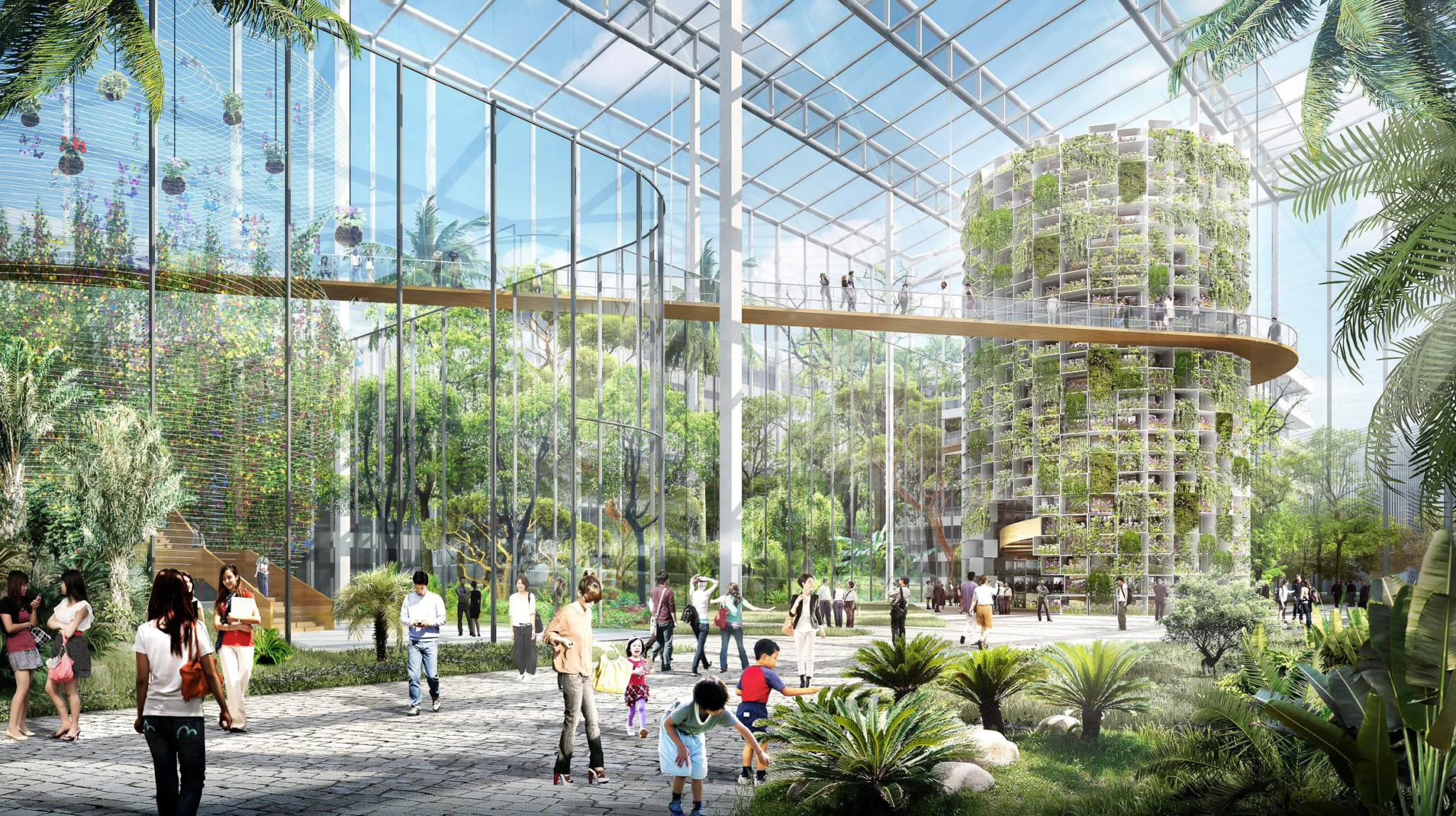
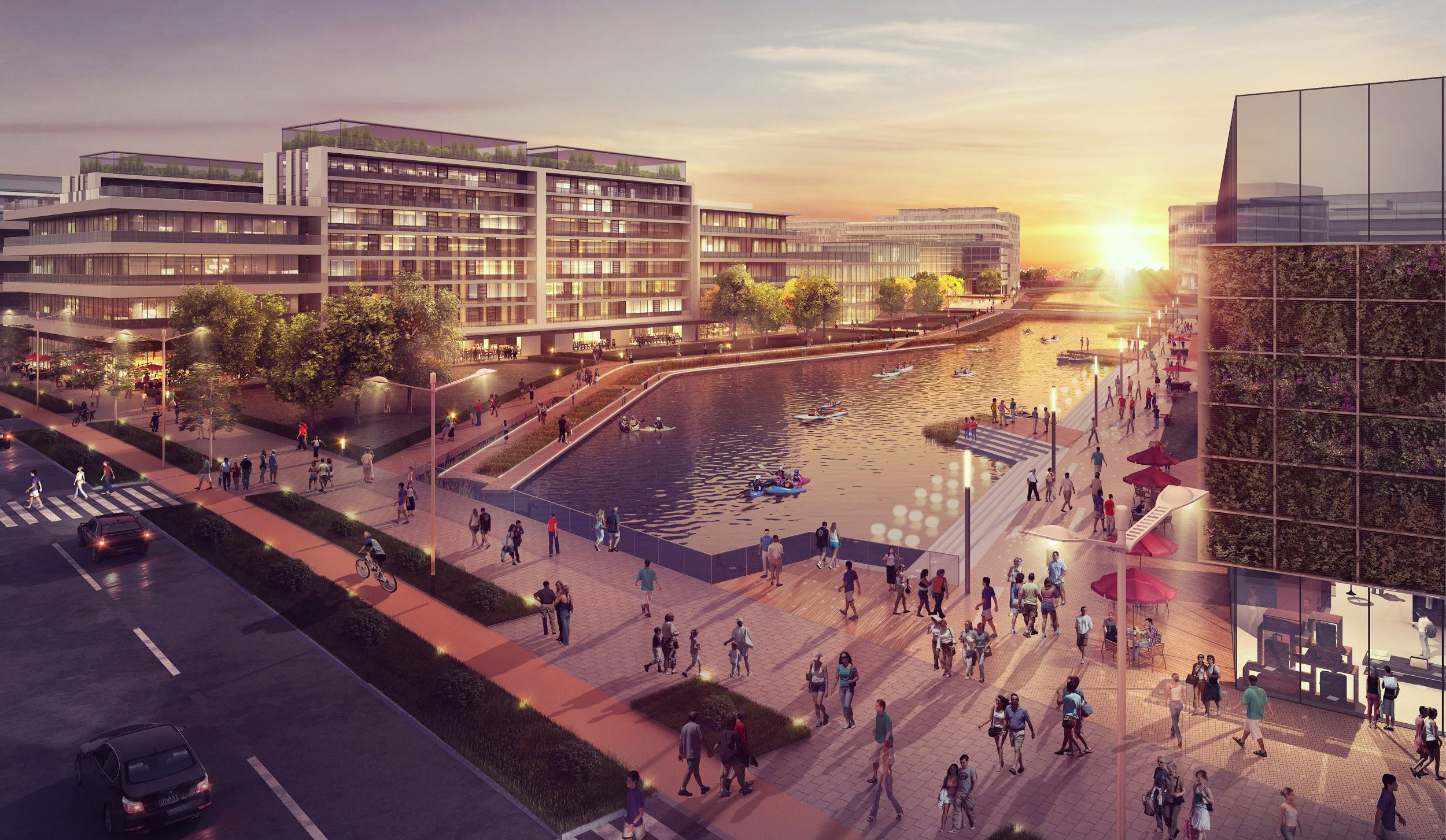
Sunqiao is a 1km squared district in the city, one subway station away from Shanghai Disneyland, so it is very strategically located. It seeks to create a new paradigm for how food can be produced for the city. Shanghai has 23 million people- that’s a lot of mouths to feed. One thing that’s really interesting about the traditional Shanghainese diet is that it’s about 56% leafy greens, and leafy greens grow really well in a Controlled Environment Agriculture (CEA) system: similar to the hydroponic vertical farming we’re proposing at Sunqiao. So growing in an urban condition with direct access to the consumer is better for a number of reasons:
- first of all it reduces the carbon impacts of our food by reducing transport;
- it also improves nutrition- food loses about 30% of its nutritional value about 3 days after it was harvested- and about 80% after a week. The faster we can get it on people’s plates, the higher the nutritional content.
And, specifically in China, there’s a lot of concern around pollution from pesticides and fertilizers and their impacts to food safety. Indoor hydroponics do not use any pesticides or fertilizer- so we remove those concerns from the equation.
There’s also the educational aspect to it as well- this opportunity in urban agriculture where you can teach the next generation – many of whom may have never been to a farm in their lives – where food comes from and how it’s grown. There’s this appreciation and understanding now that we’re all part of this natural system, as well as the need to protect and enhance that system.
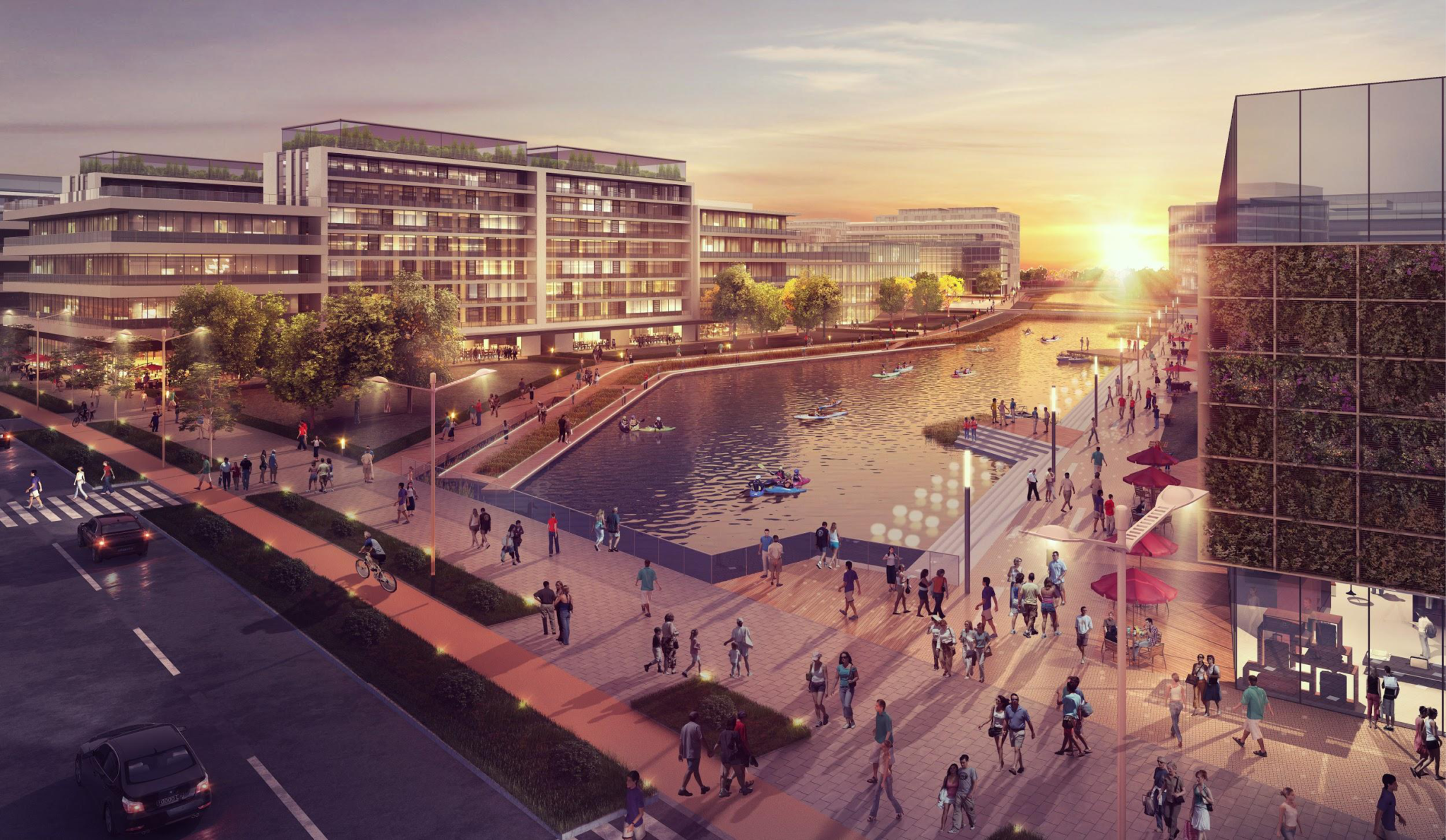
Image: Sasaki
Are all of your projects this large-scale, and can you tell us about some of the smaller projects you have worked on?
Sasaki’s landscape architects are really focused on the urban public realm, especially cities- places where people congregate and are able to have a respite within the urban environment. Some of our cool smaller scale work includes:
Cincinnati John G. and Phyllis W. Smale Riverfront Park
Boston City Hall Plaza Renovation
Considering the recent resulting pandemic of COVID-19, how can cities of the future, and the smaller projects like waterfront and city parks, help us be better in the future as a society?
I think one thing that emerged early on in the pandemic was realizing we had to stay home, so there was a new appreciation for public space, and places where you can gather and be social in the relative safety of the outdoors.
People really took to understanding how valuable recreation and access to natural environments are to our health and well-being: not only in times of pandemics, but in our daily lives. One thing that we’ve been thinking about is that there’s more equitable access to those types of spaces. A lot of North American cities tend to invest more heavily in wealthier neighborhoods. So we need to make sure we have access for especially marginalized and underrepresented communities, and that they have the same level of resources and access as the rest of the city.
The second half is a recommitment to cities. Early on in the pandemic there was a knee-jerk reaction against cities, and misinformation about dense urban environments being places where there were higher instances of COVID-19 transmission. While tied to density, it is only density of people. So if you’re living in close quarters, this is where the transmission rates were higher.
I think what we need to avoid is the reaction of going to the suburbs and feel it will provide you with adequate social distancing. That becomes a double-edged sword where you begin to encroach on the natural environment where these zoonotic crossover diseases emerge from.
The more we have human development going into the untouched, natural areas, the more exposure we’re potentially creating for ourselves.