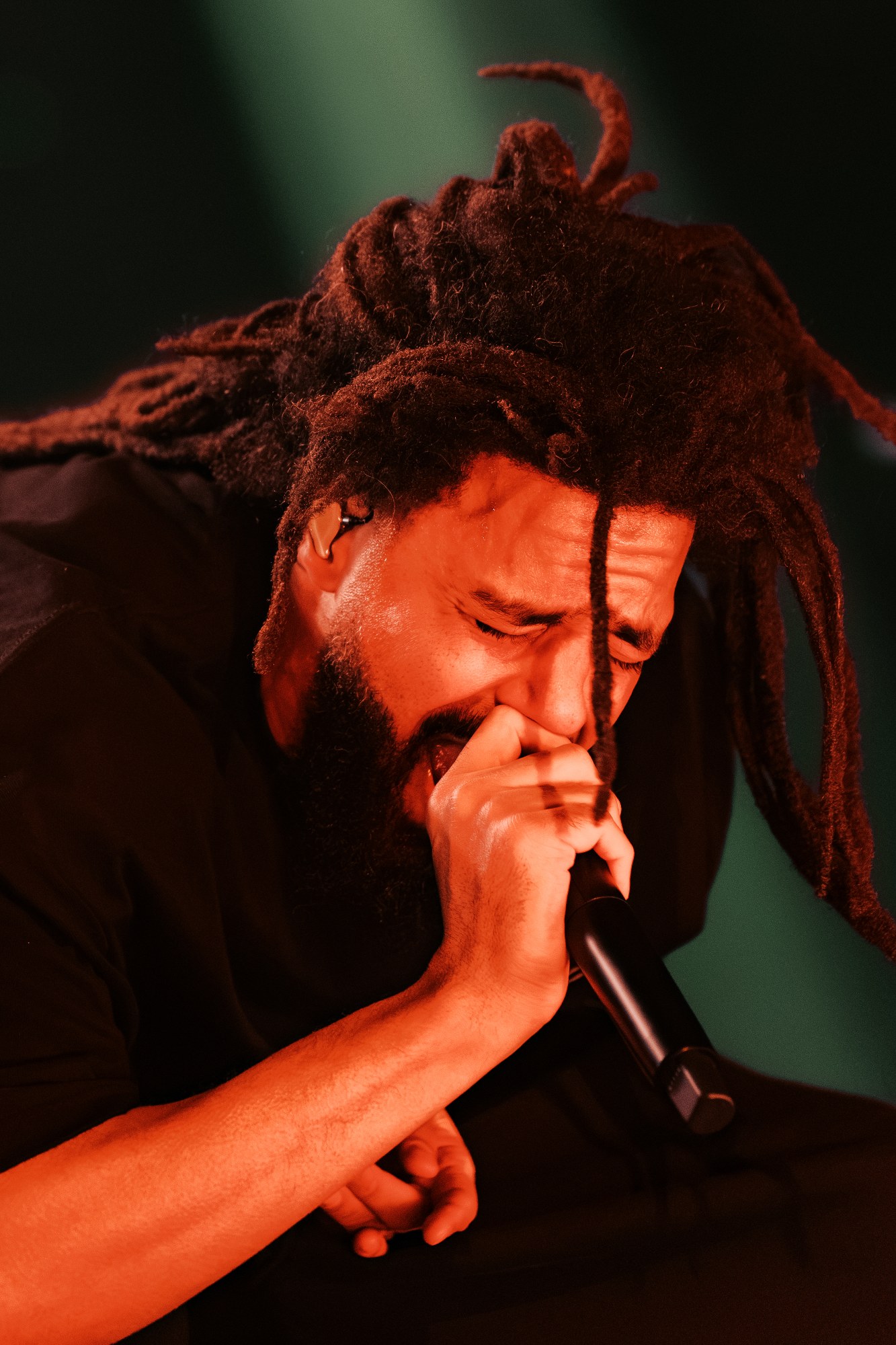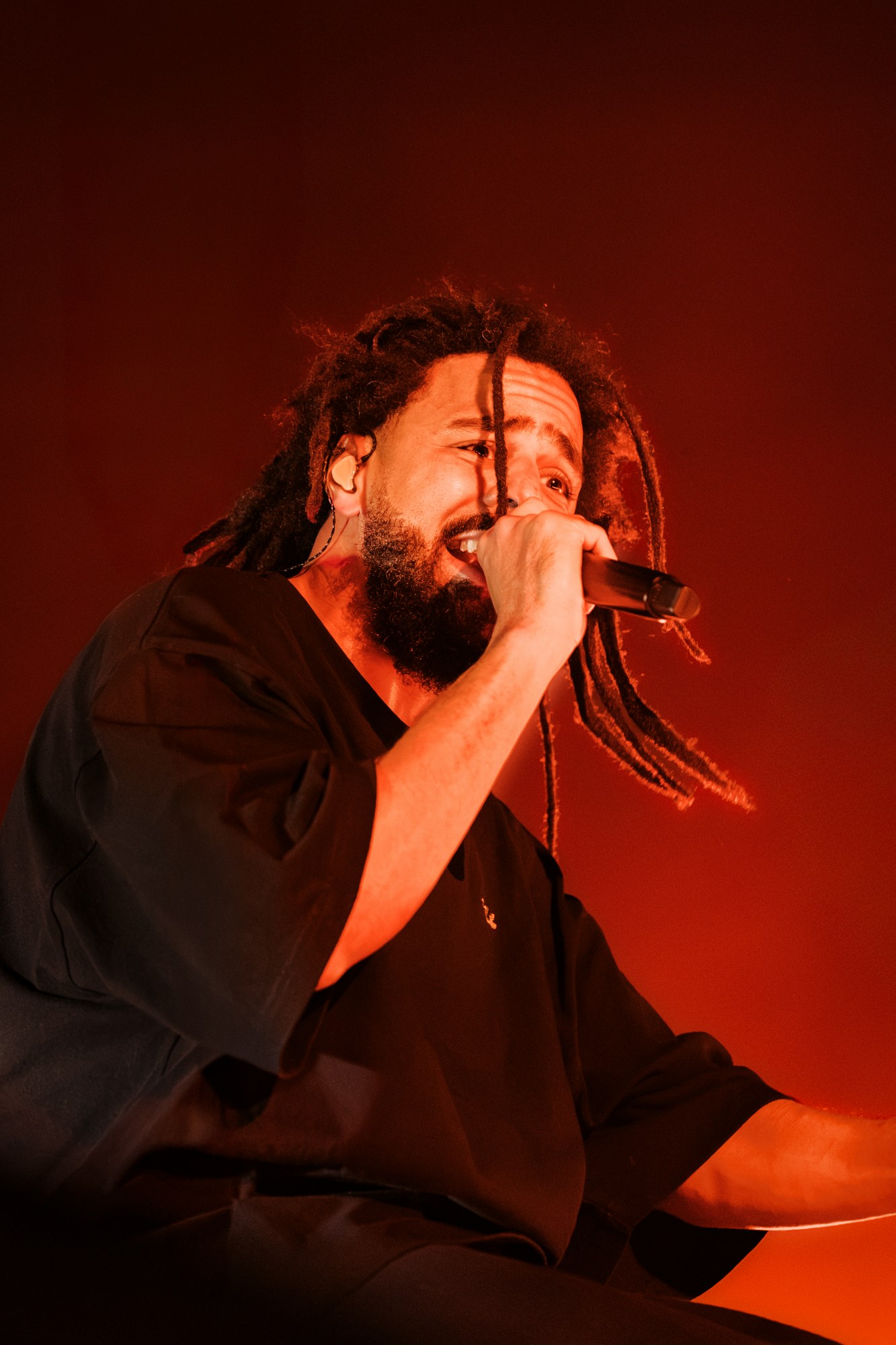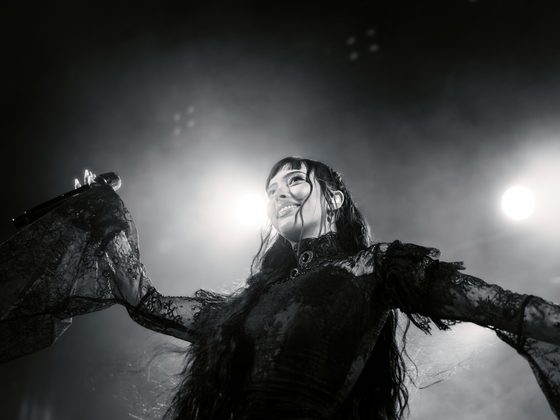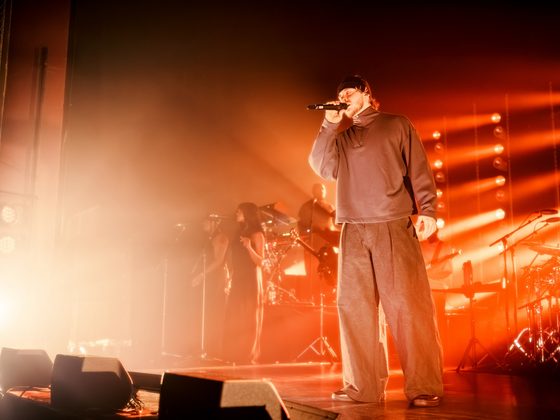
On July 25th, J. Cole lovingly shared a piece of his hometown, Fayetteville, with Montreal. As a part of The Fall-Off Tour, the Bell Centre was transformed into a sprawling tribute to his roots. Through an elaborate schoolhouse set, and music that drew upon themes of legacy and nostalgia, he traced two decades of musical ambition with a rawness that felt palpable. In perhaps his most introspective production yet, J. Cole stared down his own mythology as an artist, to bring his artistic journey full circle.
Text by Jamie Xie
Photos by Louis Alson
The Fall-Off album at its core was built as a paradox. Composed of two discs that documented the same trip home at two different ages, 29 and 39, J. Cole explored the double-edged crossroads of legacy. It was the culmination of a sprawling two-decade career, a narrative arc that was predestined to circle back to where it started. Conceptualized as J. Cole’s final album and a grand farewell tour, The Fall-Off Tour is both a worldwide victory lap, and a two-act reflection on the homecoming that never ends.
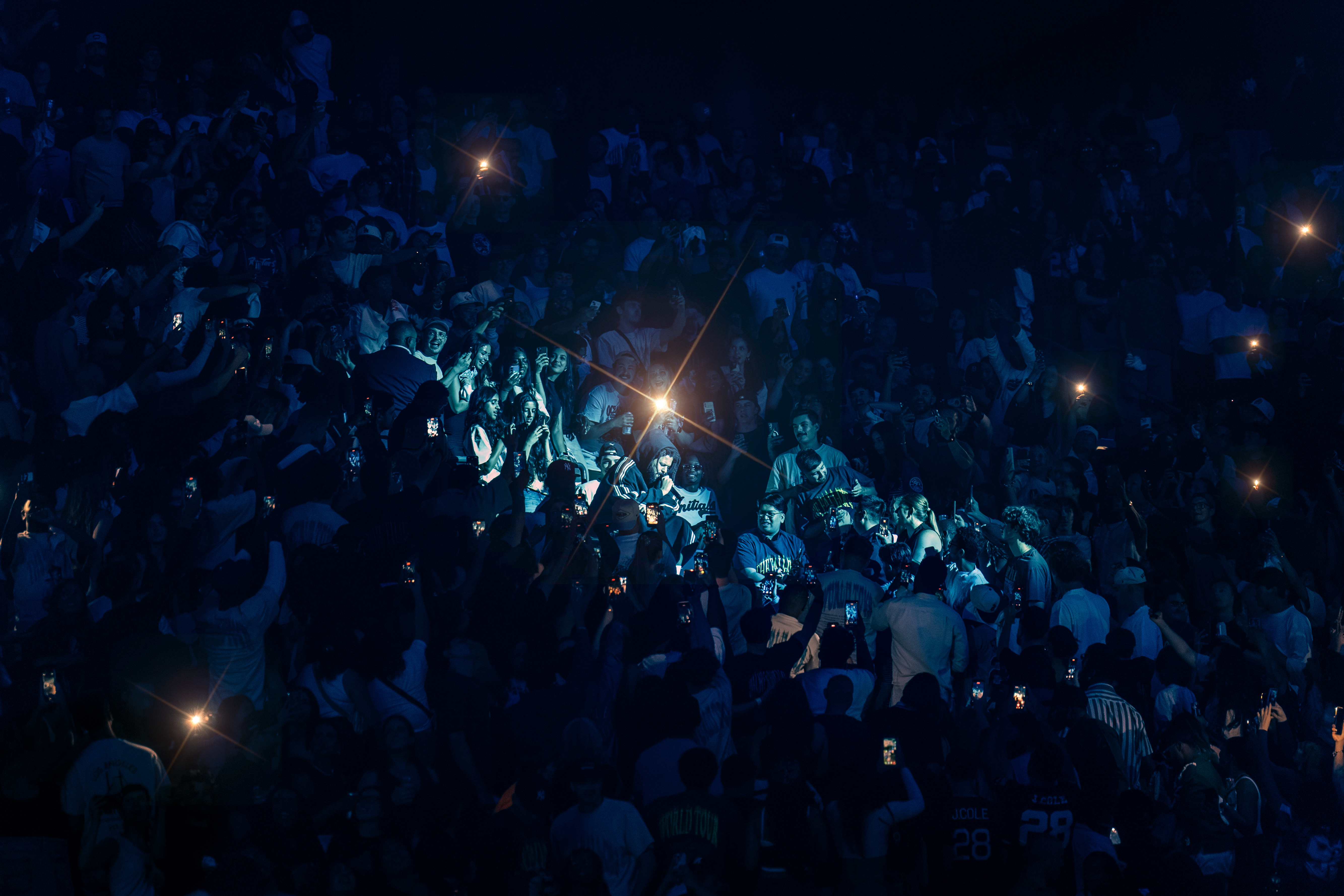
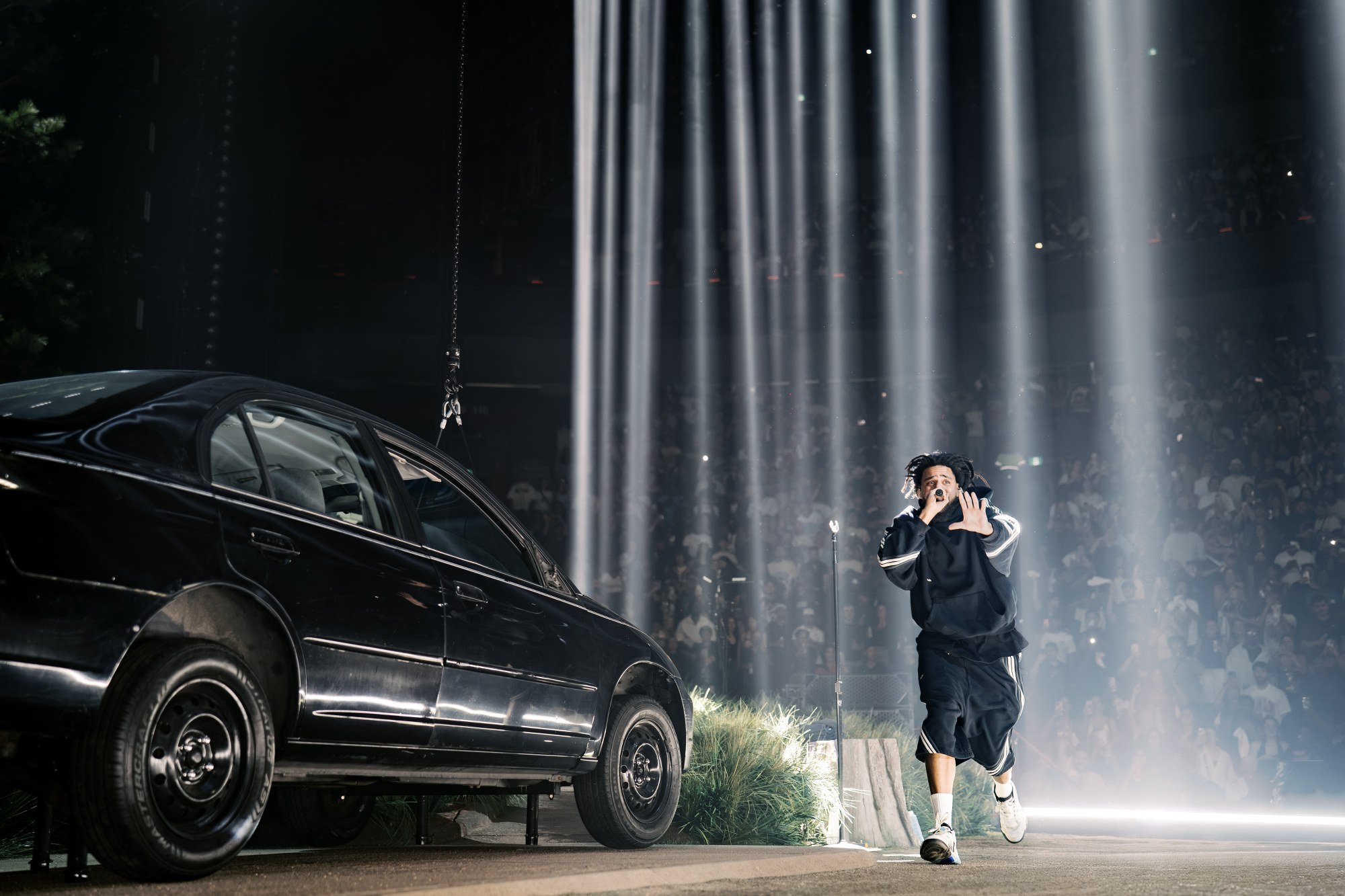
On July 25th, that hometown—Fayetteville, North Carolina, lovingly referred to as “The Ville”—materialized itself in the Montreal Bell Centre as an elaborate three-story schoolhouse set, taken over by ivy overgrowth. Trees stretched towards the arena’s ceiling as a memory palace built to scale. Set to “39 Intro,” the concert opened up with a theatrical flourish; a playful movie studio title sequence disclaimed that the concert was “based on a true story.” A blue spotlight panned across the crowd to reveal that hidden among the crowd was J. Cole disguised in a dark hoodie. He made his way down the stairs, climbing the stage to the crowd-favourite hometown anthem “Two Six.”
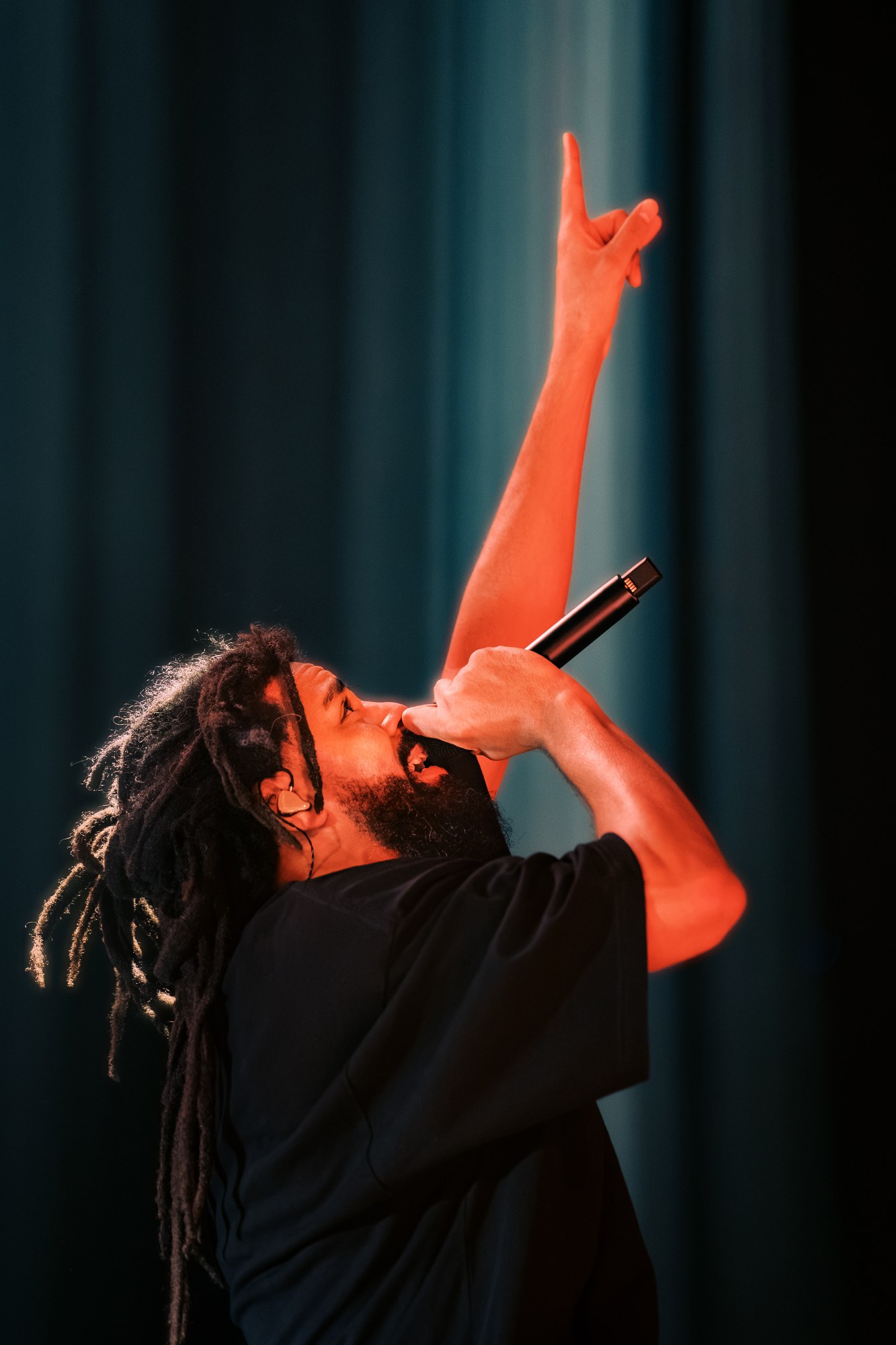
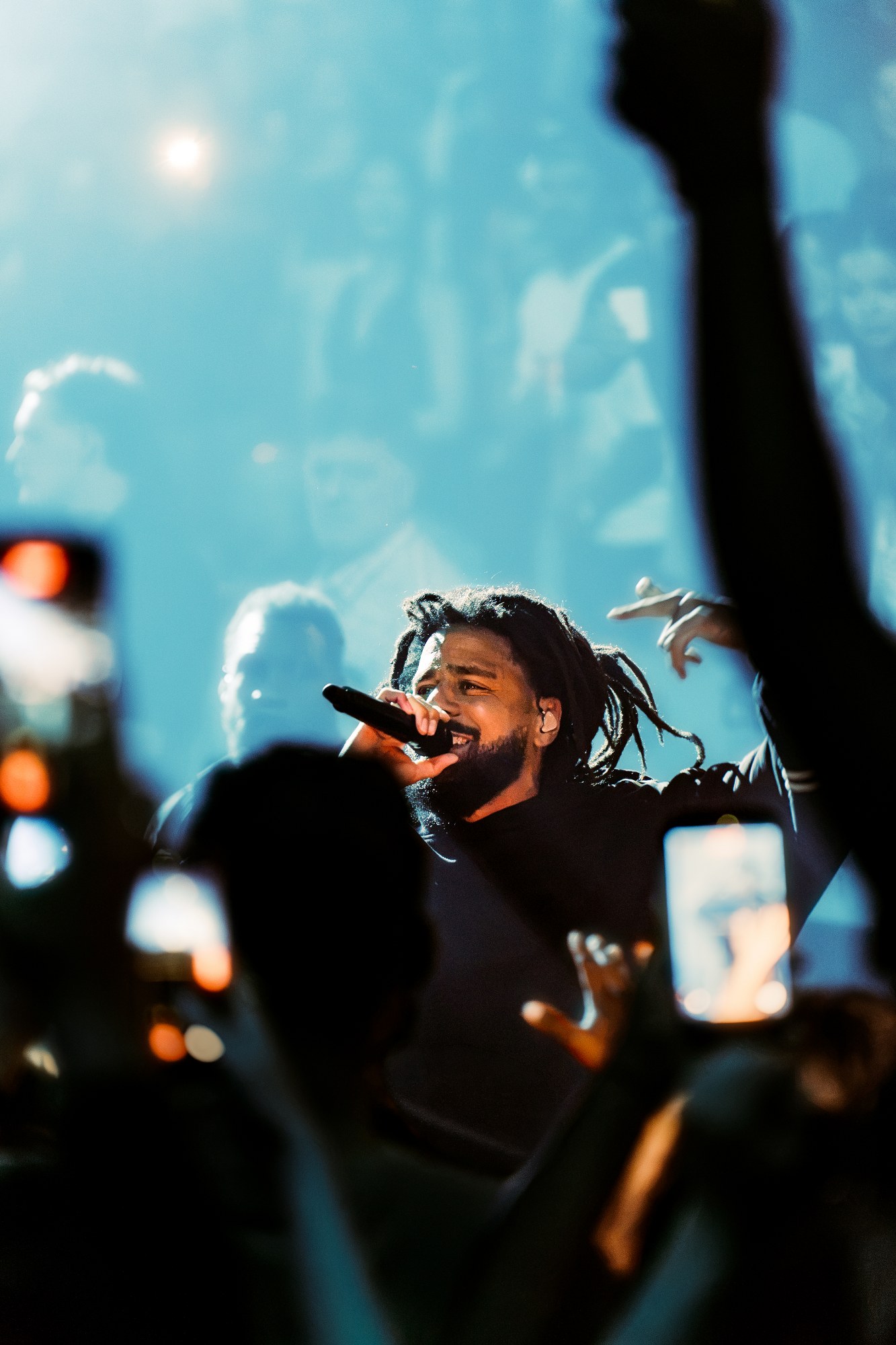
There is an old adage written on many car mirrors that warns: “objects in a mirror are closer than they appear.” For J. Cole, this warning carried a profound truth: to look forward at the mirror was paradoxically to also look back. We never truly outgrow our hometown; we carry it with us everywhere we go. To preface the album’s thesis statement “Legacy,” J. Cole spoke of his desire to bring pride to Fayetteville and put it “on Mount Rushmore.” He went on to trace the growing disillusionment with the naïve dream that he might be welcomed home as a hero. “There was once a time in my life when I didn’t feel so happy and proud to be from there,” he admitted. “After I got successful, there were people at home that I thought would be proud of me—they were hating on me, and they were lying on me. It hurt my heart.” Accompanied by guest singer PJ, J. Cole lamented the complex hometown reality that had always been closer than it appeared.
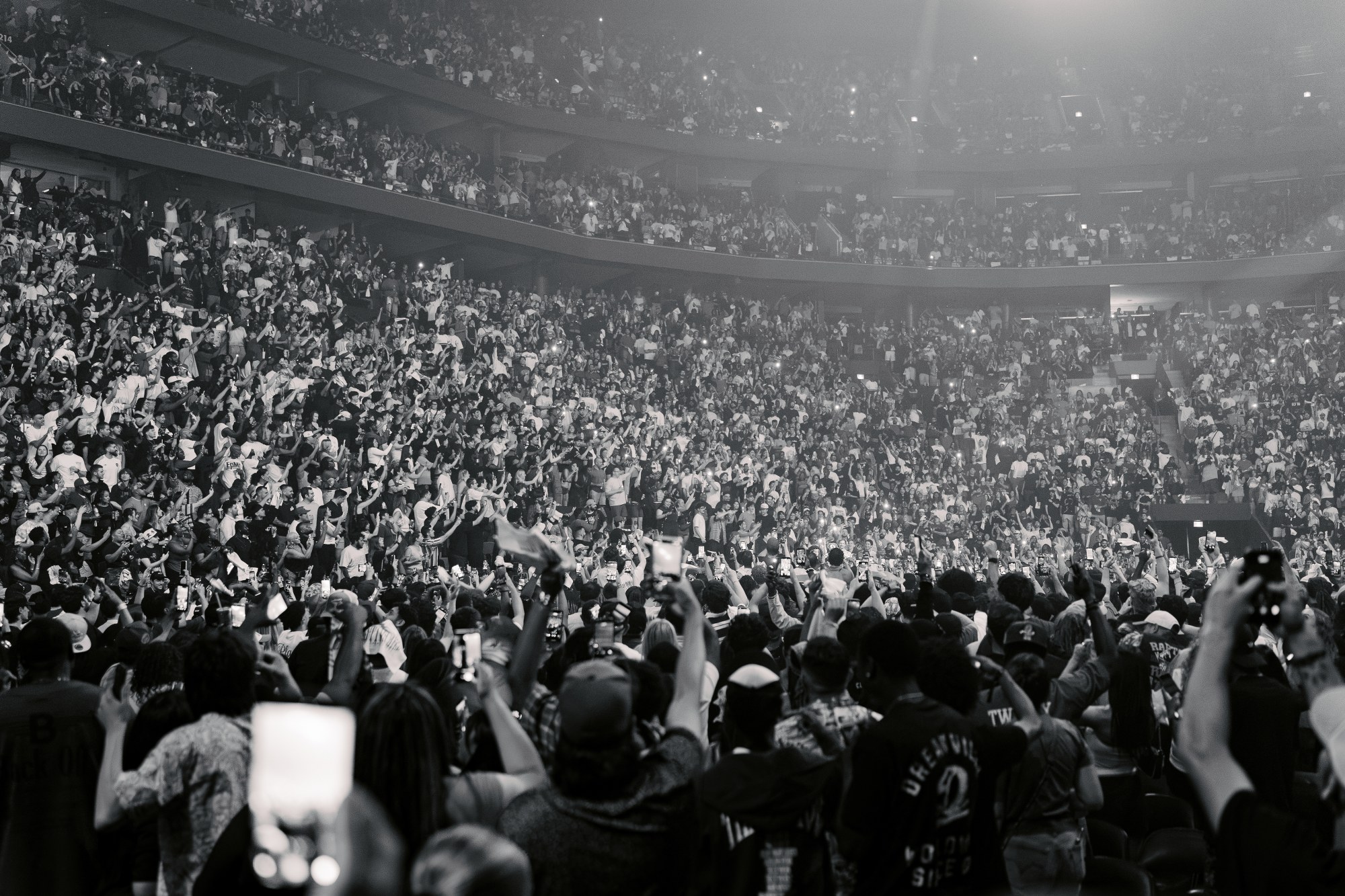
In perhaps one of the most tender moments of the night, J. Cole requested that Montreal bring his hometown to the stage. “Everywhere I go on this tour, I bring this [act] in,” he said. “I know it’s a real culture shock […] but Montreal, I need you to do me one favour: for the next song […], I need you to pretend—act like you’re fans from North Carolina just for one song.” For those five minutes, the Bell Centre was transformed into Fayetteville. United by their shared love for J. Cole and invited to play along, the stadium was electric. As Cole launched into a cover of Petey Pablo’s “Raise Up,” a southern classic that had once put North Carolina on the hip-hop map, the arena erupted in a chorus that could have been mistaken for a North Carolina tailgate. The daring Quebec to American South culture shock, it turned out, was the whole point. A reminder that home isn’t necessarily a place, but something you carry with you, and every so often get the opportunity to invite others to share.
In the night’s rendition of “Nobody’s Perfect,” an extended sing-along section was featured. With the last verse sung completely without backtrack, it carried a vulnerability to it and stood as a heart-to-heart between J. Cole and his fans. It featured the raw, unfiltered voices of thousands of Montreal fans in unison, a moment of collective reimagination. On the overhead screens, live footage of the sound team played behind-the-scenes, offering a glimpse into the mechanics of the production. The backup singers could be seen harmonizing in real time, while record scratches punctuated the performance to highlight the concert’s running theme of authenticity.
Throughout the concert, J. Cole moved effortlessly between crowd-pleasing fan-favourites and retrospective personal selections, which he self-proclaimed as “selfish songs.” These were the tracks he explained would speak to a sense of nostalgia, ones that would decorate the setlist for him to look back on fondly years from now. Ending the night on one such “selfish song,” Cole closed with the heart-wrenching “Quik Stop.” It was a choice that echoed the album’s central paradox: The final moment of a grand farewell tour was not a popular radio anthem, but an intimate reflection on the man J. Cole had been before the world decided who he was. The song’s raw honesty was a reminder that the most enduring legacies are built not on spectacle, but on the moments we get to reserve for ourselves.