The landscape of independent fashion is undergoing a radical shift, driven by a new generation of buyers who prioritize ethics as highly as aesthetics. Launching a jewelry label today requires more than just an eye for design; it demands a deep commitment to environmental responsibility.
For indie brand founders, this means rethinking the entire supply chain from the ground up. Sustainable practices are no longer an optional marketing add-on, but a foundational requirement for long-term survival and brand credibility in a crowded market.
Why Sustainable Manufacturing is the Foundation of Modern Jewelry Brands
Historically, the jewelry industry has been plagued by opaque supply chains, heavy carbon footprints, and unethical mining practices. Modern independent brands simply cannot afford the reputational risk of relying on these outdated and highly polluting manufacturing methods.
When scaling an independent fashion label, your supply chain is everything. Today’s conscious consumers expect absolute transparency, meaning brands can no longer rely on opaque production methods.
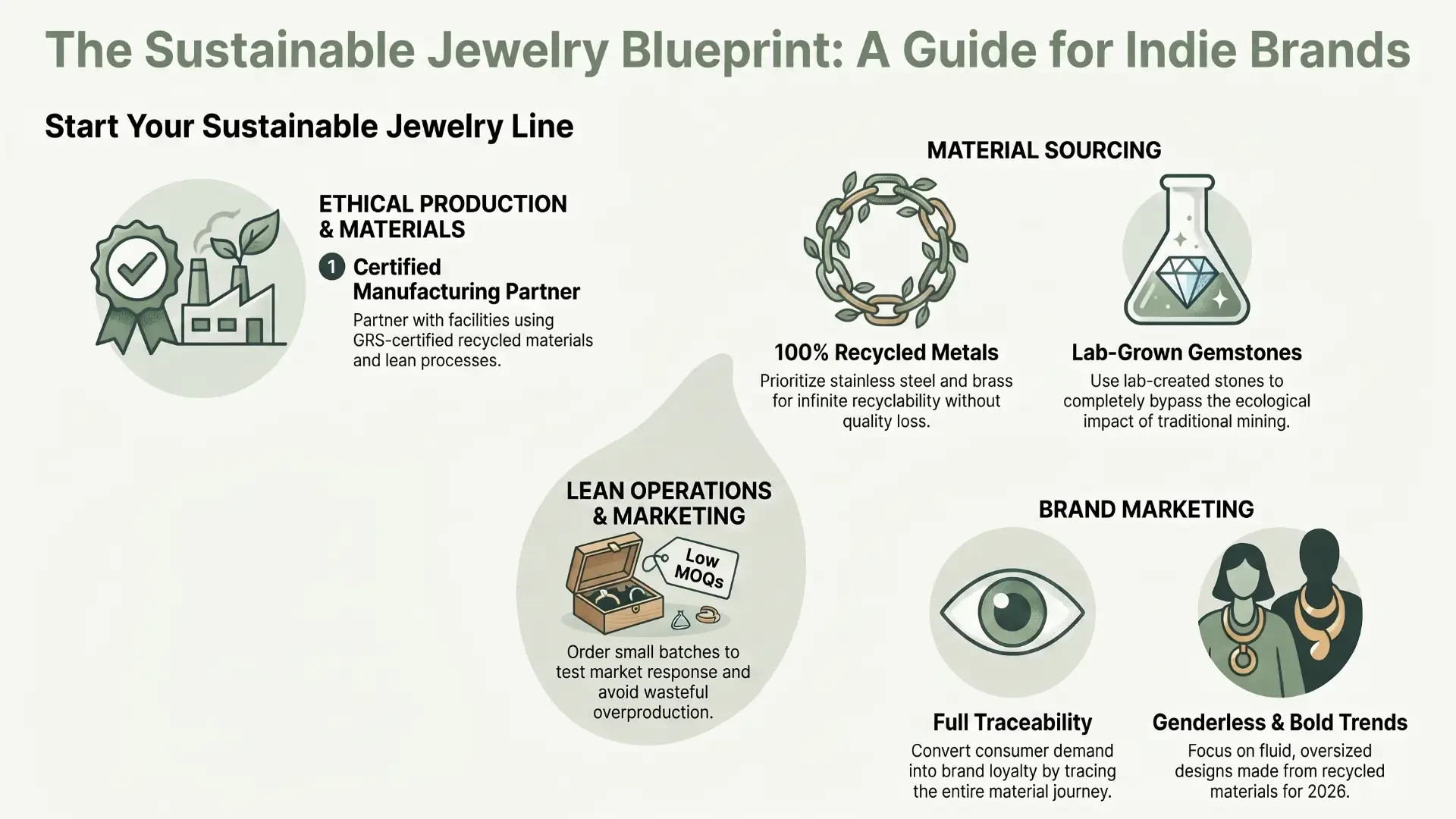
Instead, founders must partner with a certified Azone Jewelry to handle ethical production. For instance, facilities like Azone Jewelry utilize GRS-certified recycled materials and lean manufacturing processes, which provide the low minimum order quantities (MOQs) necessary for emerging designers to test new collections without contributing to industry overproduction.
By locking in a responsible manufacturing partner early, indie labels build a resilient foundation that aligns with both global sustainability standards and the expectations of their target demographic.
Key Steps to Launching Your Eco-Conscious Accessories Label
Defining Your Brand Identity and Niche
Before sourcing materials, you must establish a clear, cohesive brand identity. Whether your aesthetic leans toward minimalist elegance, avant-garde streetwear, or Y2K vintage revival, your design language must align seamlessly with your sustainable ethos.
A unified message ensures that your commitment to the environment feels authentic rather than forced. Consumers connect deeply with brands whose visual identity directly reflects their core ethical values.
Sourcing Ethical Materials (Recycled Metals & Stones)
The materials you choose define the environmental impact of your jewelry line. Fortunately, material science and recycling technologies have advanced significantly, offering high-quality alternatives to freshly mined resources.
Key materials to prioritize include:
- Recycled Stainless Steel and Brass: These metals can be infinitely recycled without losing their structural integrity or aesthetic appeal.
- Lab-Grown or Upcycled Gemstones: These options completely bypass the ecological devastation of traditional mining.
- Eco-Friendly Electroplating: Advanced, non-toxic plating techniques reduce water contamination and chemical runoff.
Managing MOQs and Lean Production
One of the greatest hurdles for new jewelry designers is managing inventory pressure while navigating the strict MOQs demanded by traditional factories. Over-ordering ties up vital capital and inevitably leads to dead stock, the enemy of sustainability.
This is where lean manufacturing becomes essential for independent brands. By adopting an agile production model, designers can order in smaller batches, test market responses to specific pieces, and scale production only when demand is proven.
2026 Jewelry Design Trends to Watch
As we look toward 2026, sustainable jewelry is moving beyond simple, understated designs into bold, expressive territory. Independent designers are pushing boundaries while maintaining their eco-conscious commitments.
Expect to see a massive surge in genderless accessories, breaking down traditional fashion binaries with fluid, adaptable pieces. Additionally, oversized, exaggerated chain designs crafted from recycled metals will dominate editorial spreads and street style alike.
Key Takeaways
| Area | Key Takeaway | Impact/Data |
| Sourcing | Lock in certified eco-manufacturers early. | Secures low MOQs for market testing. |
| Finance | Adopt agile, lean small-batch production. | Eliminates capital tied in dead stock. |
| Materials | Use recycled metals and lab-grown gems. | Bypasses toxic mining and reputational risks. |
| Marketing | Publish verifiable supply-chain transparency data. | Commands premium prices from target demographic. |
| Design | Target 2026 genderless and oversized trends. | Captures upcoming macro shift in demand. |
Marketing Your Sustainable Mission to Consumers
Having an ethical supply chain is only half the battle; effectively communicating that value to your audience is what drives conversions. Transparency is your greatest marketing asset, allowing customers to trace the journey of their jewelry from recycled raw material to finished product.
Marketing your eco-conscious accessories requires authentic storytelling rather than greenwashing. According to recent industry analyses regardingconsumer demand for sustainable fashion, a rapidly growing demographic of buyers is actively seeking out and willing to pay a premium for verifiable eco-friendly products.
By highlighting your transparent supply chain and ethical material choices, you convert this market demand into long-term brand loyalty.