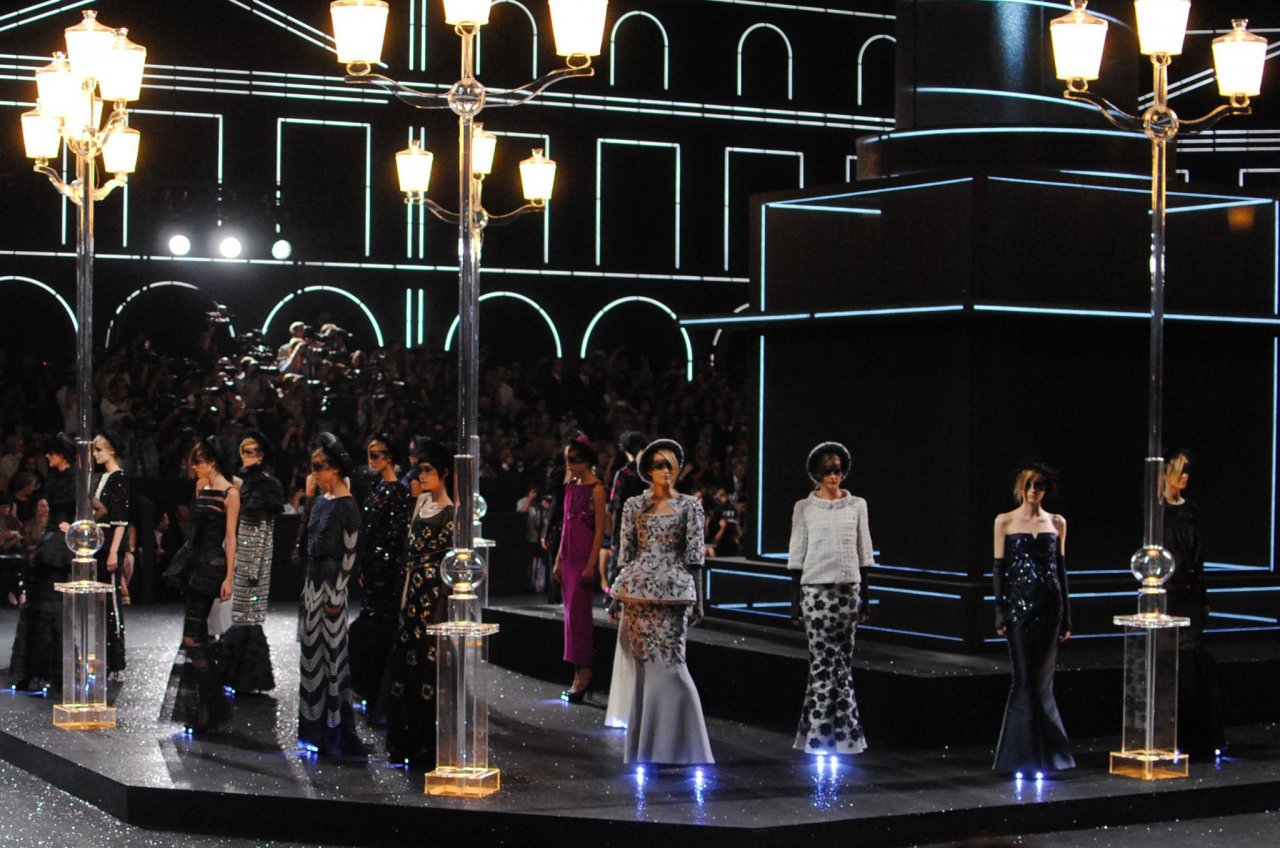
From private salons to rocket launches at Chanel, the fashion show set has evolved from a simple backdrop to a storyteller, and now to a spectacle built for the camera.
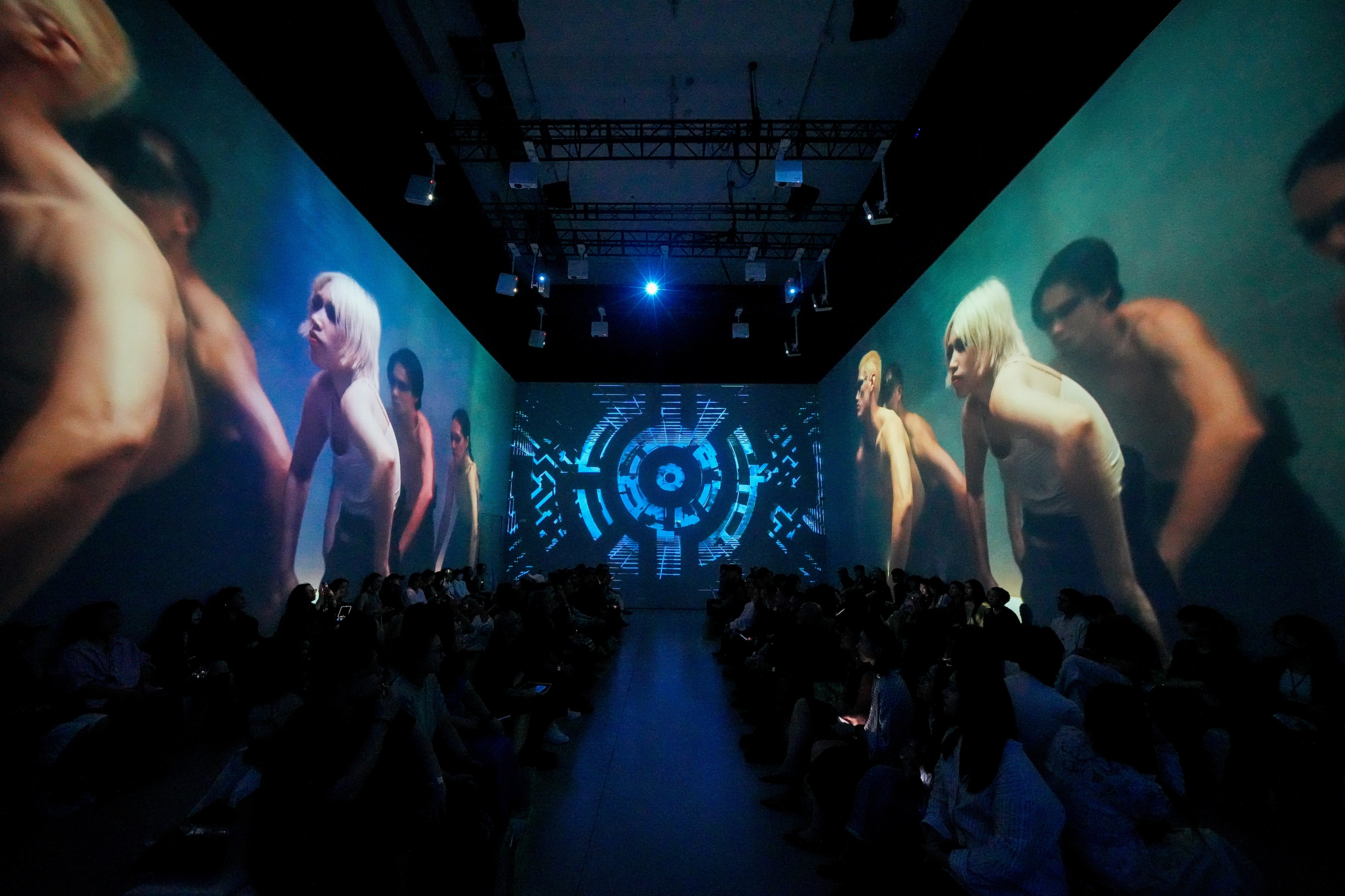
Setting the scene. Before a single look has entered onto the runway, the show has already begun. Anticipation, excitement and the audience is hooked. The set design is key. It has become more than a mere backdrop. What was once treated as a blank canvas on which to display fashion has now been transformed into a flourishing experience, cohesively bringing together entertainment, extravagance, and theatrics.
The environment is part of the fashion story. It has become a second method of communication for designers, offering a way to dive deeper into artistic ideas behind a collection, expanding on what the clothing seeks to express.
Where did it all start? A brief history.
Originating as a private and intimate event, reserved for the wealthy, aristocrats and fashion elites, the runway show has now shape-shifted into a place of spectacle and a space for public recognition and brand visibility.
The embryonic form of the fashion show appeared during the mid 19th century, when fashion collections were presented on live models who acted as mannequins, an idea conceptualised by Charles Frederick Worth. These models helped buyers visualise how they themselves may look and move within the garments, featuring clothing that only a select few would ever get to see. At the turn of the 20th century the runway stage was introduced, becoming an animated fashion presentation. Sets were simple, keeping the clothes as the sole focus throughout, with the runway separating audience and models, all eyes were on the garments.
From the 1960s, fashion shows became more experimental, moving out of salons and private rooms into spaces that inspired the collections or complemented their narrative. By the 80s and 90s, fashion show set design was growing bigger and more ambitious. The aim? To transport the audience to another place, a distant land – theatrical, magical and marvellous displays of imaginative ideas turned into architectural feats.The fashion show became a place where people were not only excited to see new collections, but also to see the set itself, hoping for that spectacle and a deeper insight into the designer’s world.
The next shift came with the rise of the camera. Once brands grasped that photography and video could be used as a marketing strategy, the runway evolved once again into something designed to be documented, not just observed. In the age of social media, this has become vital – every detail needs to be planned out with the expectation of being caught on camera. The fashion show no longer relies solely on the clothes presented on the runway; it relies on the audience’s experience and how they capture and report the collection following the show. It isn’t only the guests in the room who will share opinions on the clothes, it is now for the rest of the internet to comment on them too.
Set as storytelling.
Beyond spectacle, the set plays on narrative, communicating the designer’s inspiration and acting as a vehicle for storytelling that runs through a specific collection. The set becomes a space to expand on a concept and become a fully imagined world around the audience. Designers want their shows to be memorable, how better to do that than to create a set that is unforgettable in itself – inviting guests into their fantasy world through mise-en-scène as much as through the fashion. However, the set must complement the collection, being careful not to overwhelm it – it’s all about coherence. It is a balancing act, the risk is that the audience remember a dramatic design rather than key silhouettes within the show.
With hundreds of shows every season, set design has become a way of separating one from the rest, turning a collection of clothing into an immersive and collaborative experience shared between designer and audience. It carries the same sense of exclusivity as the original fashion shows but with the added element of intrigue, people viewing it on social media and wishing they could have witnessed it in person. With this in mind, there is an even greater need to have a worthy set design to build on the designer’s storyline and for it to linger in peoples’ minds.
What makes a set memorable?
Some shows have become synonymous with their incredible set design, entering fashion history driven by concept alongside the clothes themselves. Designers look for sets that can differentiate them for the rest, support their brand image and showcase the best version of their collection, whether that means going big and bold or keeping things simple. Anything out of the ordinary goes a long way.
Examples of extravagant designs include Karl Lagerfeld’s iconic ideas for Chanel shows, from the rocket launch (F/W2017) and the supermarket shopping trip (F/W2014) to the winter wonderland (F/W 2019). Matthieu Blazy has continued this fascination with the unforgettable at Chanel, bringing together fantasy and fun through planetary solar systems (S/S26 ready-to-wear), giant toadstools (S/S26 haute couture) and a huge fairytale beanstalk and vines meandering around the models (F/W26 haute couture).
In contrast, it sometimes works to go back to basics, as seen during the Valentino panoramic show (S/S2026). By stripping spectacle and distraction back to a minimum, it offered viewers intimacy through single visions, placing models in the cylindrical suites, inspired by the 19th century Kaiserpanorama. Viewers had individual peep holes, allowing 360 degree viewing as the models drifted through one by one.
Making the most of the natural world has proven to be unforgettable through location. For its S/S 2008 show, Fendi took its audience all the way to one of the wonders of the world – the Great wall of China. Saint Laurent’s Men’s S/S 2023 show took us to the deserts of Morocco, set between rolling sand dunes. Dior Men staged its Fall 2023 show against the Great Pyramids in Egypt, and Jacquemus S/S 2021 took the audience to fields of gold, tracing through lines of wheat fields in France.
The list goes on. These are just a few of a countless number of spectacular shows and set design. Each one has reframed how viewers relate to the clothes. They form a point of reference, a beautiful absurdity, an ingrained memory – specifically because the set made the collection impossible to view any other way.
The scene has been set.
The set has evolved and advanced alongside the show itself, progressing from a background frame to provide context and depth for the collections. The setting allows designers’ ideas to grow beyond the garments, another creative outlet and a chance to inspire. The set isn’t just decoration, it is the pages of the storybook on which the clothes perform.
Words by Clemmie German
Featured image: Courtesy of Wikimedia Commons – Haute Couture News, July 2011