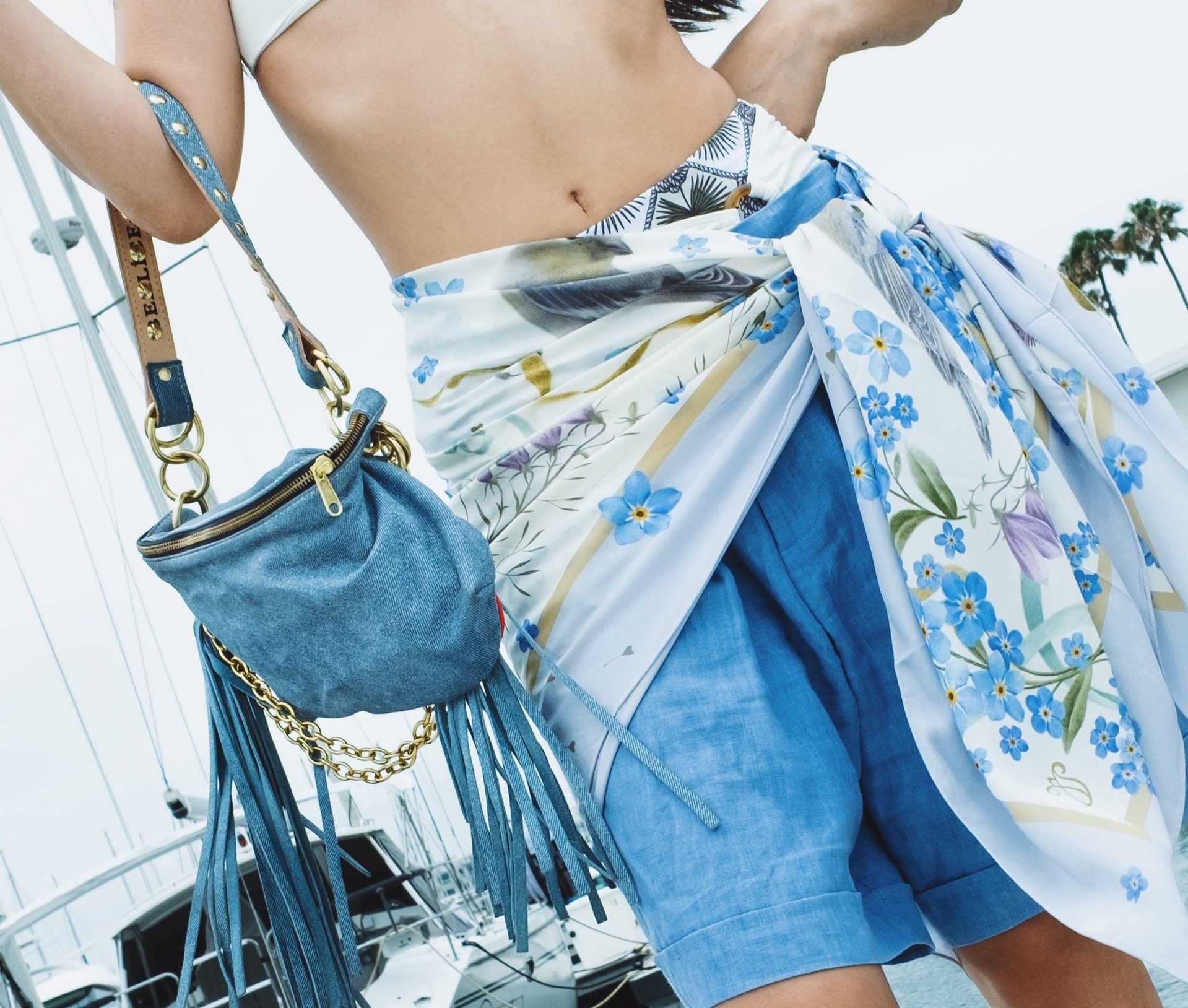
How a Minnesota Dog Owner Built a Bag Brand That’s Now on Nordstrom’s Shelves
BeAlice began in 2018 the way a lot of good ideas do: as an answer to a problem nobody else seemed to be solving. Amy, the brand’s founder, was struggling to find a bag that could keep up with her life, specifically the dog training classes she was attending with her Saint Bernard, Alice, who required both hands free and a steady supply of treats. At the time, hands-free bag styles like slings and belt bags hadn’t yet become the retail staple they are today. Women were still carrying heavy, structured purses and making do. Amy designed a flat, minimal leather bag with adjustable, patterned webbing straps that could be swapped out to change the bag’s whole look, and named it after the dog that had inspired it.
What started as a personal fix quickly became something bigger. Buyers began messaging Amy directly, and within a few years BeAlice had grown well past its original idea of one bag for one woman’s problem. The brand built its identity around a convertible design philosophy; every bag doubles as a crossbody, a shoulder bag, or a clutch, with straps engineered to be interchangeable across every style, along with signature details like red piping and brass hardware, and a naming convention that ties each collection to a person or story, from the original Alice to Blair, styled after a character from The Facts of Life.
Eight years later, BeAlice has landed a placement with Nordstrom, picked up a Forbes feature, and been worn publicly by figures like Chanel West Coast and Emily Curl, all while keeping production largely in Minnesota and in some cases, sewn by Amy herself. In 2025, she brought on a business partner, Becky, a former marketing professional, to help manage the company’s growth in retail and visibility while Amy continues to lead design and production. The brand has held to an internal standard Amy describes simply: if a bag isn’t right, it doesn’t leave the studio – a rule that, on at least one occasion, meant personally remaking more than a hundred bags after a factory production error.
In this interview, Amy and Becky discuss how BeAlice’s convertible design became a guiding philosophy rather than just a feature, what it actually took to get the brand into Nordstrom, how they’re managing quality control as manufacturing scales beyond a one-woman operation, and what parts of the business they have no intention of giving up as the brand grows.
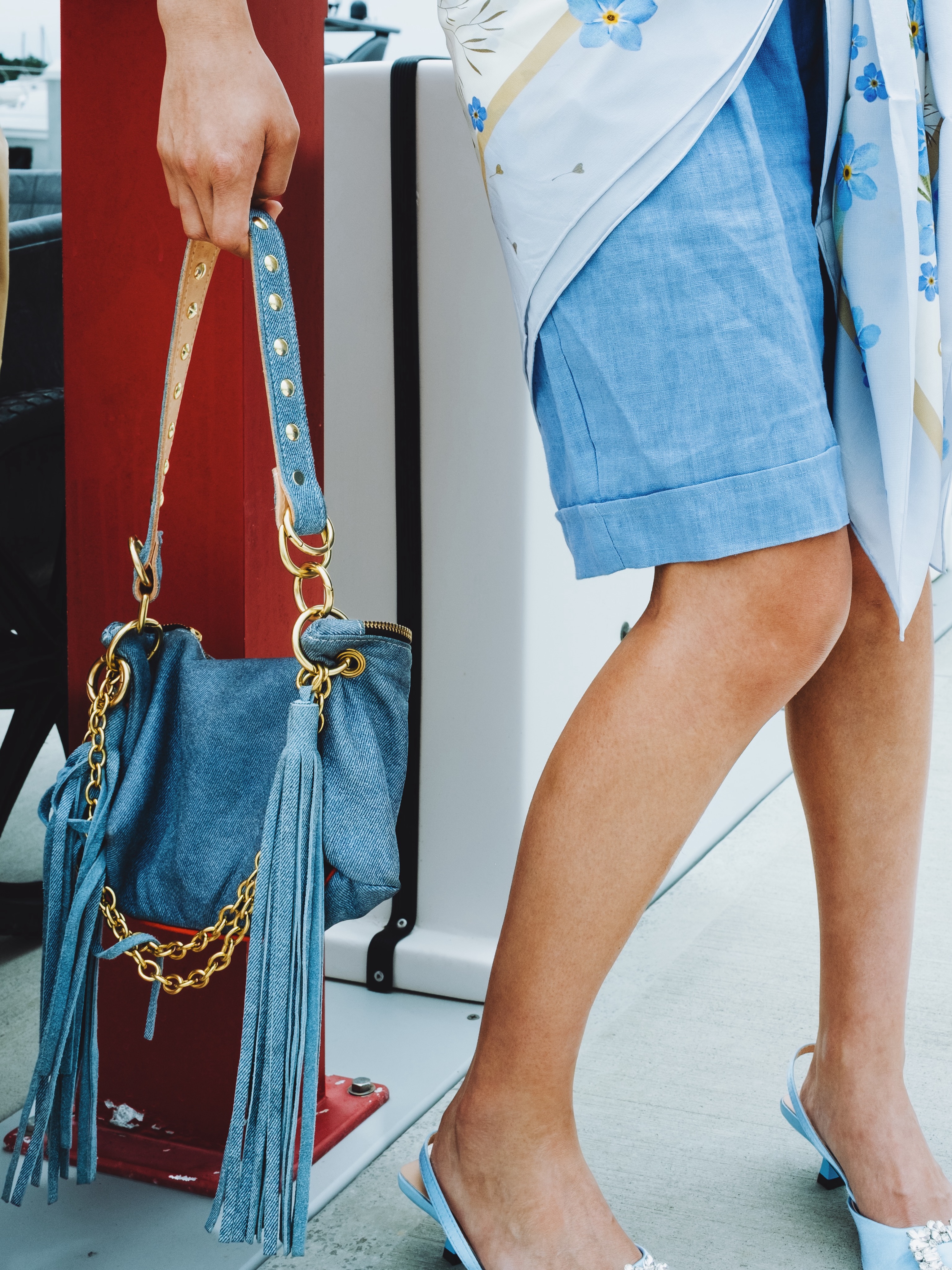
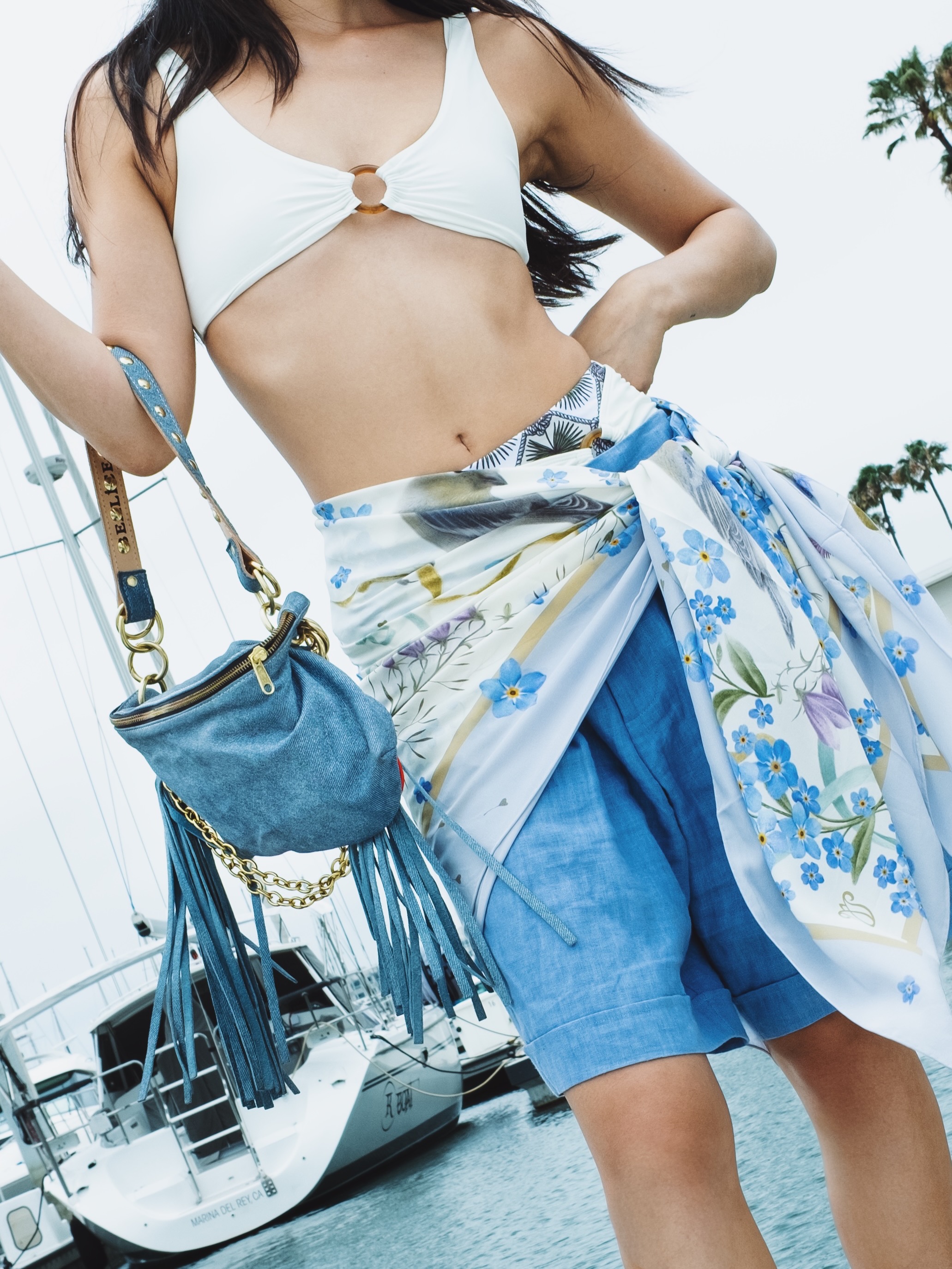
Flanelle: Take us back to 2018. What was the moment with Alice that made you realize no bag on the market could keep up with your life, and when did you know this wasn’t just solving your own problem, but something other women needed too?
Back when I designed my first bag for BeAlice, I was struggling to find a great bag that looked cool but could hold all my belongings and plenty of dog treats for the dog training classes I was attending with her. (She was a handful) It sounds wild now, but in 2018 slings and belt bags hadn’t hit the market yet. We were all carrying heavy purses, juggling our belongings, and wishing for something hands‑free. I knew women needed a bag that moved with them, not against them. The reason that first BeAlice bag took off was simple: you couldn’t find a super‑minimal, flat leather bag that felt sporty enough for everyday life but still looked classic and polished in beautiful leather. Buyers started messaging me nonstop to get one.
I added one other twist that hadn’t hit the market yet: adjustable webbing straps in a variety of patterns. You could mix and match them to make the bag more personalized. No one was offering that yet. Women could personalize their bag and switch the vibe instantly. That combination of simplicity, polish, and personalization became the foundation of BeAlice.
You’ve called the convertible design “a philosophy, not just a feature,” built for a woman
who’s bold and graceful, practical and polished, all at once. Who is that woman to you,
and how does that belief actually show up in a design decision, not just in the marketing
language?
To me, she’s every woman moving through her day with purpose. The college girl out with friends, the stay‑at‑home mom, the working professional, even the grandmother who still wants to feel polished. What they all have in common is that they’re busy, juggling a lot, and they want their bag to handle the heavy lifting.
That belief shows up in the design long before it becomes marketing language. Every BeAlice bag is built with a hands‑free option, no exceptions! That’s why every style comes with a crossbody strap. But women also want the option to shift into a chic shoulder bag or a clutch without switching bags entirely. So we engineered all our straps to be the same length across styles. That one decision means she can swap straps, mix patterns, and personalize her look instantly.
The convertible philosophy isn’t about bells and whistlesm, it’s about giving her one bag she can make her own, three different ways, depending on who she needs to be that day.
You have said, “If it isn’t right, it doesn’t leave,” is a strong standard to hold. Walk us
through what happens between an idea and a finished bag, your fabric sourcing, working
with Minnesota artisans, and which pieces you choose to hand-sew yourself. Has a bag
ever actually failed that standard?
I usually come up with an idea, sew multiple samples, and make multiple mistakes until I get the bag to look exactly how I want. We have a local leather store in town and a few fabric stores. I usually pop into those stores a few times a week while I am designing. I don’t draw, so every one of my ideas has to come from hands-on creation.
Once I get the bag and hardware exactly how I want them, Becky and I wear the bag around for a few weeks to make sure everything works and functions as we like. We get feedback from friends and strangers. Then we source leather from our two favorite tanneries, choose one or two colors, and sew the first round to confirm we have a winner. If it’s right, the pattern goes to our factory in Minnesota. If it’s something more artistic or edgy, I keep it small‑batch and sew it myself.
It’s unconventional, but it’s what keeps our quality high. And sometimes that means owning the messy parts. Recently, we had to send back over 100 Blair bags because the factory used the wrong zipper. While they corrected the mistake, I picked up the slack and made every order myself. That’s the reality of our process; hands‑on from start to finish, even when it’s not glamorous.
What made 2025 the right time to bring in a partner after running this solo for
years? Becky, what drew you specifically to BeAlice after stepping away from your own
marketing career? How do you divide the work now?
As far as expanding goes.. I knew a lot about the business at this point. I had a great following; I had learned a lot about my buyer and what they would want to carry and wear. I started teaching myself about manufacturing because I knew I couldn’t grow the company alone. I was also feeling lonely. I had assistants I adored, but I wanted someone who loved the company as much as I did and took pride in building it.
When Becky approached me and asked about partnering up, I was thrilled to have a teammate. Her second of three children was heading off to college, so she was ready for a new challenge, and she brought a strong marketing background plus a real love for fashion. It was a natural fit. Today, our roles are clear and complementary. I handle all the design and sewing; Becky leads more of the business side. We run everything by each other, but we each have our day‑to‑day lanes. And we show up together at every event, meeting clients and sharing our products is still one of my favorite parts of this industry.
The red piping, brass hardware, and named collections – Alice, Blair, Baby Blair, Suede
Totes, have become the brand’s visual language. How did those signatures come about,
and what makes each collection distinct enough to earn its own name?
Let’s start with Alice. My first two bags were named Alice and the mini Alice. I sold more of these two classic styles in the first few years than I ever expected. I would introduce other bags over the first 8-year time period, but these two always remained the winners.
When Becky joined, I designed Blair – and she got her name because I kept picturing Blair from The Facts of Life wearing it. I love having a main bag and a “baby” bag in each collection, and now we’ve expanded that family with the Blair Tote coming this fall.
Usually, when I design something, a person’s or someone’s dog’s name pops into my head for inspiration, I visualize an entire story of them wearing the bag in their everyday life. And that’s how the bag gets her name. The red piping and brass hardware are part of our signature.
I was an absolute Prada lover in my 20s in the early 1990s; the red piping is a little ode to Prada. We use brass because it has a luxurious feel that aligns with our bag motto: this bag can move with you. It won’t chip or tarnish, and it stays classic with everything.
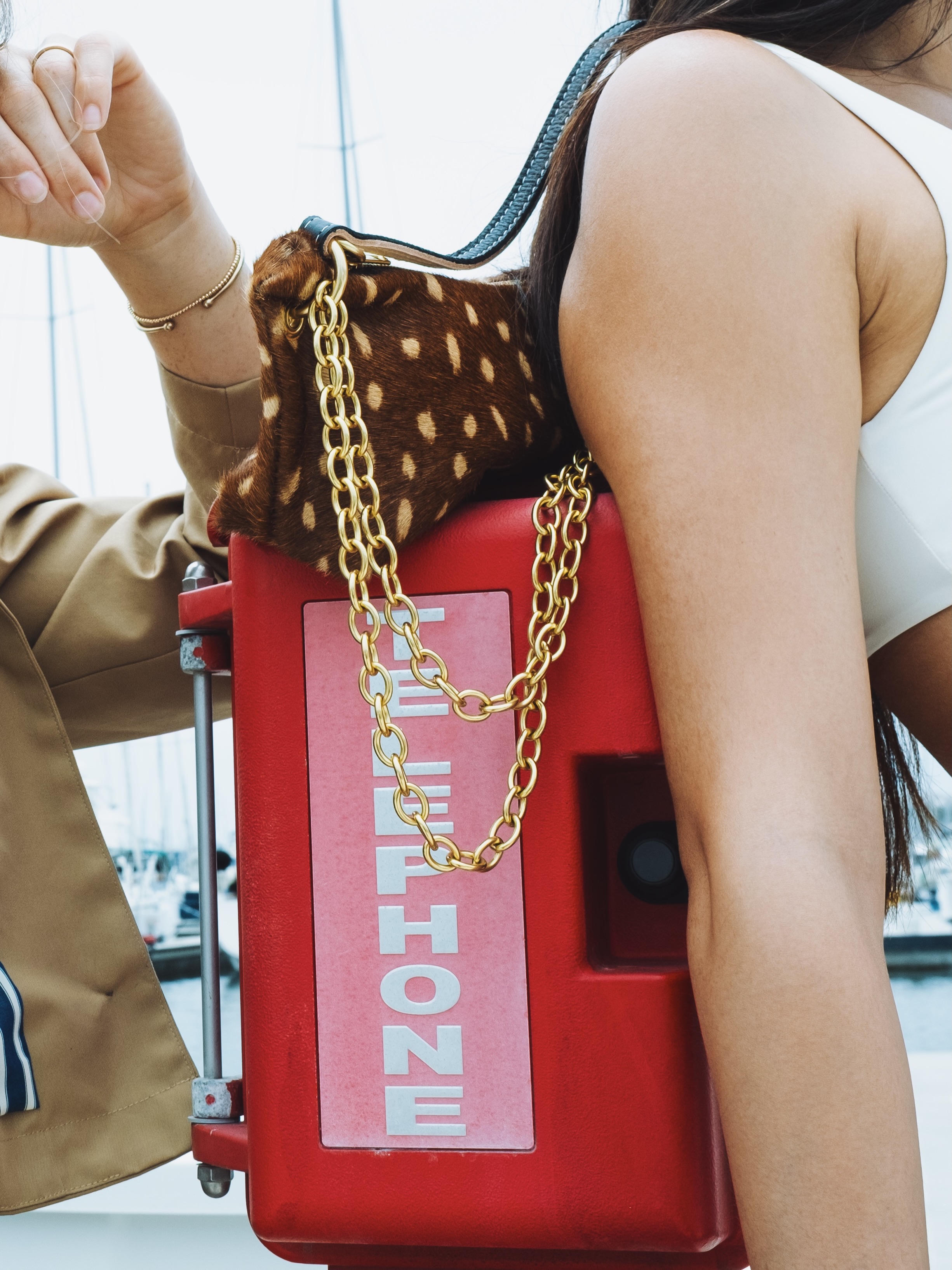
Landing in Nordstrom is a major national debut for a small, handmade brand. What did
that process look like getting there, and does it change how you produce? Can small-batch, partly hand-sewn production keep up at that scale?
Nordstrom has been both exciting and surreal, truly a dream. We wouldn’t be there without our PR partner, Annabelle Azade Kajbaf of Wear the Future. She is amazing! Annabelle connected us with the Folklore platform, which helps independent brands get in front of major retailers. From there, it was a process: your brand must be approved and align with what Nordstrom is looking for.
What I love about Nordstrom online is how supportive they are of small businesses. They understand the realities of handcrafted production and the challenges of scaling responsibly. Both Nordstrom and Folklore are committed to championing sustainable, artisan‑made brands rather than fast fashion, and I think more retailers will move in that direction.
And when that first Nordstrom order came through, we absolutely freaked out in the best way!
Between the Forbes feature and being spotted on people like Chanel West Coast and
Emily Curl, BeAlice has picked up real national attention this year. How did that
recognition come about, and has it changed who’s finding the brand, versus your original
word-of-mouth customer?
Once again, I have to mention our PR woman, Annabelle Azade Kajbaf of Wear the Future. She was incredible about finding the right events for us – and that’s how we met Chanel. Having Chanel West Coast wear our bags and post about them on her social media was a total pinch‑me moment. She’s genuinely lovely and down‑to‑earth.
The Forbes mention was another surreal experience. I flew to San Francisco for a runway show and had no idea Forbes was even there. When the article came out, we were completely blown away.
We also just shipped our Denim Fringe bag to Emily Curl, and I’m so excited about the bag she selected. She is going to love it. I’ll definitely be watching her social media for a bag sighting.
Having Chanel and Emily wear our bags – plus the Forbes feature – gives us real street cred. A lot of clients like to feel a connection with a brand before they buy, and these moments help them see who we are and what we stand for.
What stays the same: As BeAlice grows nationally, what’s the one thing about the
brand, the handmade quality, the Minnesota roots, the intimacy of it, you’re both most
protective of keeping exactly as it is?
No matter how much we grow, I’ll never forget how simply this all started; with my sweet Saint Bernard, Alice, and a moment at my son Wyatt’s baseball game when I suddenly imagined a bag I couldn’t stop thinking about. On the drive home, I stopped at a hardware store and a fabric store to see if I could actually make it. That innocence, that spark, is something I never want to lose.
We never want to lose contact with our customers either. They’re part of every decision we make. And I never want to stop sewing or having my hands involved in each bag in some way. Staying connected to the craft and to the women who carry our bags is what keeps BeAlice grounded, no matter how big we become
Photos:
Photographer @selvarnguyen
Model @paulinabreanne
Model @ashleyblin
Make-Up and Hair @princie_palette
Brand: @shopbealice