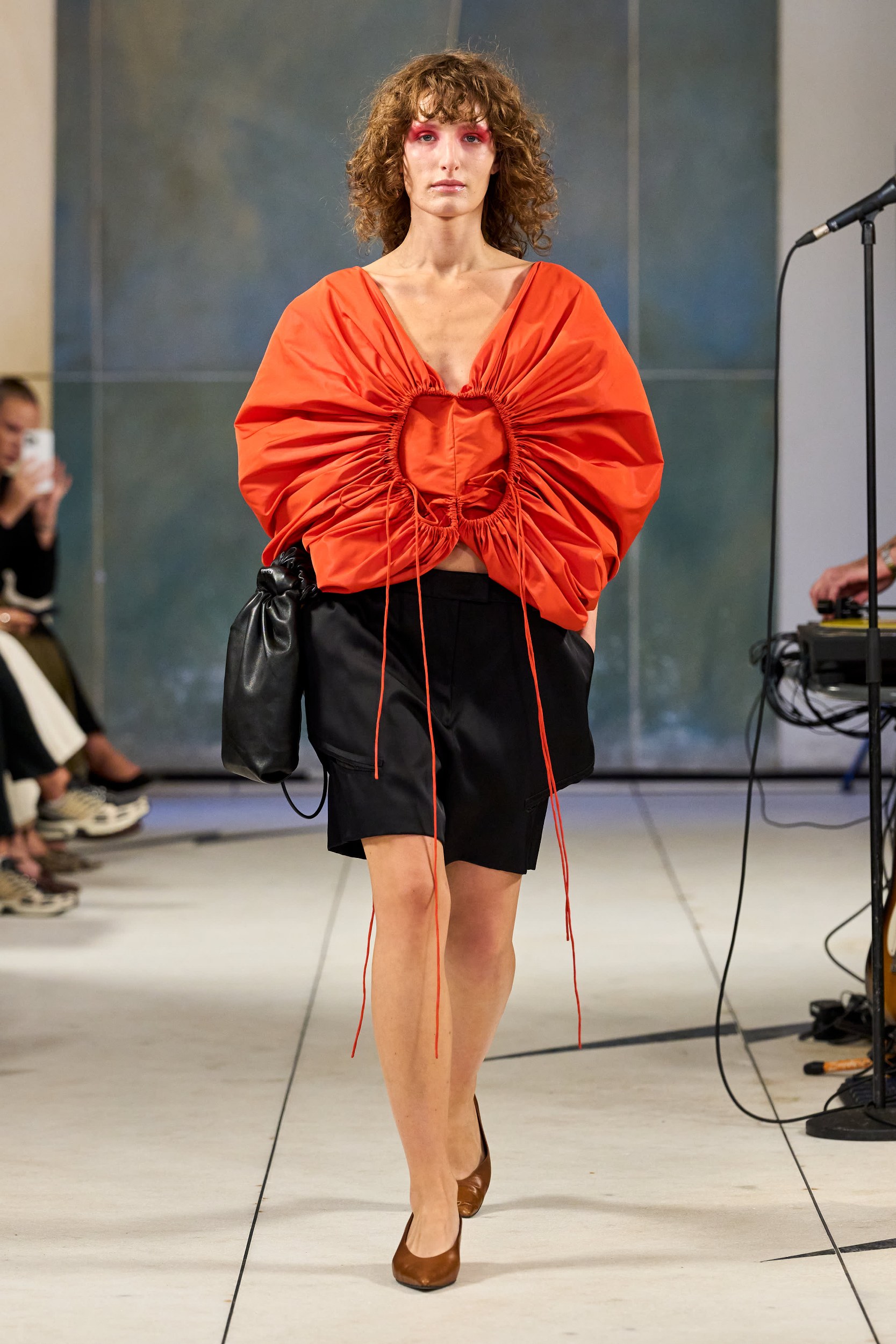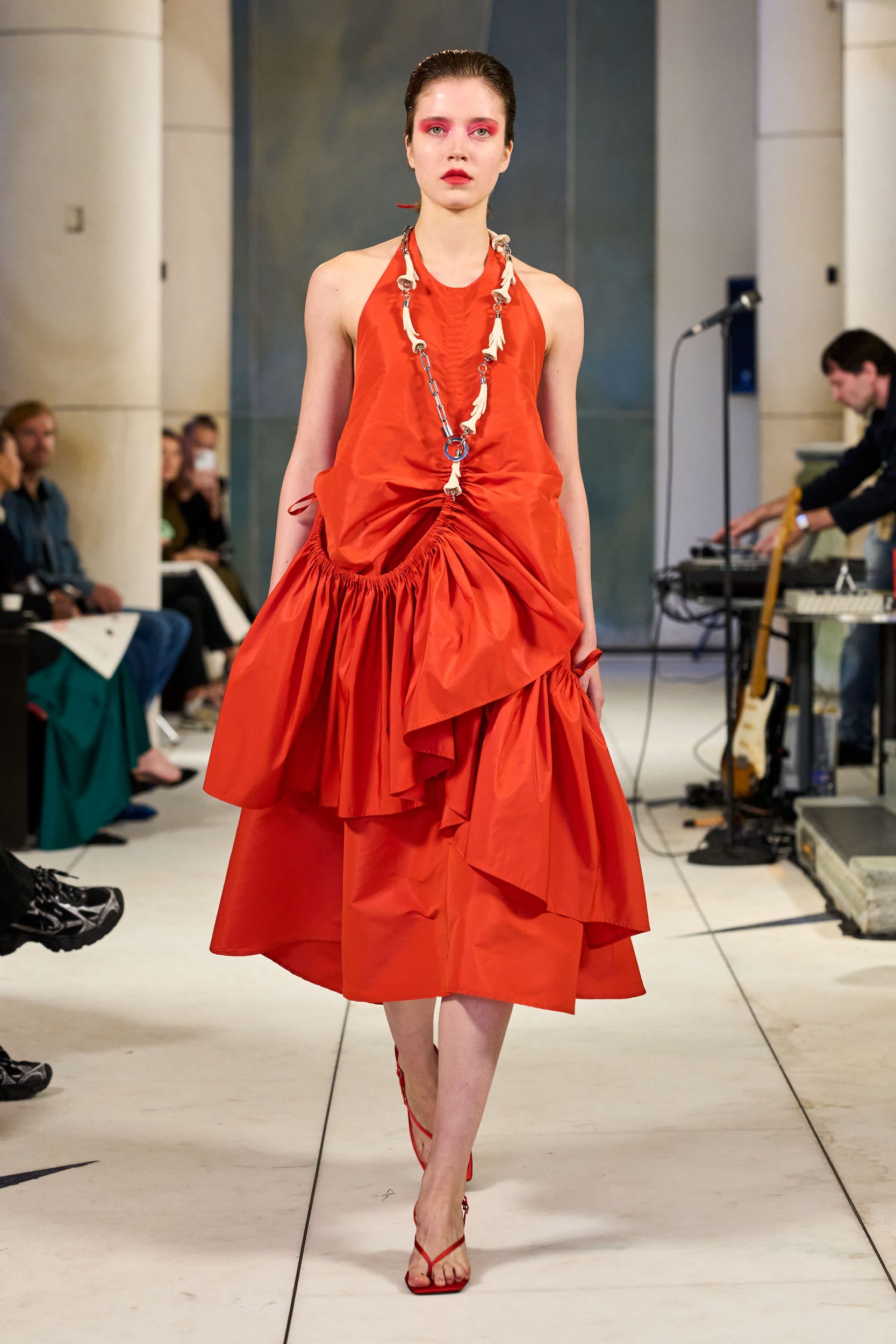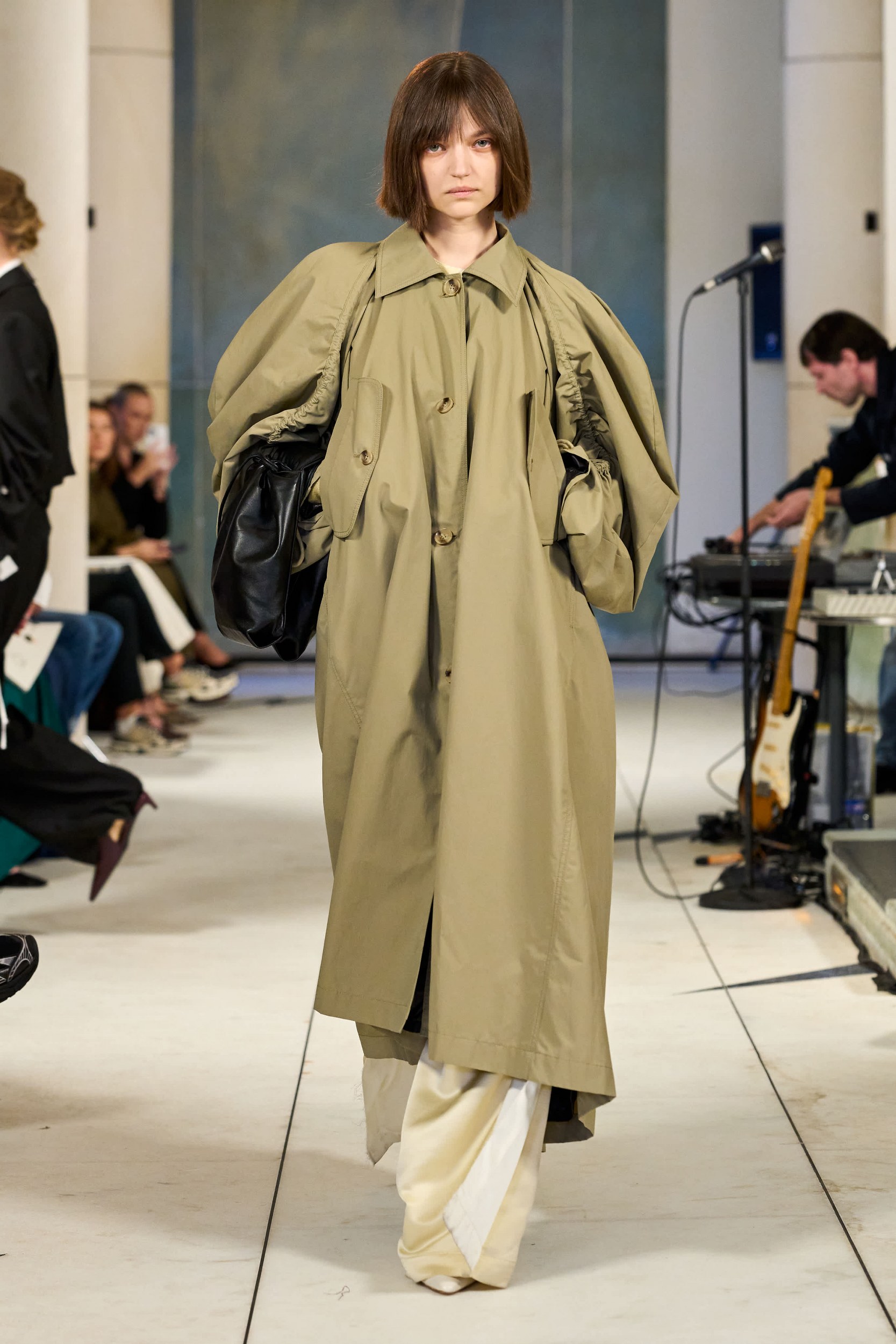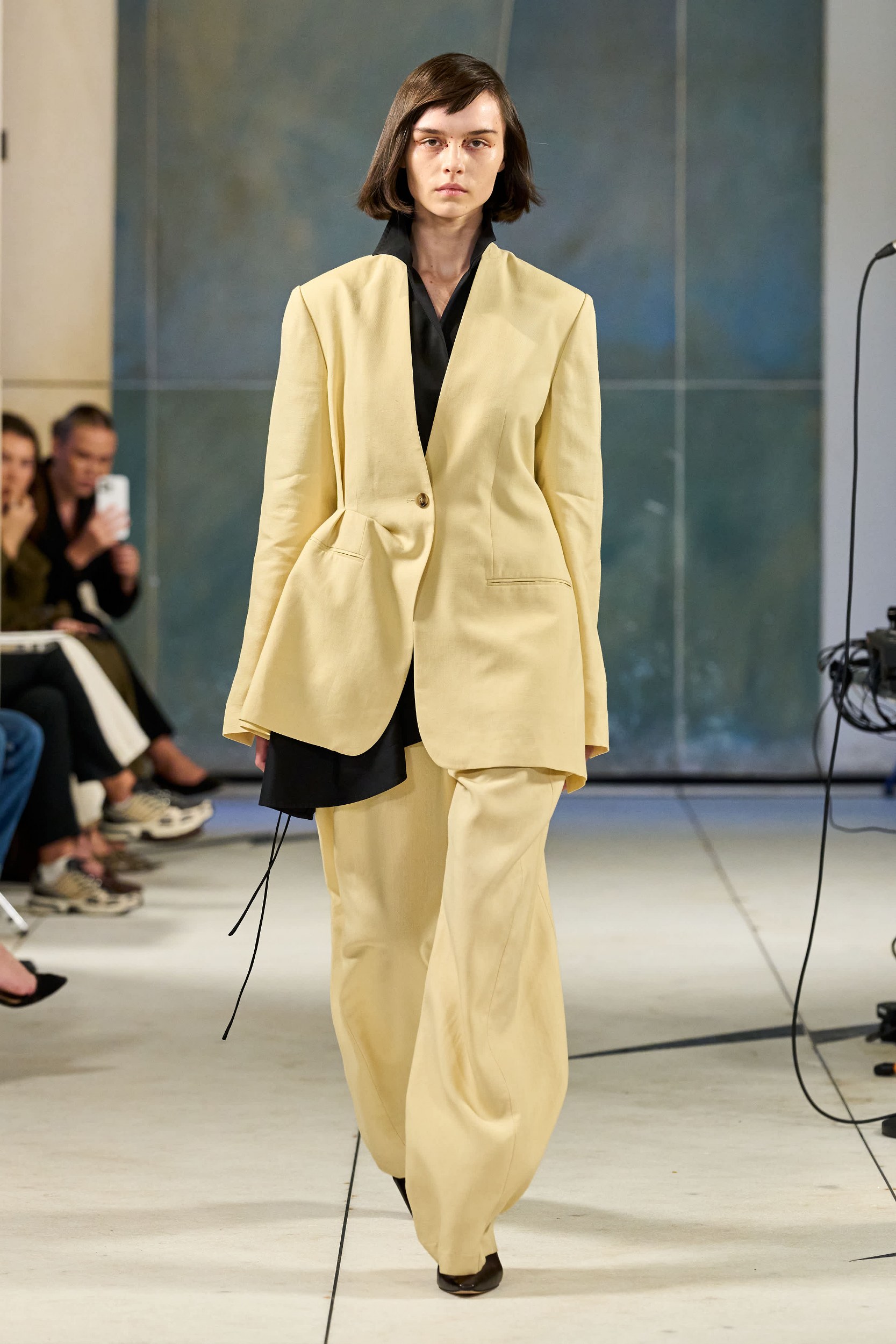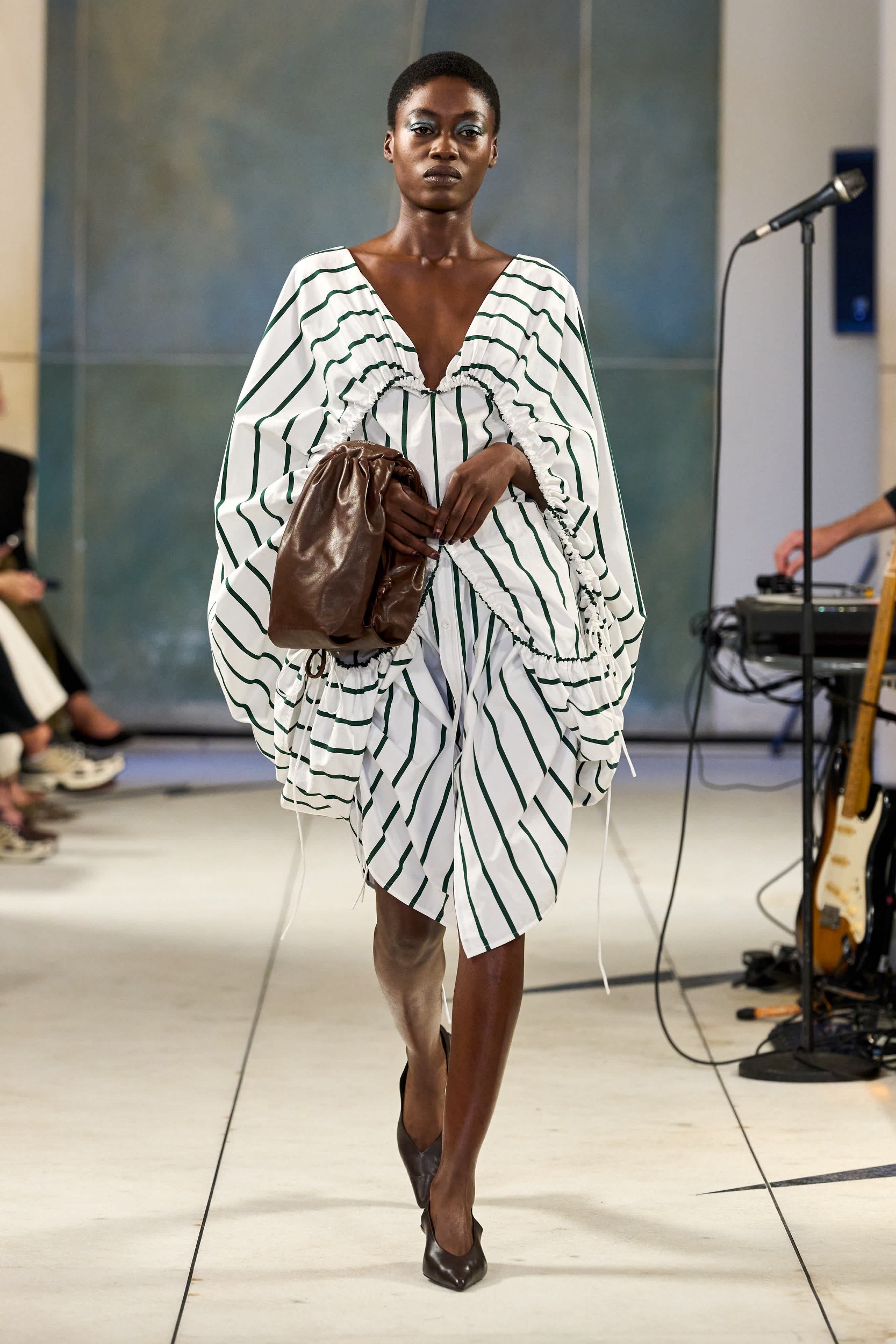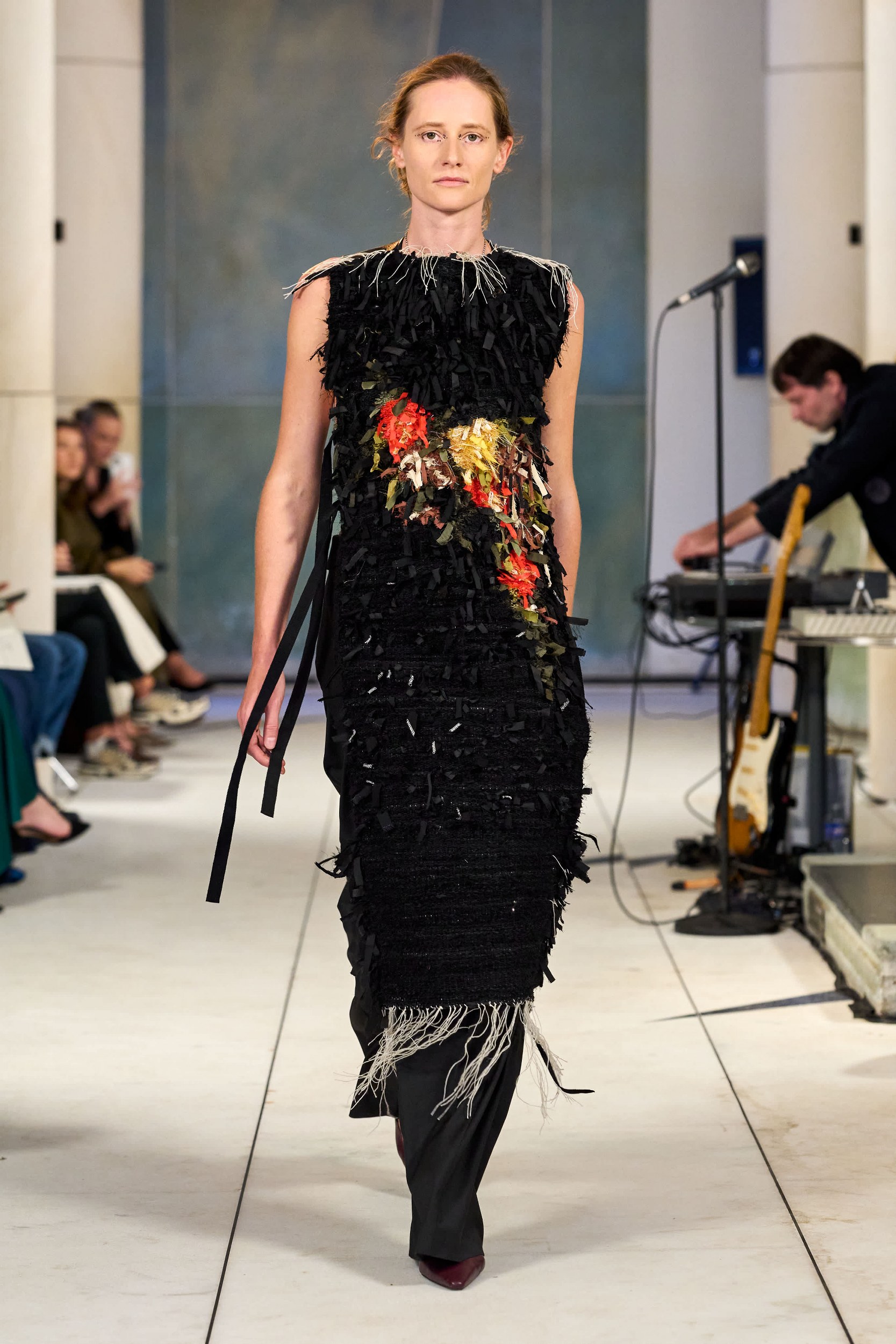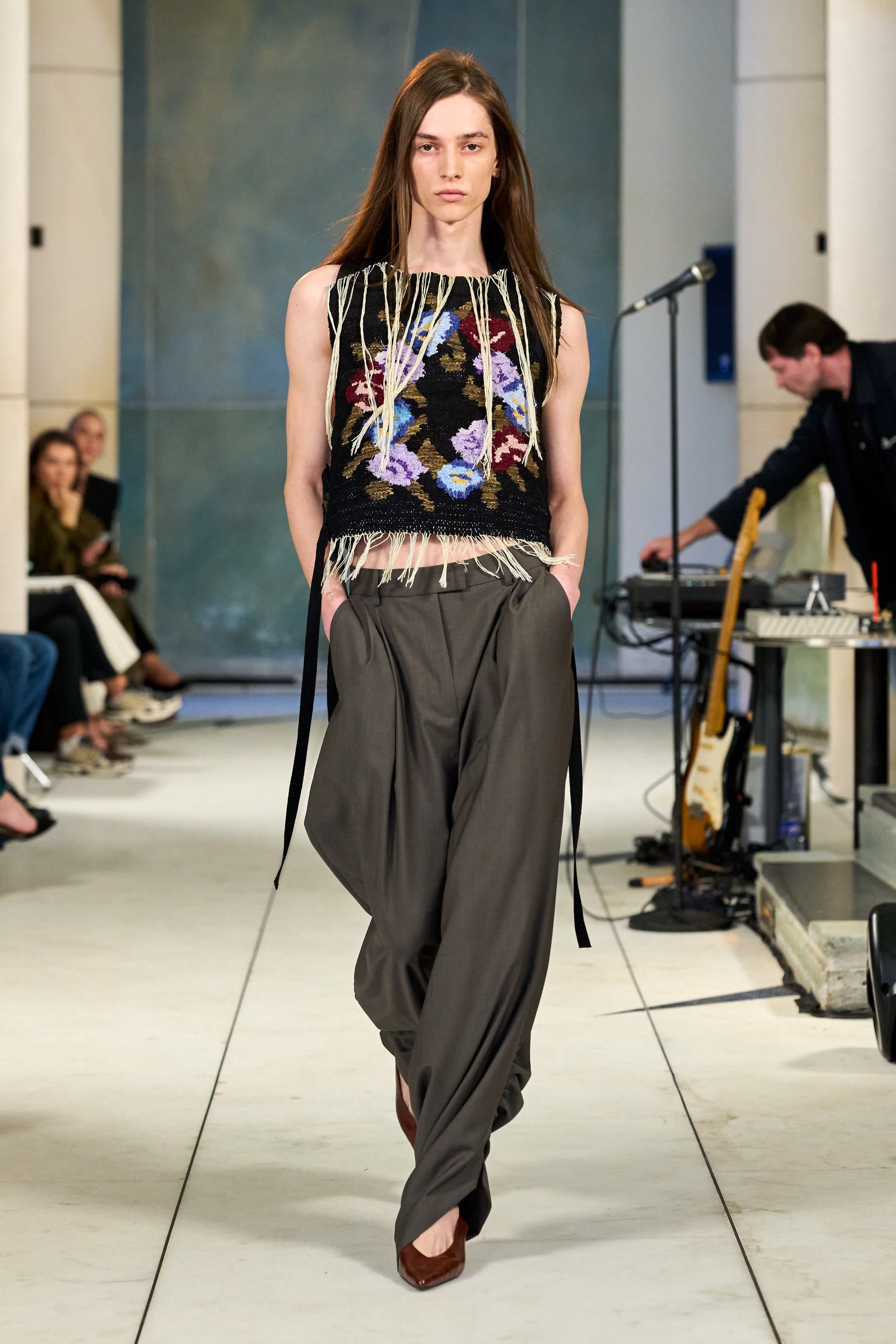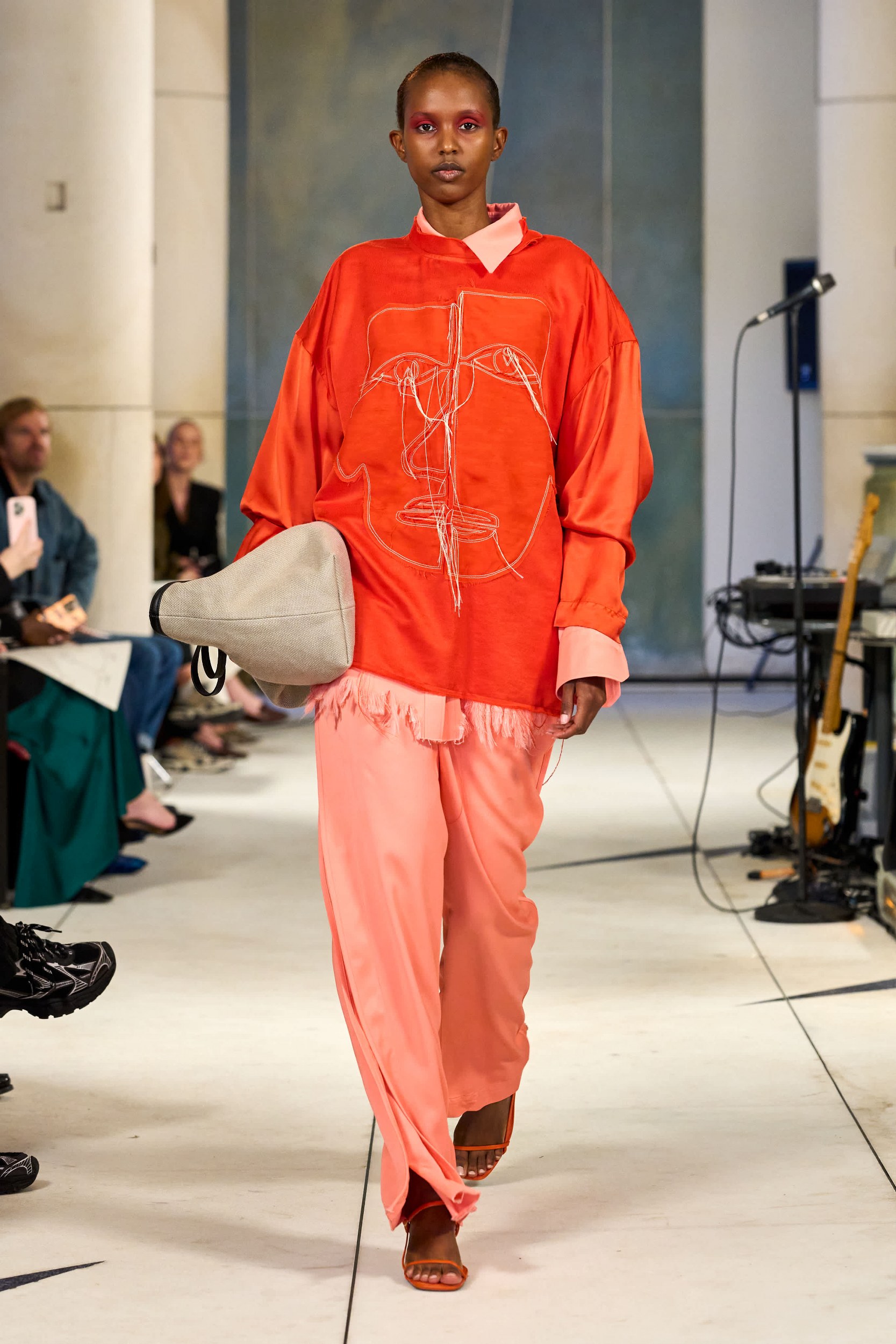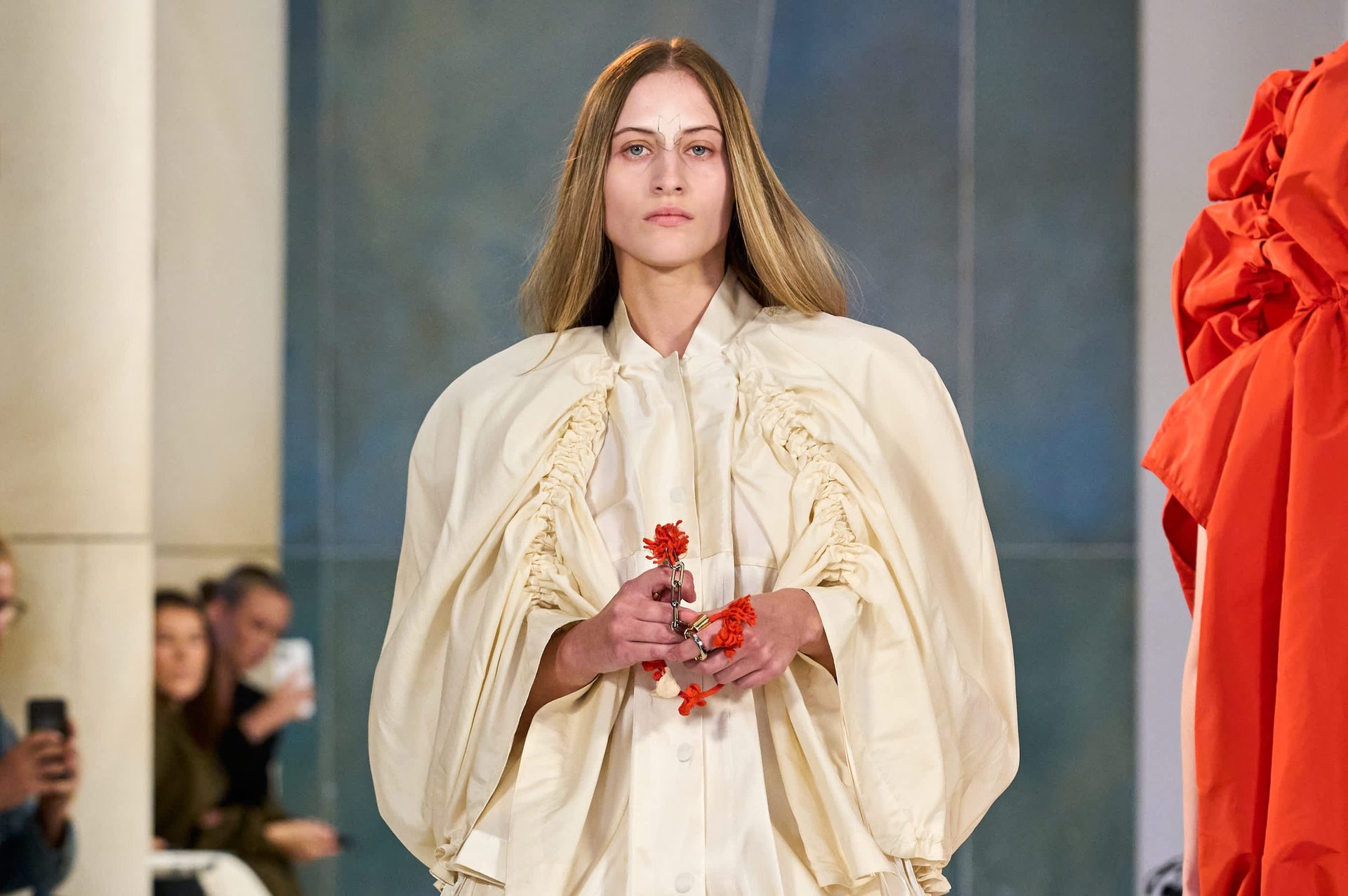
Ukrainian designer Lilia Litkovska talks about STRICHA, her Paris collection inspired by avant-garde artist Borys Kosarev, and about creating fashion in wartime.
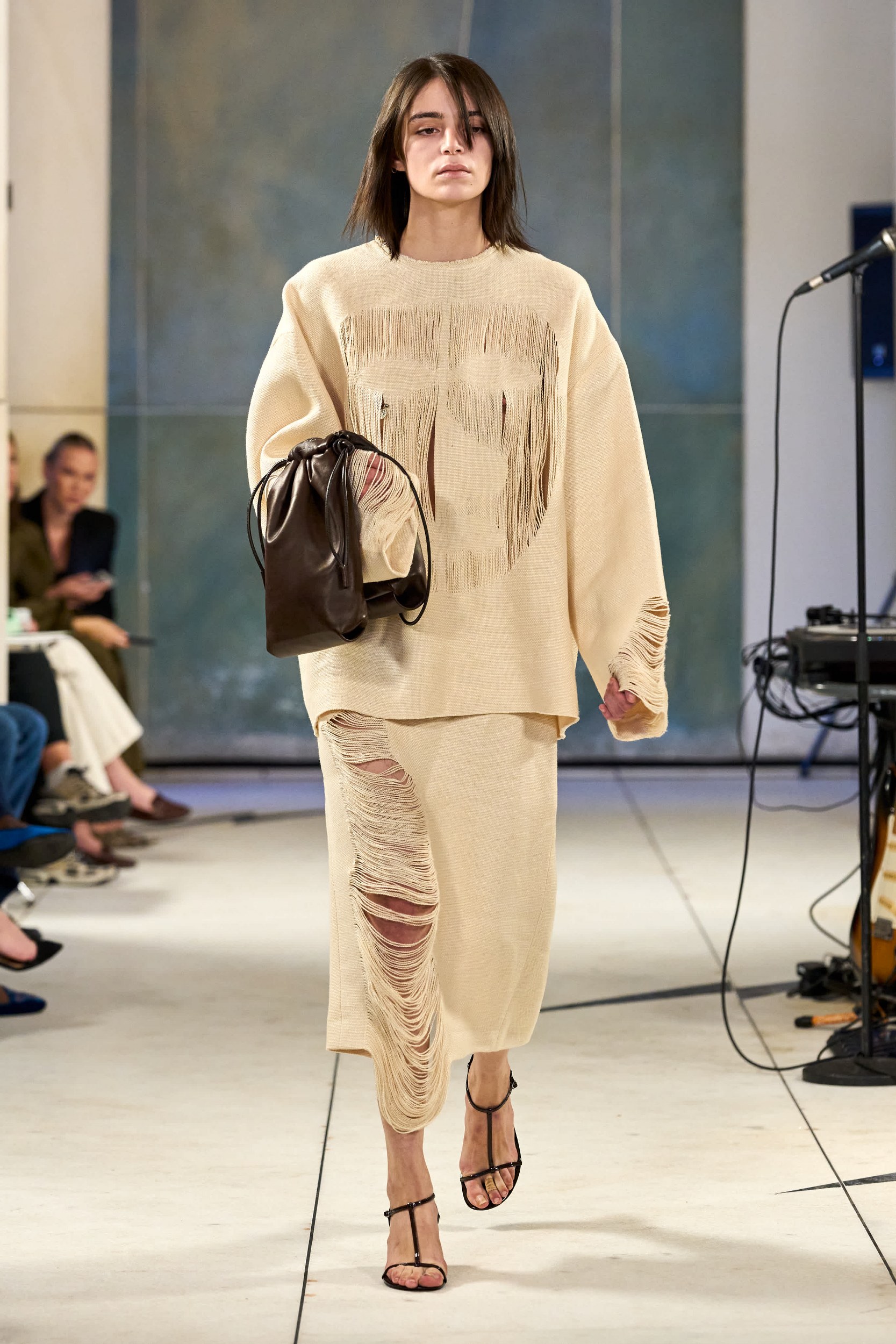
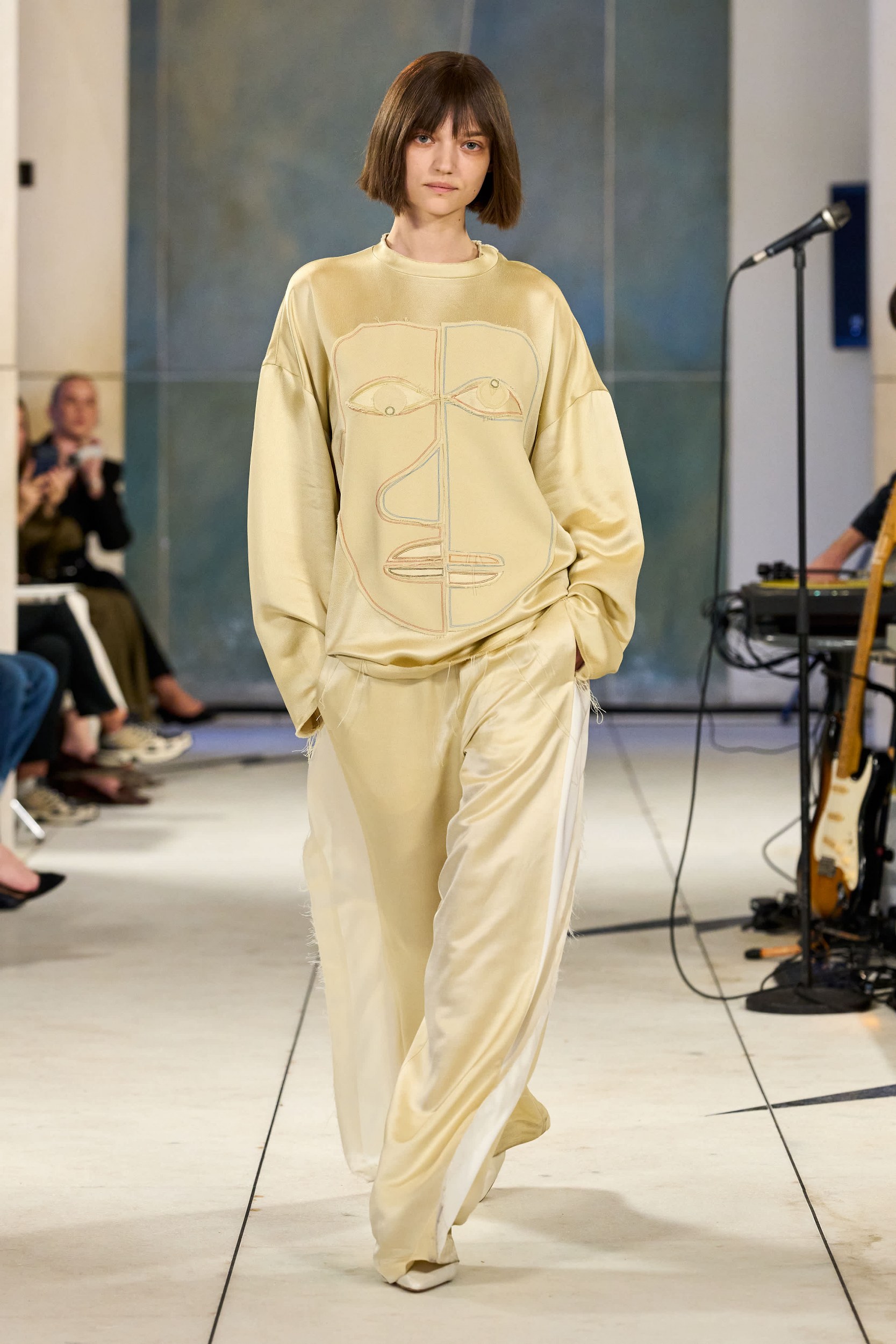
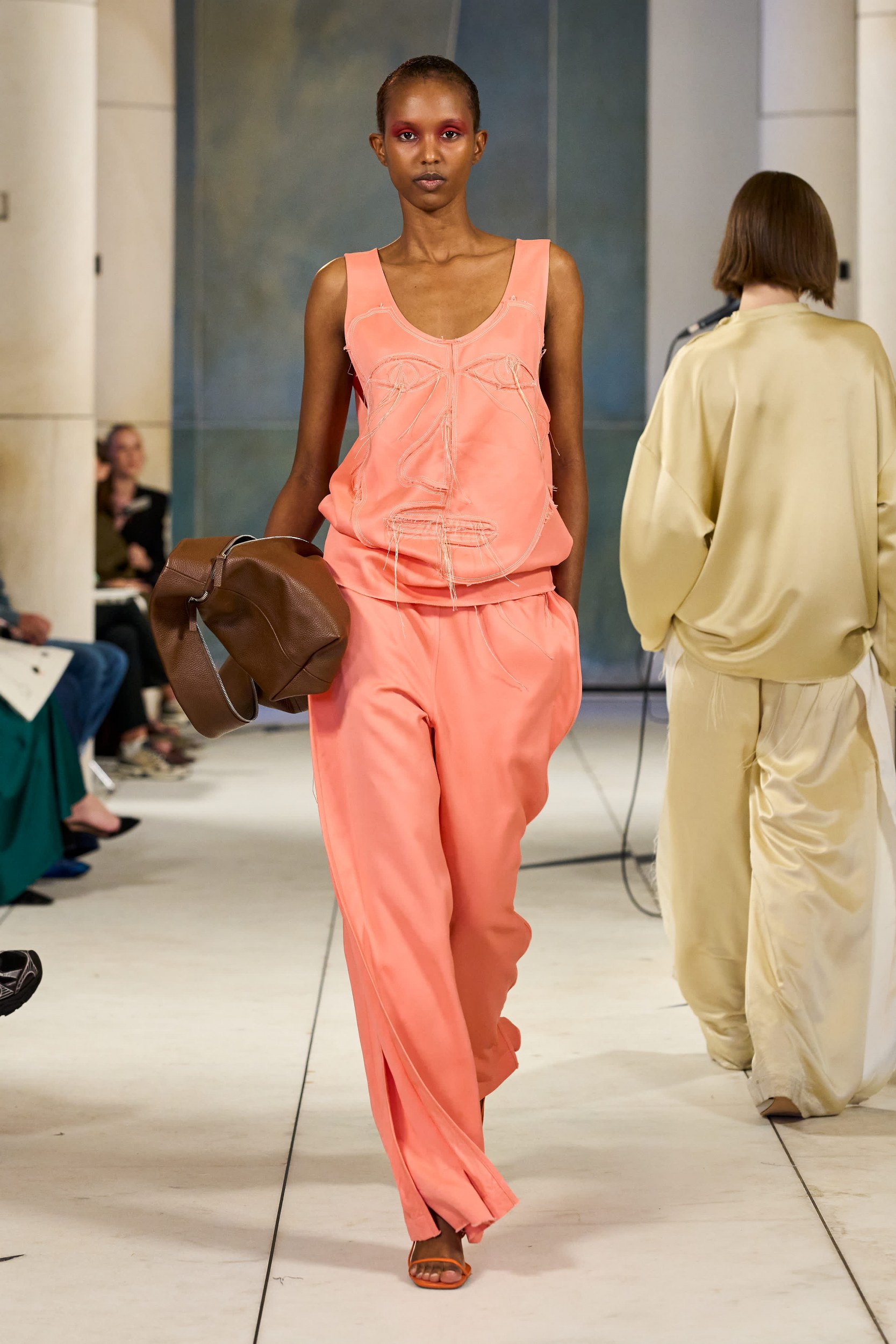
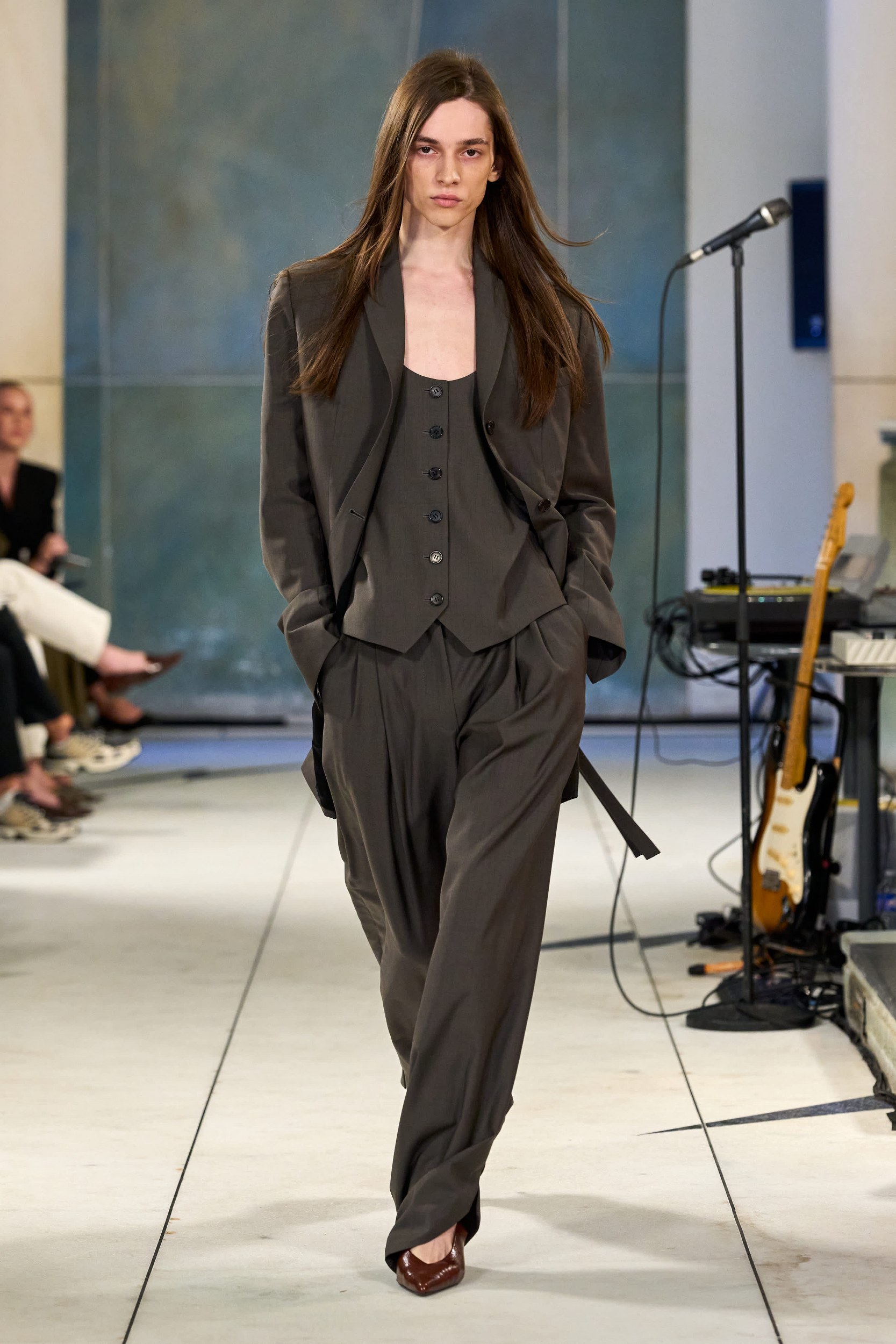
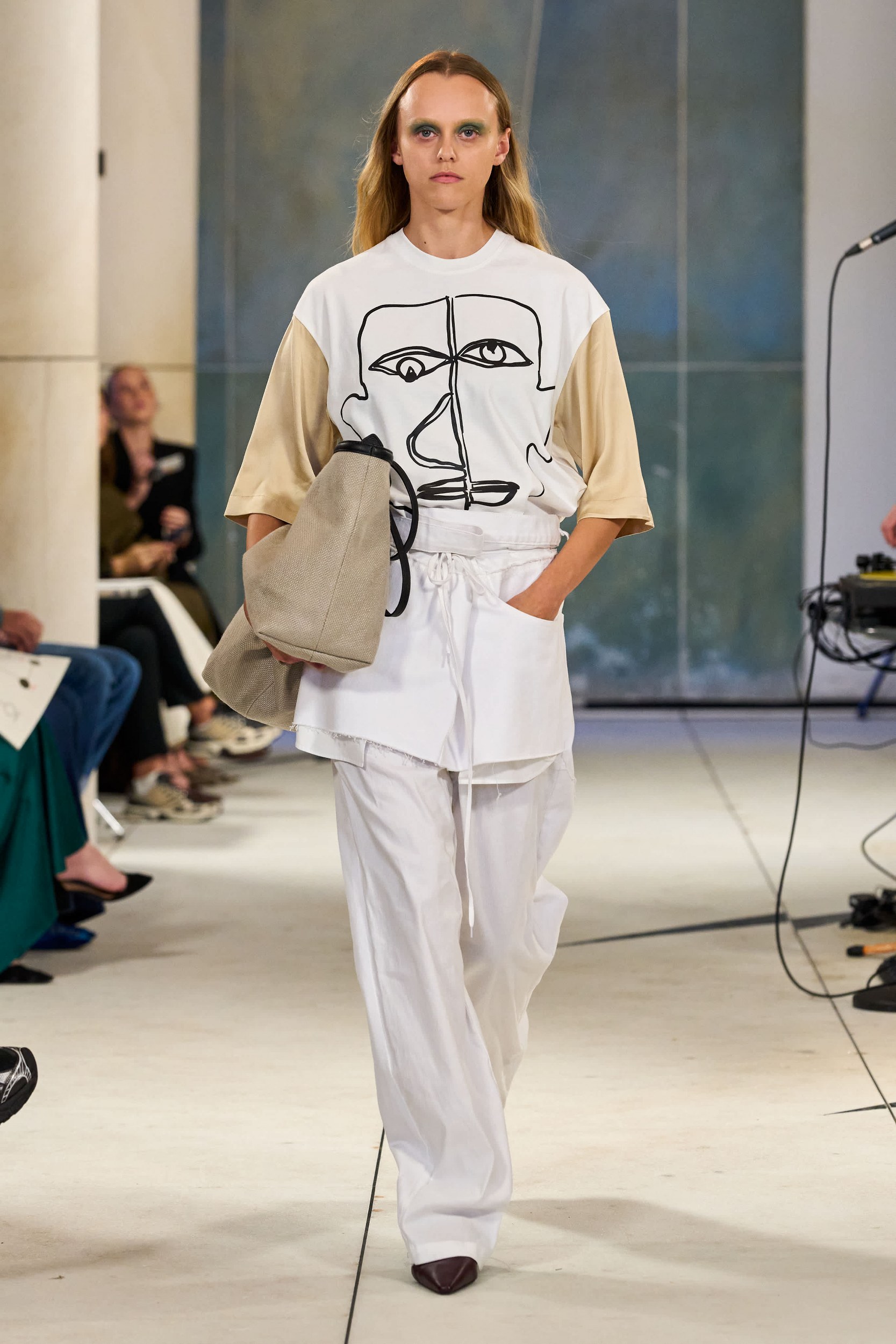
In her new collection, STRICHA, turns things inside out, sometimes literally. Ukrainian homespun weaving is flipped to show its knots. Seams sit on the surface, unapologetic. The roughness most ateliers would bury is left in plain view, because for Litkovska that is where the life of a fabric actually lives.
The collection’s inspiration is Borys Kosarev, a name few will recognize, until recently. Born and raised in Kharkiv, he was linked to that city for his entire life, from his birth to his death in 1994. In the 1920s, when Kharkiv was a hotbed of experimentation, avant-garde art was thriving there across theatre, painting, graphic design and photography, and Kosarev worked in nearly all of it. He made cubo-futurist posters and illustrations, and is credited as one of the founders of the Ukrainian school of theatrical set design. He also stepped behind the camera: as assistant to cinematographer Danylo Demutskyi, he took dozens of backstage photographs during the 1929 filming of Oleksandr Dovzhenko’s Earth, one of the landmarks of world cinema. He lived through Stalin’s purges of Ukrainian intellectuals in the 1930s, and his work slipped into obscurity for decades, rarely shown even in exhibitions devoted to the Ukrainian avant-garde.
Litkovska took his restlessness as a method rather than a mood board, and carried it to Paris, a city Kosarev never got to see.
The show presented the runway in favour of a café,. And woven into it was a sentence no one could walk past: “SET MISSING. DESTROYED BY MISSILE.” A reference to the Ukrainian workshops, some belonging to her friends, that no longer exist.
We spoke with Lilia Litkovska about honesty, about making beautiful things in wartime without pretending the war isn’t there, and about what you might find when you finally look at the other side.
You describe the most important encounter as “the encounter with yourself.” What did you discover about yourself while creating this collection?
For me STRICHA became a personal encounter with Borys Kosarev and his work. Bringing his art to Paris opened up a conversation across time, between his world and ours. I believe every story begins with an encounter. Love, friendship, lasting partnerships — so much can begin in a few seconds and open up a space for something unexpected. But the most important encounter is the one with yourself.
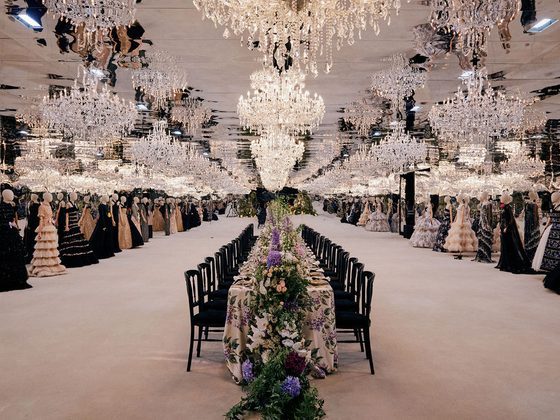
This idea also shaped the experience of the show itself. We invited our guests into a café, a place where encounters happen naturally, where people come together, exchange ideas, and share a moment. We wanted the STRICHA to feel less like a runway show and more like a moment in life itself — where different worlds meet, stories unfold, and something unexpected can begin.
Your motto is “there is no wrong side.” This season, seams, construction, and the inside of fabrics are deliberately exposed. What does turning a garment inside out represent to you beyond the clothes themselves?
We are who we are on the inside. Our outer appearance, however, is shaped by trends, context, marketing, conventions, and the roles and masks we wear. The more honest and free we are, the better we become at filtering out what is imposed on us and finding our true selves. This is what “there is no wrong side” means to me.
LITKOVSKA collections have always included transformable pieces that can be worn inside out and styled in different ways. We give people the freedom to interpret our designs on their own terms. However you choose to wear or interpret a piece, there is no wrong side.
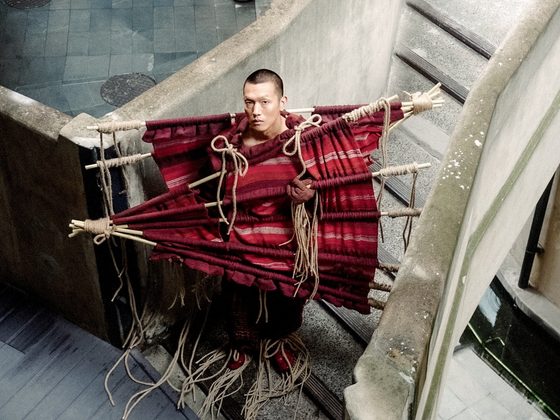
For this collection, we turned traditional Ukrainian homespun weaving inside out, exposing its knots and construction details. Its texture is raw and alive, and for me, that is precisely where its strength and beauty lie.
Rather than simply referencing Kosarev visually, you translated his method of fragmentation into the construction of the clothes. How did his approach change the way you built the collection?
Almost a hundred years ago, Borys Kosarev was searching for new forms of artistic expression, moving freely between fine art, scenography, photography, cinema, and theatre. An extraordinarily talented artist and a pioneer of the Ukrainian avant-garde, he was constantly exploring new ways to express himself. I was deeply inspired by his creative drive, especially considering the difficult times in which he was working. The more I explored his artistic journey, the more I wanted to bring that energy into the collection. Creating a collaboration across a century and presenting it in Paris felt especially meaningful — in a city Kosarev never had the chance to experience in his lifetime.
The collection speaks about Ukraine without trying to make a literal representation of war. How do you balance acknowledging the reality of what is happening in Ukraine with preserving space for beauty, experimentation, and imagination?
I don’t think these things need to be balanced against each other. The war is part of our reality, but so is our desire to create, to fall in love, to experiment, to imagine something that doesn’t exist yet. Ukraine is not only a story of destruction, and I want people to know that. There is life, love, theatre, music, and believing in the future. I want to keep working, keep questioning things, and keep creating clothes and shows that encourage people to think and ask questions. For me, that is not looking away from reality. It is refusing to distort it.
The message “SET MISSING. DESTROYED BY MISSILE” is incredibly stark. What did you want people to feel when they encountered those words within a fashion context?
Many fashion production facilities in Ukraine, including those belonging to my friends, have been destroyed by missile strikes. Rebuilding is difficult, and the reality behind these losses is not always visible. I wanted this message to serve as a reminder of what is happening in Ukraine, but also of why we keep creating. For me, this work is an act of hope, love, and support for one another. Fashion shows create a certain image, a world people enter for a few minutes. I wanted to let something from outside that world enter it, too. Not to explain everything, but to remind people that every collection comes from a particular place and time, and that this context matters.
Finally, when someone encounters LITKOVSKA for the first time, what do you hope they see beyond the surface?
I hope people see that clothing can be more than just a way of presenting yourself to the world. I want them to notice how a garment is constructed, how it moves, how it can be worn in different ways. I like clothes that have a character of their own, but that also leave room for the person wearing them to make them their own. I’m not interested in telling people who they should be. I want them to feel free to experiment and find their own way of wearing our pieces. Of course, the work also carries where we come from. Our Ukrainian identity is present in our relationship with craft, in the way we approach construction, and in how we respond to the world around us. It doesn’t always need to be stated directly. Sometimes it is simply part of how we see things and what we choose to create.
Ultimately, I want LITKOVSKA to invite people to look closer — at the garment, at the person wearing it, and perhaps at themselves. For me, clothing has always been a way of creating a connection, and you never entirely know what a meeting might reveal.